Open Vs Closed Terrarium Containers — How Mouth Width Determines Plant Survival Secrets
I ruined my first terrarium by choosing a pretty jar with a thumb-wide opening. The plants suffocated in stale air while condensation ran like rain down the sides. Later, a wide-mouthed vase with the same plants stayed stable for months. In this guide, I show exactly how the container’s mouth size sets humidity, airflow, watering needs, and which plants actually live long-term — so you can choose the right glass and stop guessing.
The Mouth Sets the Climate: Humidity, Airflow, and Gas Exchange

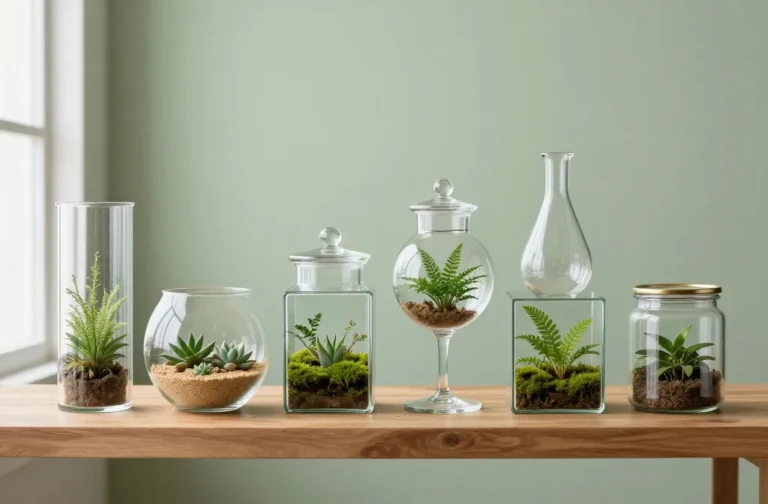
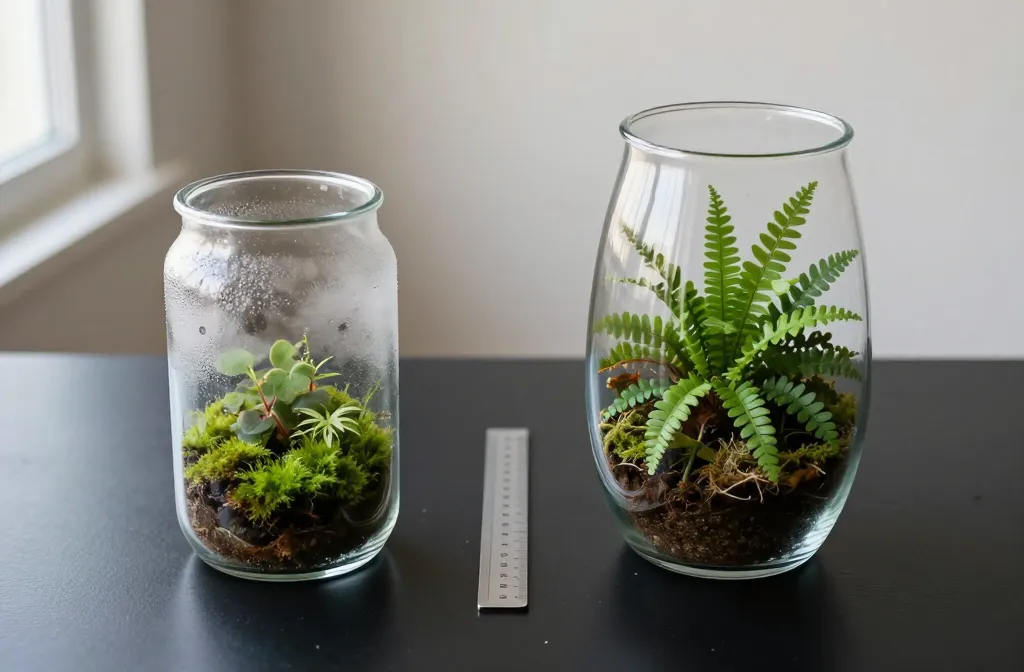
The size of the opening controls how fast air and moisture move in and out. A narrow mouth (under 5 cm/2 inches) traps humidity and slows oxygen exchange, which suits moisture-loving, slow-growing plants but punishes drought-tolerant ones.
A wide mouth (over 10 cm/4 inches) lets humidity bleed off and refreshes the air quickly. That favors plants that like to dry between waterings and need better airflow.
More opening equals more evaporation and cooler leaf surfaces; less opening equals a warm, moist microclimate. Pick the mouth to match the plant, not the other way around.
Action today: Measure your container’s mouth with a ruler and write it on a piece of tape under the base — you’ll use that number to choose plants and watering intervals.
Closed Terrariums: Why Small Openings Change Watering Forever
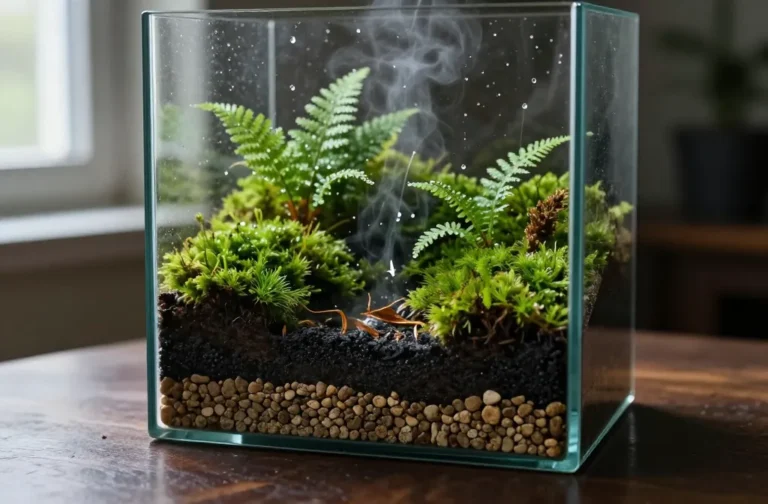
In a closed or near-closed vessel, water recycles through evaporation and condensation. A small mouth slows this loop’s losses, so a tiny initial mistake with moisture becomes a lasting problem.
With a narrow opening, the soil dries very slowly. Overwater once and you create persistent runoff, algae, and anaerobic smells. Underwater once and nothing collapses immediately because condensation keeps coming back, but plants can stall from low available moisture in the root zone.
Warning Signs in Tight-Mouth Containers
- Persistent morning-to-night condensation: Too wet; open the lid or prop it for ventilation.
- Earthy-sour smell: Oxygen is low; reduce moisture and add more air space around roots.
- Moss exploding, plants stalling: Light too low or competition too high; trim moss and raise light.
Action today: If condensation covers more than half the glass at midday, remove the lid or tilt it open for 1–3 hours to vent excess moisture.
Open Terrariums: Why Wide Mouths Demand Hands-On Watering
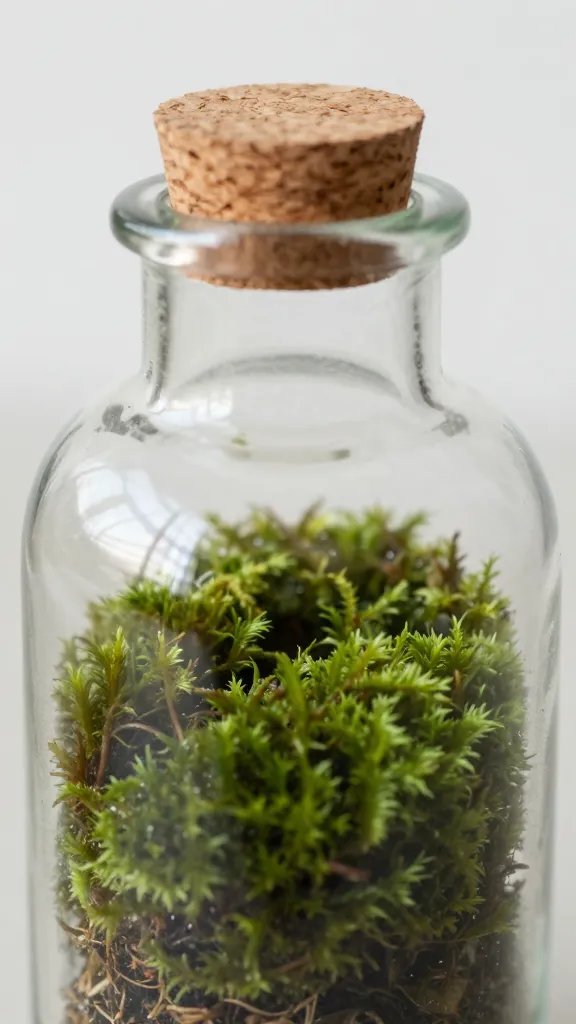
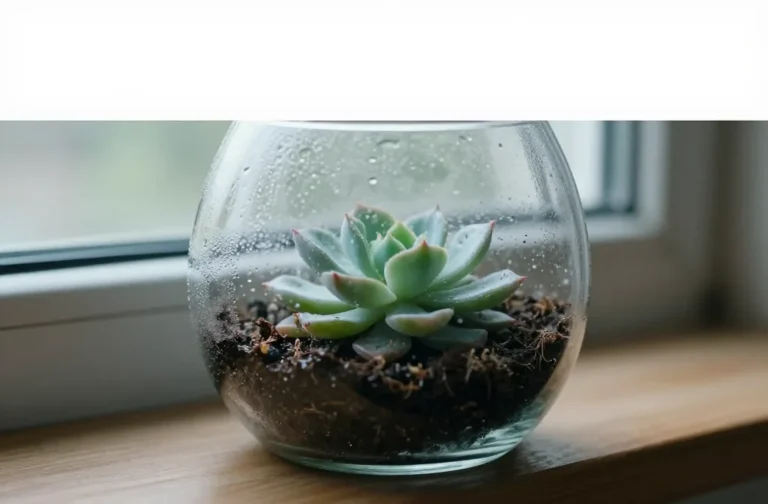
With a broad opening, moisture escapes faster and air refreshes constantly. That prevents mold and makes temperatures more stable, but you must water more often, especially in heated or air-conditioned rooms.
Wide mouths allow safer planting of succulents and arid-loving species because the top layer dries predictably. You also get easier access for pruning and cleaning, which keeps growth tidy and pests visible.
Step-by-Step Watering for Wide-Mouth Setups
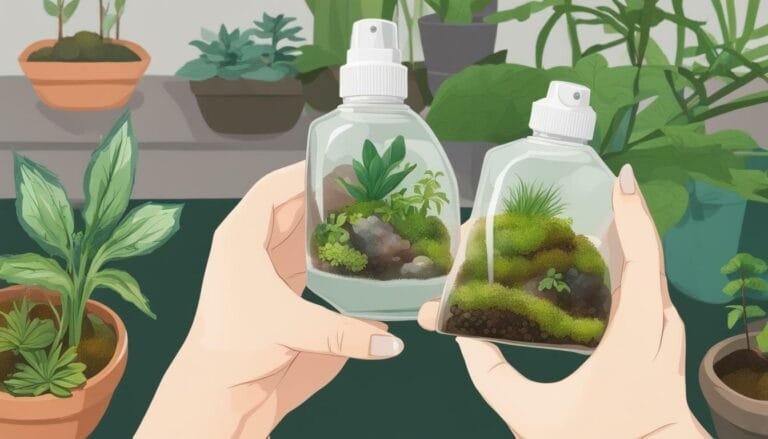
- Water lightly around the root zone with a squeeze bottle until the top 1–2 cm of soil is evenly moist.
- Wait 15 minutes, then wick any pooled water with a paper towel corner.
- Check again in 3–5 days; if the top is dry and leaves look firm, repeat a light watering.
Action today: Stick a wooden skewer 5 cm (2 inches) into the soil and pull it out — if it comes out clean, water; if it’s damp with crumbs sticking, wait two days.
Match Plants to Mouth Width: Who Thrives Where
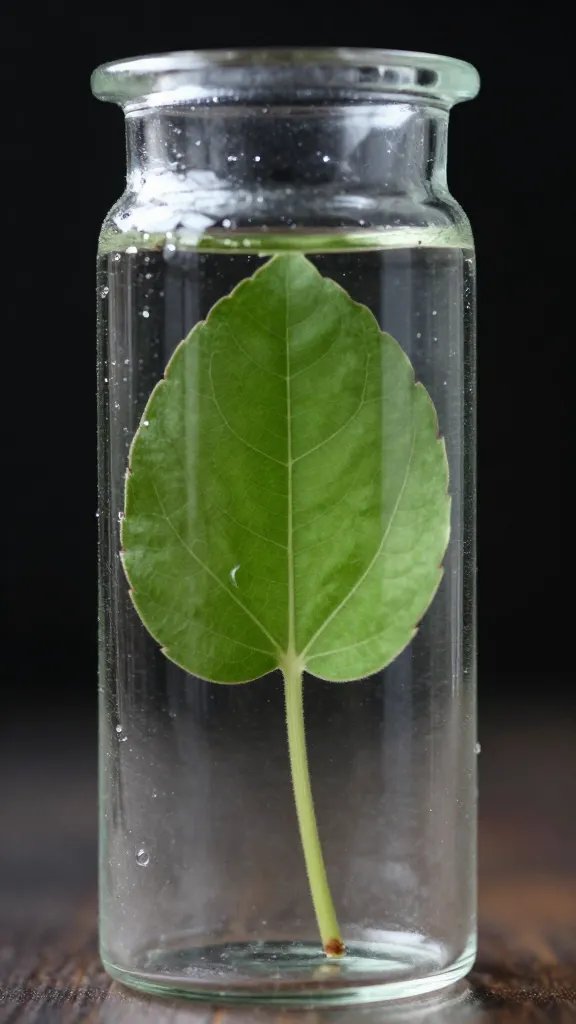
Plant choice becomes simple when you think in terms of humidity and airflow. I group by mouth size first, then by growth rate and pruning tolerance.
Best for Narrow or Closed Mouths (Under 5 cm/2 inches)
- Mosses (sheet moss, cushion moss) — thrive in consistent humidity.
- Ferns (button fern, heart fern) — small-leaved types that handle still air.
- Tropicals (fittonia, baby’s tears, peperomia ‘Mini’)
Best for Medium Mouths (5–10 cm / 2–4 inches)
- Pilea (glauca, depressa) — compact runners you can trim.
- Selaginella — appreciates humidity but needs occasional venting.
- Miniature begonias — prefer bright, stable moisture with some airflow.
Best for Wide Mouths (Over 10 cm / 4 inches)
- Haworthia, Gasteria, small Aloe — tolerate dry edges and open air.
- String-of-Pearls (Senecio/Curio rowleyanus) — trailing succulent that hates trapped humidity.
- Herbs (thyme, small rosemary) — only if the mouth is very wide and drainage is excellent.
Action today: Before buying plants, choose your container and mouth width, then pick species from the matching list so you don’t fight the environment.
Substrate and Drainage That Suit the Mouth You Have
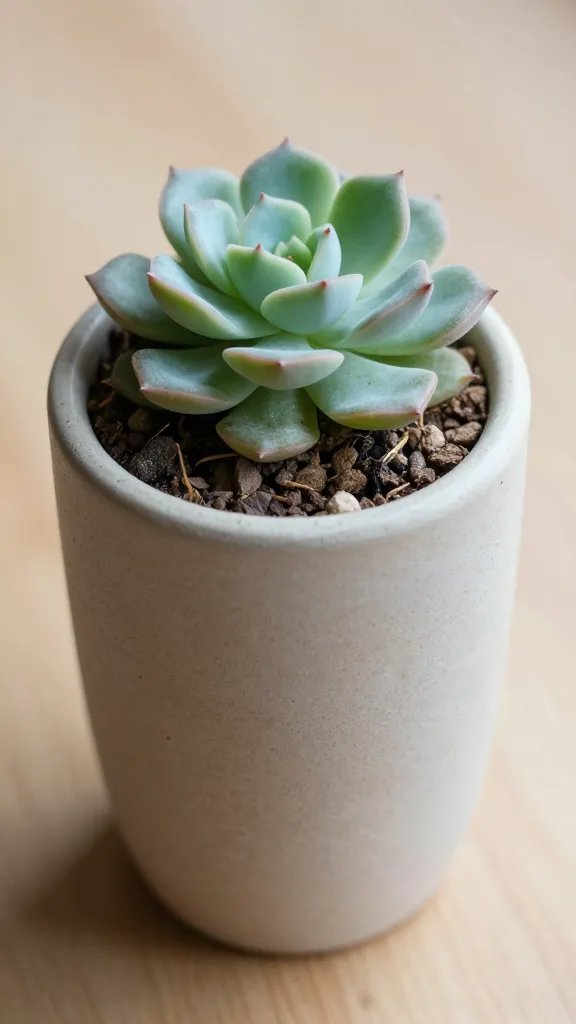
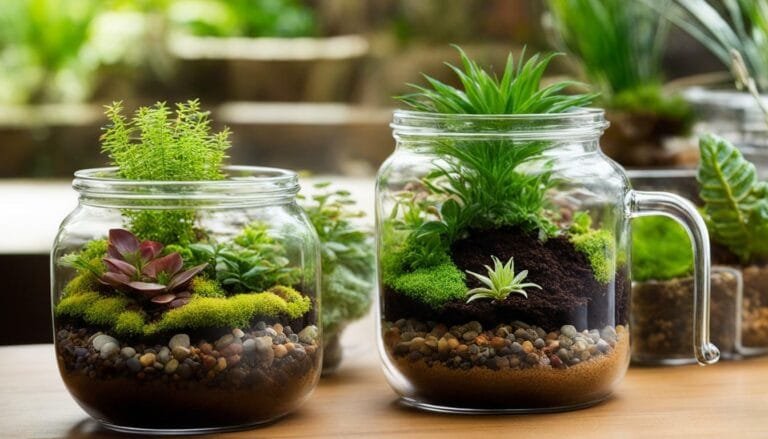
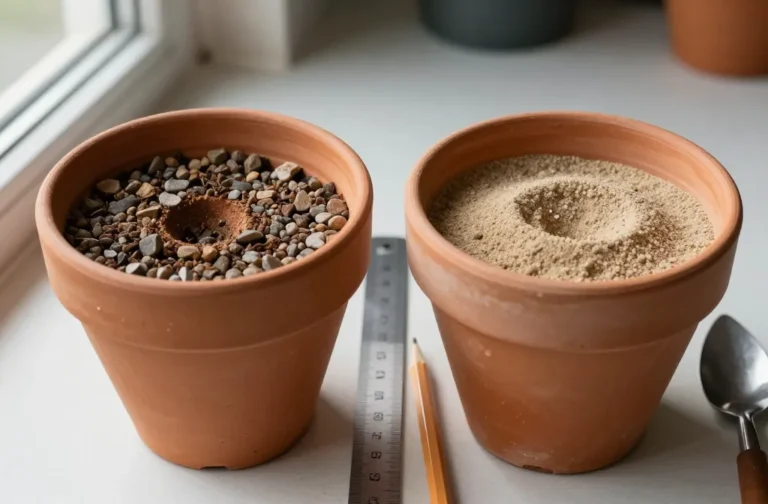
In tight-mouth or closed containers, use a thinner water reservoir layer because extra water can’t escape. I use a 1–1.5 cm layer of rinsed aquarium gravel, a coffee filter or mesh, then a 5–7 cm layer of high-quality potting mix blended 4:1 with orchid bark or perlite for air spaces.
In wide-mouth containers, evaporation helps you, so you can go a bit richer on organic matter. I still keep at least 25–30% perlite or bark for quick drying, with a 2 cm gravel base to catch runoff during watering.
Material Checklist From a Garden Centre
- Gravel or small decorative stones
- Activated charcoal (thin sprinkle above gravel for odor control in closed setups)
- All-purpose potting mix plus perlite or orchid bark
- Coffee filters or nylon mesh
Action today: If your closed terrarium smells stale, lift plants carefully, remove 1 cm of wet soil, and reassemble with a fresh charcoal sprinkle and added perlite for air.
Light and Heat: How Mouth Width Changes Leaf Stress

Closed or narrow-mouth containers trap humidity and warm up fast in direct sun. That creates leaf scorch and algae blooms even though the air feels moist. Keep these in bright indirect light near a window, never in a sunbeam.
Wide-mouth containers shed heat better. You can push them a little closer to bright windows, but still watch for midday leaf softness and dry soil. Heat vents and radiators dry open terrariums rapidly — shift them 60–90 cm (2–3 feet) away.
Action today: Move narrow-mouth or sealed terrariums one full step back from any direct-sun window and reassess condensation at midday tomorrow.
Ventilation Habits: Simple Routines That Prevent Collapse
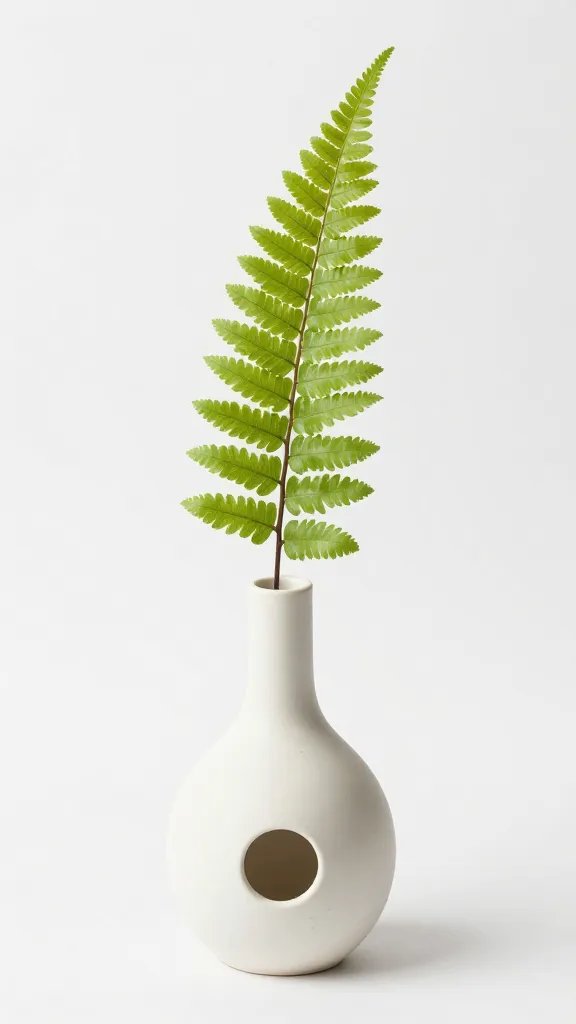
Small openings need planned ventilation because you won’t get much for free. I schedule a lid-off session of 30–60 minutes weekly for narrow-mouth builds, preferably midday when condensation is highest.
For wide mouths, I rely on pruning and surface tidiness. Dead leaves rot fast in open air and attract fungus gnats; I remove fallen bits every weekend and lightly rake the top layer with a fork to break crusts.
Fast Fixes When Things Go Wrong
- Foggy glass all day: Prop the lid overnight with a wine cork; skip watering for two weeks.
- Mold threads on soil: Increase light, remove litter, sprinkle a thin layer of dry horticultural sand.
- Wilting in open terrarium: Water in two light passes, 10 minutes apart; add a temporary plastic wrap collar to narrow the opening for 48 hours.
Action today: Add a recurring calendar reminder: “Terrarium ventilation and tidy” every Saturday for 10 minutes.
Frequently Asked Questions
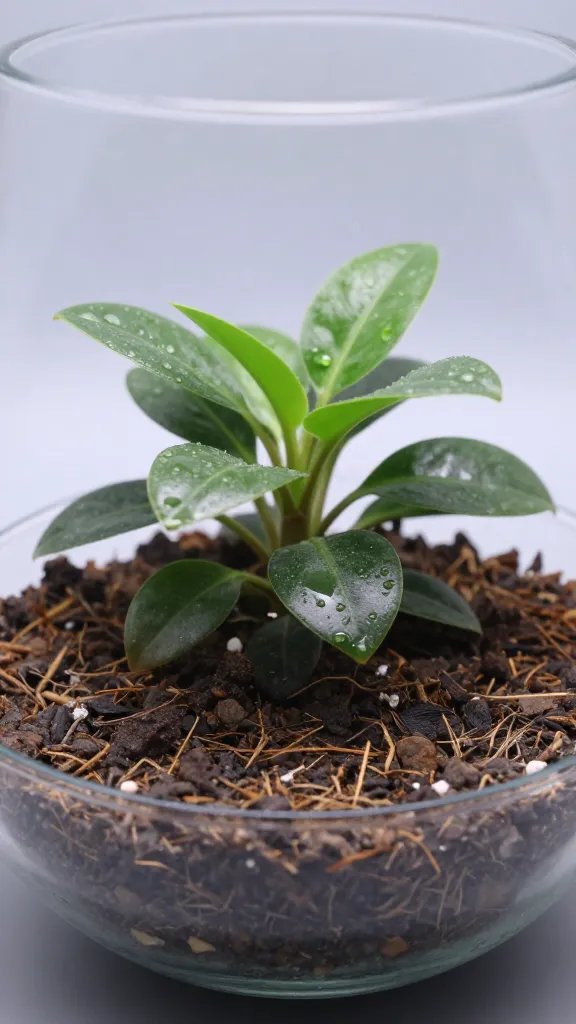
How do I know if my jar is “open” or “closed” enough for succulents?
If the mouth is wider than your open palm (about 10–12 cm / 4–5 inches) and you see no lasting condensation by midday, it’s suitable for small succulents. Use a gritty mix with at least 30% perlite or small gravel. Water lightly, then wait until the top 2–3 cm are dry before watering again.
Can I convert a narrow-mouth terrarium to handle drier plants?
Yes. Create a temporary collar that widens ventilation: remove the lid and use two chopsticks laid across the opening to hold a piece of mesh or perforated plastic wrap. Run this setup for two weeks to lower humidity and test plant response. If it stabilizes, consider permanently replacing the lid with a mesh disc.
Why does my closed terrarium grow algae on the glass?
High humidity plus too much light feeds algae. Move it to bright indirect light, not direct sun, and wipe the glass with a soft cloth wrapped around a chopstick. Reduce watering for two weeks and add a thin layer of horticultural sand on exposed soil to dry the surface slightly.
How often should I water a narrow-mouth or lidded terrarium?
Rarely. If you set moisture correctly at the start, you’ll add water every 4–8 weeks or even less. Use the glass as your gauge: add 1–2 tablespoons with a spray bottle only when midday condensation drops below one-third of the wall area.
What’s the easiest plant mix for a first terrarium in a wide bowl?
Start with one small haworthia, one gasteria pup, and a patch of preserved (not living) reindeer moss for decor. Use a gritty potting mix and a 2 cm gravel base. Place near a bright window with no direct afternoon sun and water lightly every 10–14 days.
My terrarium smells swampy — is that from the mouth being too small?
Usually yes. Low airflow in a narrow or sealed container leads to anaerobic zones. Vent daily for a few days, remove any rotting leaves, and replace the top 1 cm of soil with fresh mix plus a sprinkle of activated charcoal. Keep it in brighter indirect light to discourage microbial overgrowth.
Conclusion

Your container’s mouth width decides the climate inside — humidity, airflow, and how forgiving watering will be. Choose the glass to match the plants you love, not the other way around, and you’ll stop fighting mold, wilt, and mystery deaths. Today, measure your container’s opening, pick plants from the matching list above, and commit to a simple weekly ventilation or tidy routine — that single decision sets your terrarium up to survive all year.