Avoid These 7 Plant Selection Mistakes for Succulent Terrariums — Size, Light Requirements and Root Depth
When I built my first succulent terrarium, I crammed in the cutest rosettes I could find and parked the bowl in a bright room. Two months later, stretched stems, rot, and algae told me everything I’d done wrong about size, light, and roots. In this guide, I’ll show you the seven selection mistakes that quietly doom succulent terrariums — and how to choose plants that stay compact, handle your light, and fit the shallow soil. You’ll leave knowing exactly what to buy, where to place it, and how to keep it thriving.
1. Picking Plants That Outgrow the Glass: Size Mismatch From Day One
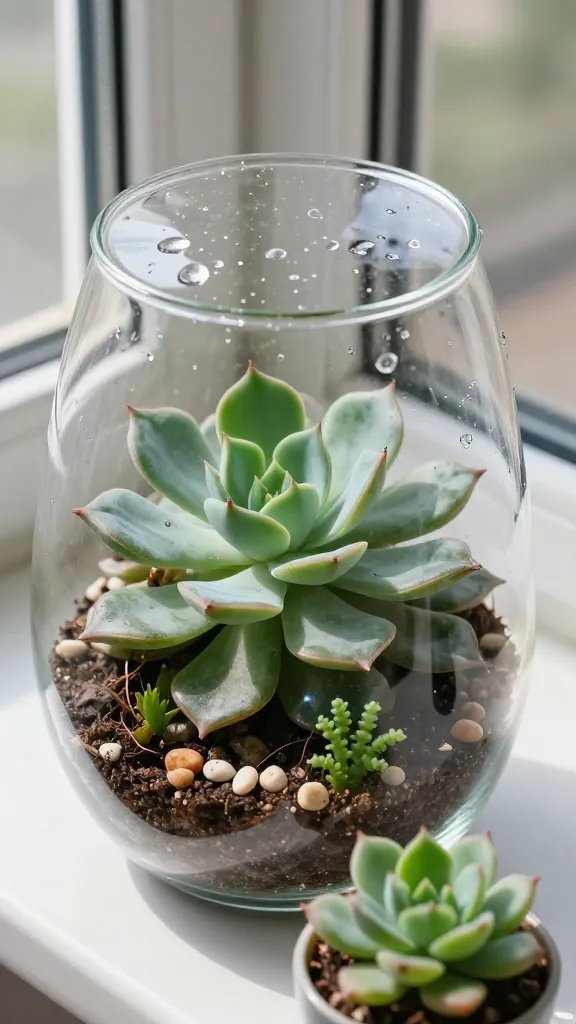
Oversized or fast-growing succulents hit the glass, block light, and trap moisture against leaves. That contact invites rot and forces you to prune constantly, which ruins the clean look you wanted.
Signs to Watch For
- Leaf tips press against the glass within 4–6 weeks
- Center rosettes shadow everything else
- Frequent pruning needed just to keep the lid clear
What to Use Instead
- Stay under 8 cm (3 in) tall at purchase for bowls under 20 cm (8 in) wide
- Choose truly compact species: Haworthiopsis fasciata (zebra haworthia), Gasteria ‘Little Warty’, Echeveria ‘Minima’, Crassula ‘Tom Thumb’, Sempervivum chicks
- Buy offsets/pups instead of mature plants — they establish without crowding
Action today: Bring a tape measure to the garden centre and select plants that are no more than one-third the height of your terrarium’s interior.
2. Mixing High-Sun and Low-Light Succulents: Uneven Stretching and Burn
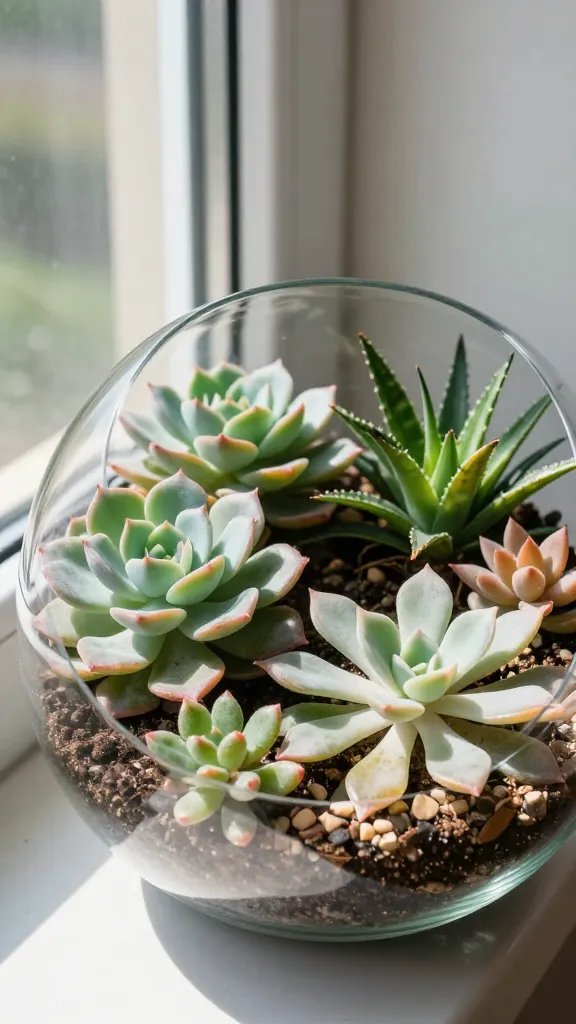
Succulents with different light needs in one bowl guarantee disappointment. Sun lovers stretch into pale towers indoors, while shade-tolerant types scorch near a sunny window.
Group by Light Requirement
- Bright direct sun (2–4 hours): Echeveria, Graptopetalum, Sedum rubrotinctum — near a south or west window within 30 cm (12 in)
- Bright indirect light: Haworthiopsis, Gasteria, Sansevieria ‘Hahnii’ (dwarf) — 0.5–1.5 m (2–5 ft) back from a bright window
How to Fix It
- Decide where the terrarium will live first, then buy only plants that match that light
- For shelves away from windows, add a clip-on LED grow light from a hardware store, set 20–30 cm (8–12 in) above for 10–12 hours daily
Takeaway: Place the terrarium location first, then select a single light “team” of plants that all thrive in that exact spot.
3. Deep-Rooted Species in Shallow Soil: Roots Suffocate and Stems Rot
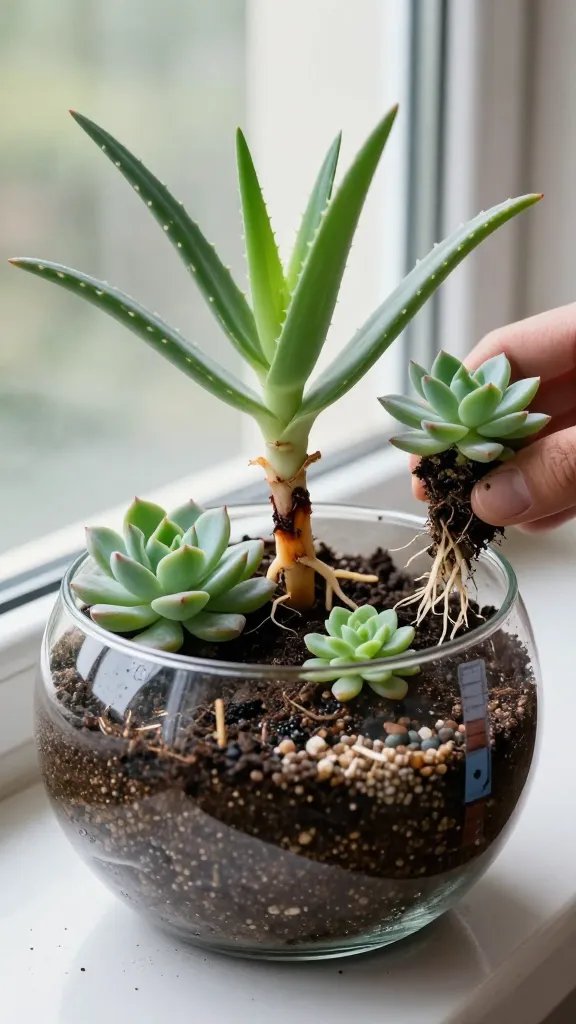
Most terrarium bowls offer only 5–8 cm (2–3 in) of plantable depth. Deep-rooted succulents hit the bottom fast, sit in damp zones, and rot from the base up.
Choose Shallow Rooters
- Great fits: Haworthiopsis, Gasteria, small Echeveria, Sempervivum offsets, miniature Crassula
- Poor fits: tall Aloe, larger Agave, columnar cacti, fast-spreading Kalanchoe
Simple Depth Test at Home
- Slip a plant from its pot and check root length
- If the main roots extend more than your terrarium’s actual soil depth, skip it
Action today: Measure your terrarium’s usable soil depth and only buy plants with roots no longer than that measurement.
4. Choosing Closed Lids for Arid Plants: Humidity Triggers Rot and Algae
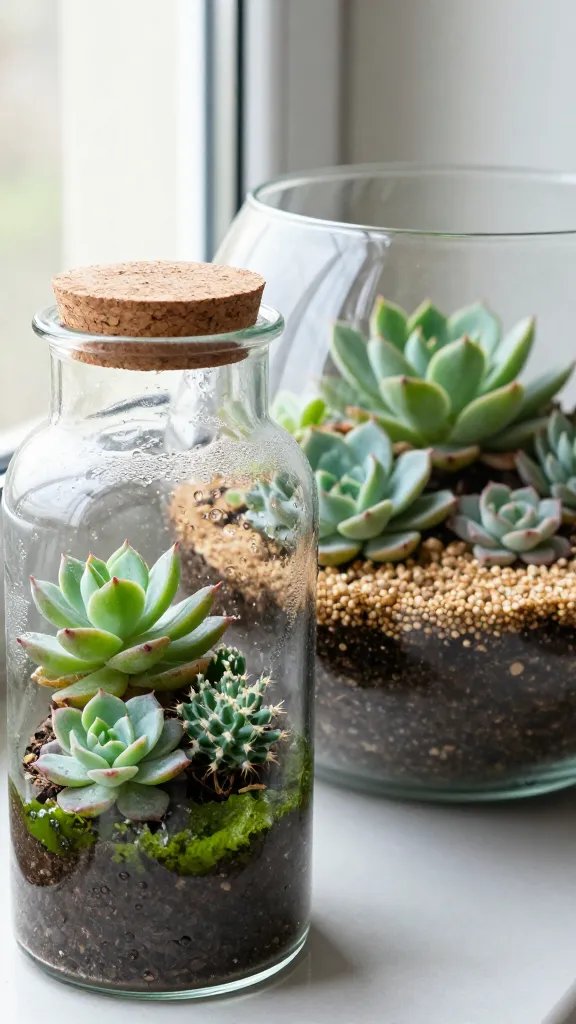
Closed or tightly lidded vessels trap humidity that succulents hate. Leaves stay damp, soil dries too slowly, and algae coats the substrate within weeks.
Match Vessel to Plant Type
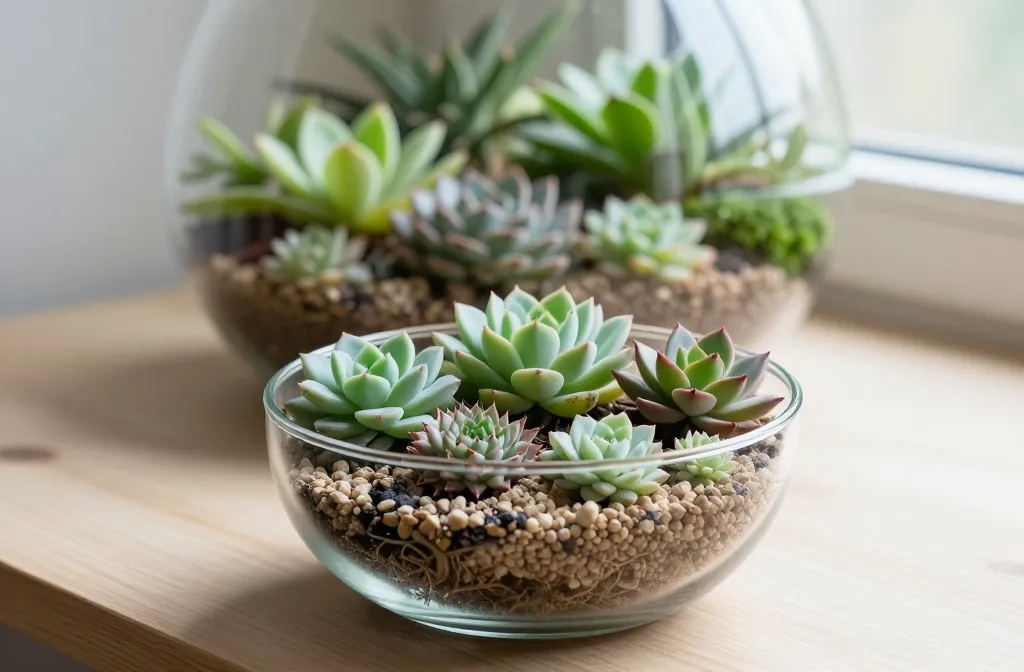
- Open terrarium (completely open top): best for almost all succulents
- Half-open (wide notch opening): acceptable with very light watering
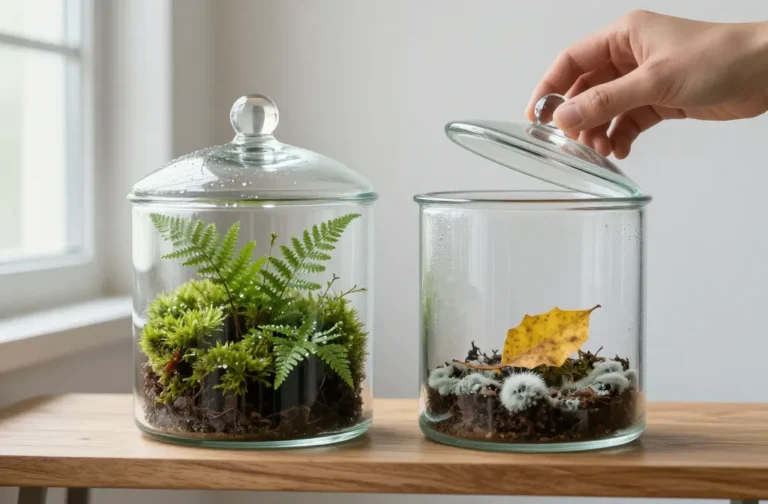
- Closed (corked/bottled): avoid for succulents — use for moss and ferns instead
Practical Setup
- Use a wide, open glass bowl 15–30 cm (6–12 in) diameter for air flow
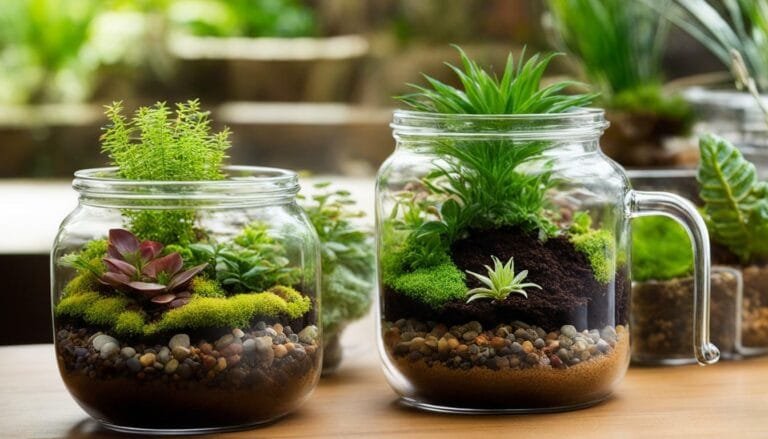
- Add a 1–1.5 cm (3/8–1/2 in) layer of coarse aquarium gravel to improve drainage
- Never seal an arrangement that includes Echeveria, Haworthiopsis, or cacti
Takeaway: If the plant label says “succulent” or “cactus,” use an open-top container — no lid.
5. Skipping True Grit: Soil Too Rich and Moist for Succulents
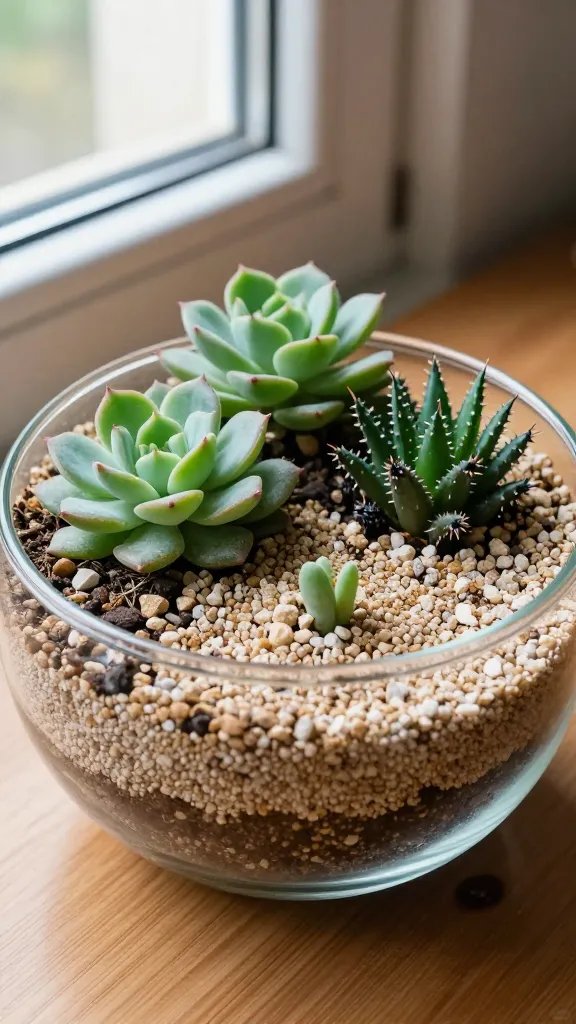
Standard potting mixes hold water like a sponge in glass, smothering roots. The result is swollen leaves that later collapse, blackened stems, and fungus gnats.
What to Use Instead
- Buy a cactus and succulent mix from the garden centre
- Improve it 50/50 with horticultural sand or pumice for better drainage
- Add a thin decorative top dressing of aquarium gravel to keep leaves dry
Watering Baseline
- Water lightly every 3–4 weeks in bright light; every 4–6 weeks in indirect light
- Add just enough to dampen the root zone — a tablespoon or two per plant, using a squeeze bottle
Action today: Repot into a bagged cactus mix cut with equal parts pumice or coarse sand before planting the terrarium.
6. Ignoring Mature Size and Offsets: Crowding Creates Damp Pockets
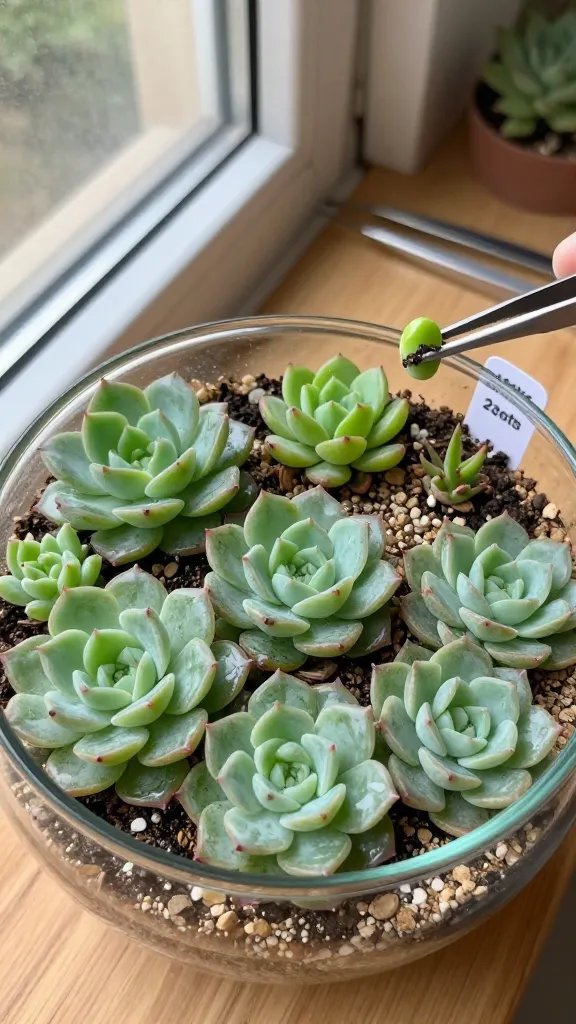
Plants that multiply quickly fill every gap, trapping moisture between rosettes. Those damp pockets breed rot and scale insects you can’t reach with tweezers.
Read the Label and Plan Spacing
- Check for words like “clumps,” “offsets,” “spreads”
- Space rosettes at least 2 cm (3/4 in) apart so air can move
- Use slow-offsetting varieties: Gasteria, Haworthiopsis over fast Sempervivum or Crassula muscosa
Maintenance That Actually Works
- Pinch off offsets with clean fingers when they reach pea size
- Use long tweezers from a hardware store to lift extras before they touch neighbors
Takeaway: Leave visible gaps on planting day — if it looks “finished,” it’s already overcrowded.
7. Planting Leaf-Heavy Rosettes Too Low: Buried Crowns Rot Fast
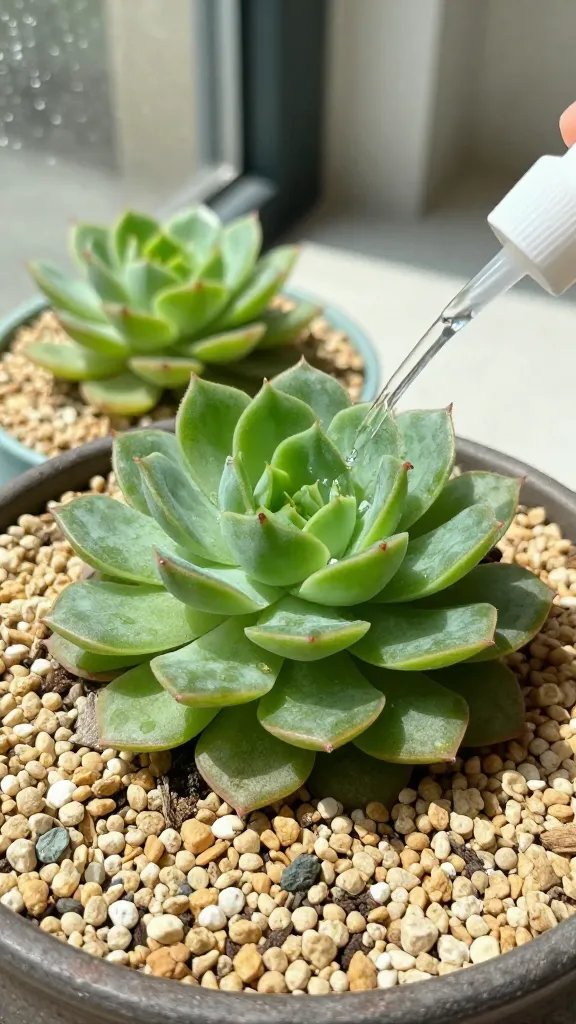
When dense rosettes sit level with or below the soil surface, any splash wets the crown. Moisture lingers where leaves attach, and rot races through the core first.
Set the Crown High and Dry
- Build a slight mound of mix under each rosette so the crown sits 5–10 mm (1/4–3/8 in) above the surrounding gravel
- Top dress with gravel right up to, but not over, the lowest leaves
- Water at the base using a squeeze bottle or spout watering can, not a spray
Warning Signs
- Lower leaves turning translucent at the attachment point
- Brown mush at the core within a week of watering
Action today: Lift any sunken rosette, add a spoonful of mix beneath, and re-seat so the crown rides above the top dressing.
Frequently Asked Questions
Can I keep succulents in a north-facing room?
Yes, but you need bright indirect light close to the window, or a small clip-on grow light. Place the terrarium within 30–60 cm (12–24 in) of the light source. Run the light for 10–12 hours daily. Without this, expect stretching within four weeks.
How many plants should I put in a 20 cm (8 in) bowl?
Use three small succulents, each 5–7 cm (2–3 in) wide, with 2 cm (3/4 in) of space between rosettes. Fill the gaps with decorative gravel, not more plants. This spacing prevents damp pockets and gives room for slow growth. Overfilling leads to rot and constant pruning.
Do I need activated charcoal in a succulent terrarium?
No, not for open succulent terrariums. Good airflow and a fast-draining mix prevent odors and stagnation better than charcoal. If your container has a narrow opening, a thin layer of aquarium-grade charcoal won’t hurt, but it’s not a substitute for an open top and gritty soil. Focus on drainage and watering discipline first.
What’s the easiest succulent for low light shelves?
Choose Haworthiopsis or Gasteria. They stay compact, tolerate bright indirect light, and have shallow roots that suit terrariums. Keep them 0.5–1.5 m (2–5 ft) from a bright window and water every 4–6 weeks. Use a gritty mix and avoid lids.
How do I stop condensation without a lid?
Condensation in open bowls signals too much water or poor airflow. Water less volume at longer intervals and use a thinner soil layer topped with gravel to reduce evaporation against glass. Move the bowl to a spot with gentle air movement, like near a doorway but out of drafts. If you see fogging, skip the next watering cycle.
Why are my succulents turning red at the tips?
Red or purple edges often mean strong light and mild drought stress, which can be normal “coloring up” for many species. Check the leaves: firm leaves with good shape are fine; wrinkled leaves need a small drink. Give a tablespoon of water at the base and reassess in a week. If color deepens while plants stay compact, you’re in a good light zone.
Conclusion
Succulent terrariums thrive when plant size, light level, and root depth all fit the container you actually have. Choose compact, shallow-rooted species that share the same light needs, plant crowns high over a gritty mix, and keep the vessel open. Start with the spot on your shelf, then buy the right team — and you’ll enjoy a clean, long-lived display instead of a slow-motion collapse.