Viral Guide: 6 Glass Container Shapes and the Terrarium Type Each One Is Actually Suited for
I kept stuffing ferns into whatever pretty jar I found and wondering why they fogged up, rotted, or just looked awkward. Once I matched the container shape to the right terrarium type, my builds started lasting years instead of weeks. In this guide, you’ll learn exactly which shapes work for closed, open, and semi-closed terrariums — plus the plants, placement, and maintenance each one needs. You’ll leave knowing which glass to buy, what to put in it, and how to keep it thriving with basic tools at home.
1. Classic Fishbowl: Condensation Traps That Beg for Moisture-Loving Miniatures (Closed Terrarium)
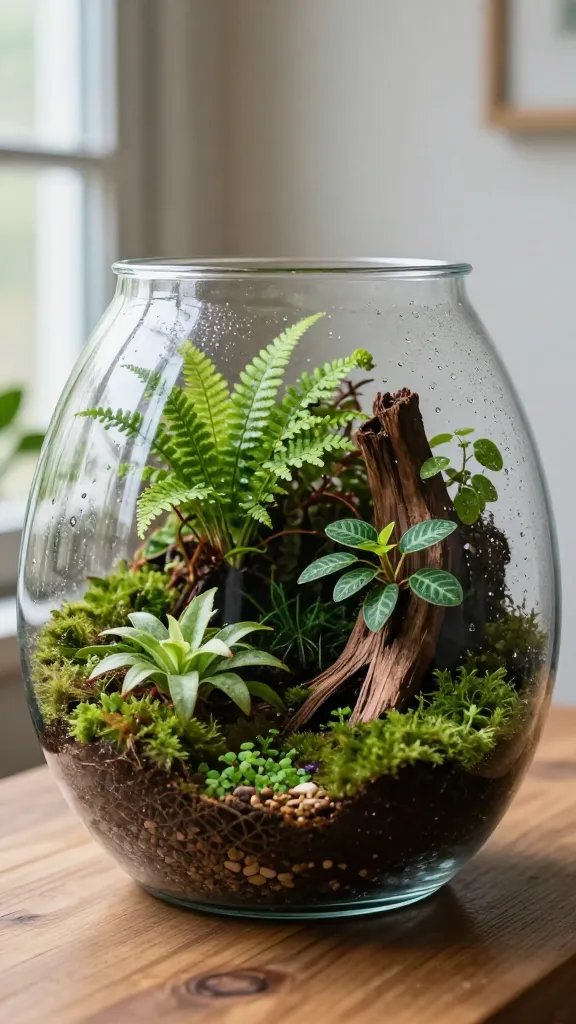
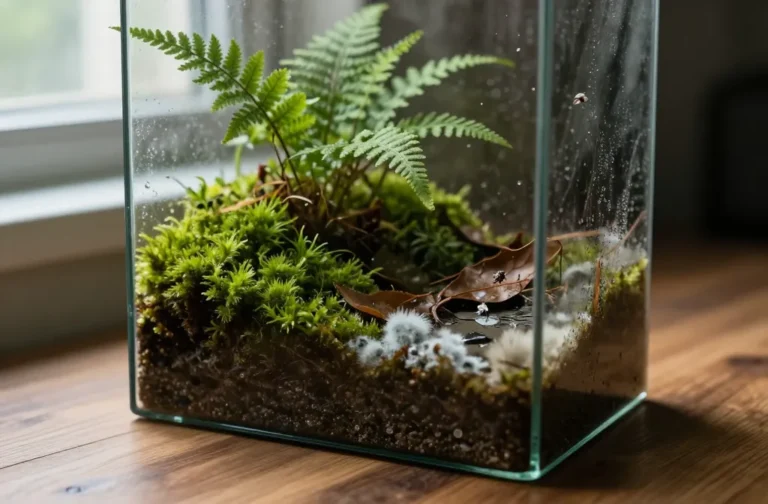
Round fishbowls look innocent, but their narrow opening locks in humidity. If you plant anything that likes airflow, it will yellow, mold, and collapse within a month. Used correctly, though, a fishbowl becomes a stable, self-watering ecosystem for small, moisture-hungry plants.
Why It Works for Closed Builds
- Rounded walls encourage condensation to slide back into the substrate.
- Narrow neck minimizes moisture loss, stabilizing humidity above 80% inside.
- Even light spread from curved glass reduces harsh hot spots.
Best Plants and Materials
- Plants: Miniature ferns (button fern), fittonia, peperomia ‘Pixie,’ pilea depressa, moss sheets.
- Substrate stack: 1–1.5 cm rinsed aquarium gravel, a thin layer of activated charcoal, then 6–7 cm good quality houseplant potting mix.
- Tools: Chopsticks or kitchen tongs to place plants through the neck.
- Lid: A flat glass coaster or cling film secured with a rubber band.
Placement and Care
- Keep in bright indirect light near a window — no direct sun on glass.
- Water sparingly: add 1–2 tablespoons with a spray bottle only when midday condensation drops below one-third of the glass.
- Vent for 30–60 minutes if heavy fog persists past noon.
Takeaway: If you want a low-maintenance, closed terrarium, choose a fishbowl and fill it with small, humidity-loving plants — not succulents.
2. Tall Cylinder Vase: Vertical Jungle Without Stagnant Air (Semi-Closed Terrarium)
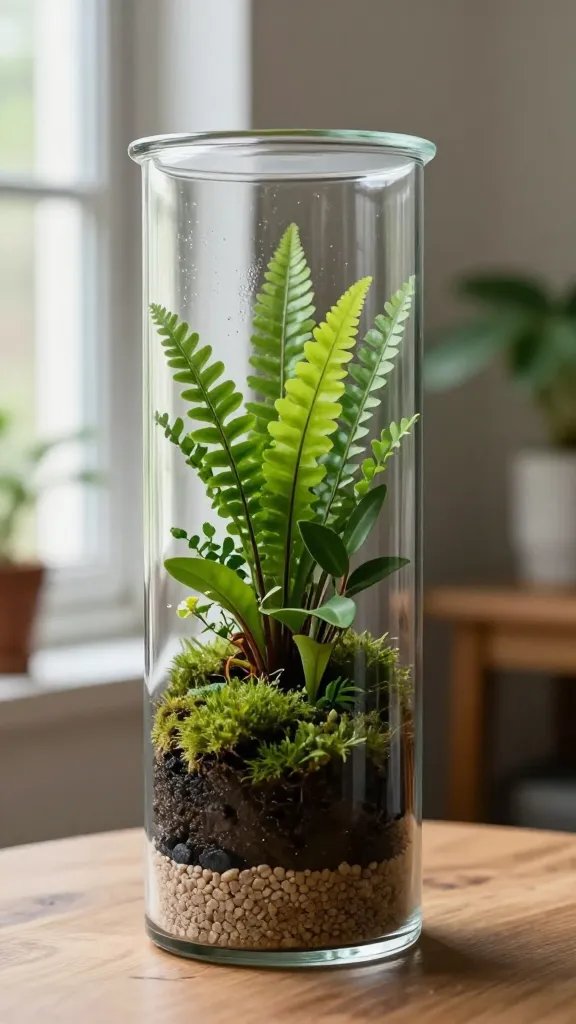
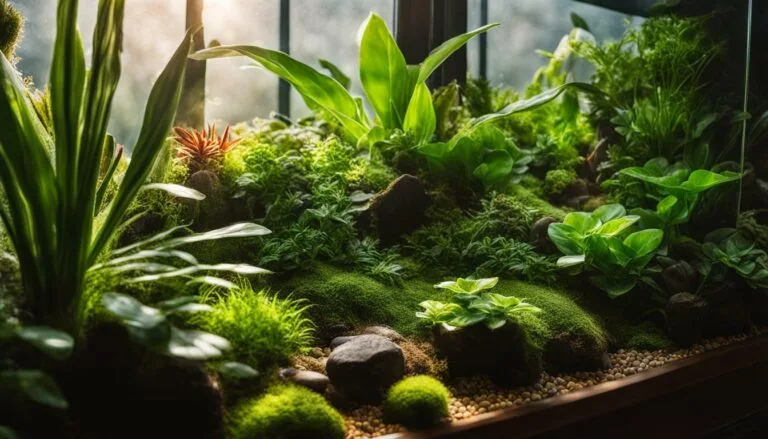
Tall cylinders are tempting for dramatic height, but fully closing them creates a chimney that traps stale air at the top and soggy soil at the bottom. That imbalance leads to mold on leaves and root rot below. Leave them semi-closed and you get lush growth with steady humidity and safe airflow.
How to Build It Right
- Vent the top: Use a lid with a small gap, or rest a saucer slightly askew.
- Layer deeper: 2–3 cm gravel, charcoal, then 10–12 cm potting mix to buffer moisture in the tall profile.
- Plant in tiers: Taller at the back: fittonia, hypoestes; mid: mini syngonium; front: moss or selaginella.
Signs to Watch For
- Mildew on upper leaves means the top is too sealed — increase the gap.
- Soggy lower layer and yellowing — raise the gravel layer or water less.
- Leggy growth — move closer to bright indirect light.
Care Routine
- Water every 3–4 weeks with a spray bottle around the root zones, not the glass.
- Rotate the vase a quarter turn weekly for even light.
- Trim tops monthly to prevent canopy shading and drip buildup.
Action today: If you have a tall vase that stays foggy at the top, crack the lid 2–3 mm and trim dense tops to restore healthy airflow.
3. Apothecary Jar with Stopper: Stable Microclimate for True Closed Terrariums
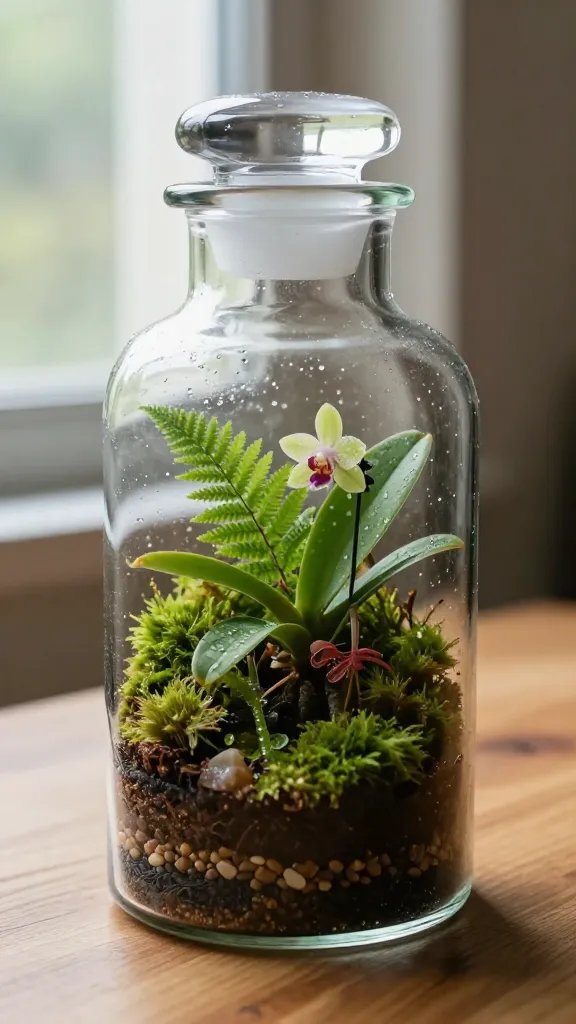
That pretty glass stopper is powerful — it creates a near-airtight seal that turns small mistakes into big problems fast. Overwater and you’ll see algae, mold, and leaf melt within days. Done right, an apothecary jar becomes a set-and-forget rainforest.
Build Details That Prevent Failure
- Measure water at setup: After planting, mist until leaves glisten but do not pour water. The initial moisture should come from damp soil, not standing water.
- Charcoal matters: Include a thin charcoal layer to reduce odors and algae bloom.
- Micro plants only: Baby tears (Soleirolia), small ferns, tiny fittonia, moss. Avoid anything that wants airflow or fast vertical growth.
Maintenance Schedule
- Keep sealed for 2 weeks and observe midday condensation. If glass is fully fogged, open for 1–2 hours.
- No fertilizer for at least 6 months — rich soil from the bag is enough.
- Prune with long scissors when leaves press the glass to stop drip burns.
Takeaway: Use an apothecary jar only for a true closed terrarium with tiny humidity lovers, and meter water with misting — never pour.
4. Wide, Shallow Bowl: Airy Stage for Succulents and Cacti (Open Terrarium)
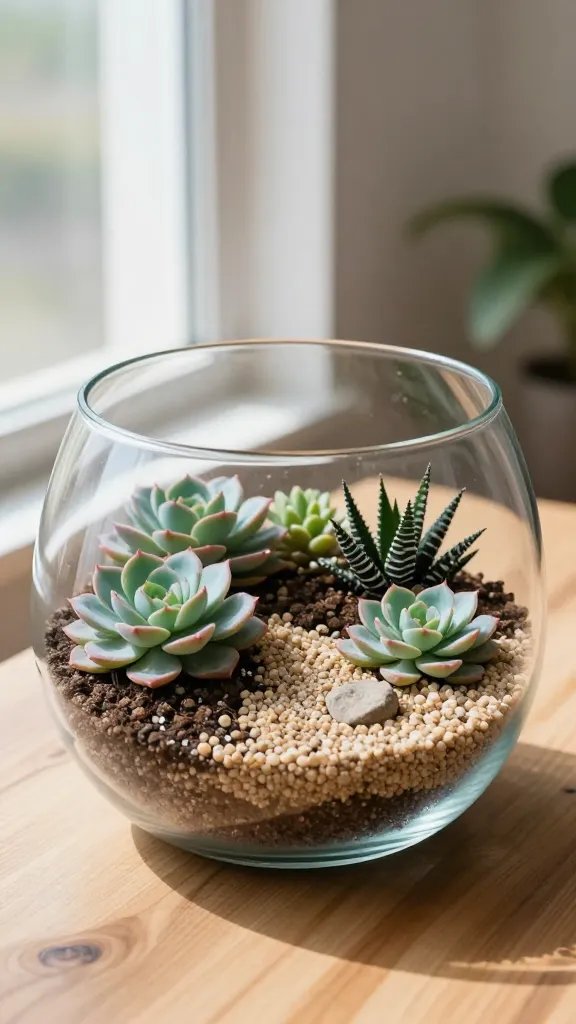
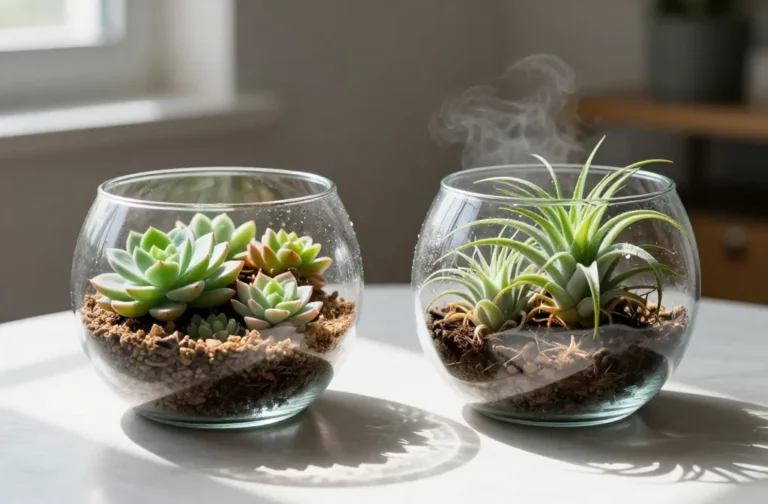
Succulents fail in closed glass because trapped humidity rots their crowns. A wide, shallow bowl offers airflow and fast-drying soil, so rosettes stay tight and colors stay bright. Build it open and sunny, or you’ll still invite rot.
What Makes This Shape Ideal
- Big opening prevents humidity build-up.
- Shallow profile discourages overwatering and speeds evaporation.
- Low rim lets you give several hours of morning sun without magnifying heat.
Plant and Substrate Choices
- Plants: Echeveria, Haworthia, Graptopetalum, small barrel cacti.
- Soil: Use a cactus/succulent mix from the garden centre. If using regular potting mix, blend in a heaped mug of coarse sand or fine gravel per 3 mugs of soil.
- Top-dress: 0.5–1 cm decorative gravel to keep crowns dry.
Care Basics
- Place in the sunniest window you have; at least 3 hours of direct morning sun.
- Water every 3–4 weeks in summer, every 5–6 weeks in winter. Pour at the edge, not on rosettes.
- No lids, no misting.
Action today: If your succulent terrarium is in a closed or semi-closed container, move the plants into a wide, open bowl and stop misting — water at the soil line only.
5. Geometric Terrarium (Faceted Glass with Metal Edges): Controlled Vents for Semi-Closed Tropicals or Arid Mixes
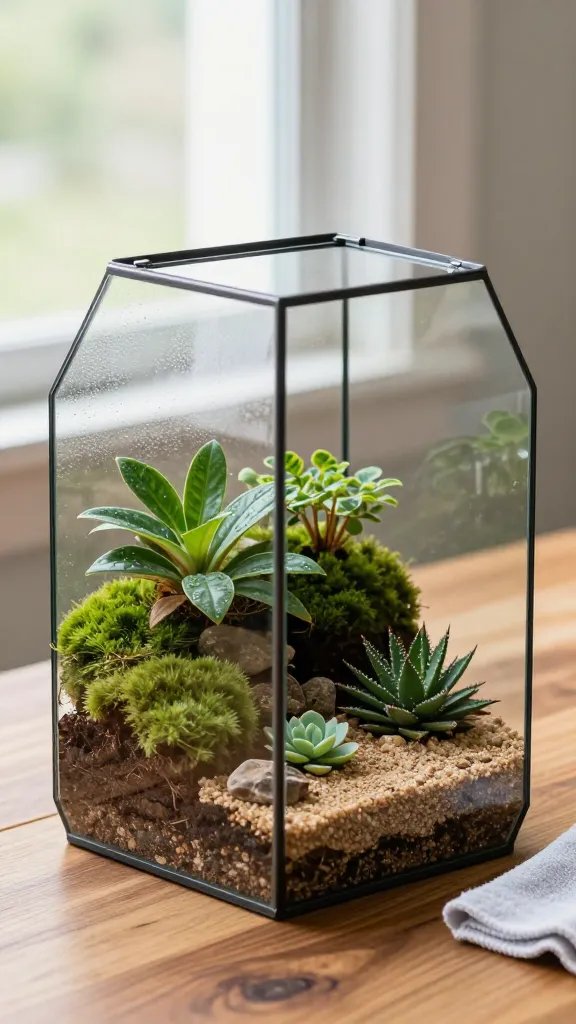
These eye-catching shapes often have a single vent panel. Seal them and you’ll bake the plants; leave everything open and you’ll swing from too dry to too wet. Use the vent deliberately and this container adapts to either tropical or arid builds.
Two Ways to Use It
Tropical Semi-Closed
- Vent slightly open to release excess moisture.
- Plants: Small peperomia, fittonia, pilea, and moss.
- Water: Light misting every 2–3 weeks; wipe inside panels to prevent drip scorch on leaves.
Arid Open
- Leave vent fully open and tilt the terrarium so the opening faces up for airflow.
- Plants: Haworthia, Gasteria, and small euphorbia — avoid soft Echeveria if light is limited.
- Soil: Cactus mix with extra grit; very light watering every 4 weeks.
Build and Placement Tips
- Because glass panes focus light, keep out of harsh midday sun to prevent leaf scorch.
- Use a brush to clean soil from creases; trapped soil wicks moisture onto leaves.
- Elevate on small feet or cork pads to avoid cold transfer from stone or metal shelves.
Takeaway: Treat the vent as a dial — crack it for tropicals, open it fully for arid plants — and place out of harsh direct sun.
6. Bottle with Narrow Neck: Patience Project for Fully Closed, Long-Lived Setups
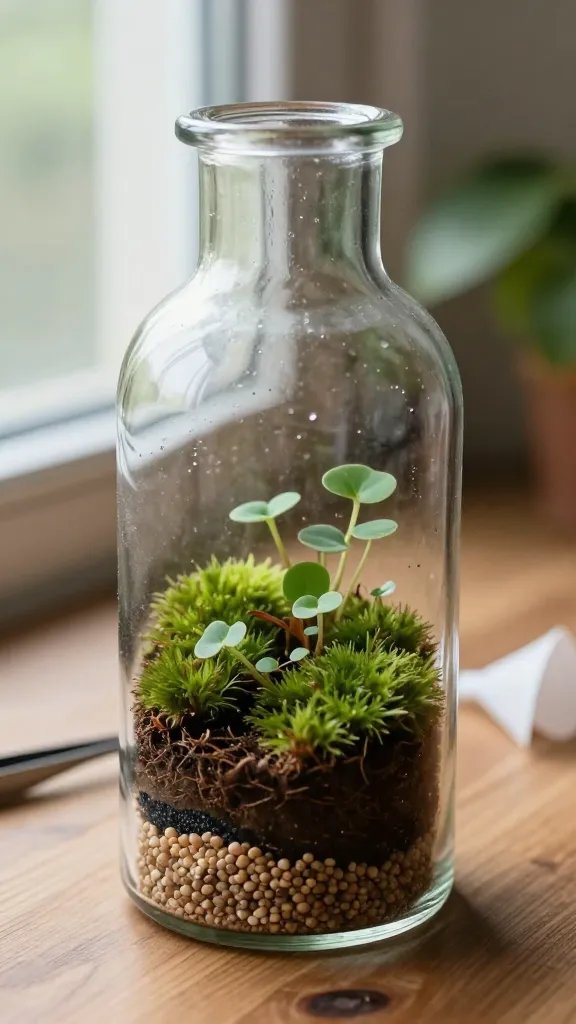
Bottles look romantic, but that tight neck turns planting and maintenance into a chore. If you cram in big plants or overwater, you won’t be able to fix it without tearing everything out. Choose slow growers and set moisture precisely, and you can leave the bottle untouched for months.
Essential Setup Steps
- Pre-dampen soil in a bowl until it clumps when squeezed but doesn’t drip.
- Layer 1 cm pea gravel, a thin charcoal layer, then 6–8 cm pre-dampened soil using a funnel made from a paper sheet.
- Use long chopsticks or a barbecue skewer to place tiny plugs of moss, selaginella, and mini ferns.
- Seal with a cork; no extra water added at planting.
Watching the Water Cycle
- For the first week, look for a light mist each morning and clear glass by midday.
- If glass stays bone dry, unseal and mist 2–3 sprays, then reseal.
- If water droplets run down constantly, unseal for 1–2 hours daily until it stabilizes.
Long-Term Care
- Keep in bright indirect light, 0.5–1.5 m from a window to avoid magnified heat.
- Prune only when leaves touch glass, using a long scissor tool or by lifting the cork briefly.
- No fertilizer for the first year.
Action today: If you want a long-lived closed terrarium but minimal maintenance, pick a narrow-neck bottle, use only tiny slow growers, and meter water by pre-dampening soil — not by pouring after planting.
Frequently Asked Questions
How do I choose between closed, semi-closed, and open terrariums?
Match humidity needs to the container’s ability to vent. Closed and bottle shapes suit plants that like high humidity, such as ferns, fittonia, and moss. Semi-closed shapes like tall cylinders fit tropicals that still appreciate some airflow. Open bowls are for succulents and cacti that want to dry quickly in bright light.
Where should I place a terrarium in my home?
Most tropical terrariums prefer bright indirect light near a window — on a table close to a bright room but out of harsh midday sun. Open succulent bowls love the sunniest sill you have, ideally with morning sun for a few hours. Keep all glass builds away from heat vents and cold drafts to prevent condensation swings.
What soil should I use if I don’t want to mix my own?
For tropical closed or semi-closed builds, use a good quality houseplant potting mix straight from the bag, with a thin charcoal layer beneath. For succulents and cacti, buy a cactus/succulent mix from the garden centre. If you only have regular mix, blend in a heaped mug of coarse sand or fine gravel per 3 mugs of soil for faster drainage.
How much should I water a closed terrarium at the start?
Start with pre-dampened soil that feels like a wrung-out sponge and avoid pouring water after planting. Mist lightly so leaves are just glossy, then seal and observe condensation for a week. Add 1–2 tablespoons only if the glass stays completely dry at midday.
Why does my terrarium glass keep fogging up all day?
Persistent fog means too much water or too little airflow. Remove the lid for 1–2 hours daily until condensation drops to the lower third by midday, then reseal. Check that your light isn’t too cold and dim — move closer to bright indirect light to help the water cycle run normally.
Can I mix succulents with ferns in the same terrarium?
No. Succulents want dry, airy conditions in an open bowl, while ferns need stable humidity in a closed or semi-closed container. Mixing them forces a compromise that weakens both groups and usually ends in rot for the succulents. Keep them in separate builds matched to their container shape.
Conclusion
Pick the glass for the climate you want to create, not just for looks. Start with one container from this list that fits the plants you already love, then follow the single action in that section to set it up right. Once you see how well the match works, scale up to your next build with confidence.