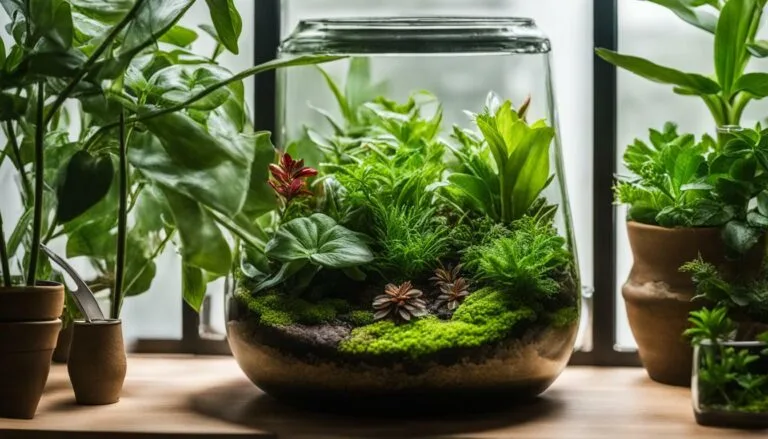
The Secret to How to Build a Carnivorous Plant Terrarium — Substrate, Water Source and Feeding Protocol
I killed my first Venus flytrap by treating it like a fern in a cute jar. The glass fogged, algae bloomed, and the plant yellowed within a month. Once I fixed the substrate, switched my water, and stopped “feeding” like a zookeeper, everything clicked. In this guide I’ll show you the exact setup that keeps carnivorous plants alive in a home terrarium — the right mix under the roots, safe water you already have access to, and a feeding routine that doesn’t rot the traps.
Choose the Right Plants for a Terrarium, Not the Label
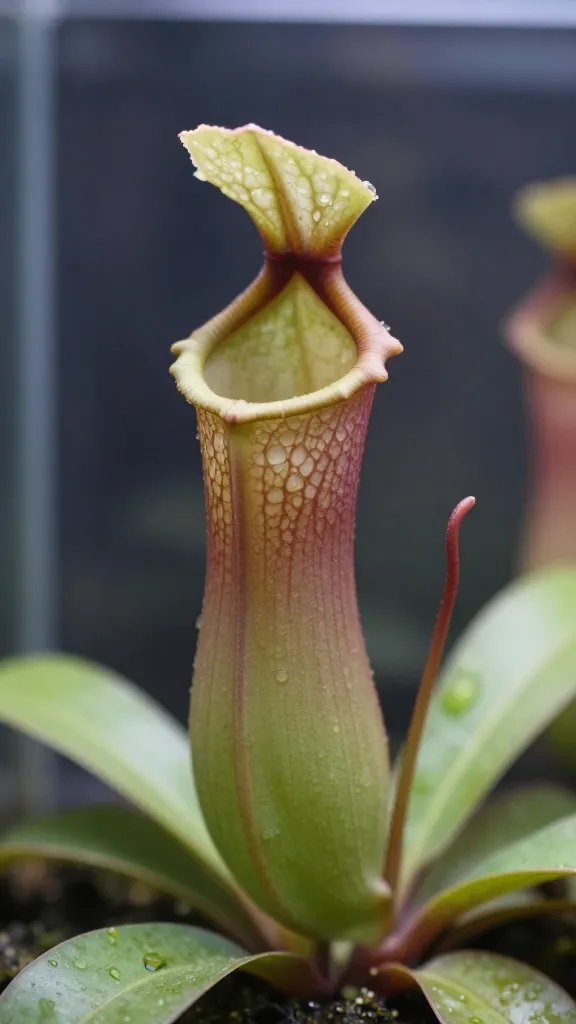
Most garden centres sell carnivores side by side, but they don’t all want the same environment. A warm, humid terrarium suits tropical species; it slowly kills many temperate ones.
Use closed or semi-closed terrariums for: Nepenthes (tropical pitcher plants), Cephalotus (with airflow), Drosera capensis/adiansonia/natalensis, Pinguicula (Mexican butterworts), and small Utricularia species. Keep Venus flytraps and most Sarracenia out of sealed terrariums — they need strong air movement and a cool winter dormancy.
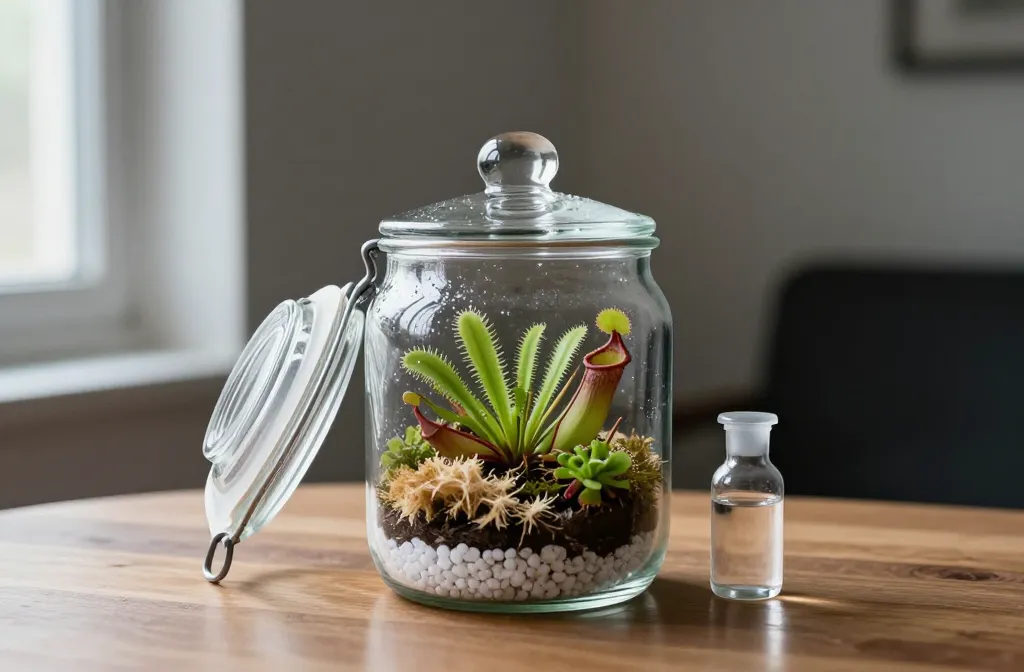
Pick a container with a wide opening for airflow control. I use a lidded glass cookie jar or a tall fishbowl with a fitted acrylic disk I can slide open by 1–2 cm.
Action today: Read the plant tag — if it says Venus flytrap or Sarracenia, plan a windowsill pot, not a closed terrarium.
Build a Mineral-Free Substrate That Won’t Burn Roots
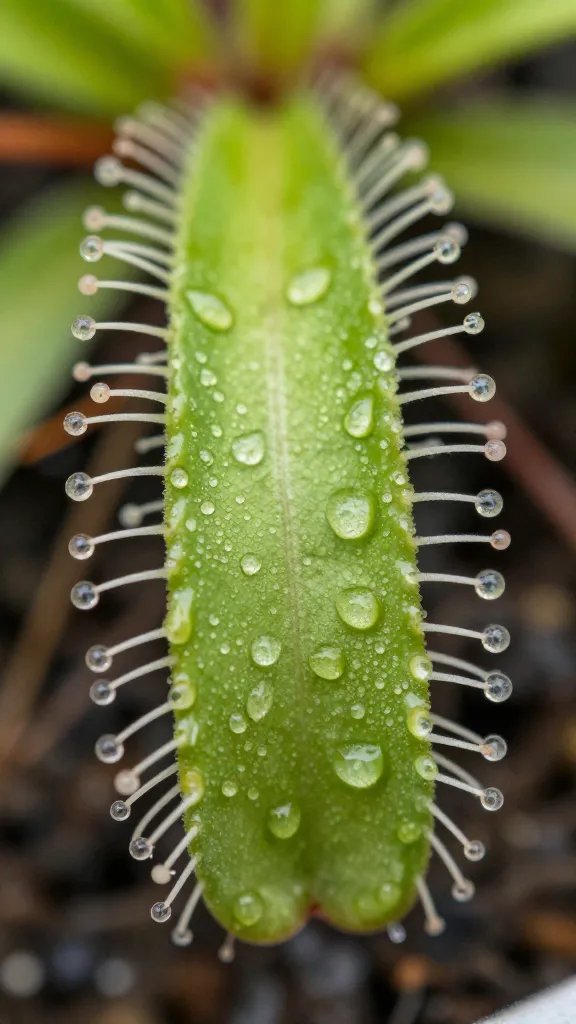
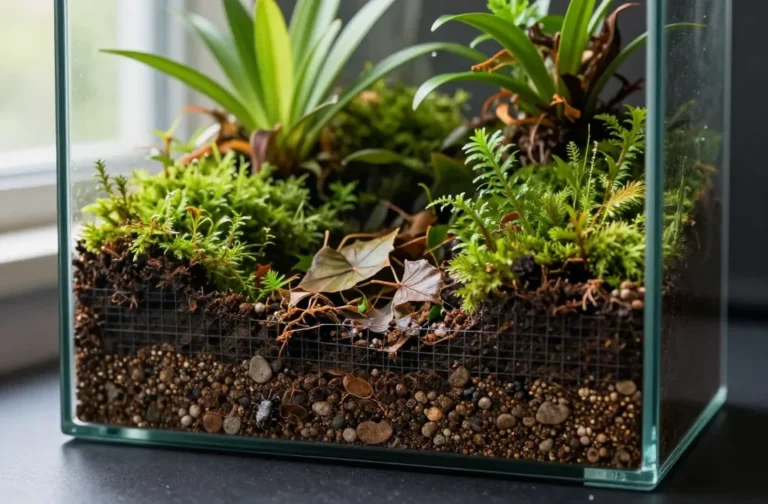
Carnivores evolved in nutrient-poor bogs. Regular potting mix or compost will kill them. I keep it simple with a 1:1 blend of sphagnum peat moss and horticultural perlite by volume, pre-soaked with safe water.
Rinse perlite in a colander until the water runs clear. Moisten peat in a bucket like you’d hydrate a sponge — no dry pockets. For Nepenthes and Mexican Pinguicula, I add 30–40% long-fiber sphagnum moss on top for humidity and to anchor roots. Never add fertilizer, bark with added lime, or regular potting soil.
Warning signs your mix is wrong
- Yellowing from the base up with no pests: usually mineral burn from enriched soil.
- Slime/algae crust across the surface: too wet and too rich; increase airflow and replace the top 1–2 cm with fresh mix.
Action today: Squeeze a handful of your mixed substrate — aim for one or two drops to fall out. If it streams, it’s too wet; add dry peat/perlite and remix.
Set the Water Source: Pure, Soft, and Predictable
Tap water often contains dissolved minerals and chlorine that accumulate and burn roots. I use distilled water from the supermarket, reverse osmosis (RO) water from an aquarium store, or rainwater collected in a clean plastic bin away from roofs that shed grit.
A simple taste test works: water should taste clean, not salty or metallic. If your kettle crusts with limescale, your tap water is too hard. Keep a 5-liter jug of distilled on hand and refill when it gets light.
Step-by-step first watering
- Fill the terrarium substrate and firm it lightly — don’t compact.
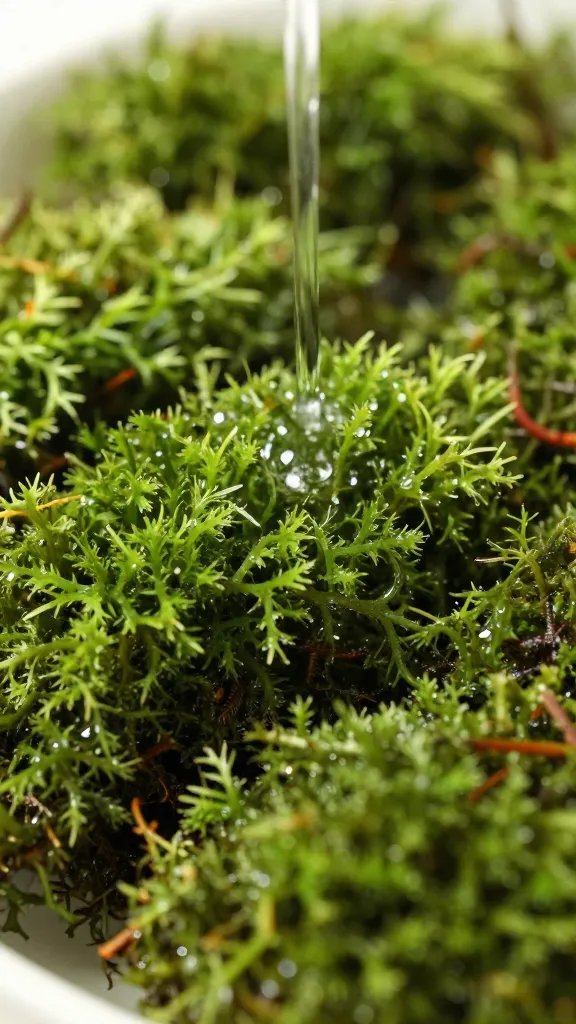
- Slowly pour distilled/RO water across the surface until the top glistens evenly.
- Wait 10 minutes, then blot any puddles with paper towel. You want evenly moist, not soupy.
Action today: Buy one gallon of distilled water and label it “carnivores only” so no one uses it for the iron.
Light the Terrarium Without Cooking It
Carnivores need bright light, but glass magnifies heat. I place terrariums in bright indirect light near a south or east window, 0.5–1 meter back from direct sun. If you only have a dim room, use a simple clip-on LED grow light from the garden centre set 20–30 cm above the plants for 12–14 hours daily.
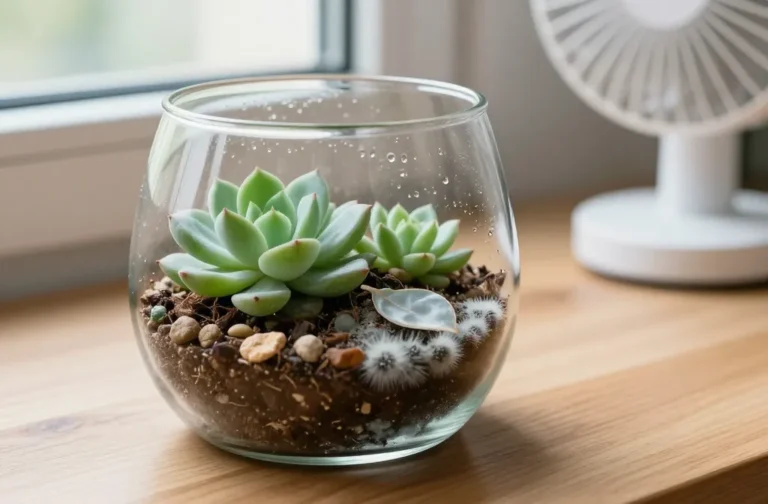
Watch for overheating: fogged glass all day and limp leaves mean heat buildup. Crack the lid 1–2 cm during the brightest hours or move the terrarium 30 cm farther from the window.
Action today: At midday, touch the glass — if it feels warmer than your hand, increase distance from the window or raise the light.
Dial in Humidity and Airflow So Leaves Don’t Rot
Tropical carnivores love humidity, but stale air breeds fungus. I run terrariums in a semi-closed mode: lid on, but offset or vented daily. Aim for light morning condensation that clears by early afternoon.
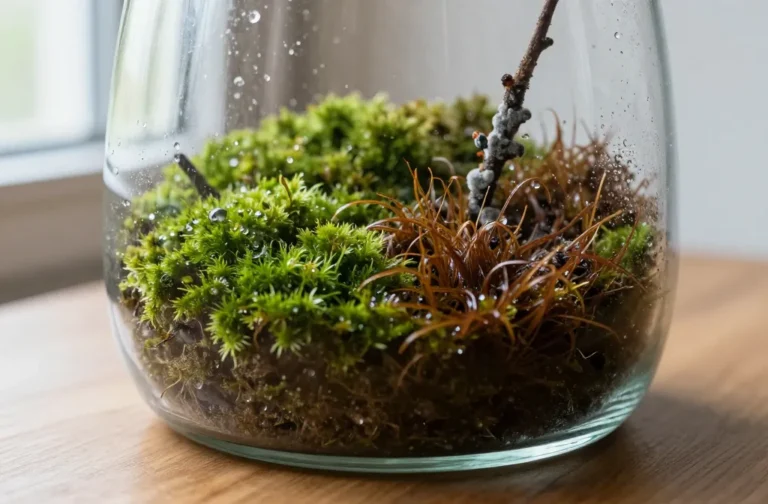
If droplets bead all day, open the lid for 1–2 hours. If the surface dries to a pale, dusty look, mist the air above the plants with distilled water and close the lid again. Add a thin top layer of live or dried long-fiber sphagnum to buffer humidity around the crowns.
Action today: Nudge the lid open the width of your pinky for the next sunny day and check that condensation recedes by lunchtime.
Feeding Protocol That Grows Traps, Not Mold
These plants get minerals from prey, not soil. Overfeeding is the fastest way to rot a trap. I feed lightly, on schedule, with small prey or a clean substitute.
What and how to feed
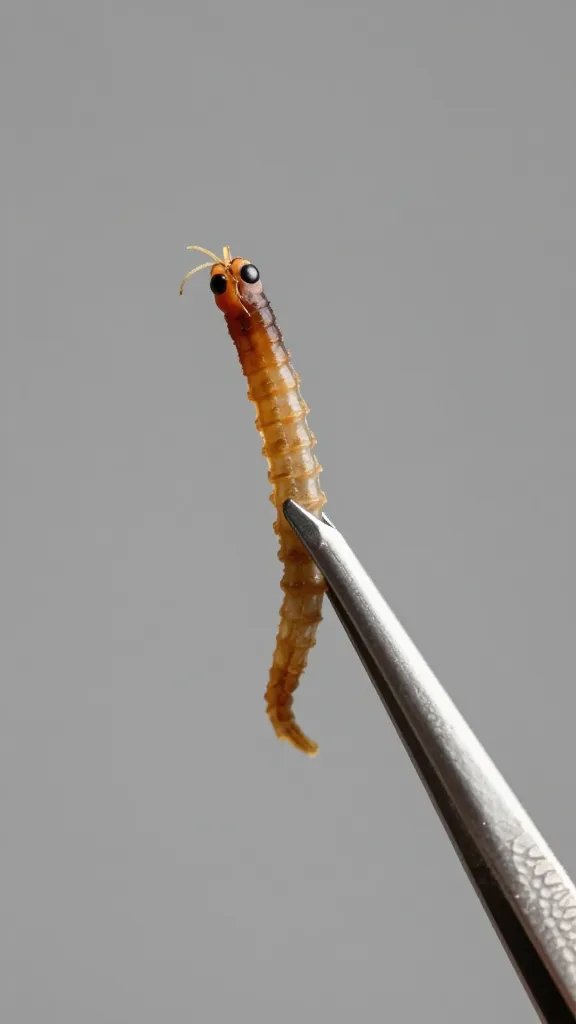
- Drosera and Pinguicula: Dust a few leaves with a tiny pinch of dried insects (crushed dried bloodworms or mealworms from the pet aisle) every 3–4 weeks. Use a cotton swab to place a piece the size of a sesame seed.
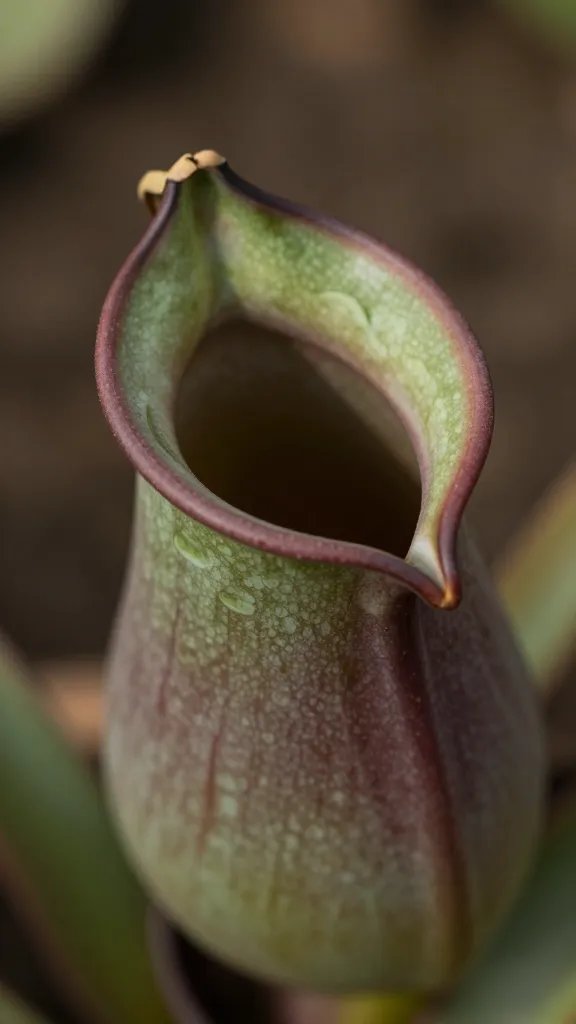
- Nepenthes: Drop one small dried insect into a single mature pitcher every 3–4 weeks. Do not fill pitchers with water; they produce their own fluid. If dry, add 1–2 teaspoons of distilled water only.
- Cephalotus: As with Nepenthes, one tiny insect in one pitcher monthly.
Never use fertilizer pellets, fish food flakes soaked to mush, or raw meat. Remove uneaten food with tweezers after 48 hours if the trap hasn’t sealed.
Action today: Set a repeating calendar reminder for “tiny feed” every 4 weeks and limit yourself to one or two traps per plant.
Watering Routine and Long-Term Maintenance
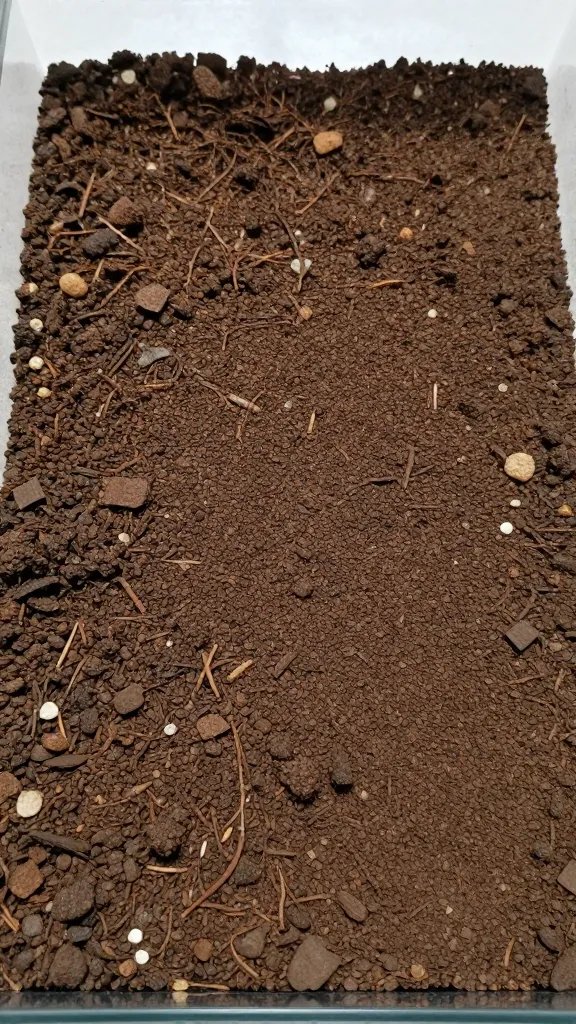
Top up moisture only when the top 0.5 cm of substrate lightens in color and feels barely damp. I add 2–4 tablespoons of distilled water around the edge and wait 10 minutes before deciding if it needs more. Never leave standing water at the bottom of a closed terrarium.
Every 3–4 months, wick out accumulated minerals by opening the lid wide and watering gently until a small amount runs to the bottom, then tilt and pour it off. Trim dead leaves with clean scissors and remove shed insect parts to keep fungus gnats down.
Action today: Insert a wooden skewer 3–4 cm into the mix; if it comes out mostly dry, add two tablespoons of distilled water and recheck tomorrow.
Common Problems and Fast Fixes
If you catch issues early, recovery is straightforward. I look for color changes and glass behavior first — they tell the whole story.
Warning signs and step-by-step fixes
- Blackening traps or pitchers: Usually overfeeding or stale air. Remove old food, open the lid 1–2 hours daily, and skip feeding for a month.
- Leaves reddening and shrinking: Light is too strong or heat is high. Move 30 cm back from the window or raise the light and reduce photoperiod to 10 hours for a week.
- Green algae and sour smell: Mix is too wet and nutrient-loaded. Scoop off the top 1–2 cm, replace with fresh peat/perlite, and run with extra airflow for a week.
- No new growth for 8+ weeks: Not enough light or too cool. Provide a grow light for 12–14 hours and keep room temps between 18–26°C.
Action today: Pick one symptom you see and apply the single fix above for seven days before changing anything else.
Frequently Asked Questions
Can I use tap water if I let it sit out overnight?
No. Letting water sit only evaporates chlorine; it does not remove dissolved minerals that harm carnivores. If your area has very soft water and no limescale, you can test it sparingly, but I still recommend distilled or RO. A single gallon of distilled lasts months in a small terrarium. Consistency beats guesswork.
Do Venus flytraps belong in a closed terrarium?
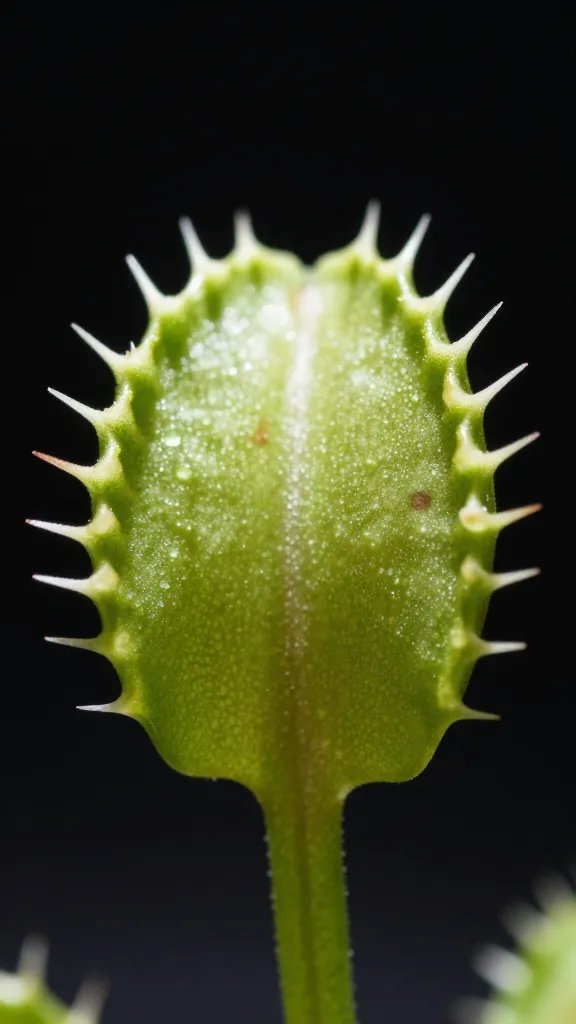
No. Flytraps need strong light, moving air, and a cool winter dormancy. A closed terrarium holds warm, stagnant air that invites rot. Grow flytraps in a plastic pot near a bright window or outdoors in season, and bring them cool in winter. Save terrariums for tropical species that don’t require dormancy.
How often should I open the terrarium lid?
Open it daily for 30–120 minutes in bright hours to refresh the air, then close it in the evening. If you see heavy condensation after noon, increase the opening or duration. If the surface dries out, shorten the vent time. Small, regular adjustments keep conditions stable.
Do I need live moss in the terrarium?
No, but a thin layer of long-fiber sphagnum helps maintain humidity around roots and suppresses algae. Live moss looks great and works well if you keep airflow steady and avoid overfeeding. If it overgrows, trim it back so it doesn’t shade the crowns. Always use moss soaked in distilled water only.
What temperature is best for tropical carnivores indoors?
Room temperatures between 18–26°C work well for most Nepenthes, tropical Drosera, and Mexican Pinguicula. Avoid hot windowsills that push the glass above hand-warm. If your room dips below 15°C at night, growth slows but recovers when warmth returns. Consistent, moderate warmth beats short heat spikes.
Can I fertilize through the soil to speed growth?
No. Soil fertilization damages the delicate root systems and encourages algae. If you want a modest boost, feed a tiny amount of dried insect to selected leaves or pitchers monthly as described. That keeps nutrients where the plant evolved to handle them. Patience produces sturdier traps and fewer problems.
Conclusion

You now have the three levers that decide success: a mineral-free substrate, a clean water source, and a restrained feeding routine. Set those, then fine-tune light and airflow with small daily adjustments. Start with one easy species like Drosera capensis, log what you change for two weeks, and you’ll see steady, healthy growth instead of guesswork.