How to Design a Terrarium with Multiple Plants — Height Levels, Feature Plant Selection and Why Symmetry Fails Secrets
I used to cram cute mini plants into glass jars and hope “more” made it better. The result looked flat from eye level and turned into a green blob after a month. Once I learned to stage height levels, choose one strong feature plant, and ditch symmetry, my terrariums started looking like tiny landscapes instead of salad bowls. In this guide, I’ll show you exactly how to plan layers, pick plants, and arrange them so your terrarium looks intentional on day one and stays balanced as it grows. For more information, see our Complete Terrarium Guide. For more information, see our build guides.
How Do You Build Height Levels in a Terrarium?
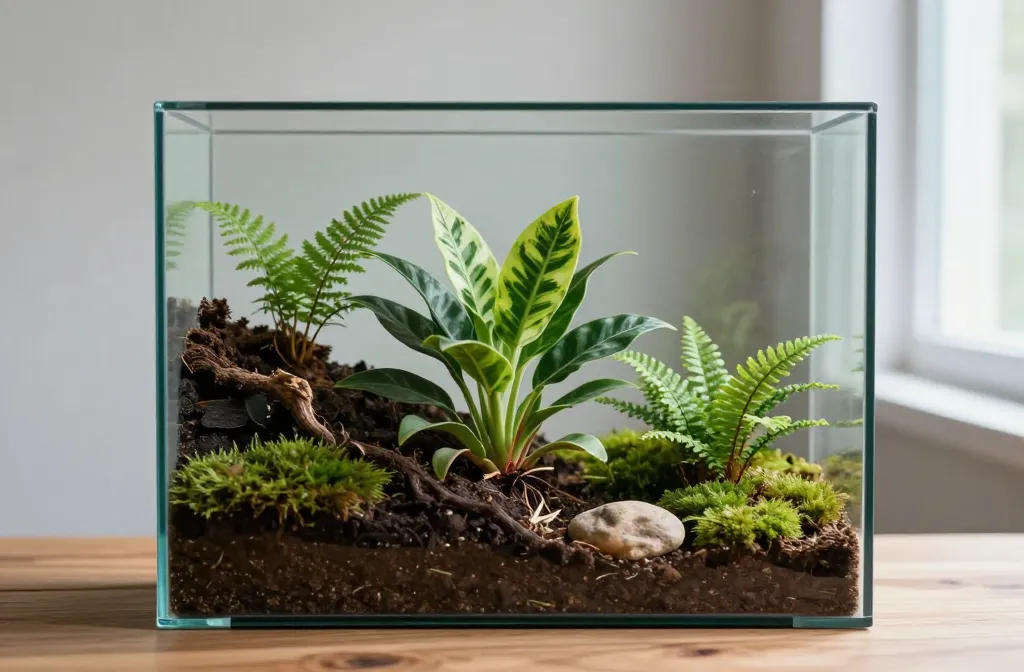
Build terrain by mounding substrate to 6–10 cm at the back and 3–5 cm at the front over a gravel and mesh base. This slope creates a landscape effect and stops the arrangement from reading as a flat green disc.
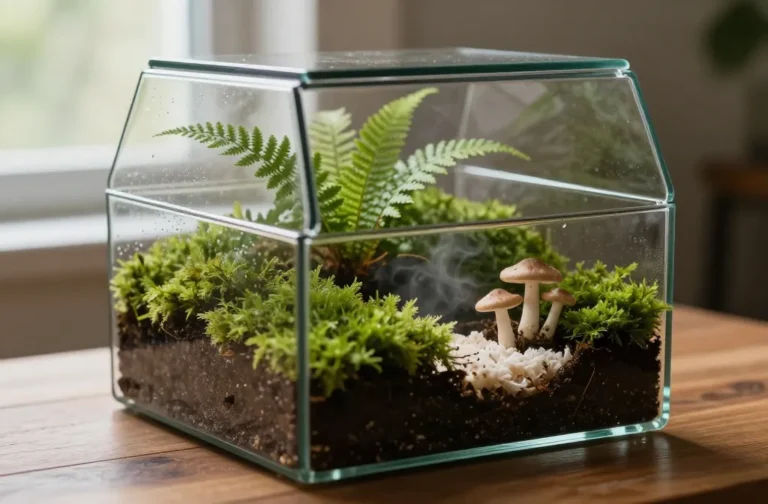
A terrarium that reads as a landscape needs a terrain. Flat soil gives you a flat look. I create a deliberate slope: high at the back or a back-left corner, tapering to the front edge so you can see inside. According to the University of Minnesota’s terrarium guide, proper layering of substrate and drainage material is what gives a closed garden its structure and long-term stability.
Use a base of drainage stones, mesh, and then substrate, but put more substrate where you want height. I mound to about 6–10 cm at the back and 3–5 cm at the front. I press the slope firmly so it doesn’t slump after the first watering. If you’re building a closed terrarium, this slope matters even more because condensation hides the back third if the terrain is flat.
Step-by-Step Build
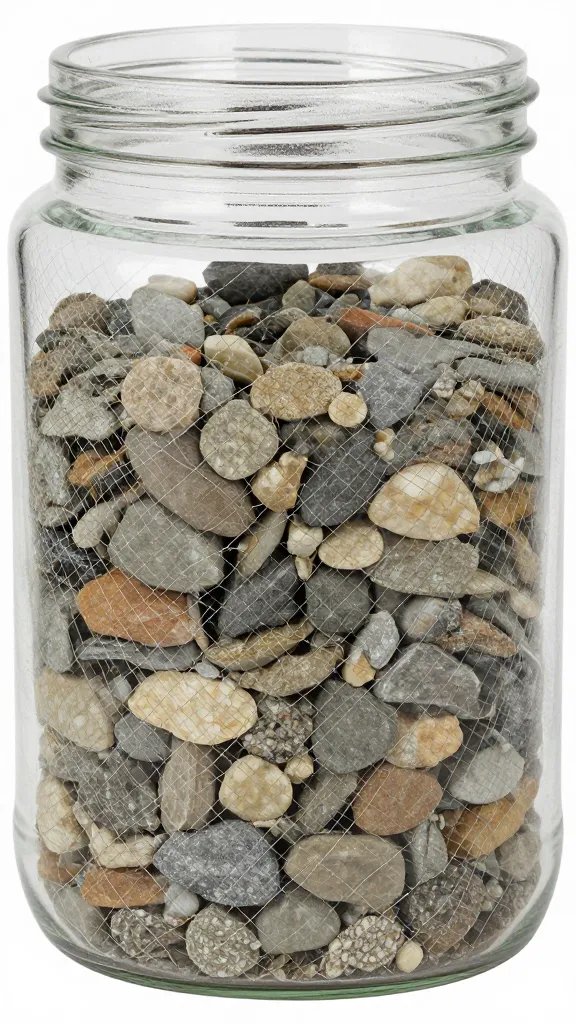
- Add 1–2 cm of rinsed aquarium gravel or pebbles.
- Lay a piece of plastic mesh or window screen to keep soil from settling into the stones.
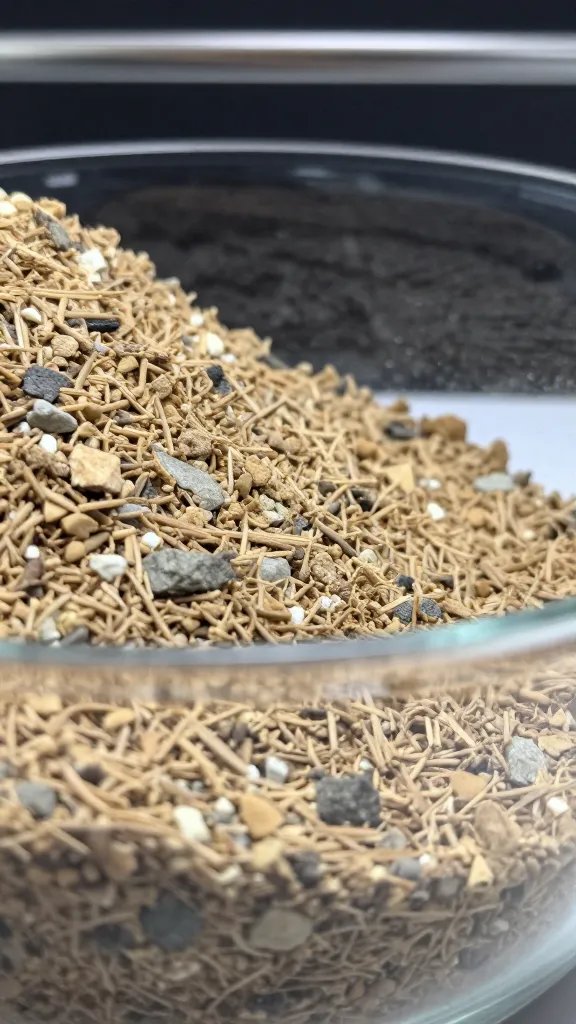
- Pour in good quality container soil mix, enriched with a handful of orchid bark for chunkiness. Build your mound now, not later.
- Carve shallow planting pockets into the slope with a spoon. This “locks” root balls so they don’t slide.
Action today: Dry-fit your slope in an empty container using rolled towels to visualize the heights you’ll build with soil — then match those heights during setup.
Which Plant Should Be the Feature of Your Terrarium?
Pick one bold plant as the focal point — a Fittonia, dwarf Peperomia, or small fern — and place it off-center at the slope’s high point. Every other plant should be smaller and quieter so the feature reads as the hero.
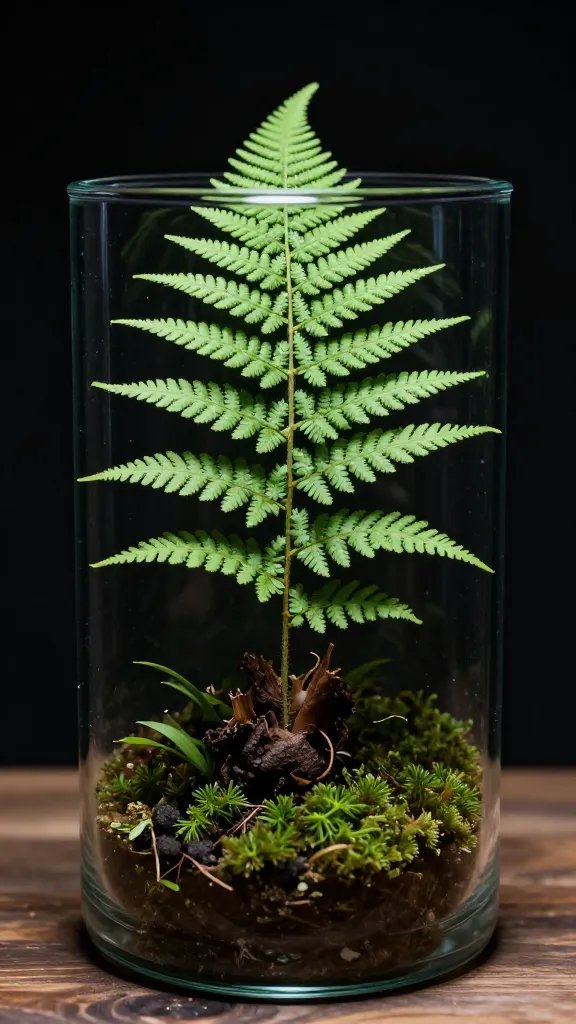
Every successful multi-plant terrarium has one clear star. That feature plant sets the scale, leaf texture, and color accents. I use a single Fittonia, dwarf Peperomia, or a small, slow-growing fern as the focal point — never three competing “almost features.”
I place the feature at the high point of the slope or one-third in from a back corner. That off-center position creates directional flow. Then I surround it with lower, finer textures that make it look bigger and more important. If you’ve seen a stunning Fittonia terrarium, you already know how one strong plant can anchor the whole scene.
Reliable Feature Plants (Small-Forming, Terrarium-Friendly)
- Fittonia albivenis (nerve plant) — bold veining, stays low but reads as “hero.”
- Peperomia caperata or P. obtusifolia ‘Mini’ — corrugated or glossy leaves with presence.
- Selaginella kraussiana (club moss) — vivid green cushion if kept moist.
- Hemianthus or small Microsorum fern varieties — slow, textural fronds.
| Tier | Examples | Height | Key Trait | Role |
|---|---|---|---|---|
| Feature / Canopy | Peperomia caperata, Pilea ‘Dark Mystery’ | 8–15 cm | Bold leaf or colour | Focal point that sets scale |
| Mid-Layer | Nephrolepis ‘Duffii’, Fittonia dwarfs | 6–10 cm | Fine texture or pattern | Fills space without competing |
| Ground Cover | Live sheet moss, Selaginella tiny forms | 2–5 cm | Low, spreading | Anchors the base, hides soil |
Takeaway: Choose one feature plant first, buy it, and bring it to the garden centre to match all other plants to it — not the other way around.
How Should You Layer Plant Heights Inside a Terrarium?
Group plants by mature height into three tiers — canopy, mid-layer, and ground cover — and contrast leaf texture between each. This creates visible depth without the plants swallowing the container within weeks.
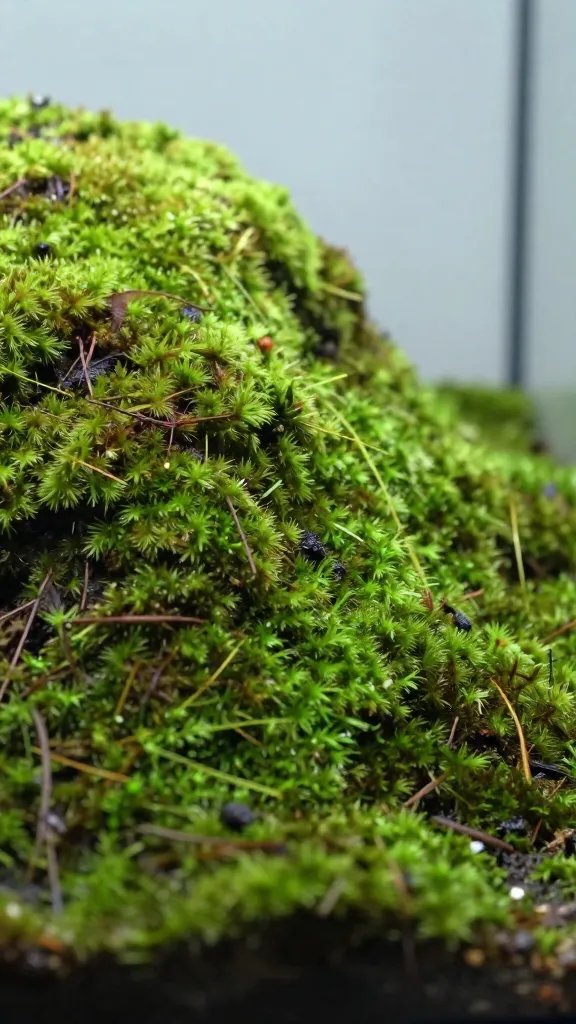
I group plants by “height at maturity” inside the given container, not by what they look like in the nursery pot. Terrariums reward restraint. I plan for three tiers: a small canopy or feature, a mid-layer of 8–12 cm plants, and ground covers under 5 cm.
Contrast leaf size and texture between tiers. Big, smooth leaves above; ferns or small patterned leaves in the middle; mossy or tiny-leafed creepers at the base. This creates depth without crowding. The complete Fittonia care guide is a good reference for choosing mid-layer plants that stay compact.
Plant Lists by Tier
- Feature/Canopy (8–15 cm): Peperomia caperata, Pilea ‘Dark Mystery’, small bird’s nest fern (Asplenium nidus ‘Crispy Wave’ juvenile).
- Mid-Layer (6–10 cm): Mini ferns (e.g., Nephrolepis ‘Duffii’), Fittonia dwarfs, small Pilea involucrata.
- Ground Cover (2–5 cm): Cushion moss (store-bought preserved moss looks good but won’t grow), live sheet moss from a reputable source, Selaginella “tiny” forms, baby tears (Soleirolia) in open vessels only.
Action today: Line up your plants on a table by final height and leaf size. Remove anything that duplicates the feature plant’s look or will exceed the tallest tier within six months.
Why Does Symmetry Look Wrong in a Glass Terrarium?
Symmetry makes a terrarium look staged and flat because your eye stops in the middle. Asymmetry — using the rule of thirds and triangular groupings — creates motion and depth that holds up as plants grow at different rates.
Symmetry makes a terrarium look staged and flat because your eye stops in the middle. In a curved glass vessel, mirrored plants amplify this flatness and expose gaps as plants grow at slightly different speeds.
I use the rule of thirds and triangular groupings. Place the feature off-center, then create two supporting clusters at different heights and distances. Repeat a leaf shape or color three times, not twice, to guide the eye in a loop.
Asymmetry Blueprint
- Anchor: Feature plant at the high mound, one-third in from a side.
- Counterbalance: A medium plant diagonally opposite, halfway down the slope.
- Grounding: A low, spreading texture at the front, leaning toward the empty space.
Takeaway: Before planting, sketch a triangle on a sticky note and place your three main plants to match those points inside the vessel.
Which Vessel Works Best for a Multi-Plant Terrarium?
Match the container to your feature plant’s moisture needs: closed glass for humidity lovers like Fittonia and ferns, open vessels for peperomia and pilea. Then choose a shape that shows off your layering from the main viewing angle.
Pick the container after you pick the feature plant’s moisture needs. Closed vessels suit humidity lovers like Fittonia and ferns. Open vessels suit peperomia and pilea that tolerate average room humidity.
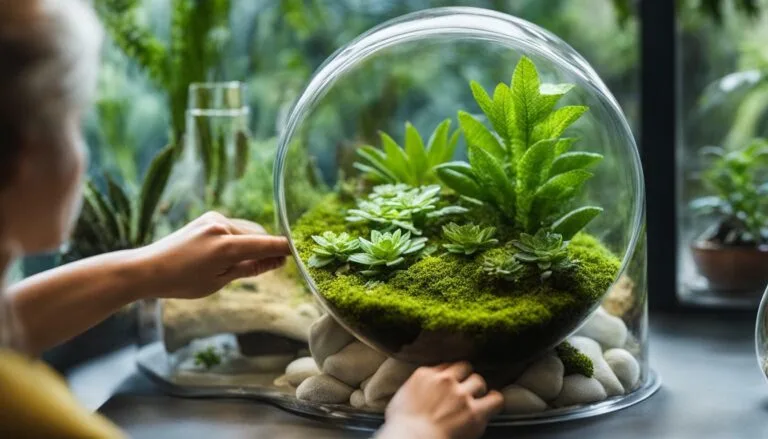
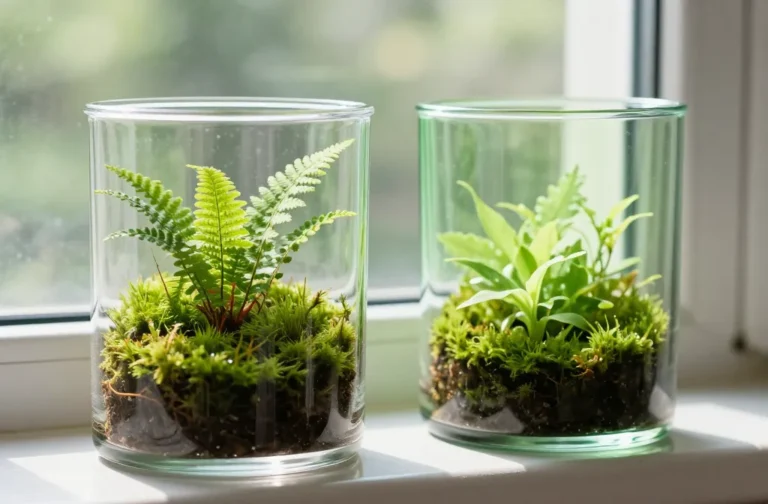
Consider the viewing angle. Bowls and fishbowl shapes magnify the front and hide the back; cylinders show layers clearly; jars with narrow necks trap humidity but limit hand access. I prefer a cylinder or wide-aperture jar for multi-plant layouts so I can place tiers cleanly. Clemson’s guide to common container planting problems covers how vessel shape affects airflow and moisture retention in ways that directly impact plant health.
Action today: Hold your empty vessel at eye level where it will live and check if the front third is visible — if not, choose a straighter-sided container.
What Substrate Keeps Multi-Plant Terrariums Healthy?
Use a chunky mix of two parts potting soil, one part orchid bark, and one part perlite to hold air in the root zone while retaining moisture. Pre-dampen the mix before planting and water sparingly at first.
Terrariums fail when the substrate compacts or stays swampy. I use a simple mix: two parts good potting mix, one part fine orchid bark, and one part perlite. This keeps air in the root zone while holding moisture.
Add a thin charcoal layer only if your mix smells stale after watering; it’s not a magic filter. The important part is building that slope firmly and watering sparingly at the start. For a deeper look at soil choices, check out this breakdown of soil types for container gardening.
Moisture Setup and First Watering
- Pre-dampen the mix in a bowl until it feels like a wrung-out sponge — barely leaves moisture on your palm.
- Pack the slope, plant snugly, then mist the foliage lightly.
- For closed setups, run the lid on for one day. If more than half the glass fogs by midday, vent for 1–2 hours.
Takeaway: Mix and pre-dampen substrate before adding to the vessel — never add dry soil and then pour water into the glass.
How Do You Maintain a Multi-Plant Terrarium Layout Over Time?
Trim the fastest grower every 2–3 weeks with long chopsticks and sewing scissors to keep the feature plant dominant. Remove any leaf touching the glass — that’s where rot and algae start — and vent closed setups the moment condensation stays all day.
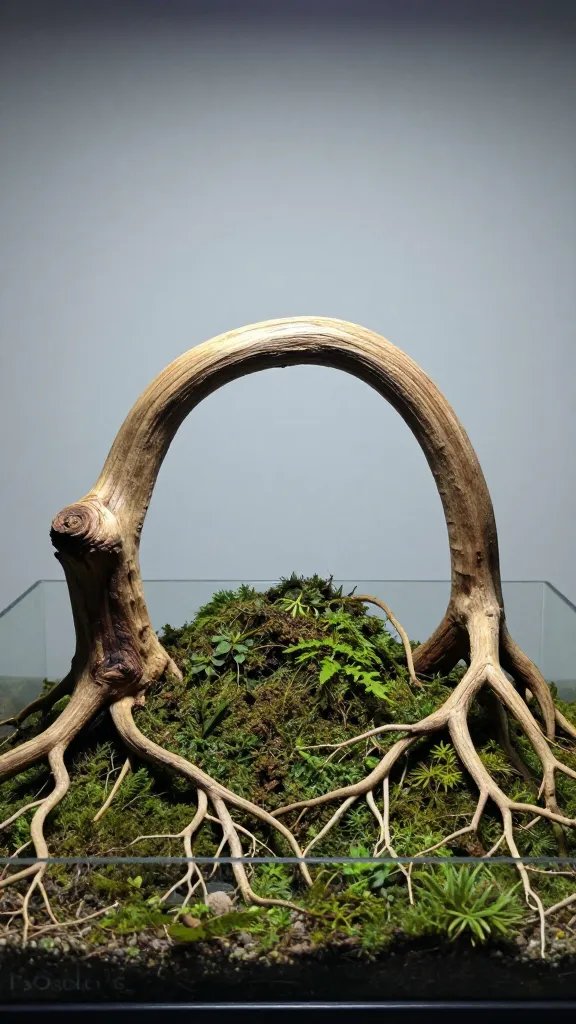
Plants grow, and your layout shifts. I trim little and often. I snip the fastest grower every 2–3 weeks to keep the feature plant visually dominant.
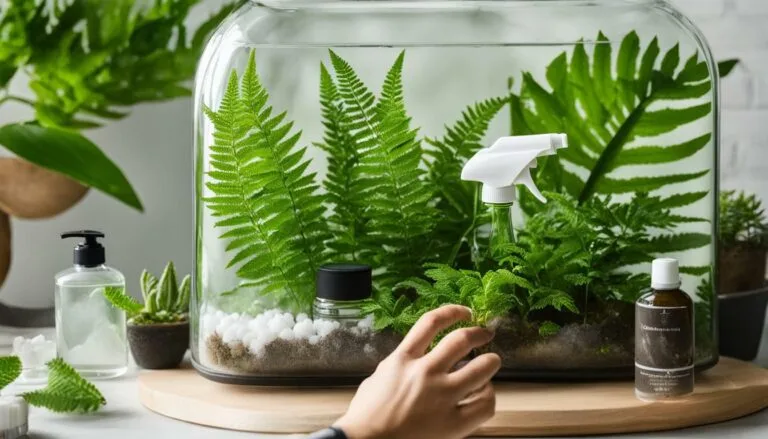
I use household tools: long chopsticks for positioning, cotton swabs for glass smudges, and sewing scissors for precise cuts. I remove any leaf that presses against the glass — that’s where rot and algae start.
Warning Signs and Fixes
- Constant heavy condensation: Open the lid for 2 hours daily for three days; blot wet patches with paper towel.
- Sour smell: Lift plants, fluff the top 1–2 cm of soil with a fork, and add a palmful of bark.
- Algae on glass: Wipe with diluted white vinegar on a cloth, avoiding leaves, then increase venting.
Action today: Schedule a five-minute trim every other Sunday — a repeating calendar reminder prevents overgrowth that ruins the composition.
Frequently Asked Questions
How many plants should I put in a small terrarium?
For a vessel the size of a large cereal bowl, I use one feature plant, two mid-layer plants, and one ground cover. That’s four plants total. Overstuffing looks good for a week, then turns into shading and rot. Leave open soil pockets so everything has space to mature.
Can I mix succulents with moss and ferns?
No. Succulents prefer dry air and quick-drying soil; moss and ferns want steady moisture and higher humidity. Mixing them forces a compromise that weakens both groups. Keep succulents in an open, gritty setup and moss/ferns in a moister, often closed, environment.
What if my feature plant starts out smaller than the others?
Stage it on the highest part of the slope to give presence, and trim surrounding plants lightly every two weeks. Most feature choices here gain stature within 6–8 weeks. If it still gets lost, swap one mid-layer plant for a finer-textured alternative to restore contrast.
How do I water without collapsing the slope?
Use a spray bottle or a small squeeze bottle and apply water at the base of plants, not across the surface. Add a tablespoon at a time, spread around the vessel. In closed terrariums, you often won’t need more than 1–2 tablespoons per month once balanced. The complete terrarium watering guide covers how much to give based on vessel size and plant type.
Why do my plants press against the glass and rot?
Plants lean toward light and the glass traps moisture on leaves. Rotate the vessel a quarter turn weekly so growth stays upright. Trim any leaf touching the glass and reduce overall humidity by venting for an hour at midday for several days. A bioactive terrarium setup handles this well because the cleanup crew breaks down dead material before it causes rot.
What’s the most common design mistake in multi-plant terrariums?
Choosing plants that look cute together but have wildly different growth rates. A fast-spreading Soleirolia next to a slow Peperomia means constant trimming within weeks. Pick companions that grow at similar speeds, or accept that you’ll be editing the layout every month.
Can I use regular potting soil for a terrarium?
You can, but straight potting soil compacts in a closed vessel and stays wet too long. Add one part perlite and one part orchid bark to every two parts potting mix. The chunky additions keep air pockets open around roots for months instead of weeks.
How long before a new terrarium looks “finished”?
Most multi-plant terrariums settle into their final shape within 6–8 weeks of consistent trimming and rotation. The first two weeks look rough as plants recover from transplant shock. If it still looks unbalanced after two months, the fix is usually removing one plant rather than adding another.
Does a terrarium need direct sunlight?
No — bright indirect light is ideal for most multi-plant terrarium setups. Direct sun through glass turns a closed vessel into an oven and scorches leaves within hours. A spot near an east-facing window or one meter back from a south-facing sill with a sheer curtain gives enough light without the risk.
Conclusion

You now have a clear playbook: build terrain first, crown a feature plant, and use asymmetry to create motion and depth. Set up one small terrarium this week using the triangle plan and a single strong feature. Once it settles, replicate the process in a second vessel — try a simple open terrarium this time — with a different feature to see how scale and texture change the entire scene.