Master the Jar Jungle: 6 Moss Species for Closed Terrariums — Ranked by Humidity Tolerance and Light Requirement
I’ve built more closed terrariums than I have sunny windows, and I learned fast that moss choice decides whether you get a lush forest or a foggy mold jar. If you’ve seen your moss yellow, melt, or grow algae, you’re not alone — I did all of that in my first month. In this guide, I rank six reliable mosses by how much humidity they tolerate and how much light they need, using plain, practical cues you can spot at home. You’ll know exactly which moss to buy, where to place the jar, and how to keep each species thriving without gadgets.
1. Sphagnum Moss (Live): Thrives In Soaked, High-Humidity, Low-To-Medium Light
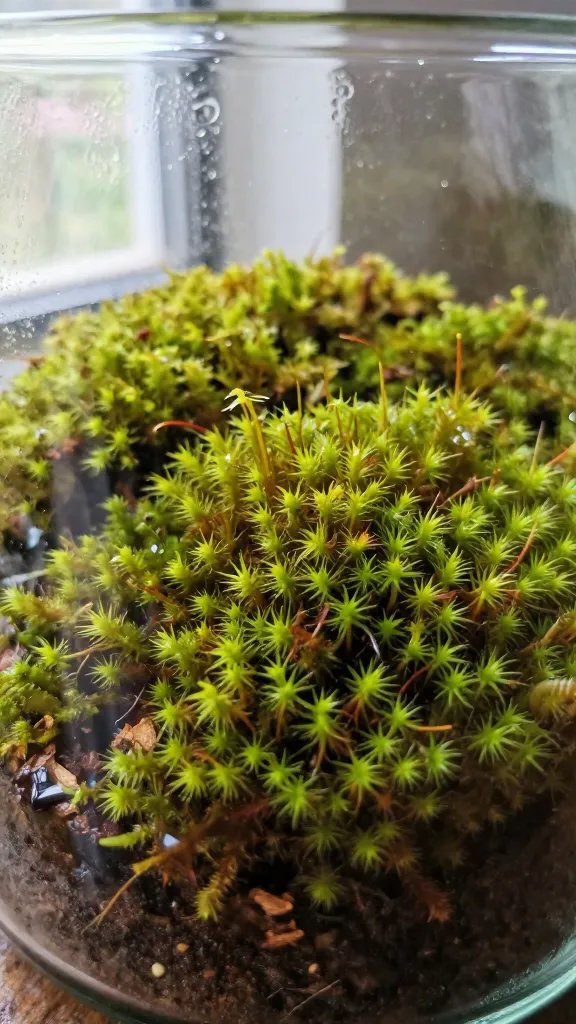
Sphagnum loves a soggy, sealed world. Give it constant humidity and it fills out as springy, lime-green pillows that rarely sulk. If your terrarium runs wet, this moss stays vibrant while fussier species rot.
Humidity And Light Sweet Spot
- Humidity: Very high. Handles heavy daily condensation and a wet substrate.
- Light: Low to bright indirect. Avoid direct sun; it heats and bleaches tips.
Signs To Watch For
- Too dry: Crispy, pale tips and stalled growth; condensation disappears by midday.
- Too bright: Bleached tan tops while lower layers stay green.
- Too stagnant: Sulfur smell or slick algae; substrate looks soupy rather than spongy.
How To Set It Up
- Use a drainage layer of rinsed aquarium gravel or leca (1–2 inches), a mesh separator, then a thin layer of damp, rinsed, long-fiber sphagnum or fine terrarium soil.
- Plant live sphagnum on top in small tufts with contact to damp media, not floating.
- Mist to settle, then seal. Keep near a bright window with filtered light — a sheer curtain works well.
Action today: If your closed terrarium stays wet, switch to live sphagnum as the main carpet; it stabilizes a waterlogged setup and stays green with minimal care.
2. Java Moss (Taxiphyllum barbieri): Forgives Overwatering And Shade, Prefers Constant Damp
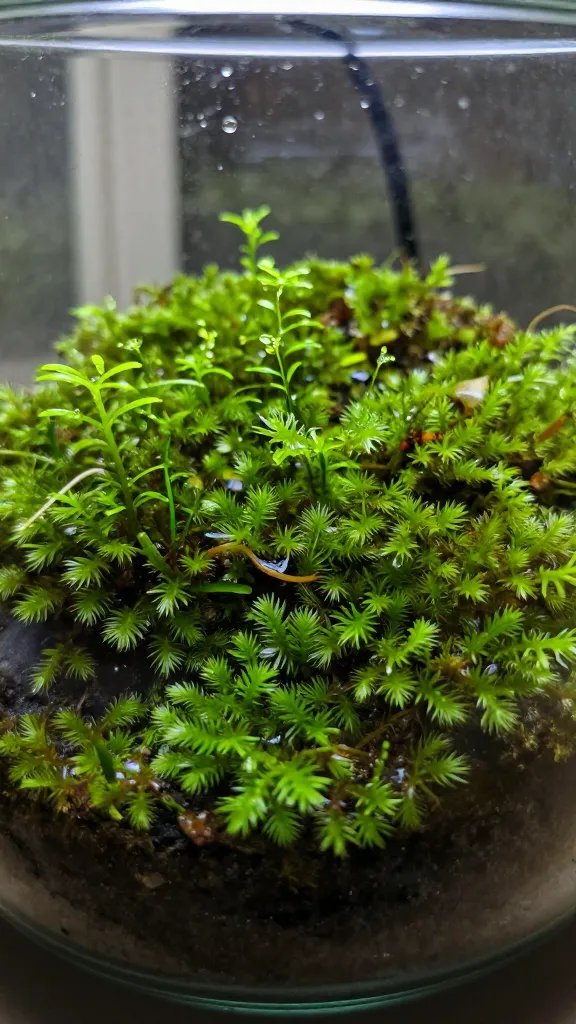
Java moss is an aquarium staple that adapts effortlessly to high humidity and dim rooms. In closed terrariums, it forms loose, feathery mats and doesn’t collapse if you overspray.
Humidity And Light Sweet Spot
- Humidity: High. Happy with frequent condensation and damp substrate.
- Light: Low to medium indirect. It greens up even a few feet from a window.
Signs To Watch For
- Too dry: Stringy brown threads that feel wiry.
- Too bright: Algae film on the glass and on the moss fronds.
- Stagnation: Sour smell; improve airflow by cracking the lid for 30–60 minutes weekly.
How To Use It
- Press small clumps onto rocks or wood; pin gently with a few strands of cotton thread until it grabs.
- Mist lightly after placement to glue it down, then avoid heavy watering for a week.
- Trim monthly with small scissors to keep it dense and prevent stringy overgrowth.
Takeaway: If your space is dim and you tend to overwater, Java moss gives you the green carpet without demanding bright light or perfect moisture.
3. Cushion Moss (Leucobryum glaucum): Handles High Humidity, Needs Bright Indirect Light To Stay Tight
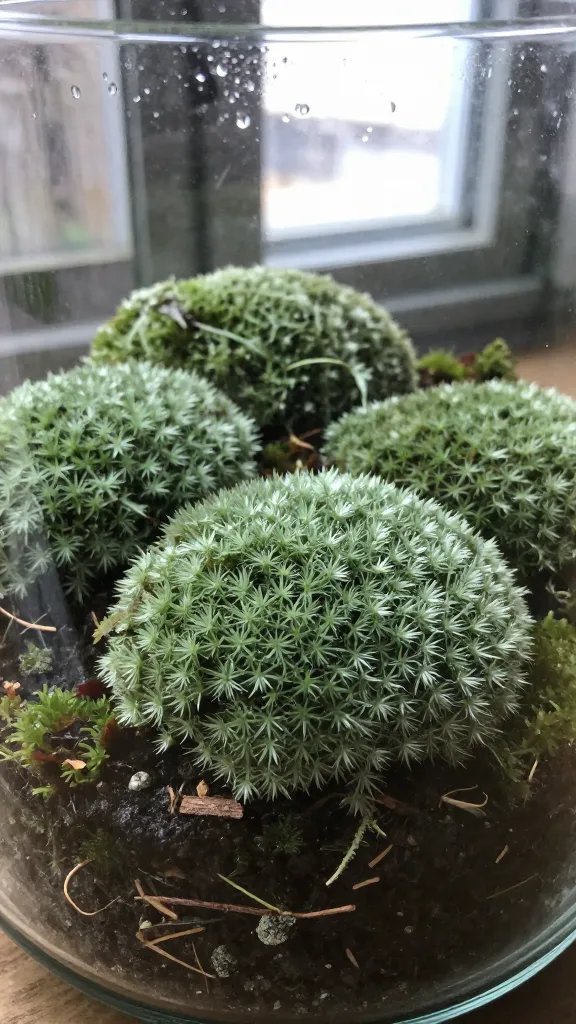
Cushion moss forms compact, velvety domes that look like miniature hills. It tolerates sealed humidity well but loses its tight shape in low light and becomes leggy and pale.
Humidity And Light Sweet Spot
- Humidity: High to very high. Accepts daily condensation, prefers evenly moist substrate.
- Light: Medium to bright indirect. Needs a bright room or a spot near a window.
Signs To Watch For
- Too low light: Domes flatten; color shifts from silver-green to yellow-green.
- Too wet: Mushy pads and gray patches; lift and blot on paper towel, then re-seat.
- Salt sensitivity: Browning edges if you use tap water with a strong mineral taste.
Placement And Care
- Use a bright, indirect spot — east or north window, or a shelf one step back from a south window behind a sheer curtain.
- Water with rainwater or boiled-and-cooled tap water to avoid mineral buildup.
- Rotate the jar a quarter turn weekly for even growth.
Action today: Move cushion moss terrariums closer to bright, indirect light — aim for a spot where you can clearly read a book without switching on lamps at midday.
4. Fern Moss (Thuidium delicatulum): Loves Moist Air, Demands Consistent Bright Indirect Light
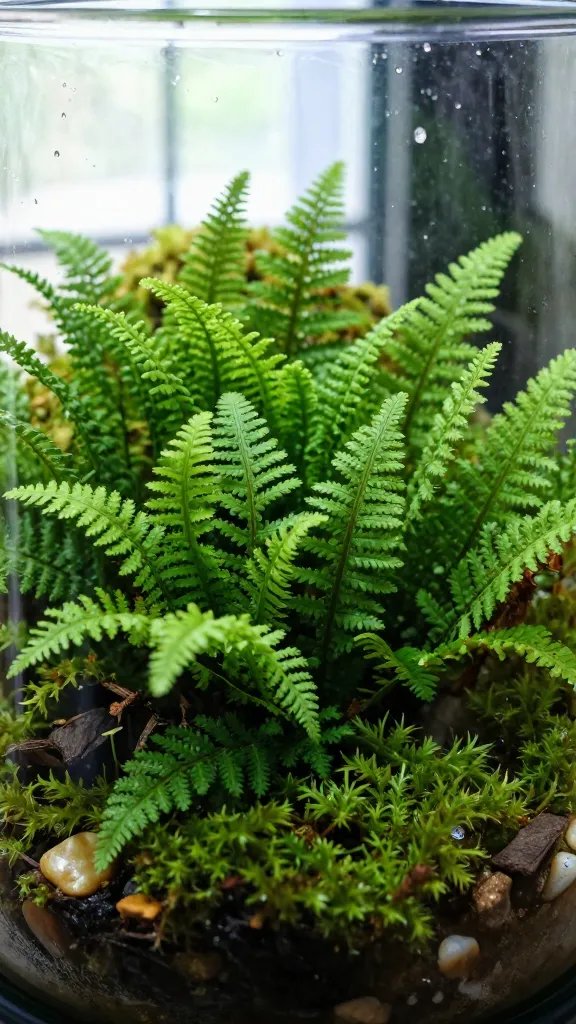
Fern moss looks like tiny ferns and creates a layered woodland floor. It thrives in humid, closed jars but pales if light is weak or if water splashes drown its fronds.
Humidity And Light Sweet Spot
- Humidity: High. Wants a damp but not sloshy substrate.
- Light: Bright indirect. Keeps its deep green and fine detail when well lit.
Signs To Watch For
- Too wet: Fronds mat and turn translucent; a light green slime appears between leaflets.
- Too dim: Dull olive color and sparse tips that reach upward.
- Heat stress: Crisped tips if direct sun hits the glass for more than 30 minutes.
Care Tweaks That Matter
- Mist the air, not the fronds. Spray the side of the jar and let droplets fall as gentle humidity.
- Use fine-grain substrate (good quality potting mix cut with fine orchid bark) topped with 0.5 inch of rinsed long-fiber sphagnum as a moisture buffer.
- Prop the lid open with a coin for 20–30 minutes after heavy misting to clear condensation.
Takeaway: Place fern moss in your brightest indirect spot and water less often — emphasize humidity over splashy misting.
5. Sheet Moss (Hypnum or Hylocomium spp.): Medium Humidity Tolerance, Moderate Light — Best For Balanced Jars
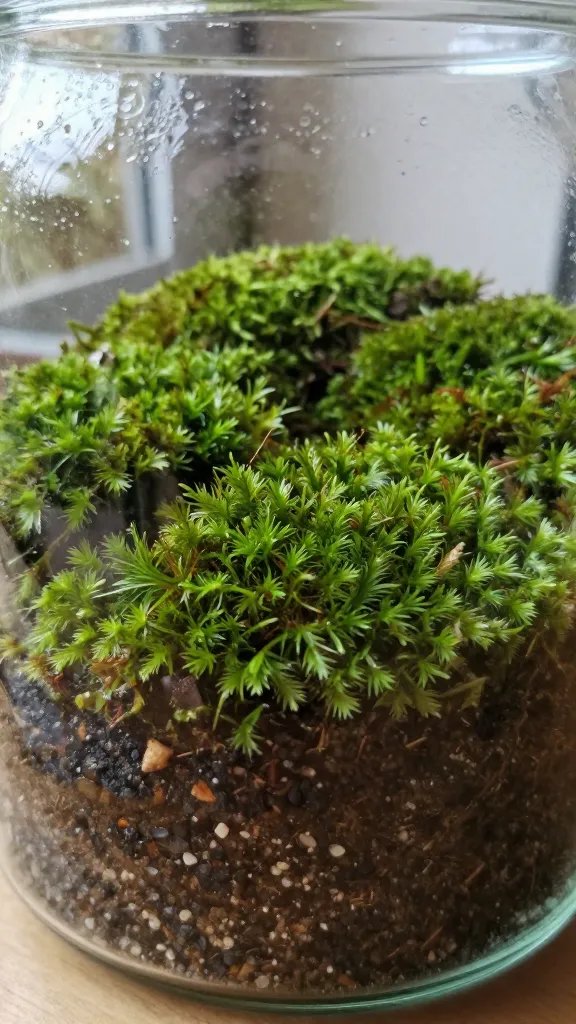
Sheet moss drapes smoothly and knits fast, making it a go-to for clean, even carpets. It dislikes extremes — not too wet, not too dim — and rewards a steady, middle-of-the-road setup.
Humidity And Light Sweet Spot
- Humidity: Medium-high. Light daily condensation is perfect; heavy dripping is not.
- Light: Medium indirect. A bright room is fine; it doesn’t require the window ledge.
Signs To Watch For
- Too wet: Edges turn brown first; white fuzz at old stems signals rot.
- Too dry: Brittle edges that flake when touched.
- Nutrient splash: Algae where potting mix touches the moss — add a thin inert top layer.
Installation Tips
- Lay patches like shingles with slight overlap; press gently to ensure contact.
- Add a neutral top layer of rinsed sand or fine orchid bark (1–2 mm) under the moss to block nutrients and suppress algae.
- Water sparingly — in a closed jar, 1–2 tablespoons every 3–4 weeks is plenty unless condensation drops off.
Action today: If your sheet moss shows brown edges, open the lid for an hour and blot the substrate with a paper towel to reset moisture to “just damp.”
6. Mood Moss (Dicranum scoparium): Moderate Humidity, Needs Brighter Indirect Light And Occasional Fresh Air
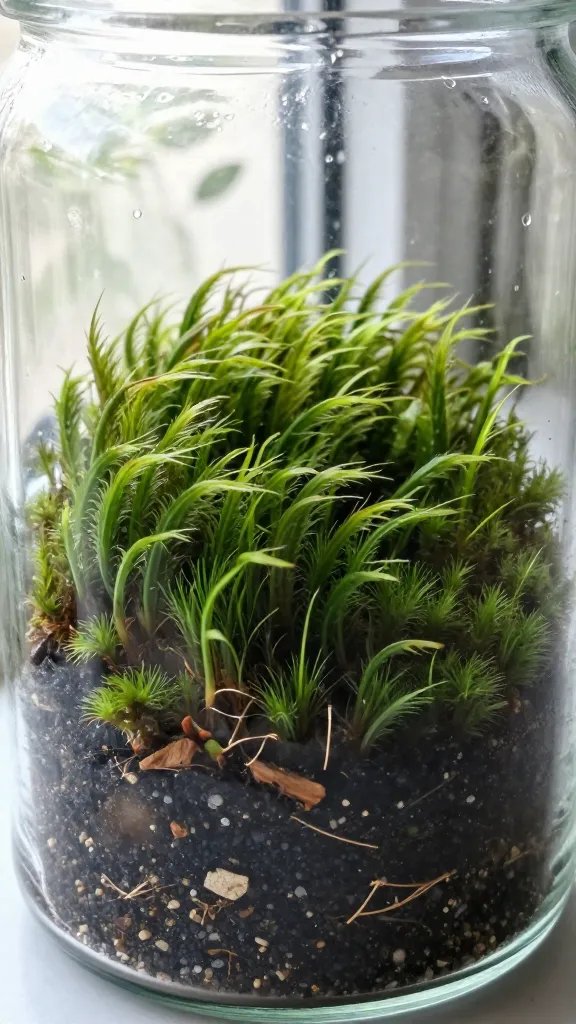
Mood moss makes dramatic, windswept tufts with visible texture. In sealed jars it wants a touch more light and fresher air than the others; ignore that and it slumps or molds at the base.
Humidity And Light Sweet Spot
- Humidity: Medium to medium-high. Prefers moisture cycling — not constant drips.
- Light: Bright indirect. Benefits from being within one step of a bright window.
Signs To Watch For
- Too stagnant: Brown thatch at the base while tips stay green — time to air out.
- Too little light: Tufts lean and stretch, losing the tidy, spiky look.
- Mineral stress: Patchy yellowing after hard tap water; switch to rainwater.
Routine That Works
- “Burp” the jar weekly for 10–15 minutes to refresh air and reduce base rot.
- Water less, but deeper: 1–2 tablespoons along the glass so moisture wicks under the clumps rather than soaking the tops.
- Trim dead thatch at the base each month with small scissors to keep air moving.
Takeaway: Treat mood moss like a bright-room resident that enjoys a weekly breath of fresh air and a light hand with water.
Frequently Asked Questions
How do I choose the right moss if my apartment is dim?
Pick Java moss or Sphagnum. Both stay green in low light and high humidity. Place the jar where you can read comfortably by daylight, even if it’s not right on the sill. Avoid direct sun to prevent overheating.
How much water should I add to a closed terrarium with moss?
Start with just enough to see light condensation on one-third of the glass by midday — usually 1–2 tablespoons for a 1–2 liter jar. Add water along the inside wall so it wicks down evenly. In most homes, you’ll top up every 3–4 weeks, only when condensation fades.
My moss is turning brown at the edges — what’s the fastest fix?
Open the lid for 30–60 minutes to release excess humidity, then blot any soggy spots with a paper towel. Trim brown edges to stop decay from spreading. Switch to rainwater or boiled-and-cooled tap water, and move the jar to brighter indirect light for a week.
Can I mix different moss species in one closed terrarium?
Yes, but group species with similar needs. Pair Sphagnum and Java moss for wetter, shadier spots, and keep Cushion, Fern, and Mood moss in brighter, slightly drier zones near the glass. Use small hardscape pieces to create microhabitats and prevent one species from smothering the others.
What substrate works best under moss in a closed jar?
Build layers you can buy locally: a 1–2 inch gravel or leca drainage layer, a piece of mesh, then a thin layer of good potting mix capped with rinsed long-fiber sphagnum or fine sand. The cap blocks nutrients from wicking into the moss, which reduces algae and mold. Keep the substrate damp, not sloshy.
How do I control mold without chemicals?
Increase air exchange for 20–60 minutes, wipe visible mold with a cotton swab, and remove decaying leaves or wood. Reduce watering for two weeks and angle the terrarium so water runs under the moss, not over it. A small pinch of activated charcoal mixed into the substrate also helps keep odors and film down.
Conclusion
Pick moss for the humidity and light you already have, not the conditions you wish you had. Start with one species that matches your room — Sphagnum for wetter, shadier corners or Cushion/Fern for brighter shelves — and dial in water by watching the glass, not the calendar. When that patch thrives, add a second species to sculpt the mini landscape with confidence.