9 Succulent Species That Genuinely Tolerate Low Light in a Terrarium Revealed
I’ve built terrariums on north-facing shelves, bathroom counters, and the dim end of a hallway. When I picked the wrong succulents, they stretched into sad noodles within a month. When I picked the right nine on this list, they held their shape and color while growing slowly and predictably. You’ll learn which species truly handle low light, how to keep them compact, and the exact steps to prevent rot in a glass container.
1. Haworthia cooperi: Bubble Rosettes That Stay Compact
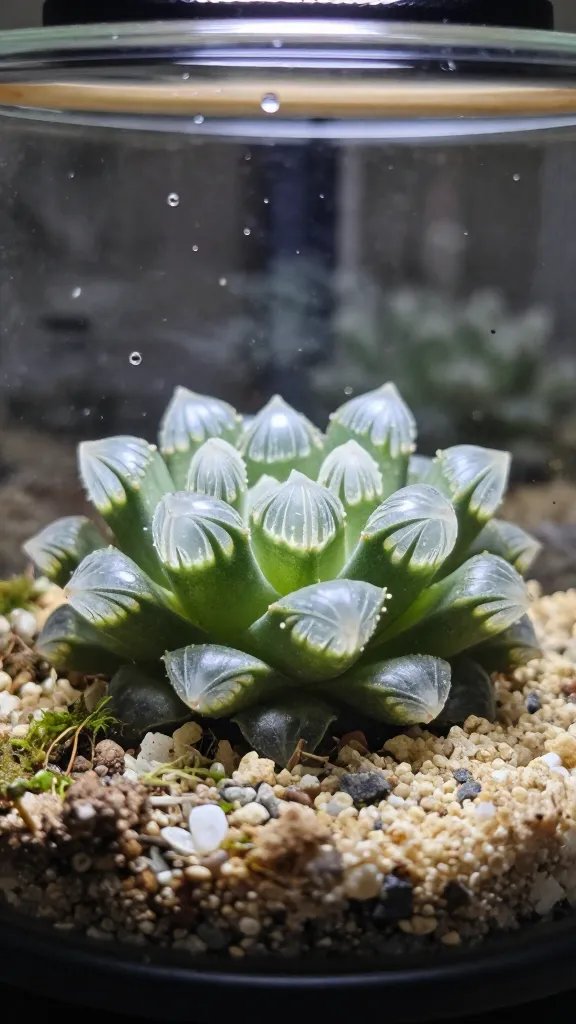
Stretching ruins most succulents in low light, but Haworthia cooperi keeps tight, translucent rosettes even on a shelf away from a window. It tolerates weekly bathroom steam and doesn’t collapse when the light dips for a few days. Left alone, it stays small and neat — exactly what you want in glass.
Signs to Watch For
- Leaves lengthen and lose their glassy windows — classic low-light strain and heat
- Center leaves turn pale green to yellow — too much water in stagnant air
- Mushy outer leaves — poor drainage or cold, wet substrate
How to Fix It
- Place within 2–4 feet of a bright window with no direct sun
- Use a shallow layer (1–1.5 inches) of well-draining cactus mix topped with decorative gravel
- Water 1–2 tablespoons every 3–4 weeks; let the surface dry completely between sips
Action today: Nudge your Haworthia closer to a window and reduce watering to a measured tablespoon — it will tighten back up within a few weeks.
2. Gasteria ‘Little Warty’: Thick Leaves That shrug Off Dim Corners
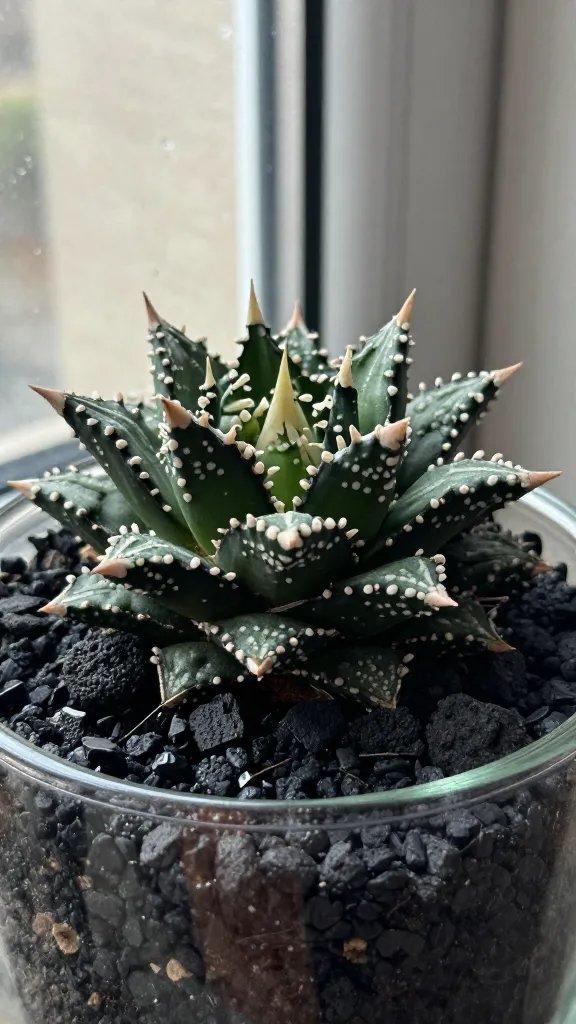
Gasteria hybrids handle shade better than most succulents and keep their chunky texture. In low light they grow slowly but don’t collapse, which prevents the “leggy” look in jars. Their roots also tolerate the slightly cooler soil of glass containers.
What to Use Instead
- Pick squat cultivars like ‘Little Warty’ or ‘Flow’ rather than tall varieties
- Pair with dark lava rock or black aquarium gravel to contrast the speckles
How to Water
- 1–2 tablespoons every 4 weeks in winter; every 3 weeks in summer
- Wipe condensation once a week to keep leaves dry
Takeaway: Choose a compact Gasteria and keep leaves dry — moisture on leaves in still air is what causes spotting, not “thirst.”
3. Sansevieria trifasciata ‘Hahnii’: Dwarf Snake Plant That Fits Glass
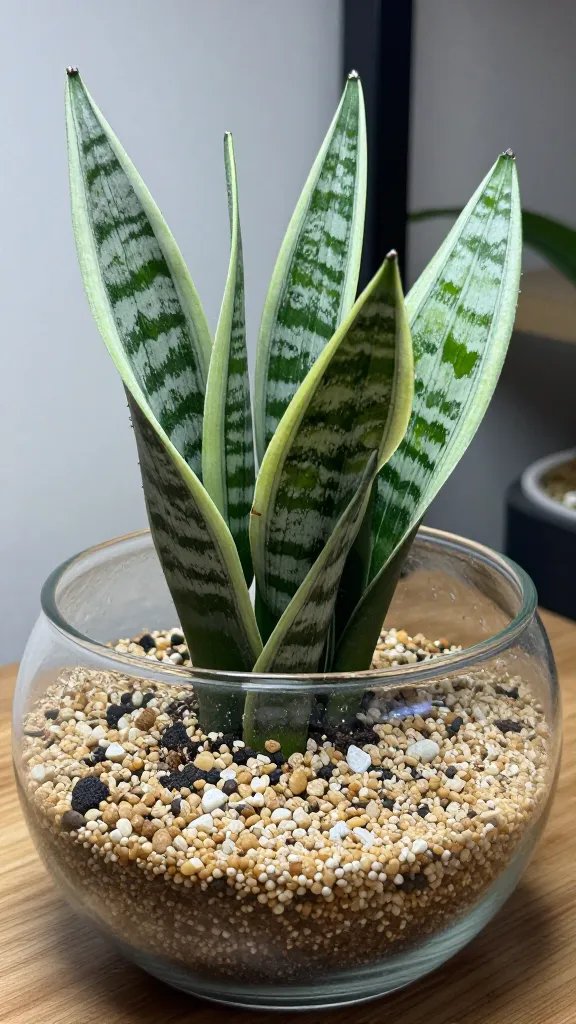
Most snake plants outgrow terrariums, but ‘Hahnii’ rosettes stay low and firm. It tolerates very low light without losing striping and forgives missed waterings. In a terrarium, its slow metabolism keeps humidity swings from causing rot.
Signs to Watch For
- Soft, folding leaves — root rot from standing moisture
- Gray, papery patches — extreme underwatering or cold drafts
How to Fix It
- Use a wider vessel for airflow — at least 6 inches across
- Add a 0.5–1 inch drainage layer of pea gravel before potting mix
- Water 2 tablespoons every 4–5 weeks; skip if you see heavy condensation
Action today: Add a thin gravel layer and stop watering until the glass shows minimal condensation at midday.
4. Haworthiopsis fasciata (Zebra Haworthia): Stripes That Don’t Fade Indoors
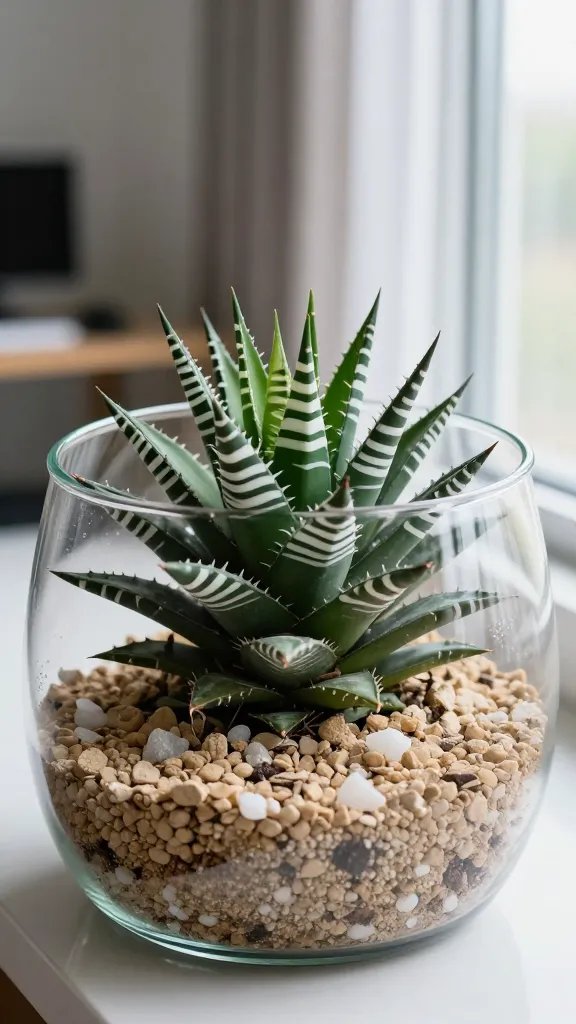
Haworthiopsis fasciata holds its zebra bands and doesn’t sprawl in dimmer rooms. It prefers bright indirect light, but unlike echeverias it won’t stretch dramatically when the light dips for a week. It stays tidy and photogenic behind glass.
Placement
- North or east window ledge, or a desk 2–3 feet back from a south window with sheer curtains
- Avoid direct midday sun on glass — it magnifies heat
Substrate Setup
- 2 parts cactus mix + 1 part pumice or perlite from the garden centre
- Top with coarse sand to keep the crown dry
Takeaway: Keep the crown above the soil line and top-dress with sand to prevent rot in humid glass.
5. Gasteraloe ‘Green Ice’: Hybrid That Balances Shade Tolerance and Structure
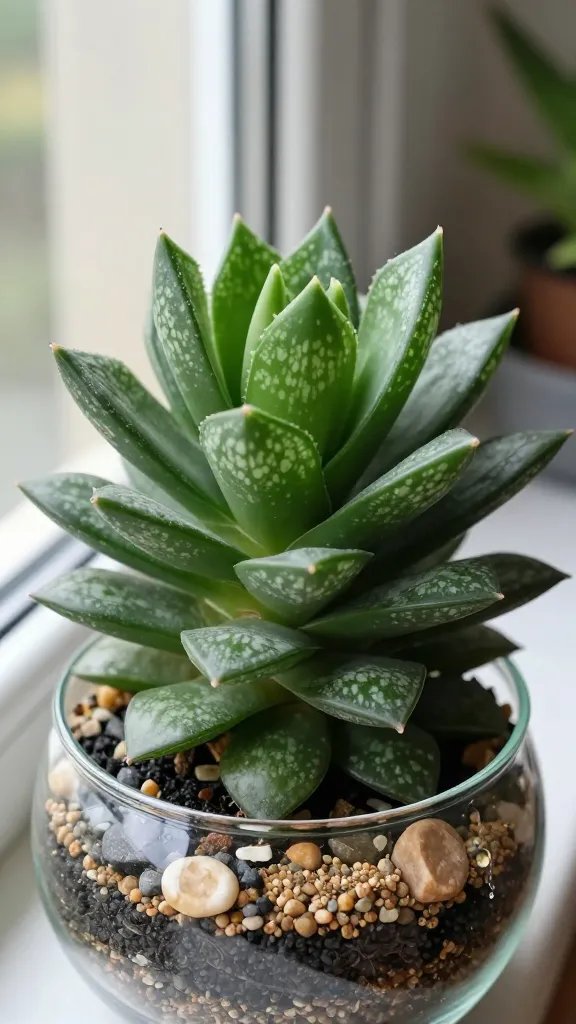
Gasteraloe combines gasteria’s shade tolerance with aloe’s form, so it looks architectural without needing strong sun. In low light it keeps a compact rosette instead of shooting upward. Its thicker leaves store enough water to handle long gaps between waterings.
Signs to Watch For
- Blanched, pale leaves — too little light; move closer to a window
- Leaf tip burn — salts from tap water; switch to filtered or rainwater
Watering Routine
- Use a narrow-spout squeeze bottle to deliver 1 tablespoon at the root zone only
- Let the top 1 inch of mix dry bone-dry before repeating
Action today: Switch to filtered water and target the soil, not the rosette — your leaves will keep their color and texture.
6. Haworthia retusa: Windowed Leaves Built for Shade
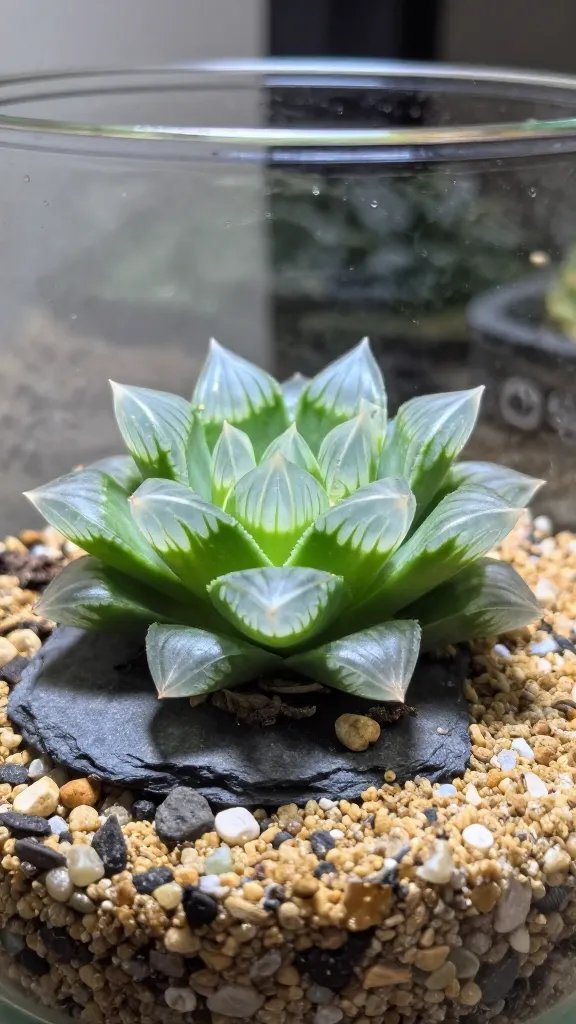
Haworthia retusa has translucent leaf “windows” that capture side light efficiently, so it performs in places most succulents fail. It stays low and star-shaped, resisting the stretched look. It’s also forgiving if you forget a watering cycle.
Terrarium Fit
- Best in open-top or ventilated terrariums to prevent stale, wet air
- Place a flat stone under the rosette to keep its base dry after watering
Feeding
- Use a half-strength cactus fertilizer once in spring only
- Do not feed in winter — low light plus fertilizer leads to weak growth
Takeaway: Give this species a vented lid and a flat stone “pedestal” — it prevents base rot and keeps the star shape crisp.
7. Sansevieria trifasciata ‘Fernwood Mikado’: Slender Fans That Endure Shade
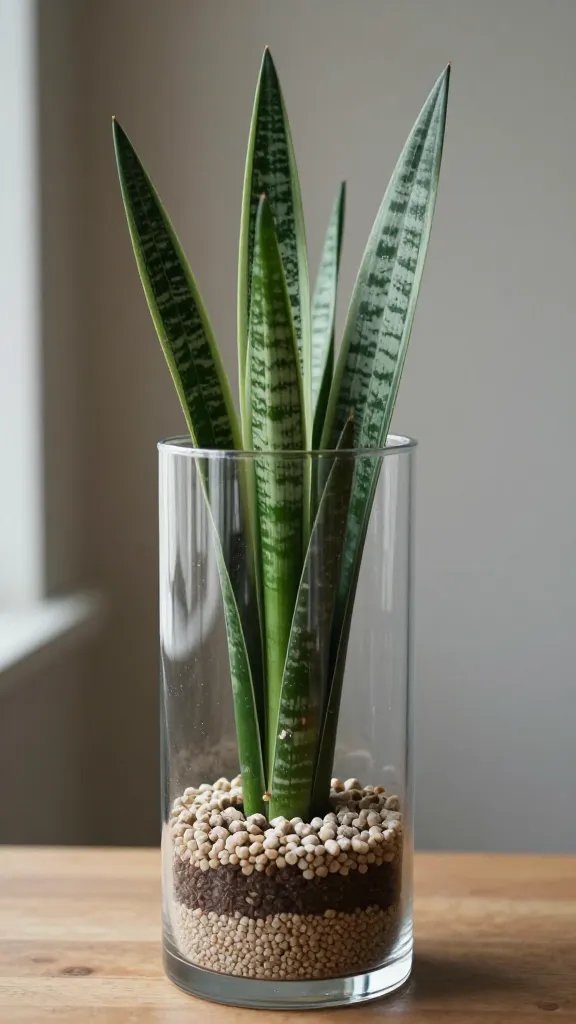
The slender, upright leaves of ‘Fernwood Mikado’ handle low light without flopping. In glass, they create height without blasting roots with moisture. Their slow growth means fewer trims and less disturbance to the layout.
Container Choice
- Select a taller cylinder to accommodate leaf height
- Add 1 inch gravel + 2–3 inches cactus mix; leave 0.5 inch air gap below the rim
Maintenance
- Rotate the terrarium a quarter turn every two weeks to keep the fan even
- Wipe inside glass monthly to reduce algae that shades your plant further
Action today: Mark your calendar to rotate the container biweekly — it prevents lopsided growth in low light.
8. Haworthia cymbiformis: Boat Leaves Suited to Dim Windowsills
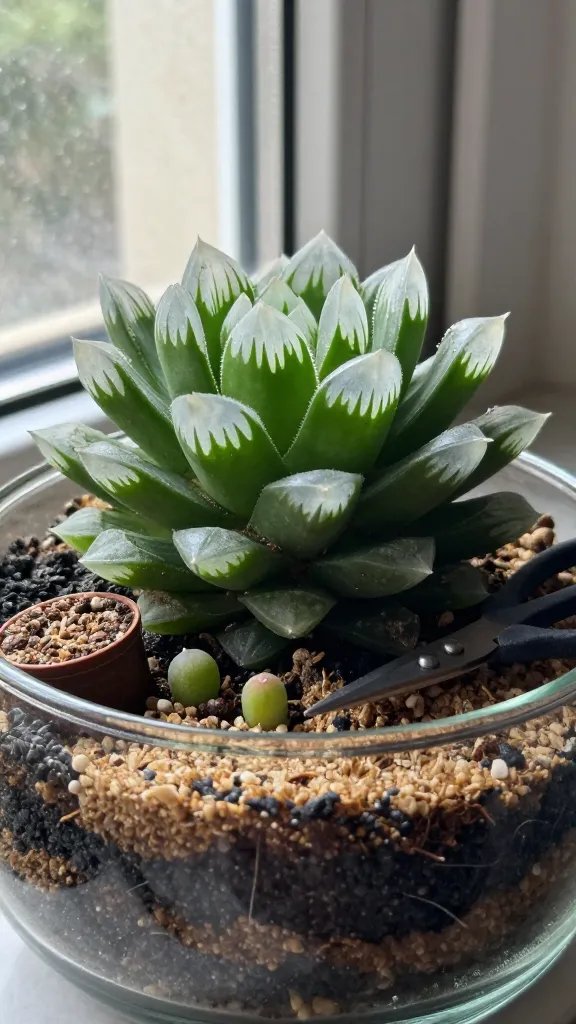
Haworthia cymbiformis forms boat-shaped leaves with light-catching tips that thrive on bright shade. It handles the daily humidity of bathrooms and kitchens better than many succulents. In a terrarium it maintains tidy rosettes and offsets slowly.
Propagation Without Overcrowding
- Remove offsets with clean scissors when they reach thumbnail size
- Replant offsets into small nursery pots to root before adding back to display
Water Schedule
- 2 tablespoons every 3–4 weeks; check that the top layer feels dry and gritty
- If condensation persists for more than 24 hours, skip the next watering
Takeaway: Thin offsets early — crowding traps moisture at the crown and invites rot in still air.
9. Sansevieria trifasciata ‘Golden Hahnii’: Variegation That Survives Shade
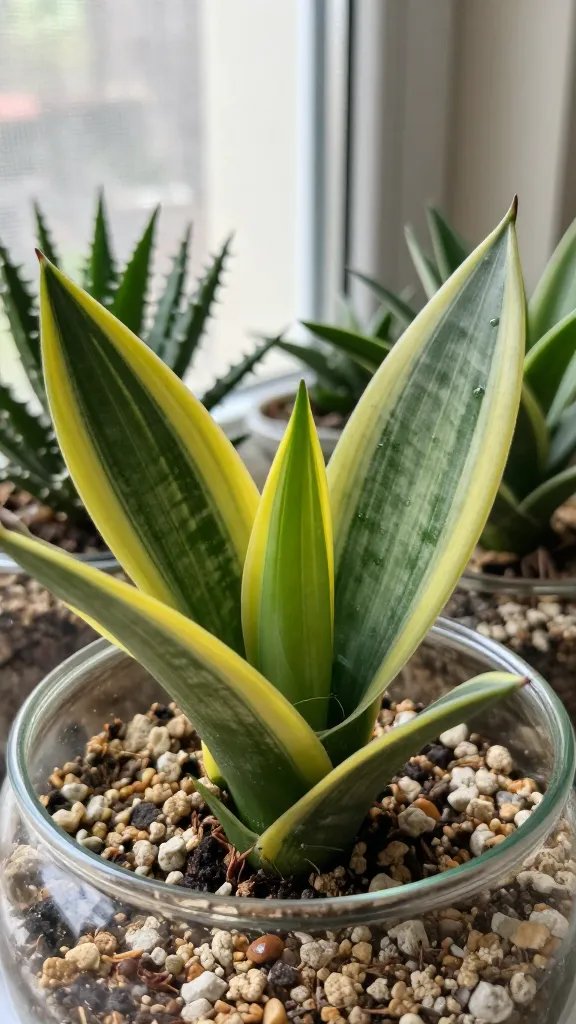
‘Golden Hahnii’ brings yellow edges without demanding strong sun, unlike many variegates. It stays compact and gives your terrarium contrast against darker haworthias. Growth remains slow and controlled, so the design holds for months.
Light Balancing
- Place closest to the window among your plants to protect variegation
- Use a sheer curtain if the glass heats up at midday
Soil and Water
- Standard cactus mix from the garden centre, amended with a handful of pumice
- Water 1–2 tablespoons every 4 weeks; never soak the entire substrate
Action today: Shift this variegate to the brightest spot in your arrangement to keep yellow margins crisp without inviting scorch.
Frequently Asked Questions
How low is “low light” for these succulents?
Think a bright room where you can read comfortably during the day without turning on lights, but with little to no direct sun. Place the terrarium within 2–4 feet of a window or directly under a bright lamp in the evening. If you see plants leaning hard toward the glass, move the setup one foot closer to the window. Avoid deep interior shelves with no nearby window.
Do I need a grow light for a low-light terrarium?
You can succeed without one if the terrarium sits near a window with bright indirect light. If your space is dim all day, add a simple clamp lamp from the hardware store with a neutral white LED bulb. Position it 12–16 inches above the terrarium for 8–10 hours daily. Keep the lamp offset so it doesn’t heat the glass directly.
How do I water succulents in a terrarium without causing rot?
Use a squeeze bottle or syringe to deliver measured tablespoons right at the root zone, not across the whole soil surface. Water every 3–5 weeks depending on room temperature, and only when the top layer feels dry and gritty. Keep leaves dry and ventilate by cracking the lid for two hours after watering. If condensation covers more than half the glass at midday, you watered too much.
Can I close the terrarium, or should it be open?
Most succulents prefer open or ventilated lids because sealed air traps moisture and raises the risk of rot. If you love the look of closed glass, choose a lid you can prop open for a few hours after watering. Aim for a vessel at least 6 inches wide to improve airflow. Watch for persistent fogging — that’s your signal to vent longer.
What soil should I use if I don’t mix my own?
Buy a good cactus and succulent mix from your garden centre and add a small bag of pumice or perlite to increase drainage. Lay a thin base of pea gravel first, then 2–3 inches of the amended mix. Top with coarse sand or aquarium gravel to keep crowns dry and clean. Avoid moisture-control potting soils — they stay wet too long in glass.
How do I keep my terrarium clean and mold-free?
Wipe the inside glass monthly with a dry paper towel to remove algae film that reduces light. Remove fallen leaves promptly so they don’t decay against damp soil. If you see white fuzz on the surface, scrape it off and let the terrarium breathe for a full afternoon. Keep watering measured and infrequent — excess moisture feeds mold first, not plants.
Conclusion
Low light doesn’t doom a succulent terrarium when you choose plants built for it and water in tablespoons, not teacups. Start with two haworthias and one dwarf snake plant, set them near a window, and commit to a monthly check-and-rotate routine. When those hold their shape for eight weeks, you’ll know you’ve got the balance right — then add a fourth plant with confidence.