7 Best Air Plants (Tillandsia) for Glass Terrariums — Ranked by Ventilation Needs Secrets Revealed
I’ve built more glass terrariums than I care to admit, and I’ve steamed more air plants than any grower should. If your Tillandsia turn brown at the base or mold creeps up the glass, the terrarium isn’t breathing enough for the species inside. In this guide, I rank seven reliable air plants by how much ventilation they need, so you can match the plant to your jar, globe, or cloche. You’ll learn exactly which species tolerate tight lids, which demand airflow, and how to set them up with materials you can find at any garden centre.
1. Tillandsia tectorum: Ultra-Low Ventilation Tolerance for Closed Glass
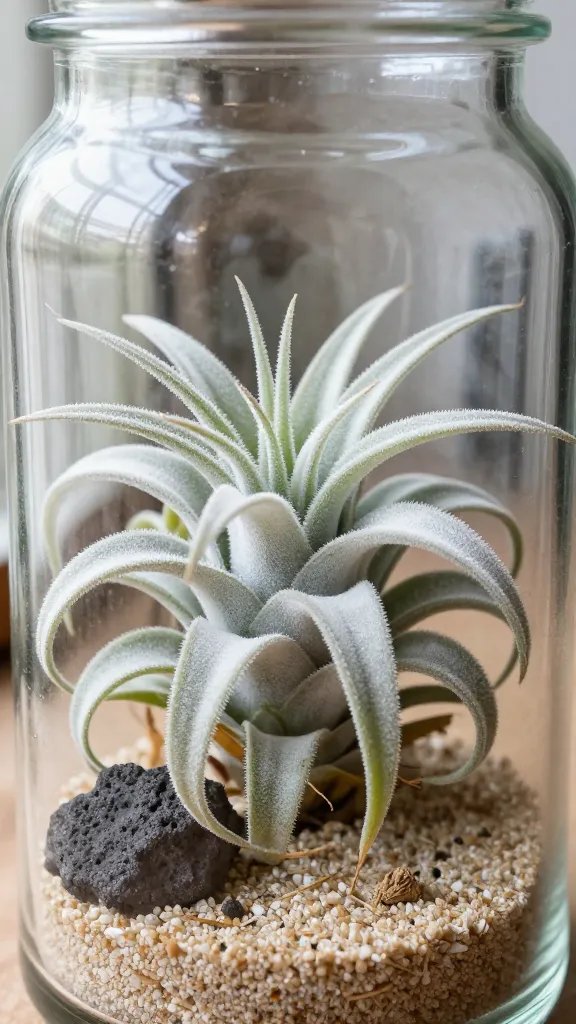
When air barely circulates, most air plants rot within a month. Tillandsia tectorum handles the stillness better than any other I’ve grown, thanks to its thick, fuzzy trichomes that dry fast and reflect heat. It won’t thrive in a swampy terrarium, but it survives longer in low-airflow glass where others fail.
Why It Works in Tighter Glass
- Dense trichomes shed water quickly and resist surface rot.
- Lightweight leaf structure dries out even with minimal air movement.
- Bright-light adaptive — handles strong filtered light beside a window.
Care Setup for Semi-Closed Vessels
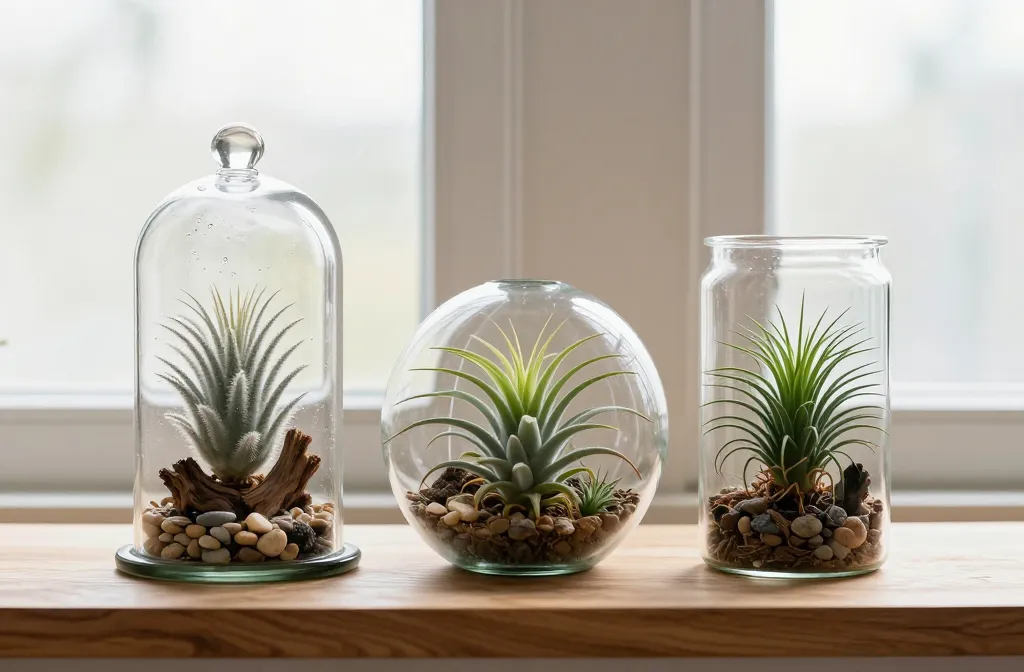
- Use a wide-mouth jar or globe at least the plant’s width for a small air pocket.
- Place on dry hardscape (pebbles or driftwood) — no moss touching the base.
- Mist lightly every 10–14 days, then leave the lid ajar for 2 hours to dry.
Signs to Watch For
- Base turning tan to brown = staying wet too long.
- Leaves going papery and curled = increase misting to every 7–10 days.
Action today: If you want an air plant in a lidded jar, start with T. tectorum and keep its base off any damp moss.
2. Tillandsia brachycaulos: The Forgiving Choice for Partially Vented Globes
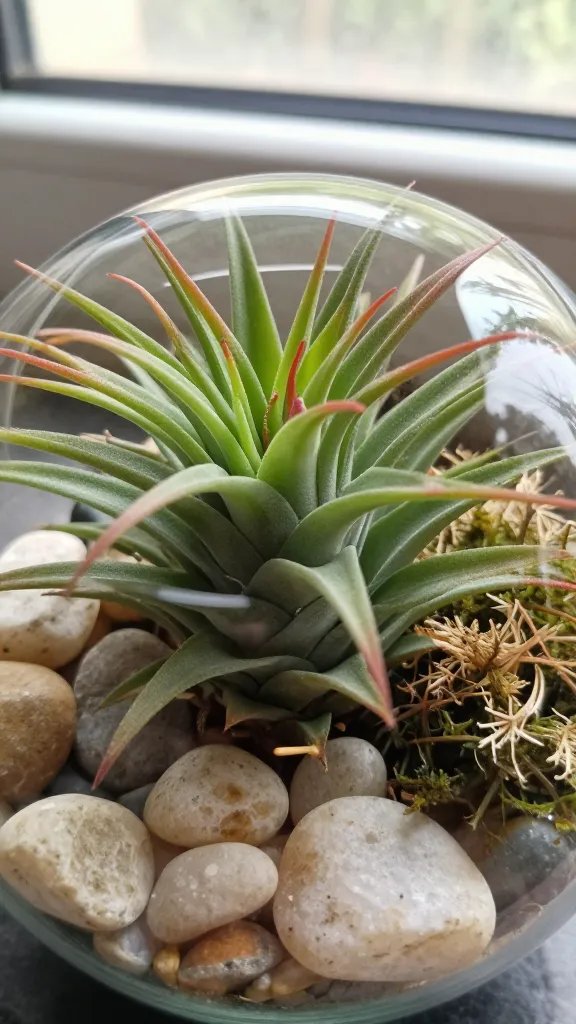
In under-ventilated terrariums, lush green air plants collapse at the core. Tillandsia brachycaulos tolerates modest airflow and rebounds fast after a soak, making it great for globes with a side opening. It also reddens in bright light, which makes care easy to read at a glance.
Placement That Prevents Rot
- Use open-front globes or jars with at least a 5–7 cm opening.
- Prop on dry stones with a toothpick-sized gap under the base for airflow.
- Keep reindeer moss decorative pieces dry — never wet directly.
Water Routine
- Mist 2–3 times per week in warm rooms; once weekly in cool rooms.
- Every 2–3 weeks, give a 10-minute bowl soak, shake off, and air-dry for 2 hours before returning to glass.
Takeaway: If your glass has one decent opening and bright indirect light, T. brachycaulos stays happy with a simple mist-and-monthly-soak rhythm.
3. Tillandsia ionantha: Popular, Compact, and Safe with Moderate Ventilation
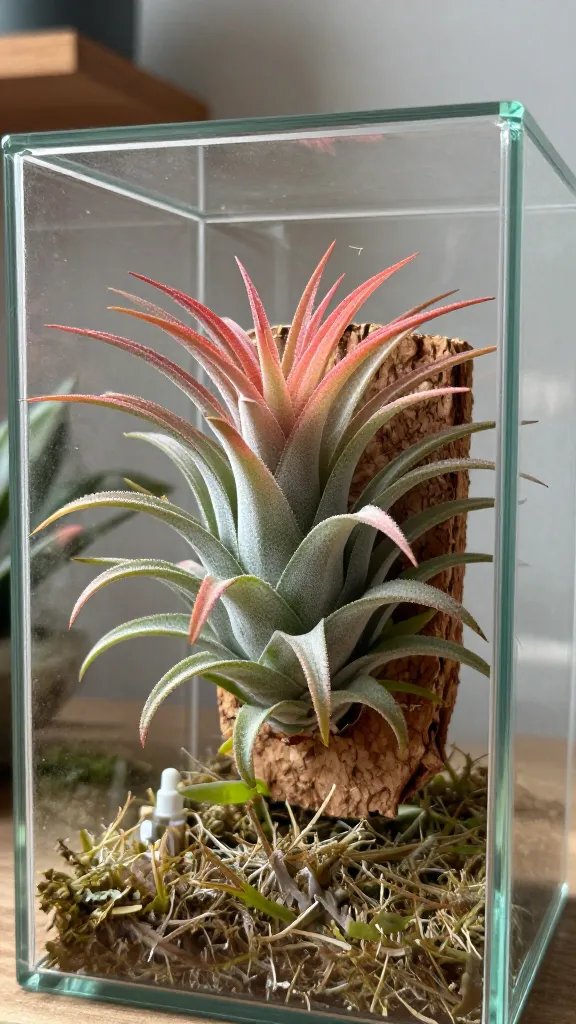
Beginners often cook Tillandsia ionantha behind glass because it sits close to damp moss and gets no breeze. Ionantha handles household humidity but needs the base to dry daily. Its compact rosette fits small vessels without touching the walls, which helps prevent constant condensation contact.
Signs to Watch For
- Greying tips that stay dull after misting = plant isn’t hydrating; increase soak frequency.
- Black at the core = trapped water; tip plant upside down after each mist.
Simple Setup
- Choose a teardrop globe with a 6–8 cm opening.
- Use pea gravel or a small shell as a perch; keep any moss separate and dry.
- Mist every 3–4 days; soak for 15 minutes every 2–3 weeks, then dry thoroughly.
Action today: After any watering, hold ionantha upside down and flick once to clear water from the core.
4. Tillandsia caput-medusae: Handles Intermittent Airflow with Thicker Leaves
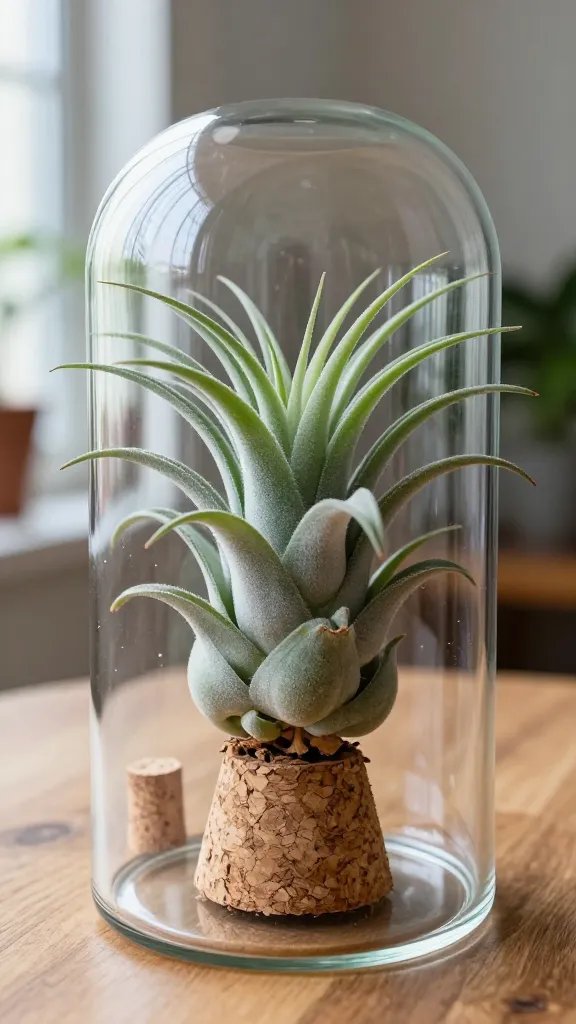
Curly-leaf air plants look dramatic in glass, but broad bases rot fast if air is stale. Tillandsia caput-medusae has thicker leaves that forgive a missed drying cycle, provided you give it space and lift it up from damp surfaces. It needs a slightly larger vessel than its footprint suggests.
Ventilation and Spacing
- Use a wide-bell jar with no lid or a cloche propped 1–2 cm with wine cork spacers.
- Mount on cork bark or a chunk of driftwood for air underneath.
- Avoid closed lids unless you can air it out daily.
Watering That Works
- Mist twice weekly; soak 15 minutes every 2–4 weeks depending on room dryness.
- Dry leaves until they feel room-temperature and flexible, not cool or slick.
Takeaway: Give caput-medusae a bigger dome and a wood mount, and it will tolerate uneven household airflow.
5. Tillandsia stricta: Thrives Only with Good Cross-Breeze in Open Glass
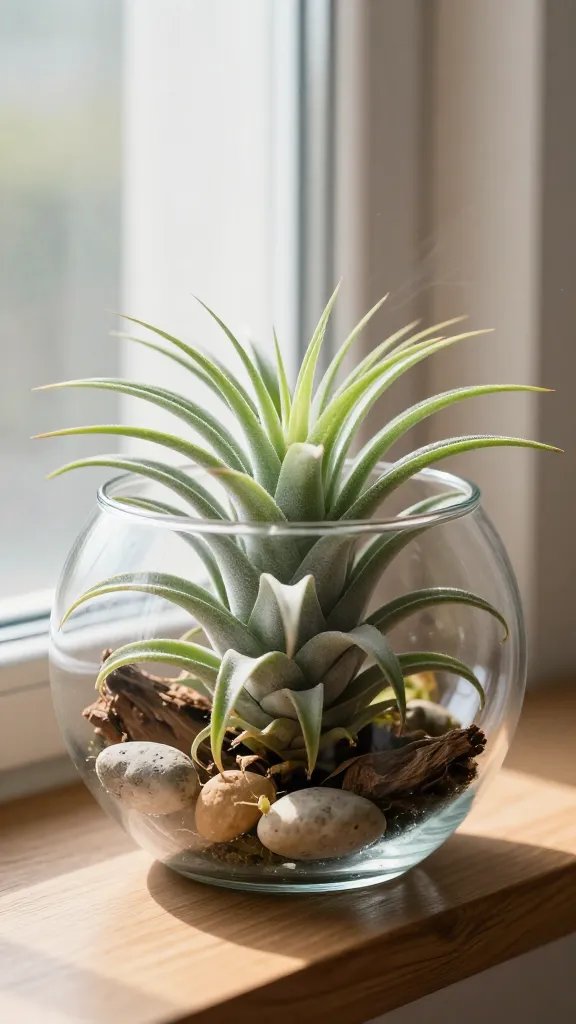
With weak ventilation, Tillandsia stricta traps moisture at the leaf bases and declines within weeks. In an open bowl or pedestal terrarium near a bright window, it grows fast and blooms reliably. The trick is airflow across, not just above.
How to Create Cross-Flow Without Gadgets
- Place the terrarium 30–60 cm from a bright window, not pressed to the glass.
- Prop one side of the bowl on felt pads to create a low, hidden air gap.
- Rotate the terrarium a quarter turn weekly so all sides breathe.
Water and Light
- Mist 3 times per week in summer; reduce to weekly in winter.
- If tips brown, move it closer to bright, indirect light rather than watering more.
Action today: If your stricta sits in a bowl, lift the rim a few millimetres with furniture pads to improve airflow immediately.
6. Tillandsia bulbosa: Needs Strong Ventilation and Careful Drying to Avoid Base Rot
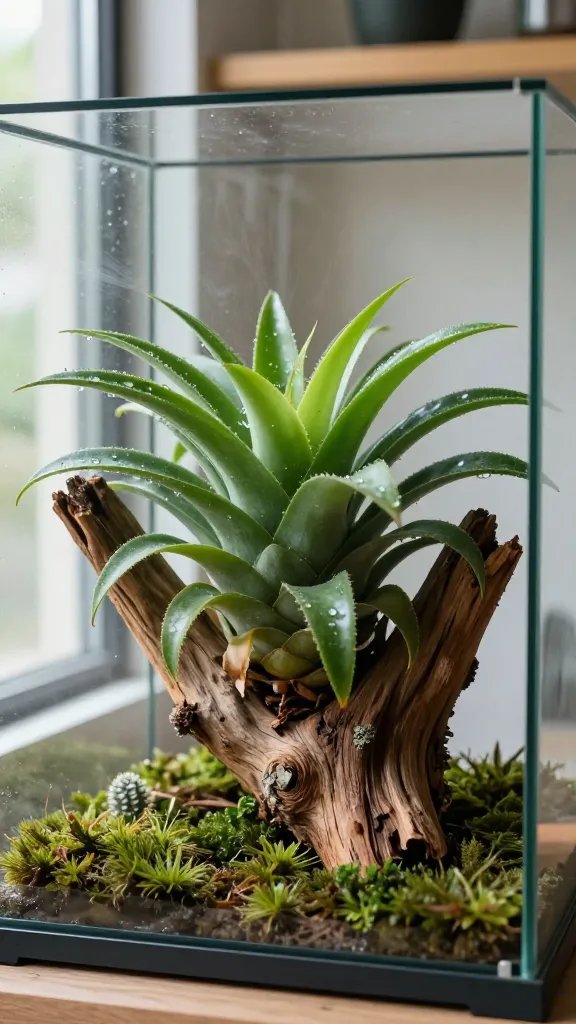
Those hollow, tentacled leaves are rot traps in still air. Tillandsia bulbosa demands strong ventilation and quick drying after every soak, or the base turns black. It shines in open-front terrariums where air can sweep in and out.
Mounting Matters
- Secure to cholla wood or a forked driftwood piece so air reaches all sides.
- Keep the bulbous base fully above any decorative moss.
- Avoid glass that narrows at the top — warm, wet air gets trapped.
Watering Routine
- Soak 10–12 minutes weekly, then shake vigorously and dry for 3 hours on a towel before returning.
- Skip misting on humid days to prevent pooling in the curves.
Takeaway: If you insist on bulbosa in glass, use a wide, open vessel and dry it completely after each soak before it goes back in.
7. Tillandsia xerographica: High Ventilation Only — Best for Large, Open Vessels
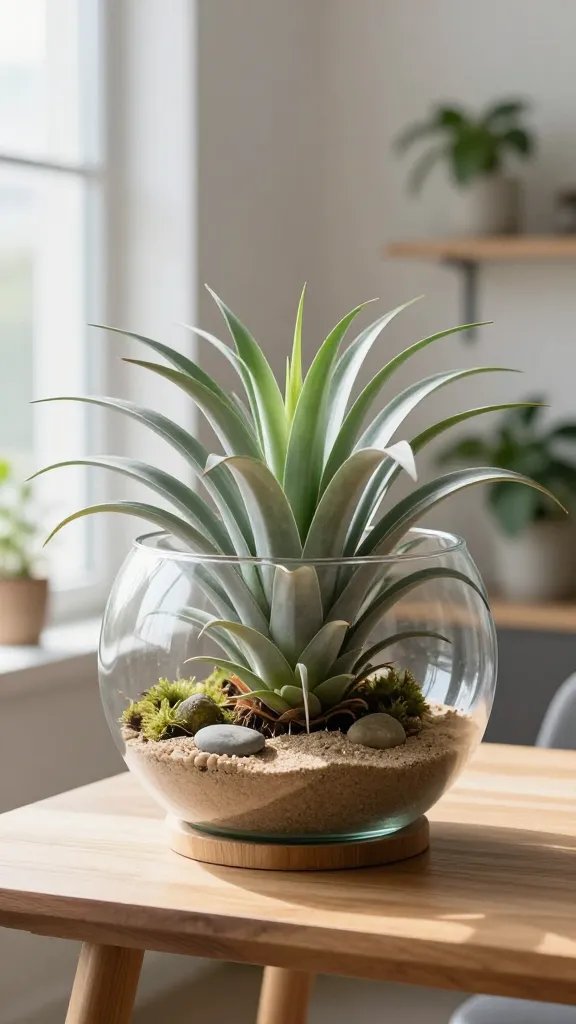
In tight glass, the majestic Tillandsia xerographica suffocates and collects condensation under its broad leaves. It needs a generous air cushion and strong light or it stalls. In a big open bowl or on a pedestal within a terrarium frame, it becomes the centrepiece that never looks cramped.
Space and Light
- Choose a vessel at least 1.5–2 times the plant’s width, fully open at the top.
- Place in bright indirect light — a bright room near a window, not direct noon sun through glass.
- Lift on a short stone stack to ventilate underneath.
Watering
- Mist 3 times per week in warm months; deep soak for 15–20 minutes every 2–3 weeks.
- Always dry the crown; tip the plant sideways after soaking to dump trapped water.
Action today: If your xerographica touches the glass, upsize the vessel or switch to an open bowl before the base softens.
Frequently Asked Questions
How do I know if my terrarium has enough ventilation for air plants?
Check the glass at midday. If condensation covers more than one-third of the walls or lingers past late morning, airflow is poor. Prop the lid open with a wine cork, switch to a wider opening, or elevate the plant on dry stones. Leaves should feel dry within 2–3 hours after misting.
Can I keep air plants with moss and stones in the same terrarium?
Yes, but keep air plants off damp moss. Use stones or wood to create a dry perch and keep decorative moss in separate dry patches. If you want living moss, restrict watering to light misting away from the air plant base and allow full drying before closing any lid. Watch for wicking — if the base feels cool and damp, raise the plant higher.
What kind of water should I use for air plants in glass?
Use rainwater, distilled, or tap water that tastes clean and not salty. Hard water leaves deposits on glass and trichomes, reducing absorption. When soaking, use room-temperature water and avoid fertilising more than once a month with a bromeliad fertiliser at one-quarter strength. Rinse with plain water the following week to prevent buildup.
How often should I water air plants in a closed or semi-closed terrarium?
In semi-closed glass, mist lightly every 7–10 days and do a short soak every 2–3 weeks, drying thoroughly before returning. In open glass with good airflow, expect to mist 2–3 times weekly and soak every 2–3 weeks. Always prioritize drying speed over frequency — air plants fail from staying wet, not from brief dryness.
Why are my air plant tips browning inside the terrarium?
Browning tips signal too little light, old age on the outer leaves, or mineral buildup. Move the terrarium closer to bright indirect light near a window and switch to softer water. Trim crispy tips with clean scissors, following the natural leaf shape, and adjust watering so leaves dry within a few hours after each mist.
Do air plants need fertiliser in terrariums?
They benefit from light feeding but only in moderation. Use a bromeliad or air plant fertiliser at one-quarter strength once a month during spring and summer. Apply after a plain-water rinse to avoid salt shock, then dry the plant thoroughly before putting it back into glass. Skip fertiliser in winter when growth slows.
Conclusion
Match the plant to the glass, not the other way around: choose T. tectorum for low airflow, step up through ionantha and stricta as openings get wider, and reserve xerographica for large, open bowls. Set one plant today on a dry perch with a clear drying routine, and you’ll see the difference within two weeks. Ready for the next step? Build a simple, open-front terrarium and graduate your airiest species into it for steady growth and blooms.