6 Terrarium Plants That Look Compatible but Will Kill Each Other Exposed
I’ve built terrariums that looked like tiny jungles on day one and turned into brown soup by week three. The problem wasn’t my glass or my soil — it was plant combos that fought each other in ways I didn’t see coming. In this guide, I’ll show you six specific pairings that fail for predictable reasons: moisture, airflow, soil chemistry, growth speed, and light needs. You’ll learn exactly what to avoid, how to spot trouble early, and which substitutes thrive together in small, low-maintenance setups.
1. Tropical Moss With Succulents: Permanent Wet Meets Permanent Dry
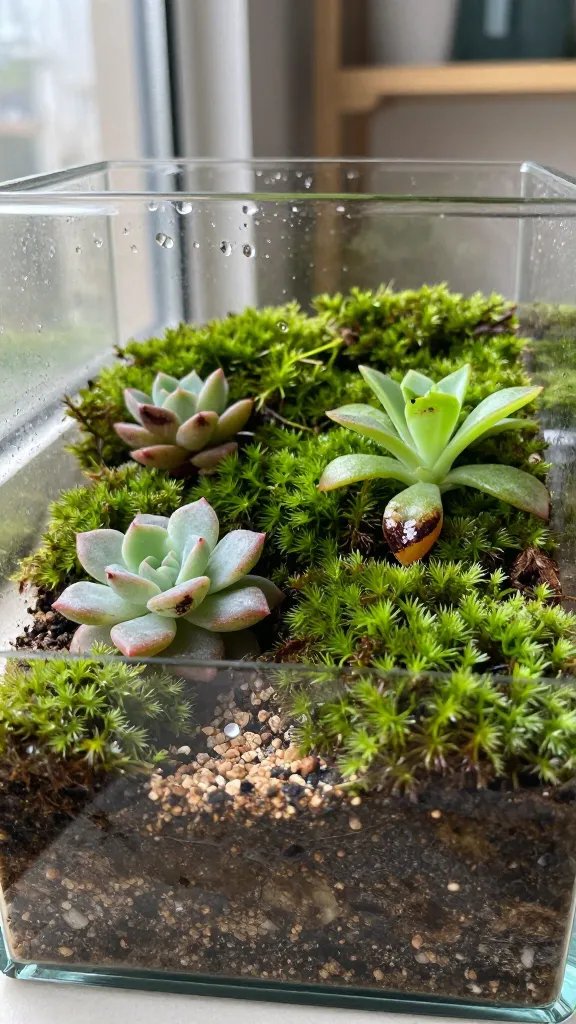
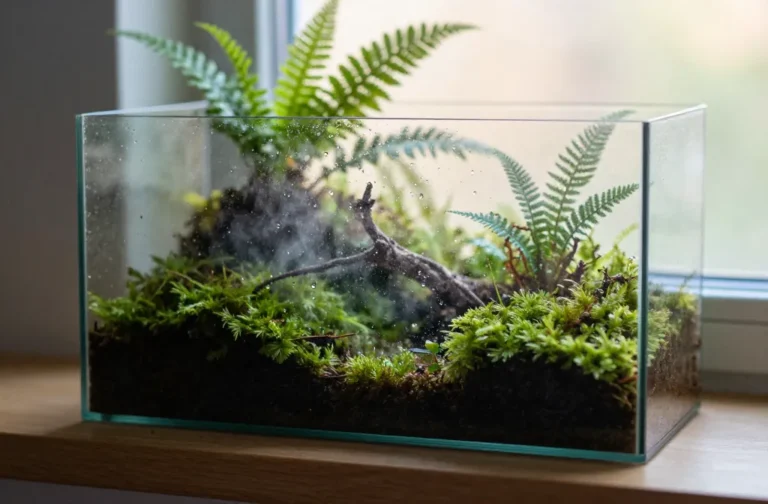
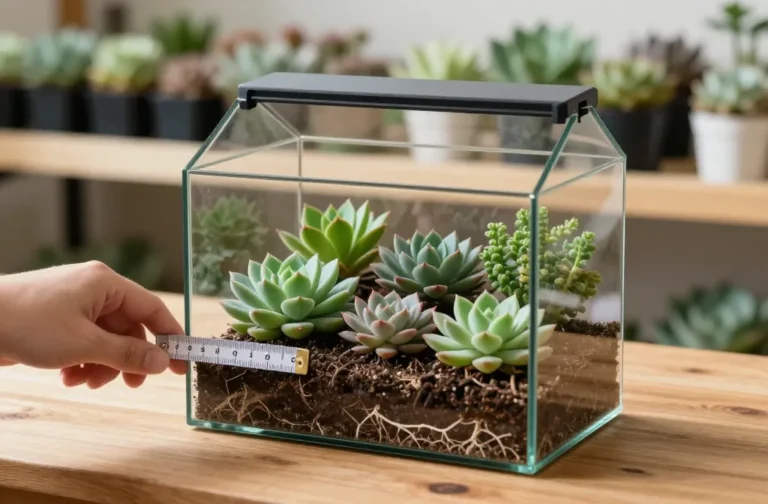
Pairing lush sheet moss or cushion moss with succulents (like Haworthia, Echeveria, or Crassula) looks cute for a week and then collapses. The humidity that keeps moss green suffocates and rots succulent roots. Open or closed, the watering rhythm these plants need is fundamentally opposite.
Signs to Watch For
- Succulents develop translucent, mushy leaves within 10–14 days.
- Moss goes crispy at the edges if you try to “save” the succulents by drying the setup.
- Soil smells “swampy” even though the top looks dry.
How to Fix It
- Separate them. Keep succulents in a shallow, open container with a gritty cactus mix and water every 3–4 weeks.
- Keep moss in a closed or semi-closed jar on consistently moist (not soggy) substrate and mist lightly once a week.
- Use two different displays instead of forcing a compromise.
What to Use Instead
- For a mossy look in humid builds: Selaginella (spikemoss), Pilea depressa, Fittonia (nerve plant).
- For a dry, open terrarium: small Haworthia, Gasteria, or Sempervivum with decorative gravel.
Takeaway: Never mix true desert succulents with moisture-loving moss — build two separate habitats that match their watering needs.
2. Ferns With Cacti: High Humidity Versus Bone-Dry Roots
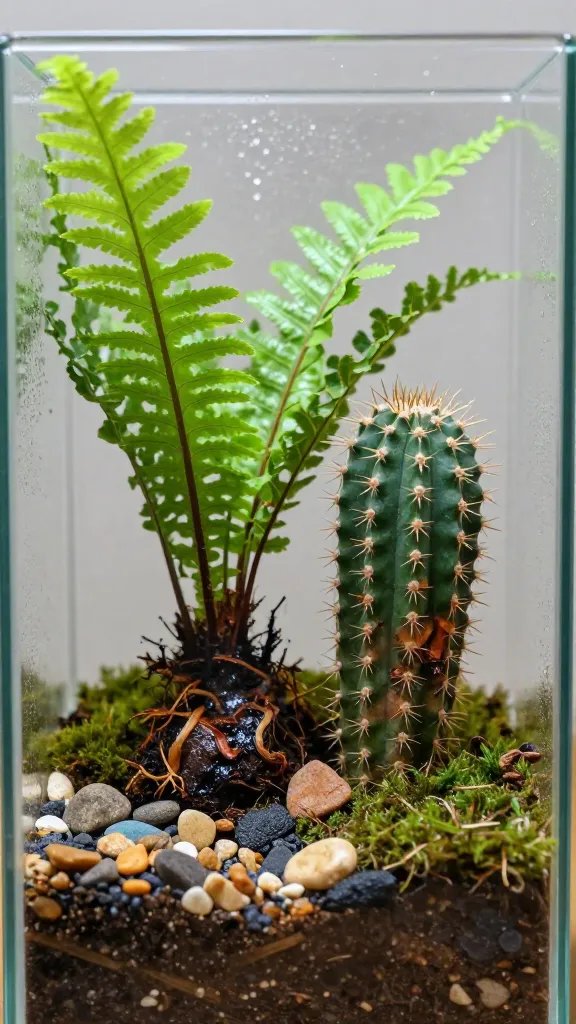
Ferns like Nephrolepis (Boston fern) and Asplenium (bird’s nest) crave constant moisture and still air. Cacti demand fast-draining soil and long dry spells. Together, you’ll either rot the cactus or crisp the fern — there’s no middle ground that keeps both alive inside glass.
Signs to Watch For
- Cacti wrinkle at first, then collapse at the base from rot within 3–6 weeks.
- Ferns brown at the tips and shed fronds if you reduce watering to save the cactus.
- Condensation cycles are erratic: dry glass in the morning, heavy fogging at night.
How to Fix It
- Move the cactus to a separate pot with cactus mix and a top layer of gravel for airflow.
- Keep the fern in a closed or lidded terrarium with evenly moist soil and a thin drainage layer of pebbles and charcoal.
- Place ferns near a bright window with no direct midday sun; cacti need several hours of direct sun or a very bright sill.
What to Use Instead
- With ferns: Pepperomia prostrata, Fittonia, compact Philodendron micans cuttings.
- With cacti: small Mammillaria, Rebutia, or Hildewintera pups in an open, un-lidded dish.
Action today: If you see any frond tip browning or cactus base softening, rehome one of them within 24 hours — you won’t “balance” this pairing by tweaking watering.
3. Fast-Spreading Selaginella With Slow Miniatures: One Plant Will Smother the Rest
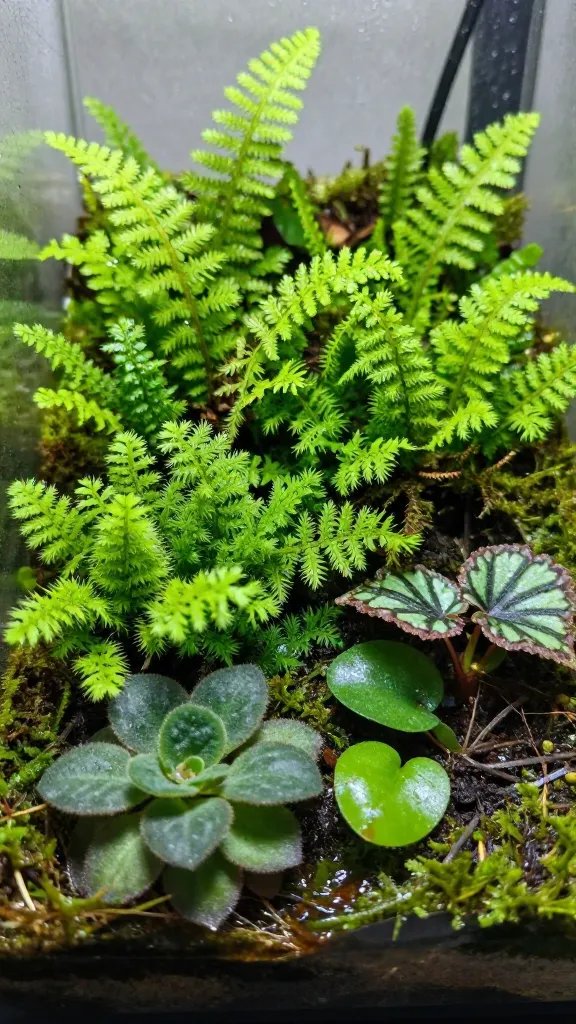
Selaginella kraussiana (spikemoss) looks delicate but behaves like a green carpet bomb. It creeps fast, retains water, and lifts other plants out of the substrate. Slow growers like mini African violets, tiny peperomias, or Begonia rex minis vanish under it within a month.