The Truth About 5 Things That Happen to a Succulent Terrarium in the First 30 Days — and What’S Normal
I’ve built more succulent terrariums than I care to admit, and my first month with each one always tells the truth. The glass fogs, leaves wrinkle or swell, and a little fungus gnat tries to move in — it’s all part of the settling-in phase. In this guide, I’ll show you what changes are normal in the first 30 days, what signals trouble, and exactly how to steer things back on track. You’ll finish with a simple weekly routine that keeps your terrarium thriving without special tools.
1. Condensation Patterns Stabilize — Or Signal Overwatering
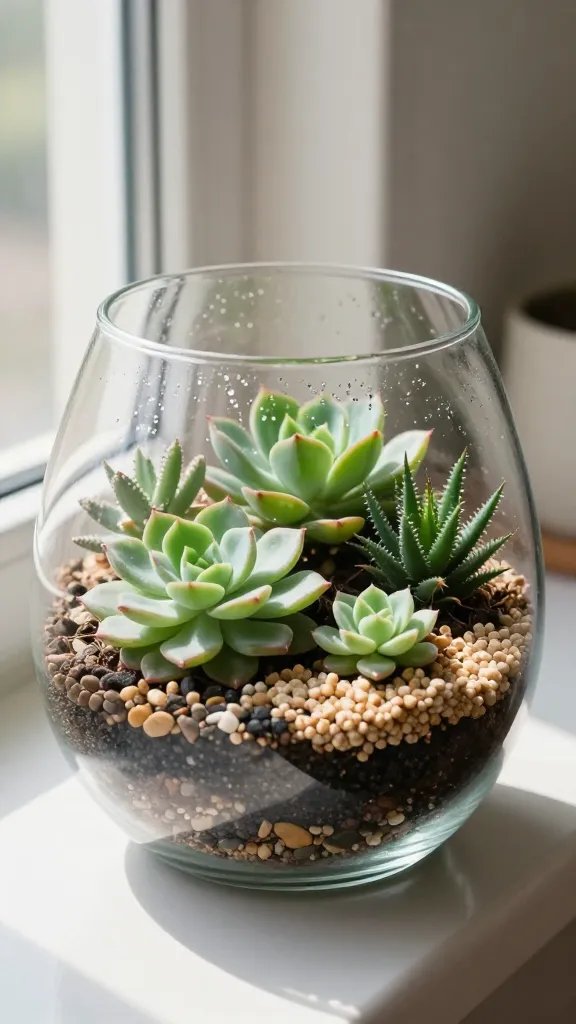
In the first week, your terrarium’s glass starts to fog and clear as temperatures rise and fall. Some morning mist is normal; heavy all-day fog means too much moisture trapped inside, which suffocates roots and invites rot.
By week two, you should see a rhythm: light condensation early, mostly clear by midday in bright rooms. If you see constant droplets running down the sides at noon, you’ve crossed into overwatering territory.
Signs to Watch For
- Light, even mist on the glass in the morning that dries by lunchtime — normal
- Large droplets streaming down glass most of the day — excess moisture
- Soil that looks shiny or puddled after two hours — no airflow and saturation
How to Fix It
- Open the lid for 2–4 hours at midday for three days in a row to vent humidity.
- Blot the soil surface with a folded paper towel to wick out excess water near stems.
- Move the terrarium 30–60 cm back from a sunny window to reduce daily temperature spikes that drive condensation.
What to Use Instead
- A spray bottle for micro-watering: 5–10 spritzes aimed at the soil only.
- A turkey baster or pipette to target water around roots without flooding.
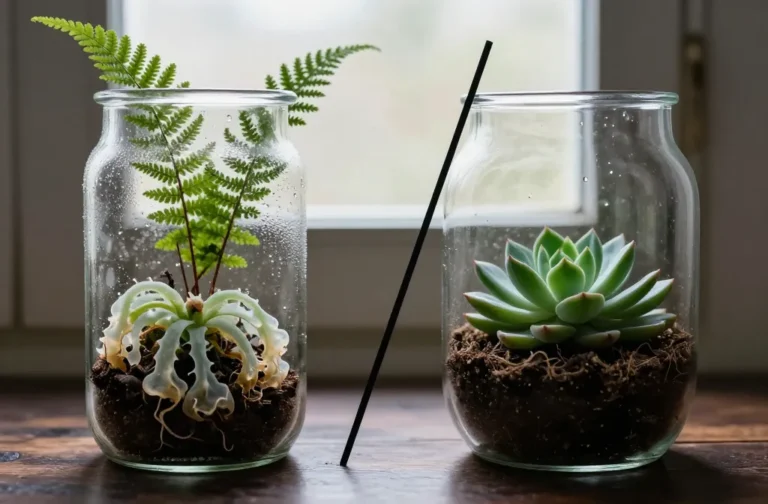
- A bamboo skewer to test moisture 2–3 cm down; it should come out barely damp, not muddy.
Action today: Check your glass at midday. If more than half is fogged, pop the lid for two hours and repeat tomorrow — you’ll reset the moisture balance before rot sets in.
2. Leaves Shrivel Or Swell — Your Watering Pace Is Off
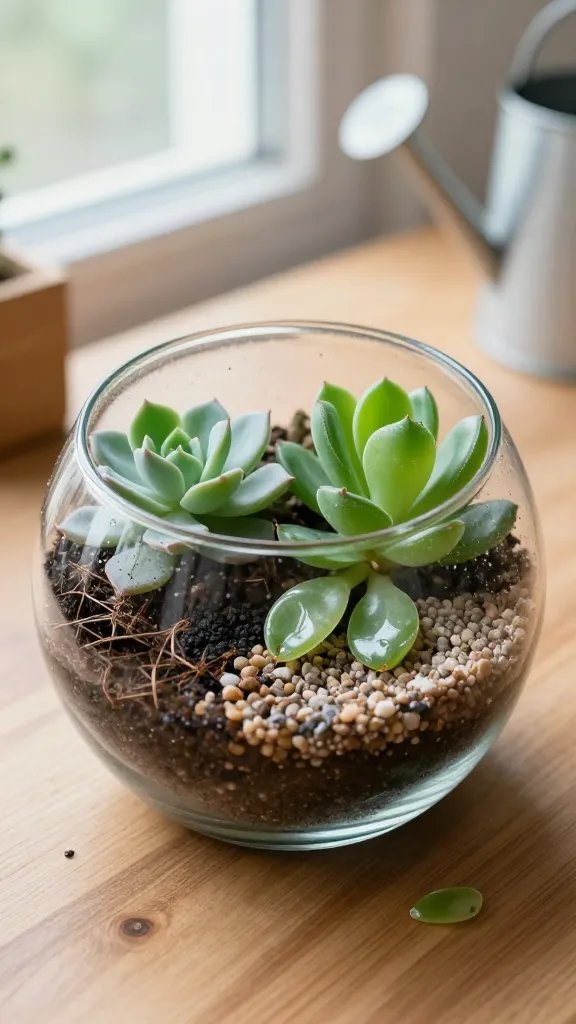
Succulents store water in their leaves, so they announce your mistakes. In the first 10–14 days, underwatering shows as wrinkled, floppy leaves; overwatering shows as fat, translucent, or splitting leaves that drop easily.
Most new terrariums need far less water than you think. The glass walls trap humidity, and even an open terrarium dries slowly compared to a standard pot.
Signs to Watch For
- Underwatered: Thin, accordion‑wrinkled leaves, slight inward curl, soil pulling from the glass edge
- Overwatered: Leaves turn soft, translucent, or pop off with a light touch; lower leaves yellow first
- Healthy: Leaves feel firm like a grape, not hard like marble or soft like jelly
How to Fix It
- Underwatered: Give 1–2 tablespoons of water per 10 cm of container width. Aim at the soil, not the rosettes.
- Overwatered: Withhold water for 10–14 days. Vent the container daily at midday for an hour.
- Remove only the mushy leaves by pinching at the base; leave firm leaves to recover.
What to Use Instead
- Switch from “pouring” to measured sips every 3–4 weeks for closed or semi-closed terrariums.
- Use a measuring spoon or a water bottle cap to dose water precisely.
- Pick a fixed “water check day” each week to feel leaf firmness rather than guessing.
Takeaway: In the first 30 days, water once — maybe twice — total. Let leaf feel guide you: firm is right, jelly is wet, wrinkled is dry.
3. Soil Settles And Gaps Appear — Roots Need Air, Not Compaction
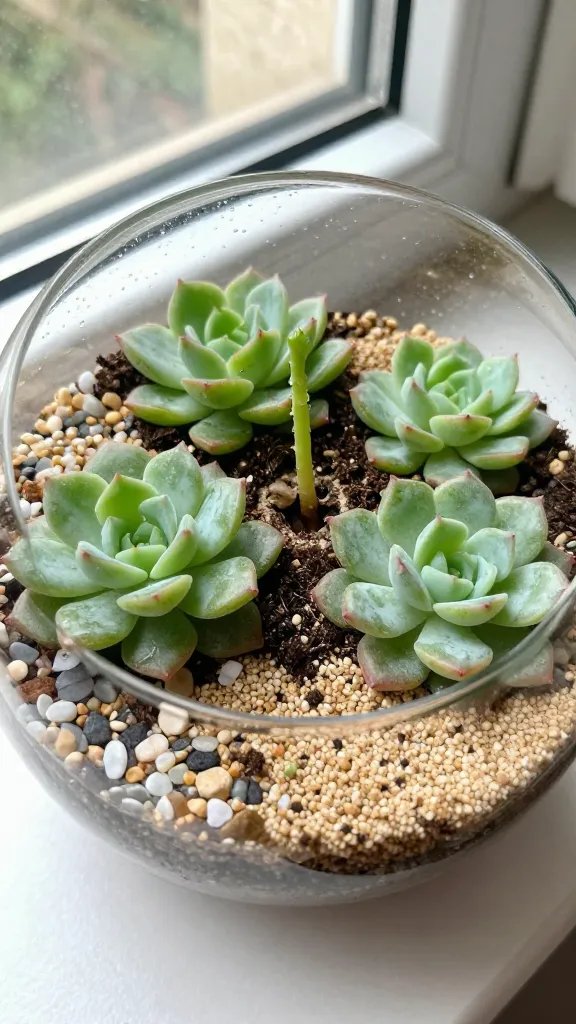
After planting, soil compresses and fine particles wash down between larger grains. By week two, you may see a slight sinkhole near stems or a gap where soil pulled back from the glass. That’s normal settling, but it becomes a problem if the soil compacts so tightly that water puddles on top and roots can’t breathe.
Compaction sneaks up: leaves look fine, but growth stalls and stems lean because the anchor is loose underground.
Signs to Watch For
- Water beads on the surface for more than 60 seconds — compaction
- Stems leaning or wobbling when you nudge them — poor anchoring
- Visible air gaps at the glass that collect condensation — settling, harmless unless large
How to Fix It
- Top up with a thin layer (0.5–1 cm) of cactus/succulent potting mix from a garden centre to level low spots.
- Gently tamp with two fingers or the back of a spoon — firm enough to support, not brick-hard.
- Create a shallow gravel collar around stems (pea gravel or aquarium gravel) to keep crowns dry and stable.
What to Use Instead
- Mix in a handful of perlite or pumice with the top-up soil for better airflow.
- Use a paintbrush to sweep mix off leaves; trapped soil against leaves holds moisture and causes spots.
Action today: Water a teaspoon onto one bare soil spot and count; if it sits longer than a minute, top-dress with fresh cactus mix and a pinch of perlite to reopen airflow.
4. Algae, Mold, And Gnats Test Your Hygiene — Small, Normal; Spreading, Not
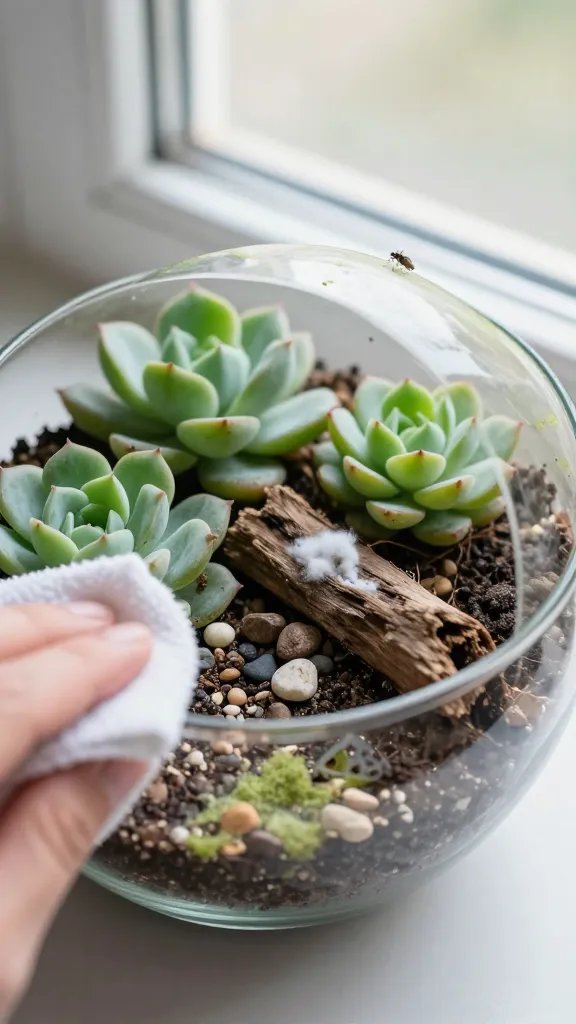
Week one brings invisible spores to life. A thin green film on the glass or a dusting of white fuzz on bark is common while humidity and temperature swing around. Left alone, that film thickens, the soil stays wetter, and fungus gnats find a nursery.
You don’t need chemicals to regain control. Cleanliness and short, consistent ventilation sessions stop the cycle.
Signs to Watch For
- Algae: Pale green stain on glass or top of soil — wipes off easily
- Mold: White cottony tufts on wood, gravel, or dead leaves
- Gnats: Tiny black flies hovering when you disturb the soil
How to Fix It
- Wipe the inside glass with a dry paper towel wrapped around a chopstick. Avoid soaking wood decor.
- Spot-treat fuzzy patches with a cotton swab dipped in 3% hydrogen peroxide; dab and let dry.
- For gnats, cover bare soil with a 0.5–1 cm layer of coarse sand or fine gravel to block egg-laying.
- Vent the lid 1–2 hours daily for a week; reduce watering until glass clears by midday.
What to Use Instead
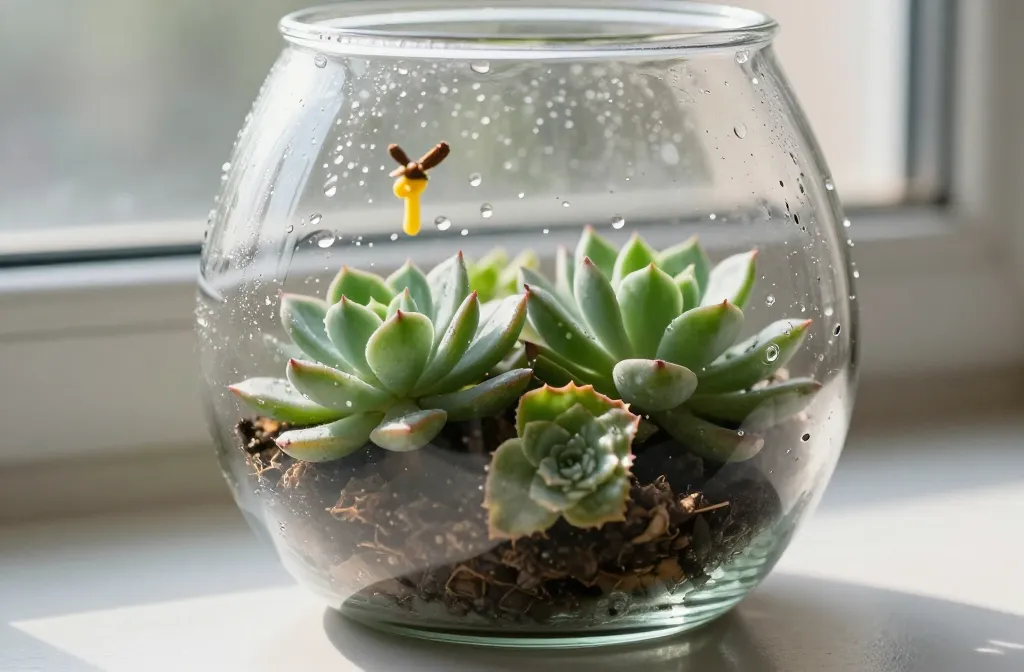
- Yellow sticky traps cut into small squares and placed discreetly near the terrarium for adult gnats.
- A light cinnamon dusting on moldy bark as a mild surface antifungal — go easy to avoid residue.
Takeaway: If it wipes off easily and doesn’t return within three days, it’s normal; if it returns fast, add daily ventilation and a gravel cap to break the moisture cycle.
5. Light Stress Shows In Color Shifts — Read The Leaves, Move The Glass
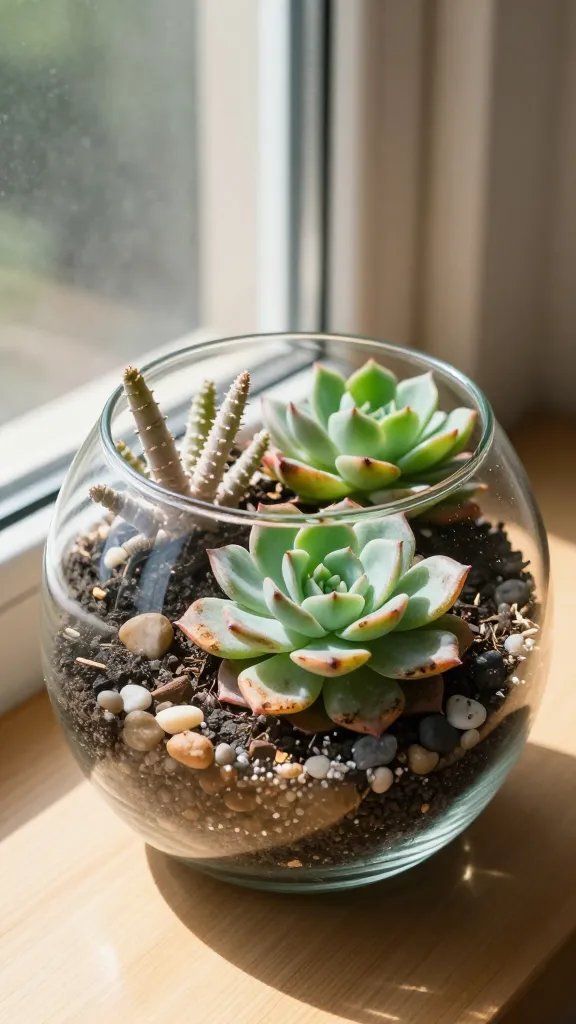
Light is the quiet driver of everything in a succulent terrarium. In the first 30 days, too little light stretches stems and washes out color; too much direct sun through glass cooks leaves and scars them with sunburn patches.
Your goal is bright indirect light near a window for most of the day, with only brief dappled sun. Think east window or set back from a south window by 60–120 cm.
Signs to Watch For
- Low light: Stems grow tall between leaves (stretching), pale new growth, rosettes loosening
- Too much sun: Brown, crisp patches on the sun-facing side; glass too hot to hold for 5 seconds
- Just right: Compact rosettes, steady firm leaves, mild blush on tips of Echeveria or Sedum
How to Fix It
- For low light, move the terrarium to an east window or within 1 m of a bright window. Avoid deep shelves.
- For harsh sun, shift it 60–120 cm back or hang a sheer curtain to soften midday rays.
- Rotate the container a quarter turn once a week to keep growth even.
What to Use Instead
- A simple clip-on LED grow light from a hardware store, set 30–45 cm above for 8–10 hours, if your room stays dim.
- A white poster board behind the terrarium to bounce window light without heat.
Action today: Hold your hand between the terrarium and the window at midday; if your hand casts a sharp, hot shadow on the glass, move the terrarium back 60–90 cm to prevent sunburn.
Frequently Asked Questions
How often should I water a succulent terrarium in the first month?
Once, sometimes twice total. Start with 1–2 tablespoons per 10 cm of container width, directed at the soil. Watch midday glass: if it clears by lunch and leaves feel firm, stop. Only repeat when leaves wrinkle or the skewer test comes out dry and clean.
Is heavy condensation normal for a succulent terrarium?
Light morning mist is normal; heavy droplets all day are not. Succulents prefer drier air than moss terrariums. Vent the lid for 2–4 hours at midday and repeat for a few days, then reduce watering to measured sips. Aim for mostly clear glass by lunchtime.
Why are my succulent leaves dropping after I set up the terrarium?
Leaves drop when the base stays wet or when the plant is shocked by heat through the glass. Remove any mushy leaves, add a thin gravel collar to keep the crown dry, and pull the terrarium back from direct sun. Pause watering for 10–14 days and check leaf firmness before resuming.
Can I plant moss with succulents in the same terrarium?
Not in a closed or very humid setup. Moss thrives on constant moisture that succulents dislike. If you want both, use an open container, separate the moss on a higher, drier ridge, and water the moss with a targeted spritz while keeping succulent crowns dry. Expect to trim moss monthly to prevent crowding.
What soil should I use if my current mix stays wet too long?
Use a store-bought cactus/succulent mix and blend in a handful of perlite or pumice for extra drainage. Top-dress with coarse sand or fine gravel to keep the surface dry around stems. If repotting isn’t an option, add a 0.5–1 cm top-up layer of cactus mix plus perlite to improve airflow right away.
Do I need a drainage layer of pebbles at the bottom?
No. In small terrariums, pebbles create a perched water zone that keeps roots wetter, not drier. Focus on a fast-draining soil and careful, measured watering. If you already have pebbles, water even less and rely on midday venting to manage moisture.
Conclusion
The first 30 days are about reading the glass and the leaves, then making small, steady corrections. Pick a weekly check-in: midday glass, leaf firmness, and a quick nudge of each stem. With that rhythm set, your next step is to refine plant selection — choose compact, slow growers that stay neat under bright indirect light and minimal water.