Stop the Rot: 4 Terrarium Watering Mistakes That Cause Root Rot in Succulents
I’ve watched more than one pretty succulent terrarium slide into mush because I treated it like a houseplant in a pot. If you’ve seen leaves turn translucent, smelled a sour funk, or spotted fuzzy mold in your glass, you’re in the same boat I was. In this guide, I’ll show you the four watering mistakes that trigger root rot in succulent terrariums and the exact fixes you can do with basic tools. You’ll leave knowing when to water, how much, and how to set up your terrarium so rot never gets a foothold.
1. Overwatering: Water Sitting Longer Than Roots Can Use
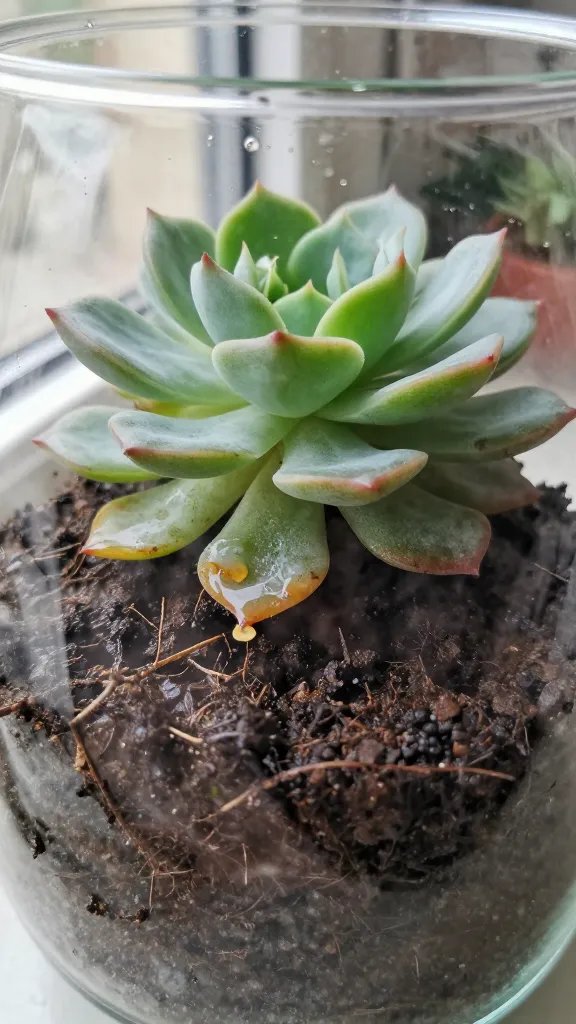
Rot starts when succulent roots stay wet for days on end. In a terrarium, there’s nowhere for excess water to drain, so every extra spritz lingers around the roots and suffocates them.
Signs To Watch For
- Translucent, mushy leaves that slip off with a light touch
- Sour or swampy smell when you open the lid or lift the glass
- Condensation beading on the glass most of the day, not just mornings
- Soil that feels cold and wet when you press a fingertip 1 inch down
How To Fix It
- Dry it out fast: Remove the lid (or open the vessel) for 24–48 hours. Place the terrarium in bright indirect light near a window to speed evaporation.
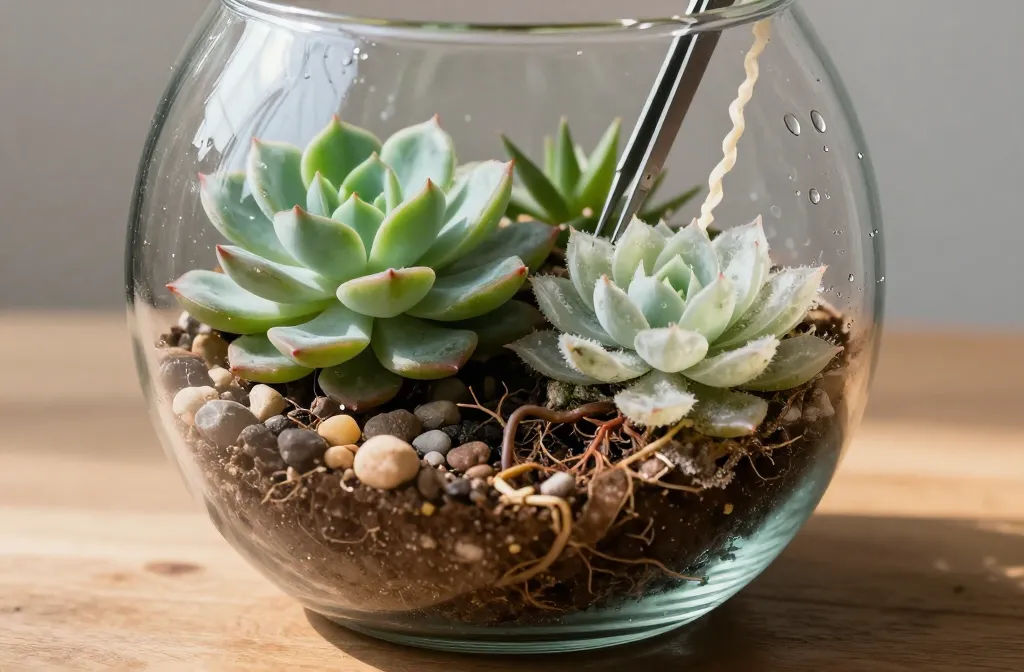
- Wick the excess: Twist a strip of paper towel into a cord and lay one end on the wet soil, the other hanging over the rim to drip into a bowl. Replace as it saturates.
- Rescue soft plants: Gently unpot the worst rotting succulents. Trim black or mushy roots with clean scissors. Let cuts dry for 24 hours, then replant in dry mix.
- Reset your schedule: For succulents in glass, water every 3–4 weeks in winter and every 2–3 weeks in summer, adjusting only if leaves wrinkle from true thirst.
What To Use Instead Of Heavy Watering
- Fine-mist spray bottle: 5–10 pumps aimed at the soil, not leaves, equals about 1–2 tablespoons in a small bowl terrarium.
- Squeeze bottle: A plastic condiment bottle lets you place a teaspoon at a time at the base of each plant.
Action today: Open your terrarium at midday and feel 1 inch into the soil. If it’s cool and damp, do not water; ventilate for 24 hours instead.
2. Trapped Humidity: Closed Lids And Foggy Glass Creating A Mini-Swamp
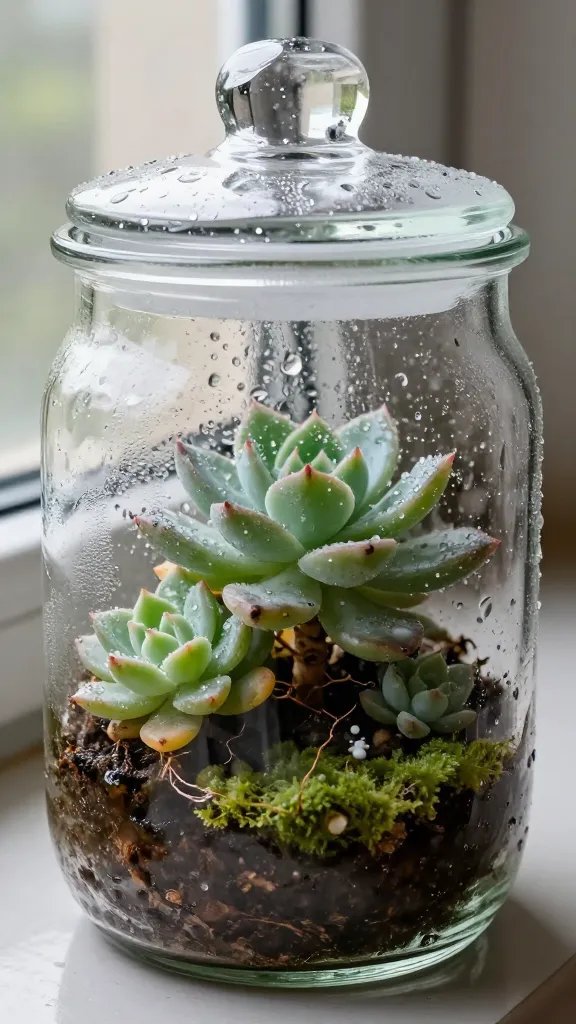
Even if you don’t overwater, a closed lid turns a succulent terrarium into a humidity trap. Constant fog on the glass means moisture can’t escape, so roots stay clammy and rot organisms flourish.
Signs To Watch For
- Condensation covering more than half the glass after midday
- Green algae slick forming on the soil or glass
- Leaves staying dewy for hours after misting
How To Fix It
- Vent on a schedule: Leave the lid off for 2–3 hours after each watering. If the glass is foggy by lunch the next day, vent again.
- Create a gap: If you love the look of a lid, set it slightly askew or rest it on two bottle caps to leave a 3–5 mm gap for airflow.
- Move the terrarium: Place it in bright indirect light near a window where air moves a little. Avoid bathrooms and kitchens where steam lingers.
What To Use Instead
- Open or partially open vessels: Fishbowl-style or footed glass with a wide mouth keeps humidity reasonable for succulents.
- Small USB fan: Run for 15 minutes after watering if the room is very still. Keep airflow gentle and indirect.
Takeaway: Keep condensation below one-third of the glass by midday; if you see more, vent the terrarium the same day.
3. Using Water-Retentive Soil: Potting Mix That Stays Wet For A Week
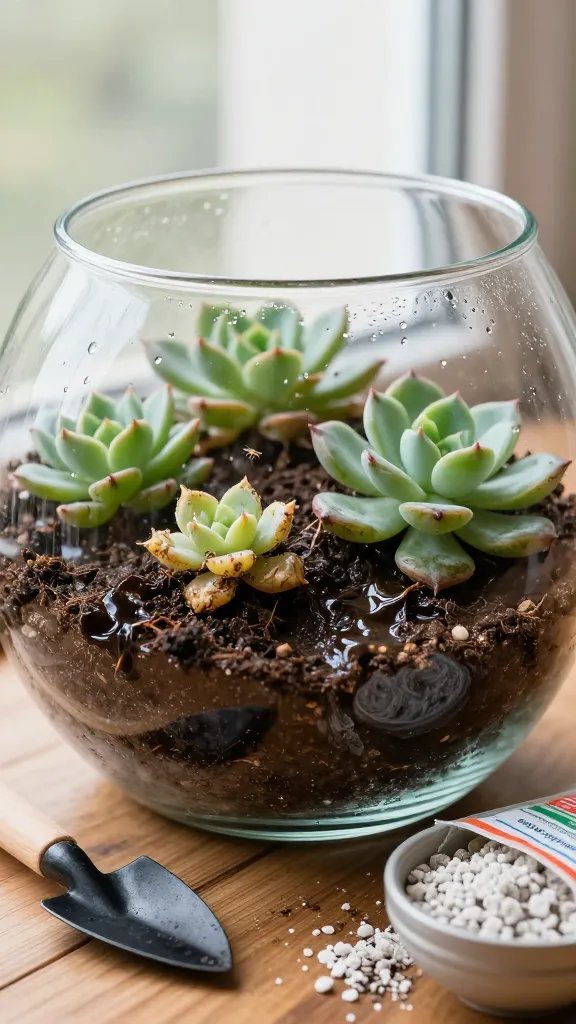
Standard houseplant mixes hold water like a sponge. In a glass container with no drainage, that moisture sticks around long after the plant has had its drink, smothering succulent roots and feeding rot.
Signs To Watch For
- Soil crusts dark and stays tacky for 4–7 days after a light watering
- Fungus gnats hovering when you jostle the terrarium
- Leaves swell, then collapse from the base despite infrequent watering
How To Fix It
- Rebuild the mix: Blend 1 part succulent/cactus mix from the garden centre with 1 part coarse sand or small horticultural grit and 1 part perlite or pumice. If you only have cactus mix, add one bag of perlite and one bag of grit to equal volume.
- Install a false bottom: Pour a 1–1.5 inch layer of aquarium gravel or small pebbles at the base. Add a thin coffee filter or mesh on top to stop soil sifting down.
- Keep soil shallow: Aim for a 2–2.5 inch soil depth so the core dries within a week.
What To Use Instead
- Top dressing: A thin layer of aquarium gravel or decorative pebbles on top prevents wet soil from wicking onto leaves and reduces algae.
- Clay additives: A handful of fired clay balls (LECA) mixed in adds air pockets without holding too much water.
Action today: Gently probe the soil with a wooden skewer; if it comes out muddy after 3–4 days post-watering, plan a repot into a grittier mix this weekend.
4. Watering The Leaves Instead Of The Roots
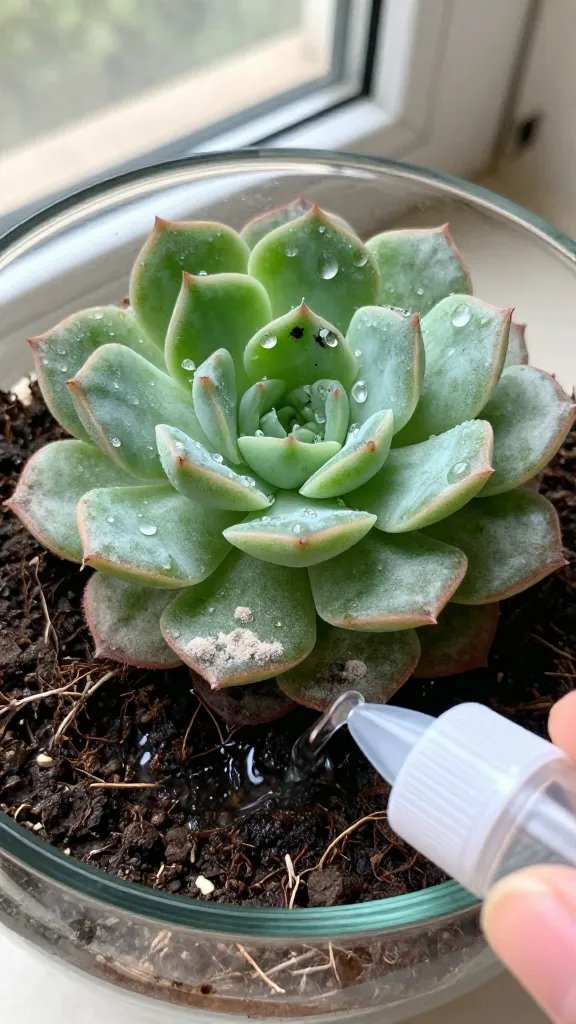
Succulent leaves trap moisture against the rosette when sprayed directly. In a terrarium, that moisture has nowhere to go, so it creeps down the crown and invites rot from the top as well as the roots.
Signs To Watch For
- Black mush starting at the crown or in the center of rosettes
- White fuzz or gray mold at leaf bases after misting
- Permanent water spots or translucent patches on leaves
How To Fix It
- Bottom-up watering: Use a squeeze bottle to apply 1–2 teaspoons of water to the soil at the base of each plant, not the foliage.
- Targeted misting: If you must mist, shield the plant with your hand and spray the soil only. One or two pumps per plant is enough in small vessels.
- Blot excess: If leaves get wet, dab them dry with a corner of paper towel. Tip the terrarium slightly to let pooled water run to bare soil.
What To Use Instead
- Long-spout watering can from the hardware store for precise pours
- Turkey baster for tight arrangements where a spout won’t fit
Takeaway: Keep foliage dry—deliver small, measured sips straight to the soil and blot any stray droplets immediately.
Frequently Asked Questions
How often should I water a succulent terrarium without drainage?
Water every 2–4 weeks depending on room temperature and light. In bright indirect light near a window, I start with every 3 weeks and adjust only if the lower leaves wrinkle and feel soft from thirst. Always check 1 inch down with a fingertip; if it’s cool or damp, wait a week. Aim for small sips—about 1–2 teaspoons per small plant.
My glass stays foggy all day—what should I do?
Fog that lingers past midday means humidity is too high. Remove the lid for 2–3 hours and move the terrarium to a brighter, breezier spot out of direct midday sun. If fog returns, leave a permanent 3–5 mm gap under the lid using two small spacers like bottle caps. Water less at the next session by half.
Can I use tap water for succulent terrariums?
Yes, if your tap water tastes clean and not salty. Let it sit in an open container overnight to let chlorine off-gas. Avoid softened water because it adds salts that build up in closed containers. If leaves show white crust on the surface, flush the soil lightly once and switch to filtered or rainwater.
What succulents handle terrariums best?
Compact, thick-leaved types tolerate the setup better: Haworthia, Gasteria, small Echeveria, and Crassula cuttings. Avoid fuzzy-leaved species like Kalanchoe tomentosa that trap moisture and rot at the crown. Choose dwarf forms and give them room so air can move between rosettes. Keep soil shallow and gritty to match their needs.
How do I know if it’s rot or just overfilled leaves?
Overfilled leaves feel firm and glossy but hold their shape; rot feels mushy, with leaves slipping off at the base and a sour smell. Check the crown and roots—black or brown tissue that smears is rot. Remove affected parts with clean scissors, let cuts dry 24 hours, and replant in dry mix. Reduce watering frequency by a full week.
Do I need a drainage layer in a terrarium?
A drainage layer doesn’t drain out of the glass, but it does keep saturated water away from roots. Add 1–1.5 inches of aquarium gravel or small pebbles, topped with a coffee filter or mesh so soil stays put. This buys you time after watering and reduces root contact with standing water. You still need a gritty soil mix and light, measured watering.
Conclusion
You now have a simple playbook: keep humidity low, soil gritty and shallow, water the soil in teaspoons, and ventilate on schedule. Set a calendar reminder for your next check-in, and use your fingertip and the glass itself as your gauges. With those habits, your succulent terrarium will stay firm, clean, and rot-free.