Stop the Rot: 5 Container Size Mistakes That Kill Plants Before They Start
I’ve lost more plants to the wrong pot than to pests. I’d bring home a healthy herb or houseplant, tuck it into a pretty container, and watch it sulk, rot, or stall for months. If you’ve had a rosemary give up in a week or a pothos that never grows, you’ve met this problem. Today I’ll show you the five container size mistakes that sabotage roots before they establish — and exactly how to choose pots that set plants up to thrive.
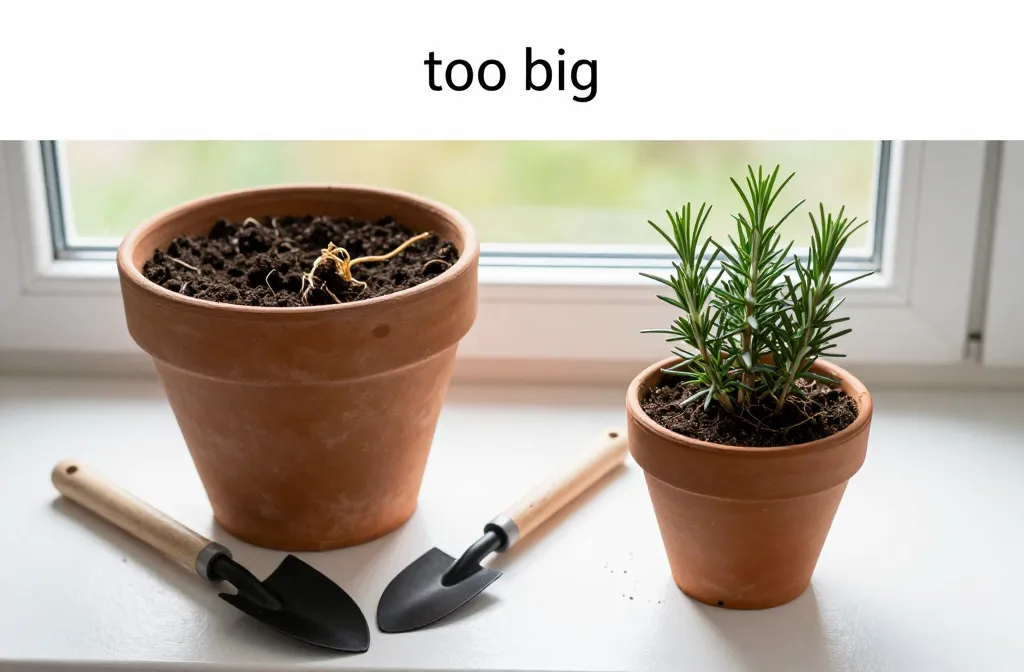
1. Planting Into A Pot That’s Far Too Big: Wet Soil Drowns New Roots
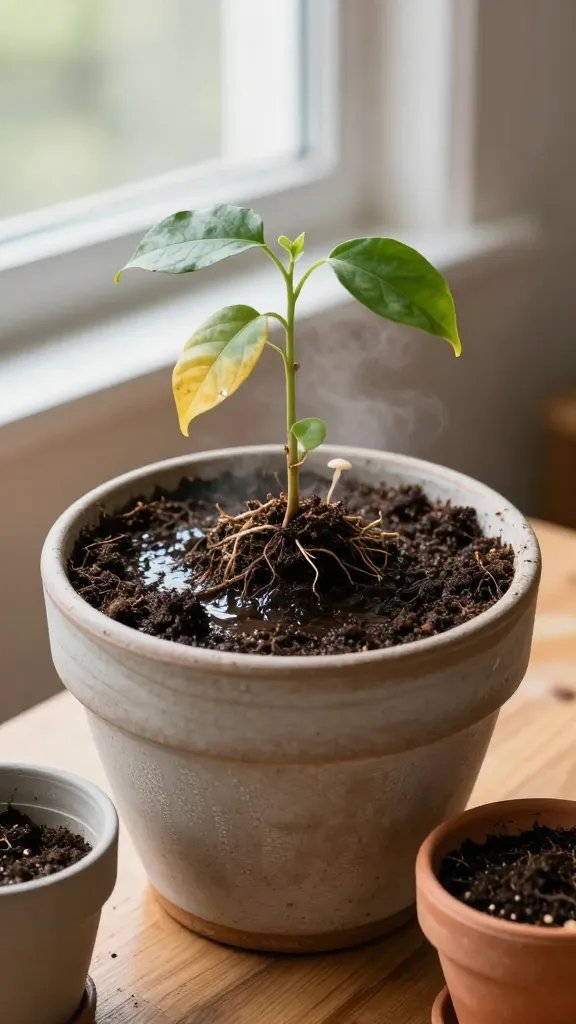
Oversized containers hold more wet soil than a small rootball can use. That unused soil stays cold and soggy, starving roots of oxygen and inviting rot. Growth stalls first, then leaves yellow from the bottom up, and the plant collapses even though you “watered carefully.”
Signs To Watch For
- Soil still wet 7–10 days after watering, even in a warm room
- Lower leaves yellowing while the top growth looks limp
- Mushroomy or sour smell from the pot
How To Fix It
- Choose the next pot size up from the nursery pot — about 2–5 cm (1–2 inches) wider in diameter, not a leap.
- Use a good quality potting mix from the garden centre; avoid garden soil in containers.
- Water once, then wait until the top 3–4 cm (about the first knuckle of your finger) feels dry before watering again.
- If you already up-potted too big, “down-pot” into a smaller container that fits the rootball snugly.
What To Use Instead
- For herbs and houseplants up to 15 cm (6 inches) wide: start with a 12–15 cm pot and move up by 2–3 cm per repot.
- For tomatoes/peppers on patios: step from 10 cm to 20 cm to 30–40 cm over the season, not in one jump.
Action today: Press your finger into the soil of any slow plant. If it’s wet past your first knuckle a week after watering, down-pot the plant to a container only 2–5 cm wider than the rootball.
2. Cramming Roots Into A Pot That’s Too Small: Rootbinding Strangles Growth
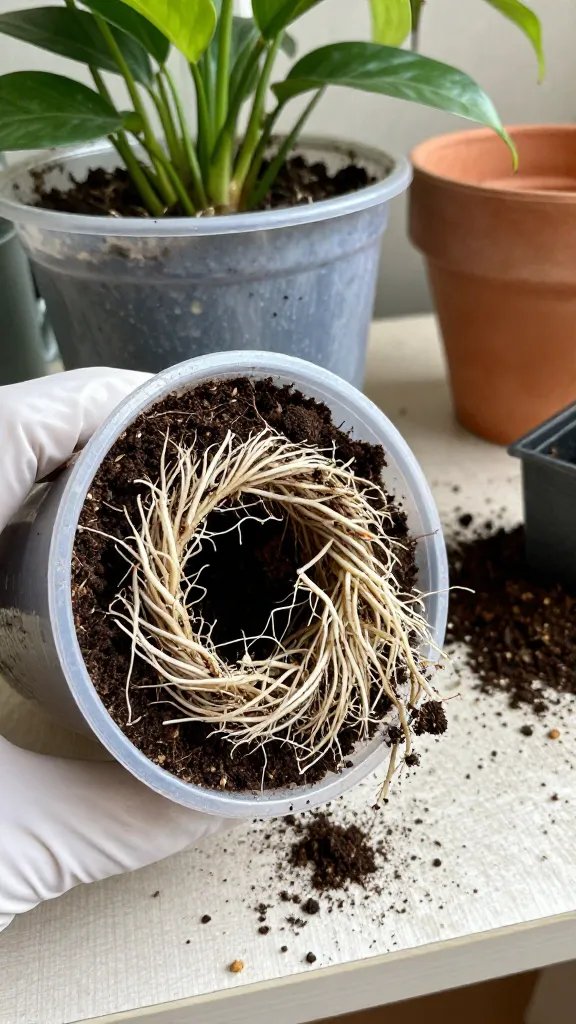
Undersized pots force roots to circle tightly, choking off water and nutrient flow. Plants dry out overnight, wilt by lunchtime, and bounce back only briefly after watering. Growth stays stunted no matter how much you feed.
Signs To Watch For
- Roots wrapping in a thick mat around the outside of the soil when you slip the plant from its pot
- Water running straight down the sides and out the bottom without soaking in
- Leaves smaller than usual and frequent wilting
How To Fix It
- Repot into a container 2–5 cm (1–2 inches) wider than the current rootball.
- Loosen the circling roots with your fingers; slice three shallow vertical cuts up the sides of the rootball if it’s very tight.
- Water deeply after repotting until water drains freely; then let the top 3–4 cm dry before the next watering.
What To Use Instead
- For fast growers like pothos, monstera, and basil: check every 3 months. If you see thick roots at the drain holes, size up.
- For woody herbs like rosemary: move up in smaller steps but give at least 20–25 cm depth by mid-season.
Takeaway: If a plant wilts a day after watering and water skims past the rootball, up-pot just one size and untangle the roots as you go.
3. Using Shallow Pots For Deep-Rooted Plants: Roots Hit The Floor And Stall
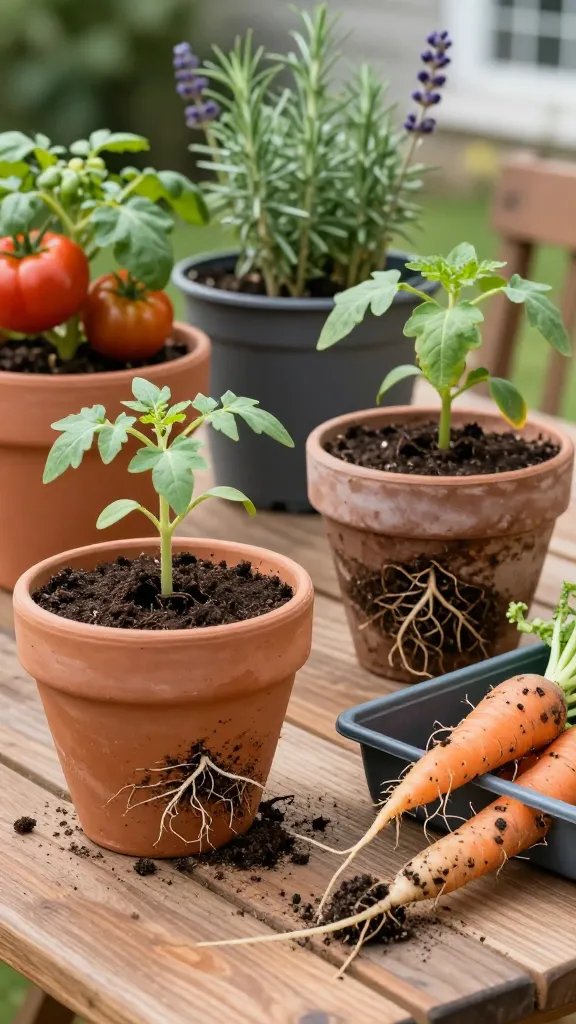
Some plants send roots straight down to anchor and drink. In shallow containers, they bottom out early, twist along the base, and the plant stops expanding above ground. You’ll see weak, floppy stems and leaves that never reach full size.
Common Victims
- Tomatoes, peppers, eggplant: want 30–40 cm depth minimum
- Carrots and radishes: need depth matching the mature root length plus a few centimetres
- Rosemary and lavender: appreciate at least 25–30 cm depth to avoid tipping and winter stress
How To Fix It
- Match pot depth to the plant’s final root needs. For most fruiting veg, choose a container you can’t easily wrap one hand around — about bucket depth.
- For root crops on balconies, use a deep window box or a 25–30 cm tall storage tote with drilled drain holes.
- Stake tall crops in deeper pots to prevent rocking that damages roots.
What To Use Instead
- Standard 10-litre bucket with holes for peppers; 15–20 litres for tomatoes.
- Deep trough planters labeled “vegetable” or “balcony tomato” at garden centres.
Action today: Check the depth of your containers. If your tomato or pepper is in anything under 30 cm deep, transplant into a deeper pot this week.
4. Ignoring Width For Spreading Roots: Crowded Crowns Invite Mildew And Pests
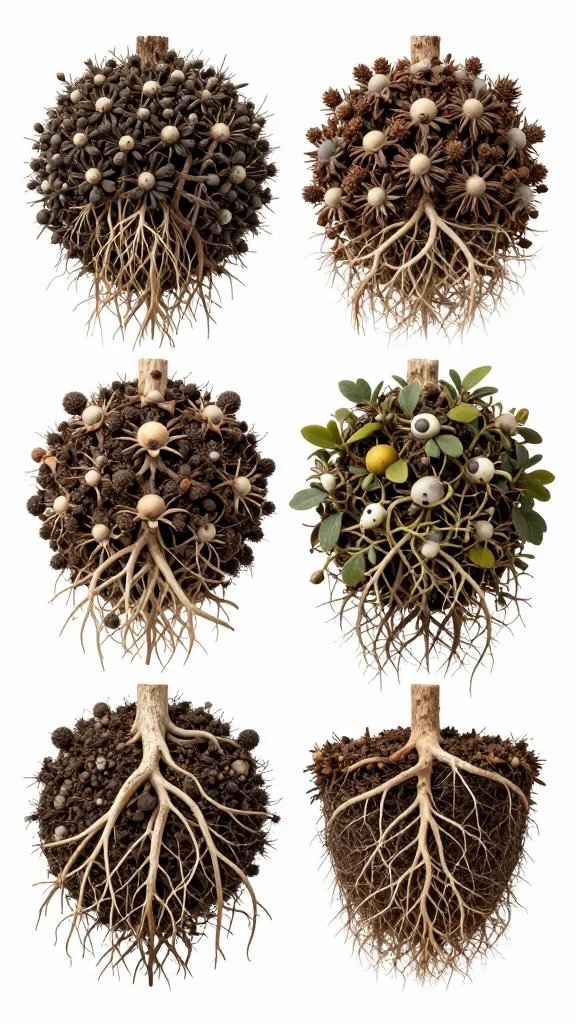
Many plants spread wide at the base. If the pot’s too narrow, foliage crowds the rim, airflow drops, and leaves stay damp. You’ll fight mildew, fungus gnats, and aphids while the plant wastes energy fighting stress.
Plants That Need Elbow Room
- Strawberries: runners and crowns rot when jammed against narrow rims
- Lettuces and leafy greens: outer leaves bruise and mildew in cramped bowls
- Bushy herbs like mint and oregano: tangle and stay wet without width
How To Fix It
- Choose containers with a top opening at least as wide as the plant’s mature spread. For a 25 cm wide basil, use a pot with a 25–30 cm opening.
- Group multiple small plants in a single wide trough rather than individual narrow pots.
- Trim back crowded edges and rotate the pot weekly so all sides get bright indirect light near a window or even morning sun on a balcony.
What To Use Instead
- Wide, low bowls for strawberries and lettuces, at least 25–30 cm across and 15–20 cm deep.
- Window boxes 60–80 cm long for mixed salad greens, spaced 10–15 cm apart.
Takeaway: Measure the plant’s current leaf spread and match or exceed that number with your pot’s top diameter to keep foliage dry and healthy.
5. Skipping Drainage Because The Pot Is Pretty: Waterlogged Soil Kills Fast
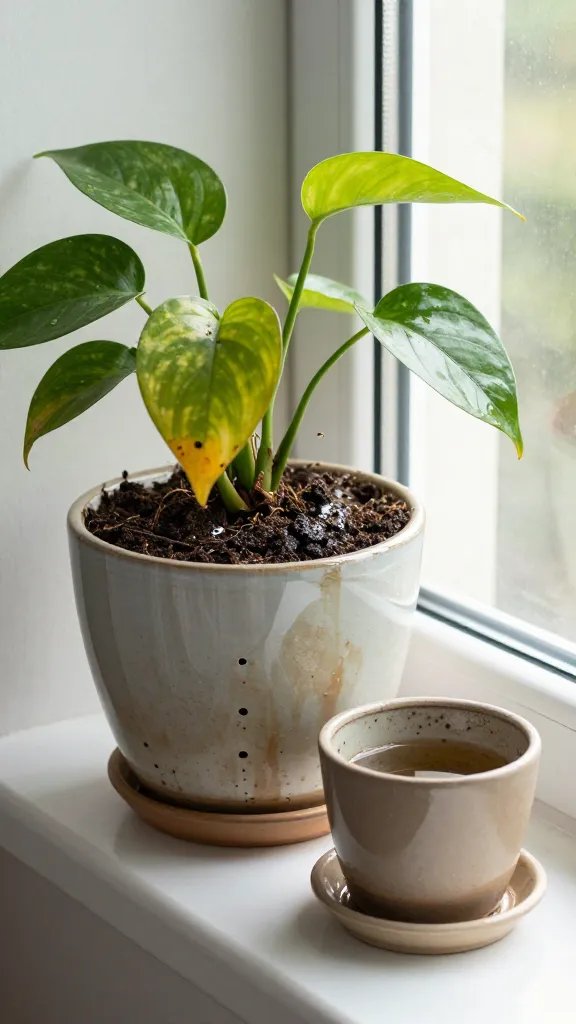
No drainage holes turn any container into a bathtub. Water pools at the bottom, roots sit in stale water, and rot sets in. Symptoms mimic underwatering at first — droop and yellowing — but watering more only speeds the decline.
Signs To Watch For
- Waterline stains inside the pot or sloshing sounds when you tilt it
- Gnats hovering over constantly damp soil
- Leaves yellowing from the base while the soil feels wet
How To Fix It
- Use a proper nursery pot with drainage placed inside your decorative pot (a cachepot). Lift it out to water, let excess drain in the sink, then return it.
- If you must use the decorative pot directly, drill 3–5 holes in the bottom with a masonry or multi-material bit. Protect surfaces with a tray.
- Never rely on a layer of rocks to “create drainage.” It doesn’t. It only raises the water table closer to the roots.
What To Use Instead
- Plastic nursery pots that fit neatly inside ceramic covers — grab both at the garden centre.
- Saucers or trays at least 2 cm deep to catch runoff without soaking the pot base for hours.
Action today: Pick your thirstiest plant and lift the inner pot after watering; if you can’t, it’s time to move it into a nursery pot with drainage inside the decorative one.
Frequently Asked Questions
How do I choose the right pot size when I bring a plant home?
Check the current nursery pot size and step up just one size — about 2–5 cm wider. If the plant is rootbound, move up to the next size only after loosening circling roots. If it’s not rootbound, wait 4–6 weeks before repotting to let it acclimate. Always use a pot with drain holes and a good quality potting mix from the garden centre.
Can I grow tomatoes or peppers on a balcony in containers?
Yes. Use at least a 15–20 litre container for tomatoes and 10–15 litres for peppers, with 30–40 cm depth. Place them in bright direct sun for 6–8 hours, water until it drains, then water again when the top 3–4 cm are dry. Stake early so the plant doesn’t rock and damage roots.
Why does my plant still look sick after I repotted to a bigger container?
If the new pot is too large, the extra soil stays wet and suffocates roots. Down-pot to a container only 2–5 cm wider than the rootball and let the top 3–4 cm dry between waterings. Also check that the pot has drainage and you used a fresh, high-quality potting mix. Finally, keep the plant in bright indirect light for a week to recover before pushing more water or fertilizer.
How deep should a window box be for salad greens and herbs?
A 15–20 cm deep window box works for lettuces, spinach, cilantro, and most soft herbs. Give each plant 10–15 cm of space side to side so leaves don’t crowd the rim. Water when the top 2–3 cm feel dry and harvest outer leaves first to keep airflow. Choose boxes with several drain holes and set on a tray to protect sills.
Do I need different pot sizes for succulents and cacti?
Yes. They prefer snug pots with excellent drainage and a gritty, store-bought cactus mix. Choose a pot only 1–2 cm wider than the rootball and shallow to moderate depth, since many have shallow roots. Water thoroughly, then wait until the mix is completely dry — sometimes 3–4 weeks indoors — before watering again.
Is a “self-watering” pot safe for beginners?
It can be, if you match it to the plant. Thirsty plants like tomatoes and basil love a reservoir, but drought-tolerant plants like rosemary, succulents, and snake plants rot in constant moisture. Keep the wick or reservoir half-full for thirsty plants and leave it empty for dry-loving species. Always make sure the inner pot drains freely into the reservoir, not into sealed space.
Conclusion
Right-sized containers turn “problem plants” into easy wins. Start by matching pot width and depth to the rootball and the plant’s mature size, always with real drainage. Your next step: walk your windowsills and balcony, measure your current pots, and make two smart swaps — you’ll see the difference in fresh growth within weeks.