What Makes a Plant Truly Tropical — the Three Conditions a Terrarium Must Meet Before You Plant It
I used to shove any pretty fern into a glass jar and call it “tropical.” A month later, I’d have crispy tips, fungus gnats, and a sad swamp that smelled like a locker room. Once I nailed the three actual conditions tropical plants expect, my terrariums stabilized and started putting out fresh growth every few weeks. You’ll learn exactly what “tropical” means in practice and how to set your terrarium to meet those needs before you plant it.
Condition 1: Warm, Stable Temperatures — Not Just “Room Temp”
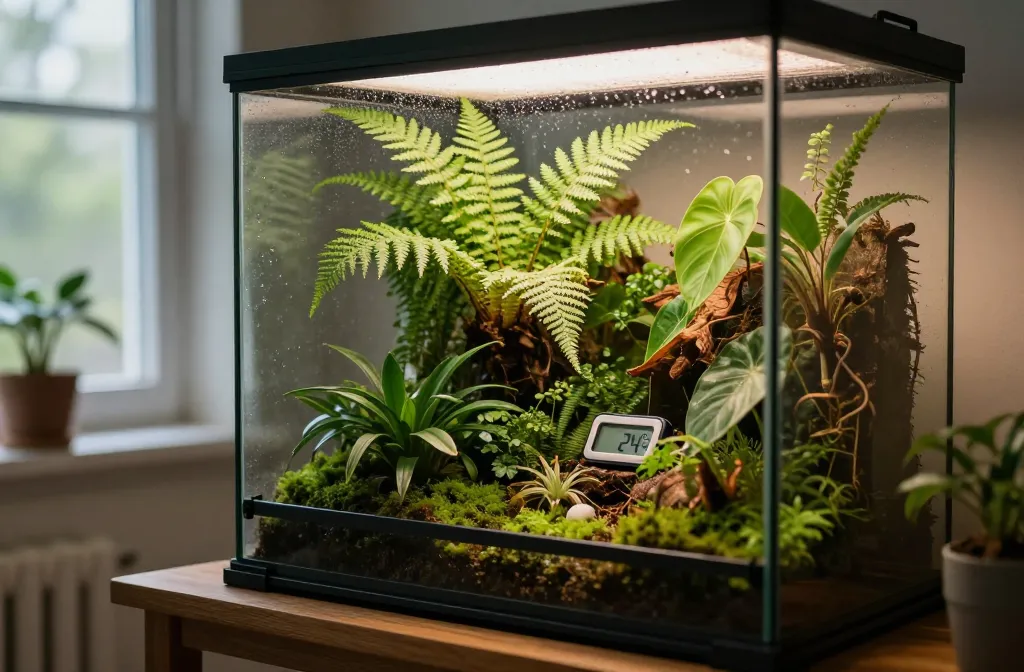
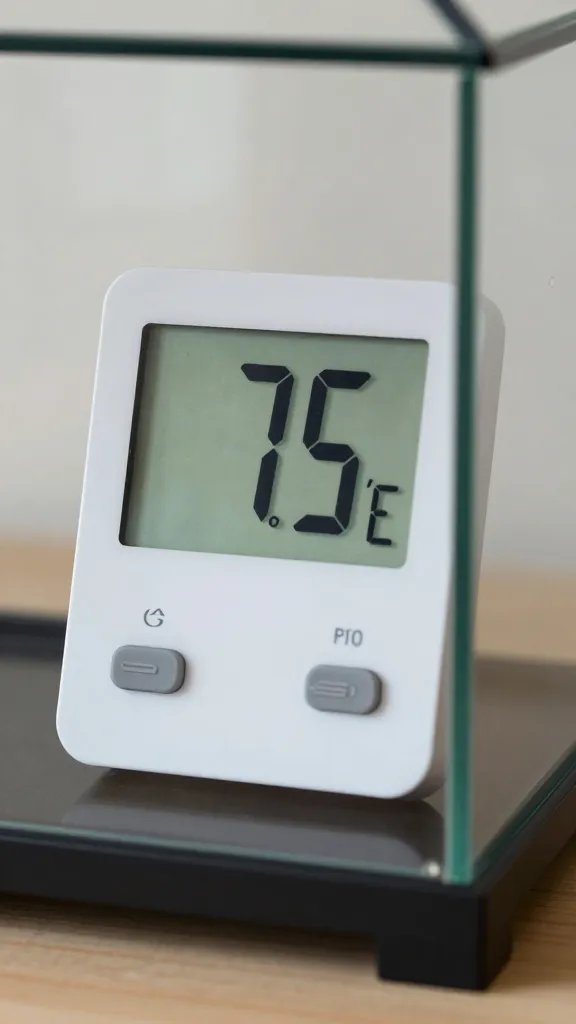
Tropical plants expect consistency: 21–27°C (70–80°F) during the day and no drops below 18°C (65°F) at night. Drafts from windows, heater bursts, or a shelf near an exterior wall swing temperatures enough to stall growth and cause leaf edge browning.
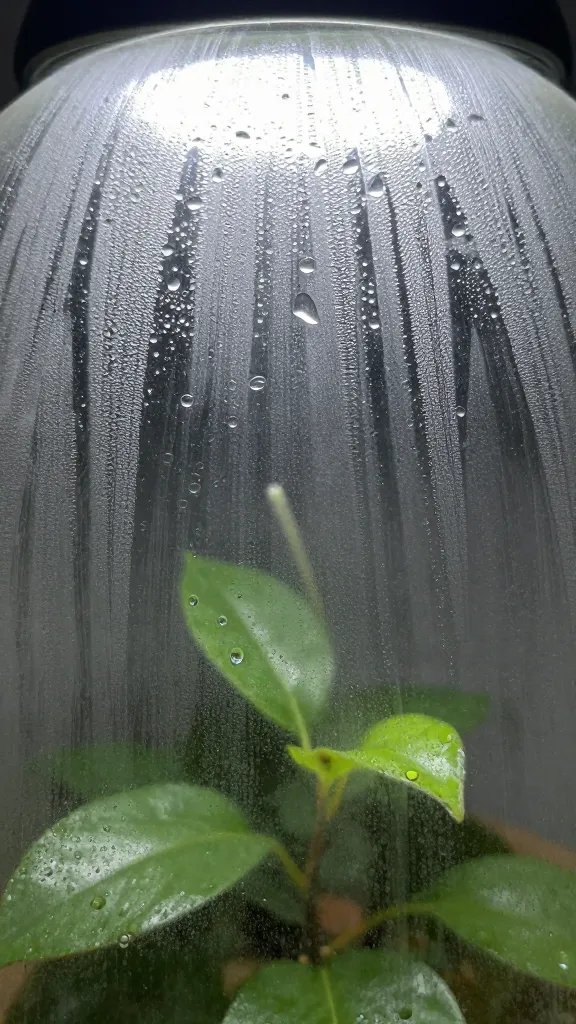
I keep terrariums away from radiators and out of direct AC airflow. A bookshelf or interior counter 1–2 metres from a window holds temperature steadier than a sill. If your glass fogs heavily at night then clears by noon, you’re likely getting a cool-night dip — relocate off the cold surface.
Warning Signs of Temperature Stress
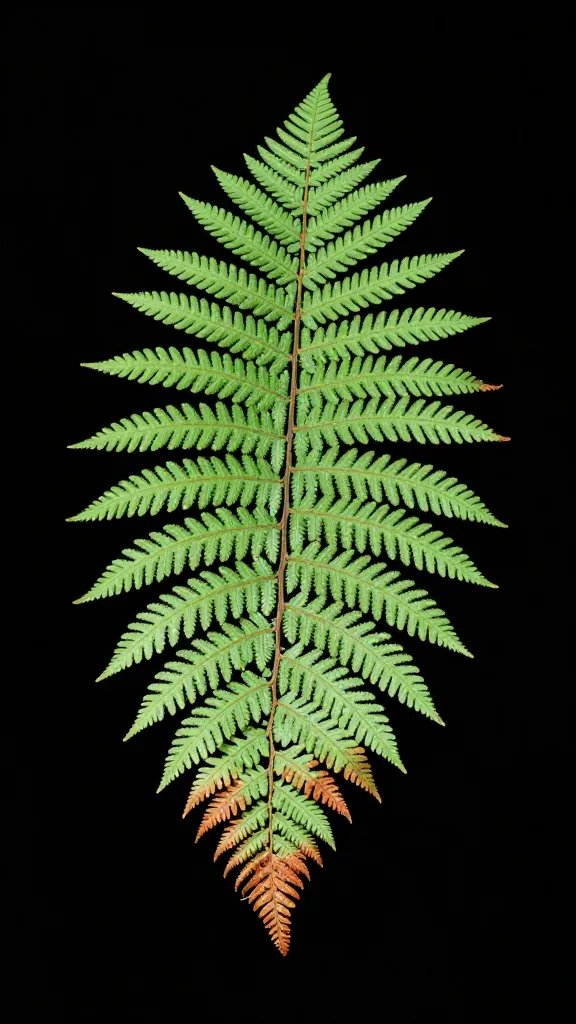
- Crisp leaf edges on ferns or moss despite moist substrate.
- Sudden condensation surges each morning that disappear by midday.
- Stalled growth while algae thrives — the plants are stressed, not the microbes.
Action today: Move your terrarium one metre away from any drafty window or vent and elevate it on a wooden trivet to buffer against cold or hot surfaces.
Condition 2: Bright, Diffused Light — Enough to Photosynthesize Without Cooking
Tropical understory plants love bright, indirect light. Near a bright window works; direct midday sun through glass spikes heat and bleaches leaves. Place the terrarium where you can comfortably read without lamp light at midday, about 0.5–2 metres from an east or north window, or 1–3 metres from a bright south/west window with a sheer curtain.
If natural light is weak, a simple desk LED lamp (4000–6500K) 20–30 cm above the lid for 8–10 hours tops up growth. Aim the beam across the glass rather than straight down to avoid hot spots. Rotate the vessel a quarter-turn weekly to prevent leaning.
Light Troubleshooting
- Too much light: Bleached patches, rapid algae on glass, daily heavy condensation by noon. Pull back 1 metre or add a sheer curtain.
- Too little light: Leggy, pale growth reaching upwards, moss turning brown. Add a desk lamp and reduce distance by 5–10 cm.
Action today: Hold your hand between the terrarium and its light source at midday. If your hand casts a crisp shadow, diffuse or move it back; if the shadow is faint, you’re in the sweet spot.
Condition 3: Constantly Humid Air with Moist (Not Soggy) Substrate
Tropical leaves want humid air while roots need aerated, evenly moist substrate. In a closed terrarium, that balance starts with the right build and a precise initial watering — then you leave it alone.
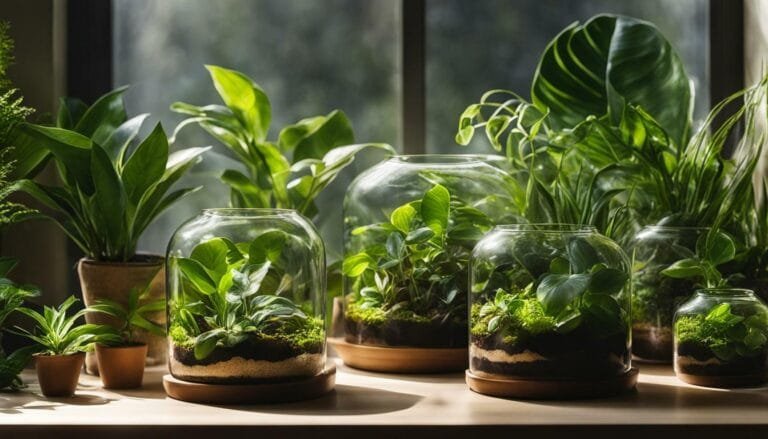
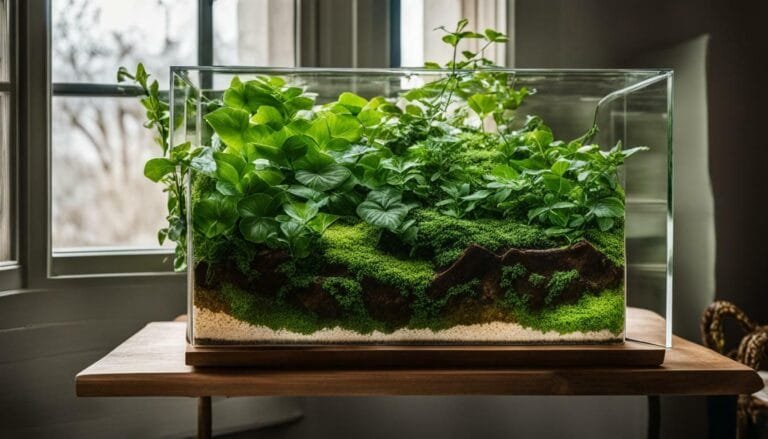
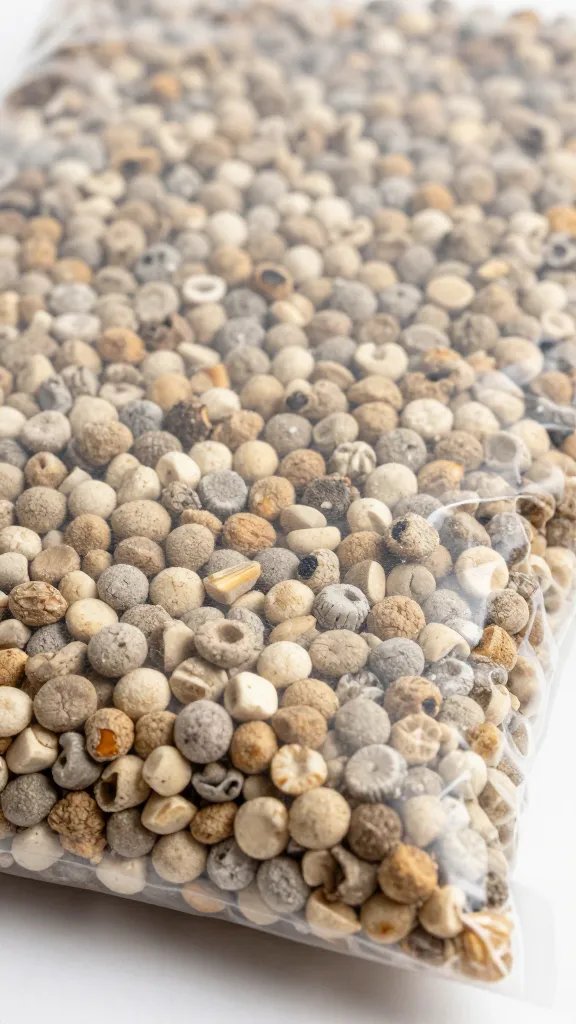
Use a clean glass vessel with a true seal (cork, gasket, or cling film under the lid). Build a base that drains internally: 2–3 cm washed gravel or LECA, a thin mesh barrier, then 6–10 cm good quality potting mix blended 1:1 with fine orchid bark or coco coir for airflow. This mix holds moisture without turning to mud.
Set the Moisture Level Before Planting
- Pre-moisten the mix in a bowl until it clumps when squeezed but does not drip.
- Pack the layers gently; air pockets cause collapse later.
- Water once after planting with 2–4 tablespoons around roots, not onto leaves.
- Seal and watch for a light misting of condensation on 25–50% of the glass by midday.
Action today: Tap the glass at midday. If water runs in sheets, open the lid for 1–2 hours. If the glass stays bone-dry for two days, mist 1–2 tablespoons and reseal.
Build for Cleanliness — Oxygen In, Rot Out
Most “tropical” failures are not about species; they’re about anaerobic rot from dirty materials and compacted soil. Rinse gravel or LECA in a colander until runoff is clear. Remove all dead leaves and soil clumps from nursery pots before planting. Snip off any damaged roots.
Add a thin layer of horticultural charcoal (not barbecue briquettes) above the drainage layer to bind odors. Keep hardscape (wood, rocks) minimal and scrubbed; avoid driftwood that leaches tannins and feeds algae.
Clean Build Checklist
- Rinsed drainage layer and tools.
- Fresh, bagged potting mix from the garden centre (not backyard soil).
- No fertilizer granules visible near roots.
Action today: If your terrarium smells sour or “swampy,” unseal it for 24 hours, remove any decaying bits with tongs, and top the soil with a 1 cm layer of fresh mix.
Choose True Tropical Species That Like Enclosed Life
“Tropical” means warm, humid, and low-to-medium light. Pick compact plants that tolerate constant humidity and limited airflow. Skip succulents and cacti — they’ll rot in weeks.
Reliable Plant List (Small Vessels)
- Ferns: Lemon button fern (Nephrolepis cordifolia ‘Duffii’), heart fern (Hemionitis arifolia).
- Arums and Aroids: Pilea depressa, Peperomia caperata, small Philodendron micans cuttings.
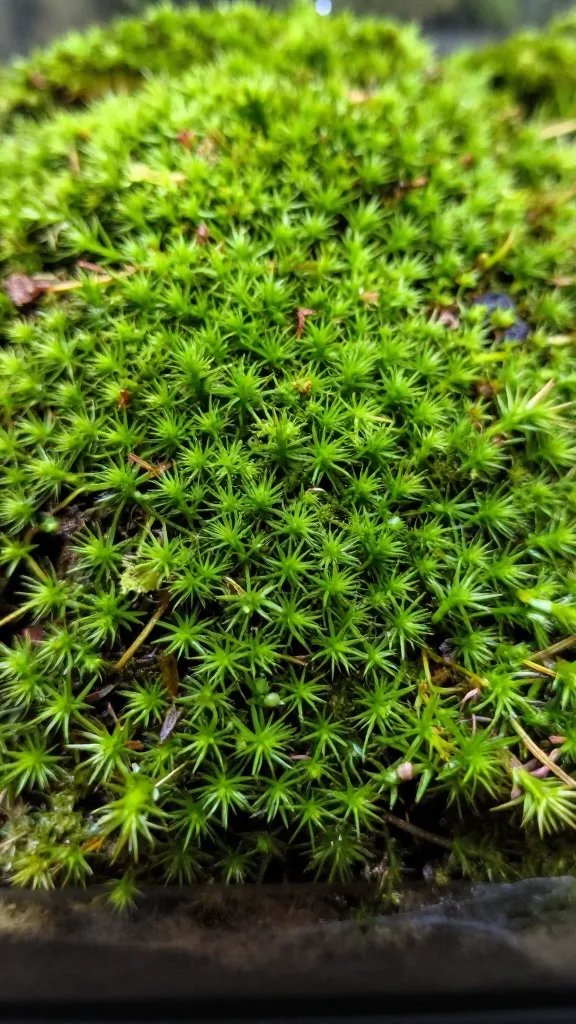
- Mosses: Cushion moss (Leucobryum), sheet moss (Hypnum) from terrarium-safe suppliers.
- Groundcovers: Fittonia, Selaginella kraussiana (prune monthly).
Action today: When shopping, choose plants labeled for “high humidity” or “terrarium suitable,” and avoid anything labeled “succulent,” “string of…,” or “full sun.”
Set-and-Forget Maintenance That Actually Works
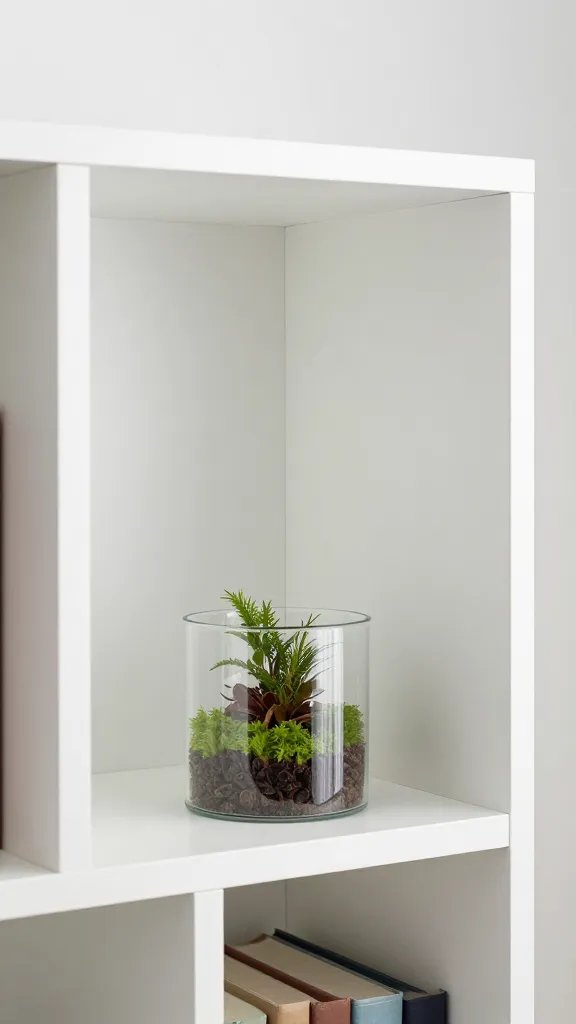
A well-built tropical terrarium wants restraint. Open the lid only when you see excessive condensation, leaf decay, or fungus gnats. Prune with clean scissors; remove a full stem back to the base rather than nibbling tips.
No fertilizer for the first 6 months. After that, if growth slows and leaves look pale, add a quarter-strength dose of an all-purpose liquid feed to 100 ml of water and apply 1–2 tablespoons around roots, then reseal.
Simple Monthly Checks
- Midday condensation on 25–50% of glass.
- No standing water visible below the soil line.
- Leaves free of melt, mold, or gnats.
Action today: Put a sticky note on the vessel with the build date and a monthly check reminder. Consistency beats tinkering.
Frequently Asked Questions
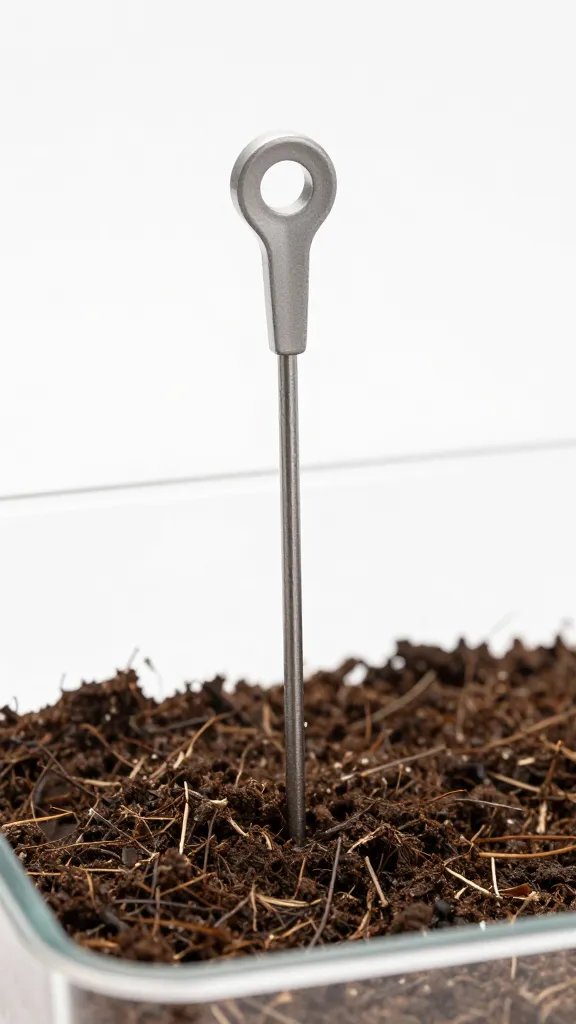
How do I water a closed tropical terrarium without overdoing it?
Use a spray bottle or syringe and add 1–2 tablespoons at a time. Aim for soil, not leaves. Wait 24 hours and check midday condensation; stop when 25–50% of the glass mists. If water pools at the bottom, open the lid for several hours and wick excess with a paper towel corner.
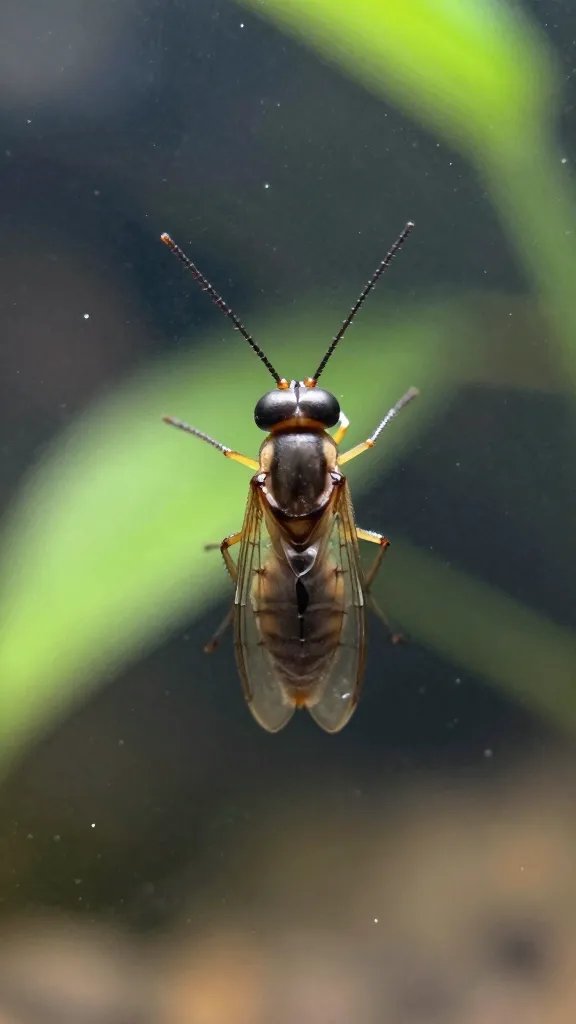
My terrarium has tiny flies. How do I get rid of fungus gnats?
Open the lid for 24–48 hours to break the humidity spike and let the surface dry slightly. Remove any rotting leaves and top-dress with 1 cm of fresh potting mix. Place a yellow sticky trap nearby and water only by syringe directly into the root zone. They fade within one to two weeks when you remove their breeding sites.
Why are my mosses turning brown at the tips?
This signals either low light or drying air pockets. Move the terrarium 30–60 cm closer to its light source or add a desk lamp for 8–10 hours. Mist lightly, reseal, and press moss firmly to ensure contact with moist substrate. Trim browned tips to encourage fresh green growth.
Can I keep orchids in a closed tropical terrarium?
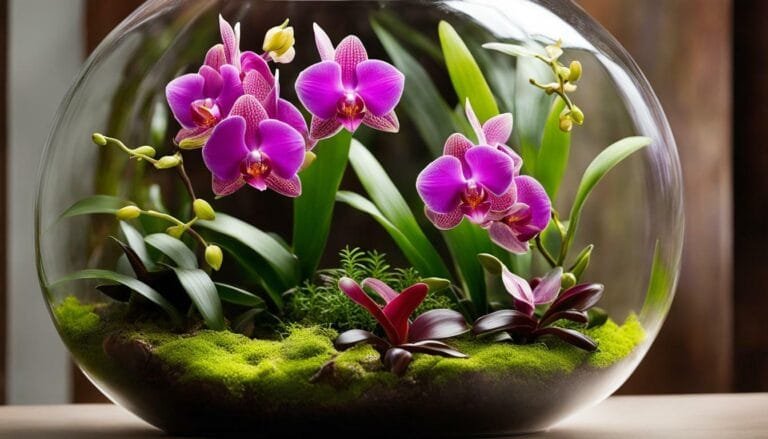
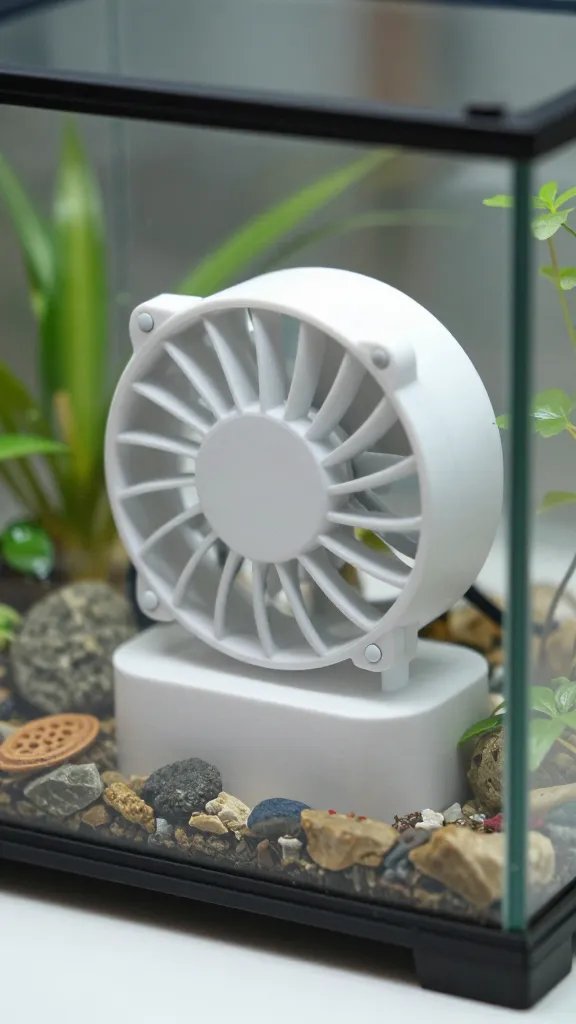
Miniature, humidity-loving orchids like Lepanthes or Masdevallia prefer airflow and cool nights — not ideal for a sealed jar. If you try, use a vessel with a vented lid and run a desk fan across the outside for gentle exchange. Keep temperatures 18–24°C (65–75°F) and avoid wetting the crown. For most home setups, choose ferns and peperomias instead.
Do I need a drainage layer if I’m careful with water?
Yes. The drainage layer creates a safety zone that keeps roots out of stagnant water and preserves oxygen in the root zone. Even a careful hand can overwater in a sealed system. Two to three centimetres of rinsed LECA or gravel with a mesh barrier prevents long-term rot.
Conclusion
If you lock in warm, steady temperatures, bright diffused light, and humid air with moist, airy substrate, you’ve created a truly tropical home inside glass. Set those three conditions first, then plant species that enjoy them and resist the urge to fuss. Today, choose your spot, build the layers cleanly, and seal it — your “tropical” won’t be a look; it will be an environment your plants recognize and thrive in.