5 Unconventional Terrarium Containers That Actually Work — and Why They Do Revealed
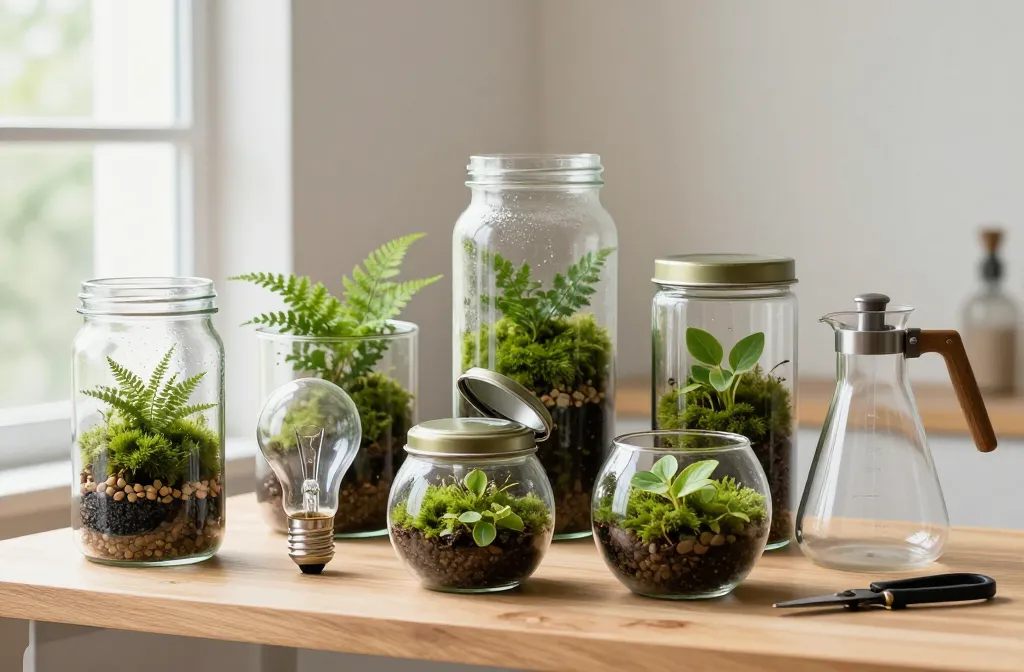
I used to think terrariums had to live in pricey apothecary jars. Then I ran out of jars and started experimenting with what was already in my kitchen and garage. The surprise: several “odd” containers outperformed my fancy glass, stayed stable longer, and looked great on a shelf. You’ll learn five unconventional containers that genuinely work, why they work from a plant-care perspective, and exactly how to set each one up with tools you already have.
1. Wide-Mouth Pasta Jars: Simple Seal, Stable Humidity
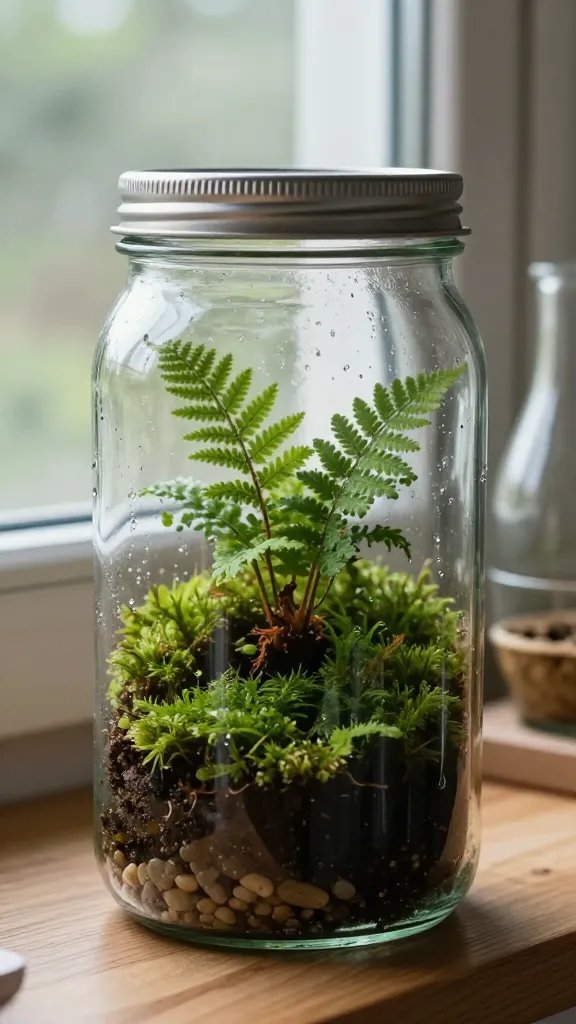
Dry, crispy fern tips and fogged-up glass tell different stories — the wrong container exaggerates both. A narrow-neck bottle traps too much moisture and suffocates; an open bowl bleeds humidity and needs constant watering. A recycled pasta jar hits the sweet spot: clear glass, a decently tight lid, and a mouth wide enough to plant and maintain without drama.
Why It Works
- Moderate headspace lets moisture condense and fall back without dripping constantly on leaves.
- Threaded lid offers adjustable ventilation — crack it a quarter turn if condensation covers more than half the glass at midday.
- Clear, vertical sides give full light exposure and easy viewing for early problem signs.
What to Plant
- Mosses (cushion or sheet moss), small ferns (e.g., maidenhair ‘Tiny Dancer’), and pilea cuttings.
- Stick to plants under 10 cm tall at maturity to avoid constant trimming.
How to Set It Up
- Wash with hot soapy water. Remove labels with a scrub pad.
- Add 1 cm of rinsed pea gravel, then a thin layer of activated charcoal (from the aquarium aisle) to reduce odors.
- Add 5–7 cm of a good quality potting mix lightened with a handful of perlite.
- Plant, firm gently, mist to settle, and tighten the lid. Aim for bright indirect light near a window.
Action today: Save your next 1-liter pasta jar, wash it, and build a moss-and-fern micro-terrarium this weekend — you’ll see stable humidity with watering every 3–4 weeks.
2. Glass Food Storage Containers: Easy Access, Low-Fuss Maintenance
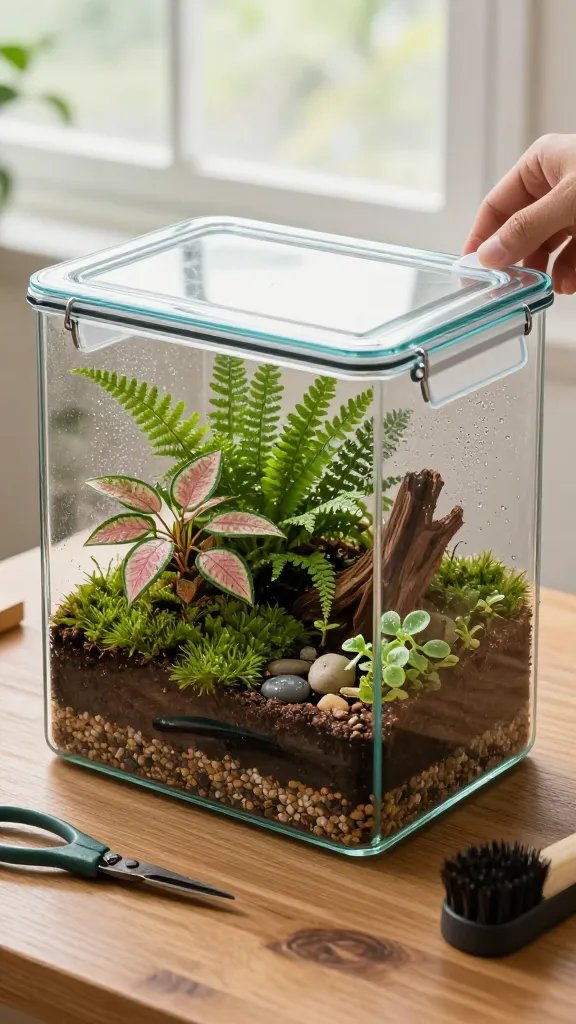
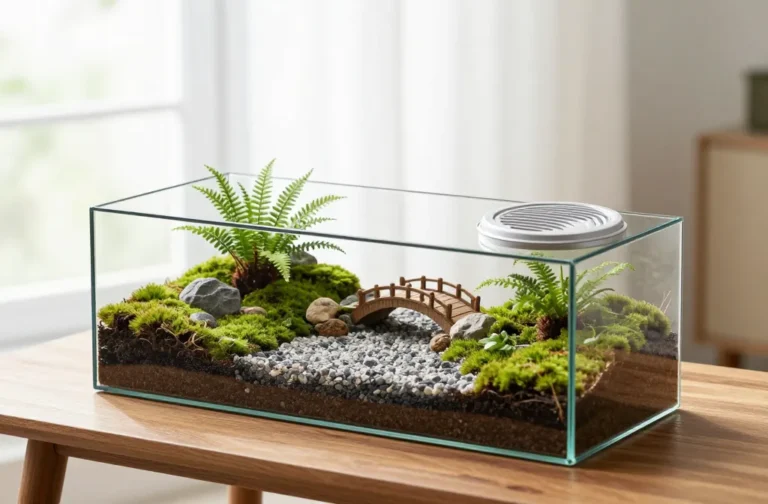
Terrariums fail when you can’t get your hand or tools inside to prune or wipe mold. Narrow bottles and globe vases turn simple fixes into surgery. A rectangular, lidded glass container (the kind you’d pack leftovers in) solves this with snap-on seals and a wide top that makes planting and upkeep straightforward.
Why It Works
- Wide opening reduces leaf damage during planting and makes pruning practical.
- Flat lid with gasket creates a reliable closed system while still allowing a quick lift for ventilation.
- Shallow footprint suits creeping plants that carpet instead of stretch.
What to Plant
- Fittonia (nerve plant), selaginella (club moss), and peperomia mini varieties.
- Create a layered look with a gentle soil slope from back to front for depth.
Setup Tips
- Rinse and dry thoroughly. If the lid is bamboo, line it with plastic wrap to protect from moisture.
- Base layers: 1 cm gravel, thin charcoal, then 5 cm potting mix mixed 2:1 with fine orchid bark or perlite for airflow.
- Water lightly: 2–3 tablespoons around roots, not on leaves. Close the lid and check midday condensation after 24 hours.
Takeaway: If maintenance frustrates you, switch to a lidded glass food container so you can actually reach inside and keep the ecosystem tidy.
3. Coffee Carafes and French Press Beakers: Tall Light Columns for Upright Growers
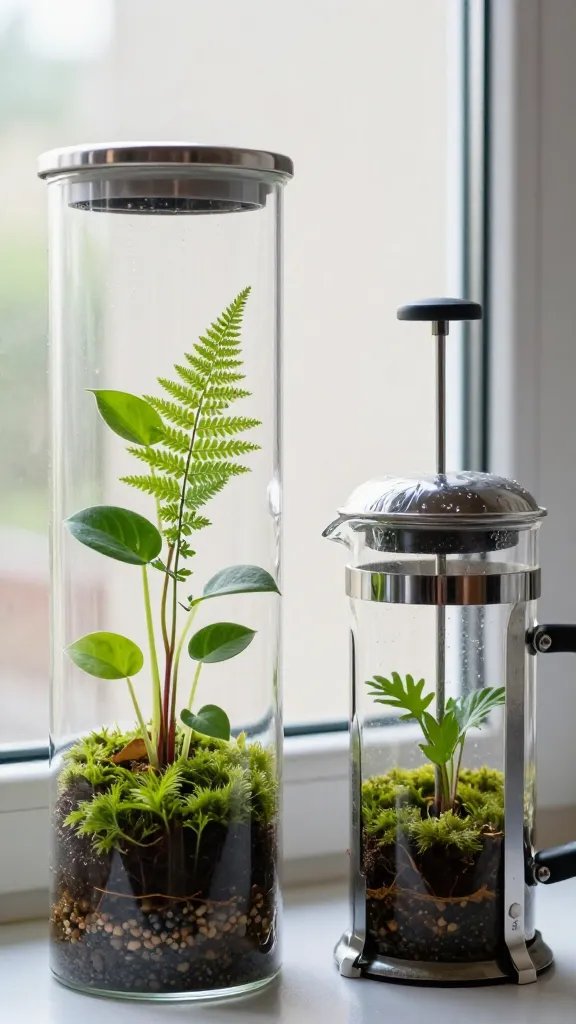
Many terrariums collapse because the plants grow up into the lid and rot, or stretch sideways hunting for light. A tall, cylindrical coffee carafe or spare French press beaker creates a bright “light chimney” that encourages vertical growth and even light on all sides.
Why It Works
- Tall, straight sides promote upright growth and reduce leaf pressing on glass.
- Borosilicate glass resists temperature swings from window exposure.
- Removable top (carafe lid or plastic wrap with a few pinholes) lets you tune humidity.
What to Plant
- Miniature ferns (e.g., button fern), baby tears at the base, and a small hypoestes (polka dot plant) center.
- Avoid succulents — they want drier, moving air.
How to Use the Height
- Build a mound: 7–8 cm soil in the back, 4–5 cm in front to create a slope that catches condensation.
- Place taller plants off-center so leaves don’t constantly brush the glass.
- Use a long-handled spoon and chopsticks for precise placement.
Action today: Repurpose a spare French press beaker, cover the top loosely with cling film, and grow a button fern where you can watch new fronds unfurl without hitting a lid.
4. Cookie Jars and Biscotti Tins with Gaskets: Consistent Closed Ecosystems
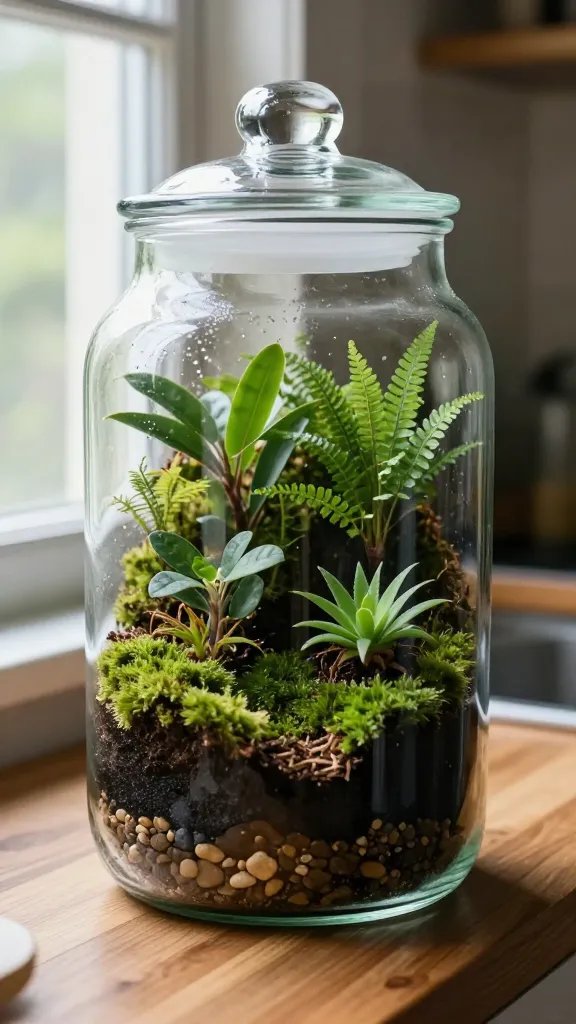
Inconsistent humidity swings trigger mold blooms one week and crispy leaves the next. A cookie jar with a rubber gasket (the classic countertop kind) locks in a predictable water cycle that closed terrariums need. The large volume dilutes small mistakes, giving beginners a wider margin of error.
Why It Works
- Air-tight seal stabilizes humidity and temperature day to night.
- Generous floor area supports layered planting and air pockets in the substrate.
- Thick glass reduces rapid temperature spikes from afternoon sun.
Best Plant Mix
- Moss carpet across the front, a cluster of fittonia in the midground, and a small pilea depressa trailing over a rock.
- Keep everything under 12 cm tall to avoid touching the lid.
Setup and Care
- Layer 1.5 cm gravel, a thin charcoal layer, then 6–8 cm of potting mix loosened with a handful of perlite.
- Pre-wet the soil until it clumps when squeezed but doesn’t drip.
- Plant, wipe the inside glass dry, seal the lid.
- Vent: if condensation covers more than half the glass at midday, pop the lid for 1–2 hours.
Takeaway: If your past terrariums swung wildly between soggy and parched, upgrade to a gasketed cookie jar for steadier humidity and fewer interventions.
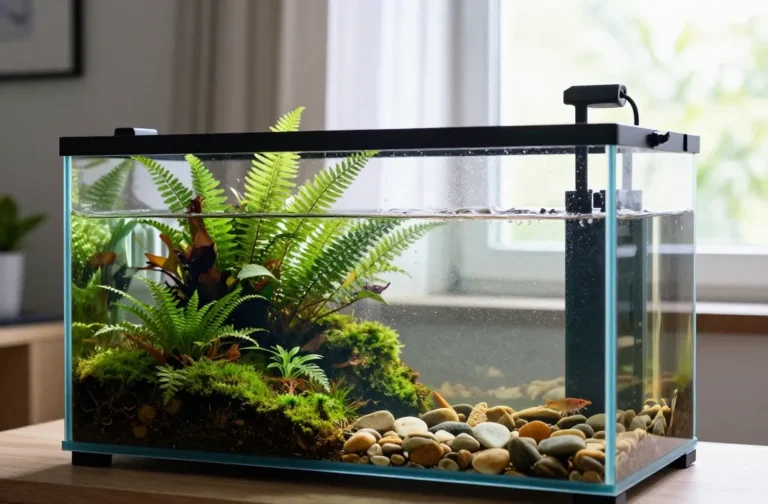
5. Fishbowls and Small Aquaria: Showcase Landscapes with Built-In Microclimates
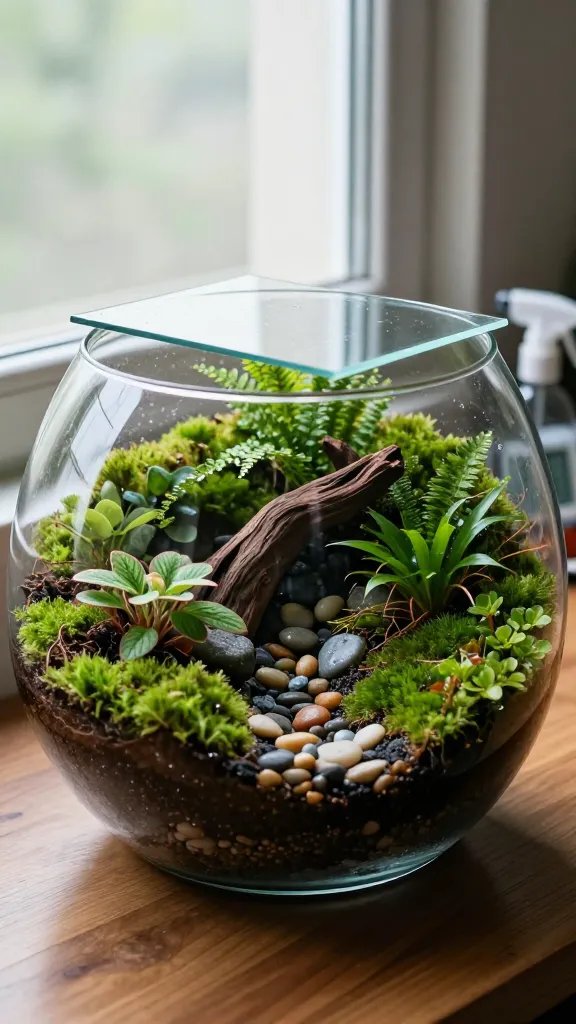
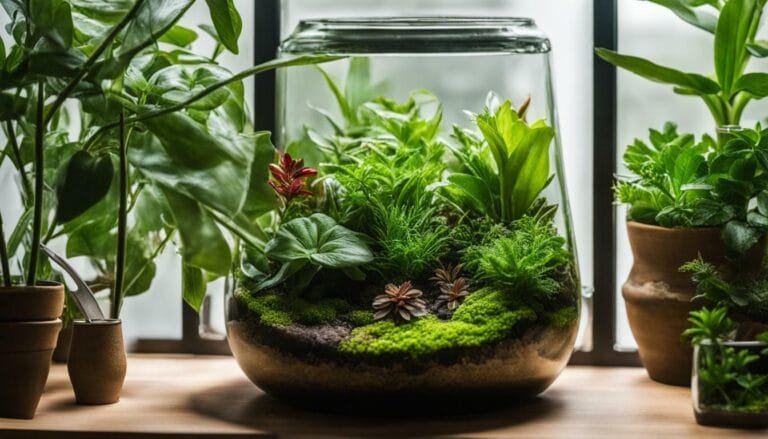
Flat, shallow bowls dry out at the edges while the center stays wet, stressing roots and inviting fungus gnats. A small fishbowl or desktop aquarium creates depth for varied planting zones while still letting you control airflow. The open top is easy to tune with a simple glass plate or plastic wrap to shift between open and closed conditions.
Why It Works
- Large viewing window makes it easy to spot early problems and enjoy the design.
- Depth and width allow hardscape (stones, driftwood) that guide airflow and water runoff.
- Adjustable cover gives you “seasonal” control — more open in summer, more closed in winter heat.
Planting Strategy
- Back: a mound with selaginella and mini fern.
- Mid: pilea glauca trailing off a stone.
- Front: moss and a patch of baby tears for a “valley” effect.
Moisture Management
- Cover 50–70% of the top with a glass cutting board or plastic wrap to hold humidity but allow some airflow.
- Water along the hardscape so runoff distributes evenly instead of pooling in one spot.
- Rotate the bowl a quarter turn weekly for even light.
Action today: Dust off a 2–5 gallon aquarium, add a partial cover, and build a moss valley — you’ll get a forgiving setup that teaches airflow and moisture balance fast.
Frequently Asked Questions
How much should I water a closed terrarium in these containers?
Start with just enough to make the soil evenly damp, not dripping — usually 2–4 tablespoons for a pasta jar and 1/4 cup for a cookie jar or small aquarium. After 24 hours, check midday condensation. If more than half the glass is fogged, vent for an hour; if there’s no condensation at all, mist the soil surface lightly. In most cases, you’ll add water every 3–4 weeks or less.
Do I really need activated charcoal, and where do I find it?
Yes, for closed or mostly closed containers it helps reduce odors and slows bacterial growth. Use a very thin layer between gravel and soil — about the thickness of a coin. Look for it in the aquarium aisle at a pet store or garden center. Skip it only if you plan to keep the container open most of the time and water sparingly.
What light do these terrariums need if I don’t have a bright window?
Place them where you can comfortably read a book by daylight without switching on a lamp — that’s bright indirect light. If your home runs dim, use a simple LED desk lamp 20–30 cm above the container for 10–12 hours daily. Avoid direct, hot sun on glass, which overheats and cooks leaves against the sides.
How do I prevent mold in closed containers?
Keep leaves off the glass, remove fallen debris weekly, and vent when midday condensation stays heavy. Water the soil, not the foliage, and wipe the inside glass dry after planting. If you spot a white fuzzy patch, dab it with a paper towel, vent for a few hours, and reduce watering by a tablespoon next time.
Can I keep succulents in these unconventional containers?
Only in the fishbowl or aquarium with an open top and very light watering. Use a sandy, fast-draining mix from the garden center and skip charcoal layers. Water a tablespoon at a time every 3–4 weeks and keep them in bright light without trapping humidity under a lid.
What basic tools help with planting in tall or narrow glass?
Use household stand-ins: chopsticks for positioning, a long-handled spoon for soil, a funnel made from paper for clean backfilling, and a spray bottle for precise watering. A soft paintbrush helps clean soil off leaves and glass. Keep a microfiber cloth nearby to wipe condensation and fingerprints so you can see what’s happening inside.
Conclusion
You don’t need specialty glass to build a stable, beautiful terrarium. Start with one container already in your kitchen, follow the ventilation and watering cues above, and you’ll learn faster with fewer plant losses. Ready for the next step? Try designing a layered hardscape in a small aquarium to practice moisture control and airflow like a pro.