The Truth About 7 Decorative Terrarium Accents That Affect Drainage, Ph or Root Health
I’ve built dozens of terrariums that looked gorgeous on day one and collapsed by week three. Every time, the problem traced back to “pretty” accents that quietly altered drainage, pH, or root space. In this guide, I’ll show you which common decorative materials change your mini-ecosystem and exactly how to deploy them without sabotaging plant health. You’ll finish with a display that stays beautiful and alive, not just photogenic.
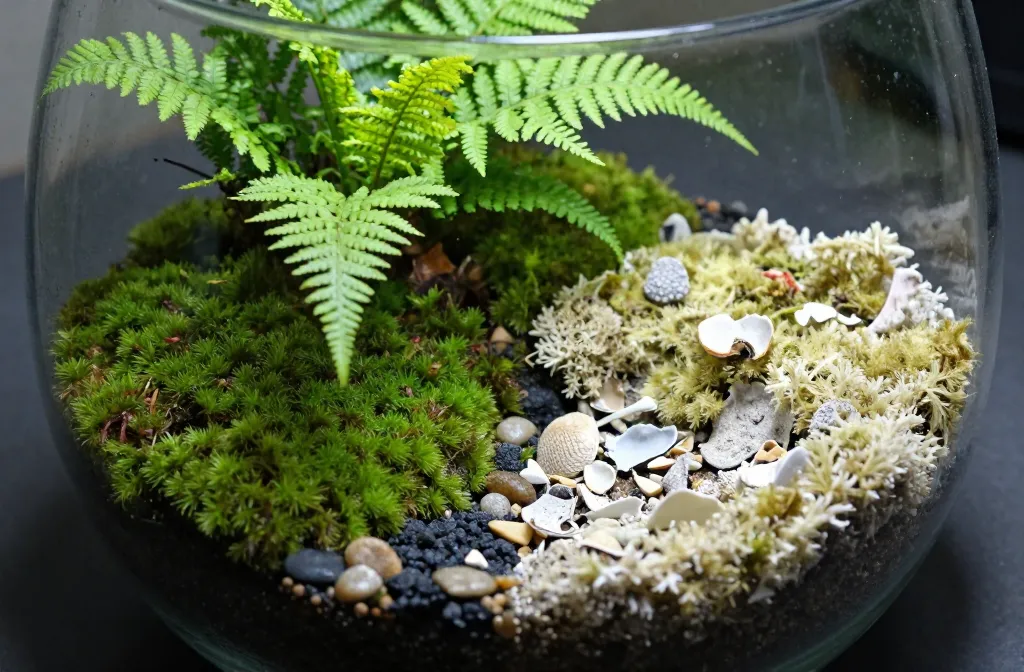
1. Crushed Shells and Coral: Alkalinity Creep That Burns Roots
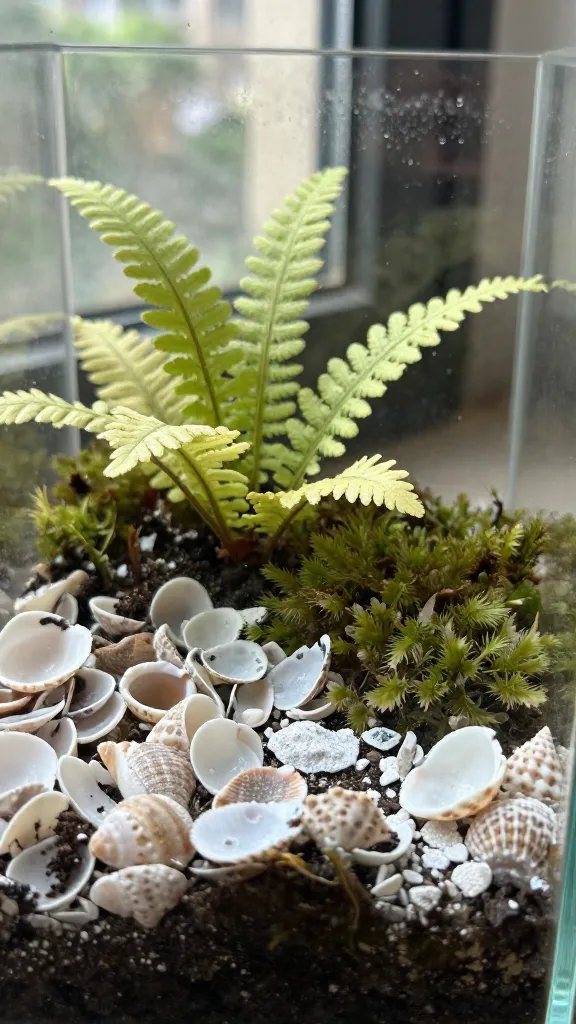
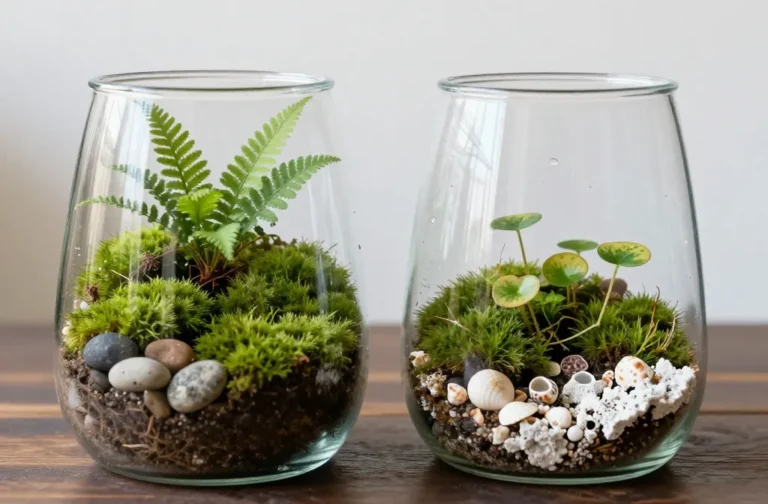
Crushed shells, coral sand, and beach finds raise pH by releasing calcium carbonate into moisture. In a humid, closed terrarium, that shift is steady and strong, stressing acid-leaning plants and blocking nutrient uptake.
Signs to Watch For
- New growth on ferns and mosses fades to pale yellow while veins stay greener
- Soil crust with white, chalky deposits
- Condensation dries faster than usual despite normal room conditions
How to Use It (If You Must)
- Quarantine shells as a dry top decoration only, never mixed into soil
- Place them on a flat rock or a piece of charcoal so water can’t pool around them
- Keep them minimal—think two or three accent pieces, not a layer
What to Use Instead
- Neutral-toned pebbles from a garden centre labeled for aquariums or houseplants
- Inert glass pebbles
Action today: If you have shells touching soil, lift them out and set them on a small flat stone or remove them entirely.
2. Colored Decorative Gravel: Hidden Dyes and Salts That Stress Roots
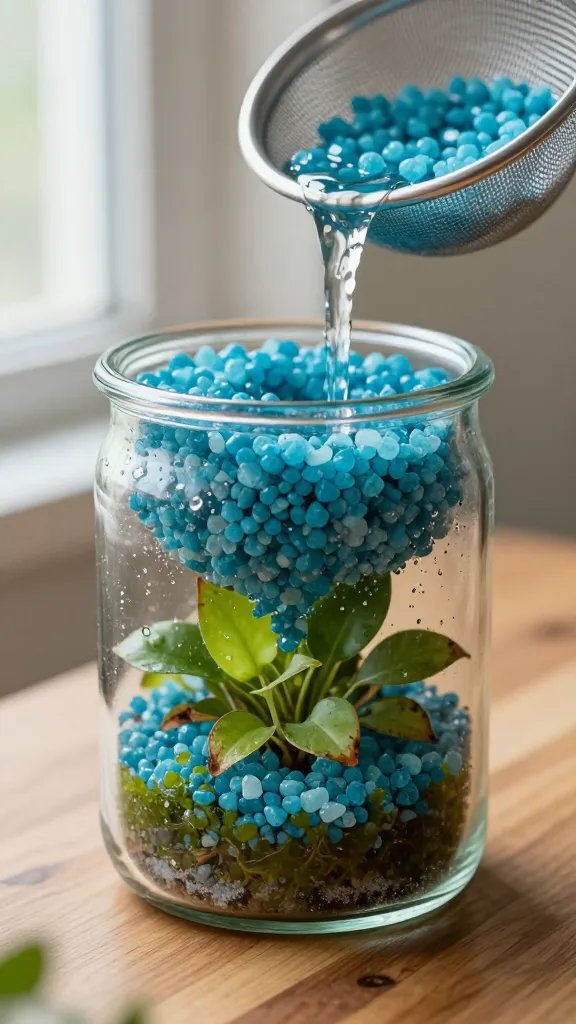
Cheap colored gravel often leaches dyes and salts when kept perpetually damp. That contamination irritates fine roots, encourages algae blooms, and throws off water balance in closed jars.
Signs to Watch For
- Water beads or condensation with a faint tint
- Algae slicks forming under the gravel or on glass near it
- Leaf tips browning on small plants like pilea or fittonia
How to Fix It
- Rinse gravel in a colander under tap water until runoff stays clear for 30 seconds
- Use it only as a thin top layer, not mixed into the root zone
- Swap for aquarium-safe gravel if tinting persists after rinsing
What to Use Instead
- Natural pea gravel, aquarium-grade quartz, or polished river stones
Takeaway: Only use gravel labeled aquarium-safe and rinse thoroughly before it goes into a humid terrarium.
3. Driftwood and Bark: Tannins and Fungi That Shift pH and Airflow
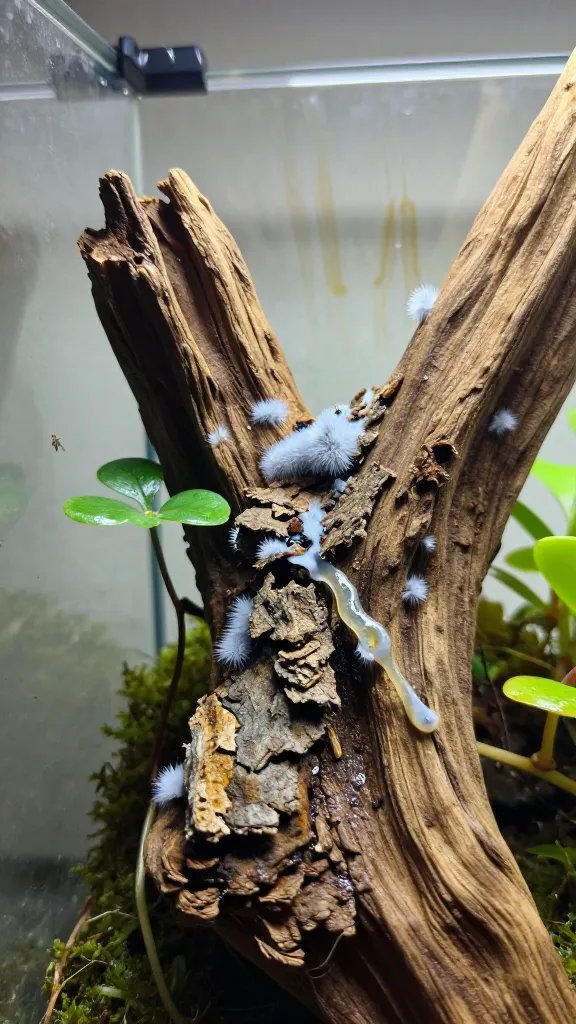
Untreated driftwood and decorative bark release tannins that acidify moisture and can stain glass. In tight containers, they also trap moisture against stems, inviting rot and fungus gnats.
Signs to Watch For
- Tea-colored condensation or water marks on the glass
- Fuzzy white or grey mycelium on the wood within 1–3 weeks
- Mushy stems where they touch damp wood
How to Use It Safely
- Scrub with a stiff brush under hot tap water; air-dry for 24 hours
- Optionally bake thin pieces on a foil-lined tray at a low oven setting (around the lowest “keep warm” mark) for 45–60 minutes to reduce spores
- Keep wood off the soil with spacers: two small pebbles or a sliver of flat rock under each contact point
What to Use Instead
- Grape wood or aquarium-grade driftwood from a pet store—already prepped to leach less
Action today: Lift any wood that sits directly on damp soil and create two pebble spacers to let air flow underneath.
4. Activated Charcoal: Great Filter, Terrible Soil if Overused
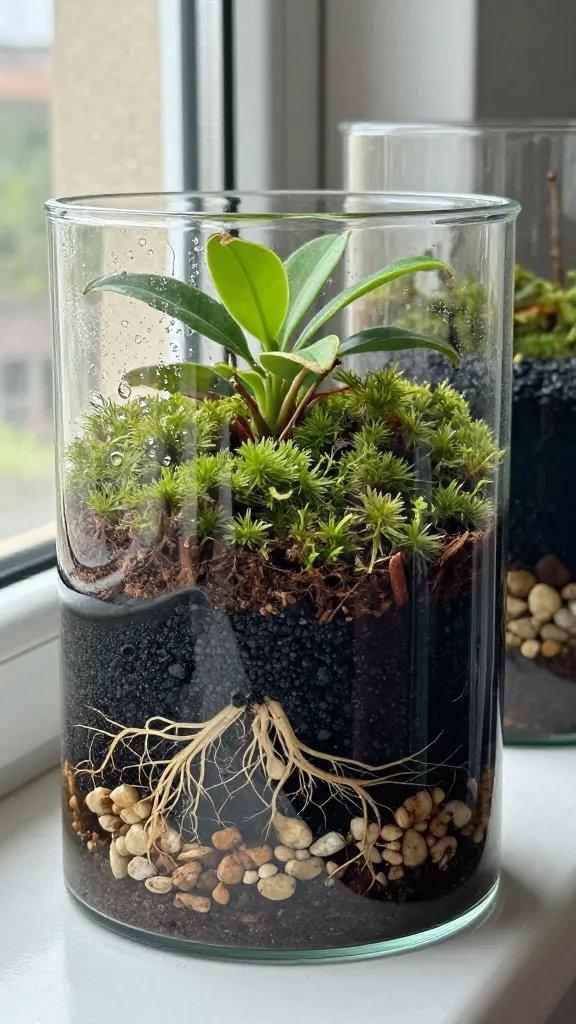
Activated charcoal helps bind odors and impurities, but too much behaves like a sponge that steals moisture from roots. Mixed into potting zones, it disrupts even drainage and creates dry pockets that stunt growth.
Signs to Watch For
- Top looks wet but roots stay dry—plants wilt a day after watering
- Uneven condensation: heavy near glass, dry patches behind charcoal-rich zones
- Slow new growth with crisping leaf edges
Right Way to Use It
- Limit to a thin layer (about the thickness of your little finger) above drainage stones and below soil
- Use coarse horticultural charcoal, not barbecue briquettes
- Rinse charcoal briefly to remove dust that clogs pores
What to Use Instead
- If odor control is the only goal, ventilate: crack the lid for 30–60 minutes weekly
Takeaway: Keep charcoal out of the root zone—use one thin layer above drainage, not mixed into potting mix.
5. Sand Layers: Pretty Stripes That Cement and Suffocate Roots
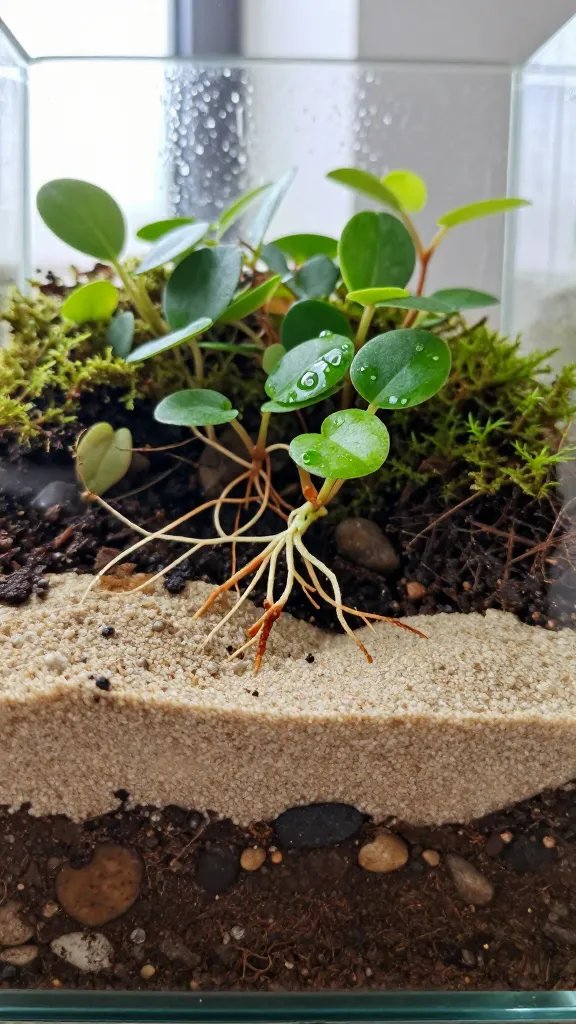
Sand looks elegant in layers, but in humid jars it compacts into a dense barrier that blocks water movement. Roots stop just above the sand line and rot where water pools.
Signs to Watch For
- Sharp water line visible along the sand band after watering
- Roots circling sideways above the sand, refusing to cross
- Edema blisters on leaves from inconsistent moisture
How to Fix It
- Confine sand to a decorative top dressing no thicker than a grain’s width between plants
- Break any internal sand bands by poking a few vertical holes down the side with a chopstick
- Favor gritty drainage layers: pea gravel or small LECA (expanded clay) pellets
What to Use Instead
- Fine aquarium gravel for stripes—it stays permeable and doesn’t cement
Action today: If you have a thick internal sand stripe, vent the lid, then use a chopstick to poke 4–6 channels from topsoil to the drainage layer to reopen pathways.
6. Limestone and Marble: Slow-Leaching Stones That Raise pH
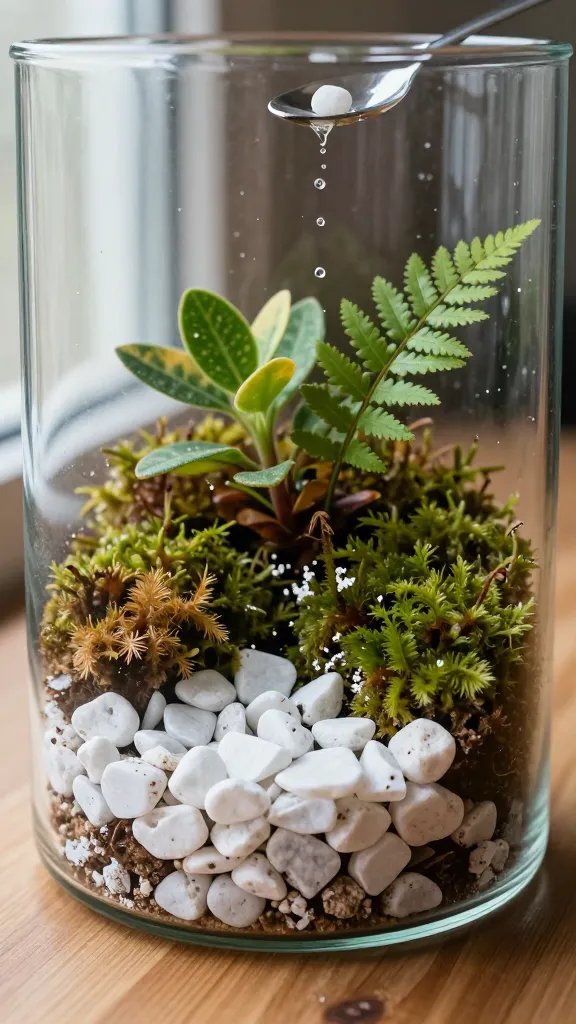
Limestone chips, marble chips, and some “white decorative stones” fizz in vinegar for a reason—they release calcium carbonate that nudges pH upward with each watering cycle. That shift locks out iron and manganese, especially for mosses, peperomia, and many ferns.
Signs to Watch For
- Yellowing between leaf veins on new growth
- Crusty white residue around stone bases
- Moss turning straw-colored despite good humidity
How to Test and Use
- Drop one stone in a spoonful of household vinegar—fizzing means it’s reactive
- If you love the look, park stones on a non-porous barrier (flat glass pebble or slate chip)
- Do not bury reactive stones in the soil or drainage layer
What to Use Instead
- Slate, basalt, granite, or dark river stones—non-reactive and stable
Takeaway: Do a 10-second vinegar test—if it fizzes, keep that stone out of your soil and drainage layers.
7. Figurines and Heavy Ornaments: Compacted Soil and Blocked Airflow
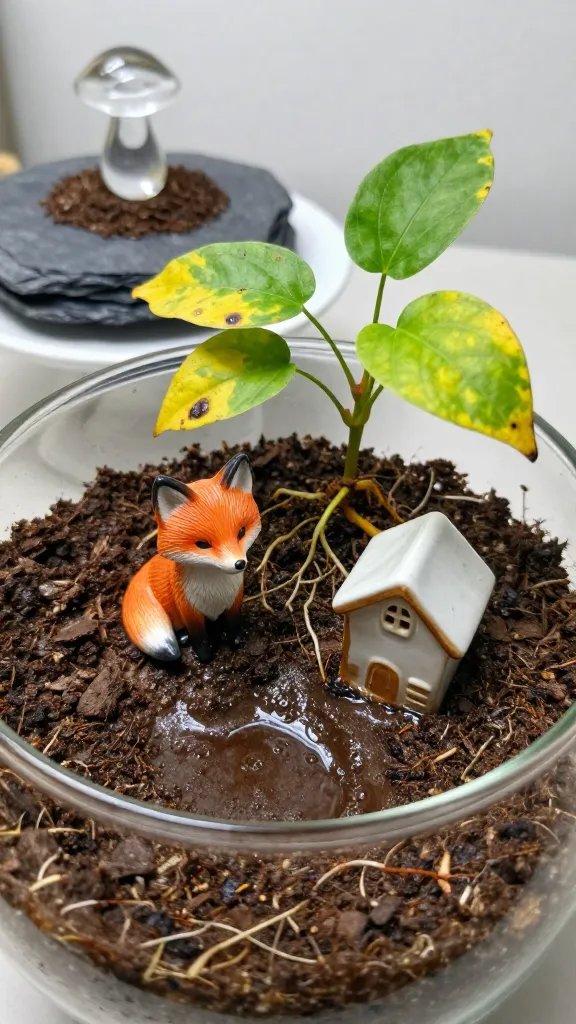
Resin animals, ceramic houses, and glass sculptures look charming but compress soil and seal the surface where roots breathe. Compaction slows drainage, invites anaerobic smells, and encourages stem rot where ornaments trap moisture.
Signs to Watch For
- Soil imprint or hard pan under the ornament
- Condensation pooling around the base after watering
- Leaves yellowing near the ornament while others stay healthy
How to Place Them Properly
- Set ornaments on a firm base: a flat rock, cork coaster, or a shallow slate piece
- Leave a 1–2 cm gap between ornament edges and plant stems
- Rotate or lift the piece monthly to keep the soil from compacting
What to Use Instead
- Lightweight cork or bark “logs” on spacers, or hollow ceramic pieces with a wide footprint
Action today: Lift any heavy figurine, fluff the soil lightly with a chopstick, and reset it on a flat rock with a finger-width gap to nearby stems.
Frequently Asked Questions
How do I know if a decorative stone will change my terrarium’s pH?
Use the simple vinegar test at your sink. Drop a small piece into a spoon of household vinegar. If you see fizzing or bubbles, the stone is reactive and will raise pH in a humid terrarium. Keep reactive stones on a non-porous barrier or swap for slate, basalt, or granite. Retest any new batch before use.
Can I still use beach finds like shells and coral in a closed terrarium?
Yes, but keep them decorative and isolated. Set shells on a flat rock or glass pebble so they don’t contact wet soil or the drainage layer. Limit the number to a few accents and monitor for white crust around them. If plants pale or moss declines, remove the shells entirely.
Is activated charcoal necessary in every terrarium?
No. It’s useful as a thin buffer above the drainage layer in closed setups, but not mandatory. If your terrarium is ventilated weekly and you use clean materials, you can skip charcoal. Never mix it through the soil where it disrupts moisture around roots.
Why does my colored gravel make the water look cloudy or tinted?
Many decorative gravels use surface dyes that leach in constant humidity. Rinse the gravel thoroughly until runoff stays clear; if it still tints, replace it with aquarium-safe gravel. Keep it as a top layer only, not mixed into soil. Watch for algae on the glass and reduce light if blooms appear.
Are sand layers always bad in terrariums?
Thick internal sand bands cause problems because they compact and block water movement. If you love the look, use a very thin sand top dressing and keep it away from plant crowns. For layered designs, choose fine aquarium gravel that stays permeable. Reopen any existing sand bands with vertical channels.
How do I safely add wood accents without mold taking over?
Scrub wood under hot water, dry it well, and optionally heat-treat thin pieces at a low oven setting. Elevate wood on two small stones so air can move underneath and moisture won’t pool. Vent the terrarium for 30–60 minutes weekly. If white fuzz appears, remove the piece, wipe it down, and re-dry before replacing.
Conclusion
Decor accents either support or sabotage your mini-ecosystem—placement and material choice decide which. Start by testing stones with vinegar, isolating shells, and keeping heavy pieces off the soil. With those habits, your terrarium will stay healthy enough to focus on the fun part: building living scenes you’re proud to keep on display.