The Secret 6 Container Types That Work for Air Plant Terrariums — and the Ventilation Rule Each Must Meet
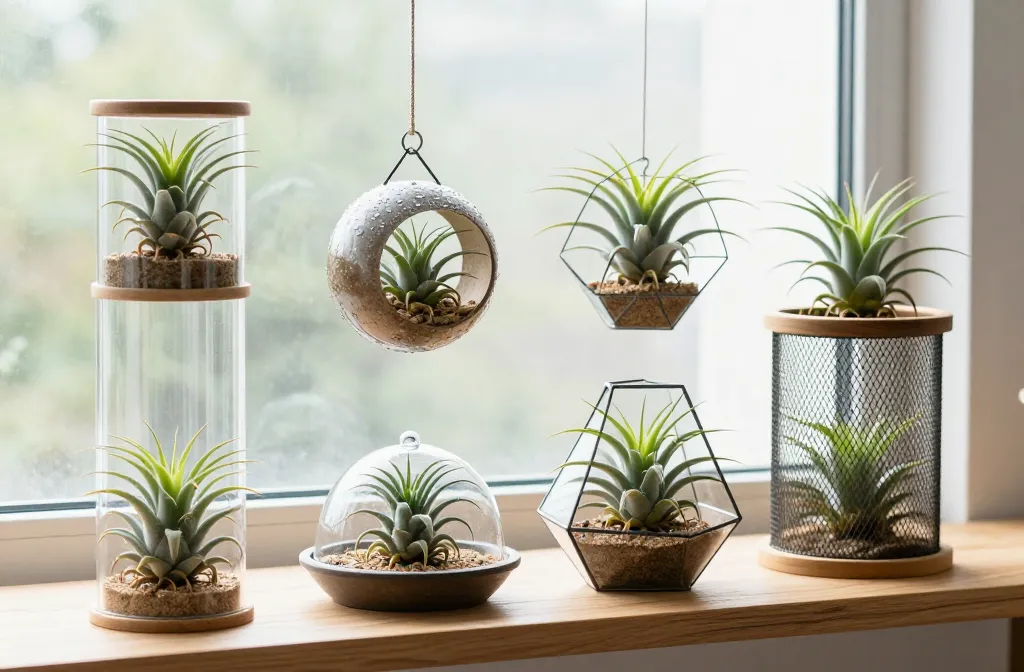
I’ve kept air plants on bookshelves, in hanging globes, and even inside a cheese dome. The only time they struggled was when the container ignored airflow. If you’ve watched a healthy Tillandsia turn limp or moldy in a pretty glass, ventilation is the missing piece. In this guide, you’ll learn the six container types that actually work for air plant terrariums and the one ventilation rule each must meet so your plants stay firm, colorful, and easy to care for.
1. Open-Top Cylinders: Great Display, Needs a Clear “Chimney”
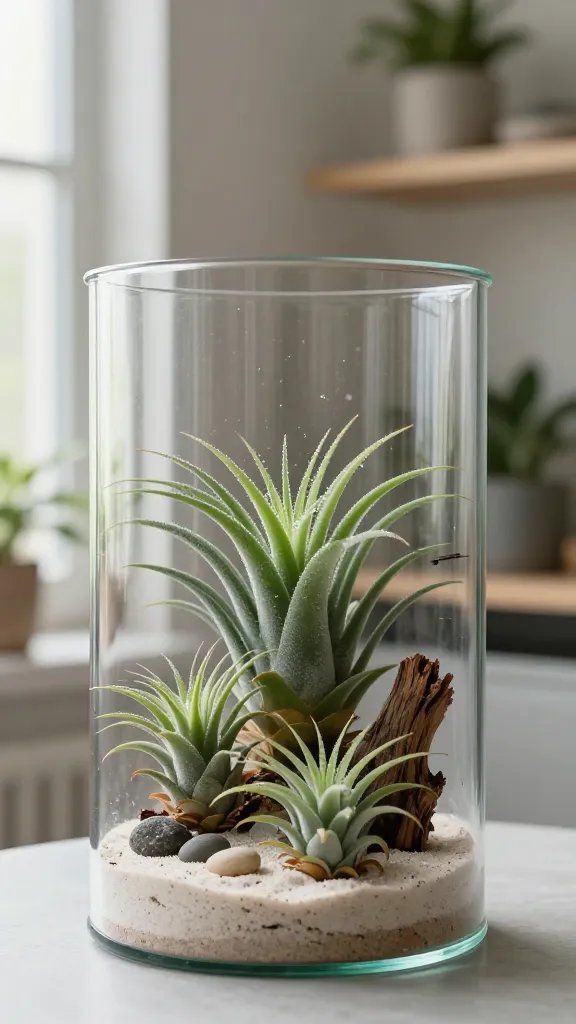
Open-top glass cylinders show off your air plants beautifully, but stagnant air sinks into tall tubes and suffocates leaves. Without a clean vertical path for air to move, moisture lingers after misting and invites botrytis and rot.
Ventilation Rule for Cylinders
- Rule: The opening must be at least as wide as the cylinder’s internal diameter, or you need a second opening near the base to create a draft.
- Think “chimney”: a wide, unobstructed opening lets warm air rise and exit so leaves dry within 4 hours after watering.
How to Set It Up
- Choose cylinders with a mouth opening equal to the body width. If the mouth narrows, skip it.
- Keep decor low. Use a 1–2 cm layer of aquarium gravel or sand and place plants on top, not buried.
- Position the cylinder within 3 feet of a bright window, not in direct midday sun.
Signs to Watch For
- Condensation beads clinging to glass past lunchtime
- Leaf tips staying damp or feeling cool and clammy after 4 hours
- Mild musty smell when you lean over the opening
Action today: If your cylinder narrows at the top, remove some filler and lower the plants so at least 5–8 cm of open air sits above them for a proper chimney effect.
2. Hanging Globes: Pretty Orbs That Demand Cross-Vents
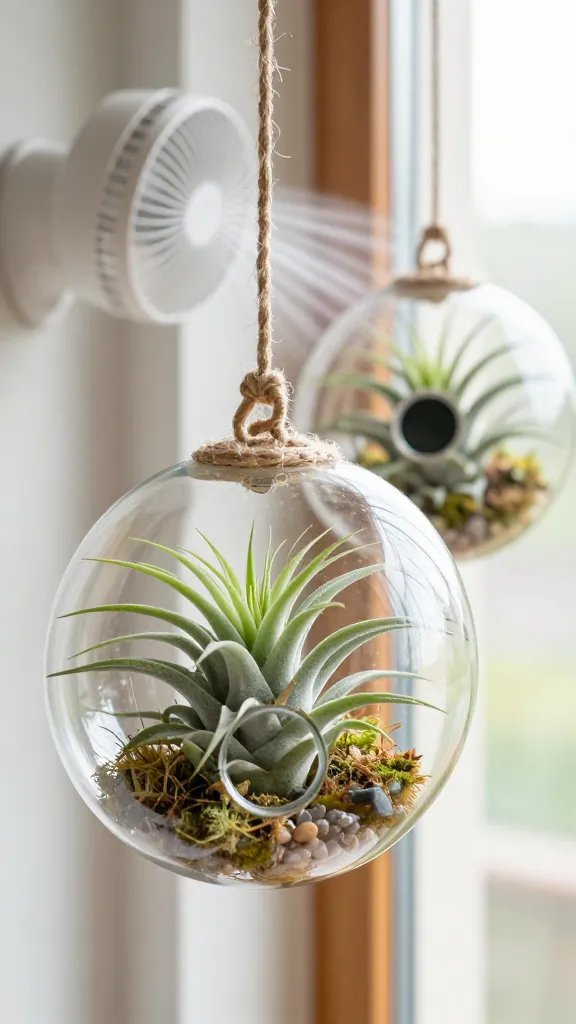
Hanging glass globes often look airy but behave like bowls with only a front porthole. After misting, humidity spikes and stalls, and leaves never fully dry. That’s when the base darkens and outer leaf sheaths rot first.
Ventilation Rule for Globes
- Rule: Two openings on opposite sides, or one opening plus daily airflow from a fan or an open window for at least 30–60 minutes.
- If your globe has only one hole, you must provide gentle airflow each day.
How to Set It Up
- Pick globes with a second rear vent or a top hole. Garden centers often stock them alongside succulents.
- Hang at eye level or higher so warm air can exit upward.
- Use pebbles, seashells, or a small driftwood piece to elevate the air plant so no leaf touches wet glass.
How to Fix a Single-Port Globe
- Move it within 2–3 meters of an oscillating fan on low for 30 minutes after watering.
- Open a nearby window for a half hour when weather allows.
- Water by dunking the plant outside the globe, then return it only when it feels dry to the touch.
Takeaway: A globe needs cross-ventilation; if it has only one opening, make airflow part of your watering routine.
3. Geometric Terrariums with Hinged Lids: Style with a Propped-Lid Gap
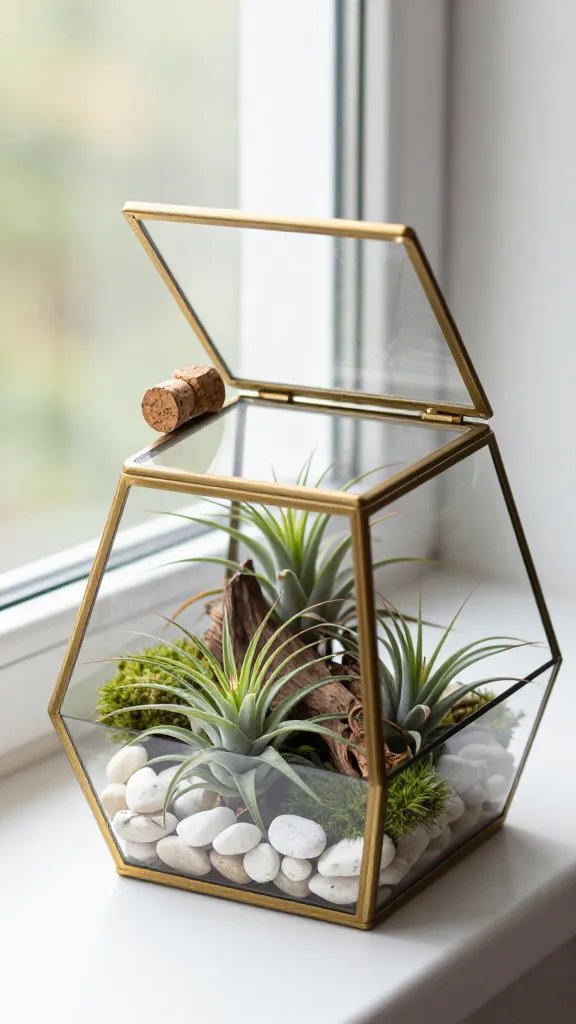
Faceted terrariums often come with brass frames and a hinged lid that tempts you to close it. Closed, they trap humidity, fog the panes, and slow-dry your Tillandsia ionantha to a limp mess. Mold on decorative moss shows up first.
Ventilation Rule for Geometric Terrariums
- Rule: Maintain a permanent gap of at least a finger-width (1–2 cm) along one edge of the lid, or remove the lid entirely.
- A continuous gap creates a gentle, predictable draft.
How to Set It Up
- Prop the lid with two small corks or clear rubber bumpers from the hardware store.
- Keep the rear panel 5–8 cm away from a wall to prevent dead air pockets.
- Avoid sheet moss unless it’s completely dry and used as a thin accent; never pad around the plant base.
Signs to Watch For
- Fogging that returns every morning and lingers past midday
- Leaf bases turning brown where they rest on decor
- Rusty dust or dark specks on glass (spores beginning to spread)
Action today: If the lid currently closes flush, add two bumpers to keep a visible, constant gap so the plant dries within 4 hours after watering.
4. Cloche Domes and Cheese Domes: Only Safe with a Tall Spacer
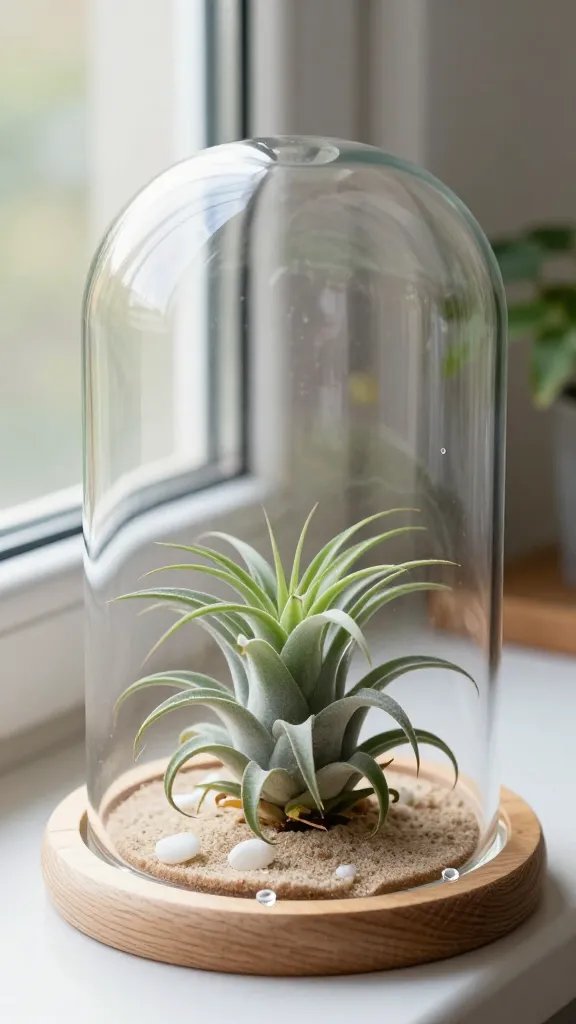
Glass domes magnify light and trap heat. Under a sealed dome, an air plant cooks, then rots as trapped moisture can’t escape. I learned fast: a tight dome equals a humidifier with nowhere to go.
Ventilation Rule for Domes
- Rule: Elevate the dome 1–2 cm off its base at all times using discreet spacers to create a continuous air gap, or use a dome with a dedicated vent hole.
- Never seal the dome fully, even overnight.
How to Set It Up
- Use three clear furniture bumpers or wine cork slices under the dome rim to form a triangle of gaps.
- Place the plant on a dry, ridged base such as a wood slice or a ceramic trivet so air can flow underneath.
- Keep the dome out of direct sun; think bright, indirect light near a window.
Watering Method That Works
- Lift the dome and remove the plant to water by dunking for 5–10 minutes in room-temperature tap water that tastes clean, not salty.
- Shake off excess water, place the plant on a towel for 30–60 minutes, then return it only when leaf bases feel dry.
Takeaway: Domes only work if the rim never seals—build a permanent 1–2 cm air gap so moisture has an exit.
5. Wide Bowls and Dish Gardens: Safe If the Surface Stays Open
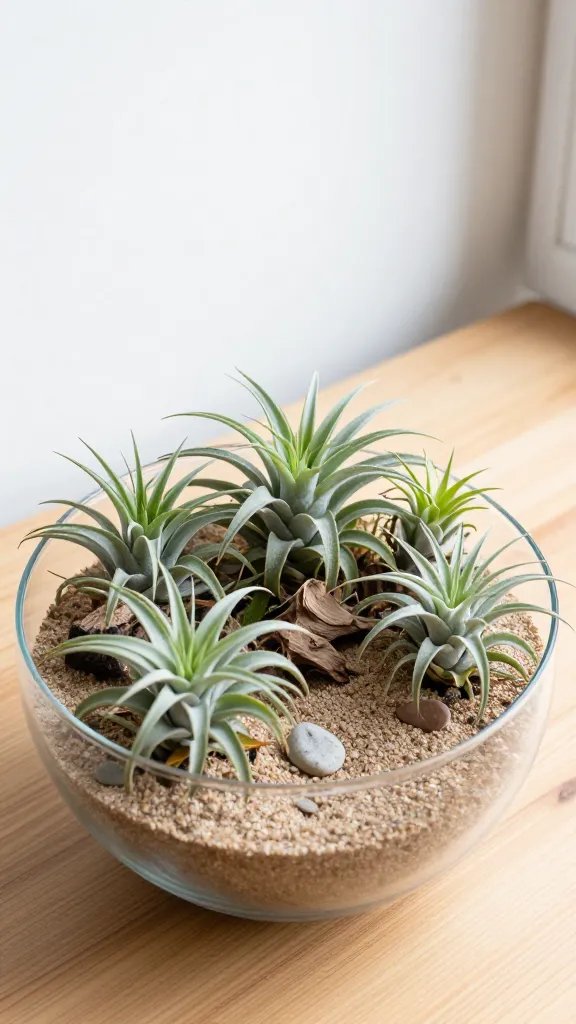
Shallow bowls feel airy, but overfilling them with stones, moss, and figurines chokes airflow at plant level. When the surface becomes crowded, leaves sit against damp decor and rot from the outside in.
Ventilation Rule for Bowls
- Rule: Keep at least two-thirds of the bowl’s surface open around each plant, with no decor touching the leaves.
- The rim diameter should be wider than the bowl is tall to prevent stagnant pockets.
How to Set It Up
- Choose a bowl with a rim at least 20 cm wide if you want to display 2–3 plants.
- Use inert materials: aquarium gravel, polished stones, or dry shell chips. Rinse them first and let them fully dry.
- Elevate plants on a few pebbles so the central cup never rests on a flat, potentially damp surface.
Quick Layout Tips
- Leave a full hand’s width of open space between plants.
- Place larger decor off to the side, not in the airflow path above leaf rosettes.
Action today: Remove one third of the filler and any decor touching leaves so air can sweep across the bowl’s surface.
6. Wire Frames and Driftwood Mounts Under Glass: Only If the Glass Is Mostly Not There
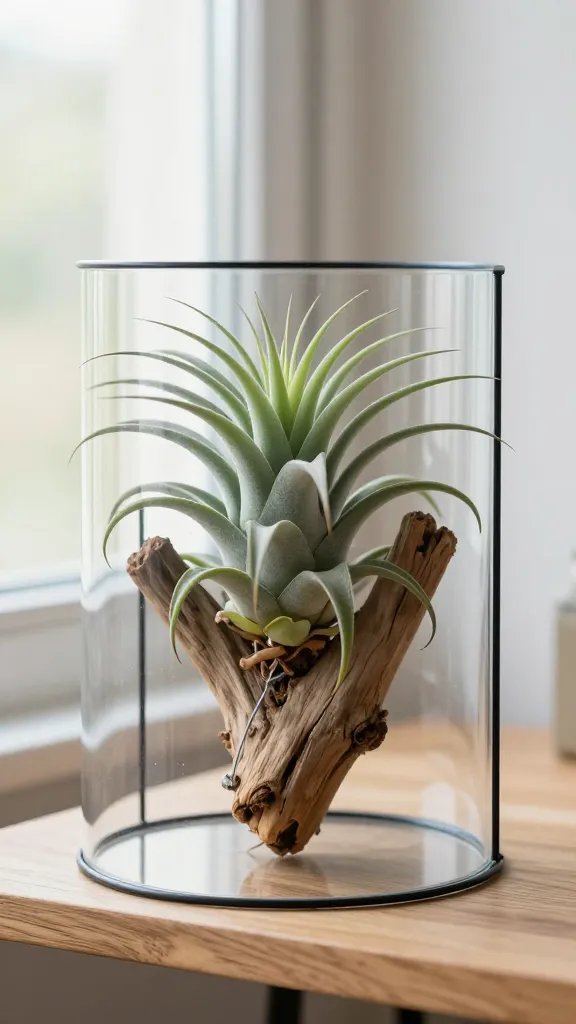
Mounting air plants to wire or driftwood looks natural and dries quickly—until we cage that setup inside small glass. Squeeze it into a tiny bell jar and you undo the mount’s biggest advantage: fast airflow.
Ventilation Rule for Mounted Displays
- Rule: If you add glass, it must surround no more than half the plant’s height and remain open on at least two sides.
- Think of glass as a splash guard, not a room. The plant needs free air to all leaf bases.
How to Set It Up
- Use a low glass ring, partial screen, or a three-sided geometric frame that leaves front and top open.
- Attach plants with floral wire or a dab of aquarium-safe silicone to the mount—never hot glue on live tissue.
- Keep the mount 5–10 cm away from walls or books for free air movement all around.
Maintenance Routine
- Remove the plant for watering, then return only when drip-dry and leaf bases feel dry.
- If you want humidity, mist the room air lightly—not the inside of a tight cover.
Takeaway: Mounts thrive when glass acts like a frame, not a lid—leave two sides fully open.
Frequently Asked Questions
How long should air plants take to dry after watering?
Air plants should dry within 2–4 hours. If they stay damp longer, increase airflow or widen the container’s openings. After dunking, shake off excess water and set the plant upside down on a towel for 15 minutes so no water pools in the center cup before returning it to the display.
Can I use a closed terrarium for air plants if I never water inside it?
No. Even without direct watering, daily humidity from the room and plant respiration builds up in sealed glass. You need a continuous gap or open vents so the plant dries fully each day. If you love a closed look, prop the lid 1–2 cm and commit to drying the plant outside the container after each soak.
Do air plants need soil or moss in these containers?
No soil—air plants take moisture and nutrients from water and air. Decorative moss is optional and should stay dry; never pack it around the plant’s base. If you use moss, keep it as thin accents that don’t touch the lower leaves to prevent trapped moisture.
Where should I place my terrarium for the right light?
Give bright indirect light near a window—think a bright room where you can read comfortably without turning on a lamp at midday. East or north windows are ideal; for a south or west window, place the terrarium a few feet back or use a sheer curtain. Avoid direct midday sun on glass to prevent heat build-up.
How often do I water air plants in these containers?
Water every 1–2 weeks by dunking for 5–10 minutes, then dry completely before returning the plant. In very dry apartments during winter heating, add a light mist midweek, but only if the plant can dry within 2–4 hours. Reduce watering if leaf tips feel consistently cool and damp or you see persistent condensation.
What if my container only has one small opening I can’t modify?
Treat it like a display case, not a home. Keep the plant perched at the opening, or remove it entirely for watering and drying, and return it only for a few hours of viewing. Better yet, relocate the air plant to a more ventilated container and use the small vessel for non-living decor.
Conclusion
Air plants thrive when your container respects a simple rule: they must dry completely the same day you water. Choose a design that guarantees that airflow, and your terrarium becomes low-maintenance art instead of a short-lived science experiment. Start by checking your openings—widen a gap, add a spacer, or move the plant up into the breeze today.