Unmissable 8 Plants That Work As Terrarium Add-Ons — Mosses, Ferns, Carnivores and Tropical Species
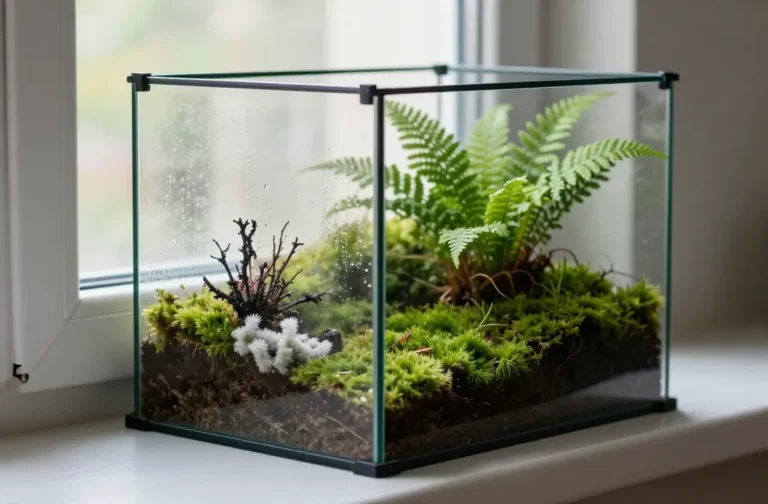
I kept seeing terrariums that looked flat after a month — moss mats and one lonely fern, nothing else. When I started adding the right “supporting cast,” the scenes finally looked alive and stayed stable for seasons. In this guide, you’ll learn eight reliable terrarium add-ons — mosses, ferns, carnivores, and tropicals — with exact care, placement, and pairing tips. You’ll finish with a planting plan you can execute with materials from any garden centre and a clean kitchen counter.
1. Cushion Moss: The Humidity Anchor That Stops Everything Else From Crispening
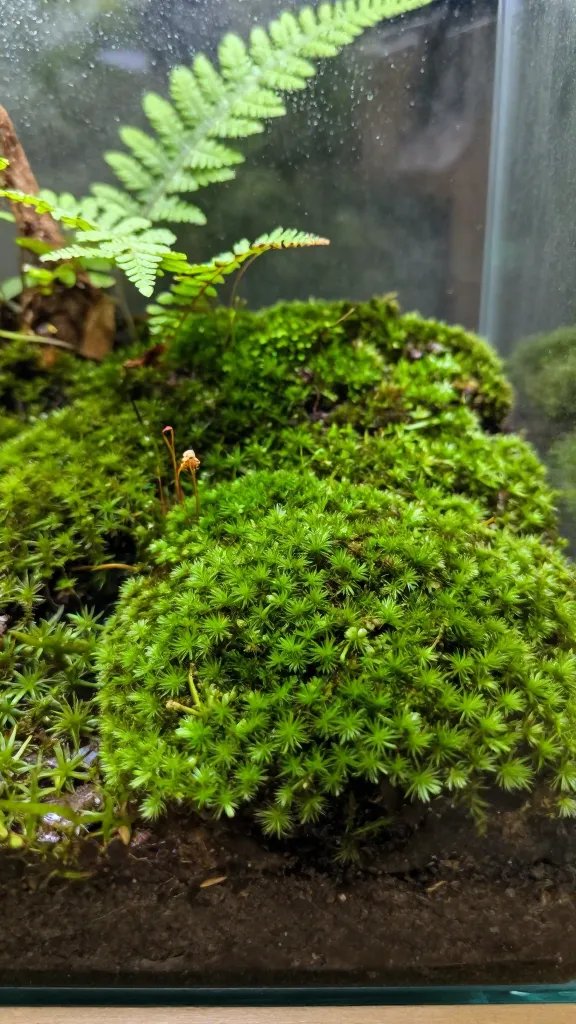
When a terrarium dries unevenly, the first casualties are delicate ferns and tropicals with thin leaves. A carpet of cushion moss (Leucobryum or Dicranum sold as “cushion,” “rock,” or “boulder” moss) stabilizes humidity and shields soil from direct light, preventing harsh swings.
Signs It’s Missing
- Topsoil crusts over in a week and pulls from the glass
- Tiny fern fronds brown at the tips
- Condensation swings from drenched to bone-dry within a day
How to Use It
- Rinse moss under cool tap water, squeeze gently, and pat to “damp sponge,” not dripping
- Press into place over a 0.5–1 cm layer of fine-grain substrate; leave small gaps around plant crowns
- Place near the front or in mounded islands to create height without crowding
Action today: Add one hand-sized cushion per 15–20 cm of terrarium diameter to lock in even humidity and reduce watering stress.
2. Sheet Moss: The Fast Groundcover That Hides Soil and Roots
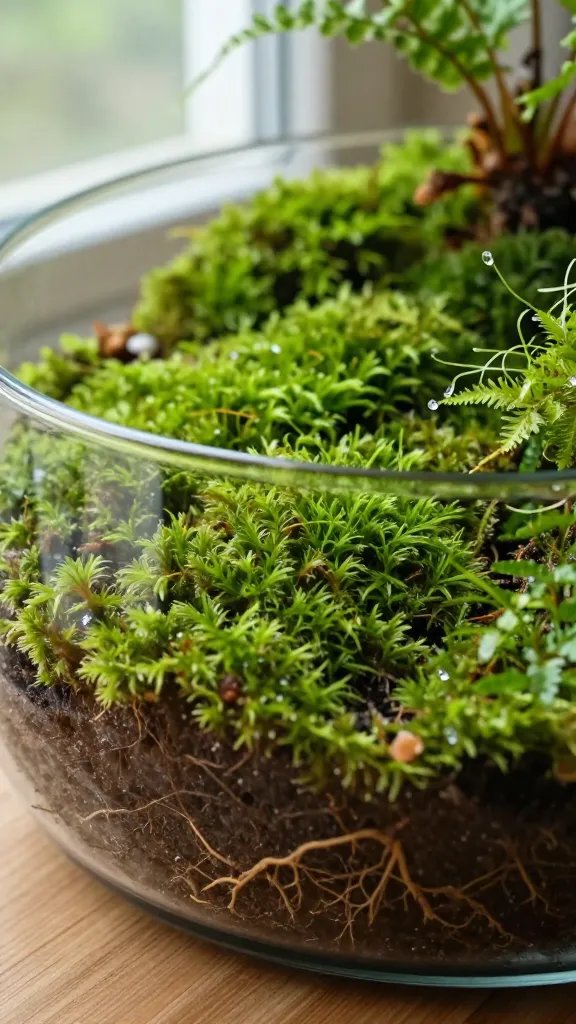
Bare soil invites algae and fungus gnats in open terrariums. Sheet moss (Hypnum/Thuidium) creates an immediate “finished” look, blocks light from the soil, and reduces mold flare-ups.
What to Use Instead (If You Can’t Find It)
- Live green sphagnum strands teased into a thin mat
- Small pieces of cushion moss arranged edge-to-edge
How to Fix Common Problems
- If edges lift, they’re too dry — mist lightly and press again
- If sheets yellow, they’re too hot — move 30–60 cm farther from a sunny window
Takeaway: Lay sheet moss like a fitted rug around plant bases to suppress algae and keep the scene tidy with minimal maintenance.
3. Selaginella (Clubmoss): The Humid-Glow Filler That Softens Hard Lines
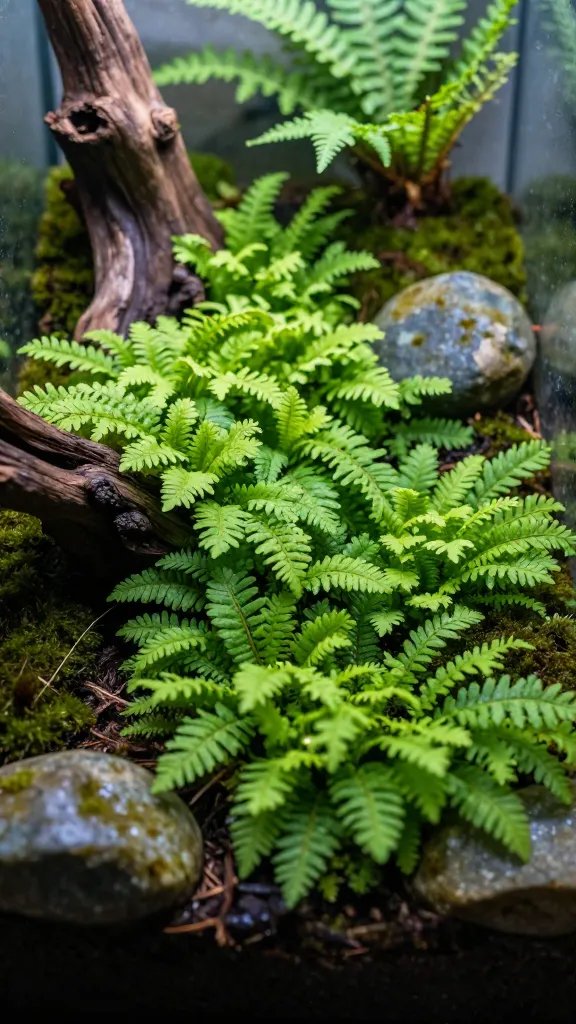
Many terrariums look patchy because the space between main plants stays empty. Selaginella (especially Selaginella kraussiana or S. apoda) fills gaps with feathery, lime-green texture and thrives in constant moisture.
Placement Tips
- Use along pathways, wood edges, and rock bases to blur transitions
- Keep leaf tips 1–2 cm from glass to avoid constant condensation burn
- Pinch stems monthly to keep it low and cushiony
Signs to Watch For
- Crispy tips: air is too dry — add a bit more moss coverage and mist lightly
- Pale overall: light is too low — move nearer a bright window with filtered light
Action today: Tuck two golf-ball-sized clumps of Selaginella where your eye falls on empty substrate — it knits the design together in two weeks.
4. Baby Tears (Soleirolia): The Quick Spreader That Makes Mini Forest Floors
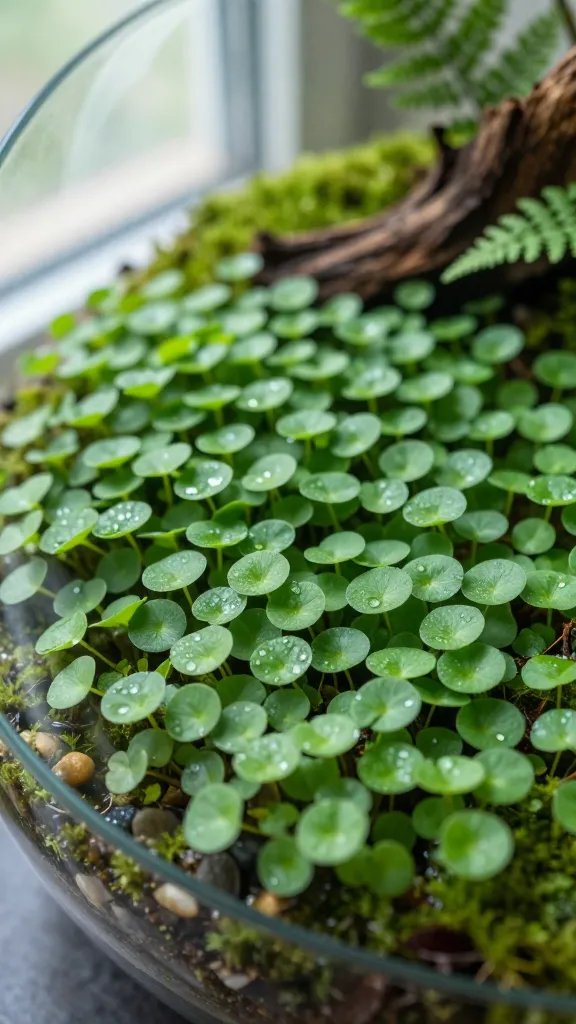
Large-leaf groundcovers look out of scale behind glass. Baby tears has tiny leaves that read as “forest floor” and quickly spreads to give a cohesive look.
How to Keep It From Taking Over
- Plant as 2–3 small plugs rather than a full mat
- Trim weekly with clean scissors, removing no more than one-third at a time
- Edge with stones or driftwood to limit creeping
Moisture Routine
- Keep evenly damp; in closed terrariums water every 3–4 weeks, open ones every 5–7 days
- Use a spray bottle to target only the root zone, not the glass
Takeaway: Plant baby tears in defined “islands” to get fast coverage you can shape, not a runaway carpet.
5. Dwarf Ferns (Nephrolepis ‘Duffii’, Pellaea rotundifolia): The Scale-Correct Canopy
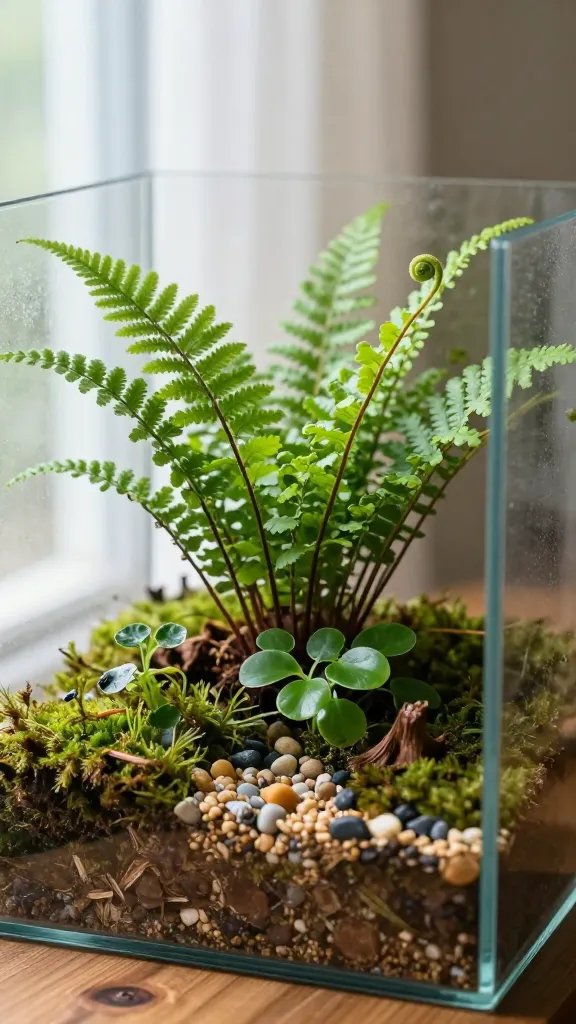
Full-size ferns overwhelm small terrariums and press against the glass, causing rot. Miniature ferns like Nephrolepis ‘Duffii’ (lemon button fern) and Pellaea rotundifolia (button fern) stay compact and bring that classic fern look.
Signs You Picked the Right Fern
- Fronds top out around 10–20 cm inside six months
- New fronds unfurl regularly without touching the lid
Care That Actually Works Indoors
- Bright, indirect light near a window with sheer curtain
- Use standard indoor potting mix blended 1:1 with fine orchid bark or coco chips for air
- Snip browned fronds at the base; don’t tug
Action today: Swap any fern brushing the glass for ‘Duffii’ — your humidity stays high without constant pruning or rot.
6. Small-Footprint Tropical Accents (Fittonia, Peperomia, Cryptanthus): The Color And Texture Punch
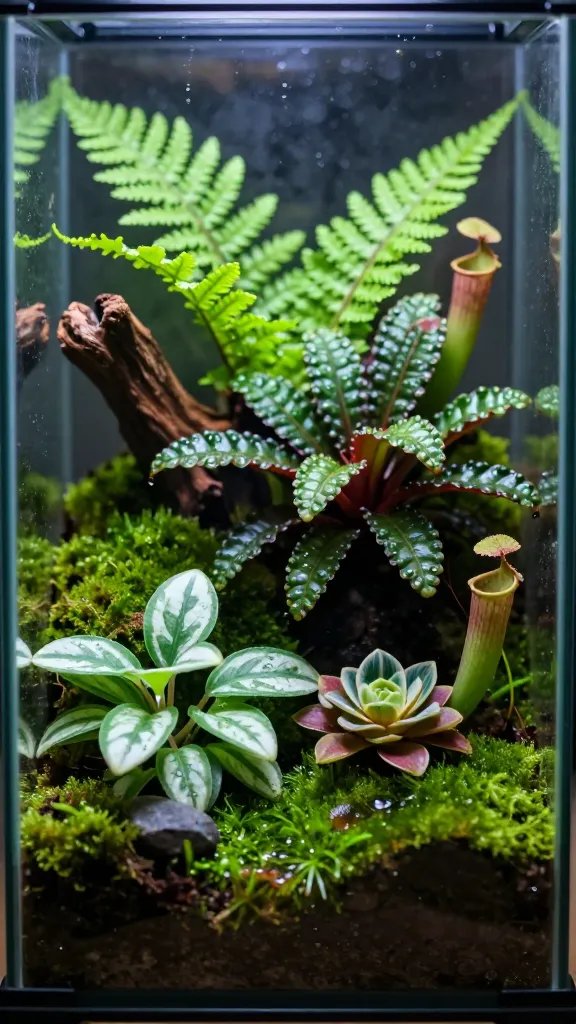
Monochrome green terrariums can look flat in photos and in person. Add one or two compact tropicals with pattern or color — Fittonia (nerve plant), Peperomia (e.g., ‘Rosso’, ‘Hope’), or Cryptanthus (earth stars) — to draw the eye and create focal points.
Plant Selection Rules
- Choose varieties labeled “mini” or under 10–12 cm tall
- Pick leaf textures that contrast moss: corrugated, striped, or rosettes
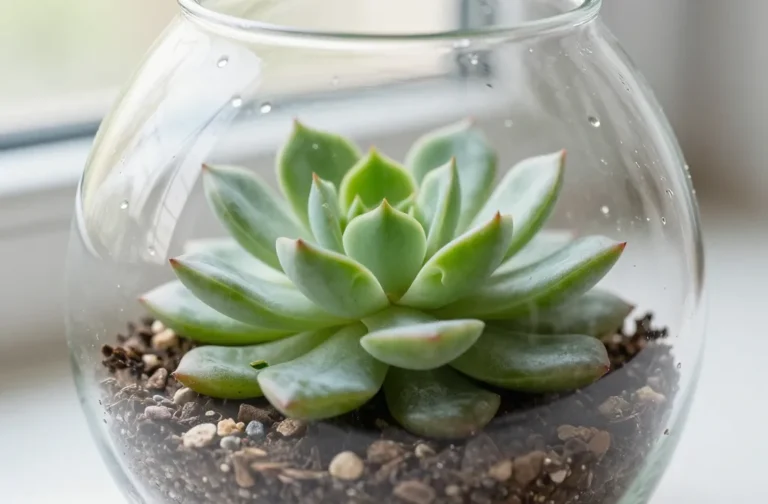
- Avoid succulents in closed terrariums — they rot in humid conditions
Simple Care
- Fittonia wilts when dry — in open terrariums water when leaves start to flag, about every 5–6 days
- Peperomia likes slightly airier mix — add a handful of perlite to standard potting soil
- Cryptanthus appreciates brighter indirect light to keep color
Takeaway: Add exactly one colorful tropical per 20 cm diameter to create a focal point without crowding the microclimate.
7. Carnivores for High Humidity (Drosera capensis ‘Narrow’, Utricularia sandersonii): The Pest Patrol That Doubles As a Showpiece
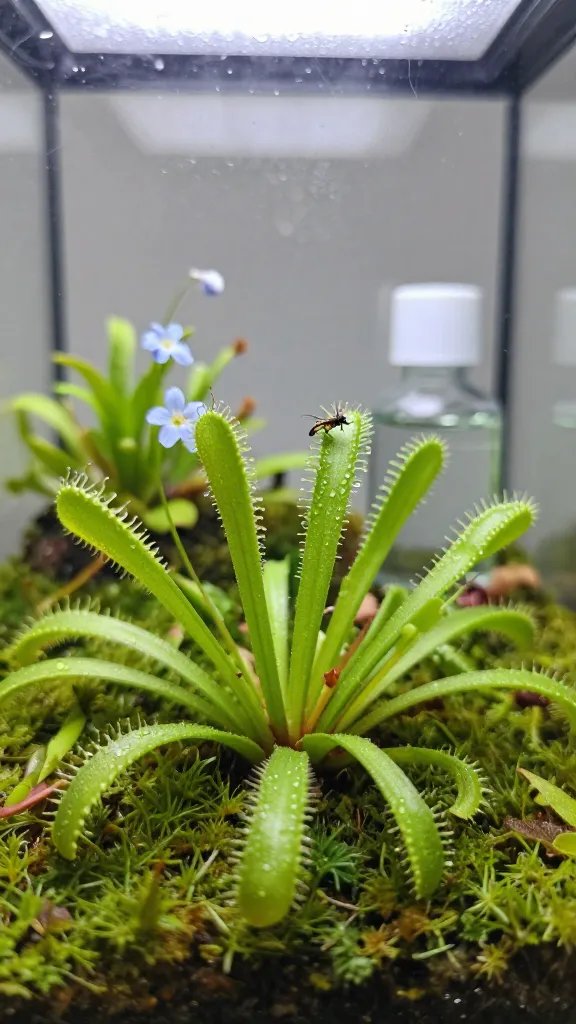
Fungus gnats love damp terrariums and annoy everyone nearby. Small carnivorous plants like Drosera capensis ‘Narrow’ and the tiny bladderwort Utricularia sandersonii thrive in humidity and quietly reduce gnat numbers.
Critical Care Differences
- Water only with rainwater, distilled, or deionized — tap minerals build up and burn leaves
- Use pure sphagnum moss or a 1:1 peat and coarse sand mix; skip fertiliser entirely
- Provide bright, indirect light; no midday sun through glass
Placement
- Put Drosera near the front for easy viewing and airflow
- Let Utricularia creep as a tiny flowered groundcover around stones
Action today: If gnats hover, add one Drosera and water it only with store-bought distilled water — you’ll see stuck adults within a week.
8. Live Sphagnum Moss: The Living Mulch That Prevents Rot And Feeds Roots
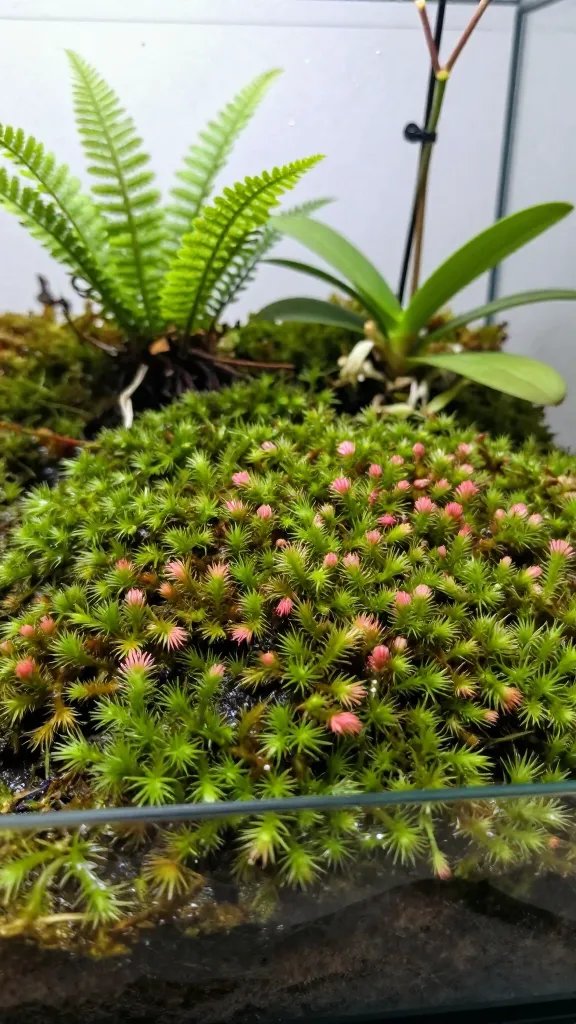
Rot starts when dense soil stays soggy around fine roots. A top layer of live sphagnum moss wicks and redistributes moisture, keeps stems dry, and resists mold better than bare soil.
How to Use It Right
- Lay a 1–2 cm layer around plant bases, not over crowns
- Trim long strands monthly to 3–5 cm to keep airflow
- Rinse under the tap every two months to flush debris
Warning Signs
- Brown tips: too hot or too dry — add a light mist and move out of direct sun
- Gray fuzz on top: overwatering — air out an hour with the lid off
Takeaway: Add a thin ring of live sphagnum around moisture-loving plants to stabilize watering and prevent base rot.
Frequently Asked Questions
How do I choose plants that won’t outgrow a small jar?
Look for labels that say “mini,” “dwarf,” or list a mature height under 15–20 cm. Pick slow growers like small Selaginella, lemon button fern, and Fittonia. Avoid plants known to vine or clump aggressively unless you’re ready to trim weekly. If the store pot already fills your palm, it’s too big for a jam-jar terrarium.
What light is best if I only have one north-facing window?
Place the terrarium within arm’s length of the window where it still gets bright ambient light. Choose shade-tolerant picks like mosses, Selaginella, Fittonia, and button fern. If it still looks dim at midday, add a simple desk lamp with a warm-white LED and run it 8–10 hours daily, keeping the bulb 20–30 cm above the lid.
How often should I water a closed terrarium with these plants?
In a sealed terrarium, water sparingly — often every 3–4 weeks or less. Add water only when midday condensation covers less than one-third of the glass and moss feels just barely springy instead of cool-damp. Use a spray bottle to add 1–2 tablespoons at a time and wait a day before adding more. If the glass streams with droplets, vent for an hour.
Can I mix carnivorous plants with regular potting soil plants?
Yes, but keep the media zones separate. Plant carnivores in their own pocket of pure sphagnum or peat-and-sand, and water them with distilled or rainwater only. Surround that pocket with your standard potting mix for ferns and tropicals. A small rock or wood barrier keeps the soils distinct and prevents mineral burn.
What if moss turns brown after a week in my closed terrarium?
Brown moss usually means heat or stale air. Move the terrarium out of direct sun, crack the lid for 30–60 minutes daily for three days, and mist lightly once to rehydrate the surface. Trim away fully brown patches and re-seat the remaining green cushions to ensure contact with damp substrate. Resume normal closed conditions once you see fresh green tips.
Do I need drainage layers with these plants?
A thin drainage layer helps, especially in closed terrariums. Add 1–2 cm of rinsed aquarium gravel or small LECA, then a sheet of mesh or window screen, then your substrate. This buffer keeps roots from sitting in water and makes overwatering less punishing. If you already built without it, water in tablespoons and watch the glass for excess condensation.
Conclusion
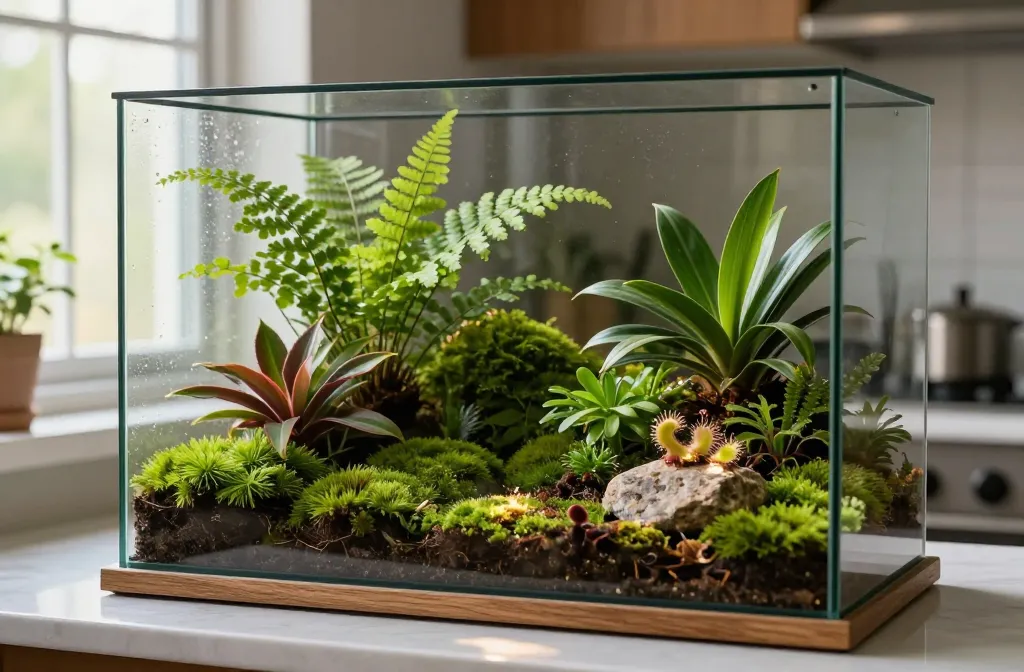
Pick two groundcovers, one dwarf fern, one colorful tropical, and — if gnats lurk — a small carnivore, then frame them with cushion or sphagnum moss. Start with a single 20–30 minute planting session and a “check the glass at midday” habit. Next step: build your own planting map on paper, then source everything from a garden centre in one visit so you can plant the same day.