The Shocking Truth: 5 Reasons Your Moss Terrarium Is Turning Brown — and the Fix for Each
I’ve stared at a once-vibrant moss terrarium and wondered why it faded to dull brown almost overnight. If you’re seeing crispy edges, pale patches, or a sludge-brown carpet, you’re not alone — I’ve made every one of these mistakes at home. In this guide, I’ll show you the five real causes behind browning moss and the exact fixes you can do with basic tools. You’ll leave knowing how to diagnose fast, correct the environment, and keep your moss emerald for the long haul.
1. Overwatering and Stagnant Air: Roots Suffocate, Moss Turns Brown
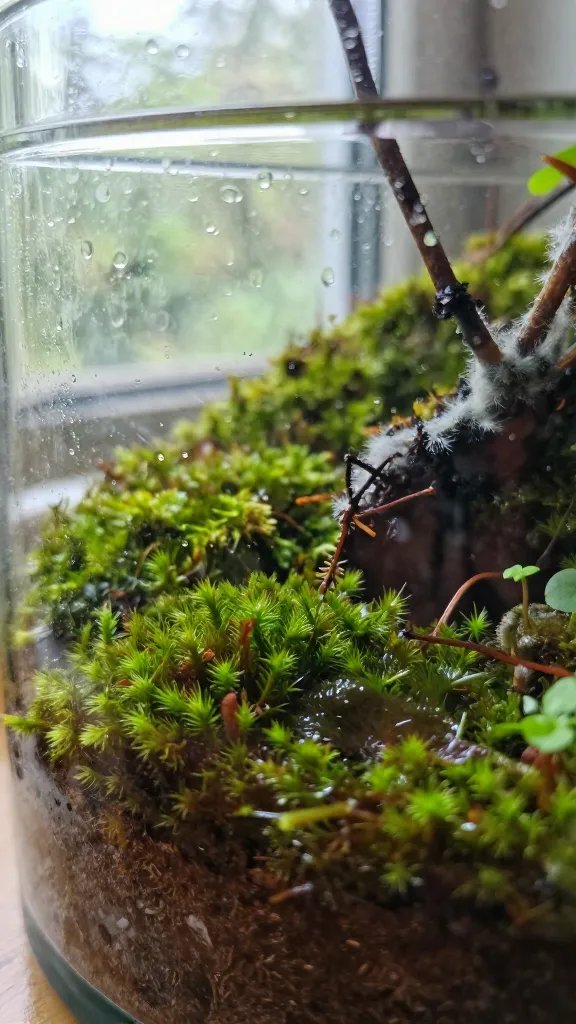
When a terrarium stays too wet, oxygen disappears from the substrate and moss suffocates. Brown patches spread from the base upward, and you’ll often see a swampy smell and fogged-up glass. In a closed jar, trapped humidity without airflow speeds up rot.
Signs to Watch For
- Heavy condensation covering more than half the glass from morning to evening
- Moss feels slimy or mushy when gently pressed
- Soil smells sour; white fuzz or gray mold on wood or soil
- Brown starting at the base of moss cushions rather than just the tips
How to Fix It
- Vent and dry: Open the lid for 2–4 hours at midday for the next 2–3 days. If closed, keep the lid slightly ajar with a bottle cap for a week.
- Sponge excess water: Wick out pooled water with a paper towel corner. Do not squeeze moss; lift only surface moisture.
- Prune rot: Trim brown, mushy sections with clean scissors. Remove any decaying leaves or wood.
- Reset watering: For closed terrariums, add only 1–2 teaspoons of water at a time with a spray bottle and wait 24 hours before adding more.
What to Use Instead
- Fine-mist spray bottle for precise watering
- Paper towels and cotton buds for wicking moisture
- Rubbing alcohol and scissors to sanitize between cuts
Takeaway: Check your glass at midday; if more than half is fogged, vent for 2–4 hours and wick out excess moisture today.
2. Too Much Direct Sunlight: Heat Stress Bakes Moss to Brown
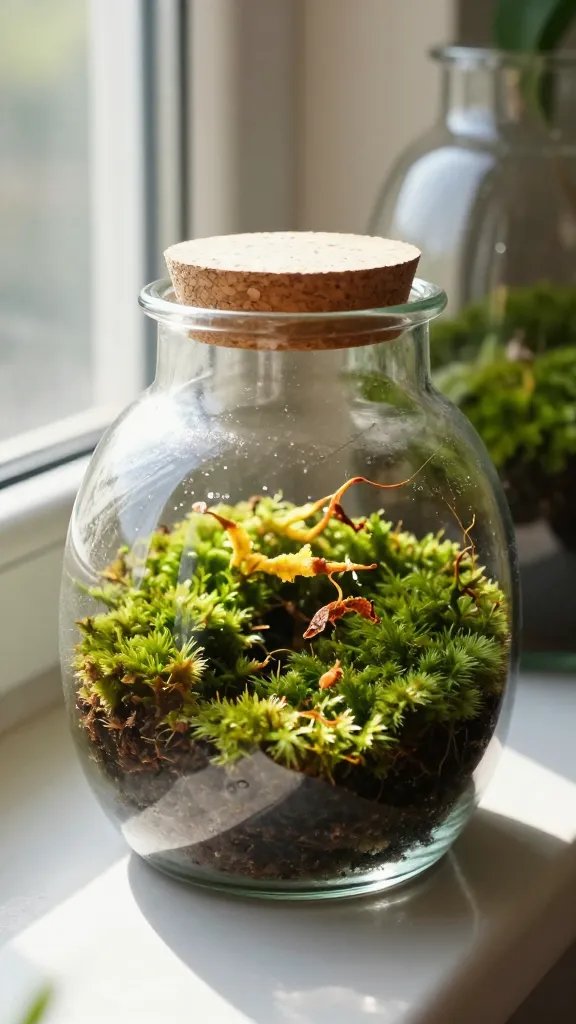
Moss hates heat spikes. A sunny windowsill turns a glass jar into an oven, bleaching moss to pale yellow, then brown and crispy. Even one hot afternoon can undo months of growth.
Signs to Watch For
- Brown or tan patches on the sun-facing side of the terrarium
- Condensation appears early morning, vanishes by noon, and glass feels warm
- Crispy tips that break when brushed
How to Fix It
- Move to bright, indirect light: Place 2–6 feet from a bright window, or behind a sheer curtain.
- Stabilize temperature: Keep between 60–75°F (16–24°C). Avoid radiators and heat vents.
- Diffuse light: If only a sunny spot is available, tape a sheet of baking parchment or a sheer curtain between the terrarium and the window.
- Rehydrate scorched areas: Lightly mist once, then wait 48 hours; do not soak.
What to Use Instead
- Sheer curtain or thin white fabric as a diffuser
- Indoor thermometer to check for heat spikes (or use your hand — if the glass feels warm, it’s too hot)
Action today: Move the terrarium to bright, indirect light and keep it out of direct sun for the next two weeks.
3. Wrong Water: Minerals and Chlorine Burn Delicate Moss Tissue
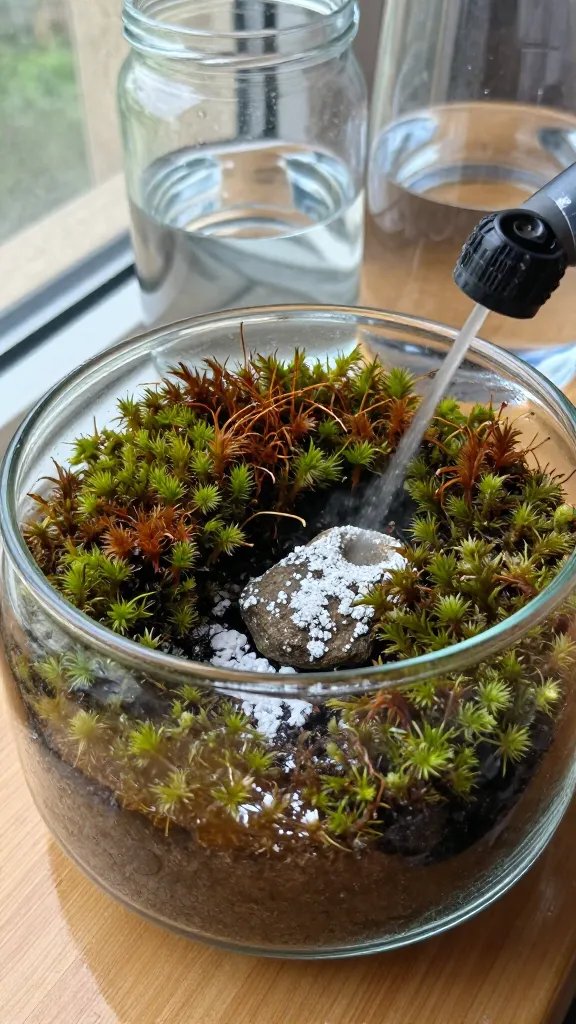
Tap water heavy in minerals or chlorine leaves white crusts and scorches moss, turning it rusty-brown from the tips inward. Minerals build up fast in sealed containers and keep burning the moss each time you mist.
Signs to Watch For
- White or chalky deposits on glass, rocks, or moss
- Brown tips that feel dry, not mushy
- Fine salt-like film after water dries
How to Fix It
- Switch water source: Use rainwater, filtered water, or tap water left out overnight in an open jug to let chlorine dissipate.
- Rinse gently: Mist with clean water until beads run off, then wick drips with paper towel to dilute surface salts without flooding.
- Clean glass: Wipe mineral haze with a cloth lightly dampened in white vinegar, then wipe again with plain water.
What to Use Instead
- Rainwater collected in a clean bucket or watering can
- Basic water filter pitcher from the kitchen
- White vinegar for glass only — keep off moss
Takeaway: From your next mist, use rainwater or filtered water only; let tap water sit out overnight before use if that’s your only option.
4. Compacted or Nutrient-Rich Substrate: Moss Sits Wet and Starves of Air
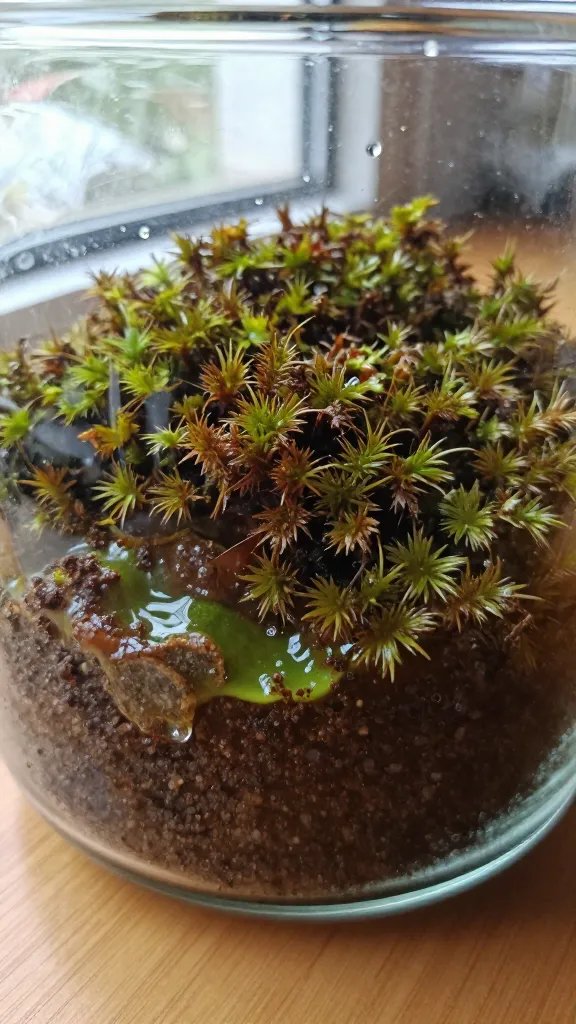
Moss thrives on clean, low-nutrient, airy surfaces. Dense potting mixes, unwashed soil, or fertilizer leachate hold water and feed algae, which smothers moss and turns it brown. When the base stays soggy, the green top can’t get enough air and declines.
Signs to Watch For
- Green slime or brown film on soil or hardscape
- Moss lifts up easily in sheets because a slick layer formed beneath
- Condensation near the base, but dry-looking moss tips
How to Fix It
- Create a drainage and air layer:
- Lift out removable hardscape and moss gently.
- Add a 1–2 cm layer of rinsed aquarium gravel or small pebbles.
- Lay a piece of mesh or a cut piece of window screen to stop soil from sifting down.
- Top with a thin layer (0.5–1 cm) of rinsed, well-squeezed long-fiber sphagnum or a lean seed-starting mix.
- Replant moss on the new surface, pressing lightly so all fronds touch but aren’t buried.
- Never add fertilizer; moss doesn’t want it.
What to Use Instead
- Rinsed aquarium gravel or small pebbles from the garden centre
- Plastic window screen or fiberglass mesh
- Long-fiber sphagnum moss (not peat) or a light seed-starting mix, used very thinly
Action today: If you see slime or a swampy base, lift the moss and add a thin drainage layer plus mesh before replanting.
5. Using the Wrong Moss or Dead Material: Some “Moss” Was Never Alive Indoors
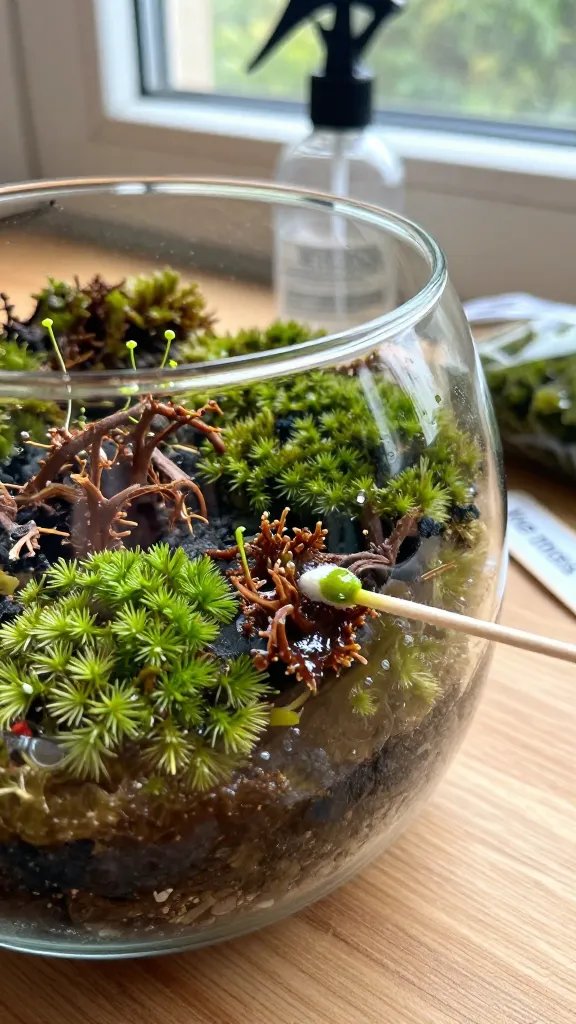
Not all moss is suited to terrariums. Dried “decorative moss,” reindeer lichen dyed green, or sun-loving lawn mosses quickly turn brown because they’re dead on arrival or adapted to very different conditions. If the material never perks up after misting, you’re nursing a lost cause.
Signs to Watch For
- Moss never deepens in color after spraying
- No new growth after 4–6 weeks in stable conditions
- Dyed fingers or tissue when you dab the moss — a giveaway for preserved decor
How to Fix It
- Source live, terrarium-suitable species:
- Cushion moss (Leucobryum) for soft mounds
- Sheet moss (Hypnum) for carpets
- Feather moss (Pleurozium) for a ferny look
- Buy from a reputable terrarium supplier or garden centre with live moss trays.
- Acclimate: Mist lightly, keep closed for humidity, and give bright indirect light for two weeks before major styling.
What to Use Instead
- Clearly labeled live moss, not “preserved” or “decor” moss
- Small offcuts from healthy patches in an existing terrarium to seed new growth
Takeaway: If your moss hasn’t greened up or grown in a month, replace it with live, labeled terrarium-friendly species.
Frequently Asked Questions
How often should I water a closed moss terrarium?
Water every 3–4 weeks in small amounts, but let the glass guide you. If midday condensation covers less than one-third of the walls, add 1–2 teaspoons with a fine mist. If more than half the glass is fogged at midday, vent instead of watering. Always add less than you think, then reassess 24 hours later.
What kind of light does moss actually need indoors?
Moss wants bright, indirect light near a window, not direct sun. A north-facing window or a spot 2–6 feet back from an east or west window works well. If your room is dim, place the terrarium under a table lamp with a cool-white LED bulb for 8–10 hours, keeping the lamp 12–18 inches away to avoid heat. Avoid south-facing direct beams.
Can brown moss turn green again, or is it dead?
If the moss is only browned at the tips and still feels springy and attached, it can recover in 2–4 weeks once conditions are corrected. Deep, mushy brown from the base is usually rot — trim it away. After fixing light and moisture, watch for fresh, tiny green shoots along stems as your sign of recovery. Replace completely desiccated, brittle clumps.
Is fertilizer helpful for moss in a terrarium?
No — fertilizer encourages algae and burns moss. Moss absorbs what it needs from clean water and the air. If you’ve already fertilized, rinse surfaces with a light mist of clean water over a few days and wick away runoff. Going forward, keep the substrate lean and skip plant food entirely.
Why is there algae on my moss, and how do I remove it?
Excess nutrients, warm temperatures, and constant wetness feed algae, which coats moss and causes browning. Reduce moisture by venting daily for a week, move to cooler bright shade, and switch to clean water. Gently brush algae from hardscape with a soft paintbrush, then dab with a paper towel. Keep the lid slightly ajar for a few days to stabilize.
Can I keep a moss terrarium in a bathroom?
Yes, if it gets bright indirect light and doesn’t sit in sun on a sill. Bathrooms often have good humidity, which moss likes, but watch temperature swings from hot showers. Place it away from the shower spray and vents, and follow the same condensation rule for watering and venting. If the room stays dim, supplement with a small LED for a few hours daily.
Conclusion
You can turn a browning moss terrarium around by controlling three levers: light, water, and airflow — with the right live moss on a clean, airy base. Make one change today: relocate to bright indirect light, vent if the glass is fogged, and switch to clean water. Once you see fresh green tips, you’ll know you’ve nailed the balance and can start styling with confidence.