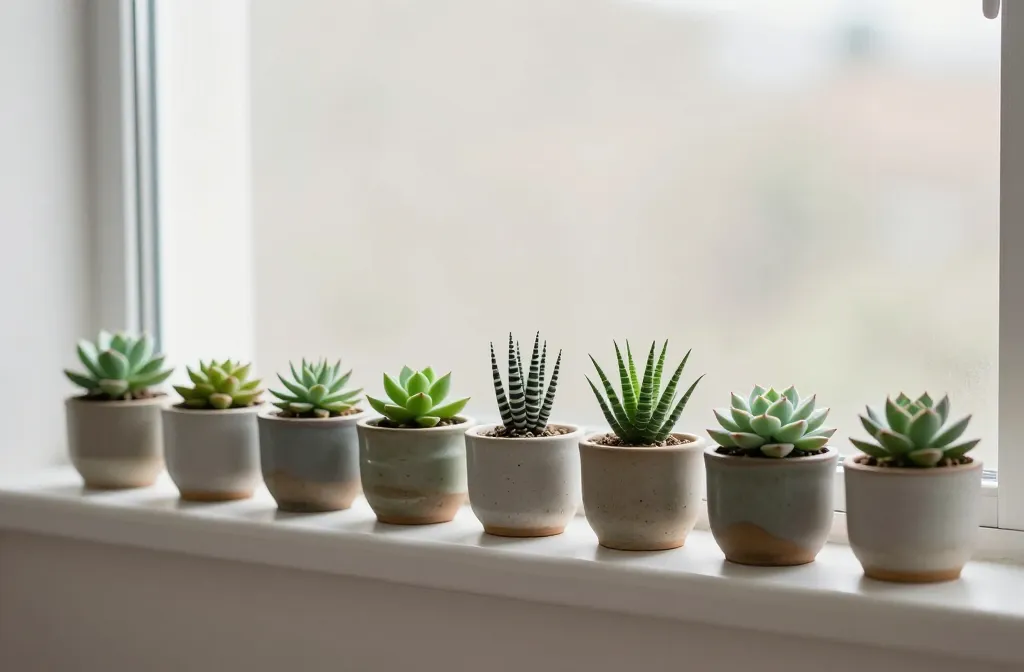
Tiny Green Gems 8 Succulents That Stay Small Enough for a Container Under 15cm
I grow in a small flat, so every pot has to earn its space. After years of trial and error, I learned which succulents stay genuinely tiny and tidy instead of turning into leggy monsters that outgrow their container in three months. Here are eight proven compact species — all stay under 15 cm, all survive on a windowsill with basic care, and none of them need a greenhouse or grow light to look good.
| Plant | Max Size | Light Need | Water Every | Best Pot Size |
|---|---|---|---|---|
| Haworthia | 8–12 cm | Bright indirect | 3–4 weeks | 8–12 cm |
| Gasteria | 10–15 cm | Bright indirect, shade-tolerant | 3–4 weeks | 9–12 cm |
| Echeveria ‘Minima’ | 8–12 cm | Brightest spot available | 2–3 weeks | 7–10 cm |
| Sempervivum (dwarf) | 6–10 cm | Direct morning sun | 3–4 weeks | 10–12 cm shallow |
| Crassula ‘Buddha’s Temple’ | 8–12 cm | Bright indirect + gentle sun | 3 weeks | 9–12 cm (heavy pot) |
| Lithops | 2–4 cm | Direct sun for hours daily | 4–5 weeks (skip winter) | 5–8 cm |
| Sedum clavatum | 10–12 cm across | Bright indirect to morning sun | 2–3 weeks | 12–15 cm wide |
| Fenestraria (Baby Toes) | 5–8 cm | Bright sun several hours | 3–4 weeks | 7–10 cm |
1. Haworthia: Compact Rosettes That Thrive On Neglect
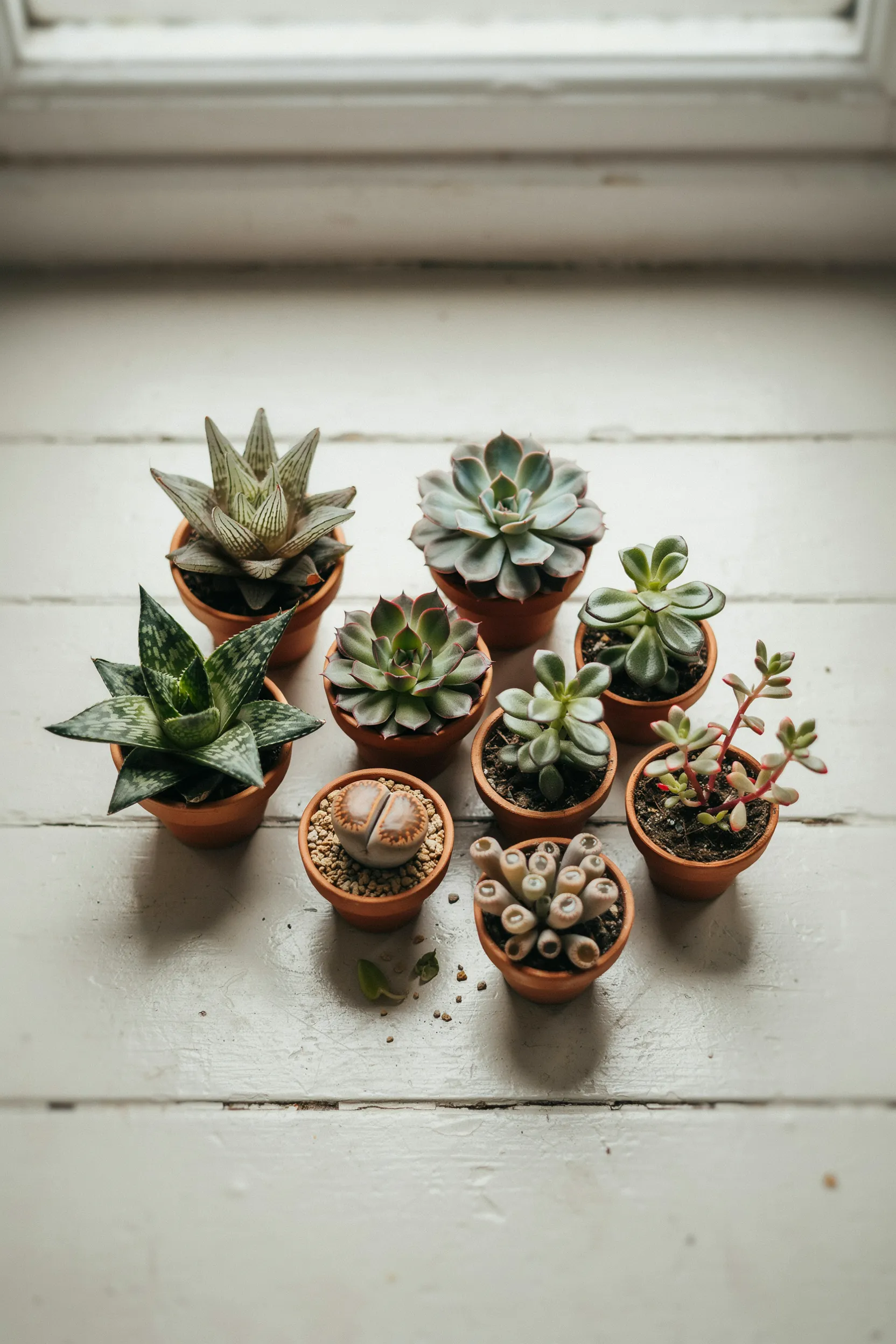
Capsule: Fist-sized rosettes (8–12 cm) that stay neat for years in a 10 cm pot. Unlike most succulents, Haworthia tolerates bright indirect light and won’t stretch in a north-facing window. Water every 3–4 weeks, use standard cactus mix, and watch for soft pale leaves (overwatering) or gaps between leaves (not enough light).
When space is tight, most succulents either sprawl or stretch toward the window. Haworthia stays neat, forming fist-sized rosettes that fit a 7–12cm pot for years. Even in bright rooms, it grows slowly and holds its shape without spilling over the rim.
What to Look For
- Haworthia cooperi: glassy-tipped leaves, stays under 10cm
- H. fasciata/attenuata: zebra stripes, sturdy 8–12cm rosettes
How to Keep It Small And Happy
- Light: Bright indirect light near an east or north window; shield from harsh midday sun with a sheer curtain.
- Pot: 8–12cm pot with a drainage hole; plastic or ceramic is fine.
- Soil: A ready-made cactus and succulent mix from the garden centre.
- Water: Every 3–4 weeks in spring/summer; every 5–6 weeks in winter. Water thoroughly, then let excess drain.
Action today: Place a Haworthia in a 10cm pot 30–60cm from a bright window and set a calendar reminder to water every 4 weeks.
2. Gasteria: Shade-Tolerant, Slow, And Sculptural
Capsule: Thick, tongue-shaped leaves with dotted patterns that stay squat even in bright shade — one of the few succulents that won’t stretch on a north-facing sill. Rarely exceeds 12–15 cm, divides slowly into tidy clumps you can separate by hand.
Dimmer rooms often turn succulents stringy. Gasteria stays squat and sculptural even in bright shade, with thick, tongue-like leaves patterned in dots and bars. It rarely exceeds 12–15cm in a pot and divides slowly into tidy clumps.
What Works Indoors
- Gasteria ‘Little Warty’ and ‘Flow’: compact forms suited to 9–12cm pots.
Simple Care
- Light: Bright indirect light; tolerates a north-facing window.
- Water: Every 3–4 weeks; let soil dry fully between waterings.
- Soil: Cactus mix plus a handful of pumice or perlite if available, but standard cactus mix alone works.
Takeaway: If your home is bright but not sunny, choose Gasteria to keep a compact profile without stretching. Our pot size guide covers why keeping succulents in snug pots actually helps them thrive.
3. Echeveria ‘Minima’: A True Mini Rosette That Holds Its Form
Capsule: Tight, powdery rosettes under 10–12 cm with modest offsets — one of the few Echeverias that stays compact indoors. Needs your brightest window (east or west, unobstructed) and weekly rotation to prevent leaning. Water every 2–3 weeks, avoiding the rosette centre.
Many Echeveria outgrow small containers or lose symmetry indoors. E. ‘Minima’ stays under 10–12cm with tight, powdery leaves and modest offsets. It keeps that perfect rosette look on a sill with strong light.
Key Conditions
- Light: Brightest spot you have — an unobstructed east or west window.
- Water: Every 2–3 weeks in active growth; avoid splashing the rosette centre.
- Air: Good airflow reduces rot; crack a window for 10–15 minutes on mild days.
Prevent Stretch
- Rotate the pot a quarter turn every week so light hits evenly.
- Use a light-coloured ceramic pot to keep roots cooler near hot glass.
Action today: Put Echeveria ‘Minima’ right on the sill of your brightest window and rotate it each Sunday. If it starts stretching, it needs more light — our fittonia light guide explains the hand-shadow test that works for any plant.
4. Sempervivum (Houseleek): Hardy Rosettes That Stay Petite Indoors
Capsule: Tight, star-like rosettes (6–10 cm) that produce small, easy-to-remove offsets. Adapts well indoors with direct morning sun from an east window. Water every 3–4 weeks in a shallow dish (10–12 cm) with drainage — their root system is shallow.
People often skip Sempervivum indoors, but the small forms adapt well and remain tidy. They form tight, star-like rosettes that rarely exceed 8–10cm and produce small, easy-to-remove offsets.
Best Picks For Small Pots
- Sempervivum ‘Little Bobo’ or other dwarf selections labelled as mini or dwarf.
Care That Works In A Flat
- Light: Direct morning sun is ideal; a bright east window keeps colours vivid.
- Water: Every 3–4 weeks; they tolerate brief dryness.
- Container: Shallow 10–12cm dish with drainage complements their shallow roots.
Takeaway: Choose a shallow, draining dish and give morning sun to keep Sempervivum compact and colourful.
5. Crassula ‘Buddha’s Temple’ Or ‘Baby’s Necklace’: Architectural But Controlled
Capsule: ‘Buddha’s Temple’ stacks tight square leaves into an 8–12 cm column; ‘Baby’s Necklace’ makes bead-like chains you can trim easily. Both stay compact with bright indirect light and a pinch-pruning routine. Use a heavier ceramic pot to prevent the column from tipping.
Many Crassula become gangly shrubs. These two stay compact and architectural in small containers. ‘Buddha’s Temple’ stacks tight square leaves into a 8–12cm column; ‘Baby’s Necklace’ makes bead-like chains you can trim easily.
How To Keep Them Tidy
- Light: Bright indirect with an hour or two of gentle sun.
- Pruning: Snip tips back with clean scissors when they hit 12–15cm; re-root cuttings in a 7cm pot.
- Water: Every 3 weeks in summer; monthly in winter.
Action today: Pinch the top 1–2cm of growth to keep shape and plant the cutting in a spare 7–9cm nursery pot.
6. Lithops (Living Stones): The Smallest Footprint For The Brightest Spots
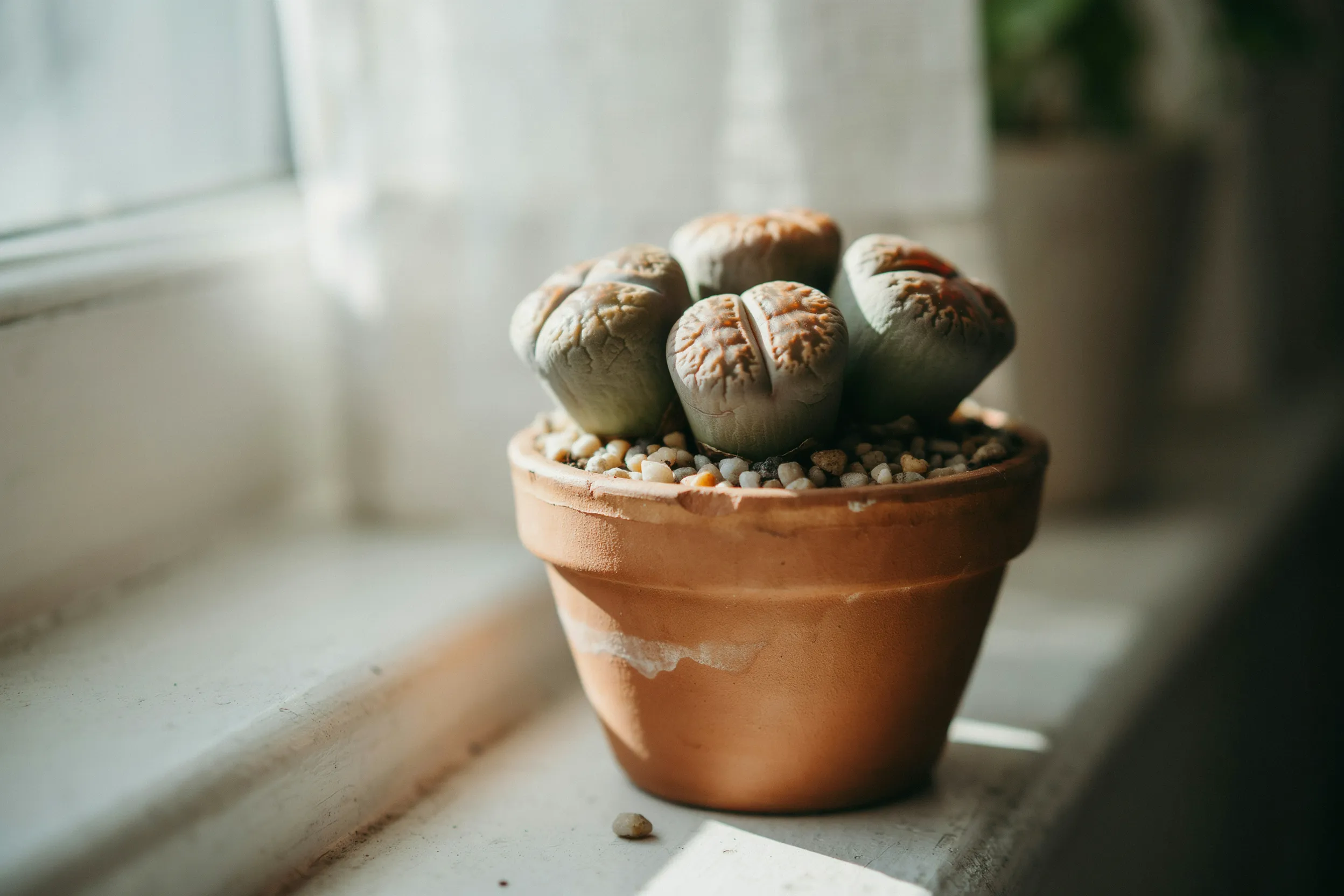
Capsule: Among the smallest succulents at 2–4 cm across — perfect for a 5–8 cm pot on a sunny ledge. Need direct sun for hours daily and a very gritty mix (80% mineral, 20% organic). The critical rule: do NOT water from mid-autumn until spring leaf replacement is complete. Overwatering is the number one killer.
If you overwater, Lithops punish you. If you follow their rhythm, they’re perfect for a 5–8cm pot and a sunny ledge. They top out at 2–4cm across, bringing colour and pattern with almost no vertical growth.
Essential Rhythm
- Light: Direct sun for a few hours daily through glass; a south or very bright west window works best.
- Water: From late spring to early autumn, give a small drink every 4–5 weeks. In winter, do not water while the plant replaces old leaves.
- Soil: Cactus mix with extra grit or horticultural sand (about one extra handful per 10cm pot).
Signs To Watch
- Splitting early = too much water
- Elongated “mushroom” look = not enough light
Takeaway: Mark your calendar: skip all watering from mid-autumn until spring leaf replacement is complete to keep Lithops tight and healthy.
7. Sedum clavatum Or Sedum pachyphyllum: Chubby Leaves, Slow Spread
Capsule: Clumping types that top out around 10–12 cm across with chalky, rounded leaves. Use a low, wide 12–15 cm pot to show off the mound. Snap off leggy tips and replant as cuttings to fill gaps — water every 2–3 weeks in warm months, monthly in winter.
Some Sedum run wild. These two behave in small pots, forming clumps that top out around 10–12cm across. Their chalky, rounded leaves add texture without spilling over the edge quickly.
Indoor-Friendly Routine
- Light: Bright indirect to gentle morning sun; protect from harsh midday heat through glass.
- Water: Every 2–3 weeks in warm months; monthly in winter.
- Grooming: Snap off leggy tips and replant as cuttings to fill gaps.
Action today: Remove any stretched stems, let the cut ends dry for 24 hours, then replant in the same pot to thicken the clump.
8. Fenestraria rhopalophylla (Baby Toes): Tiny Columns, Big Personality
Capsule: Small clusters of upright, translucent “toes” that stay low and slow in a 7–10 cm pot. Need bright sun for several hours daily. Water the soil (not the leaves) every 3–4 weeks, and top-dress with gravel to keep moisture away from the crown — the main rot risk.
Fenestraria packs an otherworldly look into a 7–10cm pot. It forms small clusters of upright, translucent “toes” that stay low and slow, perfect for a sunny sill where larger succulents overgrow.
Care That Prevents Rot
- Light: Bright sun for a few hours daily; a south or bright east window works.
- Water: Every 3–4 weeks in spring/summer; sparingly in winter. Water the soil, not the leaves.
- Soil: Cactus mix topped with a 0.5–1cm layer of small decorative gravel to keep the crown dry.
Takeaway: Add a gravel top-dress after potting to keep moisture away from the crown and prevent rot in tight pots.
Frequently Asked Questions
What size pot should I start with for these succulents?
For single rosettes like Haworthia, Echeveria ‘Minima’, and Sempervivum, start with a 7–10cm pot that’s just 1–2cm wider than the plant. For clumping types like Sedum and Gasteria, a 10–12cm pot gives room for a year of growth. Always choose a pot with a drainage hole. Our pot size guide explains why snug pots actually help succulents thrive.
What’s the simplest soil I can buy that works for all of them?
Use a bagged cactus and succulent mix from your garden centre. For Lithops and Fenestraria, improve drainage by mixing in a handful of perlite or horticultural sand per 10cm pot. Skip moisture-retaining additives like water-holding crystals. The soil add-ins guide covers which amendments improve drainage for different plant types.
How do I water without guessing and overdoing it?
Lift the pot before and after watering once to learn the weight difference. Only water when the pot feels very light and the top 2–3cm of soil is dry to the touch. When you water, pour slowly until a little drains from the bottom, then stop. Empty any saucer after 10 minutes.
Where should I place them if I don’t have a south-facing window?
Use the brightest east or west window you have for Echeveria, Lithops, and Fenestraria. Place Haworthia and Gasteria 30–60cm from a bright north or east window. If a plant starts stretching, move it closer to the glass or give it morning sun through a sheer curtain. Rotate pots weekly to keep growth even.
How do I keep them small long term without harming the plant?
Control three things: pot size, light, and pruning. Keep pots under 12–15cm, give bright light to maintain tight growth, and trim or divide when plants touch the pot rim. Re-root healthy cuttings in 7–9cm nursery pots. Avoid high-nitrogen fertiliser, which pushes soft, rapid growth.
Are these succulents safe around cats and dogs?
Haworthia, Lithops, Gasteria, and Sedum morganianum are generally considered pet-safe. Echeveria is typically non-toxic but verify specific cultivars. If you have curious pets that nibble, stick to Haworthia and Lithops as the safest options and place them where pets can’t easily reach.
Conclusion
Small containers don’t limit your succulent collection — they sharpen it. Pick one plant from this list, place it in your brightest practical spot, and set a simple watering schedule on your phone. Once that plant thrives for a month, add a contrasting shape from the list and build a compact, low-care windowsill display that stays neat all year.