The Secret to How to Water Succulents in a Terrarium — Volume, Frequency and the Dry-Cycle Rule
I learned to water succulent terrariums the hard way: one summer I turned a perfect mini-desert into a swamp with a single enthusiastic pour. If your terrarium looks great for two weeks and then sours, you’re dealing with the same problem — too much water, added too often. In this guide I’ll show you exactly how much to add, how often to add it, and how to run a reliable dry-cycle that keeps roots healthy. You’ll finish with a simple routine you can do with a teaspoon and a calendar.
Why Succulents in Terrariums Need So Little Water
Succulents store water in their leaves and stems. In a glass container, evaporation slows down, so whatever you pour in lingers far longer than it would in an open pot.
Most terrariums also have limited airflow. That trapped humidity stalls drying, which encourages rot in succulent roots that evolved for brief, infrequent rains.
Action today: Assume your terrarium needs half as much water as you think, on a schedule twice as slow. You’ll protect roots immediately.
The Dry-Cycle Rule: Water Only After the Soil Returns to Bone-Dry
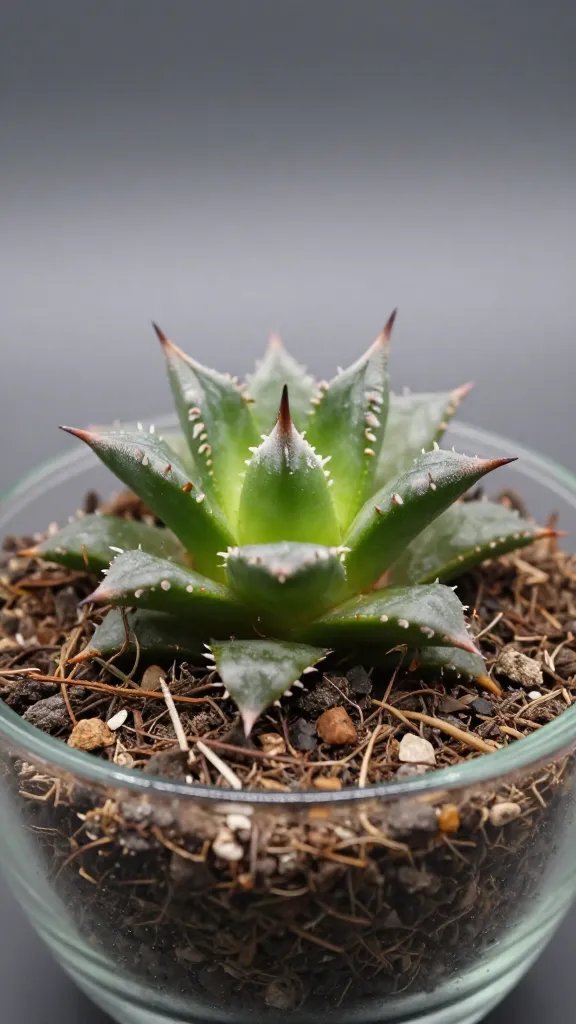
The dry-cycle rule is simple: do not water again until the substrate is completely dry from top to bottom for at least 3 full days. This forces oxygen back into the root zone and prevents rot.
Without moisture meters, I use three checks: the pinch test, the weight test, and the glass test. You should pass all three before watering again.
How to Confirm a Complete Dry Cycle
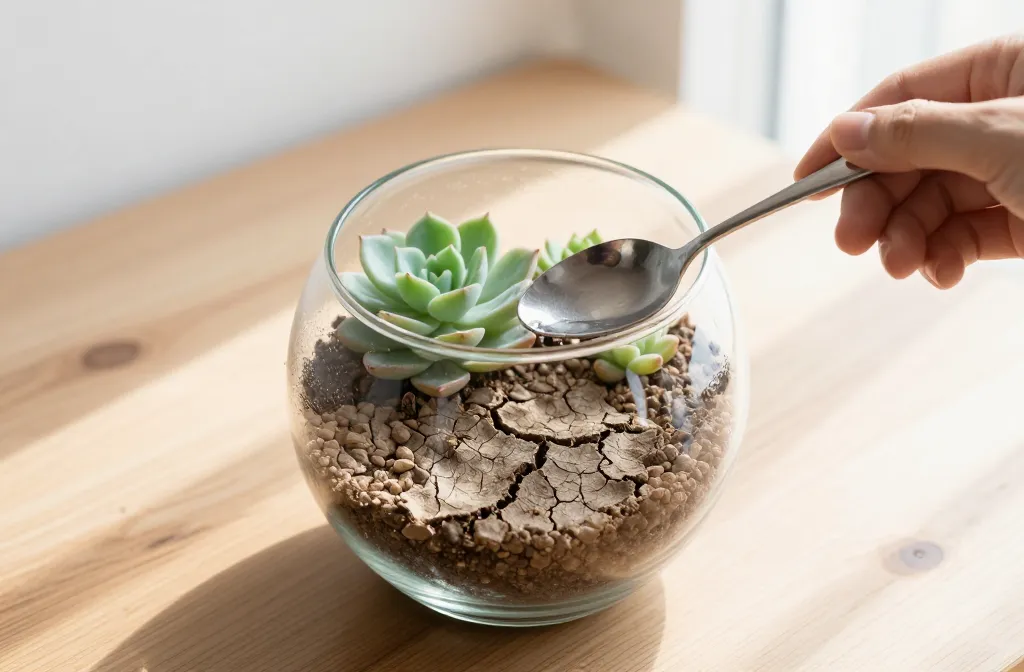
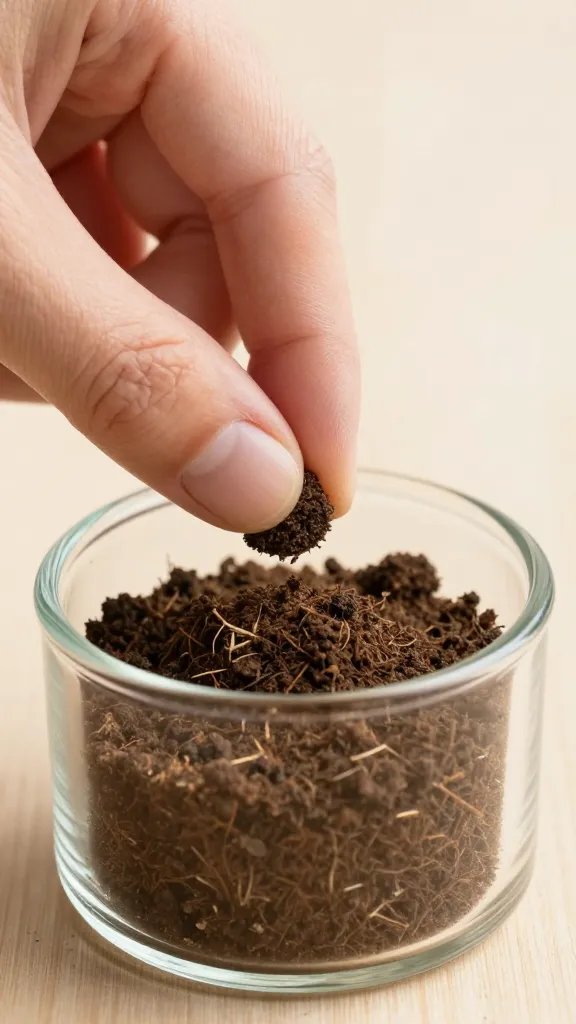
- Pinch test: Pinch the top 1 cm of soil. It must feel dusty and crumble, not cool or damp.
- Weight test: Lift the terrarium slightly with two hands. Learn its “dry weight” by comparison over two weeks; dry feels noticeably lighter.
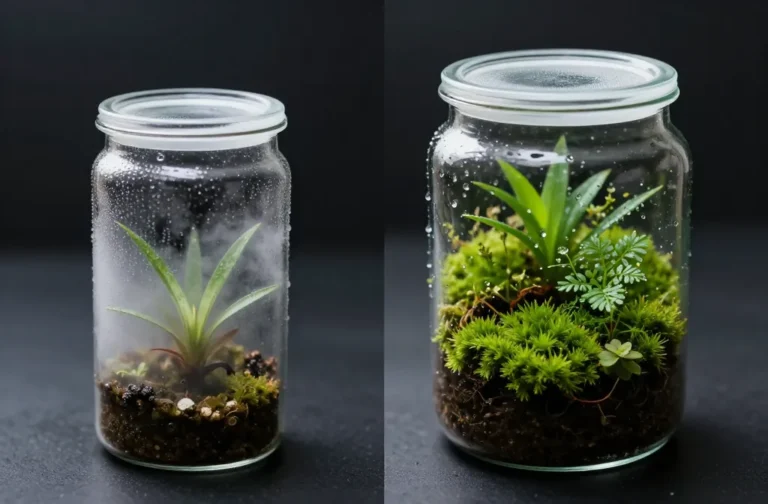
- Glass test: No fogging on the glass from morning to midday. Any persistent condensation means moisture still cycling.
Action today: Wait three dry days in a row after all condensation disappears before you even consider watering.
Exact Water Volumes for Common Terrarium Sizes
Pouring is where most people go wrong. You need teaspoons and tablespoons, not cups. I’ve tested these volumes for typical open-glass succulent terrariums with a gritty, fast-draining mix and drainage layer.
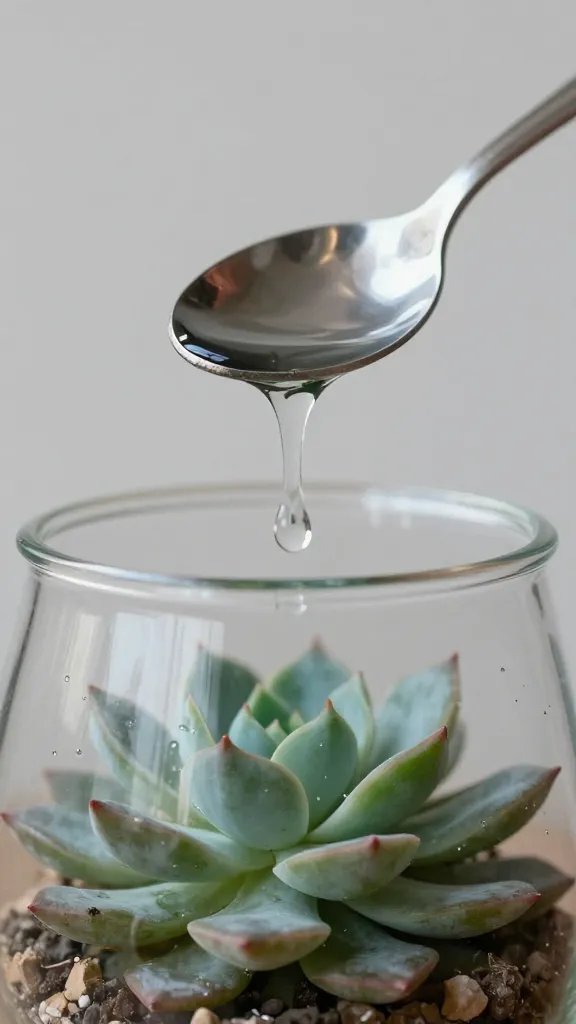
- Small (10–15 cm bowl, 2–3 succulents): 1–2 teaspoons (5–10 ml) total per watering.
- Medium (18–22 cm bowl, 3–5 succulents): 1–2 tablespoons (15–30 ml) total per watering.
- Large (25–30 cm bowl, 5–8 succulents): 3–4 tablespoons (45–60 ml) total per watering.
Apply in two passes, a few minutes apart, so the mix absorbs evenly without pooling in the drainage layer.
Action today: Swap your watering can for a teaspoon or a squeeze bottle with milliliter marks and pre-measure before you pour.
Watering Technique That Prevents Rot
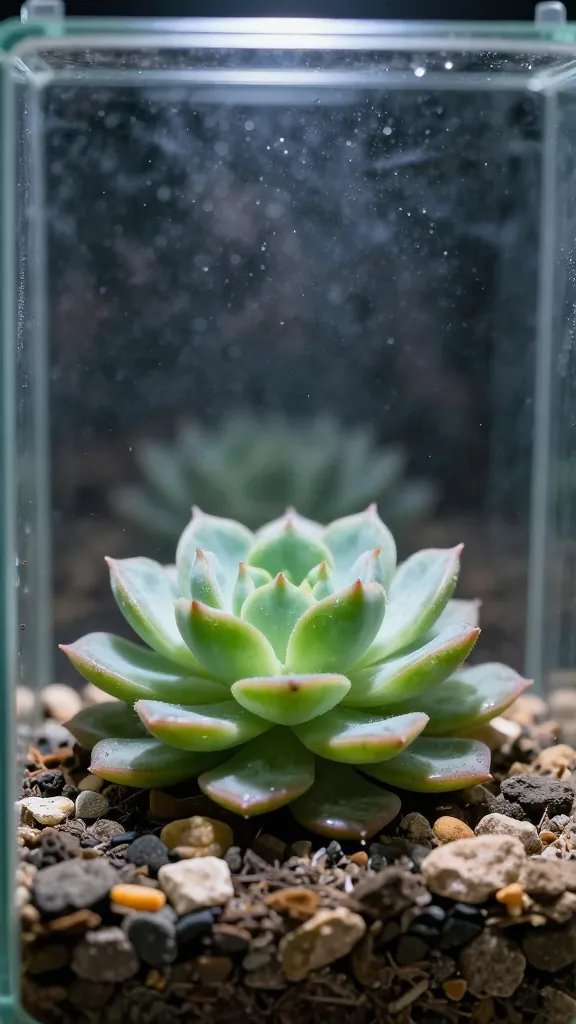
Water the soil, not the leaves. Standing water in rosettes causes fungal spots and mushy crowns on Echeveria and Sempervivum.
Aim for a slow perimeter soak. I circle the inner edge of the glass and add a small cross-path between plants. This distributes moisture without flooding one root ball.
Step-by-Step: One Safe Watering
- Confirm a full dry cycle with the pinch, weight, and glass tests.
- Measure the target volume for your terrarium size.
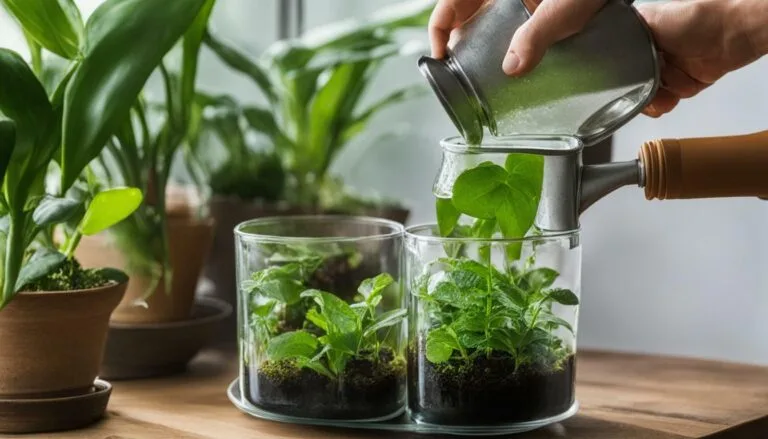
- Use a squeeze bottle or syringe to apply around the soil line, avoiding leaves.
- Wait 5 minutes, then finish the remainder the same way.
- Wick any visible puddles with a paper towel corner.
Action today: Practice one perimeter soak with 1 teaspoon of water only — it’s enough to learn control without risking overwatering.
Realistic Watering Frequency by Season and Light
Frequency comes from drying time, not the calendar. Still, you can plan a baseline and adjust with the dry-cycle rule.
- Bright indirect light near a window (spring–summer): Every 2–3 weeks.
- Bright indirect light (autumn–winter): Every 4–6 weeks.
- Lower light room: Every 5–8 weeks, sometimes longer.
If you move the terrarium or the weather shifts, reset your expectations and re-check the dry cycle.
Action today: Put two reminders in your calendar: a “check dryness” note every two weeks and a “do not water unless bone-dry” note right after it.
Soil, Layers, and Containers That Make Watering Forgiving
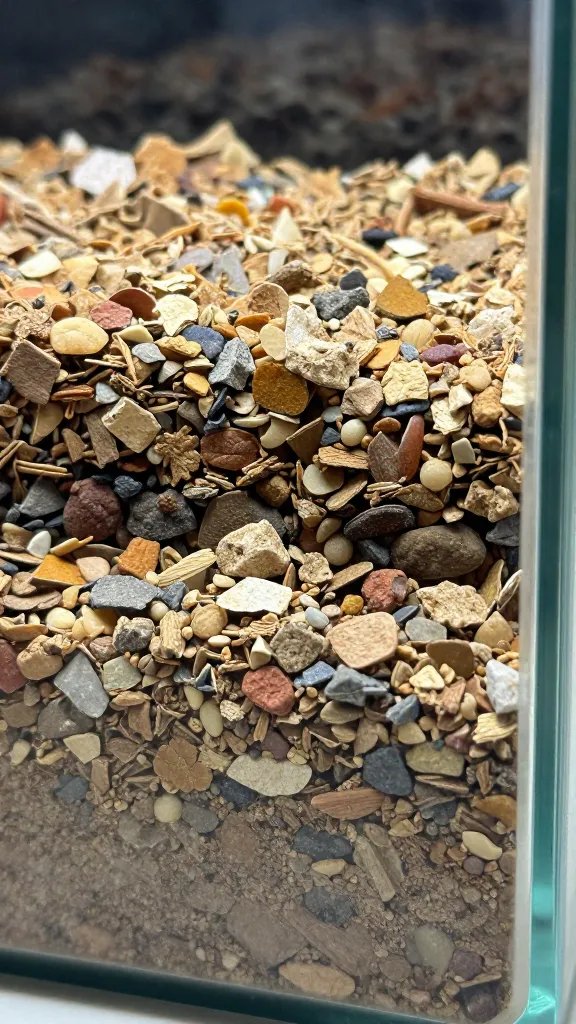
Watering stays easy when the substrate drains fast. Use a cactus and succulent mix from the garden centre and blend in equal parts coarse horticultural grit or pumice for extra airflow.
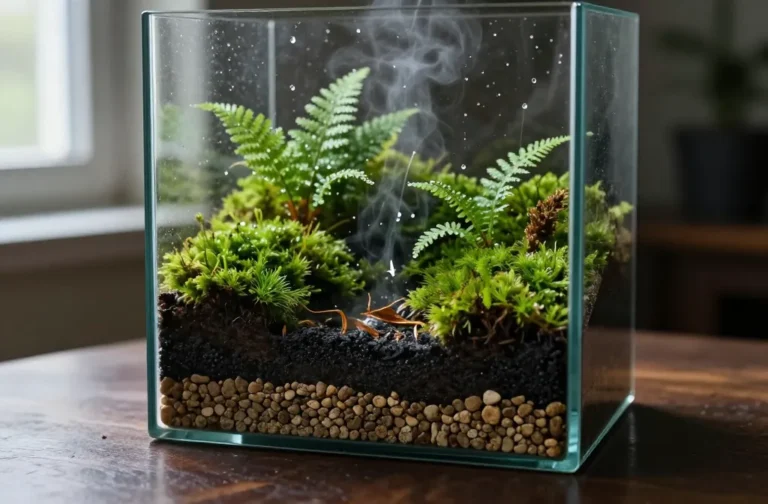
Build a proper base: 2–3 cm of drainage stone, a thin mesh or coffee filter to stop mix from sifting down, then your gritty soil. Choose an open-top container to let moisture escape; closed lids trap humidity and defeat the dry cycle.
Material Checklist From a Standard Garden Centre
- Cactus/succulent potting mix
- Horticultural grit or pumice
- Decorative stones for drainage
- Mesh sheet or paper coffee filter
- Squeeze bottle or kitchen syringe
Action today: If your terrarium lacks a drainage layer, add a ring of stones on top of the soil edge and water only into that ring — it creates a quick, safer channel while you plan a rebuild.
Warning Signs and Fast Corrections
Overwatering shows up fast in glass. Act on the first hint and you save the whole planting.
Warning Signs of Too Much Water
- Condensation that lingers past midday for multiple days.
- Leaves turning translucent or mushy, especially lower ones.
- Soil smell that’s sour or swampy.
Quick Fixes
- Wick moisture: Press a folded paper towel onto the soil surface for 10–15 minutes.
- Vent hard: Place near moving air for a day; a small desk fan across the room works.
- Withhold water: Enforce a full 14-day dry period, then re-check the tests.
- Emergency lift: If a plant’s base is mushy, lift it, trim dead roots, and replant into fresh dry mix.
Action today: If you see midday condensation, set the terrarium in bright, indirect light and skip watering for at least two weeks.
Fertilizer and Water Quality: Small Tweaks, Big Impact
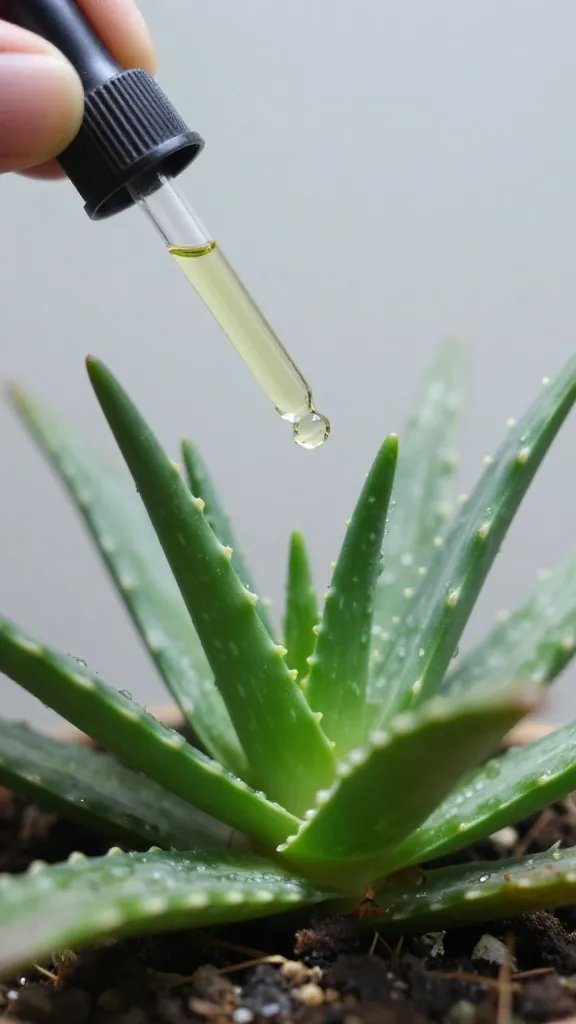
Use plain tap water that tastes clean, not salty. If your tap leaves white crust on kettles, use filtered water to avoid mineral buildup on glass and soil.
Feed sparingly: once in spring with half-strength cactus fertilizer. Too much fertilizer forces soft growth that rots easier in enclosed spaces.
Action today: Label your fertilizer bottle “Half-Strength, Spring Only” and move it out of reach — you’ll stop accidental mid-winter feedings.
Frequently Asked Questions
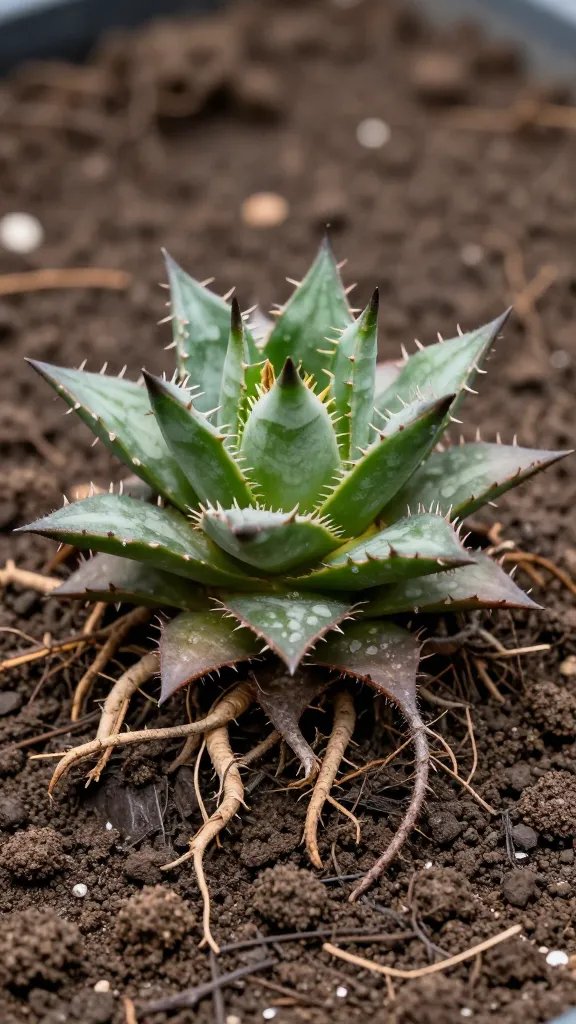
How do I water succulents in a terrarium with no drainage hole?
Measure strictly and keep volumes tiny. For a medium bowl, start with 1 tablespoon total, applied in two passes to the soil only. Watch the glass for condensation over the next two days; if you see any, extend the dry cycle before the next watering. Wick out puddles immediately with a paper towel corner.
Can I use a spray bottle instead of pouring?
Misting leaves is a bad idea for succulents in glass; it promotes rot and spotting. If you only have a spray bottle, set it to a stream and target the soil at close range. Count pumps to control volume, aiming for 10–15 ml total in a medium terrarium. Wipe any droplets off leaves with a tissue.
What if my terrarium soil stays damp for more than two weeks?
Increase airflow and warmth, then fix the substrate. Move it to brighter indirect light and run a gentle fan across the room for a day. If it still lingers, top-dress with a thin layer of dry grit to speed surface drying, and plan to repot into a grittier mix with more pumice. Resume watering only after a verified dry cycle.
How do I know if I’ve underwatered?
Underwatered succulents wrinkle along the leaves, but the leaves stay firm, not mushy. The soil will be dusty, the glass bone-dry, and plants may look slightly shrunken. Give a single measured drink (e.g., 1 tablespoon for a medium bowl), then wait a week. Plumpness should return without any translucence.
Is an open or closed terrarium better for succulents?
Open is better. Succulents need faster evaporation and oxygen around roots, which a lid blocks. Closed terrariums trap humidity and shorten the dry cycle, leading to rot. If your container has a lid, remove it permanently or leave it ajar by at least 2–3 cm.
Conclusion
You don’t need fancy tools to keep succulent terrariums thriving — you need tiny volumes, patient dry cycles, and a calm hand. Set your routine now: confirm a full dry cycle, measure with a teaspoon, water the soil in two passes, and stop at the first sign of condensation. Next step: rebuild any slow-drying terrarium with a gritty mix and an open top, then enjoy a schedule that runs for weeks, not days.