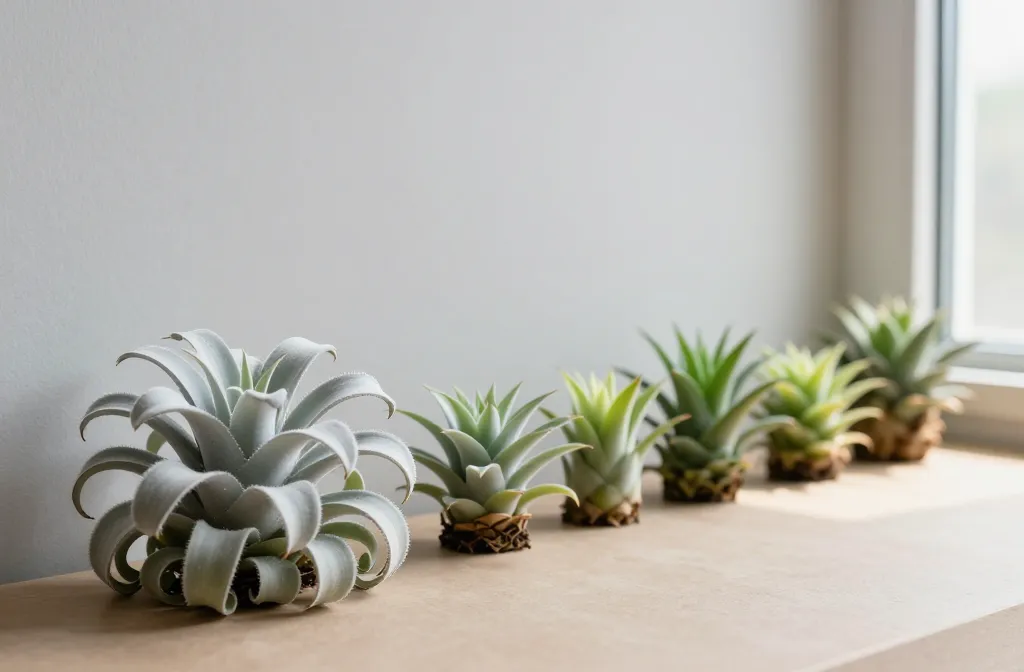
7 Tillandsia Species Ranked by Drought Tolerance — for Low-Maintenance Air Plant Setups Secrets Revealed
I learned to love air plants the hard way: by frying a few on a sunny windowsill and drowning others in a well-meaning soak. If you’ve had crispy tips or limp, rotting bases, you’re not alone. In this guide I rank seven common Tillandsia species by real-world drought tolerance and show you how to keep each one thriving with minimal fuss. You’ll know exactly which species to buy for your space and how to water, light, and mount them with basic tools.
1. Xerographica: The Desert Workhorse That Forgives Missed Waterings
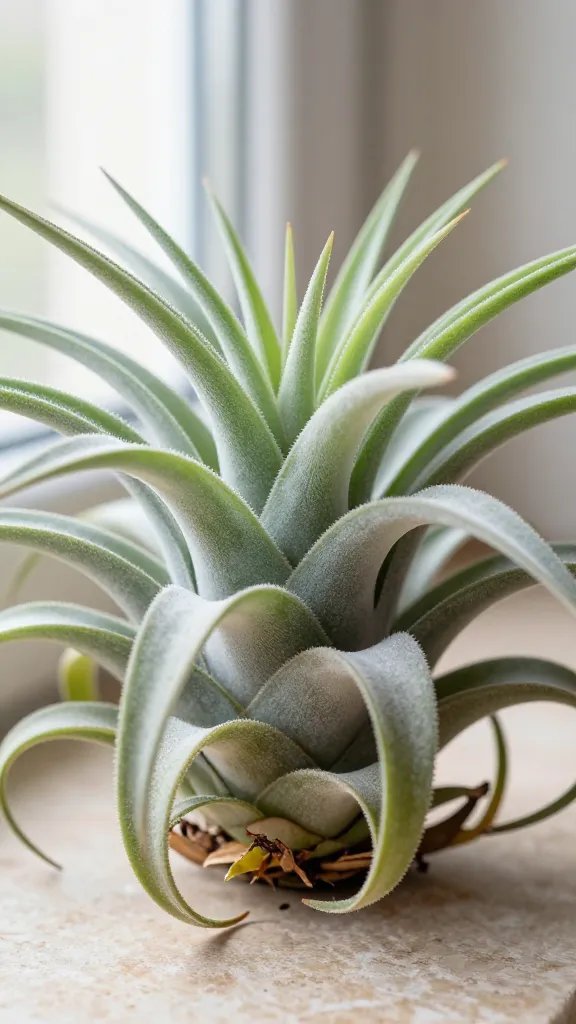
When life gets busy, Tillandsia xerographica shrugs it off. Skip a week or two and it keeps its sculptural curls and silvery sheen. It stores moisture in thick, leathery leaves and dense trichomes, so it tolerates dry indoor air better than any other common species.
Signs to Watch For
- Leaf tips crisping evenly at the very ends — normal from age or extra sun
- Center leaves folding inward tightly for more than a week — it’s thirsty
- Base discoloring brown and soft — that’s rot from too much standing water
How to Water and Place
- Water every 2–3 weeks with a deep dunk for 5–10 minutes, then shake hard to drain.
- Dry upside down for 2–3 hours to keep water out of the crown.
- Give bright indirect light near a south or east window; brief morning sun is fine.
- Fertilize monthly in spring–summer with a quarter-strength orchid or air plant fertilizer in a spray bottle.
Action today: If your xerographica feels stiff but curled tight, give it a 10-minute soak and dry it upside down on a dish rack.
2. Tectorum: The Fuzzy Survivor Built for Sun and Neglect
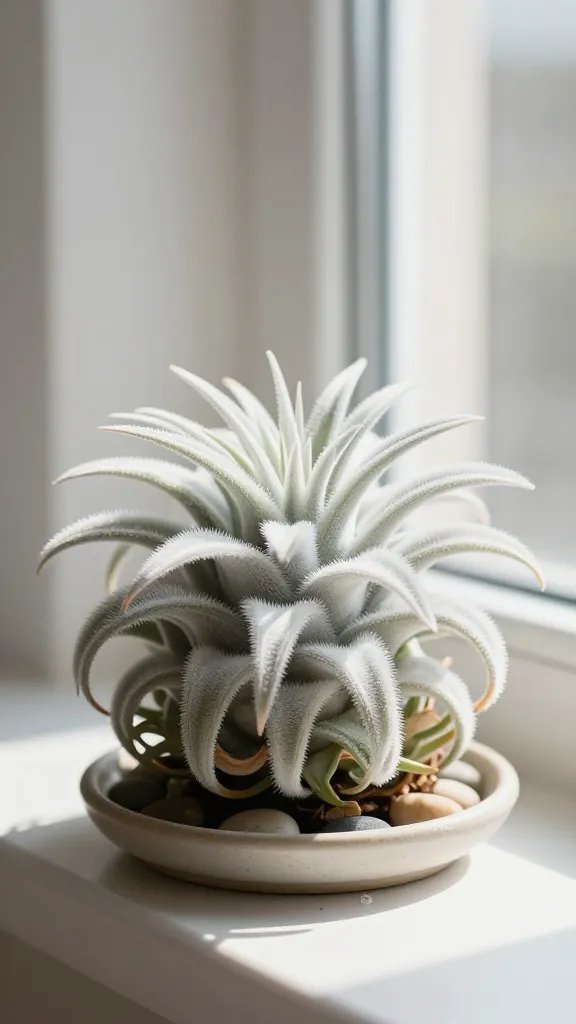
Tillandsia tectorum looks like a snowball — that thick “fuzz” (trichomes) grabs every drop of moisture from the air. It hates being overwatered and prefers drier, brighter conditions than other air plants. If you want the lowest-maintenance option, this is it.
What Not to Do
- Do not soak it. The dense fuzz traps water and encourages rot.
- Do not keep it in a closed terrarium or steamy bathroom.
How to Care
- Mist lightly once every 2–3 weeks in a bright, airy spot. Think “fog,” not “rain.”
- Give bright indirect light or gentle morning sun; avoid hot afternoon beams through glass.
- Use a fan or open window for airflow on watering days.
Takeaway: Treat tectorum like a succulent with hair — bright light, very light misting, and lots of air.
3. Duratii: The Perfumed Spiral That Thrives on Dry Spells
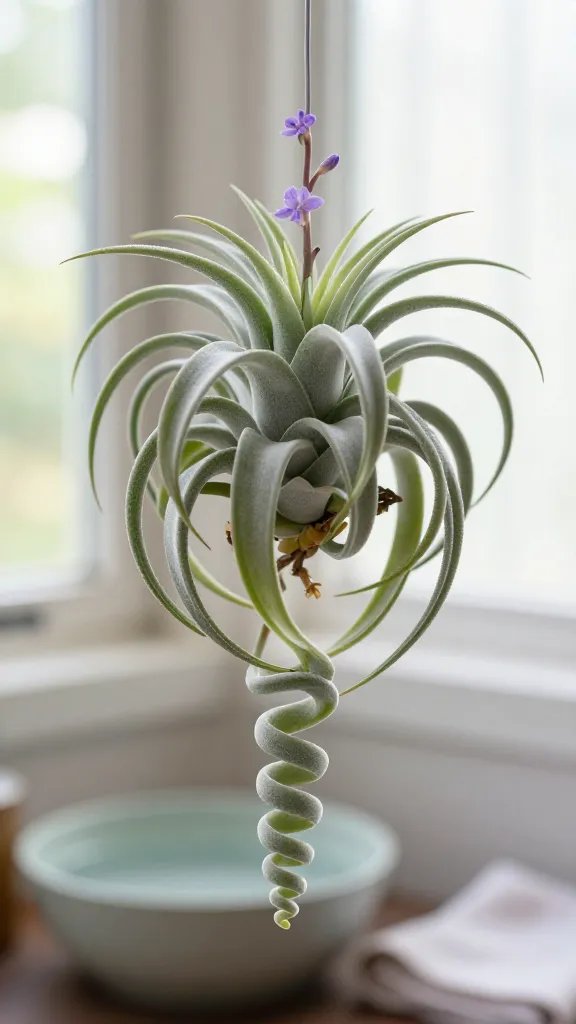
Tillandsia duratii grows long, curling leaves and can perfume a room when in bloom. It tolerates long gaps between waterings because those thick, corkscrewed leaves minimize water loss. It resents stagnant moisture more than drought.
Signs You’re On Track
- Firm, springy leaves that hold their spiral
- Silvery surface without dull green patches
Simple Routine
- Dunk every 2 weeks for 5–8 minutes, then shake out thoroughly.
- Hang it — don’t wedge it into a cup. Airflow keeps the base dry.
- Bright, indirect light near an east or west window is ideal.
Action today: Move duratii to a hanging spot where air can flow 360 degrees and mark a “soak day” every second Sunday.
4. Streptophylla: The Curly Hybrid Lover That Handles Skipped Soaks
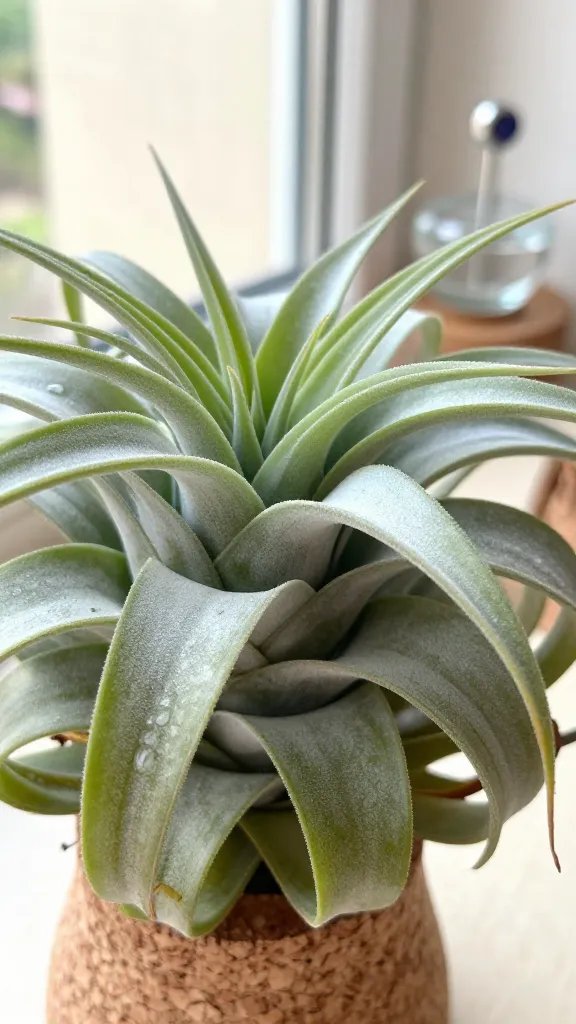
Tillandsia streptophylla puckers and curls when dry and plumps after watering. It tolerates missed waterings well, but it will lose its curl if kept constantly wet. Beginners often overwater this one because the leaves look “thirsty” even when healthy.
How to Read the Leaves
- Tight curls and firm feel — happy and adapted to your light and rhythm
- Flattened curls and floppy feel — overwatered or too dim
- Brown, papery margins — needs a slightly deeper soak next time
Routine That Works
- Soak every 10–14 days for 10 minutes. Shake vigorously.
- Bright indirect light; give morning sun 30–60 minutes if possible.
- Let it dry fully within 3 hours. Extend with a fan if needed.
Takeaway: Keep your streptophylla a little on the dry side to maintain those signature curls.
5. Ionantha (Fuego, Rubra, Guatemala): Small But Tough With Occasional Sun
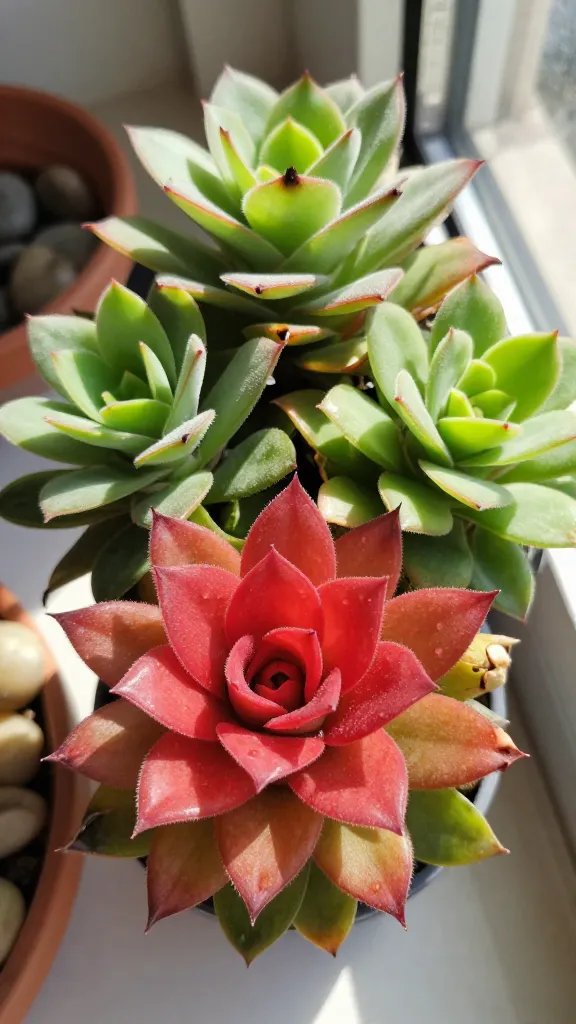
Tillandsia ionantha forms tight rosettes that blush red when happy. It’s moderately drought-tolerant for its size but suffers if left bone-dry for weeks in hot windows. Most failures happen from trapped water in the crown after a soak.
Signs to Watch For
- Leaf tips browning inside the rosette — water lingered in the crown
- Color fading to dull green in low light — needs a brighter spot
- Outer leaves shriveling evenly — time to water
Weekly Rhythm
- Soak every 7–10 days for 5 minutes. For small offsets, use a deep mist instead.
- Always dry upside down for 1–2 hours after soaking.
- Give bright indirect light with brief morning sun to encourage blushing.
Action today: After your next soak, set ionantha rosettes upside down on a clean towel to protect the crown.
6. Aeranthos: The Tough, Upright Clumper That Likes a Regular Drink
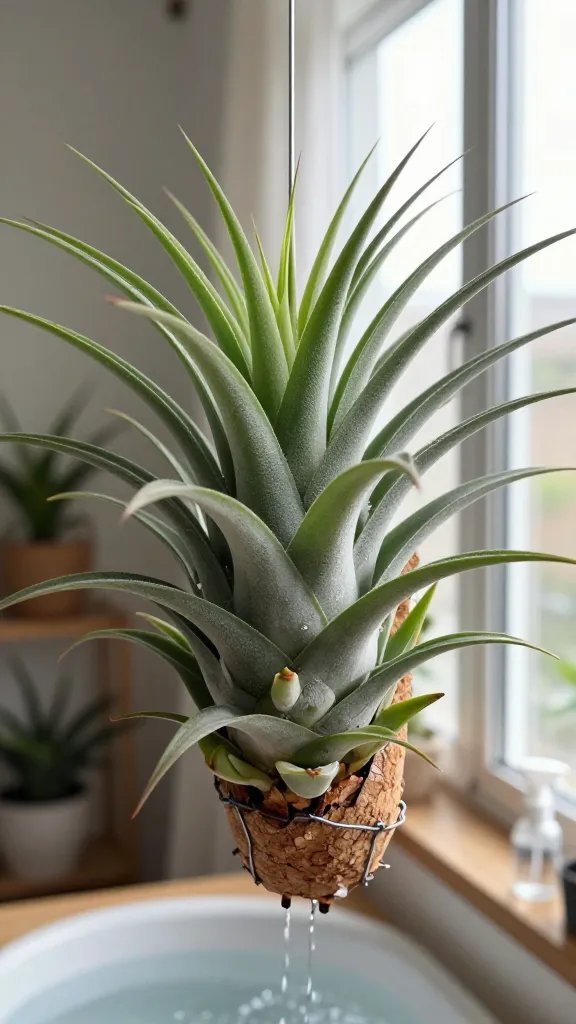
Tillandsia aeranthos handles dry indoor air but prefers a steady routine. Ignore it for three weeks in summer and leaves will accordion and brown at the tips. Give it structure and it rewards you with upright growth and frequent pups.
Care You Can Keep
- Water every 7–10 days with a 5–8 minute dunk, then shake dry.
- Place near a bright window; a sheer curtain is perfect to soften midday rays.
- Mount to cork bark or a small branch with waterproof glue or garden-safe wire so air circulates under the base.
Avoid These Pitfalls
- Leaving it in a glass bowl with no airflow
- Using softened tap water that tastes salty — it stresses the leaves
Takeaway: Put aeranthos on a repeating calendar reminder and mount it off the surface to keep its base dry and healthy.
7. Capitata (Peach, Red Form): Beautiful but Least Forgiving of Long Drought
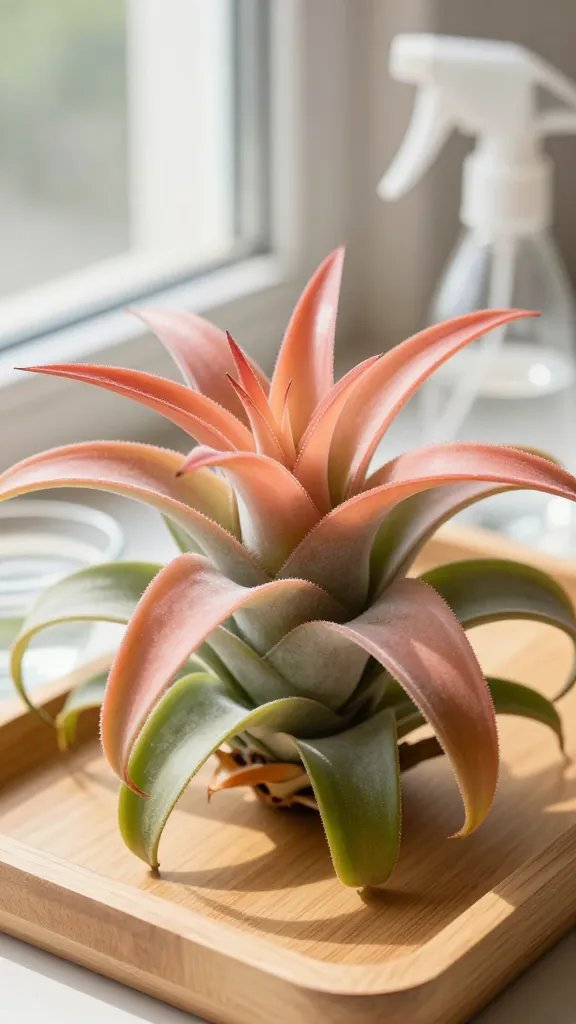
Tillandsia capitata boasts broad, soft leaves that flush peach or red with good light, but those softer leaves lose water faster. Long gaps between waterings lead to rapid tip dieback and a wrinkled texture. It’s still easy with a set routine — just don’t skip.
What Healthy Looks Like
- Supple, slightly velvety leaves with no sharp creases
- Color warming toward peach with bright light
Routine That Prevents Crisping
- Soak every 6–8 days for 8–10 minutes; in hot, dry rooms, add a midweek mist.
- Dry fully within 2–3 hours; tilt to prevent water pooling in the broad base.
- Place in bright indirect light; give gentle morning sun to maintain color.
Action today: If your capitata has crispy tips, trim only the dead brown edges and restart a weekly soak schedule.
Frequently Asked Questions
How do I know if my air plant needs water without special tools?
Use the squeeze-and-look test. Leaves that feel floppy, look wrinkled, or fold tight for days need a soak. Healthy leaves feel springy and hold their shape. Aim for soaks every 7–14 days depending on species and room dryness, and always dry within 3 hours.
Is tap water okay for air plants?
If your tap water tastes clean and not salty, it’s usually fine. Avoid softened water because the added salts stress leaves. If you see white crust on leaves or slow decline, switch to bottled spring water or rainwater collected in a clean bucket. Room-temperature water prevents shock.
Can I keep air plants in a closed terrarium?
No. Closed containers trap moisture and stale air, which leads to rot. Use open glass bowls, wire frames, or cork mounts that allow plenty of airflow. If you love glass, choose wide-mouth vessels and take the plants out to soak and dry.
How much light do air plants need near a window?
Think bright indirect light you’d use for a fiddle-leaf fig, not deep shade. Place them within 2–4 feet of an east or south window with a sheer curtain if midday sun hits hard. If leaves yellow or stretch, move them closer; if tips scorch, move them slightly back.
Do I need to fertilize air plants?
Fertilizing helps growth and blooming but isn’t mandatory. Use a quarter-strength orchid or air plant fertilizer once a month in spring and summer, mixed into your soak or a spray bottle. Rinse with plain water the next watering to prevent buildup.
How do I mount air plants without trapping moisture?
Use cork bark, driftwood, or a small branch from a garden centre. Attach with waterproof craft glue labeled plant-safe or wrap loosely with garden wire so air can move under the base. Always let the plant dry completely after watering before returning it to the mount.
Conclusion
Pick one or two from the top of this list — xerographica or tectorum — and you’ll see how easy air plants become with the right match. Set a repeat watering reminder, keep them near a bright window, and let airflow do the heavy lifting. When that routine feels natural, add a showpiece like duratii or a blushing ionantha and enjoy a drought-tolerant display that actually lasts.