Save It Fast: 7 Signs Your Air Plant Is Dying — and What Each Symptom Actually Means
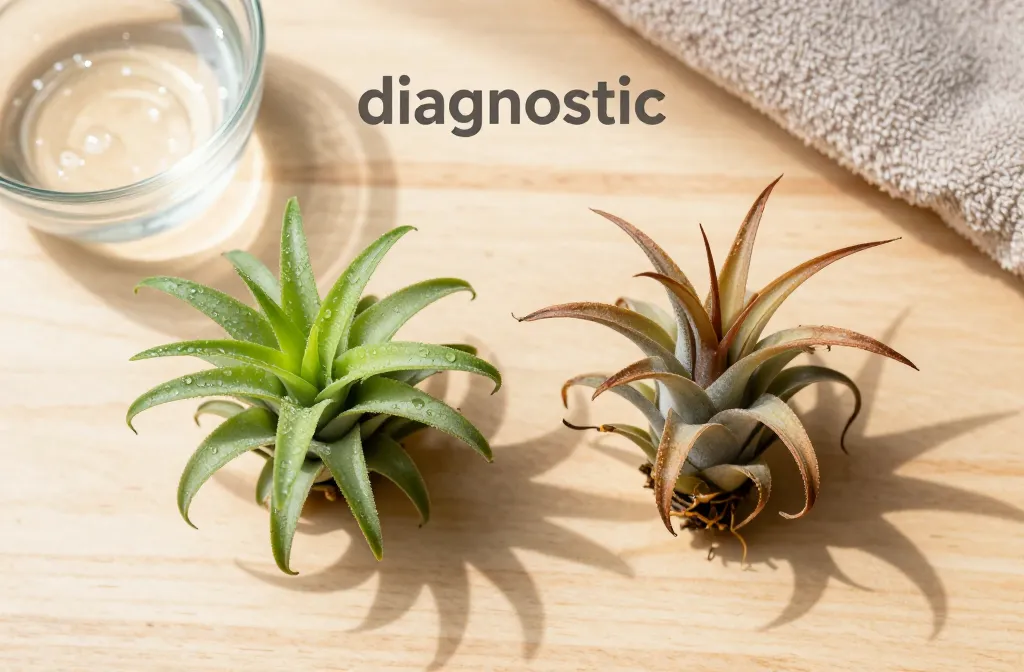
I’ve nursed plenty of sad-looking air plants back from the brink on a windowsill and a crowded bookshelf. If your air plant looks tired, crispy, or floppy, you’re not imagining it — these epiphytes broadcast their distress clearly once you know the signs. In this guide, I’ll decode seven specific symptoms, explain exactly what each one means, and show you the simplest fix using basic tools you already have at home. You’ll learn how to rescue a declining plant and set a maintenance rhythm that keeps it thriving.
1. Crispy, Browning Leaf Tips: Chronic Dehydration
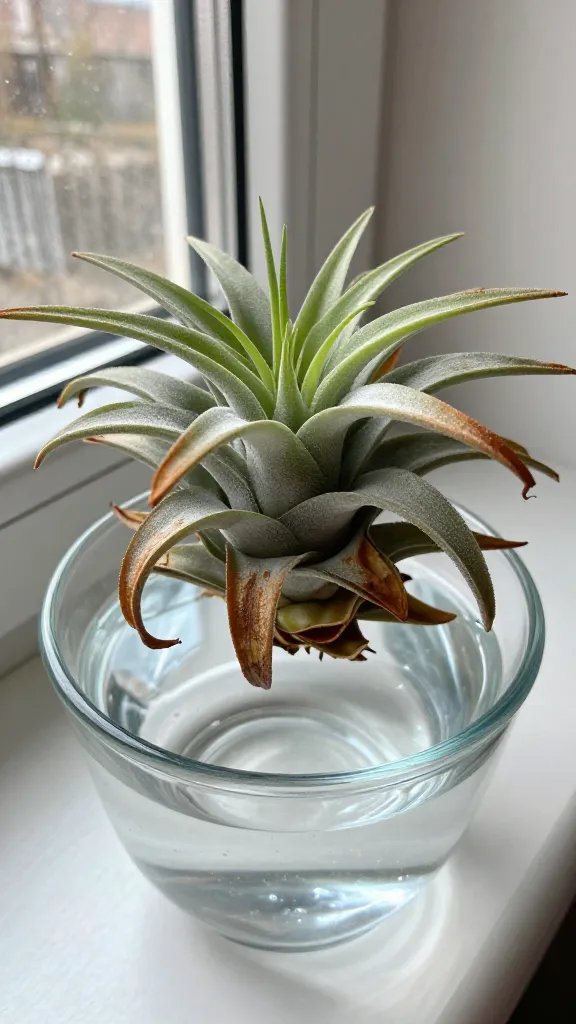
When leaf tips turn brown, curl, and feel like cornflakes, the plant is drying out. Dehydration stalls growth, then kills leaf ends, and eventually the central “heart” collapses. This happens fast in heated winter rooms or under strong sun behind glass.
Signs to Watch For
- Paper-dry leaf tips that snap when bent
- Leaves curving inward like claws
- Plant feels feather-light when you pick it up
How to Fix It
- Soak fully submersed in clean, room-temperature tap water for 20–30 minutes. If your tap water tastes salty or strongly chlorinated, use filtered or let tap water sit out overnight.
- Shake off excess water and dry upside down on a towel for 2–3 hours so no water sits in the center.
- Repeat a 20-minute soak once a week in winter and every 5–7 days in summer, then mist lightly between soaks if your air is very dry.
What to Use Instead
- A wide bowl for soaking, not a narrow glass where air pockets trap the leaves
- A soft kitchen towel to dry and a fan on low if your space is humid
Takeaway: If the tips feel crispy, give a 20–30 minute soak today and switch to a weekly soak schedule with thorough drying afterward.
2. Mushy Base or Rotting Center: Water Trapped in the Crown
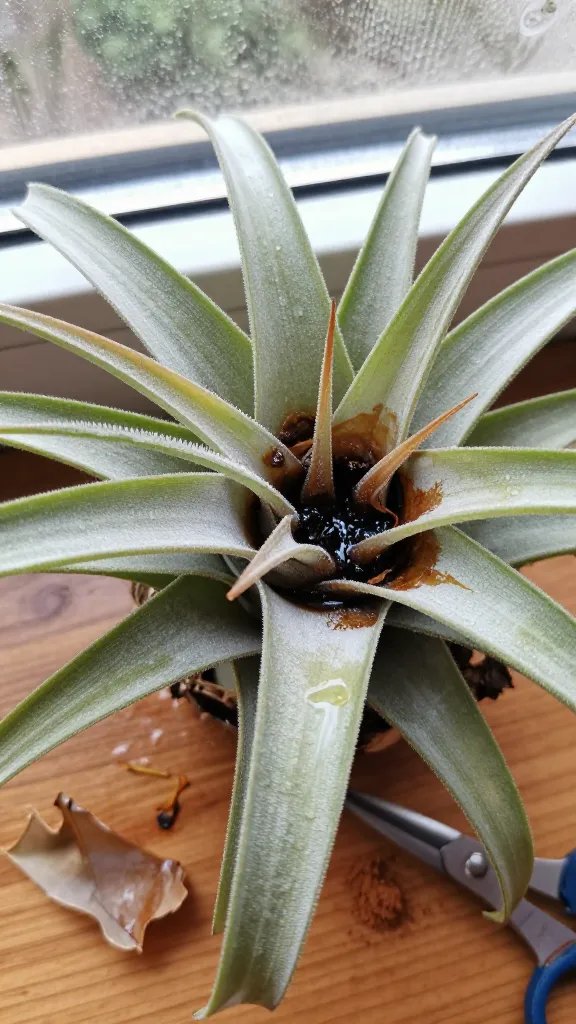
A soft, smelly base means rot started where water sat in the plant’s center. Rot spreads from the heart outward and kills healthy leaves quickly. This almost always comes from soaking too long or leaving the plant wet with poor airflow.
Signs to Watch For
- Leaves pull away easily at the base
- Brown or black mush where leaves meet in the center
- A sour or swampy smell
How to Fix It
- Trim off any fully brown, mushy leaves with clean scissors.
- Dust the base with ground cinnamon as a gentle antifungal from your pantry.
- Improve drying: always dry the plant upside down for 3–4 hours after soaking or heavy misting.
- Reduce soak time to 10–15 minutes and increase airflow — a small desk fan on low nearby works.
What to Use Instead
- Mist plus short soaks, not overnight soaks
- A wire or cork mount that lets air reach the base instead of a tight cup
Action today: Inspect the crown, remove mushy tissue, dust with cinnamon, and dry the plant upside down for several hours before returning it to an airy spot.
3. Leaves Turning Pale or Bleached: Sun Scorch and Light Stress
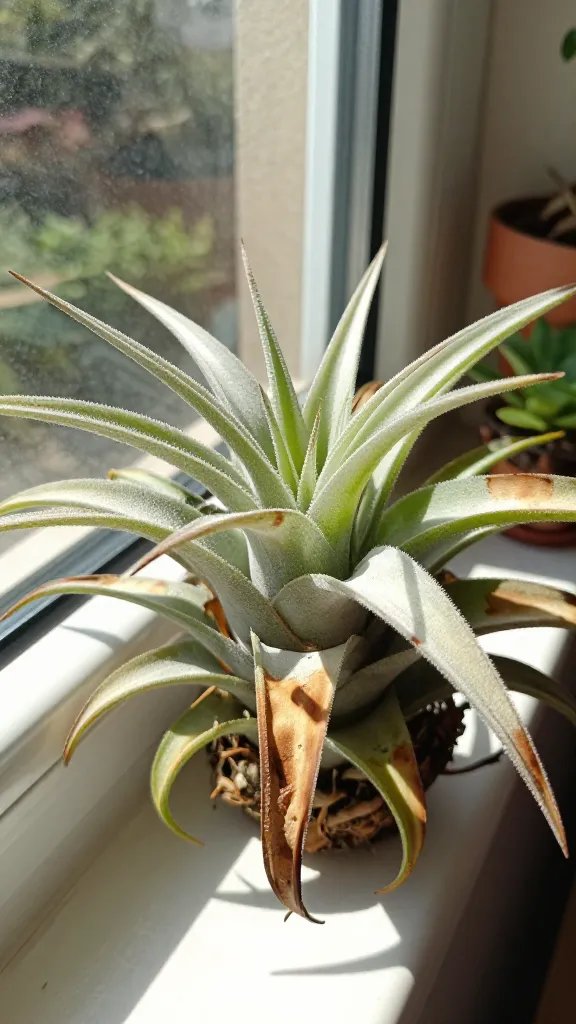
Washed-out or bleached patches mean the plant sat in direct midday sun through glass. Scorch degrades leaf cells and the plant loses water faster than it can absorb. Pale, silvery species with dense trichomes tolerate more light than greener, smoother types, but all burn behind hot windows.
Signs to Watch For
- White or tan patches on the side facing the window
- Dry, crispy texture with a sharp boundary between healthy and damaged areas
- Faster drying out after each soak
How to Fix It
- Move to bright, indirect light: one to three feet from an east or bright north window, or a few feet back from a sunny south window with a sheer curtain.
- Increase humidity around the plant by grouping with other plants or setting it near (not on) a tray of pebbles with water.
- Resume normal soak routine; damaged areas won’t green up, but new growth will be healthy.
What to Use Instead
- Sheer curtain or window film to soften midday sun
- A shelf that gets bright ambient light without hot rays
Takeaway: If you see bleached patches, relocate the plant today to bright, indirect light and add a sheer curtain if the window runs hot at midday.
4. Leaves Curling Tightly and Staying Closed: Low Humidity and Infrequent Watering
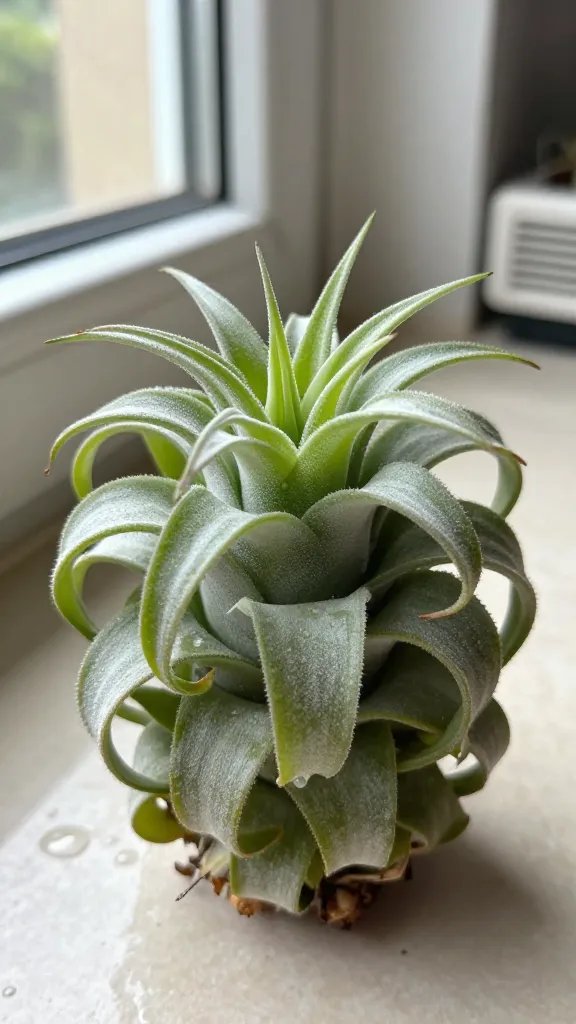
When an air plant stays clenched, it’s conserving moisture. Curled leaves reduce surface area to slow water loss, but that also slows photosynthesis and growth. Dry indoor heat from radiators or AC pushes them into a constant “drought mode.”
Signs to Watch For
- Rosette stays closed even a day after soaking
- Edges roll inward from both sides
- Plant feels rigid but not crisp
How to Fix It
- Adopt a consistent schedule: soak every 5–7 days for 15–20 minutes.
- Place the plant 3–6 feet from a window with bright, indirect light and good airflow.
- Lightly mist once between soaks if your home is very dry, but still prioritize full soaks.
What to Use Instead
- A simple weekly reminder on your phone
- A location away from direct heat or AC vents
Action today: Schedule a weekly 15–20 minute soak and move the plant away from vents so it can reopen within 24 hours.
5. Brown, Brittle Leaf Bases With Green Tops: Old Age Plus Starvation
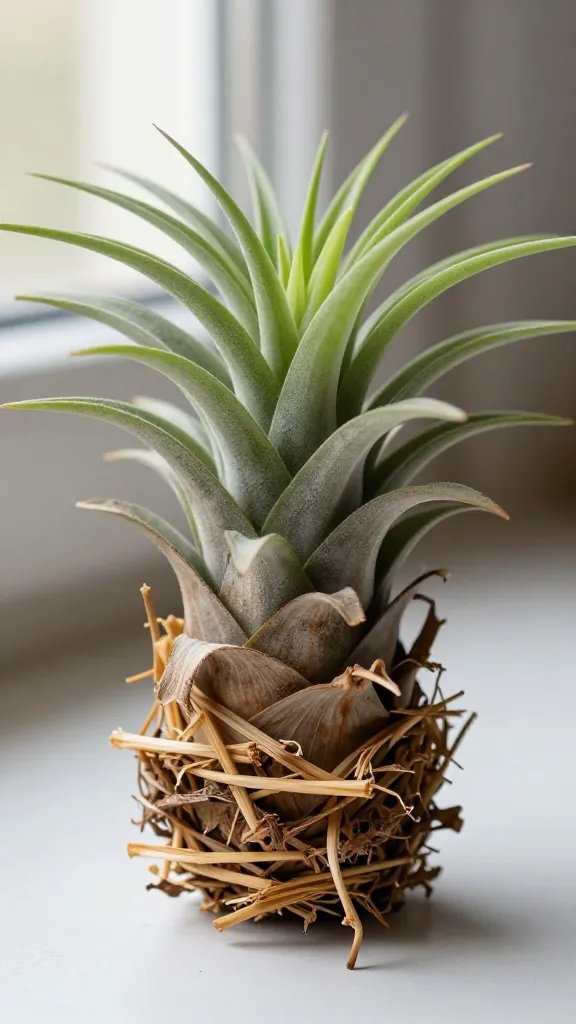
If the lower leaves dry and stack up like straw while the top stays green, the plant is using stored reserves without enough nutrients to replace old tissue. Air plants don’t live in soil, so they depend on occasional nutrients in water. Without feeding, growth stalls and the plant shrinks from the bottom up.
Signs to Watch For
- Several lower leaves fully brown and breakable
- Minimal new growth in the center over months
- Plant seems smaller after each grooming
How to Fix It
- Feed once a month during spring and summer with a bromeliad or air plant fertilizer from the garden center at half the label dose. Mix into soak water.
- Groom old leaves only when fully brown and loose — don’t yank green tissue.
- Maintain bright, indirect light to support new growth.
What to Use Instead
- A bromeliad/air plant-specific fertilizer, or a gentle orchid fertilizer diluted to one-quarter to one-half strength
- Clean scissors to snip fully dead leaves
Takeaway: Add a half-strength fertilizer to your next soak and repeat monthly in the growing season to stop the slow shrink.
6. Gray Dusty Look That Wipes Off as Fuzz: Fungal Growth From Stagnant Air
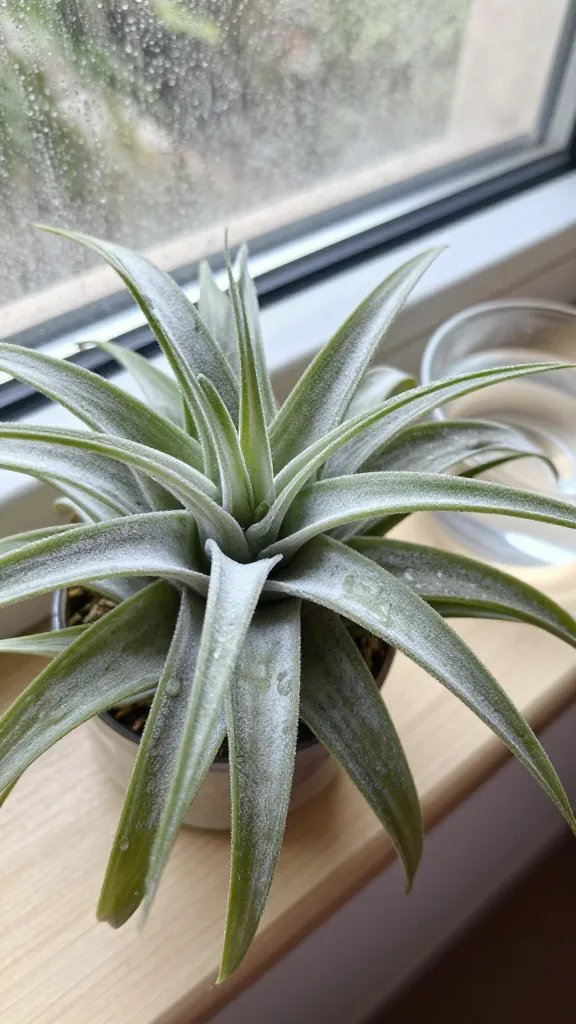
A soft gray fuzz that wipes away isn’t the plant’s natural trichomes — it’s mildew. Stagnant, humid air plus lingering moisture on the leaves invites fungus that blocks light and weakens tissue. Left alone, it spreads into the center and rots leaf bases.
Signs to Watch For
- Fuzzy coating that smears when wiped
- Musty smell and dull leaf color
- Appears after frequent misting without full drying
How to Fix It
- Rinse under a gentle tap, then soak 10 minutes in clean, room-temperature water.
- Spray a 50/50 mix of water and white vinegar lightly over the leaves, wait 2 minutes, then rinse again.
- Increase airflow — use a small fan on low for a few hours after each watering.
- Switch from daily misting to weekly soaks with thorough drying.
What to Use Instead
- White vinegar from the kitchen for occasional antifungal cleaning
- An open display or wire holder instead of a closed glass cloche
Action today: Rinse, treat with a light vinegar spray, rinse again, and dry with airflow to reset the leaf surface.
7. Plant Splitting or Pup Stalling After Bloom: Post-Flower Exhaustion Without Support
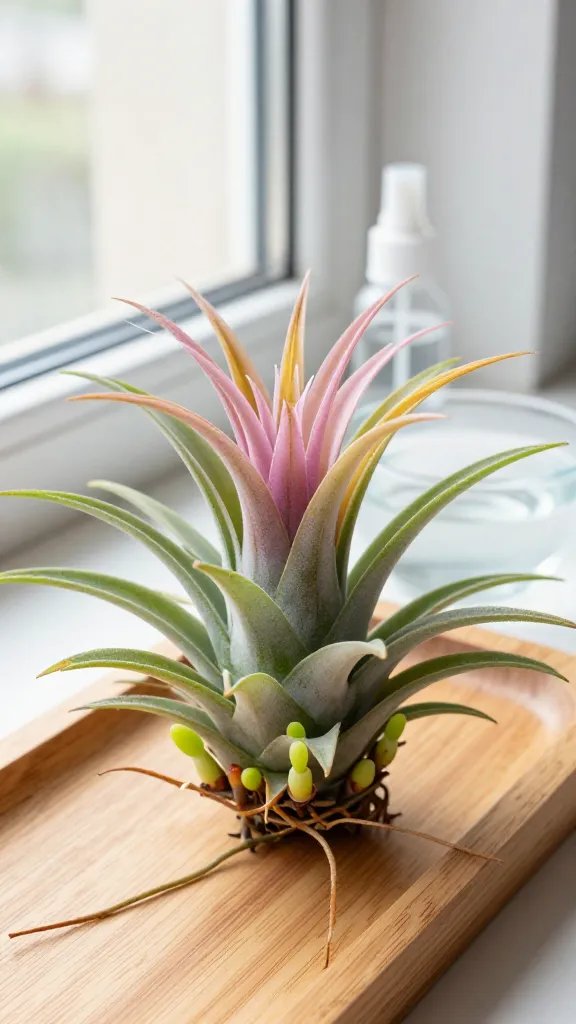
After flowering, many Tillandsia channel energy into pups and let the mother decline. If pups don’t grow, the plant runs out of reserves and the whole cluster falters. Without a small boost of water, light, and food, this normal life stage looks like a slow death.
Signs to Watch For
- Colorful bloom fades and the central leaves yellow while small pups appear at the base
- Pups stay tiny for months
- Mother plant dries from the center outward
How to Fix It
- Keep bright, indirect light steady and maintain weekly 15–20 minute soaks.
- Feed at half strength once a month during pup growth.
- When pups reach about one-third to half the size of the mother, gently twist to separate with a slight counter-rotation, or leave attached to form a clump.
What to Use Instead
- A labeled schedule for monthly feeding to support pups
- A gentle twist, not a cut, when removing pups to avoid wounds
Takeaway: Start monthly half-strength feeding now and keep the light bright to push pups past the stall phase.
Frequently Asked Questions
How often should I water an air plant?
Soak once a week for 15–20 minutes, then dry upside down for 2–3 hours. In summer or heated winter rooms, add a midweek mist or shorten the interval to every 5–7 days. If your plant feels very light and the tips are crisp, it needs water sooner. If the base feels soft, reduce soak time and improve drying.
Can I keep my air plant in a closed terrarium?
I don’t. Closed containers trap moisture and stale air, which leads to fungus and rot. If you love the look, use a vessel with a large opening and never seal the top. Mount the plant near the rim for airflow and remove it for weekly soaks.
What kind of water is best for air plants?
Use clean, room-temperature water that tastes fresh and not salty or strongly chlorinated. Tap water is fine in most places; if it smells like a swimming pool, let it sit out overnight or use filtered water. Avoid softened water from salt-based softeners. Always drain and dry well after soaking.
Do air plants need fertilizer?
Yes, but sparingly. Use a bromeliad or air plant fertilizer from the garden center at half strength once a month during spring and summer. Mix it into the soak water so it reaches the leaf surfaces evenly. Skip feeding if the plant is actively rotting — fix airflow and watering first.
How much light do air plants need indoors?
Give bright, indirect light near a window — think the light on a bright coffee table a few feet from an east or north window. South or west windows work if you hang a sheer curtain to block harsh midday sun. If the plant looks pale and reaches toward the light, move it closer; if it bleaches, pull it back.
My air plant turned red or pink — is it dying?
Not necessarily. Many Tillandsia blush before blooming, especially in brighter light. If the color shift comes with firm leaves and normal hydration, it’s healthy. Keep up weekly soaks and bright, indirect light to support the bloom and potential pups.
Conclusion
Air plants tell the truth with their leaves: crispy tips, mushy bases, and bleached patches each point to a specific fix you can apply today. Start with a proper soak-and-dry routine, adjust the light, and feed lightly during active growth. Once you dial those three, watch for pups — they’re your sign you’ve moved from rescue to thriving care.