The Secret to 9 Miniature Plants That Work at the Base Layer of a Large Terrarium — Ground Cover Options
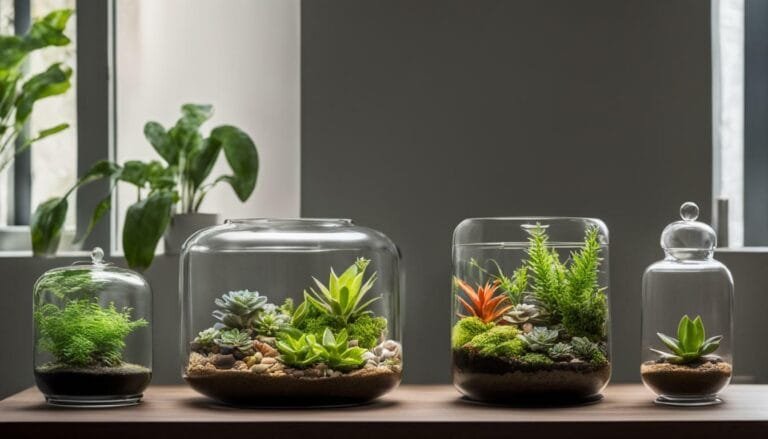
I’ve built enough big terrariums to learn that the base layer decides whether the whole scene looks lush or patchy. Most readers tell me their terrarium floor turns into either a moss swamp or a mix of weeds and bare soil. You’ll learn which small, reliable plants actually knit the surface, control evaporation, and keep maintenance low. I’ll show you exactly what to buy at a standard garden centre and how to keep each species compact and healthy.
1. Cushion Moss (Leucobryum glaucum): The Moisture-Stabilizing Carpet
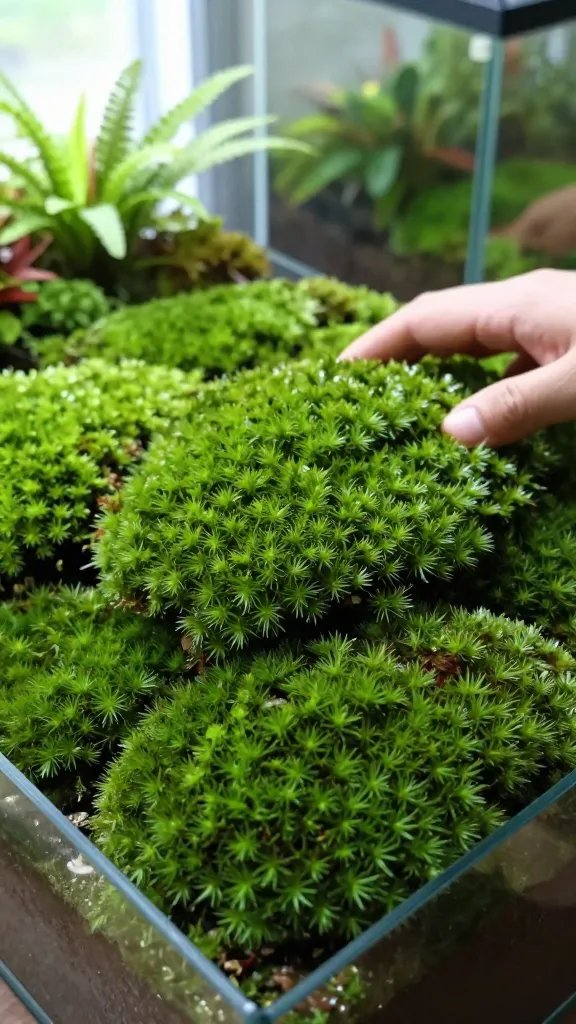
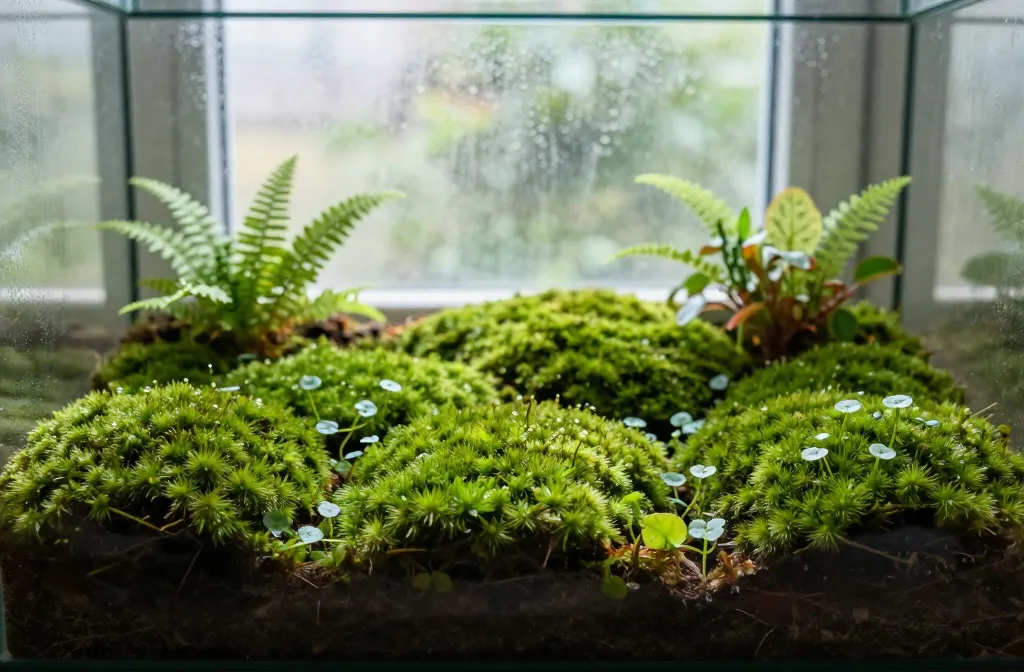
Nothing fills gaps faster than a tight cushion of moss. If the base dries or floods, larger plants struggle, but a moss cushion evens out humidity and hides soil like fresh green felt.
How to Use It
- Buy bagged “terrarium moss” or live cushion moss pads; avoid dyed craft moss.
- Rinse gently in clean tap water and squeeze to damp, not dripping.
- Press onto the substrate with firm palm pressure so it grips the surface.
Care Basics
- Light: bright indirect light near a window; no direct midday sun.
- Water: mist lightly every 2–3 weeks in closed terrariums; weekly in open ones.
- Trim: pinch back any browned tips; remove leaves that fall on it to prevent mold.
Action today: Lay cushion moss in 8–10 cm patches like puzzle pieces, leaving 1 cm seams that will fill in within a month.
2. Baby Tears (Soleirolia soleirolii): Fast Mat for Open Terrariums
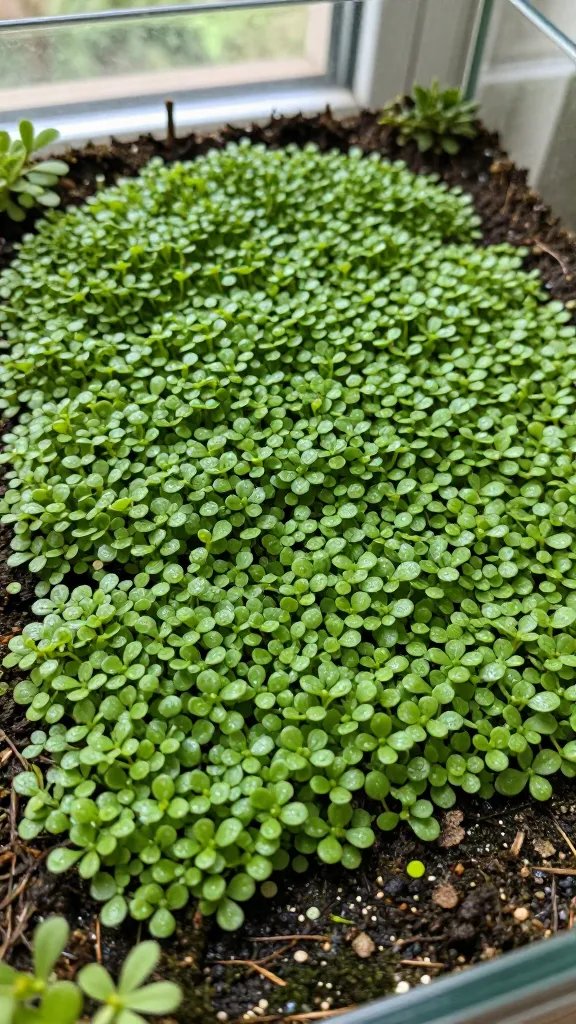
Open terrariums often look sparse because moisture escapes, but Baby Tears knits a soft, bright green mat that hides soil and edges. Left alone, it sprawls; unmanaged, it can overrun slower plants.
Signs to Watch For
- Leggy, pale growth means light is too low.
- Crispy edges signal it dried out between waterings.
How to Keep It Compact
- Plant small plugs 3–4 cm apart; press into contact with the substrate.
- Shear with scissors every 4–6 weeks to keep a 1–2 cm profile.
- Water when the top feels barely dry; don’t let it wilt.
Takeaway: In an open terrarium, set a reminder to lightly shear Baby Tears monthly to prevent it from shading slower companions.
3. Dwarf Selaginella (Selaginella kraussiana ‘Aurea’ or ‘Brownii’): Living Mulch for Closed Jars
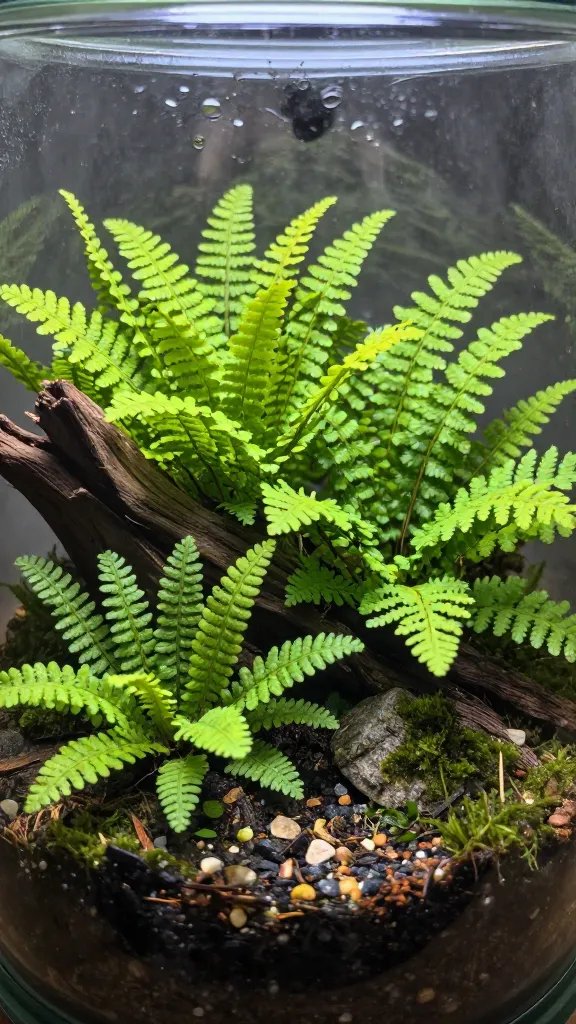
In closed terrariums, uneven humidity creates wet and dry patches. Selaginella spreads in a low, fern-like mat that holds moisture steady and keeps the surface cool.
How to Place It
- Break a nursery clump into thumb-sized pieces.
- Nestle pieces at the base of rocks or wood to anchor them.
- Leave 2–3 cm between clumps to allow lateral spread.
Care Routine
- Light: bright indirect; avoid hot windowsills.
- Water: in closed systems, rarely—open the lid if you see heavy midday condensation on more than half the glass.
- Trim: snip runners that climb onto stems of feature plants.
Action today: Add two thumb-sized Selaginella plugs per 20 cm of terrarium floor to lock in humidity without overcrowding.
4. Mini Nerve Plant (Fittonia albivenis ‘Mini’): Color-Pop Ground Cover That Flags Dryness
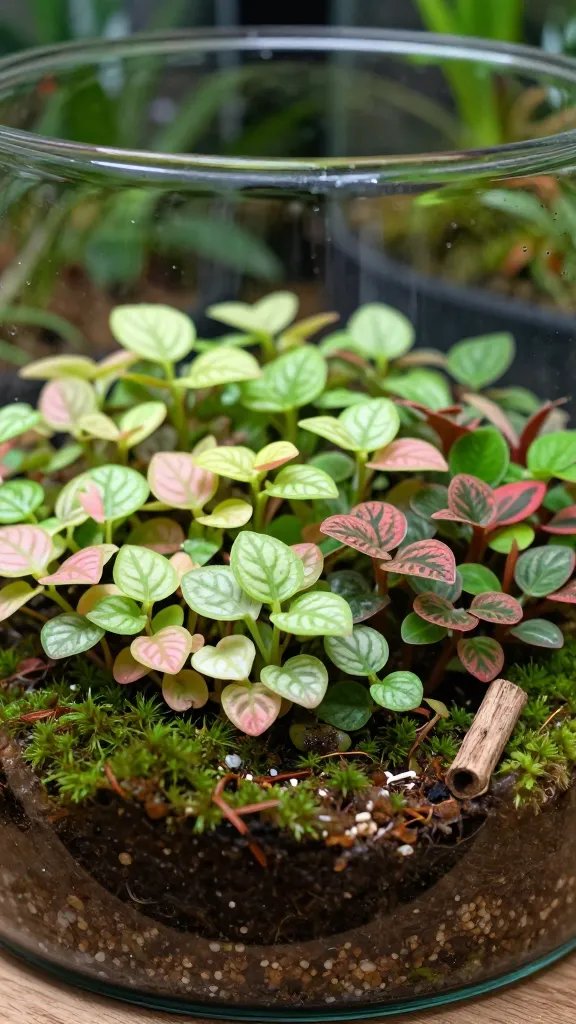
Sometimes the base layer looks flat and monochrome. Mini Fittonia brings crisp veins in white, pink, or red and stays under 5–8 cm if trimmed. It also “faints” when thirsty, so you get a clear signal before damage sets in.
Signs to Watch For
- Leaves droop dramatically when dry; they perk up within hours after watering.
- Scorched patches indicate direct sun hit the glass.
Care Moves
- Plant single-node cuttings 2–3 cm deep; they root readily in moist substrate.
- Pinch tips monthly to keep a cushion shape.
- Use clean tap water; keep consistently damp but never soggy.
Takeaway: Pinch every tuft back to 3–4 leaves today to lock in a low, colorful mat that won’t swamp neighboring plants.
5. Mini Peperomia (Peperomia prostrata or P. rotundifolia): Trailing Tiles for Edges and Paths
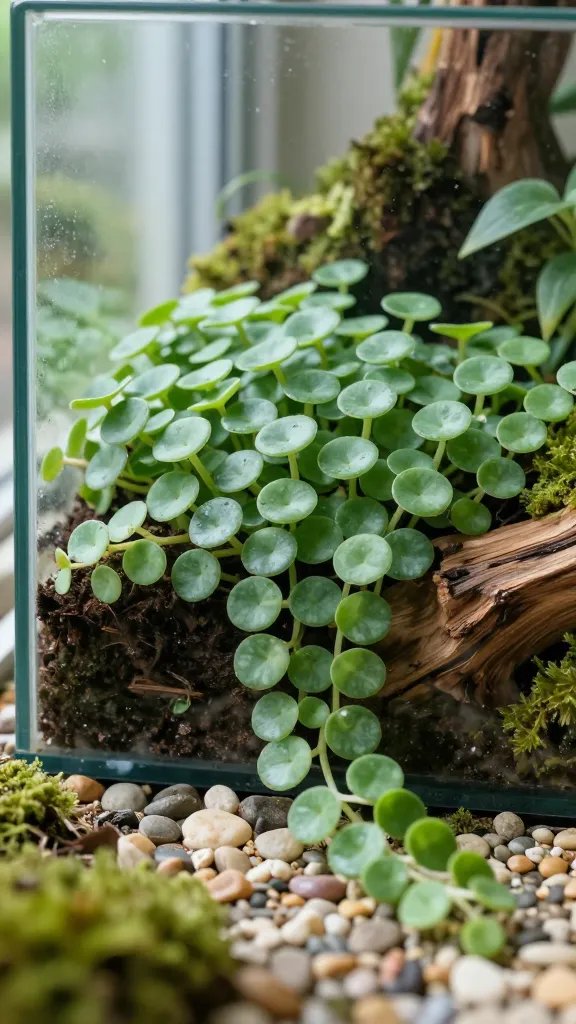
Large terrariums often have awkward edges where soil meets glass. Mini Peperomia creates neat “tiles” of round leaves that soften borders without shooting tall stems.
Best Placement
- Tuck small pieces along hardscape edges and near the front glass.
- Let a few trails spill over pebbled paths to make them look settled-in.
Care Tips
- Light: bright but gentle—east window or 1–2 feet back from a bright south window.
- Water: allow the top 1 cm to dry; if leaves pucker, water the next day.
- Groom: trim back runners every 6–8 weeks; replant the cut tips as new plugs.
Action today: Snip 5–6 cm runners and replant them as ground-level plugs to thicken the base without buying more plants.
6. Dwarf Creeping Fig (Ficus pumila ‘Quercifolia’): Textured Quilt That Handles Foot Traffic From Maintenance
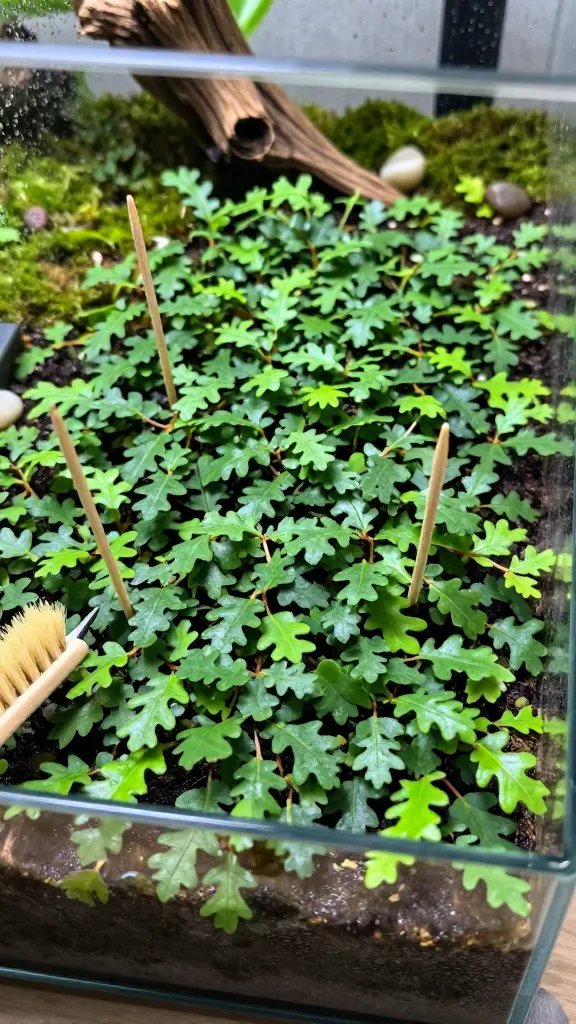
Maintenance pokes and tool bumps can tear delicate covers. Ficus pumila ‘Quercifolia’ makes a tiny oak-leaf mat that tolerates light handling and stays small-leaved under terrarium light.
Control Without Hassle
- Plant sparingly—one small plug per 15–20 cm area.
- Redirect any vertical shoots back down with a toothpick “peg”.
- Trim monthly to keep it under 3 cm tall.
Moisture Balance
- Evenly moist substrate works best; avoid water pooling at the glass.
- If condensation is heavy at midday, crack the lid for an hour.
Takeaway: Install wooden toothpicks today to pin wandering shoots flat, building a dense, low quilt instead of a climber.
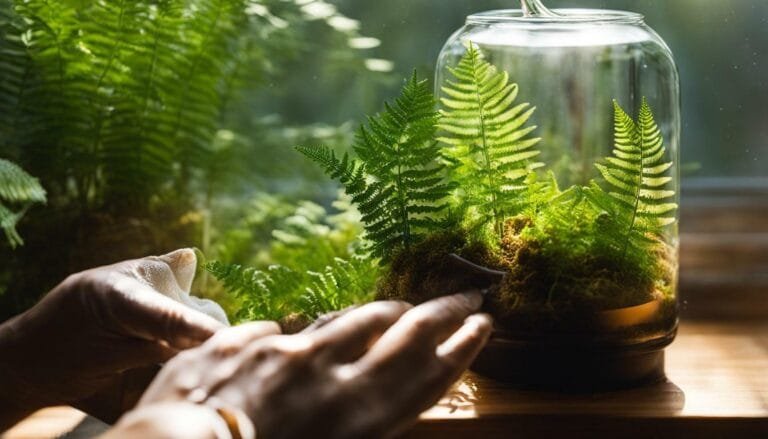
7. Mini Ferns (Lepidogrammitis or Pellaea ‘Buttons’ Size): Feathered Bases That Don’t Dominate
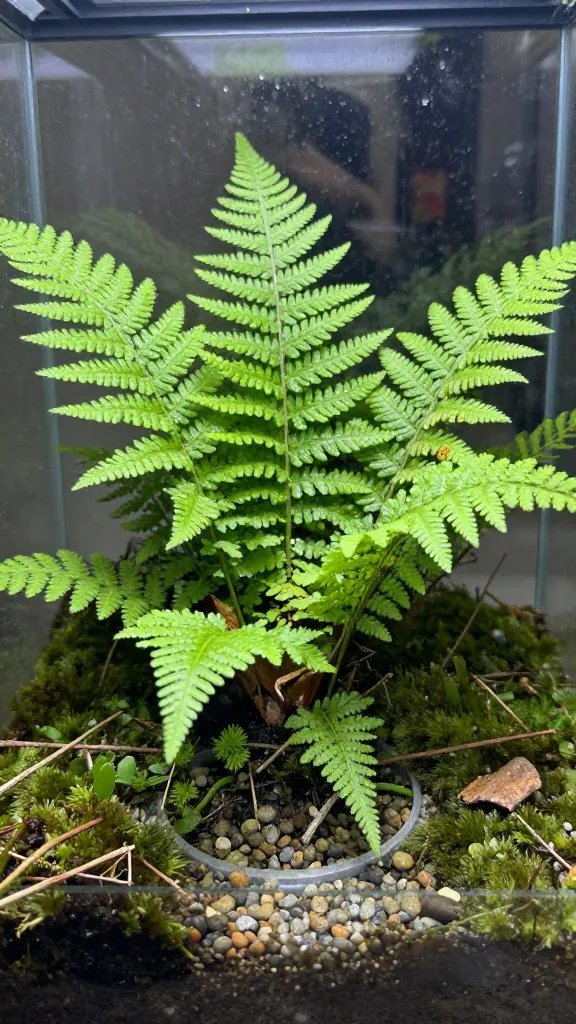
Full-size ferns outgrow terrariums and shade everything. True mini ferns with 2–6 cm fronds create elegant texture at ground level without throwing tall fronds that hit the glass.
What to Look For in the Shop
- Labels that say “mini” or “terrarium fern,” with fronds smaller than your thumb.
- Firm, bright fronds with no brown tips.
How to Plant
- Set the crown just above the substrate to prevent rot.
- Add a thin ring of small pebbles around the base to keep leaves off damp soil.
- Mist the fronds, not just the soil, once a week in open terrariums.
Action today: Lift any sunken fern crowns so the growing point sits slightly proud of the soil—this alone prevents crown rot.
8. Watermelon Dischidia (Dischidia ovata, small cuttings): Shingling Shine for Humid Corners
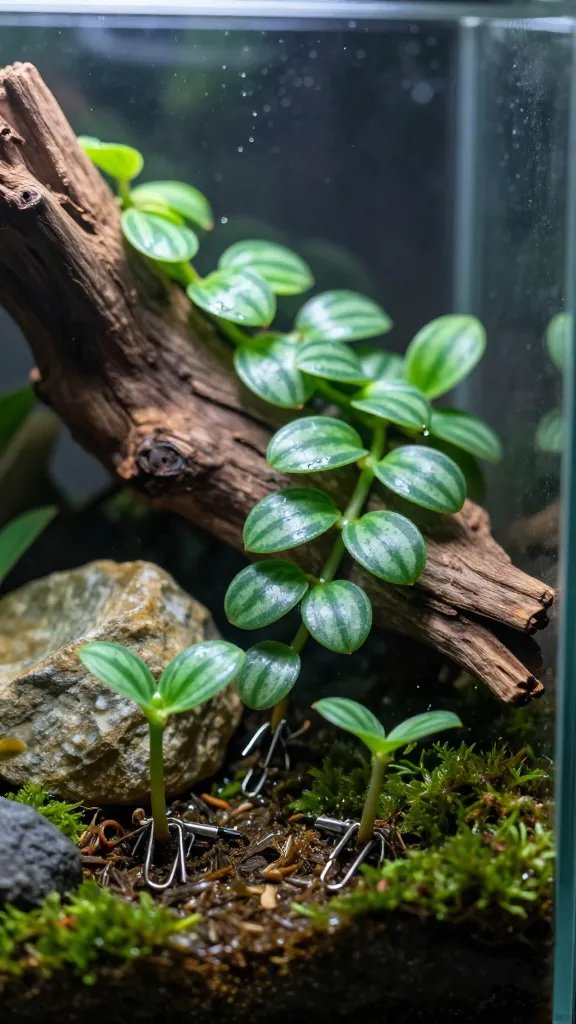
Shady, humid corners can look dull and bare. Dischidia ovata lays flat, glossy leaves with pale stripes that reflect light and make the floor look intentional.
Propagation and Placement
- Place 2–3 node cuttings on the surface and pin with small bent paperclips.
- Position near driftwood or rocks where it can “shingle” along surfaces.
Care Details
- High humidity suits it; closed terrariums are perfect.
- Water lightly; thick leaves store some moisture—avoid soggy soil.
- Trim tips that try to climb the glass and replant them as new starts.
Takeaway: Pin each cutting at two points today so every node touches the substrate—rooting doubles when nodes stay in contact.
9. Dwarf Mondo Grass (Ophiopogon japonicus ‘Nana’): Tidy Tufts That Frame Paths
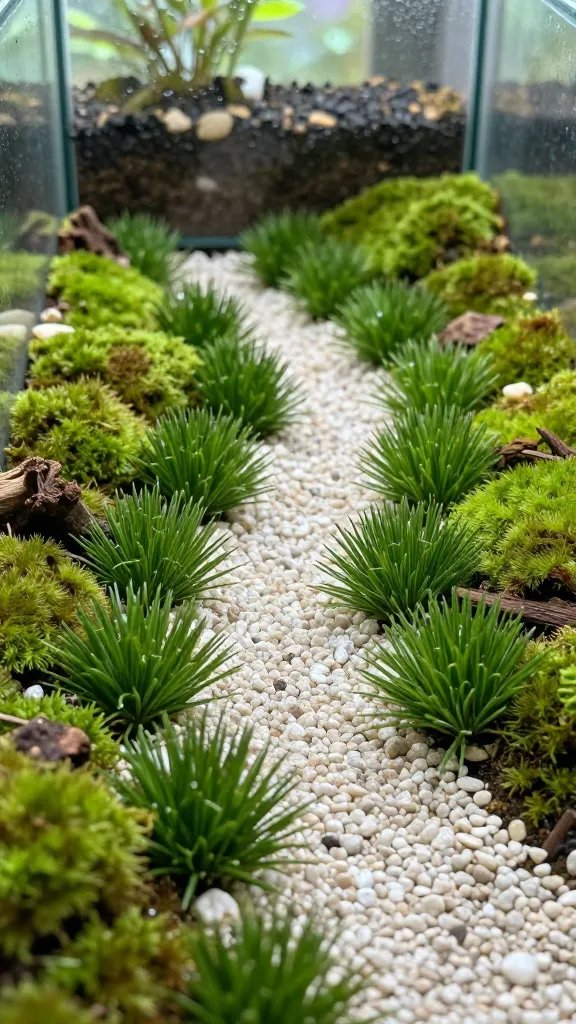
Many ground covers look messy against pathways. Dwarf Mondo forms clean, grass-like clumps that line paths and break up solid moss areas without invading.
Planting Pattern
- Divide one nursery pot into 6–8 mini tufts.
- Space tufts 5–6 cm apart along path edges for a staggered border.
Maintenance
- Light: bright indirect; it tolerates a little morning sun through glass.
- Water: steady moisture; don’t let it sit in puddles.
- Groom: snip any yellow blades at the base; thin clumps yearly.
Action today: Use one pot to create a double-row path border—offset the second row by half a tuft to look natural, not “fenced.”
Frequently Asked Questions
How do I prepare the base so ground covers don’t rot?
Build a simple layered base: a 2–3 cm layer of small gravel, a thin mesh or window screen to keep soil from falling through, then 5–7 cm of good quality potting mix from the garden centre. Mix in a handful of orchid bark or perlite for air. Before planting, moisten the mix so it clumps lightly in your hand without dripping.
Can I mix several ground covers in one terrarium?
Yes, but give each species its own zone so faster growers don’t smother slower ones. I use a “patchwork” plan: moss in shaded pockets, a creeping plant for open floor, and tufted accents along paths. Keep at least 3–4 cm of bare boundary between patches at planting; they’ll close the gaps in 4–8 weeks. Trim monthly to keep borders crisp.
What light do these plants need if I don’t have grow lights?
Place the terrarium near a bright window with filtered light—east-facing is ideal, or set it 1–2 feet back from a bright south window to avoid harsh sun. Watch leaf color and stretch: pale, leggy growth means it needs more brightness. Rotate the container a quarter turn every two weeks so each side gets even light. If growth still stretches, add a basic desk lamp with a neutral-white LED above it for 8–10 hours.
How often should I water a closed versus open terrarium with these ground covers?
Closed terrariums usually need water every 3–4 weeks or less. Add a tablespoon or two with a spray bottle only when midday condensation drops below one-third of the glass. Open terrariums need a light watering when the top 1 cm of soil feels barely dry—usually weekly. Always pour slowly along the glass edge to avoid flooding the center.
What’s the easiest way to prevent mold on the ground cover?
Remove fallen leaves as soon as you see them, and keep air moving by cracking the lid for an hour if you see heavy condensation at midday. Water in the morning so surfaces dry by evening. If mold appears, spot-treat with a cotton swab dipped in diluted 3% hydrogen peroxide (half peroxide, half water), then reduce humidity slightly. Avoid overfeeding; these plants don’t need fertilizer more than once per season at quarter strength.
Which of these stays smallest with the least trimming?
Cushion moss and dwarf Selaginella stay lowest with minimal cutting in closed setups. Mini Peperomia also behaves well with light snips every couple of months. Avoid standard creeping fig or full-size Fittonia if you can’t trim monthly—they spread faster and will shade neighbors. Start with moss plus one slow creeper if you prefer low maintenance.
Conclusion
Set your large terrarium up like a layered garden: anchor with moss, add a steady creeper, then frame with tidy tufts. Choose two or three from this list, plant in defined zones, and schedule a quick monthly trim. When you’re ready to scale up, build simple paths and hardscape first—then let these ground covers knit everything into a living floor.