5 Signs Your Terrarium Needs to Be Restarted — Not Just Adjusted Now
I’ve kept terrariums on every windowsill I’ve ever had, and I’ve rebuilt more than a few from scratch. If your glass garden looks tired, foggy, or foul no matter what you tweak, you’re standing where I once stood. In this guide, I’ll show you how to recognize when a terrarium has crossed the line from salvageable to unsalvageable — and how to restart it cleanly so it thrives again. You’ll learn the hard-stop signs, the simple tests to confirm them, and the right materials to use from any garden centre.
1. Persistent Mold And Rot: When Sanitation Has Lost The Battle
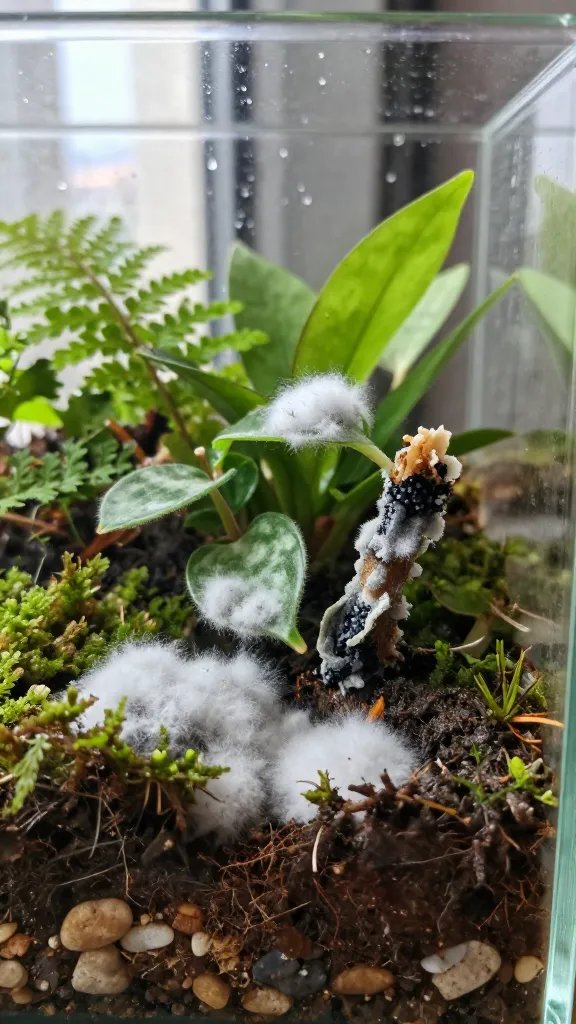
When mold returns within days after you wipe it away, the ecosystem is overloaded with decaying material and opportunistic fungi. Left alone, it smothers roots, collapses stems, and turns your terrarium into a compost jar rather than a display. At this point, trimming and airing out won’t reverse the underlying imbalance.
Signs To Watch For
- White fuzz (cottony mycelium) reappears on soil and leaves within 48–72 hours of cleaning
- Gray or black mold on stems, especially at the soil line
- Mushy bases on moss or small ferns that detach easily when tugged
- Sour or swampy smell when you crack the lid
Why Adjustment Fails Here
- Spores and decaying roots are embedded throughout the substrate, not just on the surface
- Excess nutrients from decomposing leaves keep feeding fungi
- Hidden dead roots continue to rot, even if top growth looks okay
How To Restart Cleanly
- Remove all plants and moss. Rinse roots under lukewarm tap water to strip off old soil
- Discard the entire old substrate in a sealed bag
- Wash the glass with warm, soapy water; rinse; then wipe with white vinegar and let it dry completely
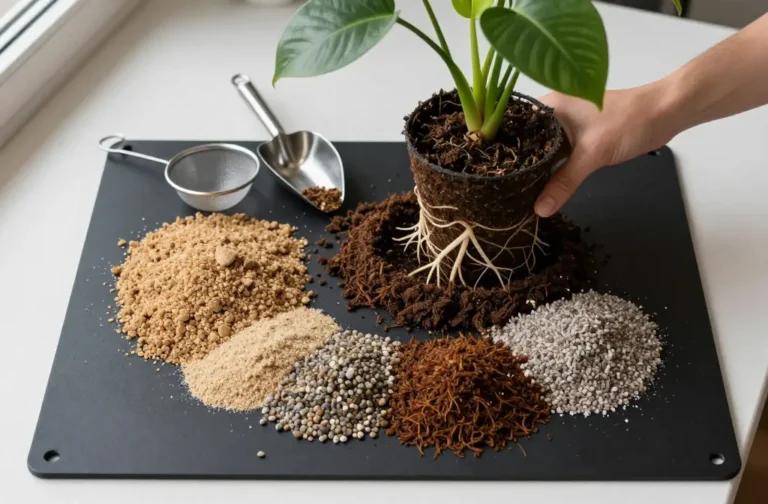
- Rebuild with a fresh base: a thin layer of washed pebbles for drainage, a mesh screen or coffee filter layer, and a good quality potting mix suited to your plant types
- Replant only firm, healthy cuttings with no soft spots
Action today: If mold returns within three days after you clean it, stop spot-treating and plan a full teardown and rebuild this weekend.
2. Sour, Anaerobic Substrate: The Soil Has Gone “Swampy”
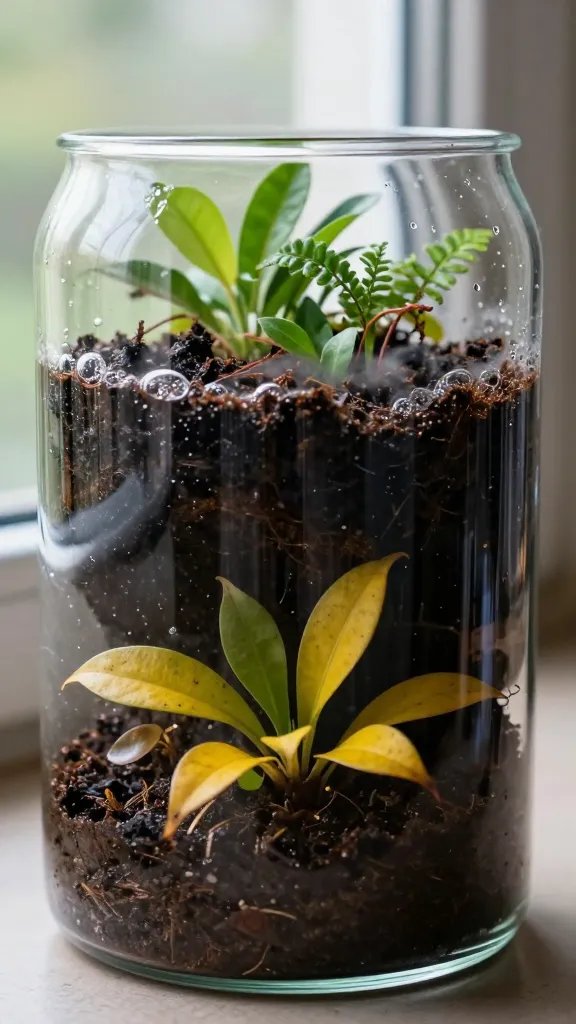
Once a terrarium smells like a fish tank or sulfur, the substrate has turned anaerobic — it’s starved of oxygen and loaded with bacteria that rot roots. Plants in this environment yellow from the base up and stall, even if their leaves look hydrated. No amount of airing out fixes a suffocated substrate.
Signs To Watch For
- Eggy, sulfur, or vinegar smell every time you open the lid
- Blackened soil layers or oily-looking patches under the top layer
- Yellowing lower leaves that drop cleanly with a touch
- Condensation beads that look greasy rather than clear
Simple Test
- Use a spoon to lift a tablespoon of soil to a paper towel. If it leaves a dark, wet ring and smells sour after airing 10 minutes, it’s anaerobic
How To Restart Right
- Salvage only firm, white-rooted pieces; toss any with brown, smelly roots
- Scrub the container and let it dry fully to reset odors and microbes
- Rebuild thinner layers: keep soil to no more than 5–7 cm deep in small jars
- Mix in a handful of orchid bark or perlite from the garden centre to improve airflow for tropical open terrariums
- For closed moss terrariums, use a low-nutrient mix (good potting mix cut 50% with fine bark or rinsed sand) to slow bacterial blooms
Takeaway: If your terrarium smells bad and soil looks black and slimy, the only fix is to replace the substrate and rebuild with a thinner, airier mix.
3. Wrong Plant Mix For The Environment: Constant Decline Despite “Good Care”
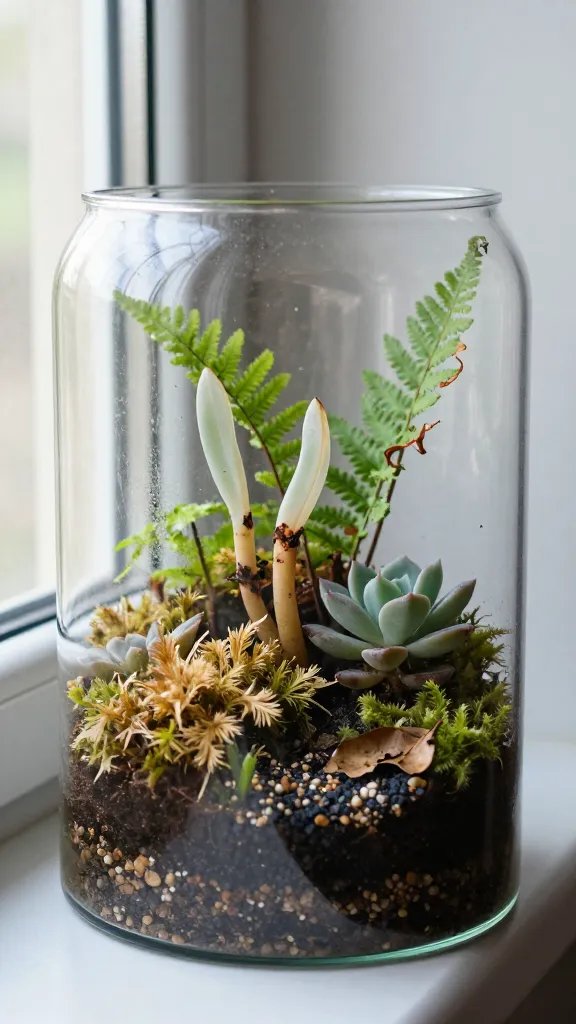
If plants keep weakening even with careful watering and light, the terrarium’s climate and the plant choices are mismatched. Shade mosses stewing in bright, hot sun or desert succulents sealed in humid glass will always deteriorate. Swapping care habits won’t overcome incompatible biology.
Signs To Watch For
- Moss bleaching to a straw color in bright spots while algae blooms in the shade
- Succulents stretching tall and thin, then rotting at the base inside closed glass
- Ferns crisping at the tips while the soil stays damp
- One plant thrives while two others steadily die — a classic mismatch signal
What To Use Instead
- For closed terrariums (lid on, steady humidity): choose mosses, small ferns, peperomia, pilea, and fittonia
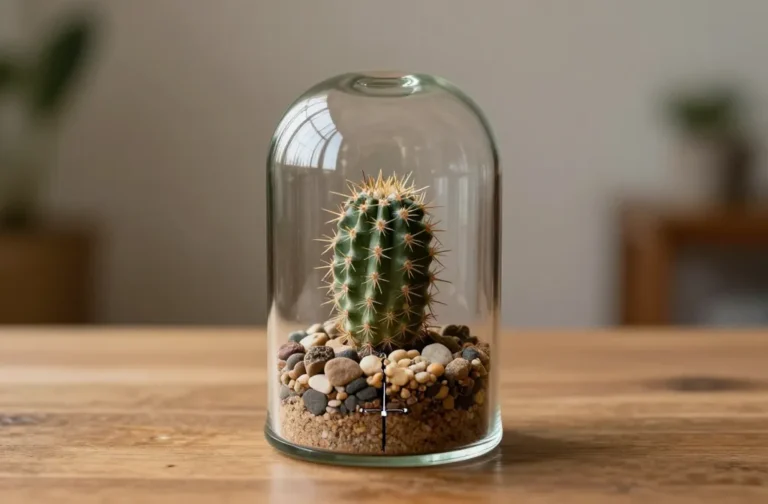
- For open terrariums (no lid, drier air): choose succulents, cacti, and haworthia with a gritty mix
- Match light to plants: place humidity lovers in bright indirect light near a window; put succulents on a sill with at least 4–6 hours of direct morning sun
How To Restart With The Right Theme
- Decide: closed humid build or open dry build — don’t mix the two
- Pick 2–3 species with the same water and light needs
- Buy a good quality potting mix and either add perlite/bark (humid builds) or cactus mix (dry builds)
Action today: If two plant types in the same jar need opposite conditions, plan a restart that commits to one climate and rehome the misfits to pots.
4. Glass Permanently Fogged Or Algae-Coated: Light And Moisture Are Trapped In A Loop
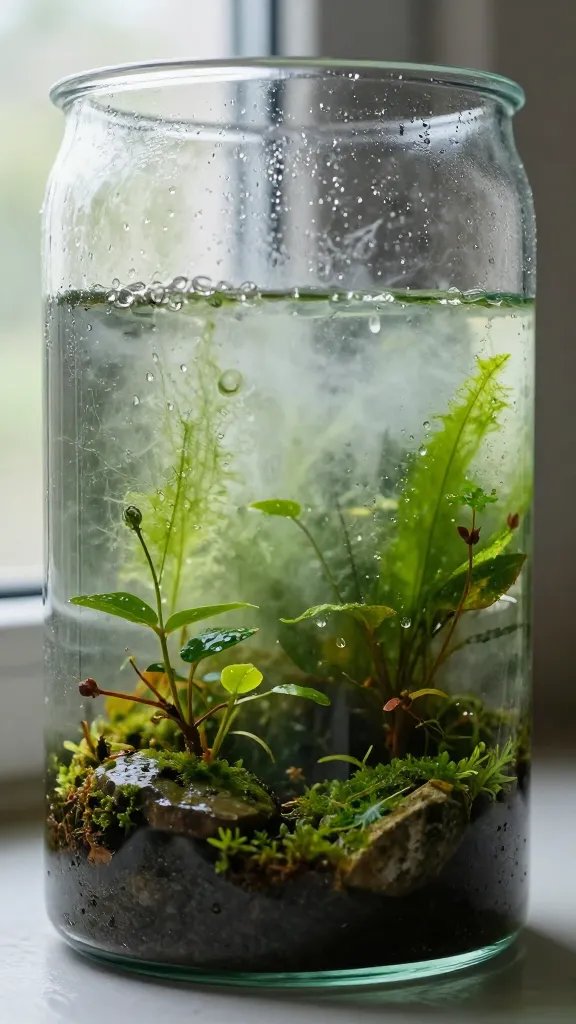
When you wipe the glass and it hazes over again within a day, you’re looking at a cycle of excess moisture and poor airflow that encourages algae and blocks light. Plants decline because they can’t photosynthesize through green film. Opening the lid for a few hours helps once; needing it every day means the build itself is off.
Signs To Watch For
- Condensation all day, not just mornings
- Green film spreading on the glass and stones
- Stunted growth even though the substrate is damp
Why Restart Beats Tweaks
- There’s too much water sealed in, and surfaces seeded with algae
- Layering is wrong: no barrier layer, or soil is pressed tightly against glass
- Light is hitting wet glass at a steep angle, supercharging algae growth
Rebuild For Clear Glass
- After cleaning the container, rebuild with a clear separation between soil and glass using a ring of decorative stones or a moss skirt to keep wet soil off the walls
- Water very lightly at setup: for a small jar (1–2 liters), add 2–3 tablespoons of water to settle the soil, then close
- Place in bright indirect light near a window instead of direct midday sun, which drives nonstop condensation
- If algae returns, rotate the terrarium so the brightest side hits plants, not bare, wet glass
Takeaway: If your glass stays foggy all day after repeated airing, rebuild with less water, a cleaner barrier at the walls, and indirect light placement.
5. Structural Problems: Contaminated, Compacted, Or Wrong-Sized Container
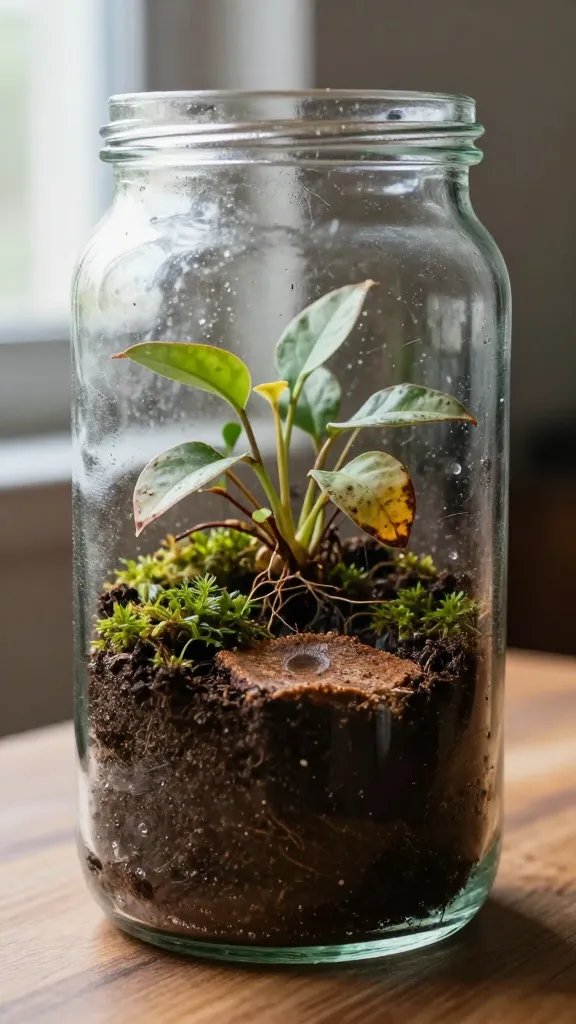
Some setups never stabilize because the container itself works against you. Deep, narrow jars trap stale air at the base, scratched thrift-store glass harbors biofilm you can’t remove, and heavy, compacted mixes suffocate roots. You’ll see plants stall for months or die in waves for no clear reason.
Signs To Watch For
- No new growth for 6–8 weeks despite stable care
- Soil that feels like a brick when you press a finger in
- Condensation only at the bottom, with a dry top layer that never evens out
- Fine scratches inside the glass that stay cloudy even after cleaning
Choose Better Hardware
- Pick a container with a wider mouth than base for easier airflow and maintenance
- Avoid deeply scratched or etched glass; buy a clear glass jar or vase from a home store
- Use washed pebbles, a mesh or coffee filter, and a fresh potting mix appropriate to your plant type
- Break up compaction: blend in a few handfuls of perlite (humid builds) or use a ready cactus mix (dry builds)
Setup Steps That Prevent Future Failure
- Thoroughly wash and dry the glass; finish with a white vinegar wipe
- Add drainage pebbles (1–2 cm), then mesh/filter, then soil (5–7 cm max)
- Plant with space between roots and the glass wall
- Water sparingly, then place in bright indirect light to stabilize
Action today: If your container is narrow, scratched, and compacts soil, replace it with a clear, wide-mouth jar and rebuild with a fresh, looser mix.
Frequently Asked Questions
How do I know if I should try adjusting instead of restarting?
Try adjustments if problems are new and mild: wipe light condensation, trim a few yellow leaves, and open the lid for two hours. If issues return within three days, or you smell sour soil, that signals a deeper imbalance. Repeating the same tweaks weekly is a sign to restart. A single, decisive rebuild saves more plants than months of half-fixes.
Can I save plants from a failing terrarium, or do I toss everything?
Save anything that feels firm and shows white, clean roots. Rinse under lukewarm tap water to remove all old soil, then pot temporarily in fresh mix or water-prop small cuttings on a windowsill. Discard squishy stems, black roots, or anything with a foul smell. Reintroduce only healthy pieces into the rebuilt terrarium.
What soil should I buy for a restart at a regular garden centre?
For humid, closed builds, use a good quality potting mix blended roughly half-and-half with fine orchid bark or rinsed sand to lower nutrients and improve airflow. For open succulent builds, use an off-the-shelf cactus/succulent mix. Skip fertilizers and compost at setup. You want lean, airy substrate that won’t go sour.
How much water should I add when I rebuild a closed terrarium?
For a 1–2 liter jar, start with 2–3 tablespoons of water after planting — enough to slightly dampen the soil without puddles. Close the lid and watch midday condensation for a week. If less than one-third of the glass fogs at midday, mist 1 tablespoon more. If more than half fogs, leave the lid open for an hour and do not add water.
Where should I place the terrarium after restarting?
Set it in bright indirect light near a window, where it gets a bright room but no harsh midday sun on the glass. Morning sun for up to two hours is fine for most humid builds. Succulent open terrariums do best with 4–6 hours of direct morning sun on a sill. Avoid radiators and vents, which swing humidity and temperature.
Do I need activated charcoal in the base layer?
It helps in small, closed terrariums by reducing odors and absorbing some impurities, but it doesn’t fix a rotting build. If you use it, add a thin layer above the pebbles and under the mesh. Still prioritize clean glass, thin soil layers, and modest watering — those prevent most problems charcoal gets blamed to solve.
Conclusion
When the same problems return within days, your terrarium is asking for a clean slate. Restarting with a focused plant theme, thinner soil layers, and careful first watering sets you up for months of low maintenance. If you’re ready to build confidently, your next step is choosing a closed or open style and buying the right mix at the garden centre this week.