6 Moss Species for Closed Terrariums — Ranked by Humidity Tolerance and Light Requirement Guide
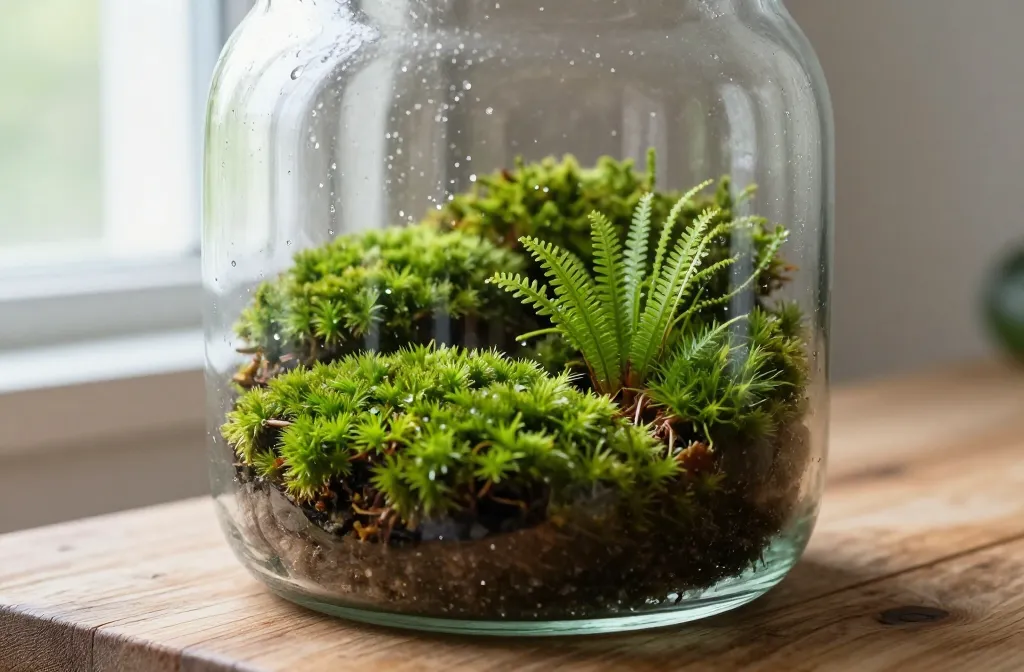
I’ve built more foggy glass jars than I can count, and I’ve watched moss either thrive like a tiny forest or collapse into slime. Most home growers juggle two variables without realizing it: humidity that never escapes and light that’s usually weaker than it looks. In the next few minutes, you’ll learn exactly which mosses handle life in a sealed jar, how much moisture they want, and where to place them for the right light. You’ll finish with a ranked, practical shortlist and clear steps you can follow with nothing more than a spray bottle and a bright windowsill.
1. Sphagnum Moss (Live): Built for Soaking-Wet, Dim, Sealed Terrariums
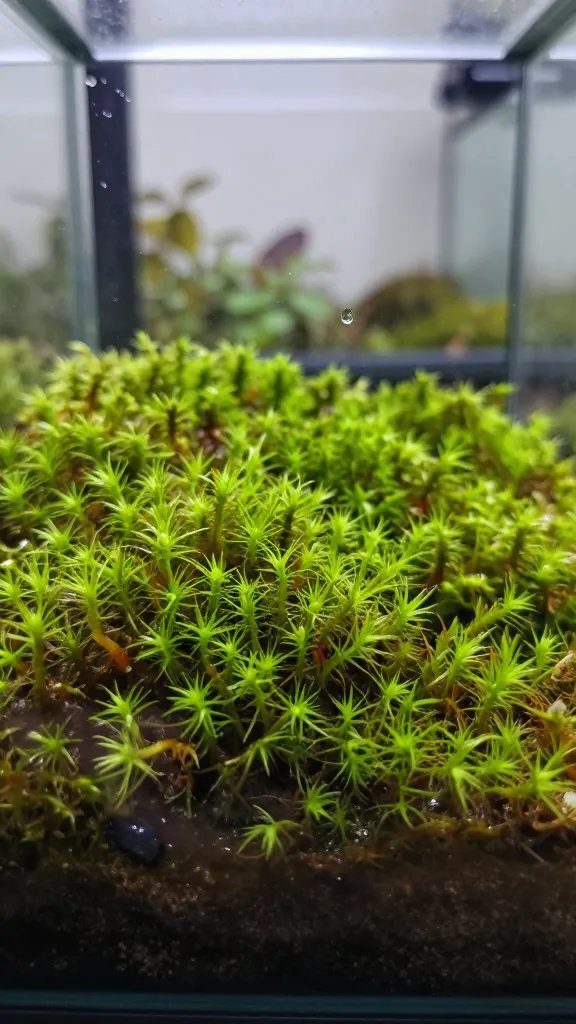
When a terrarium stays wet, most mosses rot — Sphagnum explodes with new growth. It loves constant saturation and shrugs off heavy condensation and limited airflow that suffocate other species. In dim corners or north-facing rooms, it remains lush instead of thinning.
Humidity and Watering Reality
- Humidity tolerance: Extremely high — thrives with persistent condensation.
- Watering need: Keep the base consistently damp; never let the cushion fully dry.
- Light requirement: Low to medium — bright indirect is ideal; tolerates low light better than most moss.
Best Use and Placement
- Use as a moisture buffer under other plants or as the main carpet.
- Place 1–2 feet from a bright window or right beside a north-facing window.
- Rinse well before use to remove excess tannins and any debris from the bag.
Signs to Watch For
- Healthy: Springy, upright fibers with pinkish to light green tips.
- Problem: Brown, stringy collapse means stale water — crack the lid for 1–2 hours and replace any foul-smelling patches.
Action today: If your terrarium stays foggy all day, swap the groundcover to live Sphagnum and keep the base evenly wet to stabilize the whole system.
2. Mood Moss (Dicranum scoparium): Cushions That Love High Humidity and Soft Light
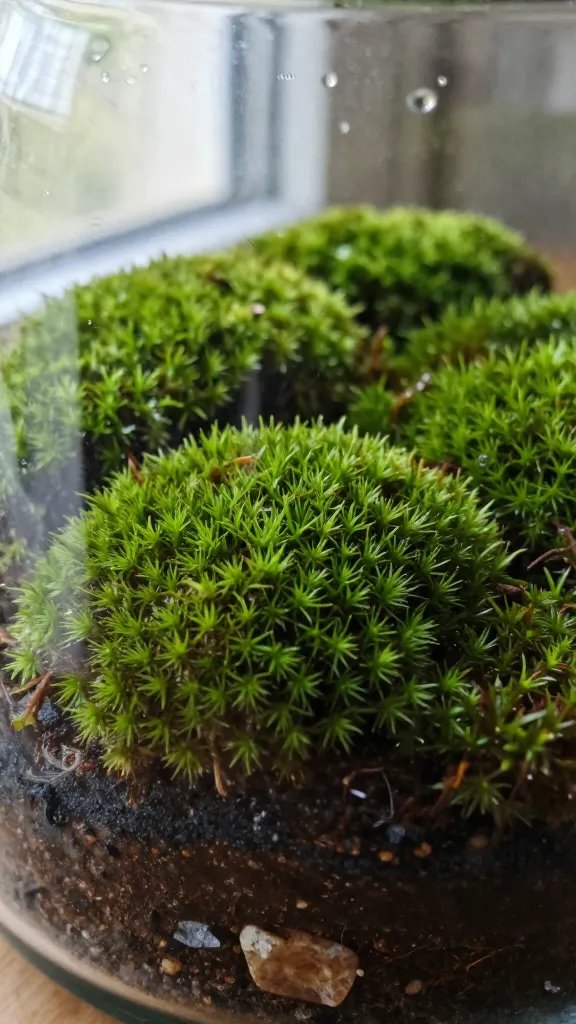
Mood moss forms rounded, velvet cushions that stay plush in sealed jars with steady moisture. It dislikes strong, hot sun through glass but thrives in bright, indirect light with frequent condensation.
Humidity and Light Sweet Spot
- Humidity tolerance: High — enjoys frequent condensation but not standing water on top.
- Light requirement: Medium-low — bright indirect near a window; no direct midday sun.
- Watering need: Light mist every 2–3 weeks in a closed jar; aim to dampen, not drench.
Fit and Care
- Ideal for mounded landscapes and soft hills over drainage layers.
- Press gently onto moist substrate; do not bury the edges.
- Rotate the jar weekly so cushions don’t lean toward the light and flatten.
Signs to Watch For
- Healthy: Dense, rounded pillows that spring back when touched.
- Problem: Flattened, glossy strands signal heat and light stress — move 2–3 feet farther from the window.
Takeaway: Use Mood moss when you want sculpted mounds in a humid, closed jar placed in bright but indirect light.
3. Cushion Moss (Leucobryum glaucum): High Humidity, Moderate Light, Low Fuss
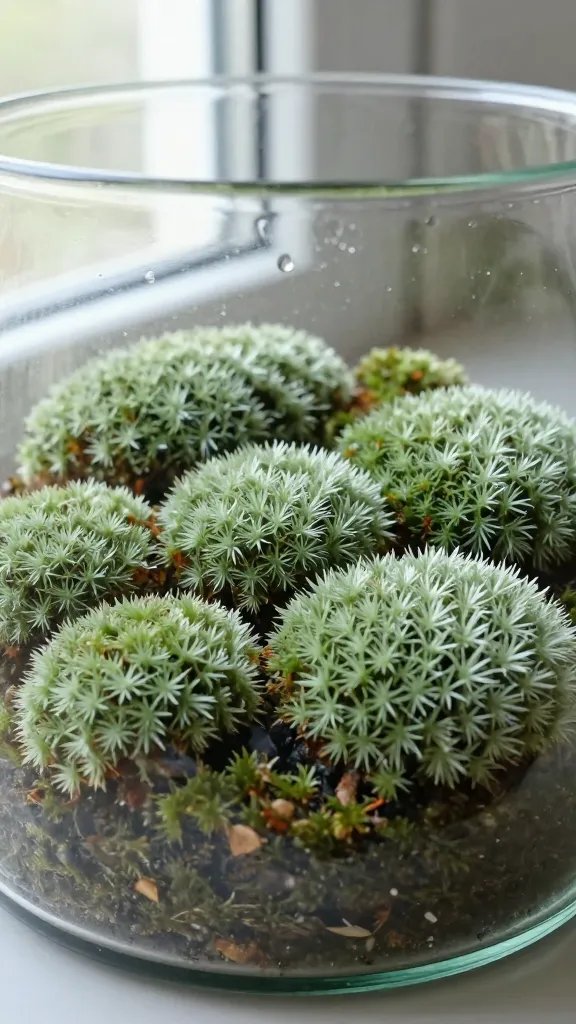
Cushion moss makes tidy domes that handle sealed humidity without melting. It stays compact and pale green, which reflects light and resists overheating better than deeper green species.
Humidity and Light Sweet Spot
- Humidity tolerance: High — excellent for closed jars with daily condensation cycles.
- Light requirement: Medium — bright indirect within 1–2 feet of an east or north window.
- Watering need: Mist lightly every 3–4 weeks; keep the substrate evenly moist.
Placement and Maintenance
- Place on raised hummocks to avoid ponding at the base.
- Pinch off browned tips with clean scissors to keep domes tidy.
- Lift and air for 30–60 minutes monthly if glass stays wet all day.
Signs to Watch For
- Healthy: Firm, springy cushions with a silvery cast when dry, brightening when moist.
- Problem: Edge browning means heat or stale air — increase distance from the window and air out briefly.
Action today: If you want neat, low domes that thrive in a sealed setup, plant Cushion moss on slightly raised spots and maintain bright indirect light.
4. Fern Moss (Thuidium delicatulum): Feathery Carpets for Humid Jars with Brighter Indirect Light
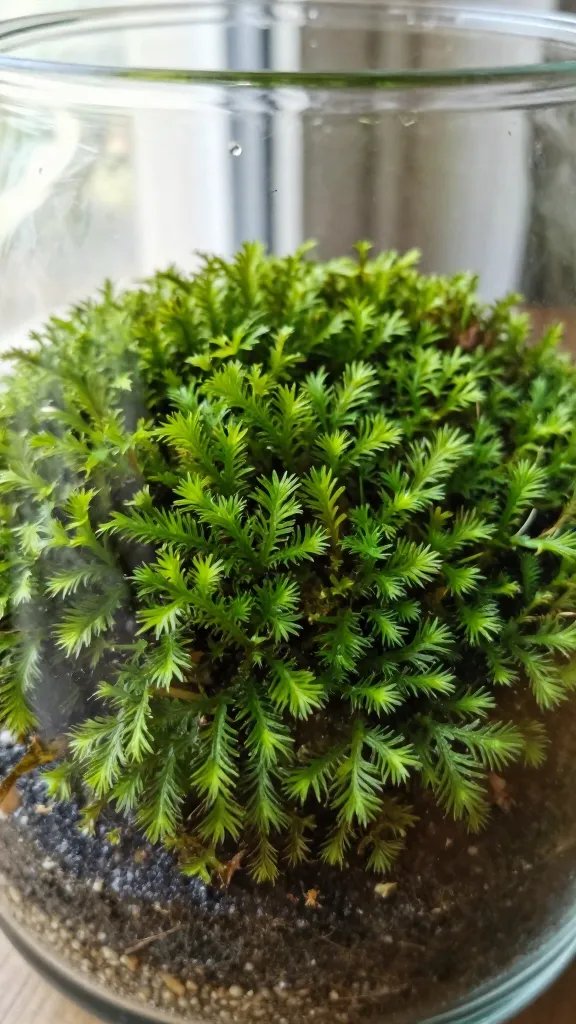
Fern moss creates lacy, forest-floor mats that love humidity but expect more light than cushions. In a dim corner, it thins and goes stringy; in bright, indirect light, it fills gaps quickly.
Humidity and Light Sweet Spot
- Humidity tolerance: Medium-high — likes steady moisture but not water sitting on fronds.
- Light requirement: Medium-high — place within 1 foot of a bright window with a sheer curtain.
- Watering need: Light mist monthly; top up substrate moisture if fronds feel papery.
Installation Tips
- Lay in thin sheets with fronds facing up; overlap edges slightly for a seamless carpet.
- Use tweezers to avoid crushing delicate fronds.
- Pair with a thin layer of leaf litter to reduce algae and highlight texture.
Signs to Watch For
- Healthy: Fine, feathery branching that stays upright and vivid green.
- Problem: Pale, stretched fronds indicate not enough light — move closer to a bright window but keep direct sun off the glass.
Takeaway: Choose Fern moss if your terrarium spot is bright but not sunny, and you want a fast, feathery carpet in high humidity.
5. Sheet Moss (Hypnum cupressiforme / Commercial “Sheet Moss”): Versatile Mats for Moderate Humidity and Bright Indirect Light
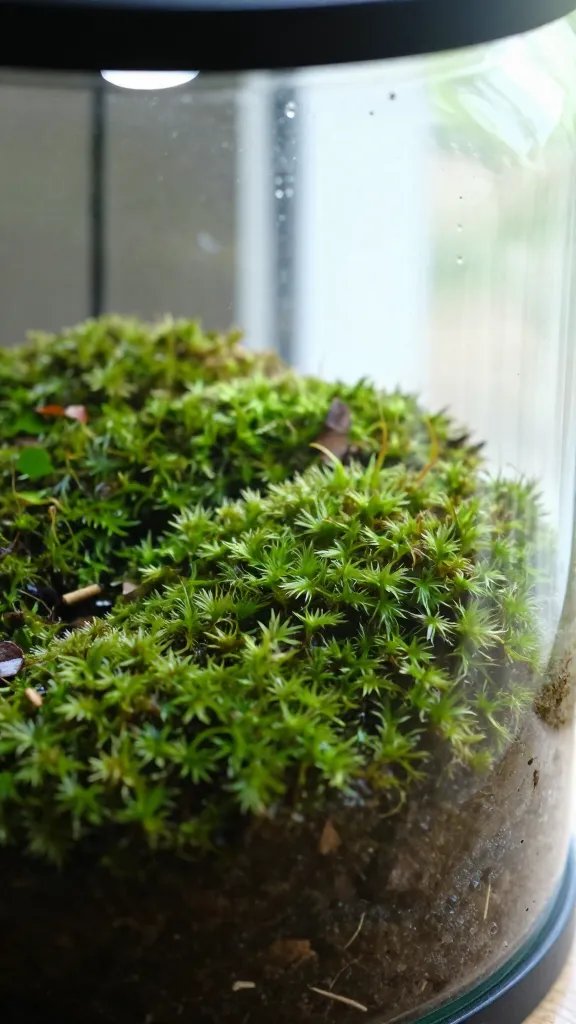
Sheet moss is often sold dried and revived, which makes it forgiving but sometimes slower to perk up. In a closed terrarium, it handles humidity well but needs brighter placement to stay dense and avoid algae.
Humidity and Light Sweet Spot
- Humidity tolerance: Medium — fine with condensation, but avoid constant dripping.
- Light requirement: Medium-high — bright indirect right by a window or under a basic desk lamp 8–10 inches above the lid.
- Watering need: Mist very lightly every 3–4 weeks; keep the base just moist.
How to Use It Well
- Rinse and soak for 10 minutes before laying to rehydrate evenly.
- Press onto moist substrate with your palm for full contact; gaps invite mold.
- Trim edges to fit; avoid piling layers, which trap stale moisture.
Signs to Watch For
- Healthy: Tight, uniform mats with small, neat leaves hugging the surface.
- Problem: Slimy sheen or green film on glass signals too little light — move it closer to a window or add a small lamp for 8 hours daily.
Action today: If your mat looks flat and dull, shift the terrarium right beside a bright window with a sheer curtain and reduce misting to a light spritz monthly.
6. Cushion/Star Moss (Tortula ruralis / Syntrichia ruralis): Low Humidity Tolerance, Needs the Brightest Indirect Light
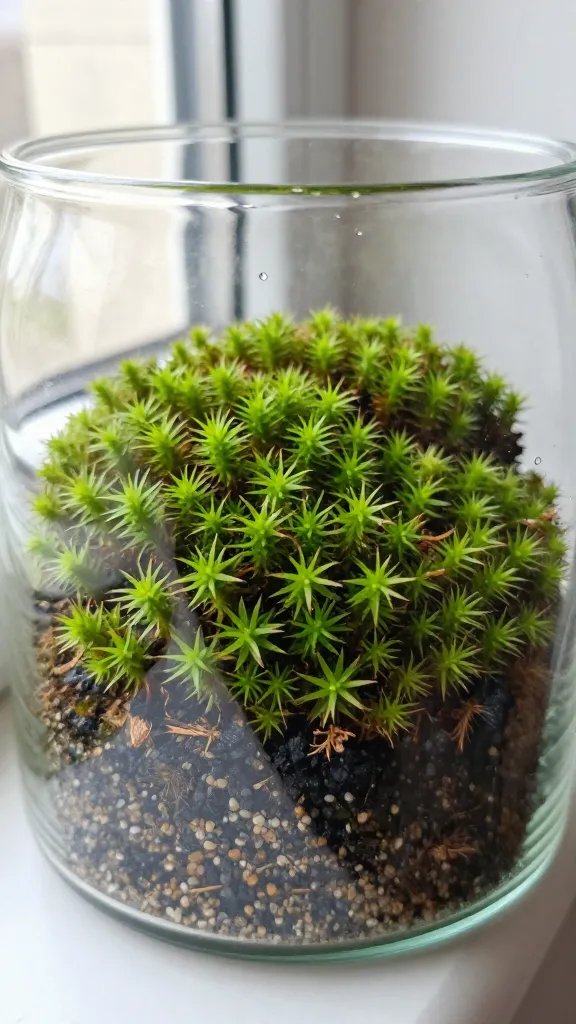
Star moss looks spectacular with spiky rosettes, but it dislikes soggy, closed jars. It prefers intermittent drying and the brightest indirect light, so in sealed setups it risks algae, leggy growth, and rot unless you manage moisture very carefully.
Humidity and Light Sweet Spot
- Humidity tolerance: Low-medium — tolerates brief dampness, not prolonged saturation.
- Light requirement: High — place right at a bright window; give it a sheer curtain to block harsh sun.
- Watering need: Mist sparingly every 4–6 weeks; keep the substrate barely moist.
How to Keep It Happy (If You Insist)
- Use a smaller jar or a lid you can crack daily for 30–60 minutes.
- Raise on a small mound of coarse substrate so water drains away from the rosettes.
- Wipe inside glass monthly to reduce algae from higher light.
Signs to Watch For
- Healthy: Compact, starry rosettes that hold their shape when damp.
- Problem: Floppy, elongated “stars” or mushy centers mean too humid — air out longer and back off watering.
Takeaway: Use Star moss only if you can give strong indirect light and a lid you can vent; otherwise pick Cushion or Mood moss for a similar look with less fuss.
Frequently Asked Questions
How do I know if my closed terrarium has the right humidity for moss?
Check the glass at midday. You want a light mist or small beads on one-third of the walls, not full fog from top to bottom. If the glass is drenched all day, open the lid for 1–2 hours and skip the next misting. If it’s bone dry for a week, add 1–2 tablespoons of water with a spray bottle to the substrate, not directly onto the moss.
What kind of light is “bright indirect” in a home?
Place the terrarium within 1–2 feet of a window where you can comfortably read a book without switching on a lamp during the day. East and north windows are safest; west windows need a sheer curtain. If your room stays dim, use a basic desk lamp with a neutral white bulb and keep it 8–10 inches above the lid for 8 hours a day.
Can I mix different moss species in one closed terrarium?
Yes, but group them by similar needs. Put Sphagnum in wetter zones or lower pockets, and place Cushion or Mood moss on raised, evenly moist mounds. Keep higher-light moss like Fern or Sheet moss closest to the brightest side of the jar. Trim boundaries with scissors so faster growers don’t smother slower ones.
Why does my moss turn brown at the tips in a closed jar?
That’s usually heat or light stress, not dryness. Glass can amplify sun and cook the top layer even when the substrate is wet. Move the terrarium 2–3 feet from the window or hang a sheer curtain, and air out for an hour. Snip off browned tips and resume with lighter, less frequent misting.
Is live Sphagnum safe for all terrarium plants?
Sphagnum stays acidic and very wet, which some ferns and tropicals enjoy but small succulents and sensitive stems won’t. Use it as a dedicated moss feature or as a moisture reservoir below a mesh layer so it doesn’t touch stems directly. Rinse it well before use and avoid fertilizer, which invites algae in closed jars.
Do I need special soil under moss in a closed terrarium?
No. Use a good quality potting mix from the garden centre topped with a thin layer of rinsed decorative sand or fine bark to keep the moss clean. Add a small drainage layer of pebbles at the bottom to catch excess water. Press the moss onto a uniformly moist surface for full contact and better anchoring.
Conclusion
Start with moss that matches your spot, not your wish list: Sphagnum for very wet and dim, Mood or Cushion for high humidity with bright indirect light, and Fern or Sheet when you can offer a brighter window. Set the jar where you can read by daylight, aim for light midday condensation, and adjust from there. Your next step: pick one species from this list, plant a dinner-plate–sized test terrarium, and practice the humidity check every midday for a week.