Viral Guide: 6 Terrarium Accent Materials That Affect Plant Health — Not Just Aesthetics
I used to treat terrarium accents like decor — a pretty pebble here, a splash of sand there. Then I watched a lush moss bowl crash after I sprinkled “harmless” beach shells on top. The wrong accents quietly change moisture, pH, and airflow inside glass, and plants respond fast. In this guide, you’ll learn which six common accent materials actually steer plant health and exactly how to use or avoid them with simple, store‑bought alternatives.
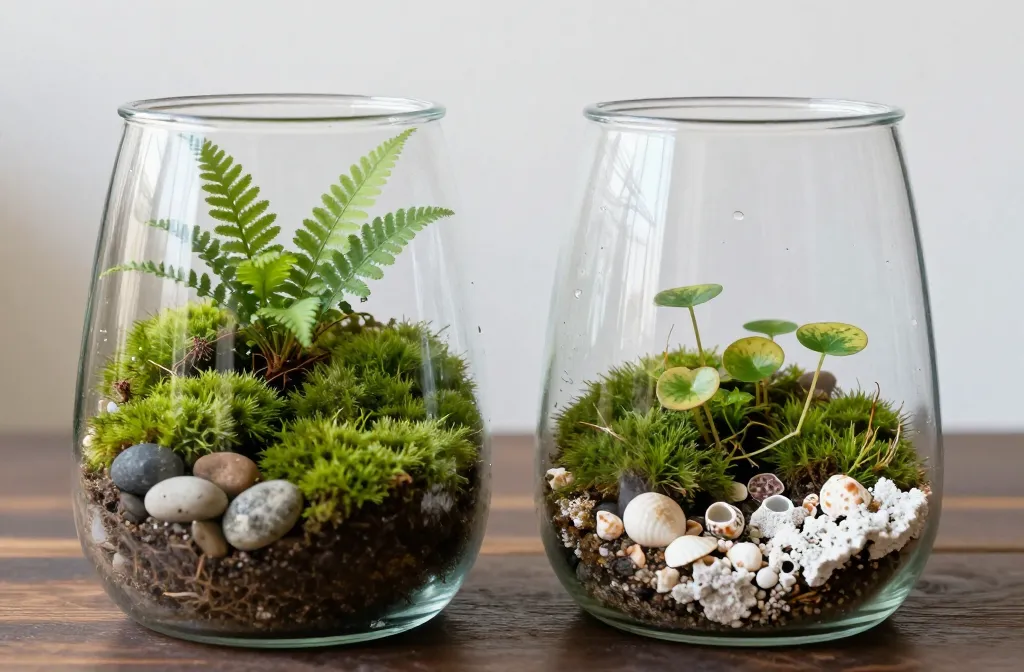
1. Beach Shells and Crushed Coral: Alkalinity Creeps That Burn Acid-Loving Plants
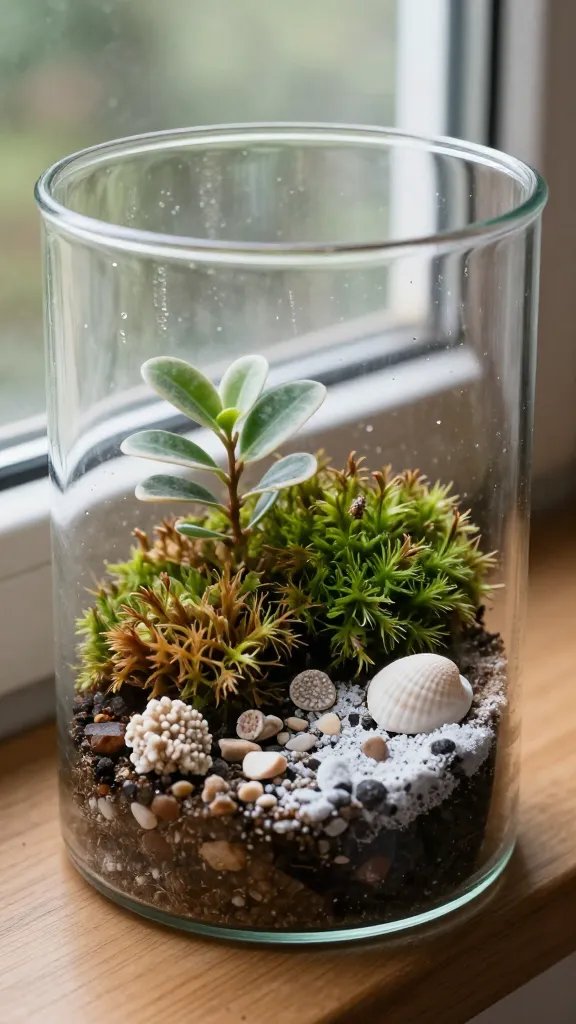
Innocent-looking seashells and coral leach calcium carbonate into moisture, pushing pH upward. In closed or semi-closed terrariums, that shift shows up as stalled growth, pale leaves, and moss that browns from the tips. I’ve watched vibrant moss and fittonia sulk for weeks after a shell top-dress “for coastal vibes.”
Signs to Watch For
- Green cushion moss turning tan at the tips within 2–4 weeks
- Fittonia and ferns losing color intensity and new leaves staying small
- White mineral crust forming where mist beads dry on shells
The chemistry is simple: carbonate buffers acidity, and most terrarium staples prefer mildly acidic conditions. Every misting session dissolves a bit more, keeping the pH too high for healthy nutrient uptake.
What to Use Instead
- Ceramic, glass, or glazed clay accents from a garden centre
- Hardwood chips or cork chunks labeled for reptile or orchid use (inert and moisture safe)
- River-tumbled glass “pebbles” sold as vase fillers
How to Fix It
- Remove shells and coral; replace the top 1–2 cm of substrate if they sat on moist soil
- Mist with clean, low-mineral water for the next two waterings to flush residues
- Reinforce with a thin layer of fresh sphagnum or leaf litter to buffer moisture
Takeaway: Skip shells and coral entirely in planted terrariums — use inert glass or glazed ceramic accents to protect acid-leaning plants and moss.
2. Dyed Sands and Decorative Gravels: Leaching Dyes and Dust That Smother Roots
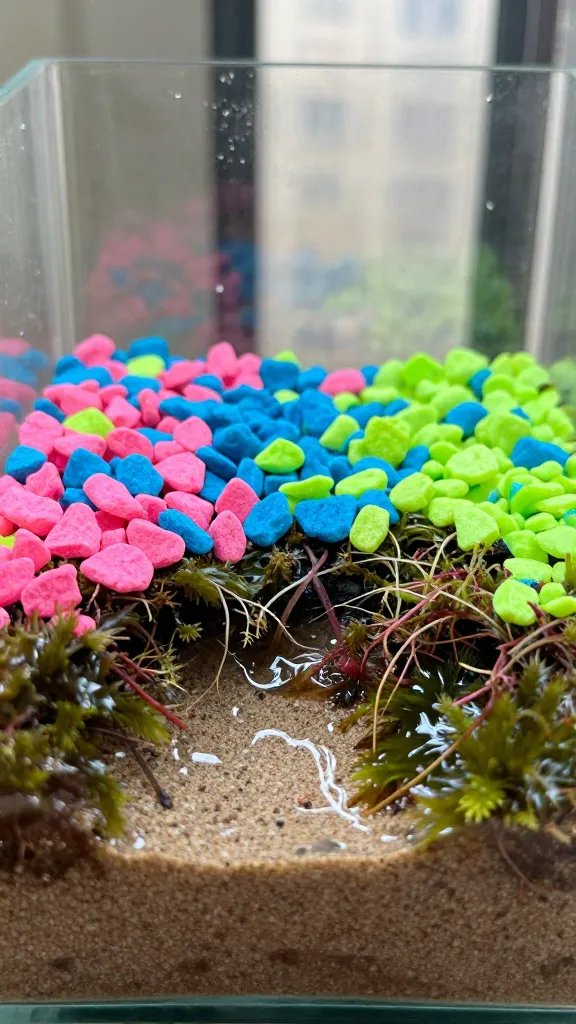
Colored sands and gravels look crisp on day one, then bleed, cloud, or crust as you mist. The fine dust chokes air gaps at the soil surface and traps moisture against stems. I’ve seen dyed neon gravel leave streaks down the glass and a slick film over moss within a week.
Signs to Watch For
- Condensation beads tinted slightly by the gravel color
- Sand forming a hard “cap” that water can’t penetrate evenly
- Algae bloom where dyes and constant dampness meet the light
What to Use Instead
- Natural, undyed aquarium gravel (look for “inert” on the bag)
- Horticultural grit or poultry grit (rinsed before use)
- Fine-grade pumice or perlite hidden beneath a thin natural top-dress
How to Fix It
- Scoop out colored material with a spoon; vacuum loose dust with a hand blower or straw and paper towel
- Rinse replacement gravel in a colander until runoff runs clear
- Apply no more than 5–8 mm thick so air can still exchange at the surface
Action today: Press a fingertip into your top layer — if it feels slick or your finger comes up tinted, remove and replace with rinsed, natural aquarium gravel.
3. Fresh Wood, Pine Cones, and Bark: Tannin Bombs That Feed Mold and Steal Nitrogen
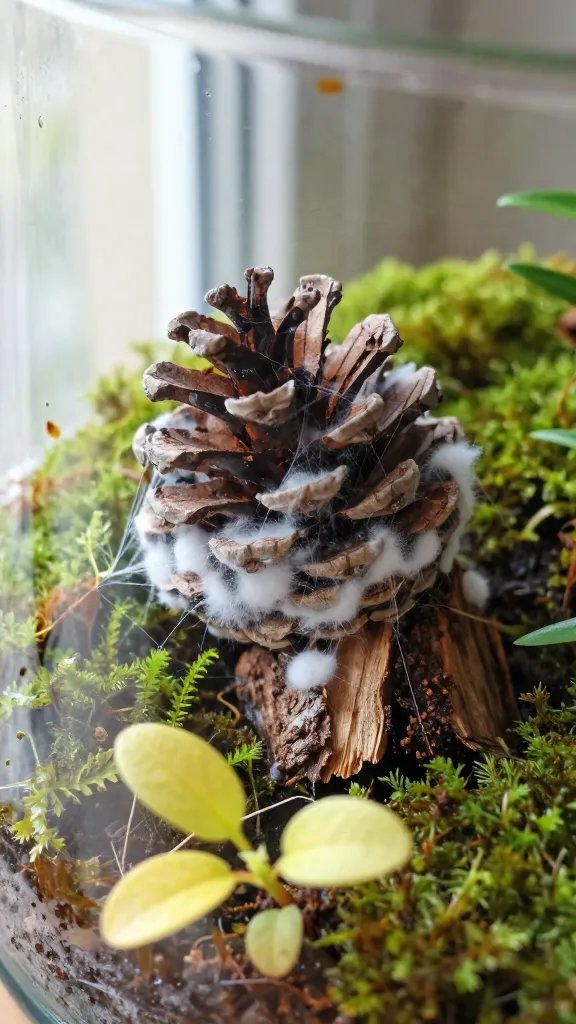
Uncured wood looks charming but dumps tannins and sugars into a humid terrarium. That fuels mold and algae, and the decay process ties up nitrogen that plants need. I once added a pine cone and watched white fuzz colonize everything in under ten days.
Signs to Watch For
- Amber tea-colored runoff on the glass after misting
- White, cottony threads around wood edges within a week
- New leaves yellowing even with regular moisture
What to Use Instead
- Cork bark (sold for reptiles or orchids) — inert and mold-resistant
- Pre-soaked and oven-dried hardwood twigs (not resinous conifers)
- Manzanita or grapevine sold for aquariums (already leached)
How to Prepare Safe Wood at Home
- Soak small hardwood pieces in a bucket of clean water for 24 hours; change water once
- Bake on a foil-lined tray at 95–105°C (200–220°F) for 1 hour to dry and reduce spores
- Cool fully before placing to avoid condensation shocks
How to Fix It
- Remove problem wood; dab visible mold with a paper towel lightly misted with 70% isopropyl alcohol
- Vent the terrarium for 2–3 hours daily for a week to break the mold cycle
- Top-dress with a thin layer of fresh sphagnum to restore a cleaner micro-surface
Takeaway: Use cork or aquarium-safe hardwood accents only; anything “fresh from outside” fuels mold and nutrient lockups indoors.
4. Metal Ornaments and Wire: Rust and Copper That Poison Roots
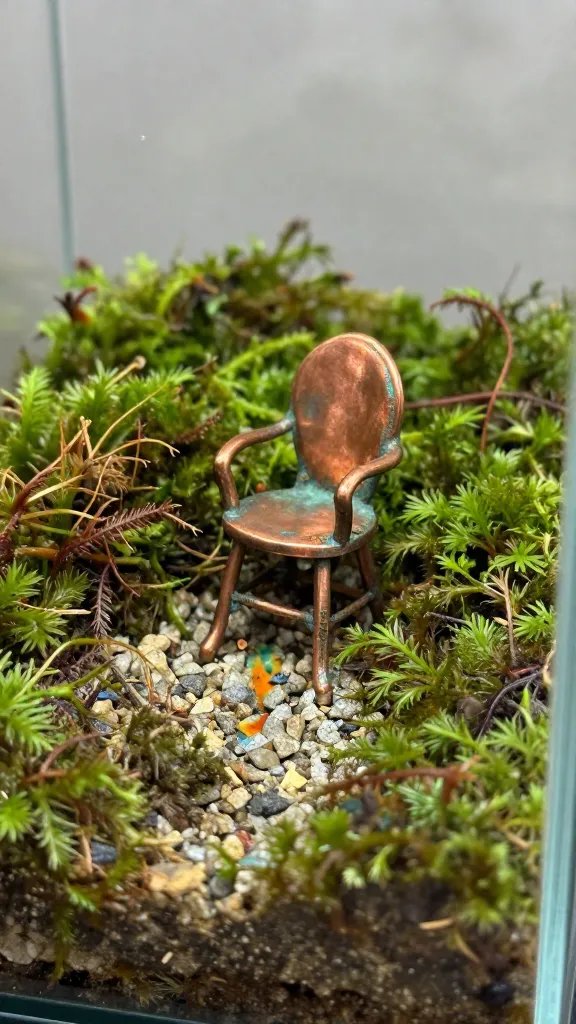
Metal ages beautifully in open air, but in a terrarium it corrodes fast. Rust flakes clog pores, and trace metals — especially copper — are toxic to mosses, liverworts, and many fern rhizoids. I learned this the hard way with a copper fairy chair that turned a moss lawn patchy in two weeks.
Signs to Watch For
- Orange or greenish streaks below a metal piece on the glass or gravel
- Moss receding directly around the ornament while the rest stays healthy
- Fine roots browning at the surface despite adequate moisture
What to Use Instead
- Resin figurines (aquarium-rated) — stable and easy to clean
- Stainless-steel only if fully sealed under a clear, non-toxic spray (indoor-safe sealant)
- Plastic-coated florist wire for tiny supports, ends dipped in clear nail polish
How to Fix It
- Remove the metal item and any visible rust fragments
- Rinse the top layer with a gentle mister and blot runoff with paper towel at the edge
- Replace affected moss or surface roots with fresh pieces after 7 days of monitoring
Action today: If you see any tarnish or orange film near accents, pull the item and replace with aquarium-safe resin decor.
5. Limestone, Marble Chips, and Cement Pieces: Hidden pH Shifters That Stall Growth
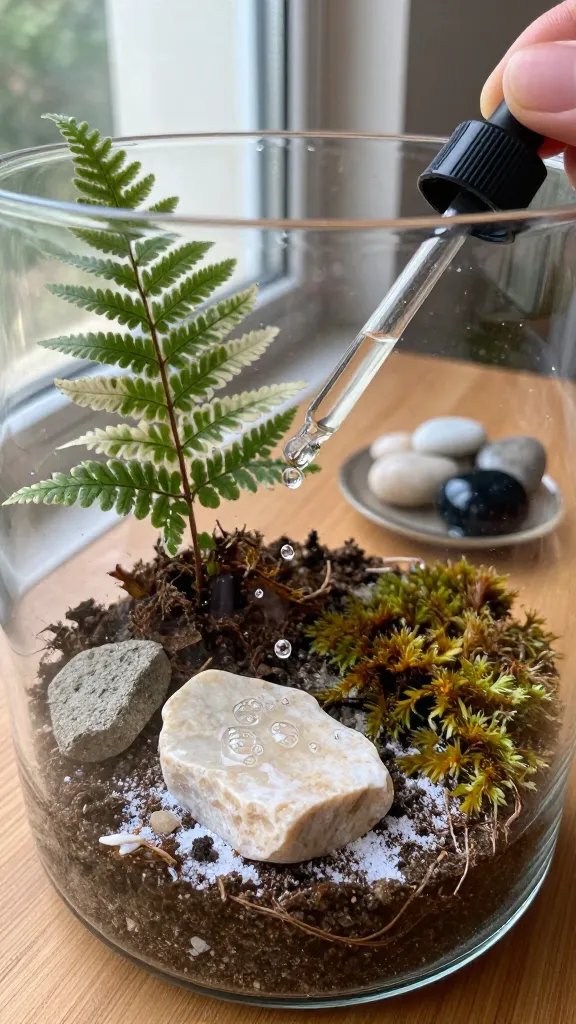
Light-colored stones and cement look clean, but many quietly dissolve in constant humidity. That raises pH and locks out iron, manganese, and other micronutrients, so leaves emerge pale and veined. My worst offender was a salvaged tile shard used as a “path,” which turned a thriving fern pale within a month.
Simple Household Test Before You Place
- Drop a bit of white vinegar on the stone; fizzing means it’s reactive and not terrarium-safe
What to Use Instead
- Inert river stones or polished onyx sold as aquarium rock
- Lava rock (scoria) or black basalt — safe and adds micro-texture
- Slate chips (rinsed) for a flat path that does not alter pH
How to Fix It
- Remove reactive stones and any white crust from the surface
- Swap top 1 cm of substrate where stones sat to reduce alkalinity carryover
- Add a thin slate or basalt “path” instead and monitor new leaf color for 2–3 weeks
Takeaway: Do the vinegar test on any pale stone; if it fizzes, it doesn’t belong in a planted terrarium.
6. Activated Charcoal Misuse: Thick Layers That Dry Roots and Starve Microbes
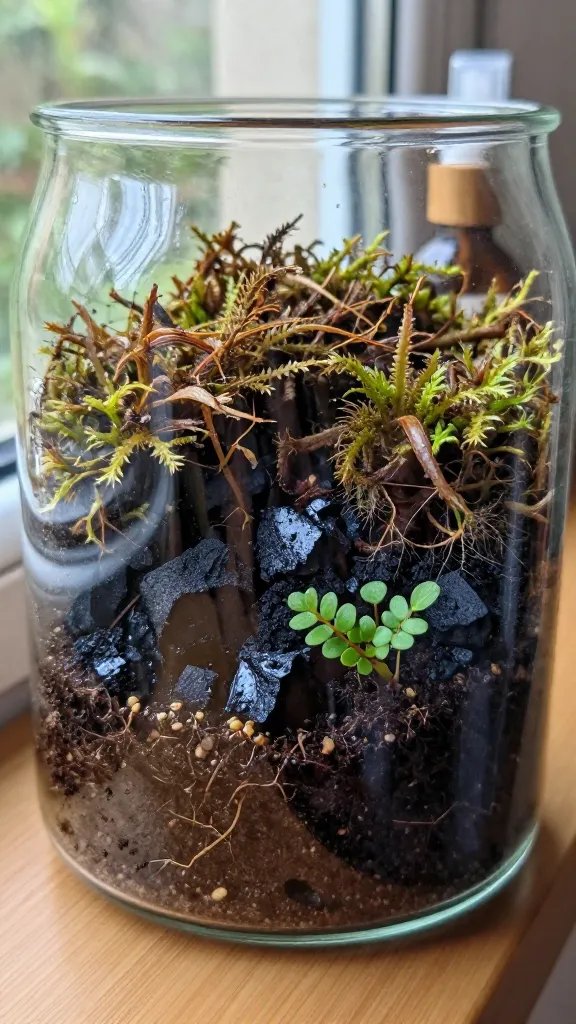
Activated charcoal helps control odors and absorbs impurities — but only as a thin barrier. Pile it thick as a decorative band and it wicks moisture away from roots, dries the surface, and starves the beneficial micro-life that keeps rot at bay. I’ve seen people stack 2–3 cm of charcoal “for freshness” and end up with crispy moss edges.
Signs to Watch For
- Top layer feels dry hours after misting while deeper soil stays wet
- Moss edges crisping, while soil plants look fine for a while
- Stubborn, sour smell despite lots of charcoal present
Right Way to Use It
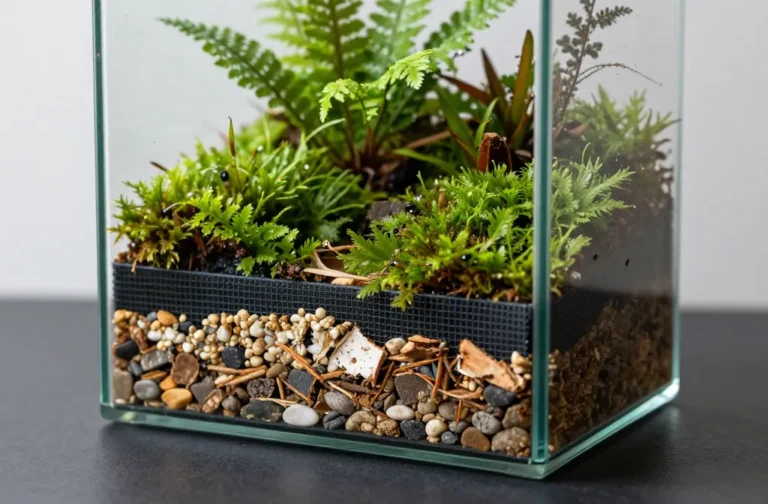
- Sprinkle a thin dusting — about 2–3 mm — above the drainage layer or mix a small handful into the substrate for a 20–25 cm bowl
- Hide decorative charcoal chunks off the main root zone, tucked as side accents, not as a continuous cap
- Use horticultural charcoal, not barbecue briquettes (which contain binders)
How to Fix It
- Scoop off excess charcoal from the root zone
- Blend a little fresh potting mix or sphagnum into the exposed area to restore moisture holding
- Mist, then close the terrarium and check humidity on the glass at midday the next day
Action today: If your charcoal layer is thicker than a coin is tall, thin it to a light sprinkle and rehydrate the surface.
Frequently Asked Questions
Are aquarium decorations automatically safe for terrariums?
Most aquarium-rated resin pieces and rocks are inert and safe because they don’t leach chemicals in water. Still, rinse everything in warm water first to remove factory dust. Avoid anything labeled limestone, coral, or aragonite. If a rock is new to you, do the quick vinegar test before it enters the glass.
Can I collect stones and wood from a local park for free?
You can, but you take on pests, pathogens, and chemistry risks. Only choose hardwood and avoid conifers; then soak 24 hours and bake at low heat to sanitize. For stones, scrub and vinegar-test them — fizz means no-go. If you’re unsure, buy small bags of aquarium-safe rock from a pet or garden centre.
How thick should decorative gravel be on top of soil?
Keep it thin: 5–8 mm is plenty. A thicker cap traps moisture against stems and blocks air exchange, which invites rot and algae. Rinse gravel in a colander until the water runs clear before placing. Leave a small ring of exposed soil around delicate stems to prevent collar rot.
Will a small amount of metal really harm a terrarium?
Yes, in a humid, closed space metals corrode quickly and concentrate in tiny soil volumes. Copper and brass are especially harsh on mosses and ferns. If you love the look, seal metal with an indoor-safe clear coat and elevate it on a resin base so it doesn’t contact moist soil. Check monthly for any discoloration or flakes.
Do I need activated charcoal at all?
It’s helpful but not mandatory. A clean build with a drainage layer, quality potting mix, and good initial moisture usually runs odor-free. If you use charcoal, keep it to a light sprinkle or a small mix-in, not a thick layer. Replace or refresh it when you rebuild or after a major cleanup.
How can I tell if a stone is changing my terrarium’s pH without a meter?
Watch plant responses first: paling new growth, stubborn algae, or moss decline near the stone. Do a simple vinegar fizz test on a similar spare piece or a hidden corner. If you suspect a problem, remove the stone and swap the top centimeter of soil nearby. Over the next 2–3 weeks, new leaves should regain normal color.
Conclusion
Accents set the mood, but in a glass ecosystem they also set the chemistry. Choose inert, rinsed, and terrarium- or aquarium-rated materials, and you’ll see steadier growth and fewer mysteries to solve. Start by auditing your current build with the vinegar test and a quick mold check, then swap one risky accent for a safe stand-in today.