Stop the Swamp: 5 Signs Your Terrarium Needs to Be Restarted — Not Just Adjusted
I’ve restarted more terrariums than I care to admit, and I learned the hard way when “tweaks” won’t save a failing setup. If your glass garden looks tired, swampy, or stuck, you’re not alone — most home terrariums hit a point where small fixes stop working. In this guide, I’ll show you the five clear signs that tell you to tear down and rebuild, plus exactly what to do next with tools you already own. Knowing when to restart protects your plants and saves you weeks of frustration.
1. Persistent Mold and Fungus Gnats: A Microbiome That’s Past Saving
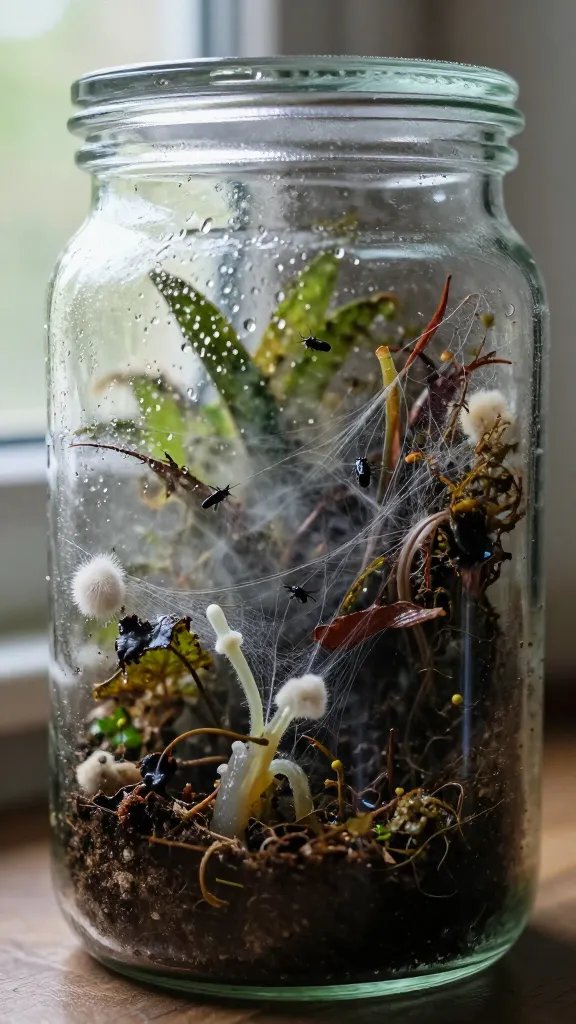
When mold returns within days of wiping it away and gnats greet you every time you lift the lid, the system’s biology has tipped. You can wipe, air out, and trap bugs for weeks, but once the substrate is saturated with decaying matter, the problem rebounds fast.
Signs to Watch For
- White fuzz or grey webbing on soil and leaf litter within 48-72 hours of cleaning
- Small black flies (fungus gnats) rising every time you tap the glass
- Mushy stems at the base of plants and a sour, compost-like smell when you open the lid
Why Adjustments Fail Here
- The substrate holds excess nutrients and dead roots that constantly feed mold and gnats.
- Eggs and fungal spores are embedded throughout the soil layers, not just on the surface.
- Short airing sessions only dry the top few millimeters; deeper layers stay wet and anaerobic.
How to Fix It (Full Restart)
- Evacuate plants you want to keep. Rinse roots under lukewarm tap water and trim any brown, mushy tissue.
- Discard all substrate and decorative organics (wood, leaf litter) that look mold-stained. Do not reuse.
- Wash the container with hot soapy water, then rinse with hot tap water and dry completely.
- Rebuild with fresh layers: a thin drainage layer of aquarium gravel, a mesh barrier (cut from a basic window screen), and a fresh, good-quality potting mix from the garden centre mixed 1:1 with rinsed aquarium sand for airflow.
- Replant sparsely, and water lightly with a spray bottle — 10–15 sprays total for a small jar.
Action today: Tap the glass and look for a mini swarm of gnats plus recurring mold within 72 hours of cleaning — if both are present, plan a full teardown this weekend.
2. Sour, Swampy Odor and Slimy Condensation: Anaerobic Rot Has Taken Over
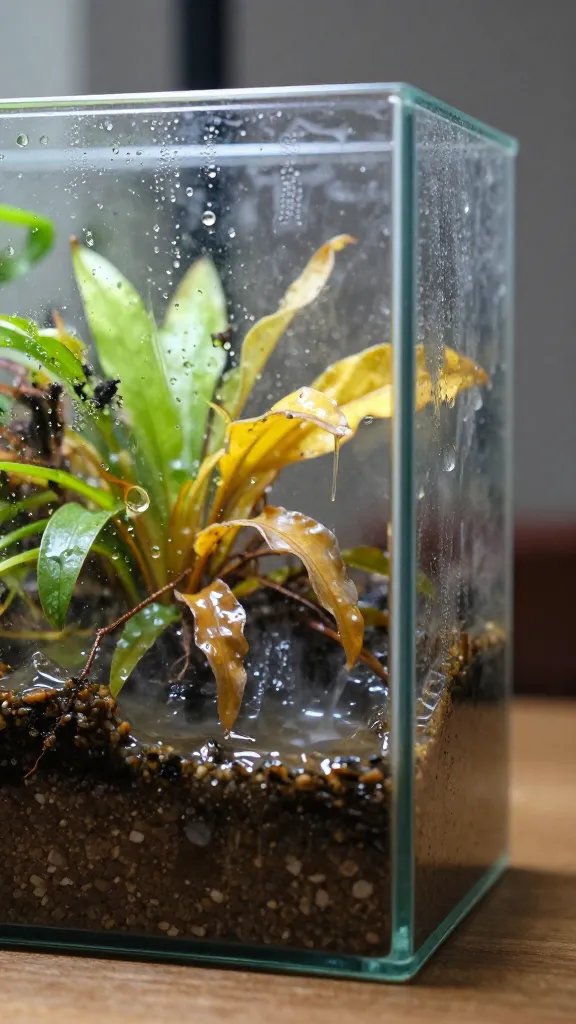
A healthy terrarium smells like fresh earth. If you catch a whiff of rotten eggs or a sour, swampy note, the lower layers have gone anaerobic. Once that slime forms on the glass and gravel, no amount of “airing out” restores oxygen to the compacted, waterlogged pockets.
Signs to Watch For
- Condensation that looks greasy or streaky rather than clear droplets
- A strong, sour smell when you crack the lid
- Yellowing leaves that feel limp, even though the substrate is wet
Common Causes
- No drainage layer or clogged base packed with fine soil
- Too much water added early on, leading to constant pooling at the bottom
- Dense decorative stones or sand on top trapping humidity under the surface
Restart Protocol
- Remove plants and trim all yellow, translucent growth. Keep only firm, green tissue.
- Dump the contents. Rinse the container with hot water. Let it air-dry fully.
- Rebuild with a clear drainage plan: 1–2 cm of aquarium gravel, a piece of window screen, then a lighter, airy mix (potting mix + orchid bark or coconut coir). Avoid pure compost or topsoil.
- Water sparingly on day one — aim for evenly damp, not wet. Leave the lid ajar for the first 24 hours to release trapped moisture.
Takeaway: If your terrarium smells off and the glass looks slimy, you’re smelling rot — not routine humidity. Restart with a real drainage barrier and lighter substrate.
3. Plants Stunted for Months: Exhausted Substrate and Wrong Plant Mix
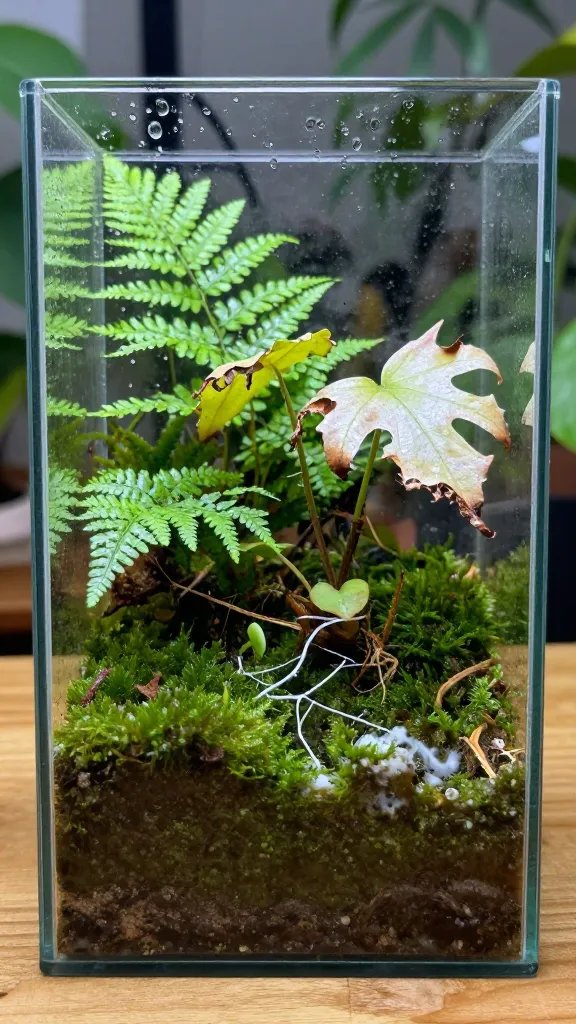
If growth has stalled for 6–8 weeks and leaves keep shrinking or crisping, the issue isn’t “patience.” The substrate often runs out of accessible nutrients or stays at the wrong moisture for the plants you chose. Topping up with fertilizer in a closed terrarium usually fuels algae and mold, not healthy growth.
Signs to Watch For
- No new leaves in 6–8 weeks during spring or summer
- Leaves emerge smaller each time, with pale, washed-out color
- Delicate plants thriving while one or two species constantly decline — a sign of mismatch
What’s Going On
- Old substrate collapses and compacts, squeezing out air spaces that roots need.
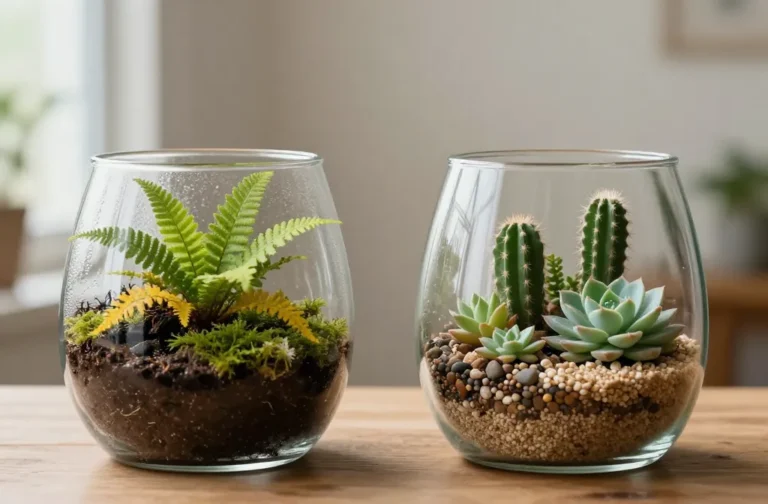
- Incompatible plants (e.g., succulents with humidity-loving ferns) force moisture compromises that suit none of them.
- Fertilizer in a closed jar creates salt buildup and algae blooms.
Rebuild With Compatible Choices
- Choose plants that like the same humidity: for closed terrariums, think fittonia, ferns (small varieties), peperomia, pilea, and moss. For open ones, use succulents and cacti only.
- Use fresh potting mix blended with rinsed aquarium sand or fine orchid bark for structure.
- Place the terrarium in bright indirect light near a window — bright room light, not direct midday sun through glass.
Simple Planting Plan
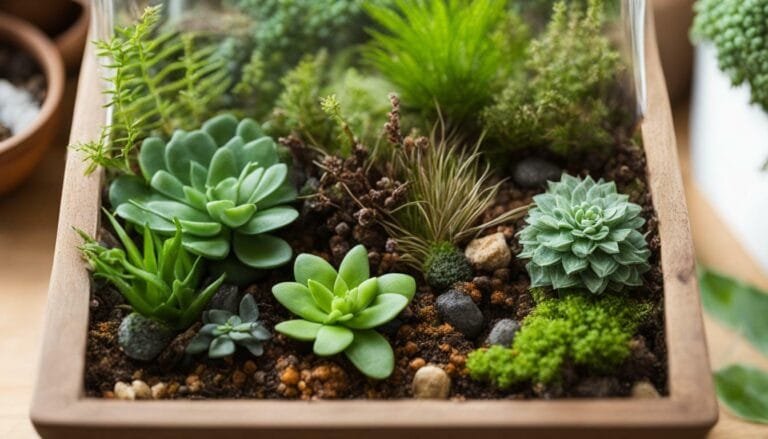
- Layer gravel, mesh, then substrate to a depth of 5–8 cm so roots have room.
- Plant fewer specimens than you think — leave gaps for air and future growth.
- Top-dress lightly with small stones or live moss only after the first week, once you see the moisture level stabilize.
Action today: If nothing has grown for two months, stop adding fertilizer and plan a fresh build with plants that share the same moisture needs.
4. Algae Film and Constant Glass Fog: Light and Water Are Locked in a Bad Cycle
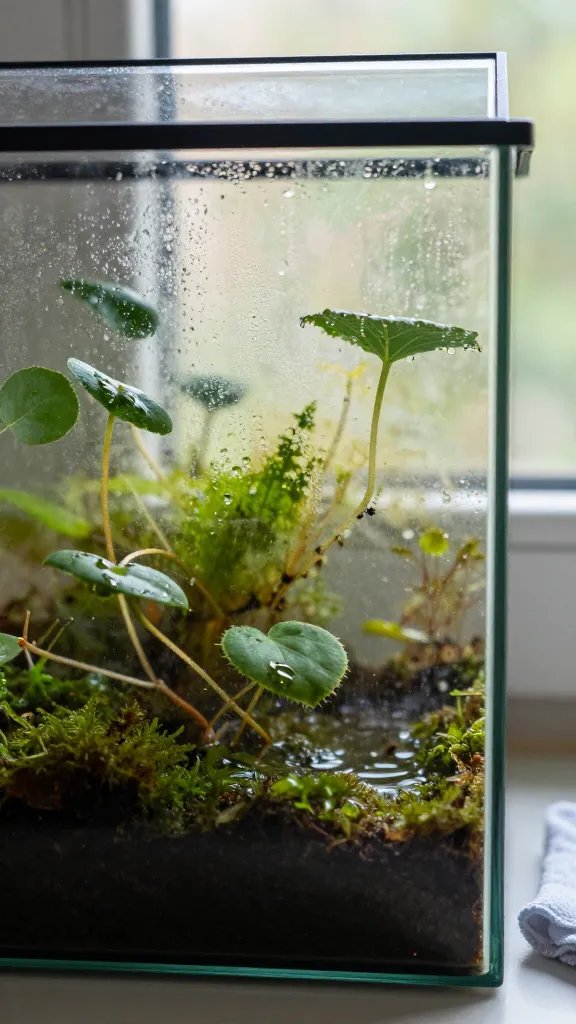
A thin green film on the glass and heavy, all-day fog tell you the water/light balance is broken. Wiping the glass works for a day or two, then the algae return because excess moisture and light feed them nonstop.
Signs to Watch For
- Greenish film or brownish haze forming again within a week of cleaning
- Condensation covering more than half the glass at midday, even after airing out
- Plants stretching toward the glass, leaves pressed and flattened
Why Restart Instead of Adjust
- Overwatered substrate stores weeks’ worth of excess moisture that keeps cycling.
- A poor layout crams foliage against the glass, trapping wet air and shading airflow pockets.
- The original hardscape forces plants too close to light sources, baking one side while the other languishes.
Clean-Slate Setup That Stays Clear
- Rebuild with slightly less substrate and fewer plants to reduce trapped humidity.
- Elevate foliage away from glass by using a small rock mound or driftwood to create layers.
- Place the terrarium one step back from the window so it gets bright indirect light rather than hot sunbeams.
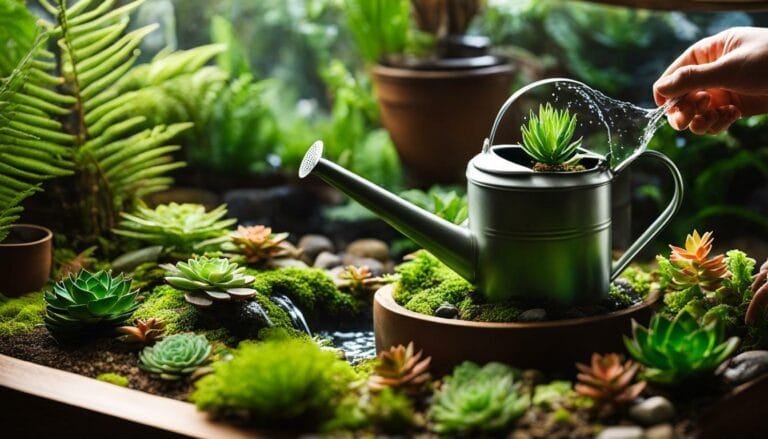
- At watering, use a mister to add a small amount — think 1–2 tablespoons total for a small jar — and recheck condensation the next day.
Takeaway: If algae and fog return within a week of cleaning, rebuild with more space, less water, and indirect light placement.
5. Irreversible Pest or Disease Damage: When Quarantine Isn’t Enough
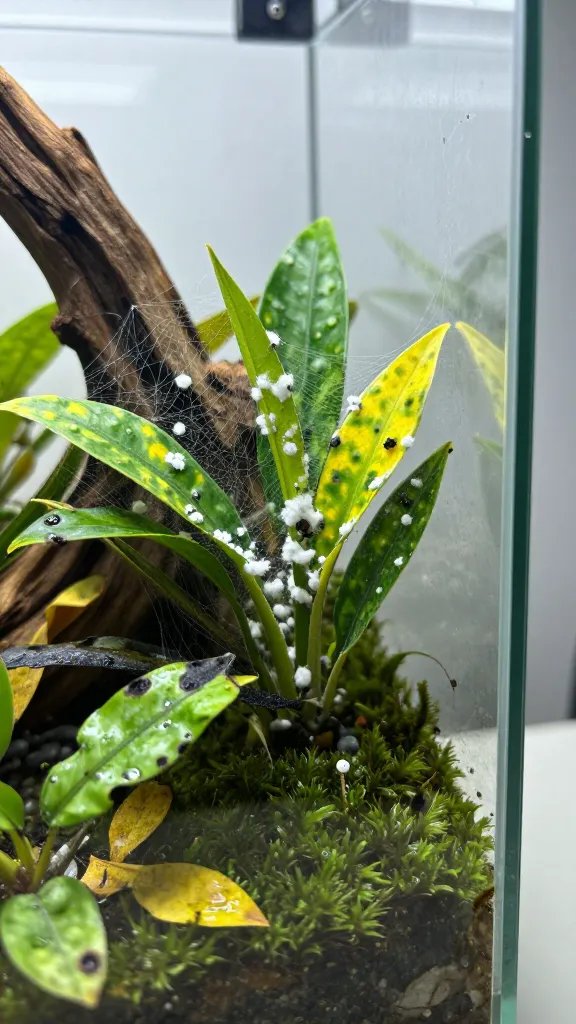
Some infestations and diseases entrench themselves in every layer of a terrarium. If you’ve hand-picked pests, used sticky traps, and pruned damaged foliage, yet you still see fresh damage in a week, the ecosystem is contaminated.
Signs to Watch For
- Webbing and stippled leaves from spider mites that return after wiping
- Cottony clumps at leaf joints from mealybugs that keep reappearing
- Blackened leaf edges spreading despite trimming and improved airflow
Why a Restart Works
- Pests lay eggs in leaf litter, wood, and soil crevices that survive light treatments.
- Closed humidity shelters pests and fungal spores, letting them rebound fast.
- Oil or soap sprays inside a closed jar linger and stress plants further.
Restart With Prevention Built In
- Discard all substrate and any porous decor (wood, bark) that can hide eggs.
- Wash the glass and any non-porous stones with hot soapy water, rinse, and dry.
- Before replanting, inspect new plants under bright light. Wipe leaves with a damp paper towel, especially the undersides.
- Keep the new build slightly drier for the first two weeks and open daily for 10 minutes to discourage pests and mildew.
Action today: If pests or black rot return within a week of cleaning and pruning, commit to a full teardown and replant with inspected, cleaned specimens.
Frequently Asked Questions
How do I know if I’m overwatering a closed terrarium?
Check the glass at midday. If more than half the surface is fogged every day and the substrate looks shiny-wet, you’ve added too much. For a small jar, limit additions to 1–2 tablespoons at a time with a spray bottle, then wait 48 hours and reassess condensation before adding more.
Can I reuse old terrarium soil if I bake or microwave it?
For home setups, I don’t. Old soil carries salts, dead roots, and pest eggs that survive uneven heating. Fresh, good-quality potting mix from the garden centre, lightened with rinsed aquarium sand or fine orchid bark, gives you a reliable, clean start without mystery problems.
What’s the best light placement for a closed terrarium?
Set it in bright indirect light near a window, where you can comfortably read without turning on a lamp at midday. Avoid direct sunbeams that hit the glass for more than 30 minutes, which overheat and cause chronic fogging. If using a desk lamp, keep it 20–30 cm above and off to the side, not pressed against the glass.
Do I need charcoal or fancy drainage materials?
No. A simple drainage layer of aquarium gravel topped with a piece of window screen works well. Fresh substrate above that is more important than charcoal for most home builds. If odor control worries you, mix a small handful of horticultural charcoal into the substrate rather than relying on a pure charcoal layer.
How often should I open a closed terrarium?
In the first two weeks after a restart, open it for 10–15 minutes every few days to fine-tune humidity. Once stable, you shouldn’t need to open it more than once every week or two. If condensation covers more than half the glass at midday, crack the lid for an hour to reset the moisture level.
What plants are safest for a long-lasting closed terrarium?
Choose humidity lovers that stay small: fittonia, mini ferns, small peperomia, pilea, and cushion-style moss. Avoid succulents and cacti in closed jars — they prefer dry air and will rot. Plant fewer specimens than you think you need so airflow and growth have space.
Conclusion
When you see these five signs, a clean restart isn’t a setback — it’s a shortcut to a thriving, low-maintenance terrarium. Strip it down, rebuild with simpler layers and compatible plants, and place it in steady bright indirect light. Your next step: schedule one hour this weekend for the teardown, and set a two-week check-in to confirm stable condensation and new growth.