How to Transition a Terrarium Outdoors for Summer — Light Acclimation and Pest Risk Done Right
I put my first terrarium outside on a sunny April weekend and cooked a patch of moss by lunchtime. I’ve since moved dozens of terrariums outdoors for summer without losing a leaf, but only after I treated them like shade-grown seedlings, not décor. In this guide I’ll show you exactly how to harden your terrarium to outdoor light and manage the sudden jump in pests. Do this right and you’ll get faster growth, richer color, and zero scorch or infestations.
Why Outdoor Light Shocks Terrarium Plants
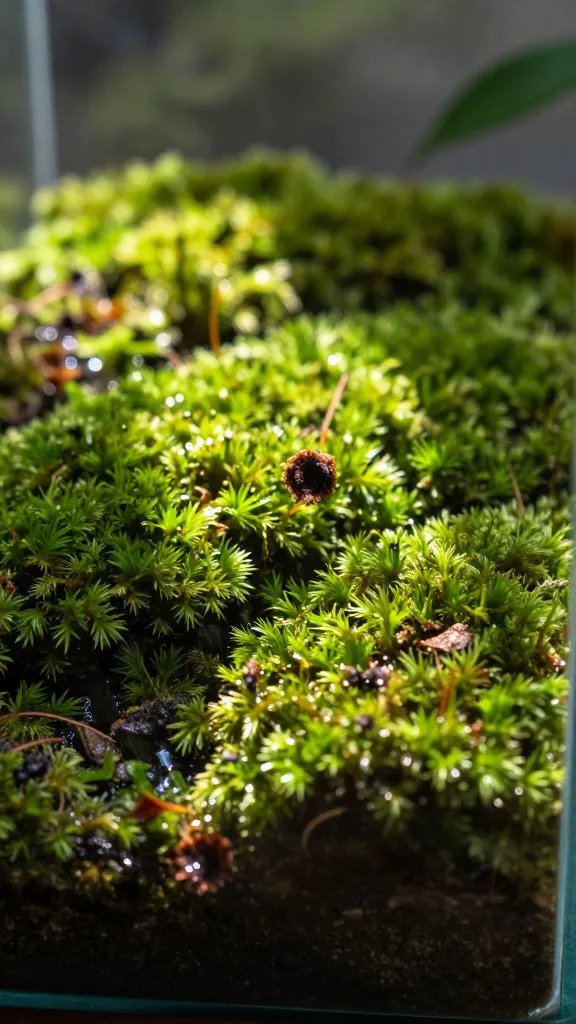
Indoor light stays gentle and predictable; outdoor light hits harder, even in the shade. Glass also acts like a lens, concentrating sun and turning a pleasant morning beam into a leaf-scorching spotlight.
Terrarium plants grow leaves adapted to low, steady light. When those leaves meet midday sun, the cells collapse and bleach within hours. I treat all terrariums as full shade only outside unless I’ve acclimated them slowly.
Action today: Pick a fully shaded outdoor spot that stays bright but never receives direct sun at any hour — under a porch, north side of a building, or beneath a dense tree canopy.
The 10-Day Light Acclimation Plan
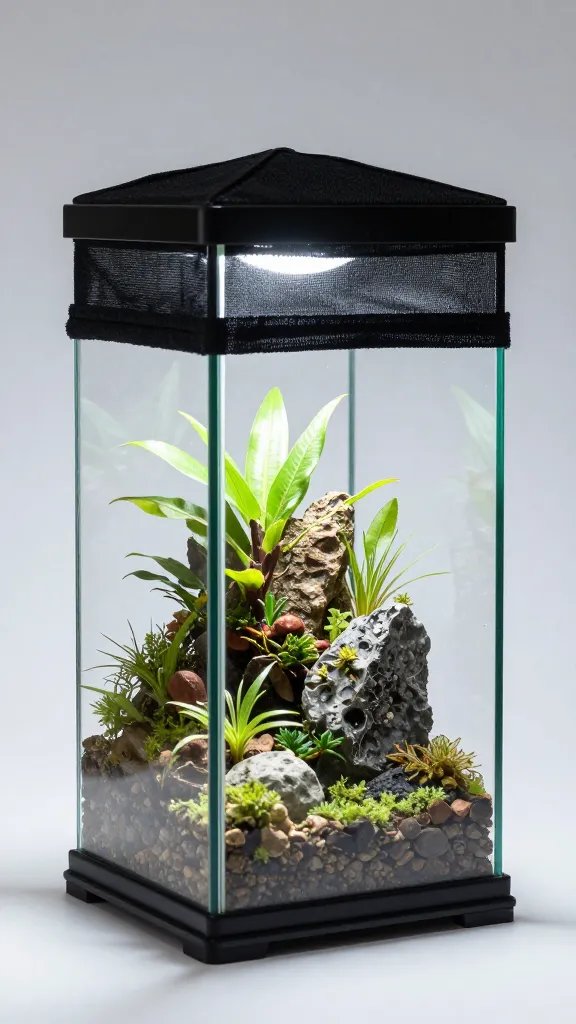
I use a simple schedule that works for closed and open terrariums. The rule: increase exposure to brighter conditions, not direct sun, in small steps and watch the leaves, not the calendar.
Step-by-Step Schedule
- Days 1–2: Place outdoors in deep shade all day. Keep the lid on closed terrariums. For open ones, use a light mesh or window screen over the top to soften ambient light.
- Days 3–4: Move to brighter shade where you can comfortably read a book without squinting, still no direct sun. Keep 30–60 cm back from any edge where shafts of sun might sneak in.
- Days 5–6: Morning dapple (sun flickering through leaves) for 30–60 minutes is acceptable for tough species like Pilea or Peperomia, but never for selaginella, mosses, or fittonia. If in doubt, skip dapple.
- Days 7–8: Maintain bright shade all day. Crack the lid on closed terrariums for 30 minutes at midday to equalize humidity and temperature, then re-seal.
- Days 9–10: Final position for summer: bright open shade with strong ambient light, zero direct sun from 9 a.m. to 6 p.m.
Warning Signs of Light Stress
- Bleached patches that turn tan or white in 24 hours — that’s scorch, move back to deeper shade immediately.
- Curling or crisp edges by late morning — too hot; increase airflow and shade.
- Glass fogging heavily for hours — the interior is overheating; vent briefly in shade.
Action today: Tape a sheet of window screen or sheer white fabric over the terrarium for the first 4–5 days outdoors to soften light while you pick the final spot.
Managing Heat and Humidity in a Glass Container
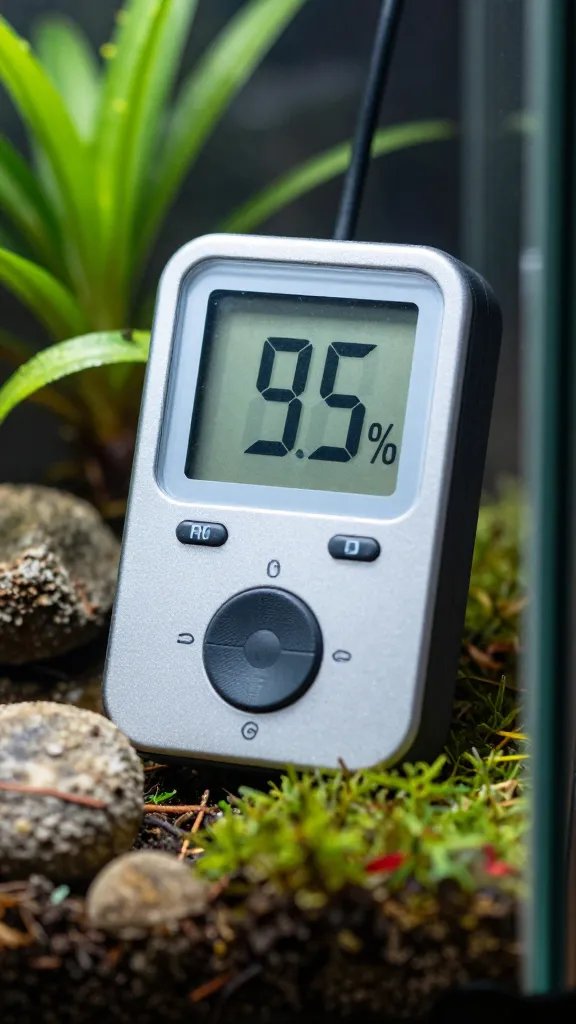
Outdoor air swings more in a day than indoor air does in a week. A sealed terrarium can hit greenhouse temperatures quickly, even in shade, if there’s no breeze.
I check temperature the simple way: I touch the glass. Warm glass means the interior is several degrees hotter than the air. If the glass feels hot, I move it immediately. I never leave a terrarium on dark stone or metal that absorbs heat.
Simple Cooling and Venting Tricks
- Raise the base: Sit the terrarium on wooden slats or a trivet so air can move underneath.
- Midday crack: For closed builds, offset the lid by 2–3 mm during the hottest hour, then re-seal. Do not remove the lid fully or you’ll crash the humidity balance.
- Water timing: Water in the evening so evaporation cools overnight rather than steaming at noon.
Action today: Slide a coaster under one side of the terrarium base to tilt it 2–3 degrees — condensation will run to one corner instead of pooling under delicate plants.
Pest Pressure Jumps Outdoors — Here’s Your Defense
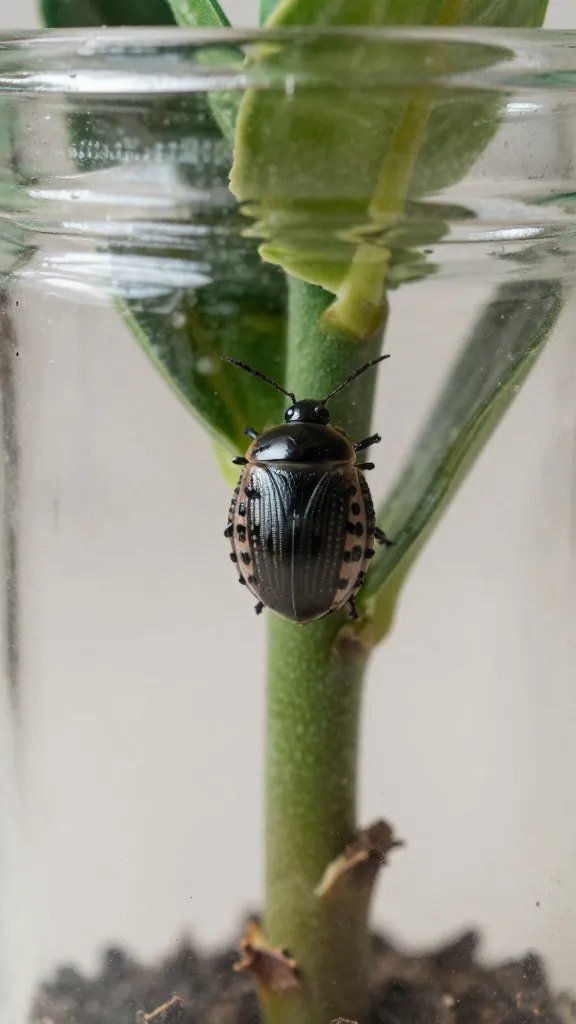
Outdoor air brings spider mites, aphids, fungus gnats, and slugs. A terrarium is a buffet under glass if you don’t screen and inspect.
I start with a 48-hour quarantine outdoors but away from other plants. I inspect morning and evening with a flashlight held at an angle to catch webbing, honeydew shine, or moving specks.
Prevention Checklist Before Moving Outside
- Rinse leaves with a gentle shower indoors to dislodge hitchhikers.
- Top-dress soil with a 1 cm layer of clean decorative gravel to deter fungus gnats.
- Copper tape ring on the base or shelf blocks slugs and snails.
- Sticky cards (yellow) placed near, not inside, alert you to winged pests.
Fast, Terrarium-Safe Treatments
- Spider mites: Wipe leaves with a microfiber cloth dampened with water plus a drop of plain dish soap per 500 ml. Repeat every 3 days for 2 weeks.
- Aphids: Use a hand sprayer with water and physically wash them off. Follow with a ready-to-use neem oil or horticultural soap applied sparingly, then vent in shade for 1 hour.
- Fungus gnats: Let the top layer of substrate dry slightly, then water with a Bacillus thuringiensis israelensis (BTI) solution per label once weekly for 3 weeks.
Action today: Install a 2–3 cm-wide band of copper tape on the stand or shelf under your terrarium to stop slugs before they start.
Watering and Condensation Control Outdoors
Outdoor air movement increases evaporation, but you still water terrariums far less than pots. I aim for light, even moisture — never soggy — and I watch the glass, not the calendar.
For closed terrariums, I want light morning misting on one-third of the glass that clears by afternoon. Constant heavy fog means too wet or too warm. For open terrariums, I water when the top 1–2 cm of substrate feels barely damp to the touch, then stop.
Simple Moisture Adjustments
- Too much condensation: Remove the lid for 30–60 minutes in shade, blot any standing water with paper towel, and reduce watering by 25% next time.
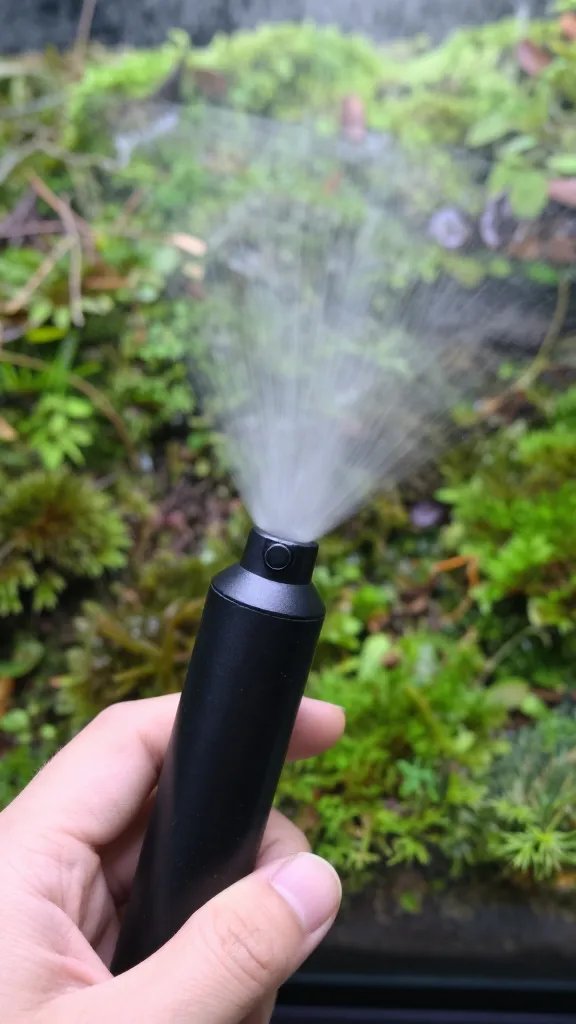
- Too little condensation: Mist the planting, not the glass, with 10–20 sprays and recheck the next morning.
- Salt buildup: If you see white crust, flush gently with clean, room-temperature tap water that tastes clean, then drain any excess from hardscape pockets.
Action today: Do the midday glass check: if more than half the glass stays fogged after lunch, vent in shade for 30 minutes and reduce the next watering.
Placement That Works All Summer
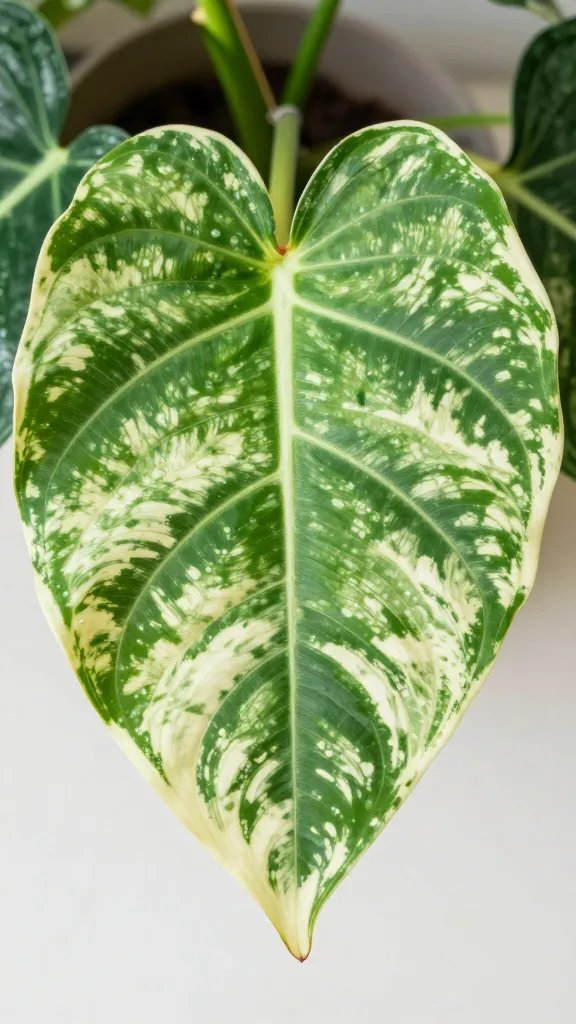
I treat the terrarium like a shade fern. Best spots: north-facing porch, under a table on a covered balcony, or beneath a dense tree with layered foliage. I avoid railings and ledges that catch sudden sun angles.
Wind matters too. Constant wind wicks moisture through any lid gap. I use a windbreak — a chair back, a planter, or a short lattice — to calm the air around the glass without blocking all light.
Action today: Take a photo of the intended spot at 9 a.m., noon, and 3 p.m. If you see any sun on the surface in those photos, choose a deeper-shade location.
Species That Tolerate Outdoor Shade Best
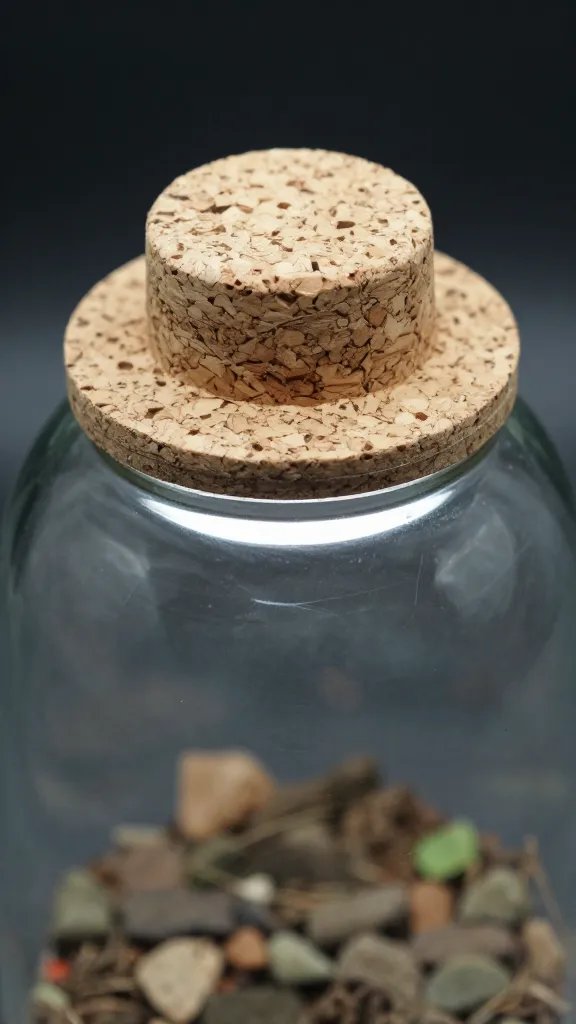
Not every terrarium plant enjoys outdoor life. I rotate forgiving species outdoors and keep the prima donnas inside.
Reliable Outdoor-Shade Candidates
- Pilea depressa, Pilea involucrata — tough leaves, handle brighter shade.
- Peperomia obtusifolia, Peperomia caperata — waxy foliage resists brief heat spikes.
- Ficus pumila ‘Quercifolia’ — creeps without melting in bright shade.
- Small ferns like Nephrolepis ‘Duffii’ — thrive if kept evenly moist.
- Mosses — only in constant shade with cool airflow.
- Fittonia — fine outside in deep shade, but never any sun.
Action today: If your terrarium is heavy on moss and fittonia, stick to the deepest shade zone and skip any dappled light step.
Frequently Asked Questions
Can I put a terrarium in direct morning sun for an hour?
No. Glass magnifies even soft morning sun and creates hot spots that scorch leaves in minutes. Keep all direct sun off the terrarium unless you’ve tested a hardy plant separately and monitored temperature by touch. If you want color without risk, use bright open shade and reflective surfaces nearby to bounce light without heat.
Should I remove the lid all summer?
For closed terrariums, keep the lid on to preserve humidity, but vent briefly during hot midday periods in shade. Open terrariums can stay open, but shield them from wind to avoid excessive drying. If algae appears on glass, wipe with a damp microfiber cloth and reduce watering by a quarter.
How do I keep mosquitoes or gnats out?
Don’t leave standing water on hardscape or in saucers. Add a 1 cm top layer of clean gravel and use BTI once weekly for three weeks if you see gnats. Keep nearby trays dry and place yellow sticky cards close by to monitor flying adults.
What if a heatwave hits while I’m away?
Move the terrarium to the coolest indoor room before you leave. If it must stay outside, place it on the ground under dense shade, double-layer a window screen over it, and pre-water in the evening so it’s evenly moist, not wet. Ask a neighbor to do a midday vent-in-shade for 30 minutes on the hottest days.
Why are my leaves turning pale even in shade?
Pale leaves point to too-bright conditions or nutrient depletion. First, move to deeper shade and see if new growth comes in richer green. If still pale, apply a half-strength, balanced liquid fertilizer once, then wait 3–4 weeks before considering another light feed.
Do I need to repot before moving outdoors?
Only if you see roots coiling on the glass or the substrate has slumped severely. Repot 2–3 weeks before the outdoor move so plants recover indoors first. Use a good quality potting mix with added fine orchid bark or perlite for structure, then resume the acclimation plan.
Conclusion
Moving a terrarium outdoors for summer pays off when you treat light and pests with respect and precision. Set the spot, run the 10-day acclimation, and keep a tight inspection routine for the first two weeks. If you’re ready to go deeper, plan your shade map today with those 9 a.m., noon, and 3 p.m. photos — that single step makes your whole summer effortless.