Unlock 5 Practical Uses for a Terrarium Beyond Decoration — Propagation, Overwintering and Plant Recovery
I started using terrariums because my windowsills were full and my cuttings kept drying out. The first time I tucked a wilting fern into a glass jar, it bounced back in a week. If you garden in an apartment or a busy home, a terrarium is more than a pretty dome — it’s controlled humidity, stable temperature, and pest quarantine in one. I’ll show you five practical ways to use a terrarium to grow more plants, keep them alive through winter, and rescue the ones that look doomed.
1. Humidity-Locked Propagation for Soft Cuttings
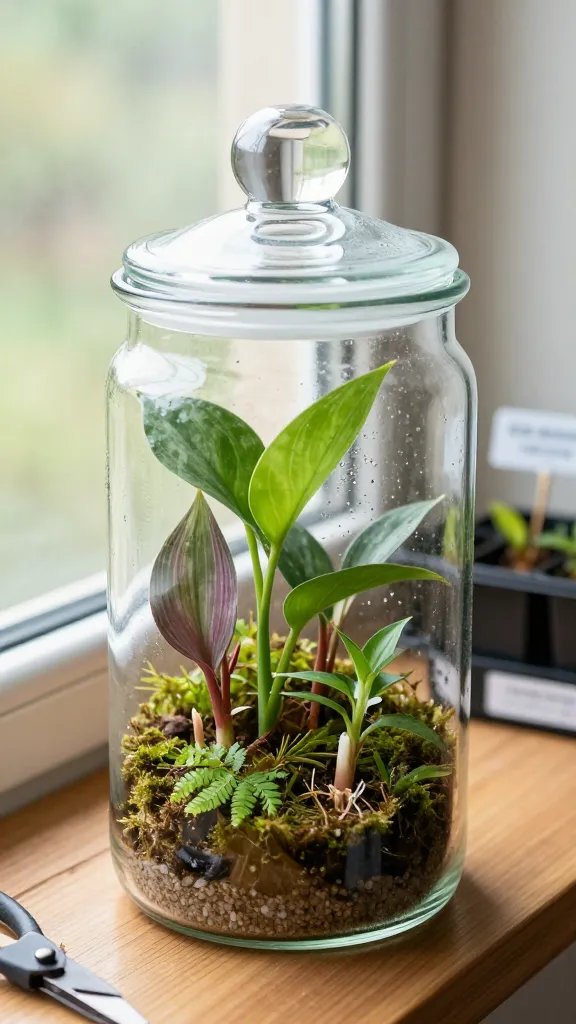
Cuttings fail when their leaves lose water faster than new roots can form. Dry indoor air and central heating accelerate that loss, so stems shrivel before they root. A terrarium traps moisture around the cutting, keeping leaves plump and buying time for roots to develop.
Best Candidates
- Pothos, Philodendron, Tradescantia, Peperomia, Fittonia, Ferns, and most tropicals with soft stems
- Tiny divisions of mosses and Selaginella
How to Set It Up
- Wash a clear glass jar or lidded container with dish soap. Rinse and dry.
- Add 2–3 cm of rinsed aquarium gravel or pebbles from the garden centre for drainage. Lay a coffee filter or piece of mesh over the pebbles to keep soil out.
- Fill with 4–6 cm of a good quality potting mix lightened with a handful of perlite. Moisten until it clumps when squeezed but does not drip.
- Prepare cuttings with one clean node under the surface and 1–2 leaves above. Remove any large leaves by half to reduce moisture loss.
- Space cuttings so leaves don’t touch the glass. Mist once, close the lid, and place near bright indirect light — close to a bright window but not in hot sun.
Signs to Watch For
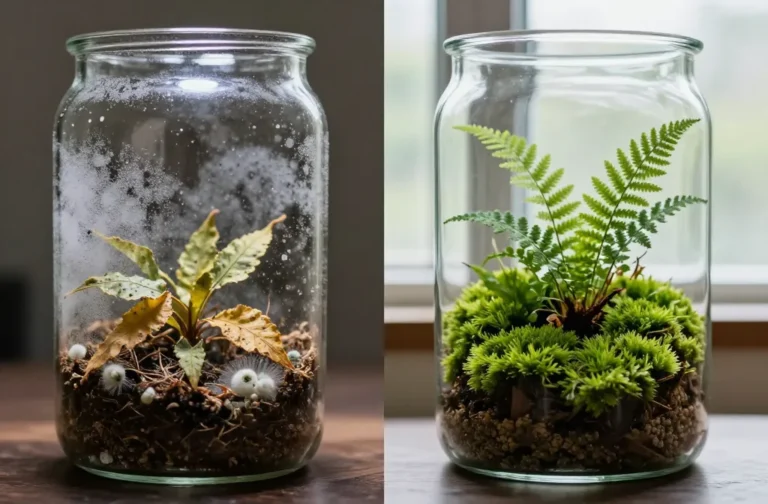
- Light fog on the glass each morning = good humidity
- Heavy water running down at midday = too wet; open the lid for 1–2 hours
- White fuzz on stems or soil = stagnant air; crack the lid 5 mm for a day
Takeaway: Prep a clean jar, add pebbles, a coffee filter, and moist mix, then place 3–5 soft cuttings under a closed lid by a bright window — you’ll see roots in 2–4 weeks with almost zero losses.
2. Overwintering Tender Herbs and Tropicals Without a Greenhouse
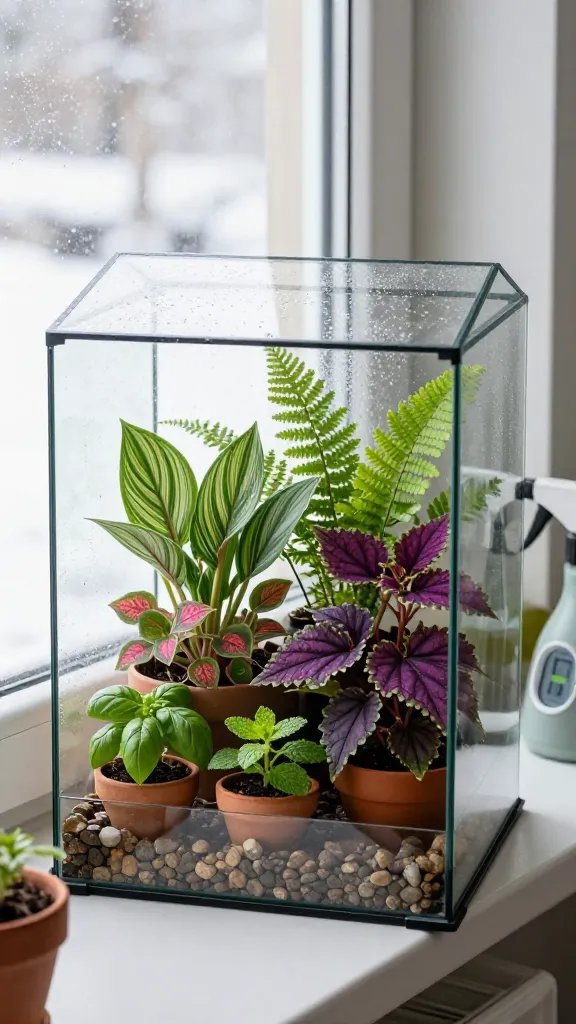
Cold drafts and dry heat turn tender plants crispy by January. Leaves brown, spider mites explode, and watering becomes a guessing game. A terrarium cushions temperature swings and locks in moisture so overwintering becomes maintenance, not triage.
Plants That Overwinter Well
- Calatheas, Fittonia, Ferns, Oxalis triangularis (as foliage, not bulbs), small Begonias, and cut-back Coleus
- Herb sprigs for kitchen use: small basil or mint plants pruned to fit, not woody shrubs
Setup and Routine
- Use a container tall enough to keep leaves off the glass. Wipe the inside dry to reduce mold.
- Repot into fresh potting mix so you don’t import gnats. Water until the soil feels evenly damp, then drain well before placing in the terrarium.
- Place 30–60 cm from a bright window. Avoid direct midday sun on glass in winter to prevent leaf scorch.
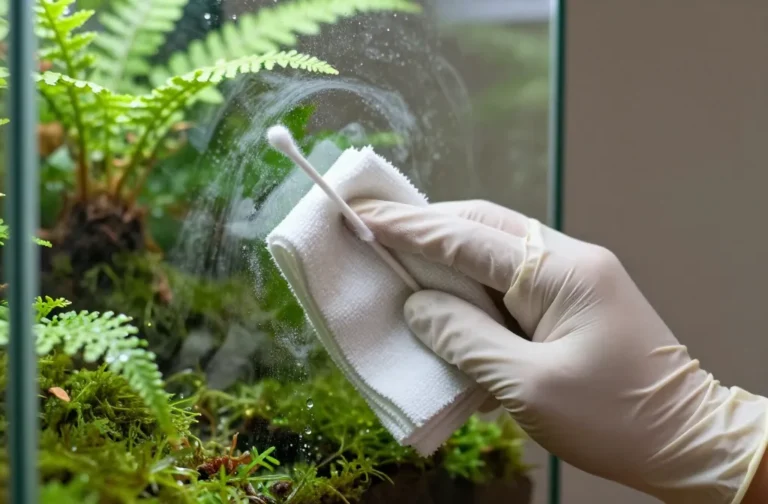
- Open the lid for 30 minutes twice a week for air exchange. Wipe off any standing condensation with a paper towel.
Common Problems
- Leggy growth: Move closer to the window or rotate the container every 3–4 days.
- Mold on soil: Scoop off the top 1 cm and replace with fresh mix; reduce moisture.
- Yellowing: You overwatered. Crack the lid for a day and wait a week before watering again.
Action today: Move your fussy winter sulker (a fern or calathea) into a lidded glass container with fresh mix, set it near a bright window, and schedule lid-off “air days” every Tuesday and Friday.
3. Quarantine and Recovery for Pest-Stressed Houseplants
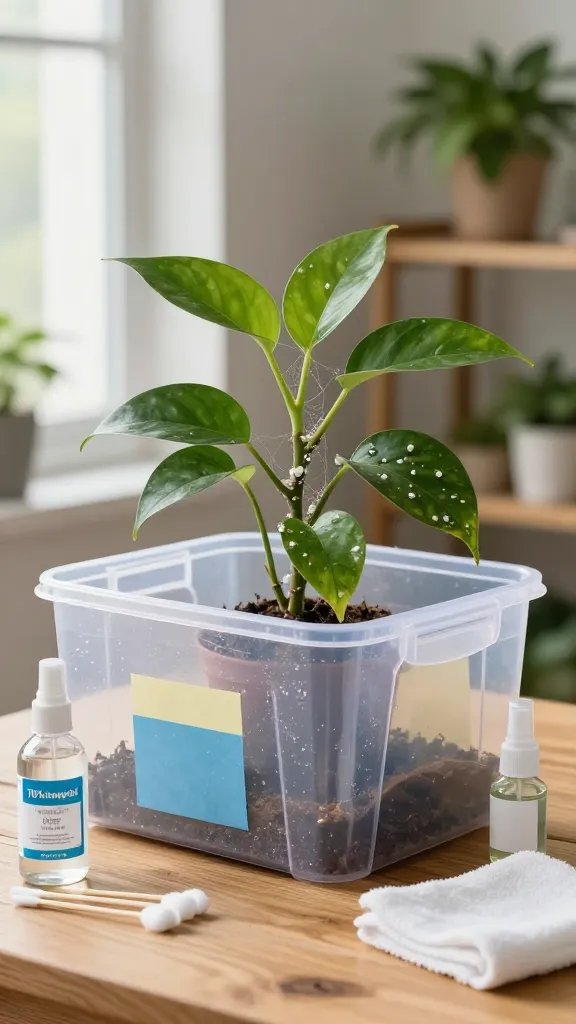
Pests spread faster than you notice them. One mealybug on a shelf becomes a dozen plants crawling with cottony fluff. A terrarium functions as a quarantine room that limits spread, raises humidity to stress spider mites, and gives you a controlled space for treatment.
What to Use Instead of Specialty Gear
- A clear storage bin with a loose-fitting lid
- Isopropyl alcohol and cotton swabs for mealybugs and scale
- Neem oil or a ready-to-use insecticidal soap from the garden centre
- Sticky traps to monitor gnats outside the bin
Step-by-Step Quarantine
- Trim off heavily infested leaves and discard in the trash, not compost.
- Wipe visible pests with alcohol-dipped swabs. Spray foliage (top and underside) with insecticidal soap until it glistens.
- Place the pot in the bin on a dry rack or upturned saucer so water doesn’t pool around it.
- Leave the lid slightly ajar to prevent stale air, and keep the bin near bright indirect light.
- Repeat the spray on days 4 and 8. Inspect daily with a flashlight.
Signals You’re Winning
- No new webbing after 5–7 days = spider mites under control
- No new white fluff for 10 days = mealybugs suppressed
- New firm growth tip appearing = recovery underway
Takeaway: Contain the problem — move any suspect plant into a clear bin, clean it, spray it, and keep it isolated for two weeks while you monitor and re-treat on a set schedule.
4. High-Humidity ICU for Wilted or Transplanted Plants
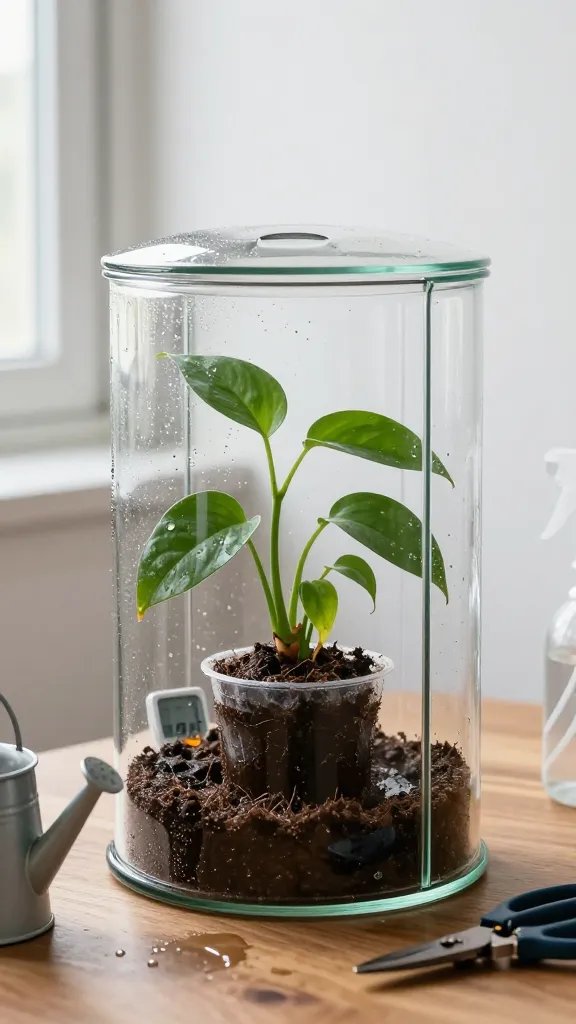
After repotting or a missed watering, some plants collapse and never perk up in normal room air. Leaves curl, stems droop, and every watering feels like guessing. A terrarium acts like an ICU by cutting water loss through leaves so roots can rehydrate and heal.
When to Use It
- Transplant shock after upsizing a pot
- Root-pruned rescues from overwatering
- Heat stress or a plant left dry too long
How to Set Up a 72-Hour Recovery
- Water the plant thoroughly until excess drains. Let it sit for 10 minutes and pour off any saucer water.
- Trim one or two largest leaves by half to reduce leaf area if the plant is severely wilted.
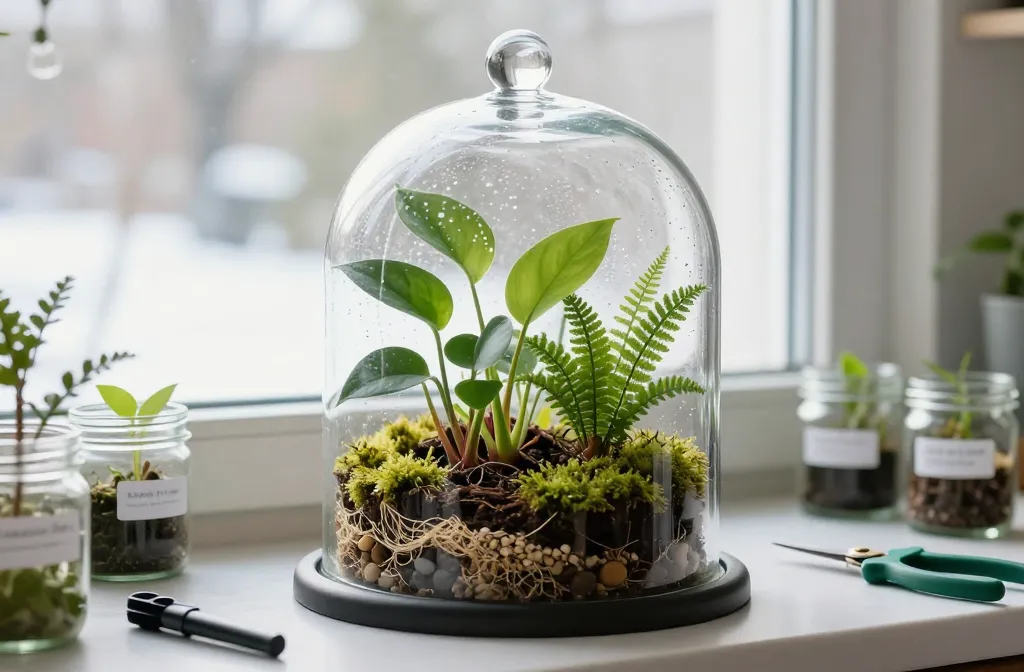
- Place the plant inside a clear container or under a large glass cloche. Keep leaves from touching the glass.
- Provide bright, indirect light and keep the container shaded from direct sun.
- Open for 15 minutes morning and evening to refresh air for three days.
What You Should See
- Leaf firmness returning within 24–48 hours
- Condensation in the mornings, light to none by evening
- No new yellowing — if yellowing spreads, roots were damaged; extend ICU another 2–3 days
Action today: For any drooping plant you just repotted, put it under a clear cover by a bright window for the next three days — short, scheduled venting prevents mold while humidity speeds recovery.
5. Controlled Microclimates for Seed Starting and Rare Miniatures
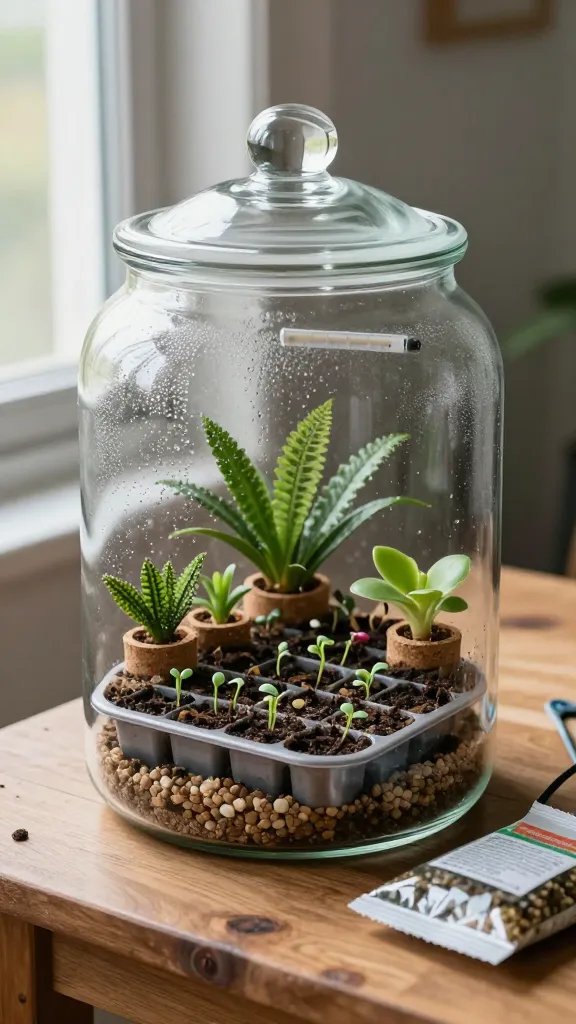
Seeds and tiny plants fail when room air swings from dry to drier and temperatures bounce day to night. Germination stalls, and seedlings collapse from damping off. A terrarium gives you steady warmth and moisture using household materials — no heat mats, no domes to buy.
Seed Starting Without Fancy Gear
- Fill a shallow tray with seed-starting mix from the garden centre. Moisten until evenly damp.
- Sow seeds at the depth on the packet (or surface-sow light-loving seeds). Mist to settle.
- Place the tray in a clear lidded box or under a large upturned glass bowl to form a tent.
- Set near a bright window out of direct midday sun. Rotate the setup every 2–3 days.
- Vent daily for 15 minutes once you see the first sprouts. Remove the cover gradually over 3–5 days as true leaves appear.
For Miniatures and Moss
- Use shallow containers with a thin layer of moist mix topped with rinsed sphagnum or sheet moss.
- Plant miniature begonias, jewel orchids, or tiny ferns with space to breathe.
- Keep glass clean so algae doesn’t shade plants; wipe weekly with a paper towel.
Red Flags
- Green film on the glass = too much light and constant wet; reduce watering and wipe
- Seedlings falling at the base = damping off; increase venting and water from below
Takeaway: Cover your seed tray with a clear box near a bright window and vent daily once sprouted — consistent humidity boosts germination and reduces daily watering chores.
Frequently Asked Questions
How do I water a closed terrarium without overdoing it?
Water once at setup until the mix feels evenly damp but not dripping. After that, use the glass as your gauge: light morning condensation means it’s fine; bone-dry glass for two days means add 1–2 tablespoons of water with a spray bottle. Always add small amounts and wait a day before adding more. If water runs down the glass at midday, vent for a few hours.
Can I put succulents or cacti in a terrarium for recovery?
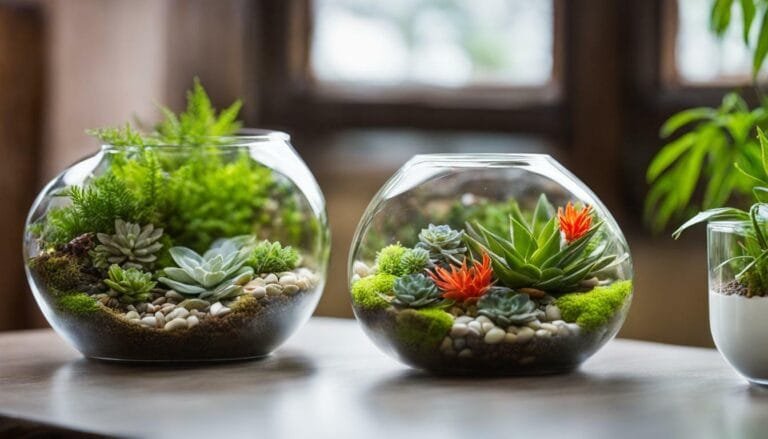
No — they dislike trapped humidity. Succulents and cacti rot quickly in closed, moist air. For recovery, give them bright light, very light watering, and moving air on an open tray. Use terrariums for humidity-loving plants only.
Where should I place my terrarium for the right light?
Place it near a bright window where you can read a book comfortably without switching on a lamp at midday. East or north windows work well; a few feet back from a sunny south window also works. Avoid direct midday sun on the glass to prevent leaf burn and overheating. Rotate the container every few days for even growth.
How do I prevent mold and fungus gnats inside the terrarium?
Start clean: fresh potting mix, rinsed pebbles, and washed glass. Keep the soil just damp, not wet, and schedule regular venting — 15–30 minutes a few times a week. If mold appears, wipe it off, remove the top 1 cm of soil, and replace with fresh mix. For gnats, let the surface dry slightly and use a yellow sticky trap outside the terrarium to monitor.
What simple tools do I need to maintain a terrarium?
A spray bottle, paper towels, long tweezers or chopsticks, cotton swabs, and isopropyl alcohol cover 95% of jobs. Add small pruning scissors and a soft brush for dusting leaves. Keep a clean coffee filter or mesh for drainage layers during setups. Store everything in a small box next to your terrarium so you actually use it.
How long should I keep a plant in “ICU” mode under glass?
Three days is enough for most transplant shock or wilting. If the plant still droops or yellows after day three, extend in two-day increments while you improve airflow by cracking the lid. Once leaves stay firm for two mornings in a row and new growth appears, remove the cover over 2–3 days. Return to normal watering only after the top 2–3 cm of soil feels dry to the touch.
Conclusion
Your terrarium is a humidity tool, a quarantine zone, and a seed nursery — all from a jar or clear bin you already own. Pick one plant that’s struggling or one tray of seeds and give it the terrarium treatment this week. Once you see the difference in survival and growth, you’ll never treat a terrarium as “just decor” again.