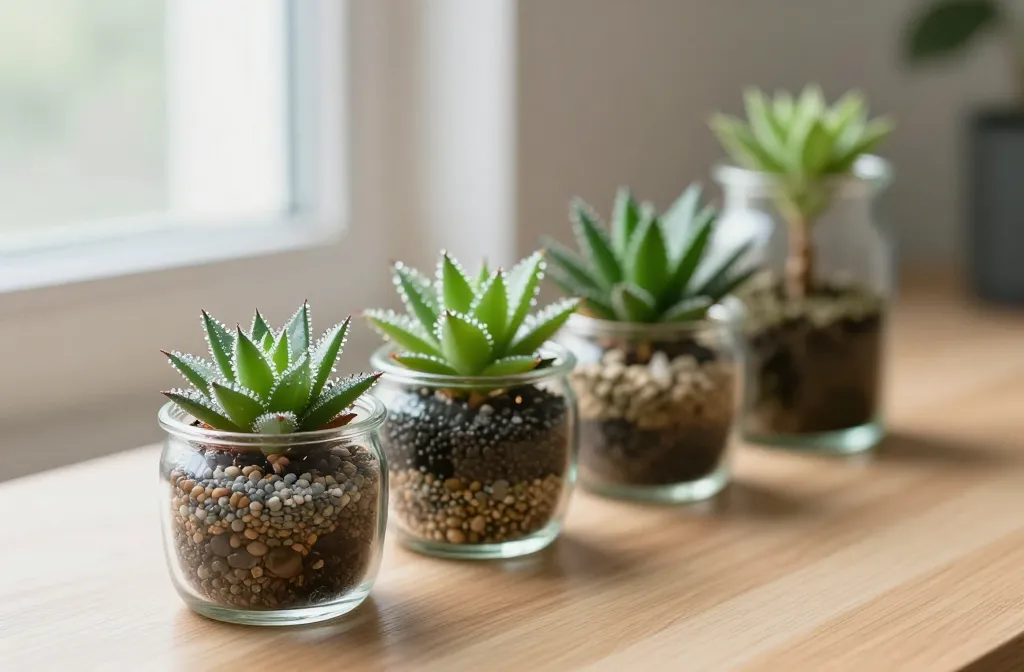
8 Haworthia Varieties for Small Terrariums — Ranked by Container Size Tolerance Guide
I learned quickly that not every succulent forgives cramped glass. My first shoebox-sized terrarium looked tidy for two months, then several plants stretched, sulked, and split their rosettes trying to escape the lid. If you’ve fought the same battle, you’re not alone. In this guide, I rank eight reliable Haworthia varieties by how well they tolerate tiny, shallow containers — so you can match the plant to your jar and keep growth controlled, tidy, and healthy.
1. Haworthia cooperi: Tiny Rosettes Built for Thimbles
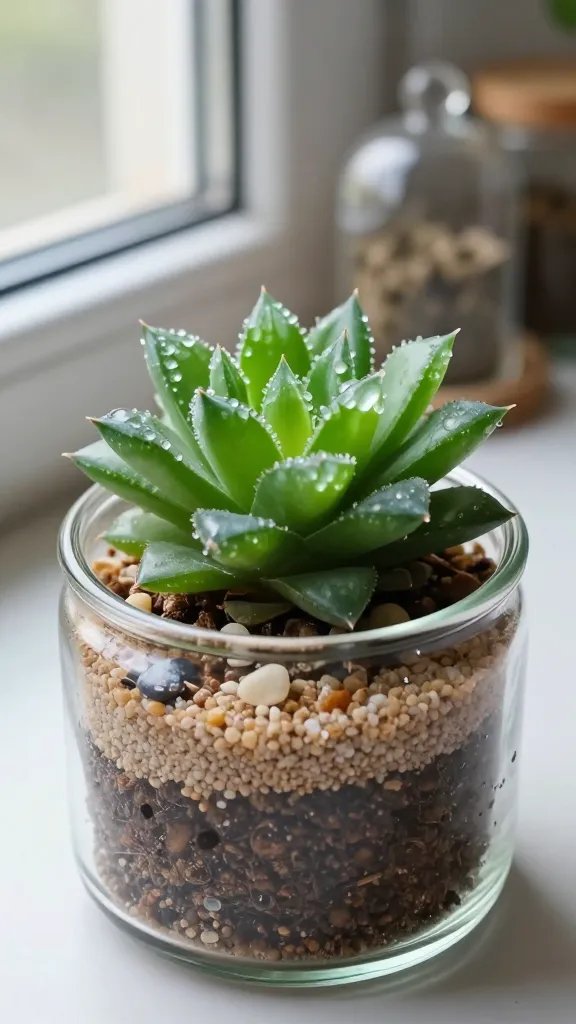
If you want a plant that looks like dew drops and stays petite, H. cooperi is the champion. The rosettes remain small, clumping slowly, and the translucent tips handle the lower light that small terrariums often impose.
Container Size Tolerance
- Minimum comfortable footprint: 5–6 cm wide, 6–8 cm tall jars
- Root depth needed: 3–4 cm of well-draining mix
- Best for: Shot-glass planters, small spice jars, mini cloches
Signs to Watch For
- Tips turning opaque and leaves thinning — light too low
- Rosette elongating upward — container too shaded or too warm
- Outer leaves shriveling at the base — needs a small drink
How to Set It Up
- Use a cactus/succulent mix topped with a 1 cm layer of aquarium gravel to keep leaves dry.
- Give bright indirect light near a northeast or bright east window.
- Water 1–2 tablespoons every 3–4 weeks; let the top layer dry fully between sips.
Action today: Pair a single H. cooperi with a spice jar and a 3–4 cm soil profile — it will sit tight and jewel-like for years.
2. Haworthia cymbiformis: Canoe Leaves That Love Tight Quarters
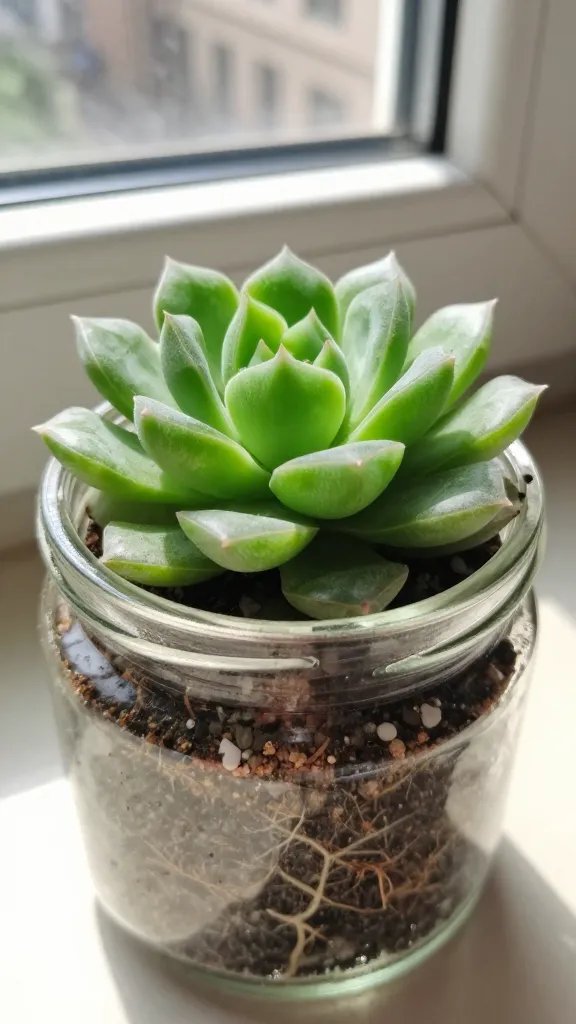
H. cymbiformis forms boat-shaped leaves that stay compact without constant pruning. It accepts slightly deeper containers but won’t run rampant, even in brighter spots.
Container Size Tolerance
- Minimum comfortable footprint: 7–8 cm wide, 8–10 cm tall
- Root depth needed: 4–5 cm
- Best for: Jam jars, small hurricane glass, narrow mugs with drainage added
Practical Care
- Provide morning sun and afternoon shade to prevent leaf bleaching.
- Rotate the jar a quarter-turn weekly to avoid leaning.
- Wipe inside condensation once a month; this keeps leaves from staying wet.
Takeaway: Choose H. cymbiformis when your container is narrow but a touch taller — it stays tidy and forgiving.
3. Haworthia retusa: Triangular Rosettes That Behave in Teacups
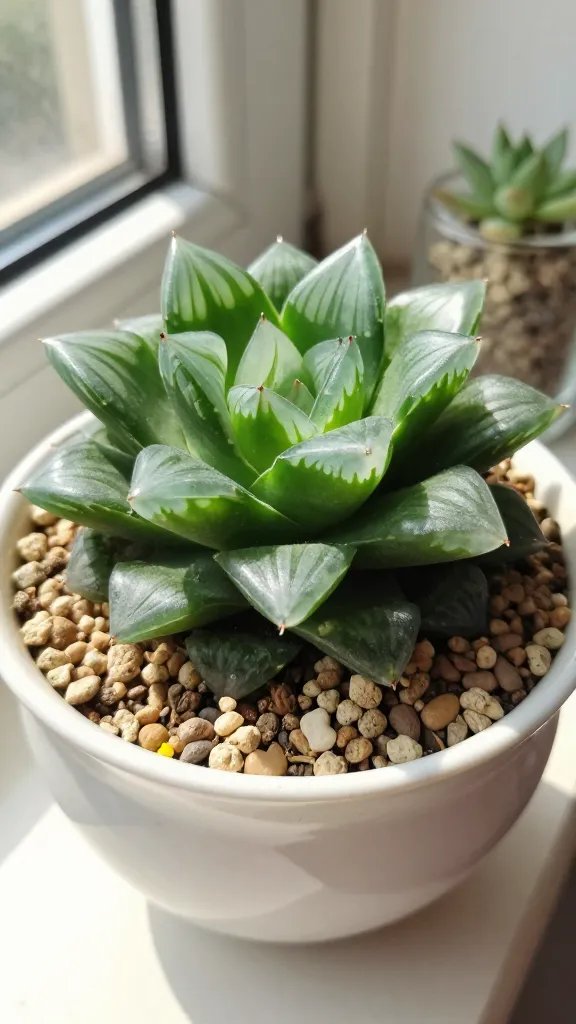
H. retusa packs geometric leaves into a tight star that resists stretching under glass. It tolerates slightly brighter light than cooperi without bulking up too fast.
Container Size Tolerance
- Minimum comfortable footprint: 8–9 cm wide, 8–12 cm tall
- Root depth needed: 5 cm
- Best for: Teacups with a drainage hole, small cylindrical vases
Signs and Fixes
- Leaf tips browning: Move 30–60 cm back from a south window.
- Base crowding with offsets: Snip a couple of pups at soil level to maintain airflow.
- Green staying pale lime: Increase morning light by moving closer to an east window.
Action today: Test your light by placing your hand 20 cm from the plant — you want a soft-edged shadow for most of the day.
4. Haworthia truncata: Fan-Shaped Minimalist for Shallow Trays
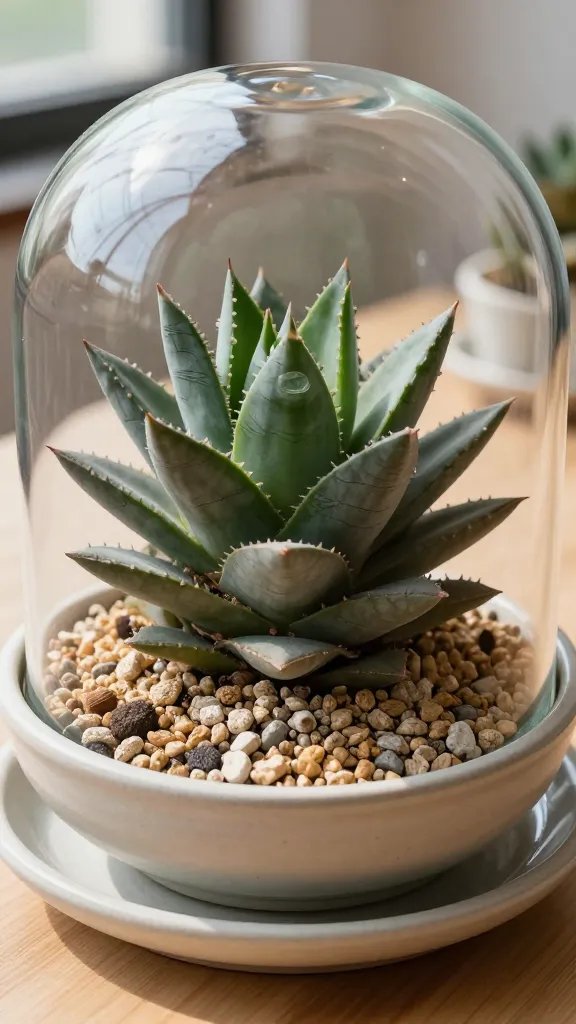
H. truncata grows in a flat fan rather than a dome, so it fits under low lids and stays architectural. It appreciates width over depth, which suits shallow bonsai-style dishes with glass covers.
Container Size Tolerance
- Minimum comfortable footprint: 10–12 cm wide, 6–8 cm tall
- Root depth needed: 3–4 cm, but wide space to spread
- Best for: Shallow dishes with glass cloche, appetizer ramekins with saucer “lids”
Setup Details
- Provide a gritty, airy mix; add a handful of coarse perlite to standard cactus soil.
- Keep leaves above gravel — the chopped tips rot if buried or splashed repeatedly.
- Water sparingly: 1–2 tablespoons every 4 weeks in winter, 2–3 weeks in summer.
Takeaway: If your container is low and wide, H. truncata fills the space without bumping the lid.
5. Haworthia limifolia: Textured Rosettes That Tolerate Moderate Cramp
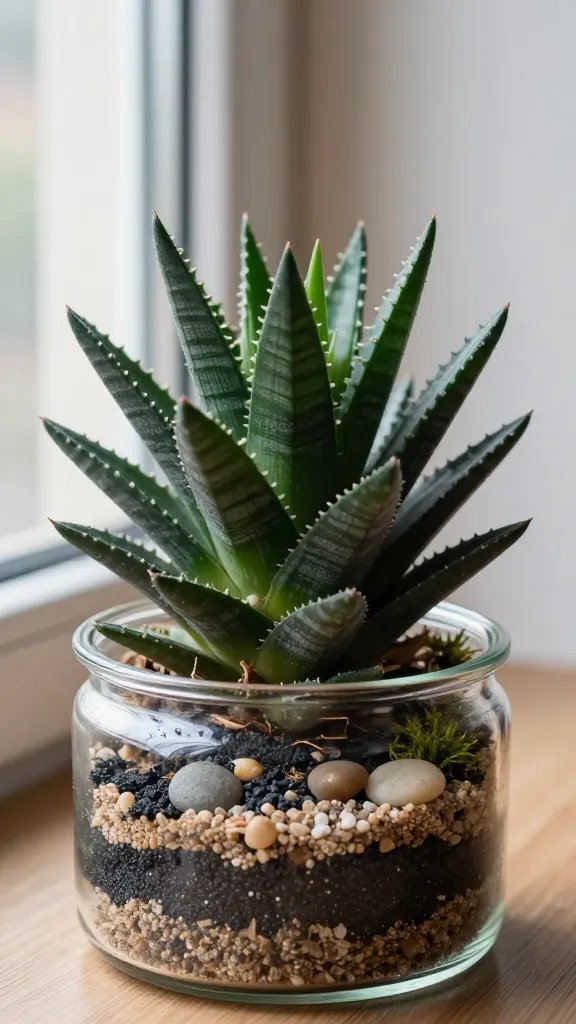
H. limifolia has ridged, dark leaves that handle moderate crowding but need a bit more headroom than the minis. It stays striking and sculptural without racing upward.
Container Size Tolerance
- Minimum comfortable footprint: 10–12 cm wide, 10–14 cm tall
- Root depth needed: 5–6 cm
- Best for: Small cookie jars, short apothecary jars with a removable lid
Care Cues
- Leaves curling inward means it’s thirsty — add 2–3 tablespoons of water along the glass, not onto the rosette.
- Persistent condensation signals too much moisture — crack the lid for 1–2 hours at midday.
- Darkening to near-black is fine in bright shade; bleaching means it’s too close to harsh sun.
Action today: If the glass fogs over for more than half the day, vent the lid and skip the next watering.
6. Haworthia reinwardtii: Stacked Columns That Need Just a Bit More Elbow Room
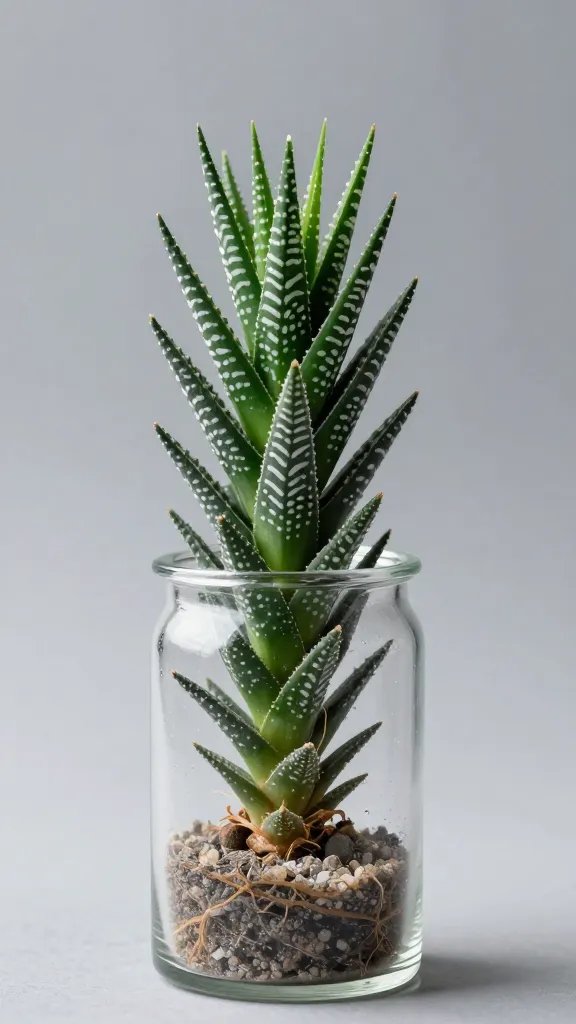
H. reinwardtii forms upright, zebra-dotted columns. It looks neat in a cylinder but needs extra height to prevent the tips from pressing the lid as it slowly stacks.
Container Size Tolerance
- Minimum comfortable footprint: 9–10 cm wide, 14–16 cm tall
- Root depth needed: 5 cm
- Best for: Narrow cylinders, tall jars, glass chemist-style bottles with a wide mouth
Practical Moves
- Plant 2–3 cm lower than you think to allow for upward growth.
- Pinch off side shoots with clean scissors to keep a single, tidy column.
- Rotate every two weeks to stop leaning toward light sources.
Takeaway: Use H. reinwardtii when your container has height but little width — it reads vertical without spreading.
7. Haworthia fasciata (Zebra Haworthia): Popular, But Needs Breathing Space
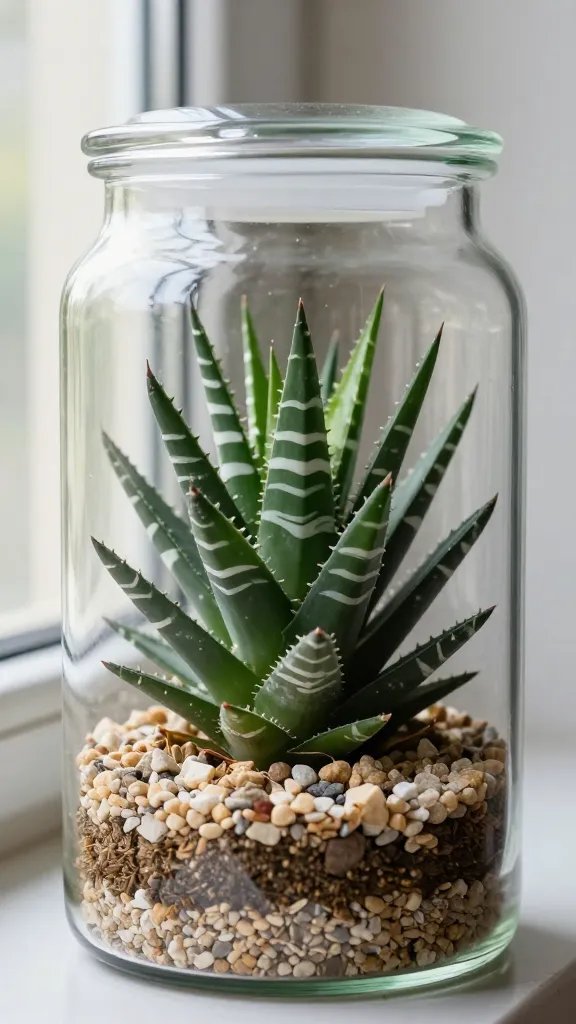
The classic H. fasciata thrives only when you give it more room than Instagram suggests. In small jars, it presses leaves against glass, collects condensation, and rots from trapped moisture.
Container Size Tolerance
- Minimum comfortable footprint: 12–14 cm wide, 16–18 cm tall
- Root depth needed: 6–7 cm
- Best for: Medium cookie jars, wide cylinders with a breathable lid or occasional venting
How to Keep It Happy
- Give bright, indirect light one step back from a south or west window.
- Keep the rosette center dry — water along the inner glass only.
- Leave 3–4 cm of air above the tallest leaf to avoid skinning on the lid.
Action today: If your zebra haworthia touches the glass, replant 1–2 cm lower and top-dress with gravel to lift leaves clear of moisture.
8. Haworthia attenuata: Beautiful, But the Least Suited to Tiny Vessels
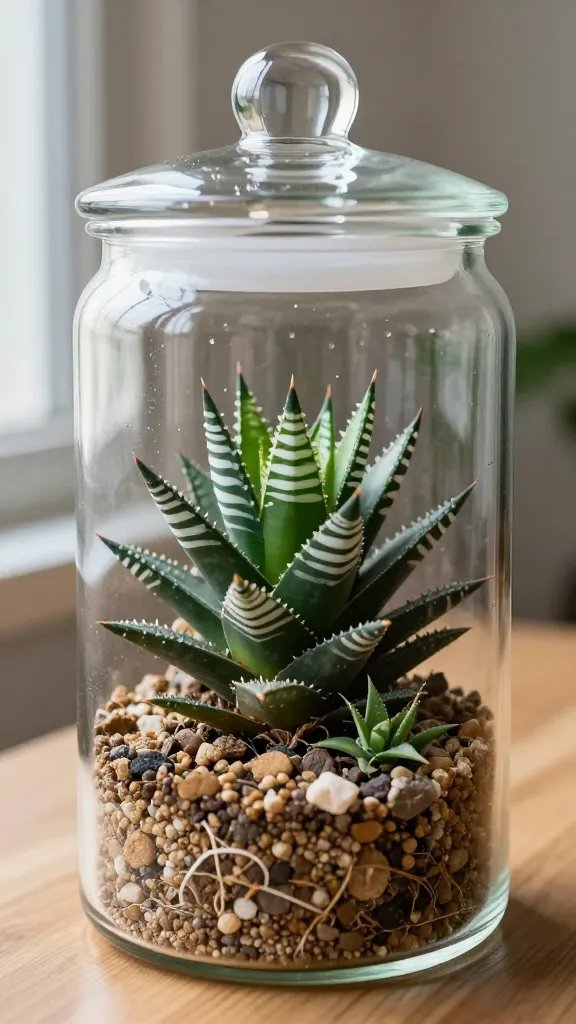
H. attenuata offsets freely and expands faster than most haworthias. In jars under 14 cm wide, it crowds itself within months and stays damp where leaves press the glass.
Container Size Tolerance
- Minimum comfortable footprint: 14–16 cm wide, 18–20 cm tall
- Root depth needed: 6–8 cm
- Best for: Larger apothecary jars, glass domes over a low bowl with good airflow
When Space Is Tight
- Choose a single, small pup instead of a clustered plant.
- Thin offsets quarterly with clean snips to keep air flowing between leaves.
- Water less than you think: every 3–4 weeks, 2–3 tablespoons, and vent after watering.
Takeaway: If your container is genuinely small, skip H. attenuata and pick H. cooperi or H. retusa instead.
Frequently Asked Questions
Can I use a fully closed terrarium for haworthias?
Haworthias prefer drier air than ferns and mosses. I treat them as “loosely closed” — lid on most days, but vented for 1–2 hours after watering and whenever condensation covers more than half the glass by midday. If your jar seals tightly, leave a small gap or remove the lid every few days. This prevents leaf rot at the base.
What soil should I use if I don’t mix my own?
Buy a good cactus/succulent potting mix from the garden centre. To make it airier without special tools, stir in a handful of coarse perlite or small aquarium gravel per mug of soil. Aim for a gritty feel that doesn’t clump when damp. Top-dress with 1 cm of gravel to keep leaves dry.
How often do I water haworthias in a terrarium?
Less often than potted succulents. In a small jar, I add 1–3 tablespoons of water every 3–4 weeks, pouring along the glass so the rosette stays dry. Check by pressing a finger into the mix through a gap in the gravel; water only when the top 2–3 cm feel dry and no midday condensation lingers.
Why are my haworthia leaves turning translucent or mushy?
That’s early rot from trapped moisture. Open the lid for several hours, wick water from the soil with a corner of paper towel, and move the jar to bright indirect light. Remove any mushy outer leaves with clean scissors and let the wound dry before the next watering. Top-dress with fresh dry gravel to prevent splash-back.
Can I keep haworthias with moss in the same terrarium?
It’s a difficult pairing. Moss likes constant moisture and low airflow, while haworthias stay healthiest on the dry side with regular venting. If you insist, create a raised, gravelly haworthia zone and a separate moss pocket kept lightly damp — and water them with separate squeeze bottles. Expect to adjust often to avoid rot.
Do haworthias need direct sun in a small container?
They prefer bright indirect light near a window. Morning sun from an east window works, but harsh midday or afternoon sun overheats glass and scorches leaves. I place jars 30–90 cm from a bright window so they cast a soft-edged shadow for most of the day. Rotate weekly to keep growth symmetrical.
Conclusion
Match the plant to the jar and haworthias will reward you with calm, compact growth. Start with H. cooperi or H. retusa in your smallest glass, and graduate to H. fasciata once you have more room and airflow. Your next step: pick the container you already own, choose the variety from this list that fits its size, and plant it with a gravel top-dress this weekend.