The Real Guide to 6 Air Plant Species That Survive in Low-Light Conditions — and the Trade-Offs of Each
I’ve kept air plants alive on a dim bookshelf, a north-facing windowsill, and even a bathroom with frosted glass. If your home has few sunny spots, I know the exact struggle: everything looks great for a month, then the leaves curl, tips brown, and you’re left guessing why. In this guide you’ll learn which six air plant species truly tolerate low light and the specific compromises each one demands. You’ll finish with clear actions you can take this week to keep them thriving without special gear.
1. Tillandsia bulbosa: Forgiving In Shade, But Demands Humid Air
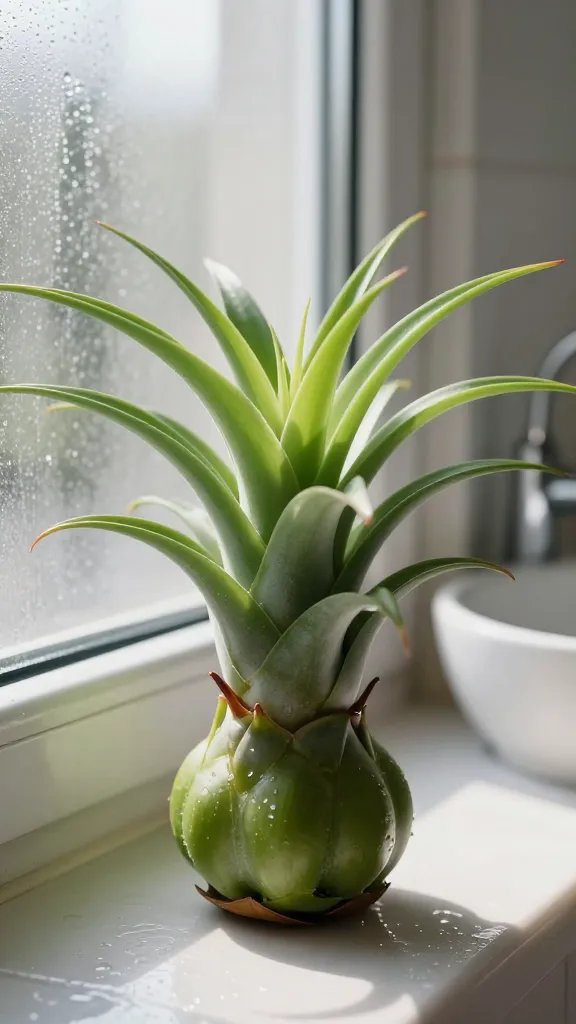
Tillandsia bulbosa stays plump and green in a room that never sees direct sun. The bulbous base stores moisture, so it doesn’t collapse quickly when light is limited. The trade-off: in drier rooms, tips crisp and the plant stalls because it relies on steady humidity to make up for lower light energy.
Bulbosa grows best near a bathroom window or kitchen sink where steam bumps humidity. In a dry living room, it needs more frequent misting and slightly longer soaks, which increases rot risk if you don’t dry it promptly.
Signs to Watch For
- Leaf tips turning tan and papery within two weeks between waterings
- Outer leaves curling tightly around the bulb, staying that way all day
- A funky smell or soft base after a deep soak (early rot from poor drying)
How to Fix It
- Move it within 2–3 feet of a bright north window or 4–6 feet from an east window with sheer curtains.
- Increase humidity by placing a shallow tray of water with pebbles nearby. Keep the plant above, not touching, the water.
- Water schedule: soak 20–25 minutes every 10–14 days, plus a light mist on off-weeks. Always shake out water and dry the base upside down for 30 minutes.
Action today: Give bulbosa a 20-minute soak, shake it dry, and relocate it within arm’s reach of your brightest low-light window, ideally in a steamy room.
2. Tillandsia harrisii: Silver, Shade-Tolerant Leaves, But Slow Growth
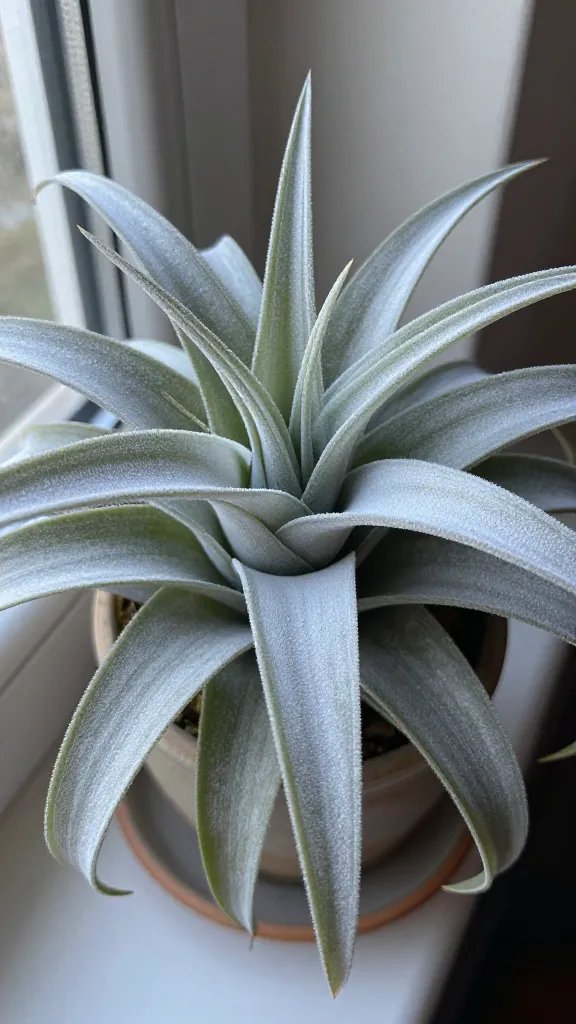
Tillandsia harrisii has thick, silvery leaves loaded with trichomes that harvest weak light efficiently. It keeps its shape and color even on a north-facing sill. The price you pay is patience: in low light, harrisii grows slowly and pups (offsets) later than in brighter spots.
If you push water and fertilizer to force growth, the soft leaf bases rot and the silver finish dulls. In low light, less is more with this species.
Signs to Watch For
- Plant looks healthy but shows no new leaf center growth after 2–3 months
- Trichomes (silvery dust) rubbing off due to frequent handling or heavy misting
- Brown at the leaf base after long soaks
How to Fix It
- Accept a slower schedule: aim for growth checks every 6–8 weeks, not weekly.
- Water every 12–14 days with a 15–20 minute soak; avoid daily misting.
- Feed very lightly: once a month, add a pinch (half the label’s weakest rate) of water-soluble orchid fertilizer to your soak water.
Takeaway: Treat harrisii as a low-maintenance display that rewards consistency over speed—light soaks, light feed, and no fussing.
3. Tillandsia caput-medusae: Handles Dim Corners, But Hates Trapped Water
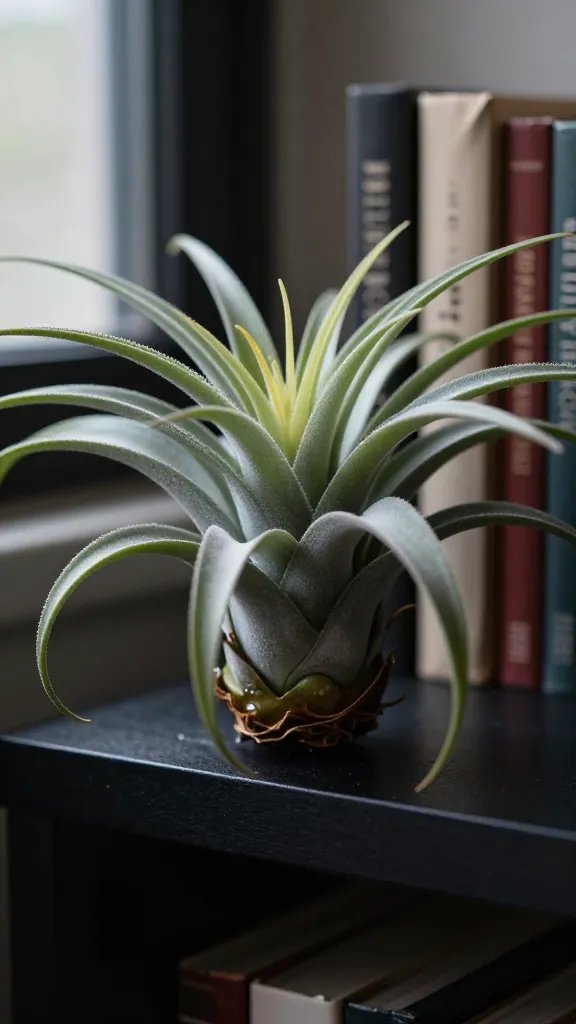
Tillandsia caput-medusae tolerates lower light thanks to its broad, twisting leaves that catch whatever light is available. It stays sculptural on a bookshelf far from harsh sun. The downside is its tight base: in low light, drying takes longer, so trapped water rots the core fast.
If your room lacks airflow, the risk multiplies. This is the species I’ve lost most often because I didn’t flip it to dry after watering.
Signs to Watch For
- Center leaves yellowing first, then pulling free with a gentle tug (rot)
- Persistent cool, damp feel at the base two hours after watering
- Musty smell near the center of the plant
How to Fix It
- Water with a shorter soak: 10–12 minutes every 10–12 days in low light.
- Always dry upside down on a towel for 45–60 minutes, then return upright.
- Improve airflow: position near a vent that runs daily or a small fan on low across the room.
Action today: After your next soak, set a timer for 45 minutes to ensure the plant fully dries inverted before you put it back.
4. Tillandsia tectorum: Thrives On Bright Indirect Light, But Needs Dry Handling
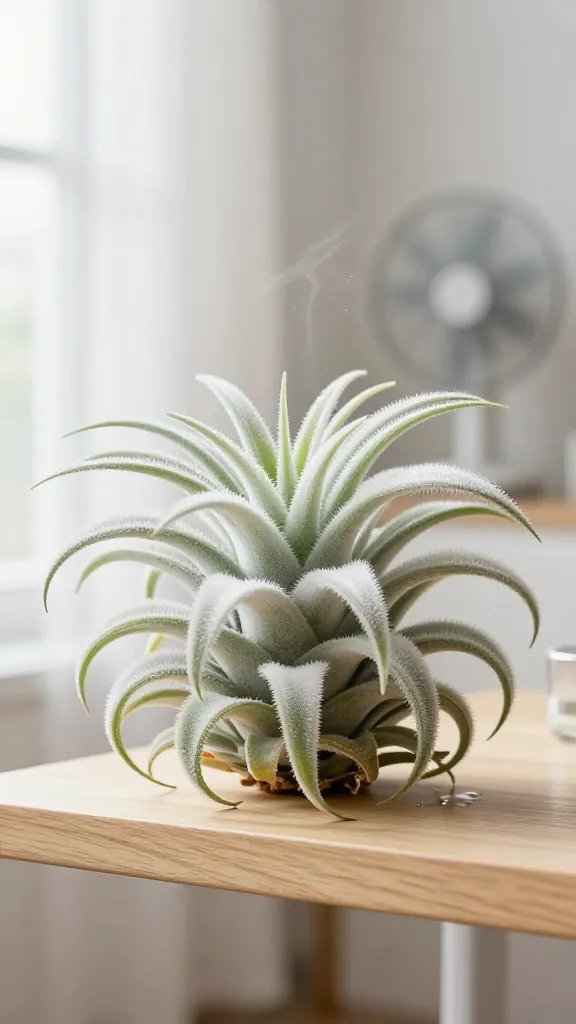
Tillandsia tectorum looks like a snowball because of its dense trichomes, which let it capture weak light extremely well. It stays cheerful in a bright room without direct sun. The trade-off: it hates heavy, frequent watering in low light and prefers dry spells.
Most people drown tectorum. In dimmer settings, it wants mist more than soaks—and lots of air circulation to dry the fuzzy leaves.
Signs to Watch For
- Fuzz matting down and turning grayish, not bright white
- Base turning translucent or slimy after a long soak
- No rebound “fluff” within an hour of watering
How to Fix It
- Mist generously once a week, aiming for the foliage, not the base. Skip soaking entirely in winter or in very low light rooms.
- Give it the brightest indirect light spot you have—right at a north window or 3–4 feet back from an east window with sheer curtains.
- Feed sparingly: once every 6–8 weeks at one-quarter orchid fertilizer strength.
Takeaway: Keep tectorum fluffy by misting weekly instead of soaking and placing it as close to your brightest low-light window as possible.
5. Tillandsia ionantha (Select Forms): Compact, Colorful In Shade, But Thirsty
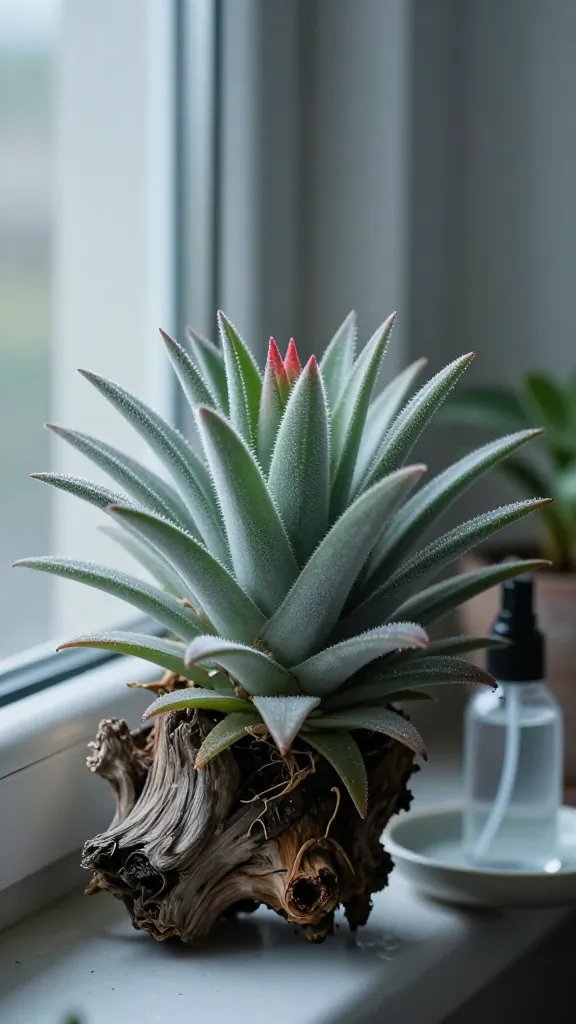
Tillandsia ionantha varieties like ‘Fuego’ and ‘Scaposa’ manage low light better than many ionanthas. They stay compact and can blush with color when light improves, but in steady low light they drink more and may not color up. The trade-off is a tighter watering rhythm and acceptance that blooms and blush will be modest indoors.
If you miss waterings in a dim room, ionantha dries from the tips inward and loses leaves in rings. It forgives you once, then declines fast.
Signs to Watch For
- Leaf tips browning evenly across the rosette
- Center leaves staying pale green without new inner growth after a month
- Plant feeling feathery and too light when you pick it up
How to Fix It
- Soak 15–20 minutes every 7–10 days. In between, give a firm mist mid-week.
- Dry upside down for 30 minutes after each soak to protect the rosette center.
- For color: move the plant 1–2 feet closer to your brightest window for two weeks at a time, then return to its display spot.
Action today: Put a recurring reminder on your phone for a 10-day soak cycle and a mid-week mist so ionantha never runs dry in low light.
6. Tillandsia xerographica (Small/Medium): Sculptural In Dim Rooms, But Needs Bright Indirect Placement
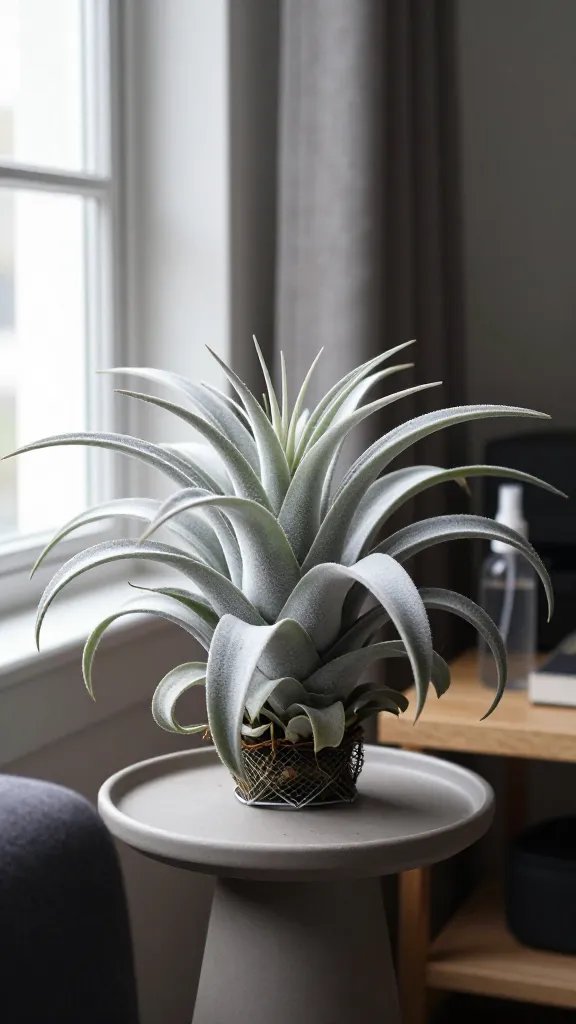
Tillandsia xerographica steals the show even in a low-light living room due to its large, curled leaves and silver sheen. It tolerates less light than people expect if it’s near the brightest window you have. The compromise is growth speed—new leaves emerge slowly, and overwatering in that slower metabolism leads to base rot.
Choose small or medium plants for low-light spaces. Very large xerographica prefer stronger light and better airflow than most indoor corners provide.
Signs to Watch For
- Outer leaves losing curl and laying flatter over 4–6 weeks
- Center slow to unfurl with a slight yellow tinge
- Base tissue softening after standard 20–30 minute soaks
How to Fix It
- Place within 2 feet of a north or bright east window; avoid direct sun through glass.
- Water lightly: 10–12 minute soak every 10–14 days, plus a light mist on the leaves only if the room is very dry.
- Dry time matters: give 60 minutes upside down, then set it on an open stand so air reaches the base.
Takeaway: Keep xerographica close to your best window and cut soak times in half compared to brighter-room care.
Frequently Asked Questions
How “low” can the light be for air plants to survive?
Think bright enough to comfortably read a book during the day without turning on lights. Spots 2–4 feet from a north window or 4–6 feet from an east window with sheers qualify. If a wall stays gloomy all day, rotate plants weekly to a brighter window “charging station” for two to three days.
How often should I water air plants in low light?
Most low-light setups do best with a soak every 10–14 days plus a light mid-week mist for thirstier species like ionantha and bulbosa. Shorten soaks to 10–12 minutes for tight-based plants (caput-medusae, xerographica). Always shake out excess water and dry plants upside down for 30–60 minutes to prevent rot.
Can I use tap water, or do I need special water?
Use water that tastes clean and not salty—plain tap water works if it doesn’t leave heavy white crust on your kettle. If your tap water is very hard or smells chlorinated, fill a bucket and let it sit overnight, or use store-bought spring water. Avoid softened water, which contains salts that stress air plants over time.
Do air plants need fertilizer in low light?
Yes, but far less than labels suggest. Use a water-soluble orchid fertilizer at one-quarter strength once a month for green-leaved species, and every 6–8 weeks for silver-leaved types like tectorum and xerographica. Add it to the soak water, then rinse with plain water the next time you hydrate to prevent buildup.
How do I mount air plants so they dry well in darker rooms?
Use open holders that let air reach the base: wire stands, cork bark, or a simple fishing line loop. Skip closed globes unless they have big side openings and you’re diligent about removing the plant to dry. After watering, set the plant upside down on a clean towel for at least 30 minutes before remounting.
What’s the fastest way to tell if my low-light spot is failing them?
Check leaf posture and tips at the same time each day for one week. Persistent inward curl by midday, plus browning tips, means the plant is underpowered and dehydrated for the light level. Move it 1–2 feet closer to your brightest window and tighten your water schedule by 2–3 days.
Conclusion
Low light doesn’t mean giving up on air plants—it means matching species to your space and tightening the basics: placement, quick drying, and a steady watering rhythm. Choose one species from this list that fits your room and set a two-week care reminder today; small, consistent steps keep these plants thriving for years.