The Secret to 5 Substrate Ingredients That Improve Drainage Without Compacting Over Time
I used to think a “well-draining mix” meant tossing in a handful of whatever grit I had. A few months later, my pots felt like bricks and roots sulked in stale, heavy soil. If your plants perk up right after watering but droop again in a week, your mix is suffocating them. Here’s how I build drainage that actually lasts, using ingredients you can grab at any garden centre or hardware store.
1. Pumice: Porous Stone That Keeps Air Pockets Open
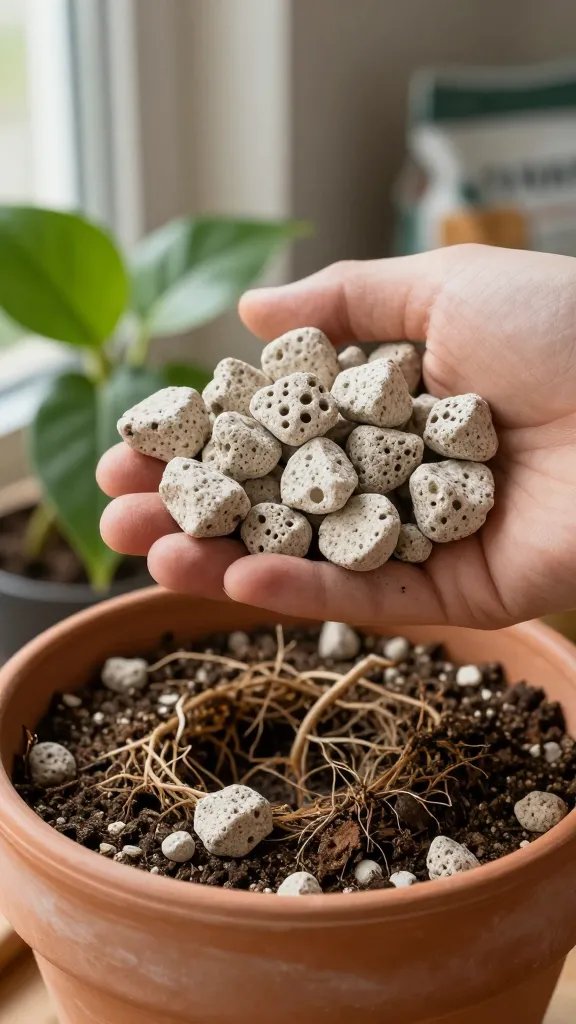
Compaction strangles roots by squeezing out air spaces, and soggy soil invites rot. Pumice solves both by adding rigid, porous structure that doesn’t break down or float away when you water.
What Makes Pumice Different
- Rigid and porous: Each piece is like a tiny sponge full of tunnels that hold air and a bit of water.
- Doesn’t compact: It resists crushing in pots, so channels stay open for years.
- Stays put: Unlike perlite, it won’t float to the top or wash out of the pot.
How I Use It
- General houseplants: Mix 1 part pumice to 3 parts good potting mix for reliable drainage.
- Thirsty tropicals (e.g., Monstera, Pothos): 1 part pumice, 2 parts potting mix, 1 part fine bark.
- Drought lovers (e.g., Sansevieria, Aloe): 1 part pumice, 1 part potting mix.
Signs You Need It
- Soil feels heavy two weeks after watering.
- Water puddles on top before sinking in.
- Roots circle the pot edge seeking air, while the centre stays wet.
Action today: Add 1-2 handfuls of pumice to the top inch of your current mix, scratch it in gently, and water through to start opening channels without a full repot.
2. Pine or Fir Bark Fines: Chunky Organic That Won’t Turn to Sludge
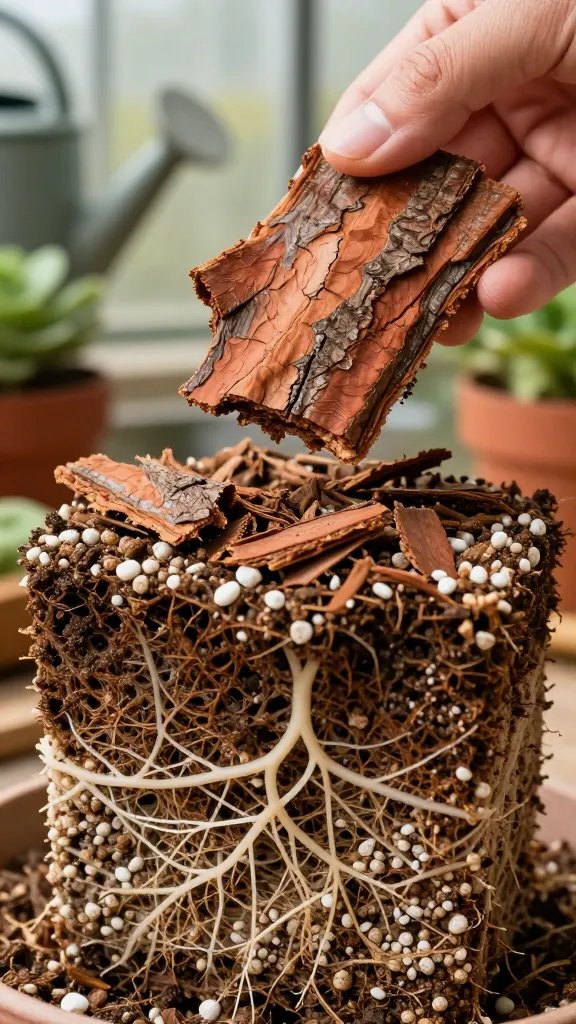
Most bagged potting mixes collapse as the fine peat breaks down, squeezing out the air. Bark fines add chunky, fibrous structure that resists collapsing and encourages roots to branch through stable gaps.
Why Bark Works
- Chunk-based structure: Pieces create long-lasting air pockets and pathways for water to move evenly.
- Slow to decompose: Conifer bark ages gradually, keeping the mix springy for multiple seasons.
- Root health: Encourages fine root growth and reduces the risk of anaerobic pockets.
How I Use It
- Aroids and epiphytes (e.g., Monstera, Philodendron): 1 part bark, 1 part potting mix, 1 part pumice or perlite.
- Orchids: Use a bagged orchid bark blend, then cut it with 20-30% potting mix for indoor pots that need more moisture.
- Size tip: Aim for fingernail-sized bark pieces. If your bag has large chunks, crush them in a towel with a mallet.
Watchouts
- Fresh bark can be hydrophobic. Pre-soak for 30 minutes before mixing.
- Avoid dyed or landscape mulch. Choose “orchid bark” or “pine/fir bark fines.”
Takeaway: Swap 25-40% of the peat-heavy potting mix in your next repot for bark fines to prevent compaction over the next 12–18 months.
3. Coarse Perlite: Lightweight Lift That Increases Drainage Fast
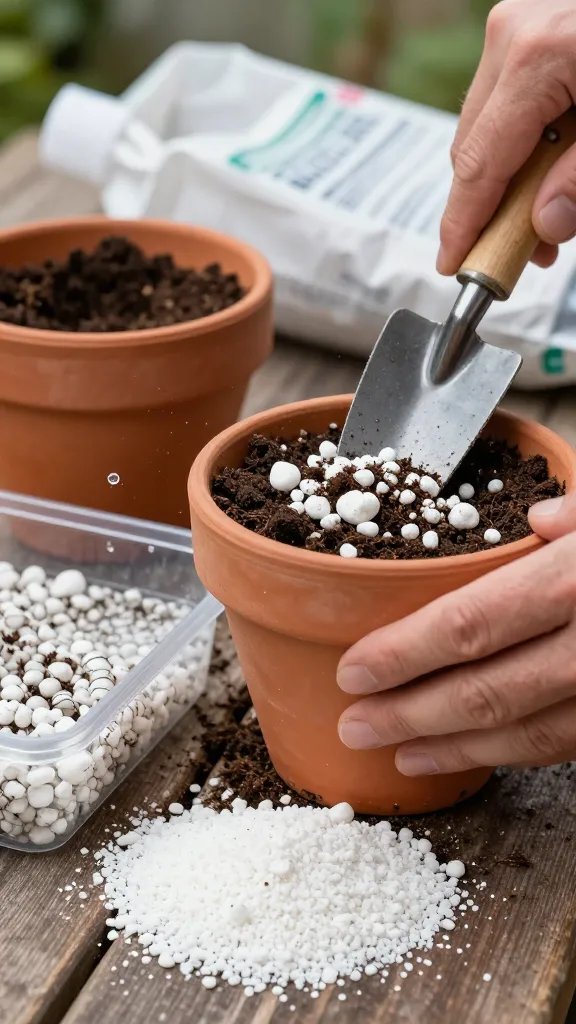
If your soil dries slowly and feels dense, perlite creates immediate lift. While it can float, the coarse grade mixed thoroughly still boosts drainage and reduces waterlogging right away.
Pros and Cons You Should Know
- Pro: Increases pore space and speeds water through the root zone.
- Pro: Readily available and affordable at any garden centre.
- Con: Floats and migrates upward with repeated watering if used alone.
- Con: Fine grades add dust; use a mask when handling and pre-wet to settle.
Best Uses
- Standard houseplants: Add 20-30% coarse perlite to potting mix to lighten it instantly.
- Starter mixes for cuttings: 50% perlite and 50% potting mix keeps bases oxygenated.
- Paired with bark: 1 part bark, 1 part perlite, 1 part potting mix delivers both chunk and lift.
Signs You’ll Benefit
- Leaves yellow from the bottom up despite careful watering.
- Soil stays cold and wet feeling for more than a week indoors.
- Water dribbles down the pot edges but the core remains soggy.
Action today: Top-dress with a half-inch of perlite and poke several pencil-wide holes down to the pot’s mid-depth to create instant chimneys for airflow.
4. Horticultural Grit or Crushed Granite: Weight That Stabilises Structure
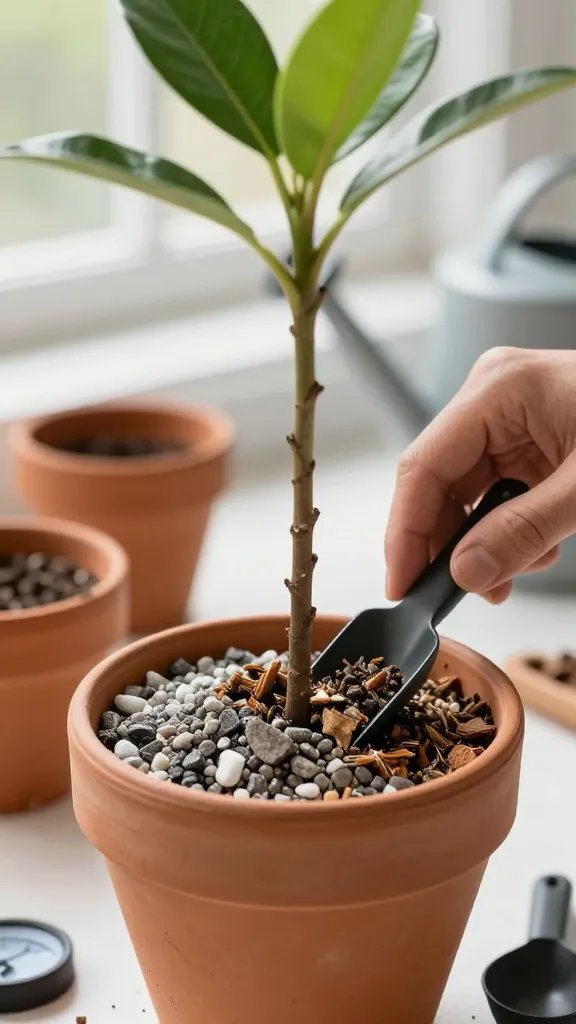
Some mixes drain quickly for a month, then slump and seal off. A small amount of mineral grit adds weight and rigid scaffolding that resists that slump, especially in narrow pots where airflow is limited.
Why I Reach for Grit
- Stable particle size: Won’t dissolve or compress, so air gaps persist.
- Improves balance: Heavier pots tip less with tall plants.
- Even drainage: Helps prevent “perched water” at the base of the pot.
How to Use It Without Overdoing
- Mix ratio: 10-20% grit blended into your potting mix for succulents and herbs.
- Layering myth: Don’t add a gravel layer at the bottom — it raises the water table and keeps roots wetter. Blend the grit evenly through the whole mix.
- Size guide: Aim for pea-sized particles. Rinse dusty grit in a colander to keep the mix clean.
Good Plant Matches
- Rosemary, thyme, lavender: 20% grit, 40% potting mix, 40% perlite or pumice to mimic their native rocky soils.
- Succulents and cacti: 25% grit plus 25% pumice with 50% potting mix for quick drain and long-term structure.
Takeaway: For your next repot of a Mediterranean herb, add a large mug of rinsed horticultural grit to a standard 10–12 cm pot’s mix to prevent mid-season slump.
5. Coir Chips (Coconut Husk Chunks): Long-Lasting Chunk That Resists Decay
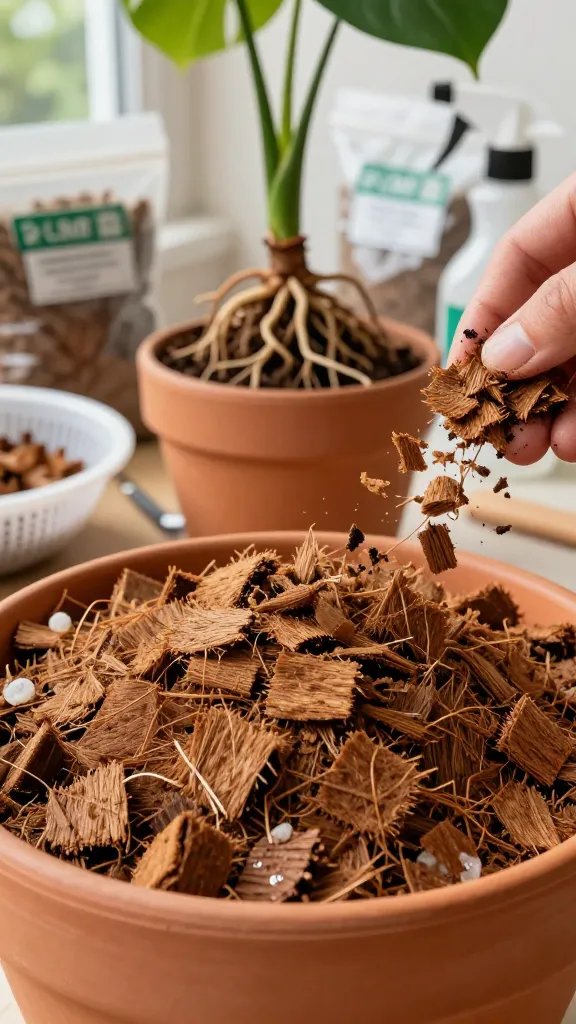
Peat-heavy mixes compress and go sour over time. Coir chips act like bark’s tropical cousin: they hold moisture evenly while keeping chunky air pockets that don’t collapse after a few waterings.
What Sets Coir Chips Apart
- Resists compaction: Chunky pieces spring back after wetting and drying cycles.
- Even moisture: Holds water without waterlogging, ideal for indoor conditions.
- Clean and consistent: Usually free of pests and easy to rinse and soften.
How I Use Them
- Tropicals that like airflow (e.g., Syngonium, Anthurium): 1 part coir chips, 1 part bark, 1 part potting mix.
- Heavy-handed waterers: Replace 25% of your usual potting mix with coir chips to broaden the safe watering window.
- Prep tip: Soak for 20–30 minutes, then squeeze out excess water before mixing.
Signs It’s a Good Fit
- Leaves droop a day after watering but perk up when the soil is aerated.
- Fungus gnats thrive on constantly wet, peaty surfaces.
- Roots are pale and sparse in the centre of the root ball.
Action today: If your mix feels springless, repot one plant with 30% coir chips and track how evenly it dries over two weeks — use that result to tune mixes for the rest of your collection.
Frequently Asked Questions
Do I still need drainage holes if I use these ingredients?
Yes. Drainage ingredients improve airflow and water movement, but they don’t replace drainage holes. Always use a pot with a hole and a saucer. Water thoroughly until it runs out, then empty the saucer after 10–15 minutes so roots don’t sit in runoff.
What’s the easiest starting mix for most houseplants?
Combine 2 parts good potting mix, 1 part pumice or coarse perlite, and 1 part pine/fir bark fines. This balances moisture and air for the majority of tropicals. If your home runs dry and warm, lean slightly heavier on potting mix; if it’s cool and dim, increase the pumice.
How do I know my soil is compacting over time?
Watch for soil pulling away from the pot edges, water beading on top, and slow drying even in warm rooms. A wooden chopstick pushed into the mix should come out slightly damp within the top third after a few days; if it’s wet halfway down a week later, the core has compacted. Roots circling the outside while the centre is bare is another clear sign.
Can I use aquarium gravel or landscape pebbles instead of horticultural grit?
You can use washed, pea-sized aquarium gravel as a substitute mixed through the soil, not as a bottom layer. Rinse it well to remove dust and avoid polished stones that are too smooth and large, which add weight without real structure. Keep it to 10–20% of the mix to prevent excess heaviness.
Is vermiculite good for drainage like perlite?
No. Vermiculite holds water and compresses more than perlite, so it’s better for seed starting or water-loving plants, not long-term drainage. If you need lift and airflow, choose coarse perlite or pumice. Save vermiculite for mixes where consistent moisture is the priority.
Should I add a layer of rocks at the bottom of the pot?
No. A rock layer raises the perched water table and keeps the root zone wetter, not drier. For better drainage, keep the mix uniform from top to bottom and rely on proper particles like pumice, bark, and grit. Always use a pot with a drainage hole instead of trying to engineer a false bottom.
Conclusion
If your soil feels heavier every month, the fix is simple: swap fines for chunks and stable minerals. Start with one plant and a three-ingredient blend — potting mix, a chunky organic (bark or coir chips), and a mineral aerator (pumice or coarse perlite) — and watch the roots tell you you’re on the right track.