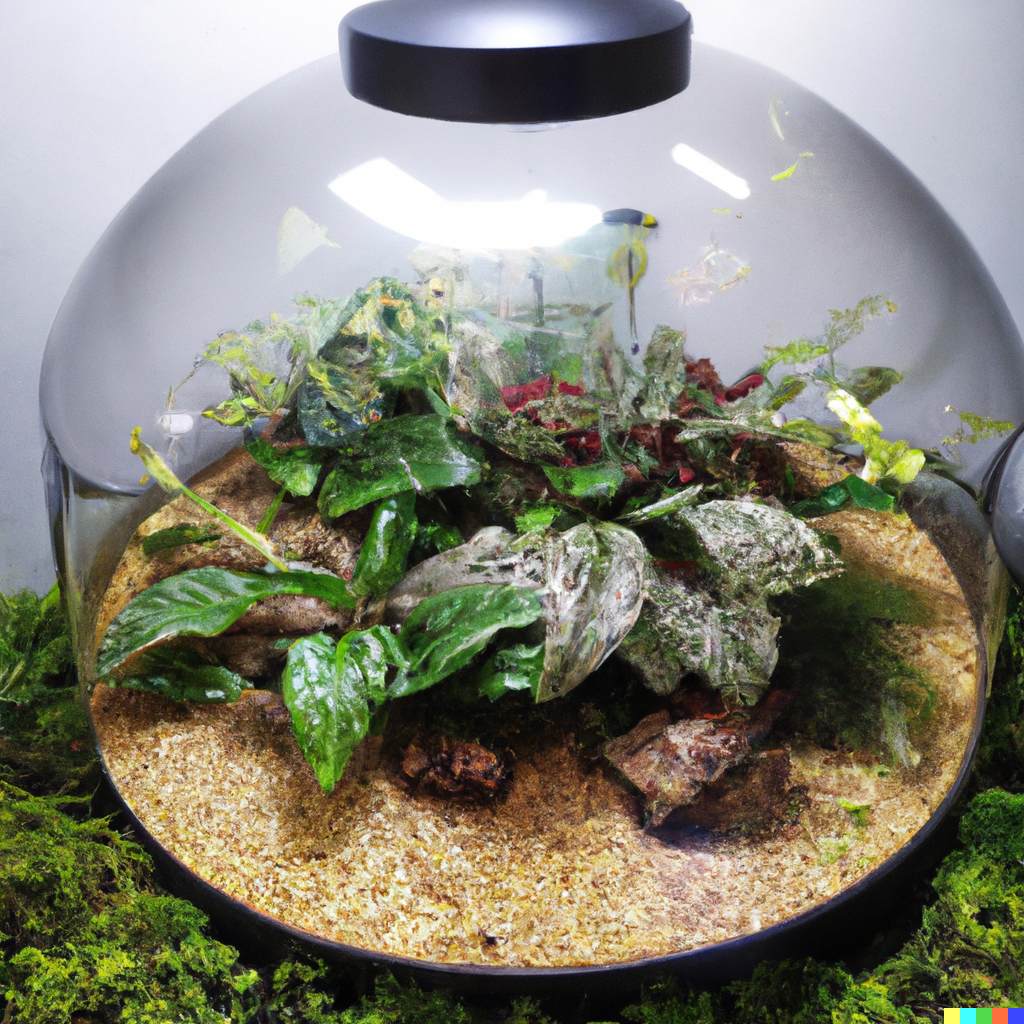
Do Fittonia Plants Grow Better in Open or Closed Terrariums? A Beginner’s Guide
I’ve killed three fittonias before I figured out what the plant actually needs. The first one crisped up in an open terrarium because I forgot to mist it for two days. The second one grew leggy and moldy in a sealed jar because I never opened the lid. The third one . in a jar with a vented lid that I crack open once a week . has been thriving for eight months. For a full list of plants tested in closed terrariums, see the woodland plants guide. The difference between open and closed isn’t about which is “better.” It’s about matching the setup to how much attention you’ll actually give it.
What Fittonia Actually Needs: The Numbers
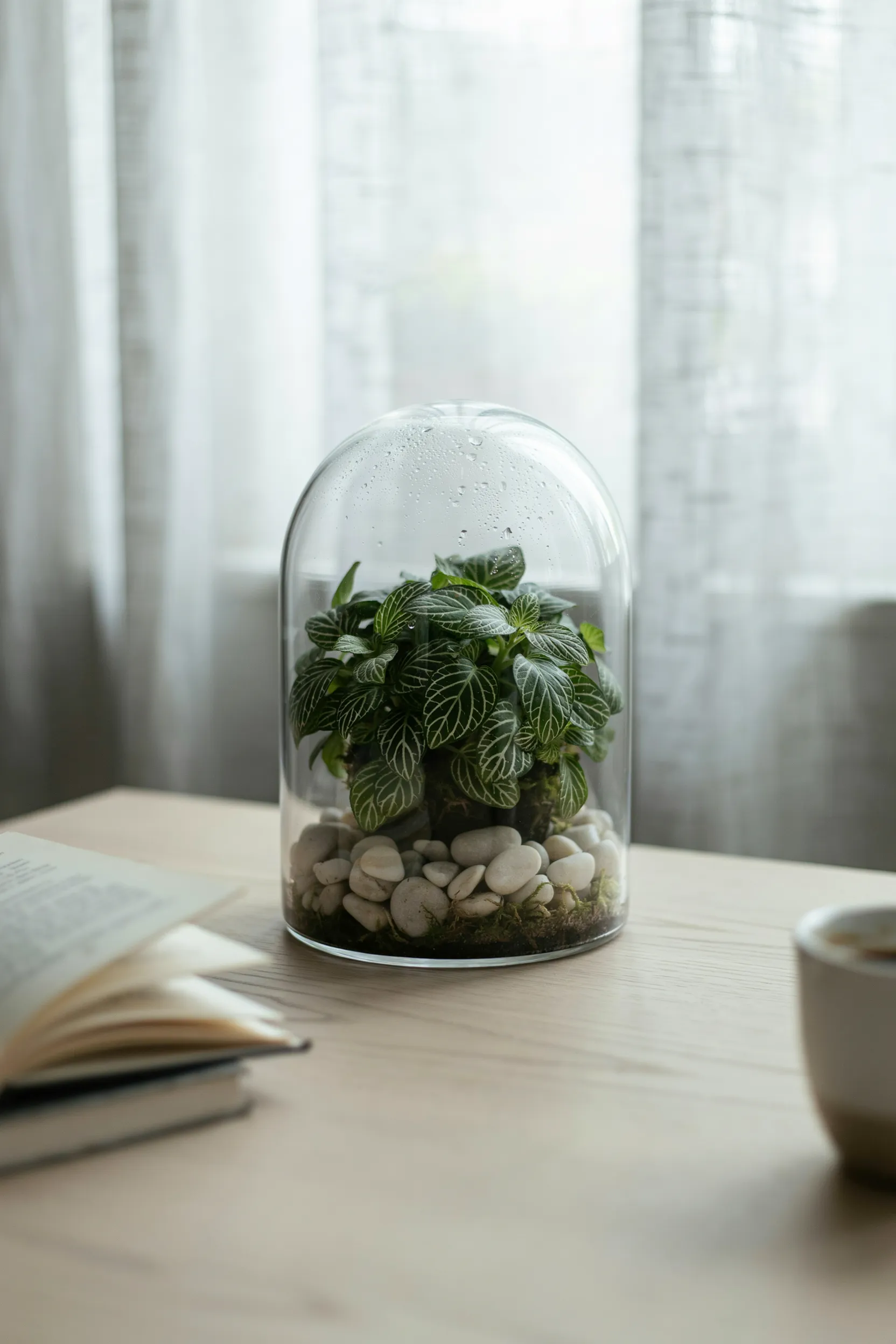
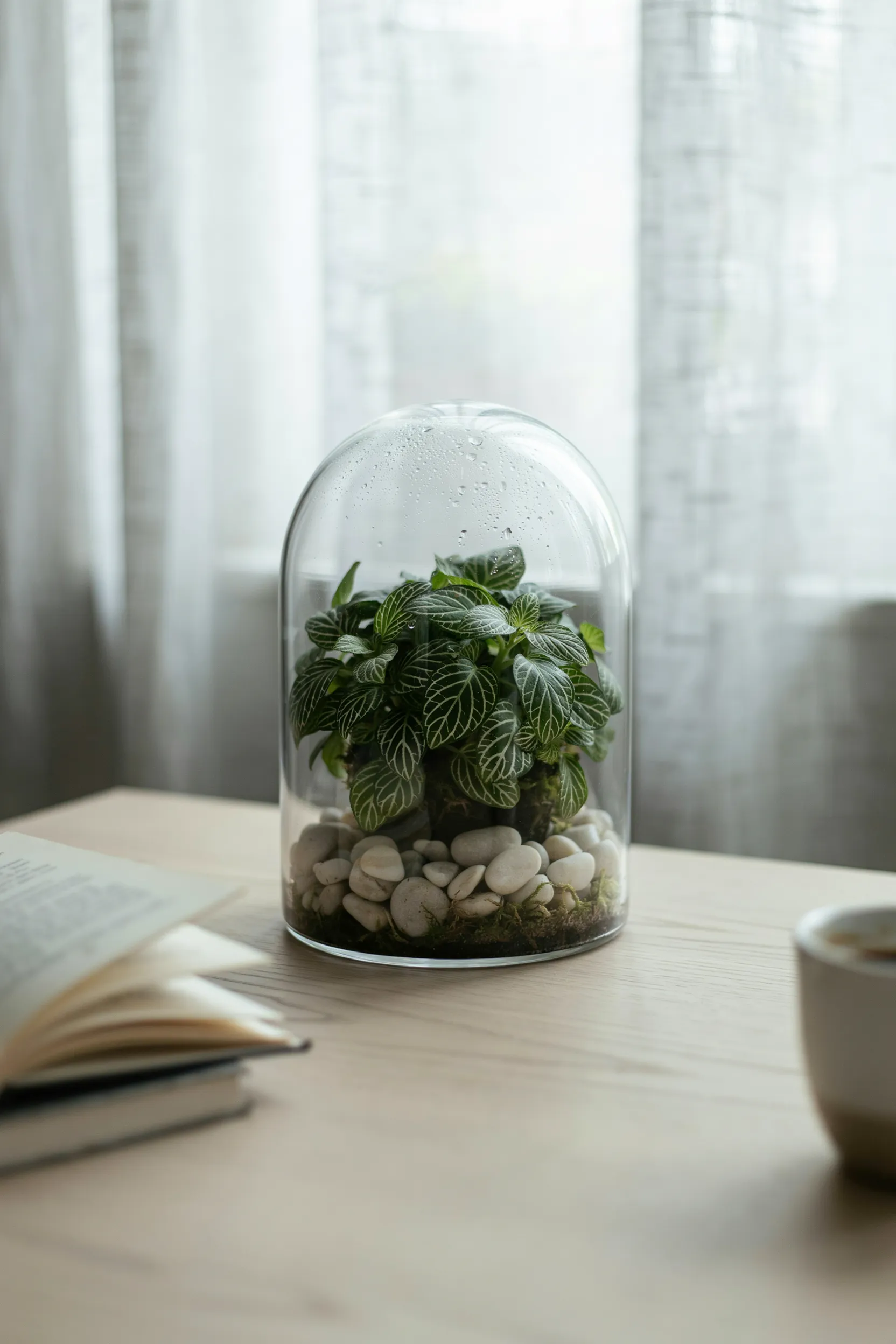
Capsule: Fittonia (nerve plant) needs 60–80% humidity, 65–80°F (18–27°C), bright indirect light, and consistently moist (not wet) soil. It wilts dramatically when humidity drops below 50% or soil dries out, and it develops root rot or mold when the air is stagnant and the substrate stays saturated.
Fittonia comes from the understory of South American tropical forests . warm, humid, shaded, and moist. Those four conditions determine whether the plant thrives or dies in your terrarium:
| Factor | Ideal Range | Warning Signs (Too Low) | Warning Signs (Too High) |
|---|---|---|---|
| Humidity | 60–80% | Crispy leaf edges, wilting, curling | Mold on leaves, mushy stems |
| Temperature | 65–80°F (18–27°C) | Leaf damage below 55°F (13°C) | Rapid wilting in closed glass above 85°F |
| Light | Bright indirect . 2–4 ft from east/west window | Leggy growth, faded vein colour | Scorched white patches on leaves |
| Soil moisture | Consistently moist, never saturated | Dramatic wilting within hours | Yellow lower leaves, stem rot at base |
A hygrometer ($8–12 at any garden centre) is the single most useful tool for fittonia care. Guessing humidity is what kills most nerve plants . Your apartment might feel humid to you at 45% relative humidity, but fittonia starts wilting below 50%.
Action today: Buy a small digital hygrometer and place it inside your terrarium. Read it at midday for three days before you plant anything. That tells you the baseline you’re working with. Our complete fittonia care guide covers light, watering, and propagation in detail.
Open vs Closed Terrariums: The Honest Comparison
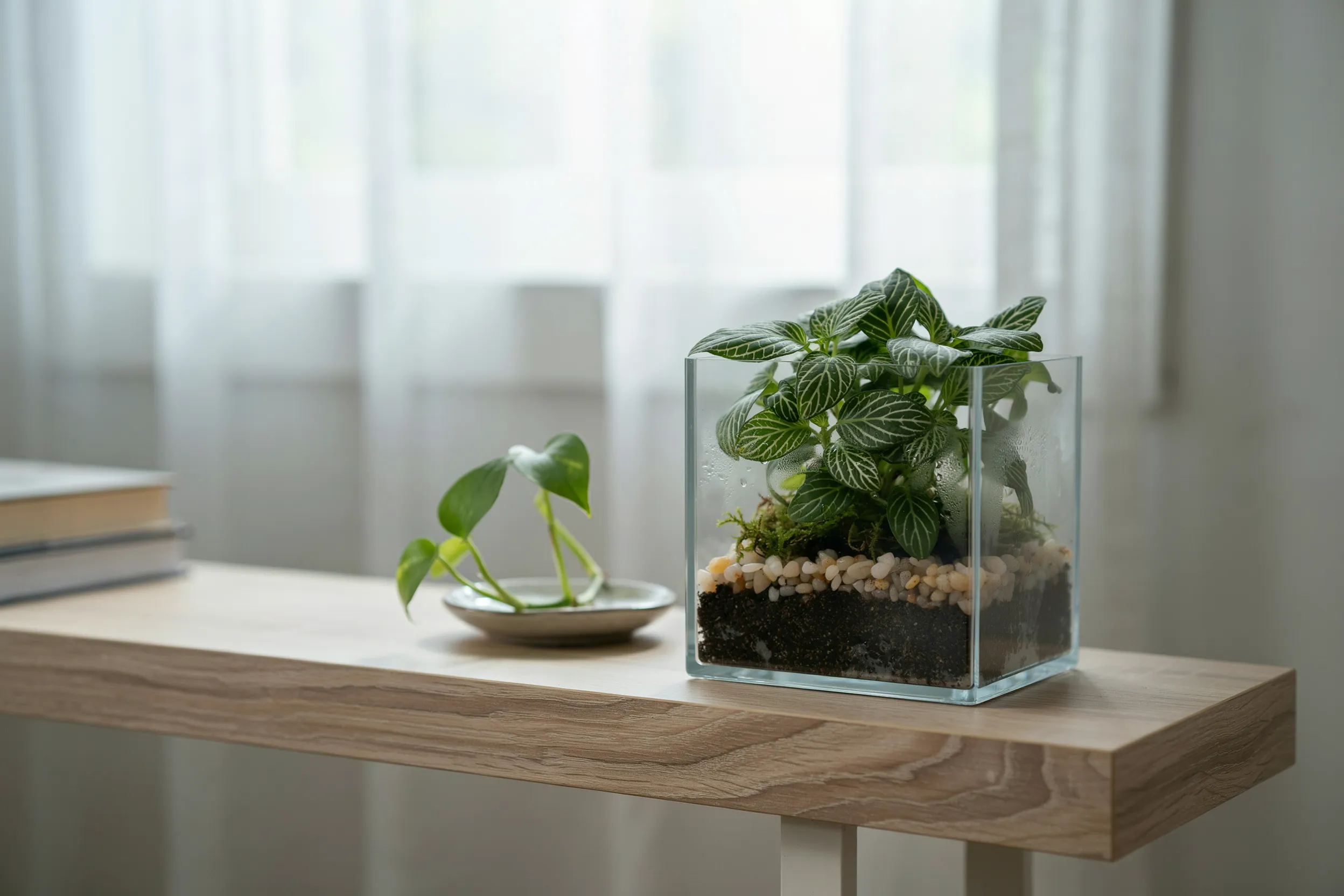
Capsule: Closed terrariums maintain the humidity fittonia craves with minimal effort, but need weekly venting to prevent mold. Open terrariums give better airflow and lower mold risk, but require daily misting and more frequent watering. Choose based on how often you’ll check the plant, not which looks better.
| Factor | Closed Terrarium | Open Terrarium |
|---|---|---|
| Humidity | Consistently 70–90% . ideal for fittonia | Fluctuates 40–60% . often too dry without misting |
| Watering | Rarely needed after initial setup; check every 2–4 weeks | Every 2–4 days; soil dries faster with airflow |
| Mold risk | Higher . needs weekly venting (open lid 15–30 min) | Lower . better air circulation prevents fungal growth |
| Growth speed | Fast . may need monthly pruning to stay compact | Slower . more compact but prone to wilting |
| Maintenance level | Low . monitor condensation, vent weekly, prune monthly | High . daily misting, frequent watering checks |
| Best for | Set-and-forget displays, beginners, humid climates | Decorative arrangements, dry climates, active plant parents |
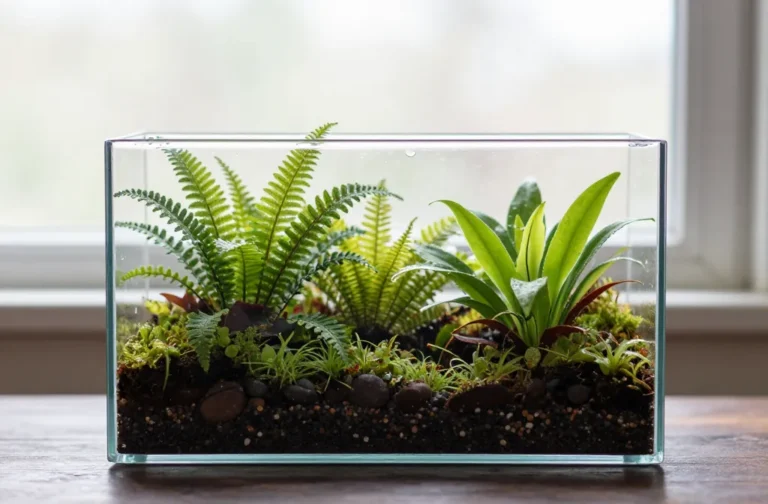
| Container options | Jars with lids, apothecary jars, bell jars | Open bowls, wide-mouth jars, glass cloches (vented) |
The honest truth: closed terrariums are better for fittonia if you want low maintenance. The sealed environment holds the 60–80% humidity the plant needs without you doing anything daily. Open terrariums can work, but they demand the kind of attention that most people don’t sustain past week three.
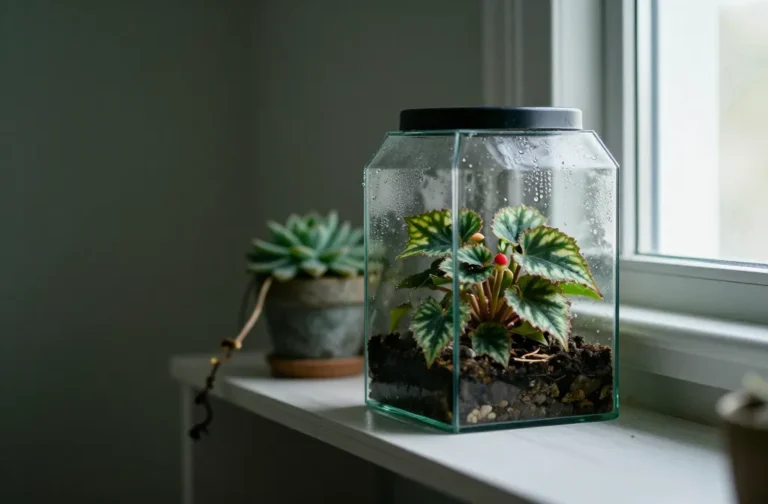
If you’re not sure which to pick, start with a jar that has a removable lid. Run it closed for two weeks, then crack the lid for 30 minutes daily. If the plant stays perky and the glass clears, you’ve found the balance. If mold appears, vent more. If leaves crisp, seal it tighter. Our beginner’s terrarium guide covers container selection in detail.
Action today: Choose your container type now based on how often you’ll check the plant. Honest answer . daily? Go open. Weekly? Go closed. Somewhere in between? Get a jar with a vented or removable lid.
Why Closed Terrariums Usually Win for Fittonia
Capsule: A closed container holds 70–90% humidity with almost no effort . The exact range fittonia thrives in. The main risk is mold from stagnant air, which a weekly 15–30 minute venting session prevents. Add springtails after the first month for biological mold control.
Closed terrariums create a self-sustaining moisture cycle: water evaporates from the soil, condenses on the glass, drips back down. Fittonia sits in the humidity it evolved for, and you rarely need to add water.
The one risk is mold and fungal growth from stagnant air. The fix is simple:
- Open the lid for 15–30 minutes once a week. This allows gas exchange (fresh CO2 for photosynthesis) and reduces fungal spore concentration.
- Wipe condensation off the glass if it completely obscures the view. Some condensation is normal; sheets of water dripping constantly means too much moisture.
- Add a culture of springtails after the first month. These tiny insects eat mold and decaying matter before it becomes visible. They’re the single best investment for a closed terrarium’s long-term health.
Fittonia grows faster in a closed environment because the humidity stays constant. Plan to prune every 4–6 weeks . pinch the stem tips to encourage bushy growth rather than leggy stems reaching for light.
Action today: If you already have a closed terrarium with fittonia, open the lid now for 20 minutes. Set a weekly reminder on your phone. That one habit prevents 90% of closed-terrarium fittonia deaths.
When Open Terrariums Make Sense (and How to Make Them Work)
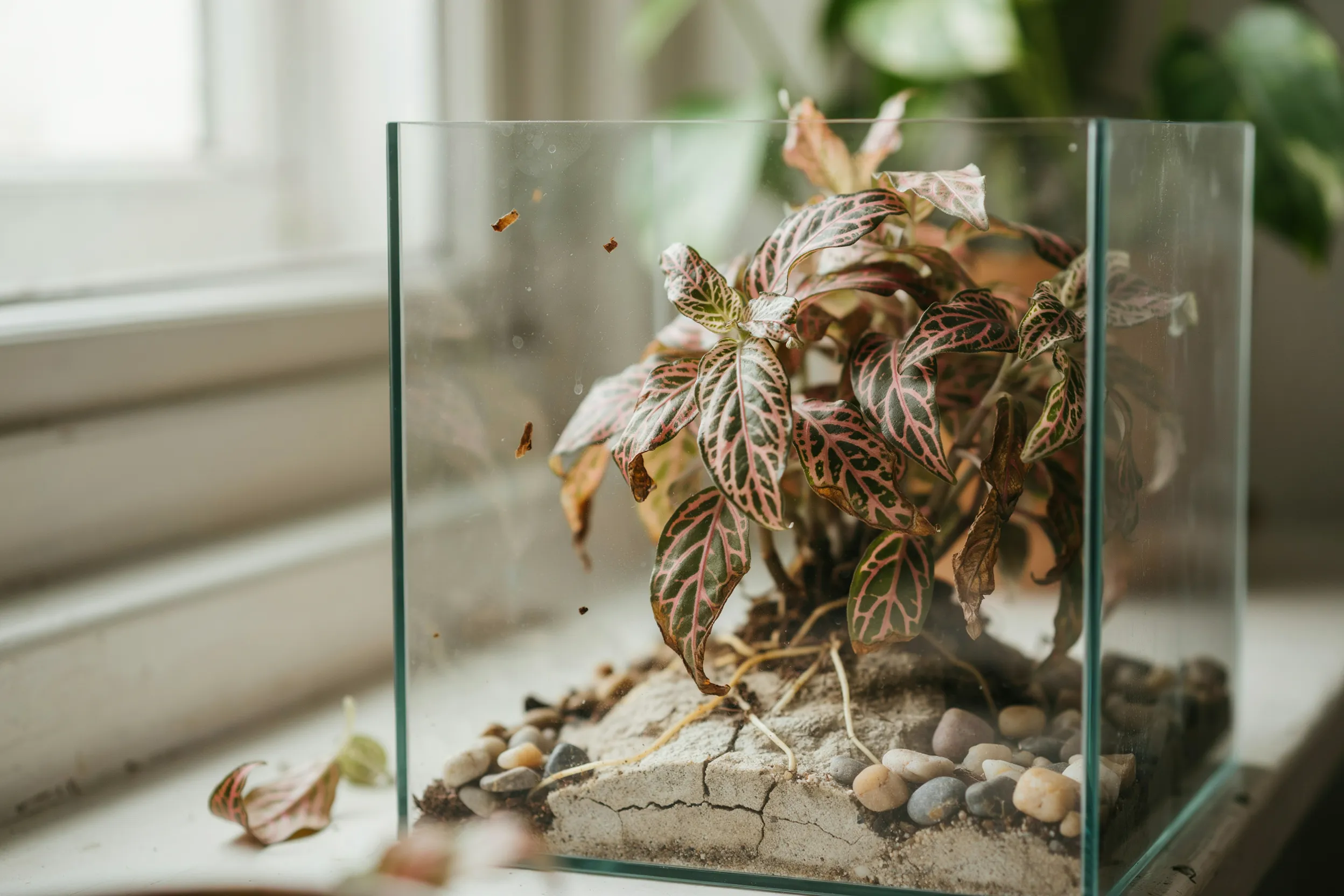
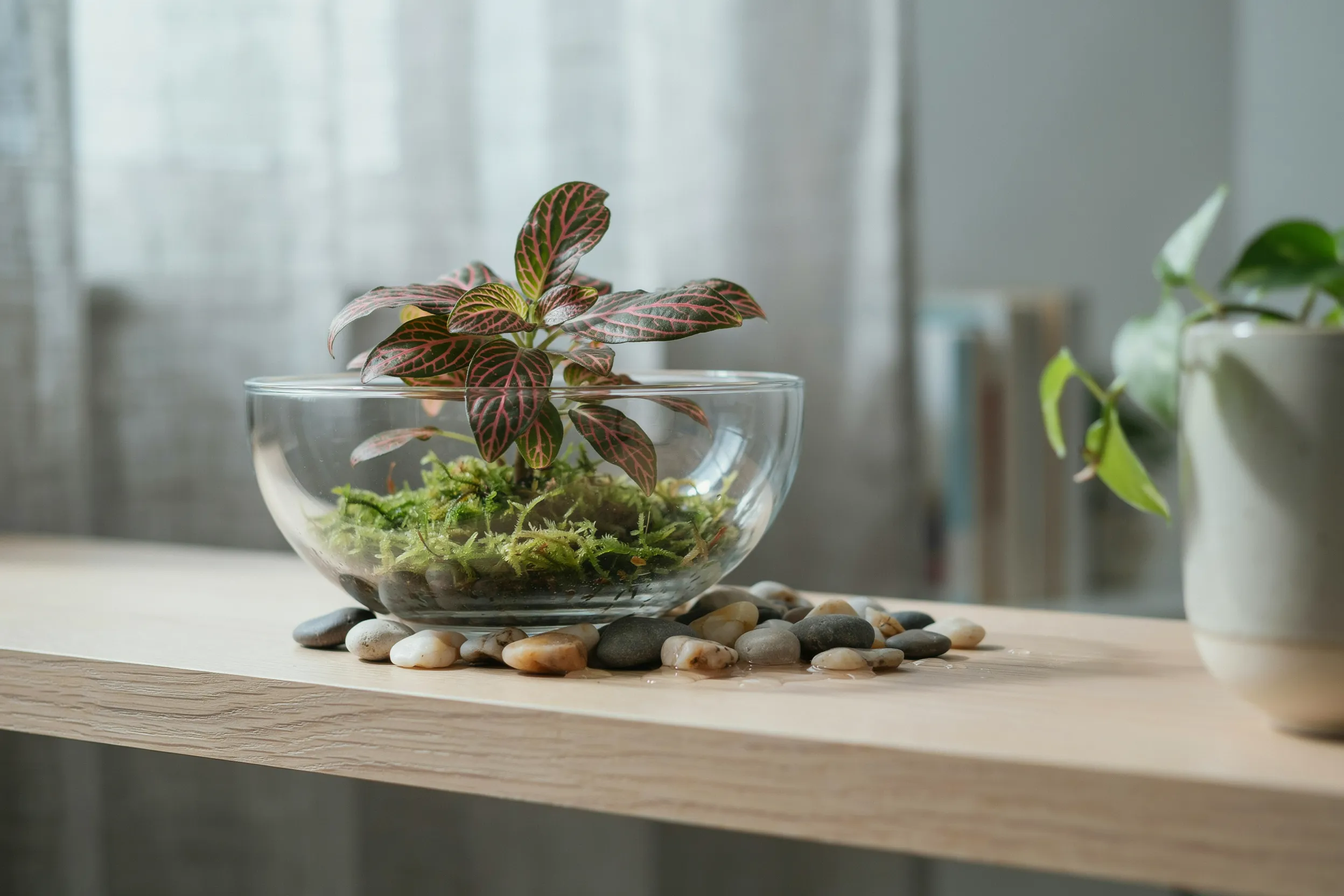
Capsule: Open terrariums work when your ambient humidity is already above 50%, you’ll mist daily, and you want the arrangement visible from all angles without a lid blocking the view. Group multiple fittonias together to create localised humidity through transpiration.
Open terrariums suit you if:
- Your home’s ambient humidity stays above 50% (common in humid climates or homes with whole-house humidifiers).
- You enjoy daily plant care and won’t forget to mist.
- The container shape doesn’t accommodate a lid (open bowls, wide dishes).
- You want to display fittonia alongside succulents or air plants that need drier air.
Making an Open Terrarium Work for Fittonia
- Group 3–5 fittonias together. Multiple plants transpire moisture, creating a localised humidity pocket higher than the room’s ambient level.
- Add sphagnum moss on the soil surface. This retains moisture around the roots and slowly releases humidity upward.
- Mist with distilled water daily. Tap water leaves mineral deposits on the veined leaves. Distilled or rainwater prevents this.
- Use a pebble tray underneath. Fill a shallow tray with pebbles and water, set the terrarium on top. Evaporation raises humidity from below.
- Keep away from drafts. Air conditioning vents, open windows, and heating ducts drop humidity fast. Place the terrarium in a still-air spot.
Action today: If your open terrarium fittonia wilts by afternoon, add a pebble tray underneath and group a second fittonia next to it. The humidity boost from two plants and a water tray is often enough to stop the daily wilt cycle.
Soil Mix That Works in Both Setups
Capsule: Use a well-draining but moisture-retentive mix: 2 parts coco coir, 1 part perlite, 1 part worm castings. This holds enough moisture for fittonia without waterlogging in a closed system. Avoid heavy potting soil . It compacts and suffocates roots in any terrarium.
The soil mix needs to do two competing things: hold moisture (fittonia wilts fast in dry soil) and drain well (fittonia rots in saturated soil). A coco coir-based mix threads that needle.
| Ingredient | Ratio | Purpose |
|---|---|---|
| Coco coir (rinsed) | 2 parts (50%) | Moisture retention, resists compaction better than peat |
| Perlite (coarse) | 1 part (25%) | Aeration and drainage . prevents waterlogging |
| Worm castings | 1 part (25%) | Gentle nutrition, improves soil biology |
Build a drainage layer at the bottom of the terrarium: 1 cm rinsed gravel, a mesh separator, then 4–5 cm of the soil mix above. The terrarium layers guide explains why the order matters and what happens when you skip a layer.
Action today: Mix one batch of this soil (enough for 2–3 small terrariums). Store the excess in a sealed bag . It stays usable for months. If you’re dealing with root rot from a previous fittonia, our soil add-ins for root rot prevention guide covers amendments that improve drainage further.
Watering Fittonia in Each Setup
Capsule: Closed terrarium: water only when condensation disappears from the glass (every 2–4 weeks). Open terrarium: check soil daily and water when the top 1 cm feels dry (every 2–4 days). Always use room-temperature distilled or rainwater . cold tap water shocks the roots and mineral deposits damage the leaf veins.
Closed Terrarium Watering
After the initial setup watering, a closed fittonia terrarium may go 2–4 weeks without needing more water. The sign to water: condensation stops appearing on the glass in the morning. When you do water, add just 1–2 tablespoons . enough to dampen the soil without creating standing water at the bottom.
Open Terrarium Watering
Check daily. Press a finger 1 cm into the soil . If it feels dry at that depth, water slowly around the base until the soil is evenly moist but not saturated. In a dry apartment (below 40% humidity), you may need to water every 2 days and mist the leaves in between.
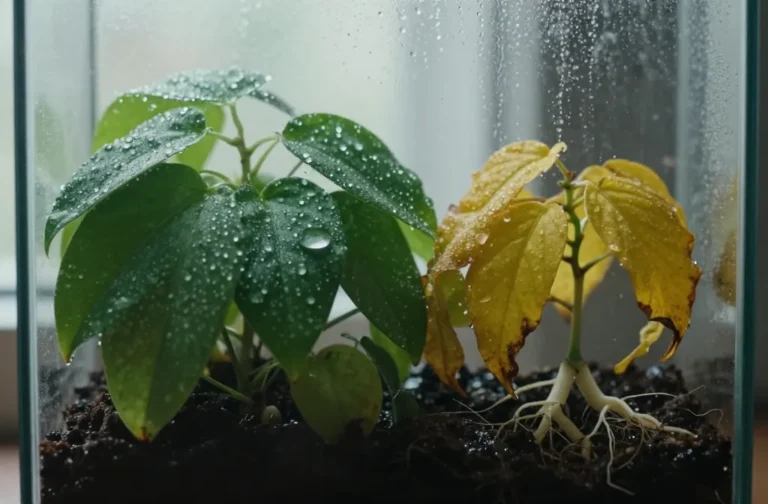
If leaves curl or brown at the edges, increase watering frequency. If lower leaves yellow and stems feel soft at the base, you’re overwatering . let the soil dry longer before the next watering.
Action today: Set a daily phone reminder to check your open terrarium’s soil moisture, or a biweekly reminder for a closed one. Fittonia wilts dramatically when dry (sometimes within hours), so the check takes 10 seconds and saves a plant rescue.
Light Requirements and Placement
Capsule: Bright indirect light only . 2–4 feet from an east or west-facing window, or behind a sheer curtain on a south window. Direct sun scorches fittonia leaves within an hour and overheats closed glass containers fast enough to cook the plant.
Fittonia’s veined leaves fade and lose their distinctive patterns in low light. In too much direct light, the leaves develop white scorched patches and the terrarium overheats. The sweet spot is bright enough to read a book without a lamp but not bright enough to cast sharp shadows.
For closed terrariums, never place them in direct sunlight . The glass acts like a greenhouse and the internal temperature can reach 120°F (49°C) within 30 minutes. Our guide on why plants cook under glass in direct sun explains the physics behind this.
Rotate the terrarium a quarter turn every week so all sides receive even light. Fittonia stems bend toward the light source, and one-sided growth looks lopsided within 2–3 weeks.
Action today: Move your terrarium to a spot that gets bright indirect light. If you’re not sure about the light level, hold your hand 12 inches above the container at midday . You should see a soft shadow with fuzzy edges, not a sharp dark one.
Choosing Fittonia Varieties for Terrariums
Capsule: Compact varieties stay manageable in terrariums longer: F. albivenis ‘White Star’ (white veins, small leaves), F. argyroneura (silver veins, miniature), and F. verschaffeltii (pink/red veins, slightly larger). Avoid large-leaf varieties that outgrow small containers within months.
| Variety | Vein Colour | Leaf Size | Terrarium Suitability |
|---|---|---|---|
| F. albivenis ‘White Star’ | White/cream | Small (2–3 cm) | Excellent . stays compact for months |
| F. argyroneura (mini) | Silver/white | Tiny (1–2 cm) | Best for small jars . slowest grower |
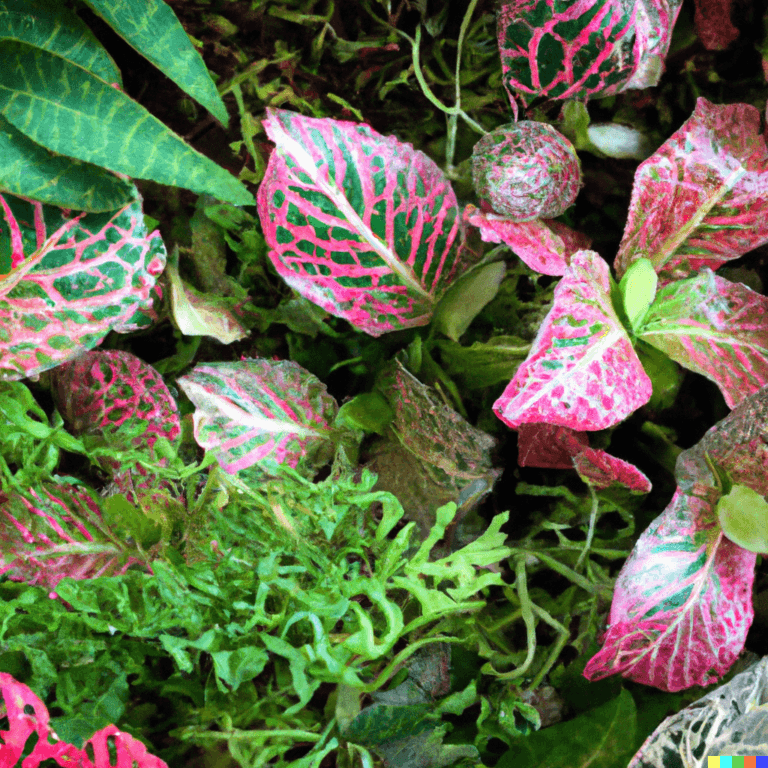
| F. verschaffeltii | Pink/red | Medium (3–5 cm) | Good in larger containers; needs pruning |
| F. ‘Red Star’ | Deep red/pink | Medium (3–4 cm) | Good . colour intensifies in bright indirect light |
| F. ‘Frankie’ | Pink/green variegated | Medium (2–3 cm) | Good . unique colour pattern |
Action today: When buying fittonia for a terrarium, choose plants in 2-inch pots. Larger specimens are already leggy and will outgrow a small container within weeks. Two or three small plants fill in better than one large one.
Frequently Asked Questions
Can I put fittonia in a terrarium with succulents?
Not in the same container. Fittonia needs 60–80% humidity and consistently moist soil. Succulents need dry air and soil that dries completely between waterings. One of them will die. If you want both in one display, use separate containers side by side.
My fittonia wilted completely . is it dead?
Probably not. Fittonia wilts dramatically when dry, sometimes collapsing flat within hours, but recovers within 1–2 hours of watering if the roots are still alive. Water thoroughly, place in bright indirect light, and wait. If the stems are still firm (not mushy), the plant will bounce back. Only give up if stems are brown and mushy at the base.
How often should I fertilise fittonia in a terrarium?
Sparingly. Apply a balanced liquid fertiliser (10-10-10 or 20-20-20) at quarter strength once a month during the growing season (spring to early fall). In a closed terrarium, nutrients accumulate because nothing leaves the system . over-fertilising burns roots and triggers algae growth on the soil surface.
My fittonia is getting leggy in a closed terrarium . what do I do?
Prune it. Pinch or snip the stem tips back to the second set of leaves from the top. This triggers branching from below the cut, making the plant bushier instead of taller. Fittonia in ideal closed conditions can grow fast enough to need pruning every 4–6 weeks. Root the cuttings in water and replant them to fill gaps.
What temperature kills fittonia?
Below 55°F (13°C), leaf damage starts. Below 50°F (10°C), the plant may not recover. Keep your terrarium in a room that stays above 60°F (16°C) year-round. In winter, move it away from cold window glass . The temperature at the glass surface can be 10–15°F colder than the room air.
Do I need a grow light for fittonia in a terrarium?
Only if you can’t provide bright indirect light from a window. A small LED clip light at 6500K colour temperature, running 8–10 hours on a timer, replaces natural light well. Don’t use a regular desk lamp . warm-white bulbs (2700K) lack the blue spectrum fittonia needs for compact growth.
Conclusion
Fittonia thrives in a closed terrarium with a vented lid , that combination gives it the humidity it craves while the weekly venting prevents the mold that kills closed-system plants. If you prefer an open arrangement, commit to daily misting and a pebble tray. Either way, the plant tells you what it needs: wilting means too dry, mold means too stagnant, crispy edges mean the light is too direct or the air too dry. Read the signals, adjust one variable at a time, and the veined leaves stay striking for years.
✓ Article fetched successfully
Title: Do Fittonia Plants Grow Better in Open or Closed Terrariums? A Beginner’s Guide
Status: publish
Date: 2023-08-23 19:58:11
One Comment
Comments are closed.