The Secret to 9 Woodland Plants for Closed Terrariums — Low Light, High Humidity and Slow Growth
I learned to build closed terrariums the hard way: by cooking a sunny-window succulent forest in a week. When I switched to true woodland species, everything calmed down — slower growth, steadier moisture, and that mossy understory vibe I wanted from the start. In this guide, I’ll show you the nine plants that have stayed compact, lush, and mold-resistant in my glass jars for years. You’ll learn what each plant needs, how to spot early trouble, and the exact actions to keep them thriving with standard garden-centre supplies.
1. Pillow Moss (Leucobryum glaucum): The Living Humidity Buffer
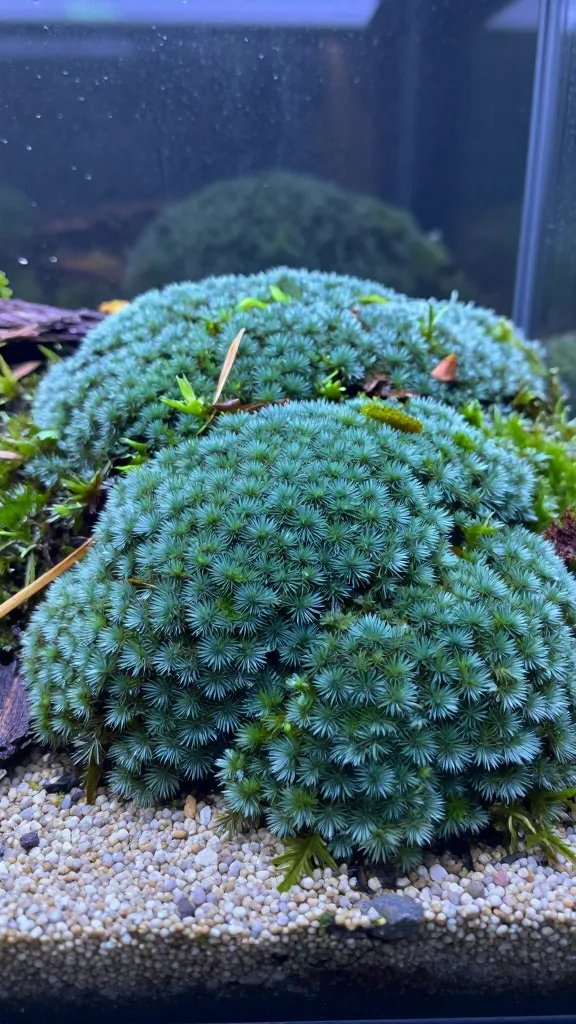
Nothing stabilises a closed terrarium like pillow moss. It drinks up excess moisture, softens hard lines, and hides soil that can grow fungus. When moss fails, you get patchy brown spots and a musty smell within days.
Signs to Watch For
- Silvery, crispy tips that stay dry by midday
- Musty smell and white fuzz on the soil edge
- Moss mounds collapsing or flattening
How to Keep It Happy
- Rinse off any soil before placing; only the green parts should touch the surface
- Set on a thin layer of rinsed decorative gravel or bark chips to improve airflow
- Bright indirect light near a window; no direct sun through glass
- Mist the surface lightly if condensation stays under one-third of the glass for a week
Action today: Lift moss onto a thin gravel layer and trim off any brown bits — this restores airflow and stops rot fast.
2. Dwarf Peperomia (Peperomia caperata ‘Rosso’ or ‘Napoli Nights’): Compact Foliage Without the Sprawl
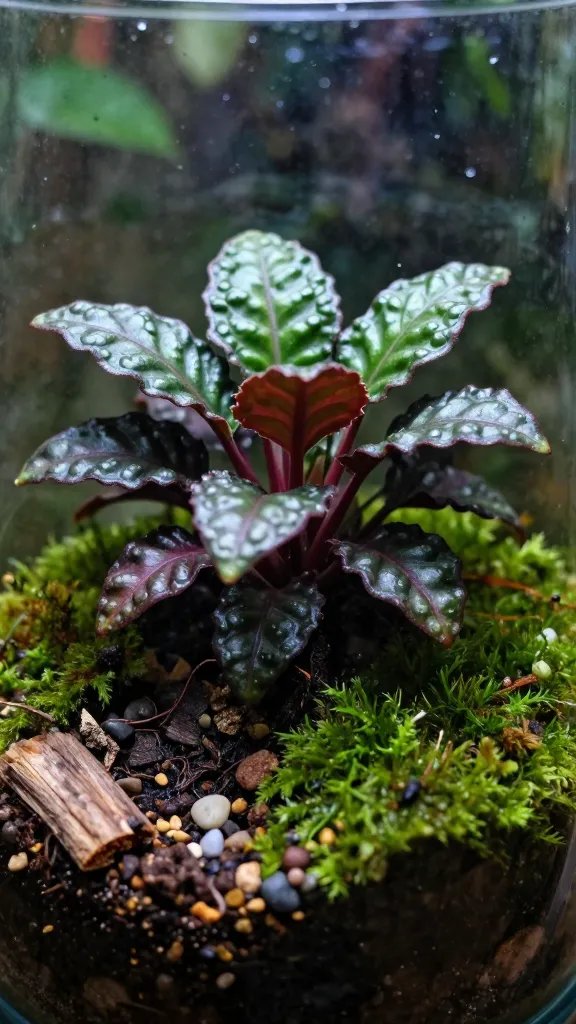
Most peperomias hate soggy pots, but in a closed terrarium they stay compact and sculptural. When stressed, Peperomia caperata drops leaves and melts at the crown. That’s almost always a sign of stagnant air or direct sun, not “needing more water.”
What to Use Instead of Fancy Mixes
- Good quality indoor potting mix from the garden centre
- Blend in a handful of orchid bark or small bark chips for chunkiness
- Top-dress with a thin moss ring so leaves don’t touch wet soil
Placement and Light
- Place the plant slightly elevated on a stone or mound to keep the crown dry
- Keep 2–3 feet from a bright window; never in hot sun
Takeaway: Keep the plant’s crown free from constant contact with wet soil — raise it on a small stone to prevent melt.
3. Creeping Fig (Ficus pumila ‘Quercifolia’): The Tamer, Miniature Climber
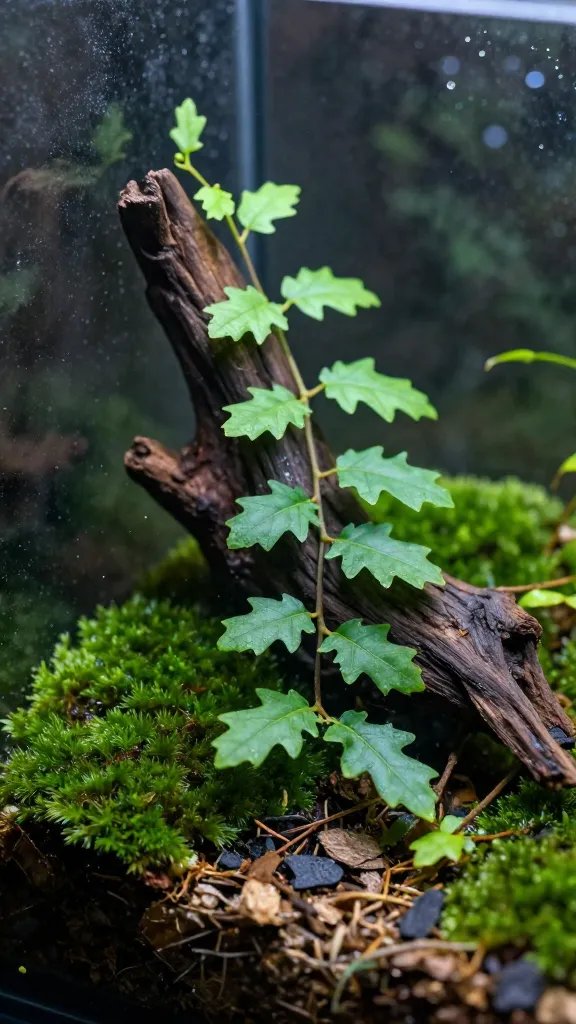
Regular creeping fig overruns a terrarium in months. The miniature ‘Quercifolia’ form keeps the same woodland feel without smothering everything. Left unchecked, it will still blanket moss and steal light from slower plants.
Signs It’s Getting Aggressive
- New shoots reaching the glass within two weeks of planting
- Overlaying moss cushions like a net
- Condensation marks where leaves stick to the glass
How to Control Growth
- Plant just one 2–3 inch cutting
- Pinch back tips every month with clean scissors
- Train a single runner along a stick or small branch
Action today: Pick one runner to keep and clip every other tip at the second leaf to hold its footprint.
4. Spike Moss (Selaginella kraussiana): The Mini Fern-Lookalike That Loves Damp Air
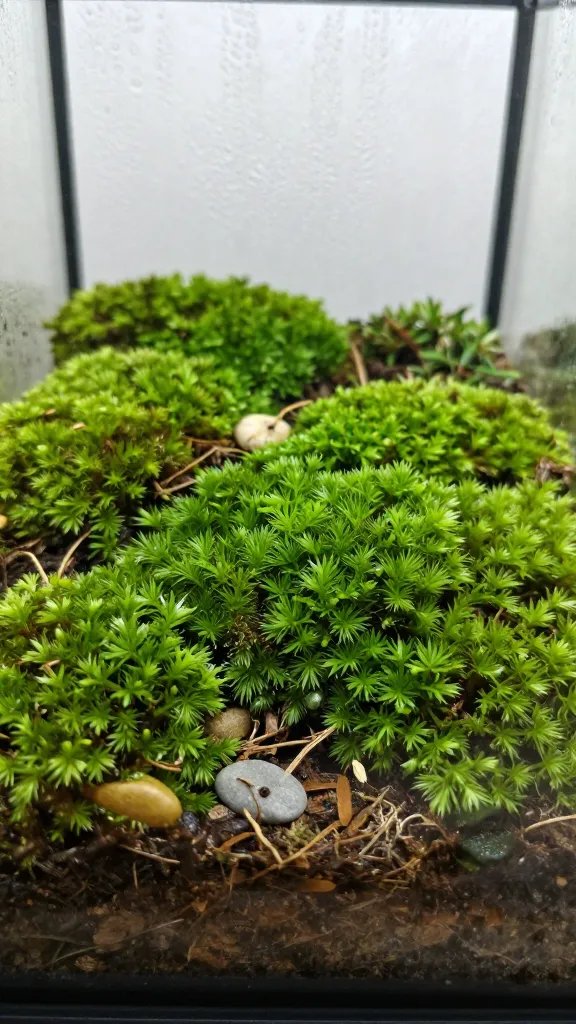
Selaginella gives that ferny carpet without the size of true ferns. If it dries, it collapses into a crunchy mat that doesn’t rebound. Too wet with stale air and it invites white mold at the nodes.
Moisture Sweet Spot
- Condensation on one-third to half the glass by midday = ideal
- Open the lid for 1–2 hours if water beads run down the walls constantly
- Avoid burying stems; lay them on the surface and pin with a pebble
Light and Trimming
- Bright indirect light; a north or east window works well
- Trim back 1–2 inches when it reaches hardscape or glass
Takeaway: Keep stems at the surface, not buried — surface growth stays healthy and resists rot.
5. Nerve Plant (Fittonia albivenis ‘Mini’): Color Pop That Won’t Overgrow
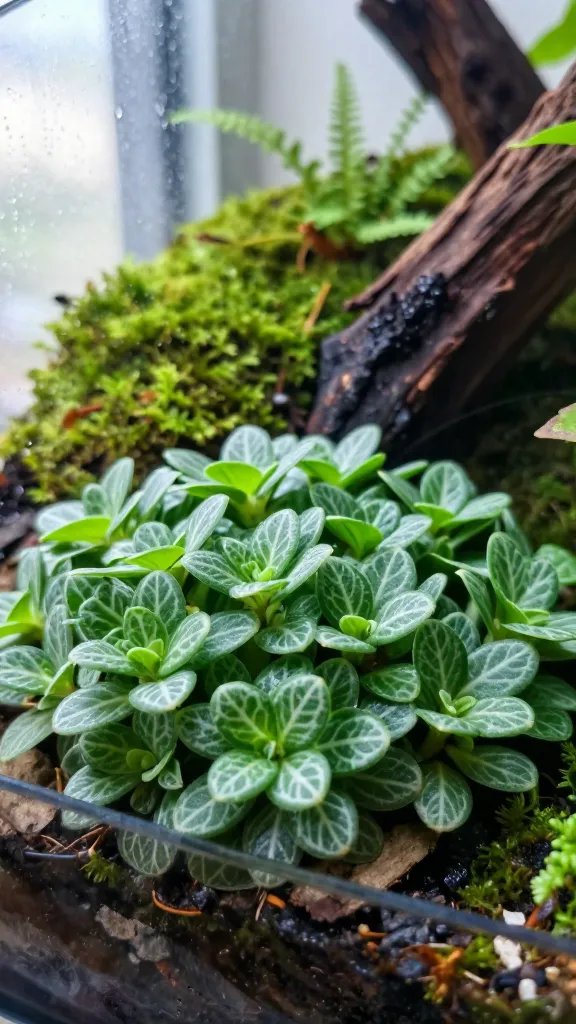
Standard Fittonia gets leggy and floppy. The mini varieties stay tight and cushiony, perfect for foreground color. If humidity swings or light is too low, leaves droop and margins brown quickly.
Signs to Watch For
- Persistent droop even with morning condensation
- Brown edges starting from the oldest leaves
- Stems stretching toward the glass
Simple Fixes
- Move the terrarium 1–2 feet closer to a bright window (no direct sun)
- Snip back to just above a leaf pair; it rebounds bushier
- Thin the canopy around it to let light reach the crown
Action today: Give Fittonia a light haircut above a leaf node — you’ll reset it to a tight cushion in two weeks.
6. Baby’s Tears (Soleirolia soleirolii ‘Aurea’ or ‘Variegata’): Fast Groundcover You Can Keep in Bounds
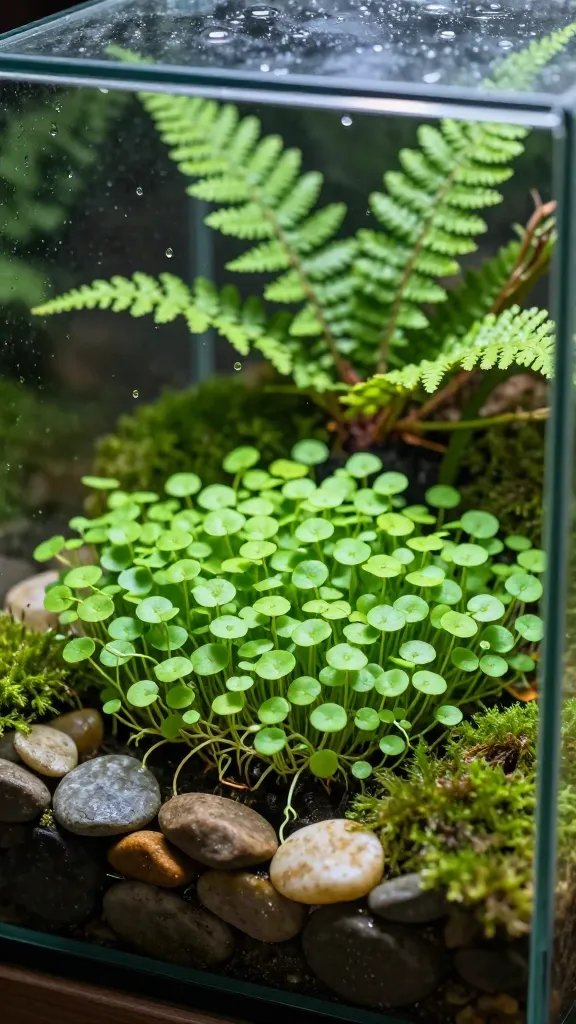
Baby’s Tears loves closed terrariums so much it blankets everything in a month if you let it. When it overruns, it traps moisture against other plants and starts leaf rot. Starved of light, the mat thins to yellow threads.
How to Use It Wisely
- Plant a pea-sized plug, not a handful
- Border the patch with stones to contain runners
- Trim weekly around ferns and moss to keep air moving
Water and Air
- Open the lid for 30–60 minutes after trimming to dry fresh cuts
- If glass is dripping all day, dab the mat with a paper towel
Takeaway: Limit Baby’s Tears to a stony “island” — the hard edge keeps it from swallowing your terrarium.
7. Heartleaf Fern (Hemionitis arifolia): A True Fern That Stays Petite
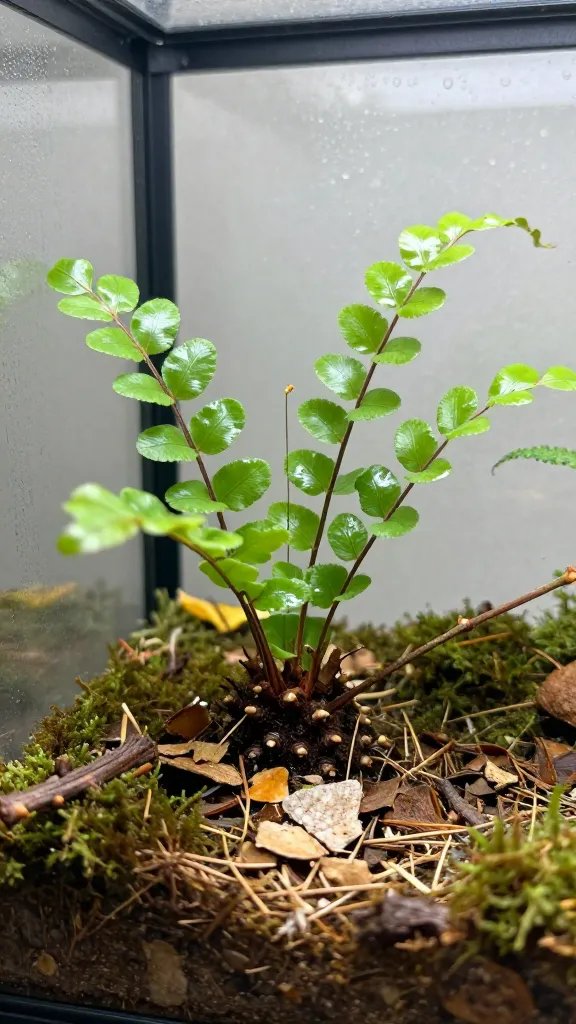
Many ferns outgrow glass in months. Heartleaf fern keeps its sweet, heart-shaped fronds and tops out small. It sulks if the rhizome stays soggy or the air turns stale.
Planting and Care
- Set the rhizome slightly proud of the soil, not buried
- Use standard potting mix with a handful of orchid bark for air pockets
- Keep fronds off wet glass; reposition with a twig if they touch
Light and Cleanliness
- Bright, indirect light — morning light is fine, no midday rays
- Remove any yellowing frond at the base with clean scissors
Action today: Lift the fern on a small mound so the rhizome sits above the soil line — this prevents chronic rot.
8. Jewel Orchid (Ludisia discolor): Slow-Growing Foliage Star for Low Light
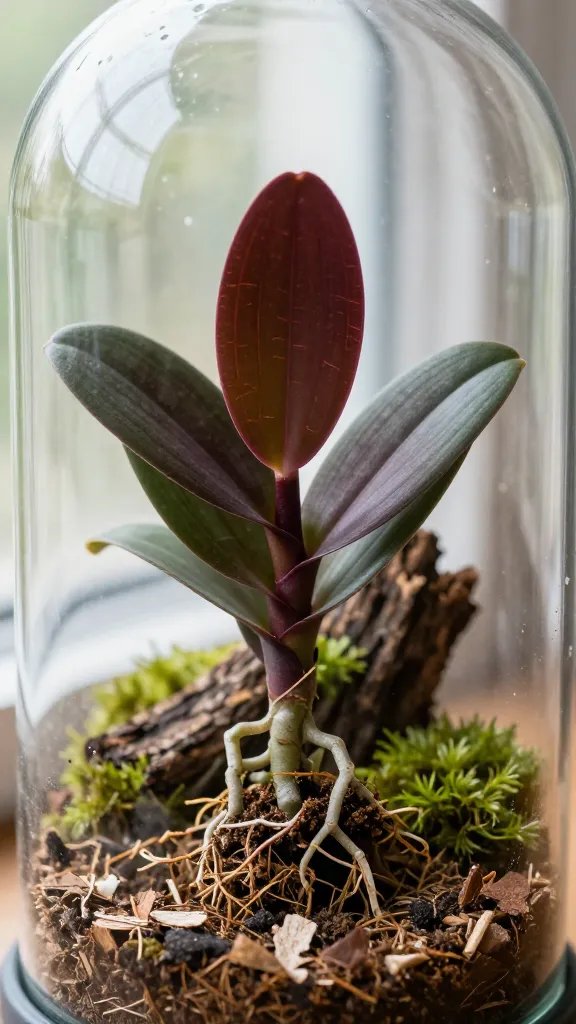
Ludisia discolor brings velvety leaves with copper pinstripes and grows slowly in closed glass. Overheated glass or soggy crowns cause sudden leaf drop and blackened stems. Starved of light, it stretches and loses leaf color.
Right-Sized Planting
- Use a single 2–3 inch cutting; large clumps struggle to adapt
- Standard potting mix with a sprinkle of bark chips for drainage
- Seat the stem at soil level; do not bury the nodes
Light and Temperature
- Place 2–4 feet from a bright window; avoid west-facing heat
- Crack the lid 1 hour after any direct morning sun to vent
Takeaway: Start small — one cutting adapts better and stays compact, avoiding the sudden crash big clumps risk.
9. Dwarf Clubmoss (Selaginella uncinata ‘Blue’): Iridescent Accent That Loves Consistent Damp
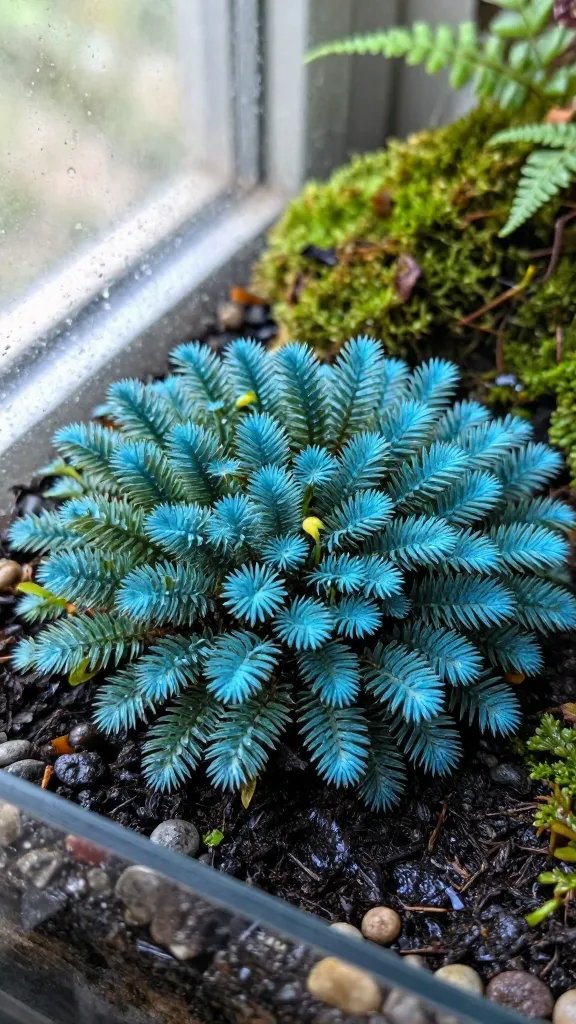
The blue-green sheen of Selaginella uncinata steals the show, and it stays low if you trim the tips. Let it dry and the color fades to dull green; let it stew in stale air and it melts at the nodes.
Soil and Spacing
- Plant shallowly in a standard potting mix; press, don’t bury
- Leave a one-finger gap between it and any glass wall to reduce drip damage
- Edge with small pebbles to guide spread
Routine Care
- Trim 0.5–1 inch every month to maintain color and density
- If condensation is constant, open the lid 30 minutes at midday
Action today: Create a finger-wide perimeter gap from the glass — this prevents constant drip scorch and keeps color vivid.
Frequently Asked Questions
How do I prepare the base layers for a closed terrarium?
Use what you can buy locally. Start with 1–2 cm of rinsed aquarium gravel or decorative stones, then a thin layer of activated charcoal from the aquarium aisle to keep odors down. Add 5–7 cm of a good quality indoor potting mix. Firm it gently so plants don’t sink, and wipe down the glass before closing the lid.
How much should I water a closed terrarium at the start?
Moisten the soil until it feels like a wrung-out sponge — damp but not dripping. After planting, add 1–2 tablespoons of water with a spray bottle to settle everything. Close the lid and check condensation at midday for the next three days; if over half the glass is fogged, open the lid for an hour.
My terrarium has mold on the soil — what’s the fastest fix?
Scrape off the top 5 mm of affected soil with a spoon and bin it. Replace with fresh potting mix and top with a thin ring of clean moss or small bark chips to keep the surface drier. Vent the terrarium for 1–2 hours daily for three days and trim any touching leaves to improve airflow.
Can I keep this on a desk far from a window?
Yes, if you provide bright, indirect light for 8–10 hours. Use a small, warm-white LED desk lamp set 12–18 inches above the glass, angled so it doesn’t heat the lid. Keep the lamp off during midday sun if the terrarium sits near any window to avoid overheating.
How do I stop plants from outgrowing the terrarium?
Plant small to start and prune little and often. Clip tips every 2–4 weeks rather than letting stems run, and remove one old stem for every new stem you keep. If a plant touches the glass for more than a day, trim it back to a leaf node or gently reposition it with a twig.
What should condensation look like in a healthy closed terrarium?
By midday, one-third to half of the glass should show fine misting or small beads. Heavy dripping all day means too much water or too much heat; open the lid for an hour. If the glass stays bone-dry for a week, mist 1–2 tablespoons of water onto the soil, not the leaves.
Conclusion
Pick true woodland plants and your closed terrarium becomes set-and-forget art, not a weekly rescue mission. Start with one or two species from this list, learn their trimming rhythm, and add more once your mini-ecosystem feels stable. When you’re ready, build height with a branch and train miniature creeping fig for a layered forest floor effect.