Stop Killing Plants: 5 Soil “Add-Ins” to Prevent Root Rot in Containers
Your plants aren’t dramatic . you’re drowning their roots. Root rot is the single most common killer of container plants, and it almost always traces back to one thing: soil that stays wet too long because it lacks air pockets. These five add-ins transform a dense, water-holding potting mix into a breathable, well-drained medium that lets roots breathe between waterings. Each one targets a specific failure mode, and I’ll show you exactly when and how to use each. If you’re also dealing with wrong pot size, fix that first — soil add-ins can’t compensate for a pot that’s too large.
How Coarse Perlite Stops Root Rot in Containers
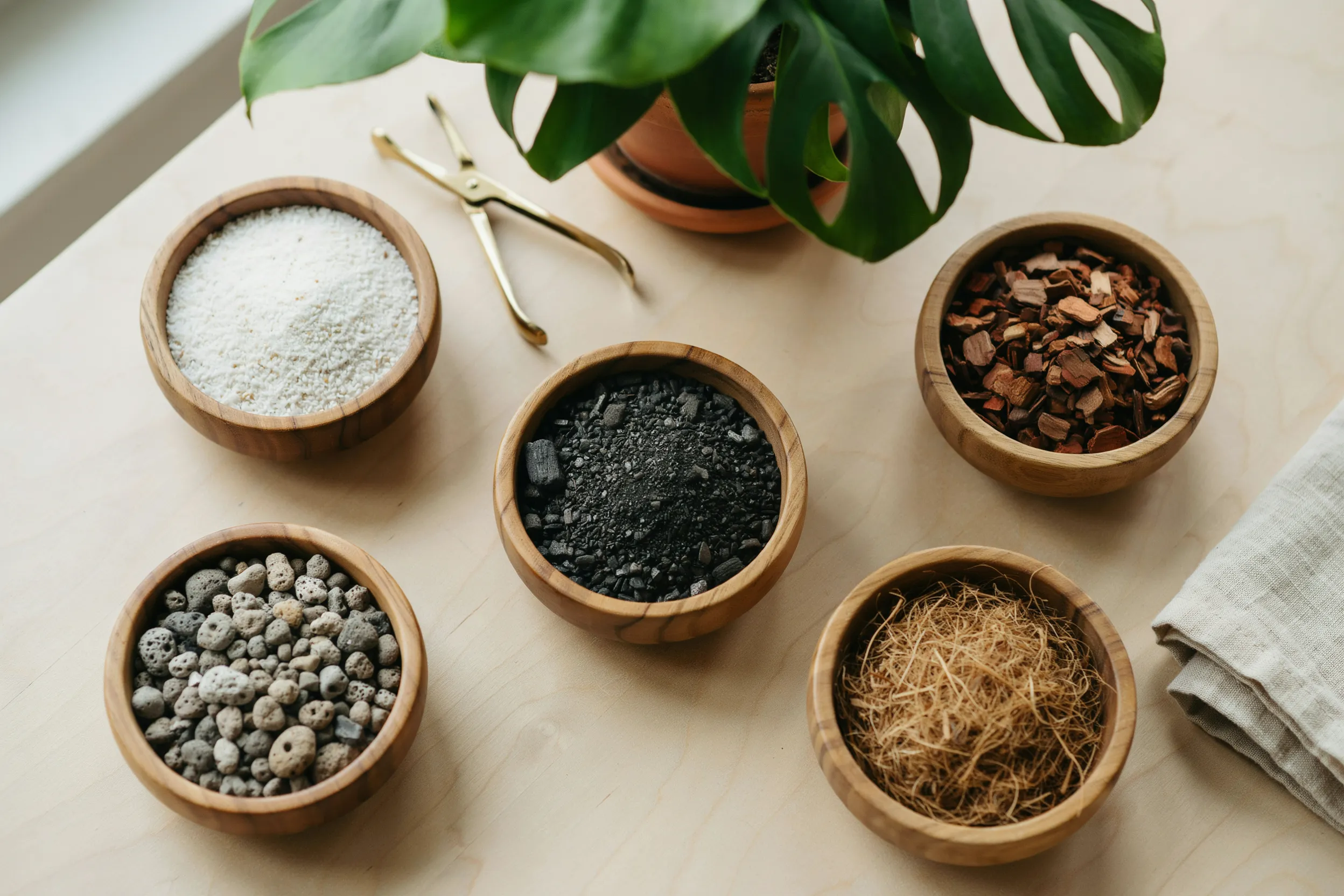
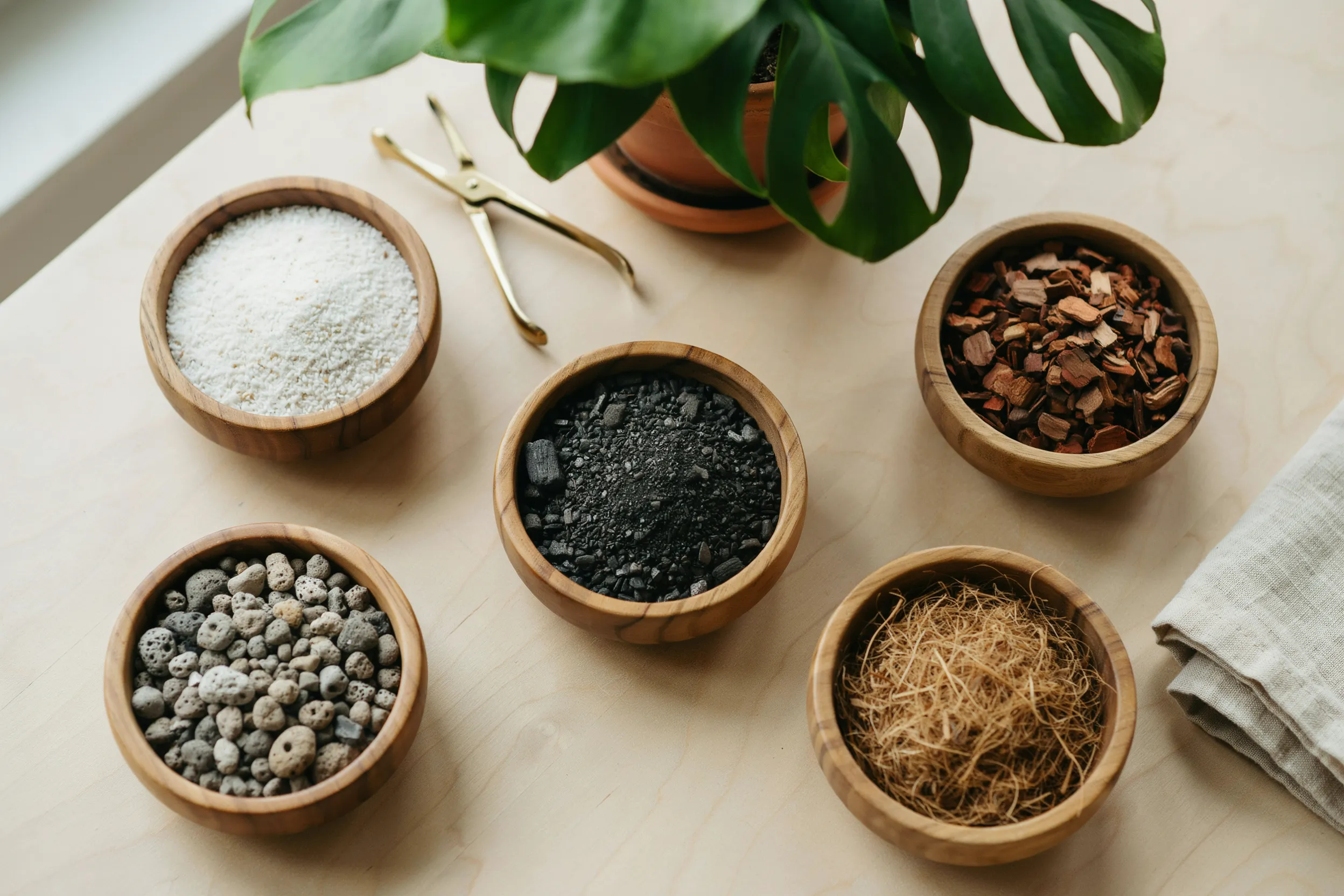
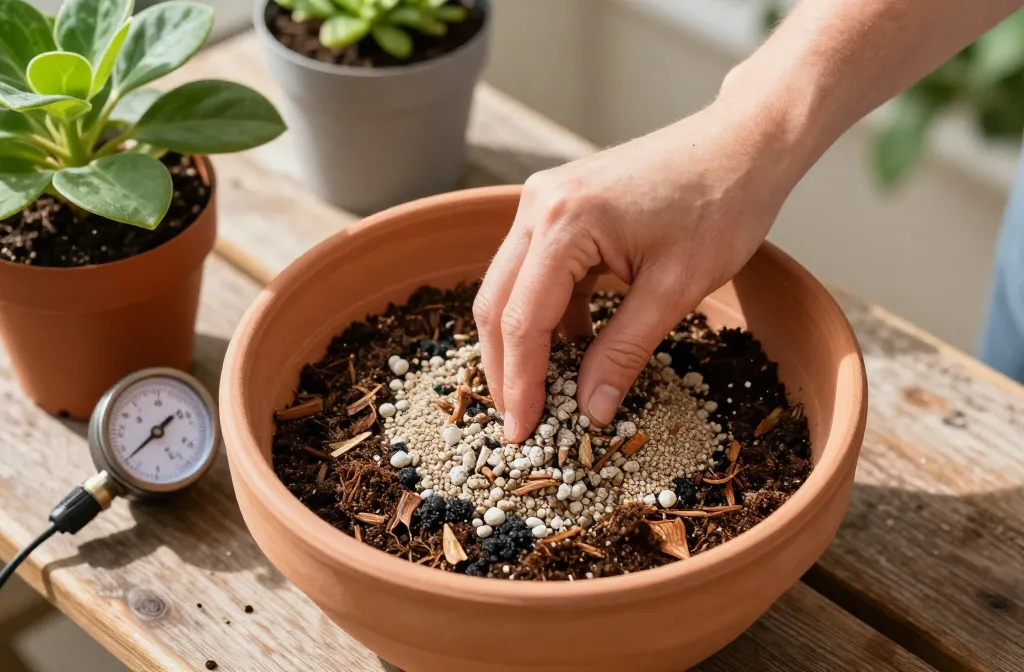
Capsule: Coarse perlite creates air pockets that keep soil from compressing and speeds drainage without stripping the mix dry . use 20–30% for most containers, up to 40% for succulents and aroids prone to rot.
Perlite looks like tiny popcorn, and it works like it too . light, airy, and effective. It opens up compacted potting mixes so water drains out and oxygen flows in. That combo keeps roots from suffocating and rotting. The University of Minnesota Extension guide on container soil mixes identifies poor aeration from overly fine media as a leading cause of root rot in indoor containers.
Why It Works
- Creates air pockets that keep soil from compressing under the weight of watering.
- Speeds drainage without stripping the mix completely dry . roots still have access to moisture between waterings.
- Inert and sterile, so it won’t introduce pathogens or alter soil chemistry.
Use coarse or “#3 horticultural perlite” for containers. Fine perlite disappears into the mix and doesn’t create the macro-pores you need. If you can’t see individual white particles in the finished blend, the grade is too fine.
How to Use It
- General containers: Mix 20–30% chunky perlite into potting soil by volume.
- Thirsty plants (herbs, annuals): Stick to 15–20% to keep moisture balanced without waterlogging.
- Succulents and aroids prone to rot: Go up to 40% for fast-draining blends that dry within 2–3 days.
Action today: If a pot stays wet for more than 5 days in bright light, repot with 30% coarse perlite mixed in. That single change fixes most overwatering damage before it starts. If the pot itself is too large (another common cause), our pot size and root health guide explains the right-size rule.
Why Pine Bark Fines Are the Best Structure Saver for Rot-Prone Plants
Capsule: Pine bark fines add chunky structure that resists compaction for 1–3 years, encourages beneficial microbes that outcompete rot-causing fungi, and keeps soil breathing long after peat or coir breaks down into sludge.
Pine bark fines add chunky structure that keeps soil from turning to sludge. They age well in the mix, resist compaction, and encourage healthy, fibrous roots. Think of them as the scaffolding that holds your soil in perfect form. According to Clemson Extension’s guide on container planting problems, structural amendments like bark fines are the most effective long-term defence against the compaction that leads to root rot.
Key Points
- Improves drainage and aeration without draining too fast . bark holds some moisture internally while creating gaps between particles.
- Provides long-lasting structure as peat or coir breaks down over 1–2 years. Bark pieces stay intact for 1–3 years, maintaining air channels.
- Encourages beneficial microbes that colonise bark surfaces and outcompete rot-causing fungi like Pythium and Phytophthora.
Look for “pine bark fines” or “soil conditioner” . pieces about 1/8–1/4 inch (3–6 mm). Avoid big mulch chunks; roots don’t want to navigate boulders.
Mix Ratios
| Plant Type | Bark Fines | Potting Soil | Perlite | Why This Ratio |
|---|---|---|---|---|
| All-purpose containers | 30–40% | 30–40% | 20–30% | Balanced moisture and air for most houseplants |
| Aroids (philodendron, monstera) | 40% | 30% | 30% | Mimics the chunky epiphytic substrate they evolved in |
| Flowering annuals | 20–25% | 55–60% | 15–20% | More moisture retention for thirsty, fast-growing plants |
Action today: Buy a bag of pine bark fines (often labelled “soil conditioner”) at the garden centre. A 25-litre bag costs $8–12 and lasts through dozens of repots.
How Horticultural Charcoal Keeps the Root Zone Fresh
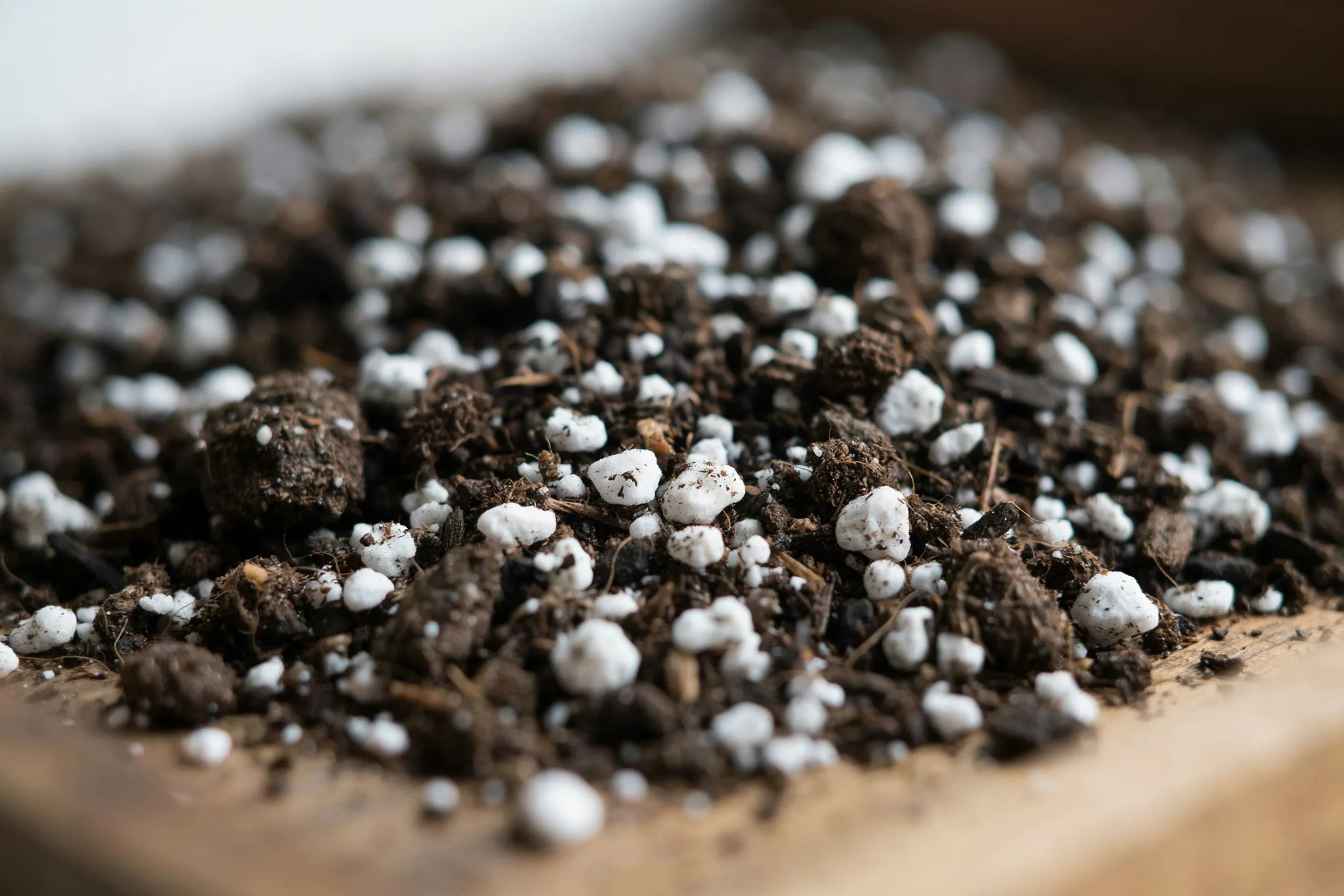
Capsule: Charcoal absorbs excess moisture and sour odours, gives beneficial microbes a porous home base, and keeps the root zone fresher in mixes that stay damp too long , especially in bathrooms, low-light spots, and winter setups where evaporation slows.
Charcoal acts like a tiny sponge . It absorbs excess moisture and funky odours, and gives microbes a home base. It doesn’t “purify” everything like magic, but it does keep the root zone fresher for longer between repots.
Why You’ll Use It
- Balances moisture in mixes that stay damp too long . charcoal’s pores hold water that would otherwise saturate the soil.
- Reduces sour smells in pots with slow drainage by adsorbing the volatile compounds that cause the odour.
- Supports beneficial organisms that colonise the charcoal’s porous surface and help roots resist pathogens.
Use horticultural charcoal or activated charcoal made for plants. Skip BBQ briquettes . additives and binders don’t belong in your pots and can leach chemicals into the soil.
How to Use It
- Mix-in: 10–20% charcoal by volume for tropicals and houseplants.
- Layering (optional): A thin layer (1/2 inch) near the bottom can help in heavy mixes, but don’t rely on it to fix bad drainage . The mix itself needs amending. Our drainage layer guide explains what actually works at the pot bottom.
Charcoal shines in bathrooms, low-light spots, and winter setups where soil dries slowly. Use it when pots feel musty or plants sit borderline soggy despite your best watering habits. For terrariums specifically, charcoal is a standard layer . our terrarium layers breakdown shows where it fits.
Action today: If any pot in your home smells sour when you lift it, mix 15% horticultural charcoal into the soil at the next repot. The odour usually clears within a week.
Why Pumice Is Better Than Perlite for Long-Term Drainage
Capsule: Pumice is perlite’s heavier, tougher cousin . It won’t float to the surface after watering, keeps air channels open for years without breaking down, and holds a touch of moisture inside its pores. It costs more but outperforms perlite in any setup where you want drainage that lasts without re-amending.
Pumice is perlite’s tougher, less floaty cousin. It’s heavier, won’t migrate to the surface, and keeps air channels open long-term. If you’ve watched perlite surf to the top after every watering and wondered why your “well-draining mix” keeps getting denser, pumice solves that.
What Makes It Special
- Long-lasting structure that doesn’t break down easily . pumice is volcanic rock and lasts indefinitely in the mix.
- Improves drainage while holding a touch of moisture inside its pores . A balance perlite can’t match.
- Stays put in self-watering containers and outdoor pots where perlite floats away.
Choose particles between 1/8–1/4 inch (3–6 mm) for houseplants, up to 3/8 inch for large containers. It costs more than perlite ($12–18 per 10 litres vs $6–10 for perlite), but the performance pays off over the 1–3 years between repots.
Best Uses and Ratios
| Application | Pumice Ratio | Partner | Why |
|---|---|---|---|
| Succulents and cacti | 40–60% | 40–60% gritty mix or potting soil | Fast drainage, dries within 1–2 days |
| Large floor planters | 20–30% | 70–80% potting mix | Prevents compaction in heavy, hard-to-repot containers |
| Self-watering pots | 25–35% | 65–75% potting mix | Counters the constant moisture from the reservoir |
Action today: For your next succulent repot, try 50% pumice and 50% potting soil. Water normally and time how fast it dries . Most people see the surface dry within 2 days instead of 5.
How a Coir and Grit Combo Gives You Balanced Moisture
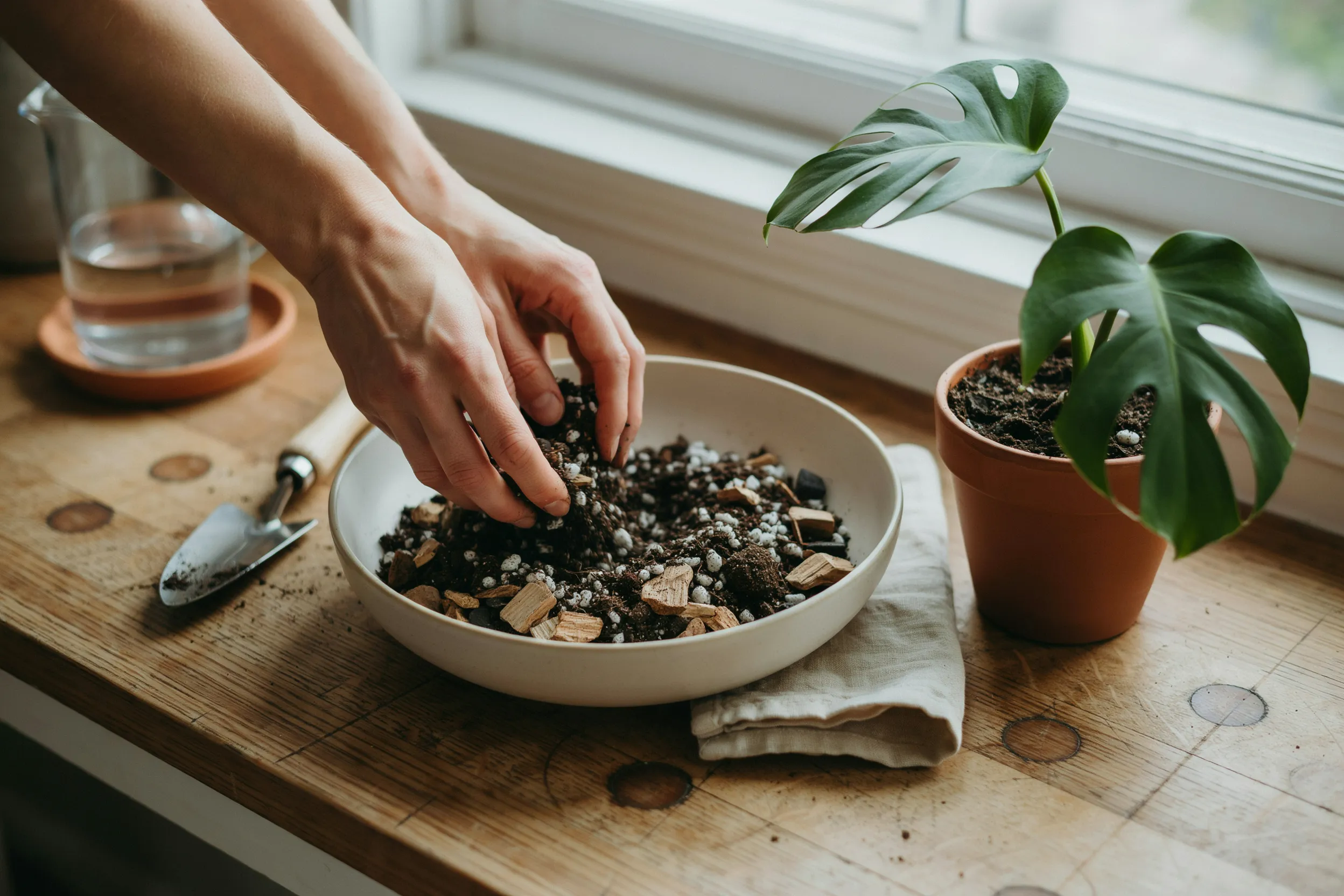
Capsule: Swapping some peat for coconut coir gives steady moisture without waterlogging, and pairing it with coarse grit dials in drainage . it’s the forgiving, “not too wet, not too dry” blend that beginners and overwaterers love. Coir rewets easily after drying (peat doesn’t), and grit creates permanent exit routes for excess water.
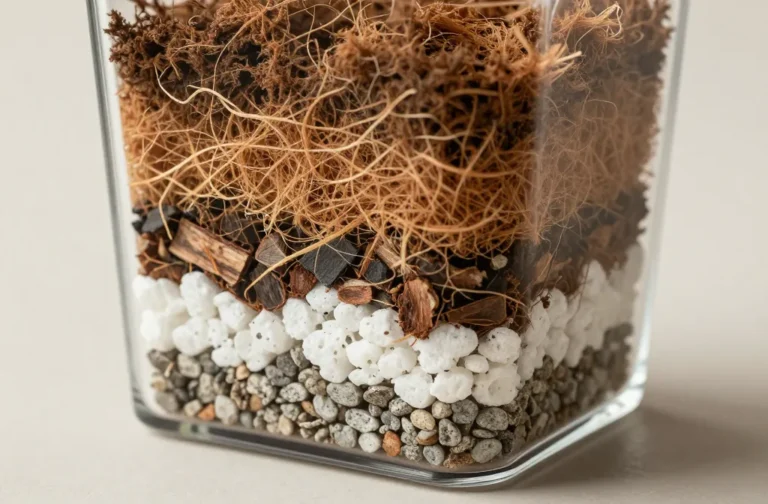
Peat-heavy mixes can hold water forever, which screams root rot. Swapping some peat for coconut coir gives you steady moisture without waterlogging, and pairing it with grit (like coarse sand or small lava rock) dials in the drainage. It’s the “not too wet, not too dry” Goldilocks blend. As University of Minnesota Extension explains, the balance between moisture retention and drainage is the single most important factor in preventing container root rot.
Why This Duo Works
- Coir rewets easily even after fully drying out (peat becomes hydrophobic when dry . water runs off the surface instead of soaking in).
- Grit creates fast exit routes for extra water, preventing the saturation that triggers rot.
- Together they reduce compaction and support root health across a wider range of watering habits.
How to Build the Mix
- Base: 40% high-quality potting soil.
- Coir: 20–30% hydrated coir (rinse if the brick smells salty . Some brands run high in salts).
- Grit: 20–30% coarse horticultural sand, small lava rock, or chicken grit (insoluble granite).
- Optional boost: 10% perlite or pumice for extra airflow.
Skip play sand . It compacts and smothers roots. Go for coarse grains you can see and feel individually. If you can’t see individual grains when you pinch a handful, it’s too fine.
When to Use It
- Herbs and veggies in containers that want consistent moisture without puddles.
- Plants in warm climates where mixes dry fast but still get heavy waterings.
- Beginners who overwater . This blend forgives a lot, trust me.
This combo gives you control. You’ll water less often than with super-gritty mixes, but roots still breathe like champs.
Action today: Buy one brick of coco coir ($5–8 at any garden centre) and a bag of coarse horticultural sand. Soak the brick, mix the recipe above, and repot one struggling plant this week.
Quick Reference: All Five Add-Ins Compared
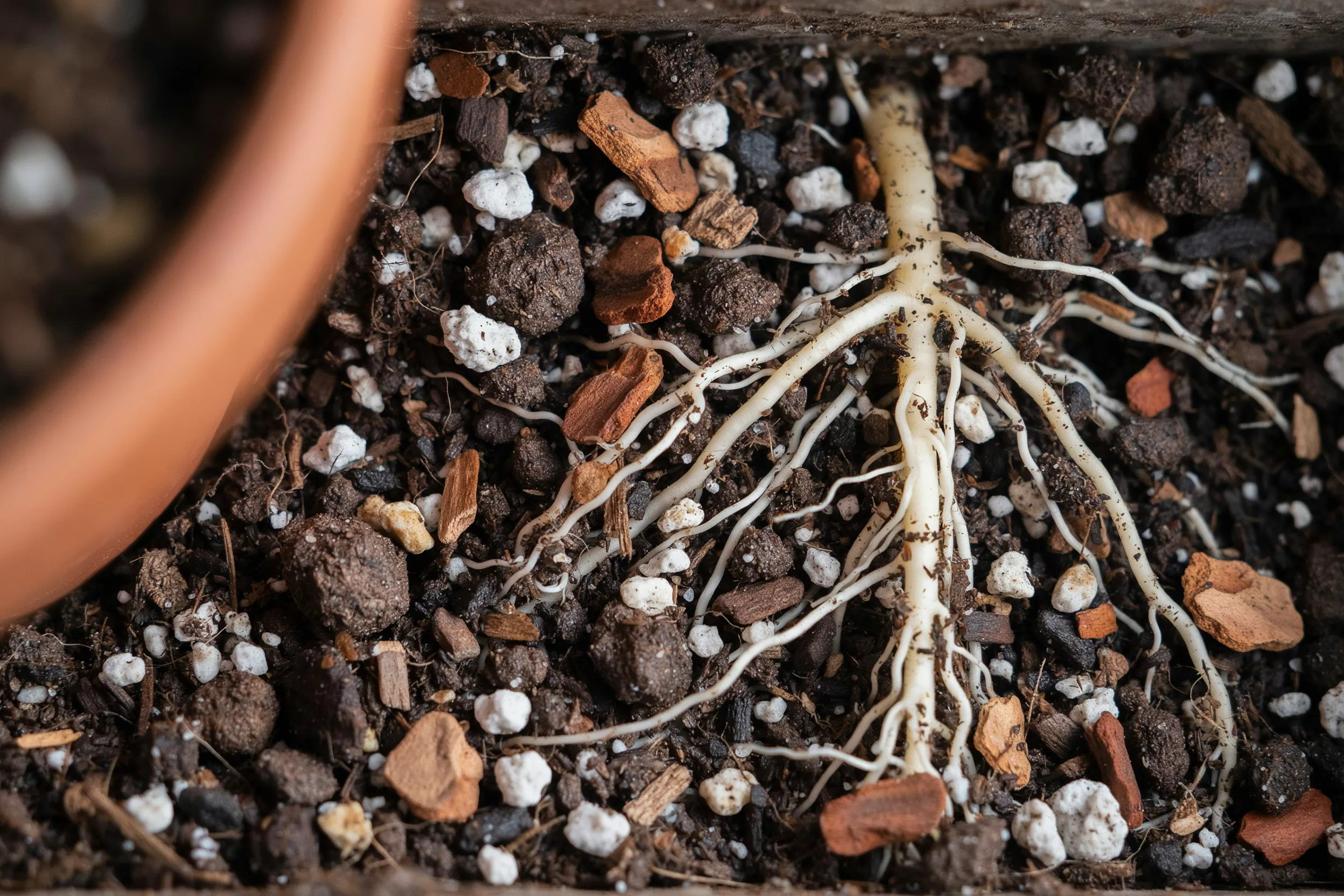
| Add-In | Best Rate | Best For | Lasts | Cost (per 10L) |
|---|---|---|---|---|
| Coarse perlite | 20–40% | All containers, quick fix | Indefinite (floats up over time) | $6–10 |
| Pine bark fines | 20–40% | Aroids, tropicals, annuals | 1–3 years before breakdown | $8–12 |
| Horticultural charcoal | 10–20% | Low-light, humid, winter setups | Indefinite | $10–15 |
| Pumice | 20–60% | Succulents, large planters | Indefinite (doesn’t break down) | $12–18 |
| Coir + grit combo | 20–30% each | Herbs, veggies, beginners | Coir: 1–2 years; grit: indefinite | $5–8 (coir) + $6–10 (grit) |
Frequently Asked Questions
How much perlite should I add to prevent root rot?
For most container plants, mix 20–30% coarse horticultural perlite into your potting soil . succulents and aroids prone to rot can handle up to 40%. Fine perlite doesn’t work as well because it disappears into the mix; always choose the coarsest grade you can find for meaningful drainage improvement.
Can I use charcoal from my fireplace or BBQ in potting soil?
No . fireplace charcoal and BBQ briquettes contain additives, binders, and chemical residues that can harm plants and contaminate your soil. Use only horticultural charcoal or activated charcoal specifically made for plants, which is clean, porous, and free of harmful chemicals.
What’s the best soil mix for succulents to prevent root rot?
A blend of 40–60% pumice or coarse perlite with 40–60% gritty potting soil gives succulents the fast drainage and low moisture retention they need to avoid rot. Avoid any mix that stays wet for more than a day or two after watering . If you can squeeze water out of a handful, it’s too moisture-heavy for succulents.
How do I know if my plant already has root rot?
Gently slide the plant out of its pot . If roots are brown or black, mushy when pinched, and smell sour or swampy, that’s root rot. Trim all affected roots with clean scissors back to firm, white tissue, let the remaining healthy roots air-dry for an hour, then repot into a fresh, well-draining mix with plenty of perlite or pumice. If more than half the roots are gone, the plant may not recover.
Can I mix multiple add-ins together?
Yes . in fact, combining them is usually better than using any single one alone. A popular all-purpose blend: 1 part potting soil, 1 part perlite, 1 part pine bark fines, and 1/2 part charcoal. Each add-in targets a different aspect of root health (aeration, structure, moisture balance, biological activity), and together they create what soil scientists call a “bimodal pore distribution” . both micro-pores for water retention and macro-pores for air.
Do I need to amend soil if my pot already has good drainage holes?
Yes. Drainage holes let water exit, but they can’t fix a mix that holds too much water between the holes. The soil itself needs air pockets throughout the root zone . that’s what these add-ins provide. Holes and amended soil work together, not as alternatives. Our sand vs gravel drainage guide explains why even good holes can’t save a dense mix.
Conclusion
Pick one or two of these add-ins and remix your next pot . No more swampy containers or sad, yellowing leaves. The fastest win is coarse perlite at 30%: cheap, available everywhere, and it fixes most overwatering damage before it starts. From there, add pine bark for long-term structure, charcoal for freshness in damp spots, pumice for succulents that need to dry fast, or the coir-grit combo for herbs and vegetables that need the Goldilocks zone. Your plants will perk up within 2–4 weeks of repotting into a mix that actually breathes.
✓ Article fetched successfully
Title: Stop Killing Plants: 5 Soil “Add-Ins” to Prevent Root Rot in Containers
Status: publish
Date: 2026-07-23 10:30:00