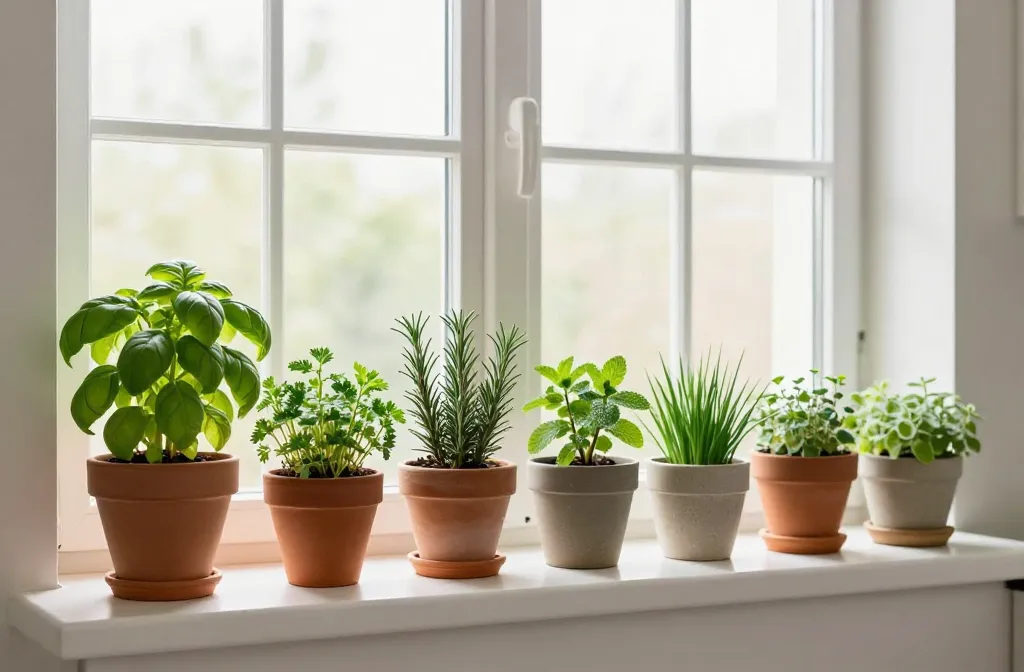
8 Herbs That Thrive in Small Pots on a Windowsill — Ranked by Light Requirement Cheat Sheet
I’ve raised dozens of windowsill herb pots in cramped apartments and shaded kitchens. I know the frustration of a plant that looks fine for a week, then collapses after a cloudy spell or scorches in a sunny blast. In this guide I rank eight reliable herbs by how much light they need, and show you how to keep each one happy in small pots. You’ll learn where to place them, when to water, and how to harvest so they keep producing.
1. Basil: Loves Strong Sun And Warmth (Brightest Light)
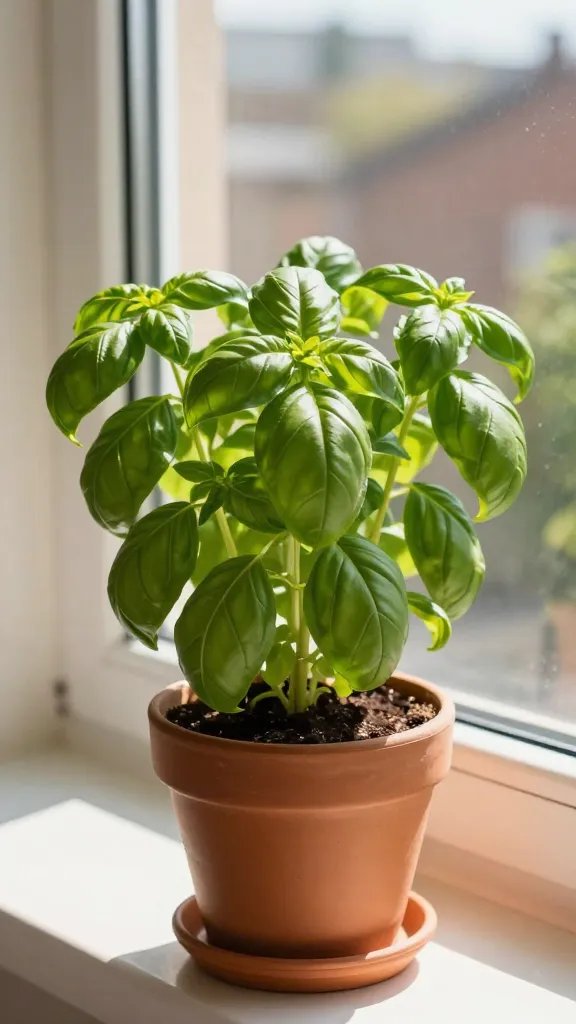
Basil sulks without strong, consistent light. On dim sills it gets leggy, tips blacken, and leaves lose aroma within two weeks. In strong sun it stays bushy and sweet, but it also dries out fast in small pots.
Signs To Watch For
- Tall, thin stems reaching toward the window
- Dull, pale leaves and weak scent
- Soil crusts and dries within a day in full sun
How To Fix It
- Place basil in a south- or west-facing window with at least half a day of direct sun. Pull it 15–30 cm back if leaves scorch in summer.
- Use a 15–18 cm pot with drainage and a saucer. Water when the top 2 cm of mix is dry; don’t let it sit in water.
- Pinch the top pair of leaves weekly to keep it compact. Remove flower spikes as soon as they appear.
- Feed lightly every 2–3 weeks with a general liquid fertilizer at half strength.
Action today: Move basil to your sunniest window and pinch the top growth to two pairs of leaves to reset its shape.
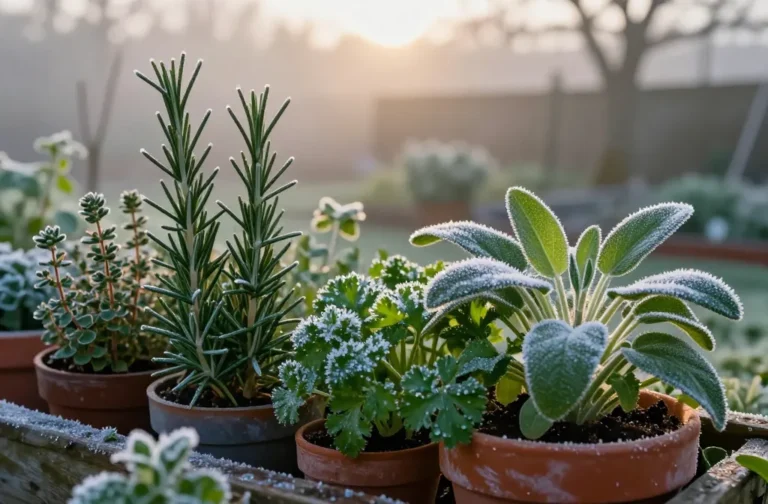
2. Rosemary: Demands Direct Light And Dry Feet
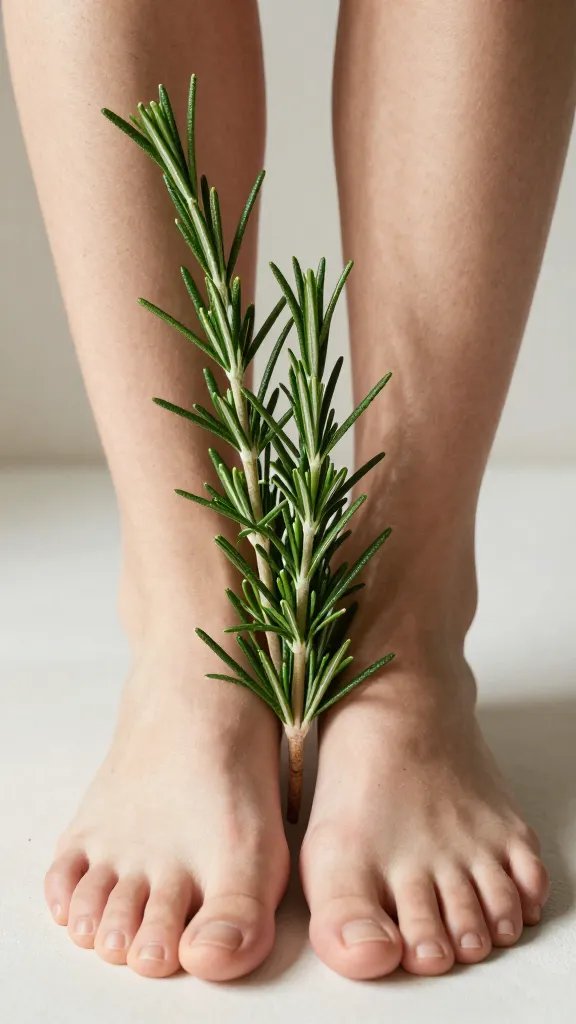
Rosemary handles strong sun even better than basil, but it crashes if its roots stay wet. In dim light it sheds interior needles and becomes woody with sparse tips.
Signs To Watch For
- Needle drop on shaded side of the plant
- Gray, limp tips after heavy watering
- Stagnant growth despite “looking fine”
How To Fix It
- Give direct sun in a south or west window. Turn the pot a quarter turn each week for even growth.
- Use a 12–15 cm terracotta pot and a well-draining potting mix. Let the top 3–4 cm dry before watering.
- Water sparingly in winter; the plant rests and needs less.
- Harvest by snipping entire tip sprigs, not single needles, to encourage branching.
Takeaway: Keep rosemary in bright sun and let it dry more deeply than your other herbs before watering.
3. Thyme: Sun-Loving But Forgiving In Small Pots
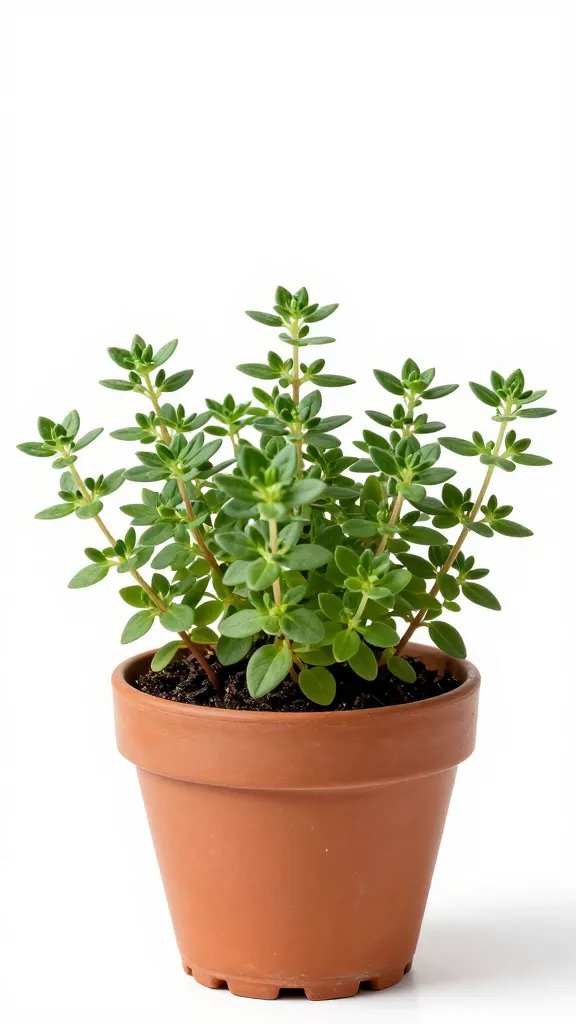
Thyme thrives with strong light, yet it tolerates the slightly lower sun of a bright east window. In low light it spreads thin and woody, and flavor dulls.
Signs To Watch For
- Woody runners with sparse, tiny leaves
- New growth stretching toward glass
- Pot stays wet longer than three days
How To Fix It
- Place in south, west, or bright east windows. If light is borderline, group it with rosemary to the brightest spot.
- Use a 12 cm terracotta pot; thyme hates soggy soil. Water when the top 2–3 cm is dry.
- Rejuvenate by trimming back one-third of the plant in early spring to trigger fresh growth.
Action today: Trim back straggly stems by one-third and shift thyme to the brightest sill you have.
4. Sage: Likes Plenty Of Sun, Needs Breathing Room
Sage handles bright windows well but suffers in stagnant air and soggy pots. In low light, leaves broaden, flop, and snap at the base.
Signs To Watch For
- Floppy, oversized leaves leaning off the pot
- Dark, soft patches at soil line from poor airflow
- Slow rebound after harvest
How To Fix It
- Give direct sun where possible. Crack the window for airflow on mild days.
- Choose a 15 cm pot with drainage and avoid crowding with other plants on the same saucer.
- Harvest by taking full stems above a set of leaves, not individual leaves from the base.
Takeaway: Keep sage in a sunny, well-ventilated spot and harvest by stem to encourage sturdy regrowth.
5. Oregano: Medium–High Light And Regular Trims
Oregano stays dense when it gets several hours of sun, but it becomes stringy and tasteless if shaded. Overwatering is a common windowsill failure.
Signs To Watch For
- Long, pale runners with big gaps between leaves
- Mossy soil surface and fungus gnats from staying wet
- Muted aroma when rubbed
How To Fix It
- Place in a south or bright west/east window.
- Use a 12–15 cm pot. Water when the top 2–3 cm is dry; empty the saucer after 10 minutes.
- Shear back lightly every 3–4 weeks to keep it compact and flavorful.
Action today: Give oregano a light haircut and slide it to a sunnier sill so new growth comes in dense and aromatic.
6. Parsley: Happy With Bright Indirect Light And Morning Sun
Parsley handles less sun than the Mediterranean herbs above. It grows steadily in a bright east window or a south window pulled back from the glass. Too little light gives tall, floppy stems that topple when you cut a handful.
Signs To Watch For
- Flat or curly leaves on very long, weak stalks
- Pot stays wet for days and growth slows
- Yellowing of lowest leaves first
How To Fix It
- Aim for bright indirect light with a couple of hours of morning sun. Avoid intense late-afternoon heat right at the glass.
- Use a 15–18 cm pot. Water when the top 2 cm dries; parsley likes steady moisture, not saturation.
- Harvest by removing full outer stems at the base, leaving the center to keep producing.
Takeaway: Keep parsley in bright, gentle light and harvest from the outside so the plant keeps pushing new growth.
7. Chives: Low–Medium Light Tolerant And Easy To Regrow
Chives tolerate less light than most herbs on this list. They still bulk up faster with morning sun, but they’ll survive on a bright sill without direct rays.
Signs To Watch For
- Flat, floppy blades instead of upright tubes
- Pale green color and slow rebound after cutting
- Soil staying soggy after small waterings
How To Fix It
- Place in a bright east or north window, or a south window set 30–45 cm back.
- Use a 12–15 cm pot. Keep evenly moist; water when the top 1–2 cm is dry.
- Harvest with scissors, cutting a handful of blades down to 5 cm. They regrow cleanly.
Action today: Give chives a neat haircut and slide the pot where it gets morning sun or all-day bright light.
8. Mint: Thrives In Bright Indirect Light And Stays Fresh With Moisture
Mint grows vigorously even without direct sun. On a bright sill it becomes a steady source of sprigs for tea and salads. Direct, hot sun at the glass can scorch the top leaves and dry it out too quickly.
Signs To Watch For
- Crisp, browned leaf edges from heat at the glass
- Wilting and quick bounce-back after watering
- Leggy, pale growth if placed deep in a dim room
How To Fix It
- Give bright indirect light or gentle morning sun. Pull it 20–30 cm back from a hot south window.
- Use a 15–18 cm plastic or glazed pot (holds moisture better). Water when the top 1–2 cm is dry.
- Pinch tips each week to keep it bushy. Don’t mix mint with other herbs in one pot; it takes over.
Takeaway: Keep mint out of harsh afternoon sun, water steadily, and pinch often for a constant flush of tender leaves.
Frequently Asked Questions
How do I know if my windowsill is bright enough without special meters?
Stand at your window at midday and look for a distinct, crisp shadow from your hand on the counter. That means strong light for basil, rosemary, thyme, sage, and oregano. A fuzzy shadow means medium light, fine for parsley and chives. If you see no shadow, move herbs closer to the glass, use a lighter curtain, or swap to a brighter window.
What size pots should I use for small windowsills?
Stick to 12–18 cm diameter pots with drainage holes and individual saucers. Terracotta suits drought-tolerant herbs like rosemary and thyme because it dries faster. Plastic or glazed pots suit parsley, chives, and mint because they hold moisture longer. One plant per pot keeps watering simple and avoids overcrowding.
How often should I water herbs in small pots?
Use your finger as a simple gauge. Water when the top 1–2 cm is dry for mint, chives, and parsley; wait for 2–4 cm to dry for basil, thyme, sage, and oregano; and let rosemary dry deepest at about 3–4 cm. Always water thoroughly until a bit drains into the saucer, then empty the saucer after 10 minutes.
Why do my herbs get leggy and tasteless indoors?
They’re stretching for more light and burning through energy without building sturdy leaves. Move sun-lovers to a south or west window and keep them close to the glass, pulling back if leaves scorch. Pinch or shear lightly every 1–2 weeks to encourage dense growth. Harvest often, but never remove more than one-third of the plant at once.
Can I grow multiple herbs in one long trough on the windowsill?
It’s tempting, but mixed needs cause problems. Dry-loving herbs like rosemary and thyme resent the steady moisture that parsley and mint enjoy. If you use a trough, group herbs with similar watering and light needs and space them at least 15 cm apart. Better yet, use separate pots so you can move each plant to its best spot.
Do I need to fertilize windowsill herbs?
Yes, but go light. Use a general liquid fertilizer at half strength every 2–3 weeks during active growth. Skip feeding in the darkest months if growth slows. If leaves lose color despite good light, resume feeding and refresh the top few centimeters of potting mix.
Conclusion
Place each herb where its light appetite is met, water by feel at the top of the soil, and harvest with a plan. Start by moving basil and rosemary to your brightest window and giving mint a gentler spot back from the glass. Once the placements are set, you’ll enjoy steady, fragrant cuttings all year from a simple windowsill lineup.