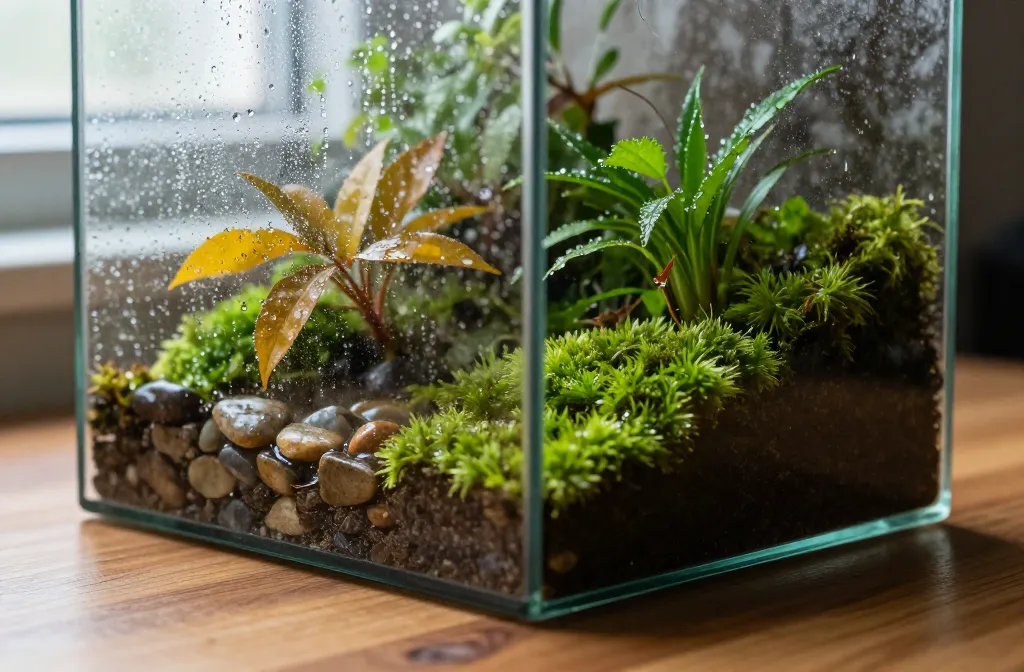
Master 9 Terrarium Troubleshooting Symptoms and What Each One Actually Means
I’ve built terrariums that looked like jewel boxes on day one and bogs by week three. If you’ve stared at fogged glass, drooping moss, or mysterious gnats and wondered what you did wrong, I’ve been there. In this guide, I decode the nine most common terrarium symptoms, what each one actually means, and the exact home-friendly fixes that bring them back. You’ll know when to vent, when to water, and when to swap plants — with tools you already have.
1. Overwatering: The Silent Killer of Closed Terrariums
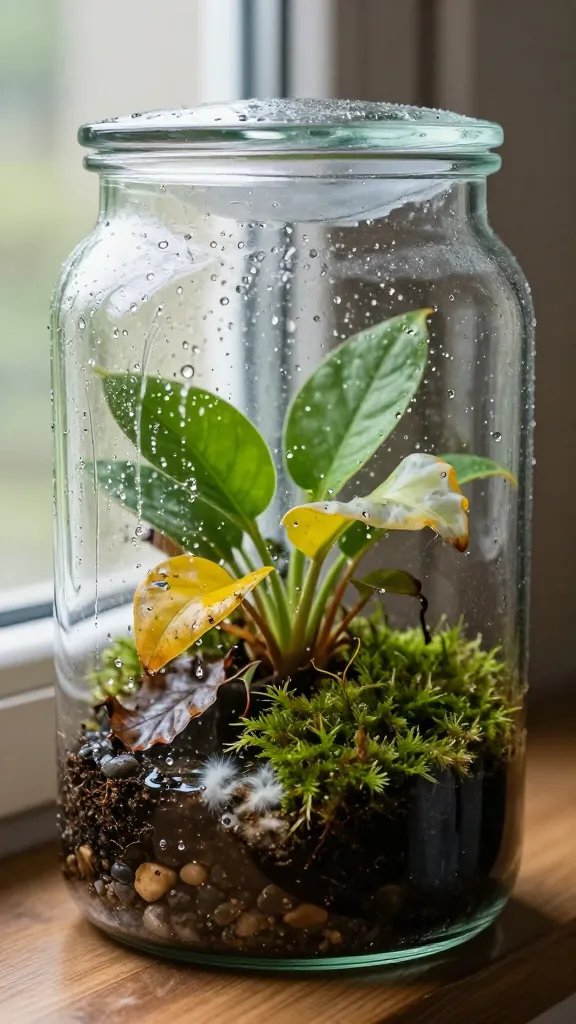
Too much water drowns roots, fuels rot, and turns your glass garden into a swamp. Plants yellow from the base, moss goes stringy, and the whole thing smells stale.
Signs to Watch For
- Heavy condensation covering more than half the glass at midday
- Leaves turning yellow then translucent and mushy
- White or gray fuzz on soil or dead leaves
- Water pooling in the drainage layer (pebbles) you can see
How to Fix It
- Vent: Open the lid for 1–3 hours daily until condensation settles to the lower third of the glass at midday.
- Wick: Insert a paper towel corner down to the drainage layer to draw out excess water; replace as it saturates.
- Prune rot: Snip off mushy leaves and remove fallen debris to cut down decay fuel.
- Water schedule: For closed terrariums, add 1–2 tablespoons every 3–4 weeks only when glass shows minimal morning dew.
Takeaway: Aim for light morning dew and a clear view by midday; if it’s foggy at noon, dry it out before adding another drop.
2. Underwatering: The Quiet Wilting and Crisping
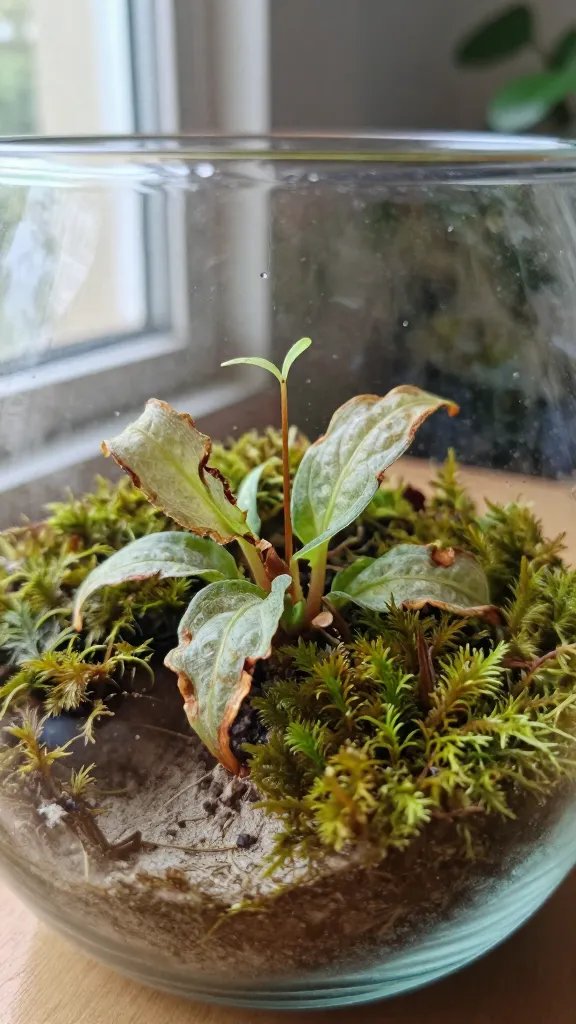
Underwatering doesn’t look dramatic at first. Leaves curl, moss goes brittle, and stems stall — then whole patches brown and die back.
Signs to Watch For
- Bone-dry soil that pulls from the glass edges
- Moss that snaps rather than bends
- No condensation at all in the morning
- Plants losing sheen and feeling papery
How to Fix It
- Rehydrate slowly: Mist evenly until the soil darkens, then add 1–2 tablespoons of water to the base layer. Avoid dumping.
- Seal and observe: Close the lid and check for light morning condensation the next day.
- Mulch: Add a thin layer of decorative moss or leaf litter to slow evaporation.
Action today: If your glass is bone dry at sunrise, mist thoroughly and add two tablespoons of water, then recheck in 24 hours.
3. Constant Fogged Glass: Heat and Humidity Out of Balance
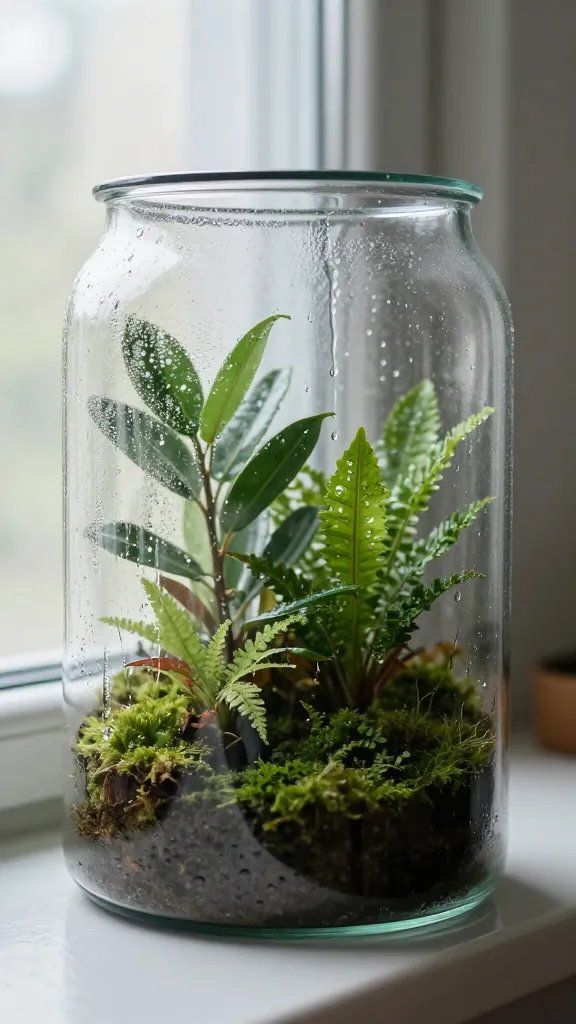
Perma-fog blocks light, stresses plants, and invites mold. It tells you the water cycle is working, but the temperature and airflow aren’t.
Signs to Watch For
- Glass fogged all day, not just mornings
- Drips running down the inside like rain
- Plants leaning toward brighter sides despite moisture
How to Fix It
- Move to bright indirect light, not direct sun — a spot near a window with filtered light through a sheer curtain works.
- Short daily vent: Open the lid 30–60 minutes at midday until glass clears by afternoon.
- Reduce water volume: Wick excess water from the drainage layer with a paper towel.
Takeaway: Clear glass by midday equals healthy balance; adjust placement and venting until that’s your norm.
4. White Mold and Fuzzy Growth: Decomposer Overdrive
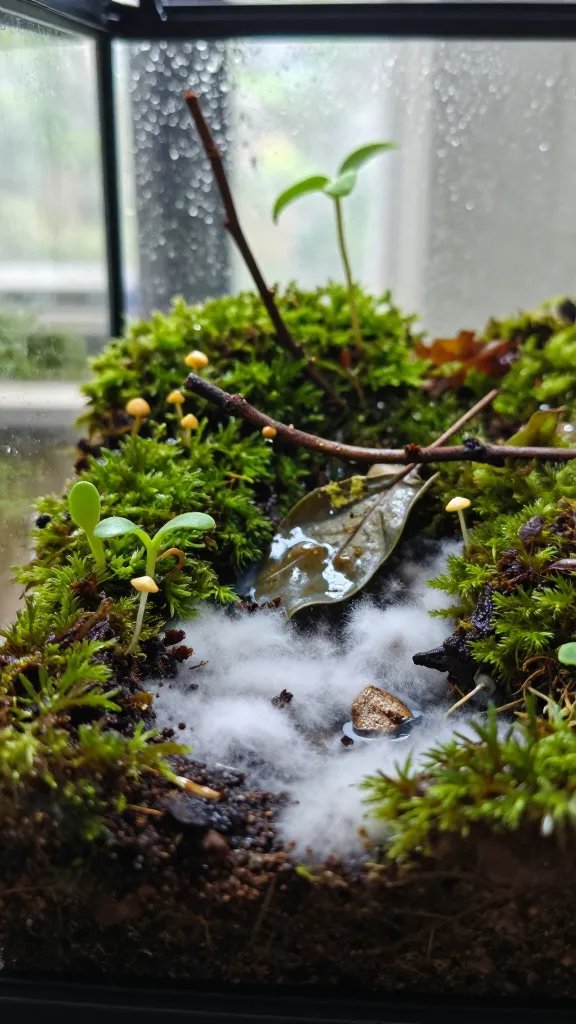
White fuzz on soil, twigs, or leaves means fungus is chewing through wet organic matter. Left alone, it spreads, smothers moss, and rots tender stems.
Signs to Watch For
- Cottony white patches on wood or soil
- Mushroom pins popping up after a warm spell
- Slime film where leaves were left to rot
How to Fix It
- Manual removal: Twist off fuzz with a cotton swab or paper towel; remove decaying leaves.
- Dry the surface: Vent daily for an hour and reduce watering to slow fungal growth.
- Spot-treat: Dust a tiny pinch of ground cinnamon on problem spots — a gentle antifungal from your spice rack.
- Boost cleaners: Add a few grains of activated charcoal (from the aquarium aisle) mixed into exposed soil in the worst area.
Action today: Swab visible mold, dust the area with a pinch of cinnamon, and vent for 60 minutes at midday.
5. Leggy, Pale Growth: Light Is Too Weak
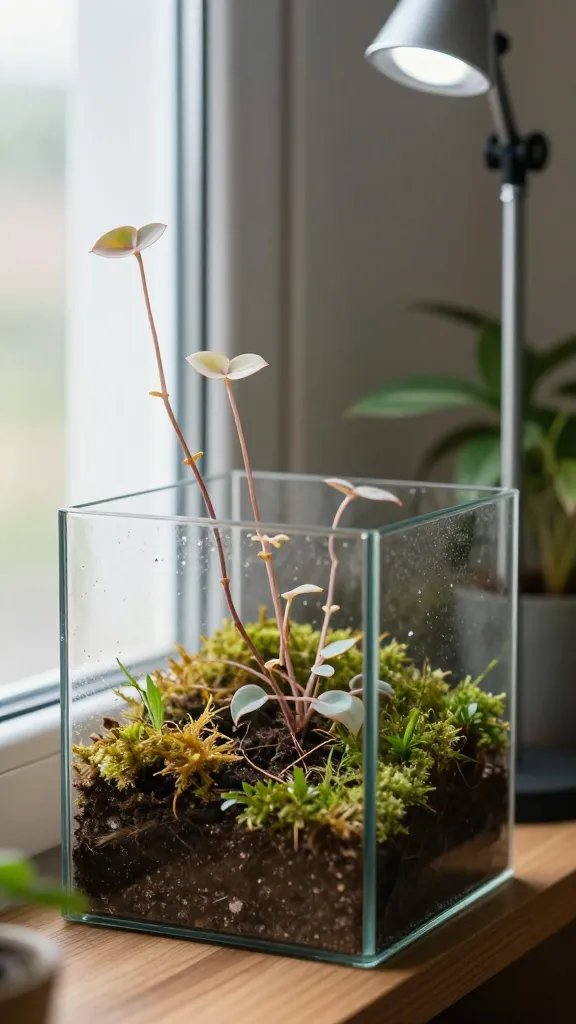
Stretched, floppy stems and washed-out greens mean your plants are craving more light. They spend energy reaching instead of filling in, and moss thins.
Signs to Watch For
- Long internodes with small, pale leaves
- Plants pressing against the glass toward the window
- Green moss turning yellow and sparse
How to Fix It
- Relocate to bright indirect light near a window — bright room with no harsh midday sun on glass.
- Supplement on dark shelves with a simple clamp light fitted with a “daylight” LED bulb (labeled 5000–6500K) 8–12 inches above the terrarium, 10–12 hours/day.
- Rotate the terrarium a quarter turn weekly for even growth.
Takeaway: If plants lean or pale, move them closer to a bright window or add a daylight LED for 10–12 hours.
6. Brown Tips and Crispy Edges: Heat Stress or Salt Build-Up
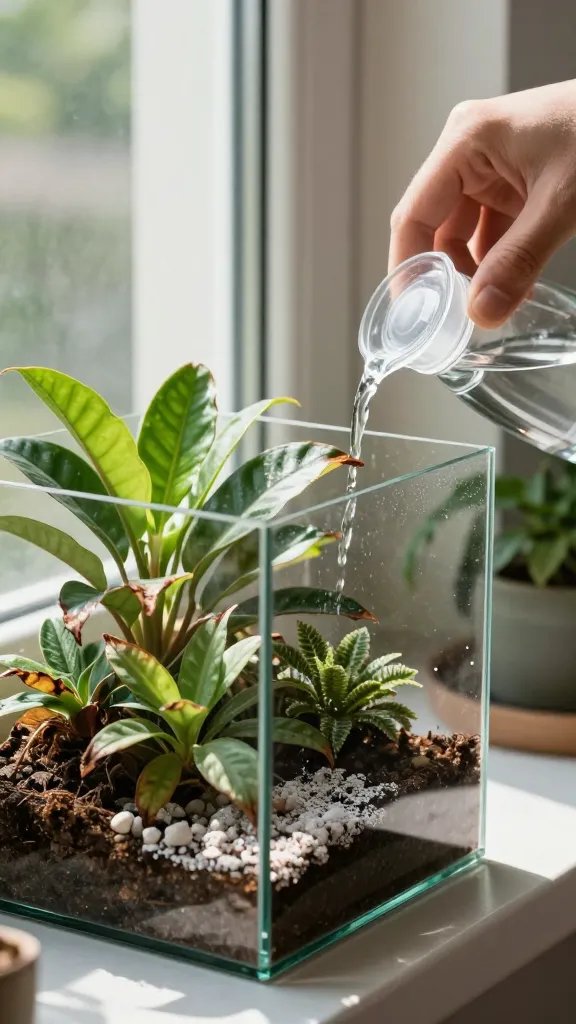
Leaf edges browning and crisping points to hot glass or minerals concentrating in the soil. Both dehydrate tissues faster than roots can supply water.
Signs to Watch For
- Brown, dry edges on leaves facing the window
- Mineral crust on soil or pebbles (white, chalky)
- Watering doesn’t restore plumpness
How to Fix It
- Temperature: Pull the terrarium back from direct sun; don’t let midday sun hit the glass.
- Flush salts: With the lid off, slowly add clean tap water that tastes fresh (not salty) until the drainage layer holds water, then wick it out with paper towels. Repeat once.
- Switch water: Use filtered or boiled-then-cooled water if your tap leaves chalky spots on your kettle.
Action today: Move the terrarium out of direct sun and perform one slow flush, wicking out the drainage layer afterward.
7. Fungus Gnats: Tiny Flies Mean Wet, Rich Soil
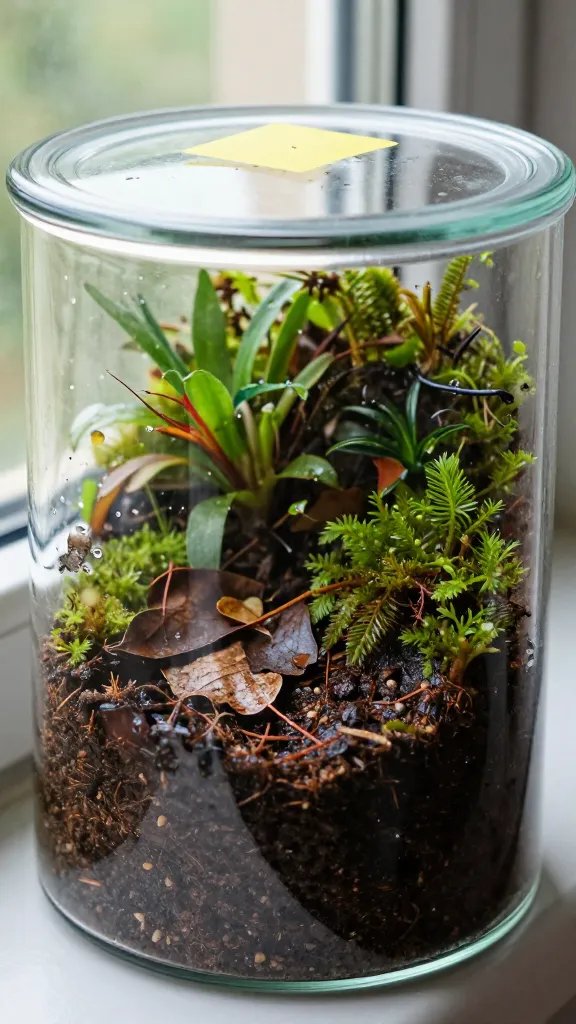
Those little black gnats hovering when you open the lid aren’t just annoying. They signal consistently wet soil with plenty for larvae to eat.
Signs to Watch For
- Small black flies when disturbed
- Larvae (thin, clear worms) in the top 1 cm of soil
- Always-damp soil and decaying leaf litter
How to Fix It
- Dry the top: Vent daily until the top half-inch of soil feels just barely damp.
- Trap adults: Place a small square of yellow sticky trap inside or taped near the opening.
- Top-dress: Add a thin layer (3–5 mm) of horticultural sand or small aquarium gravel to the soil surface to block egg-laying.
- Clean: Remove decaying leaves and trim soft, rotting stems.
Takeaway: Dry the top layer and add a sand or fine gravel cap — that alone breaks the gnat cycle.
8. Algae Slicks on Glass and Rocks: Too Much Light Plus Nutrients
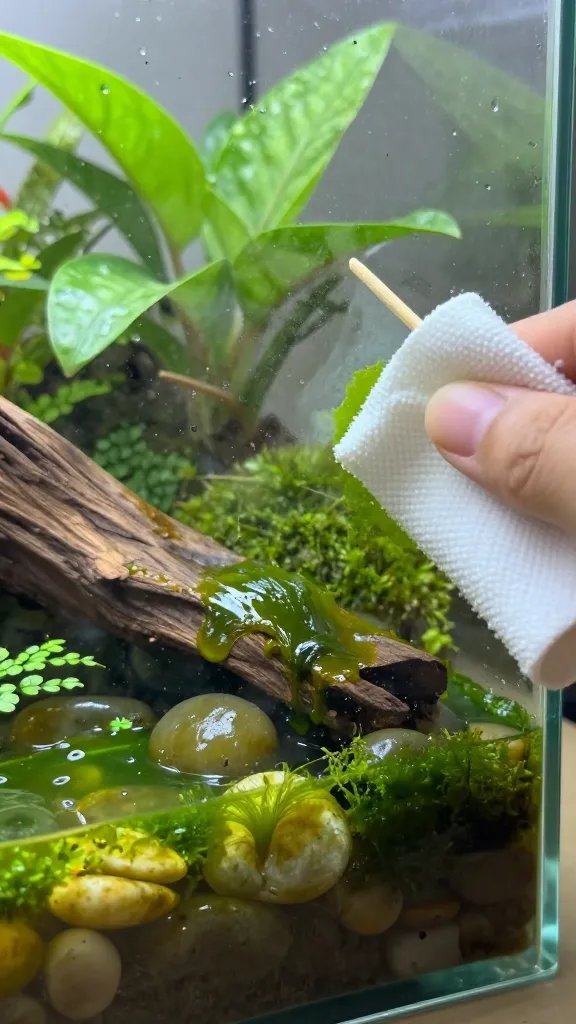
Green film on the glass or a slippery feel on stones means algae is having a feast. It steals light from your plants and makes the scene look murky.
Signs to Watch For
- Green haze on lower glass and hardscape
- Slippery feel on pebbles when you clean
- Condensation tinted greenish in strong light
How to Fix It
- Reduce direct light: Move out of direct sun or shorten artificial light to 8–10 hours.
- Clean: Wipe glass with a microfiber cloth wrapped around a wooden chopstick for tight spots.
- Starve algae: Avoid fertiliser; remove decomposing leaves; add a sprinkle of activated charcoal to the soil surface in problem zones.
Action today: Wipe the glass clean and move the terrarium to bright, indirect light — not sunbeams.
9. Plant Collapse After Repotting: Wrong Species or Root Shock
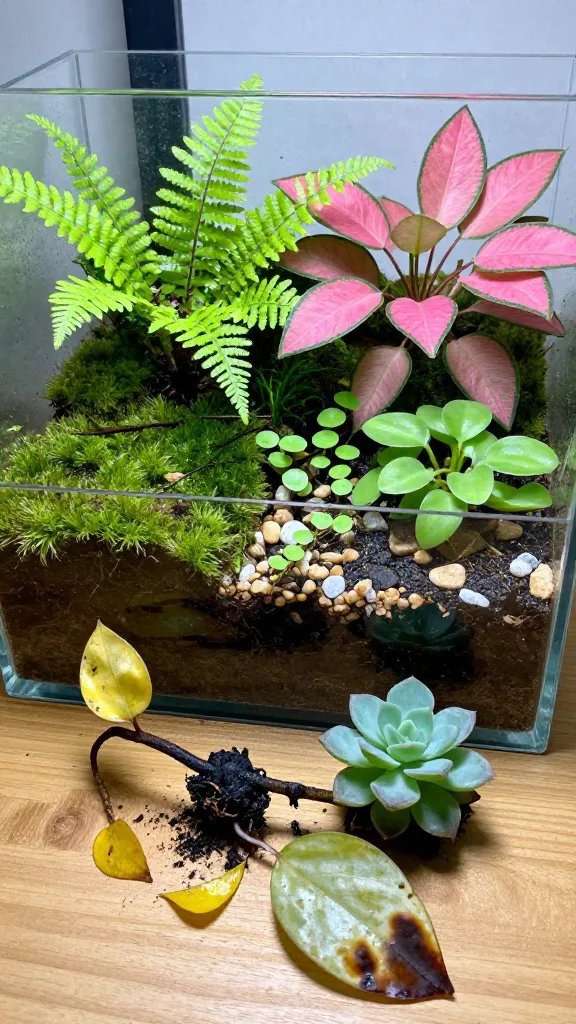
When a new terrarium declines in days, the issue is usually plant choice or rough planting. High-humidity species thrive; houseplant leftovers often don’t.
Signs to Watch For
- Terrestrial ferns thriving while a pothos cutting or succulent rots
- Leaves droop and blacken from the stem base
- Plants fail to perk up after a week of stable conditions
What to Use Instead
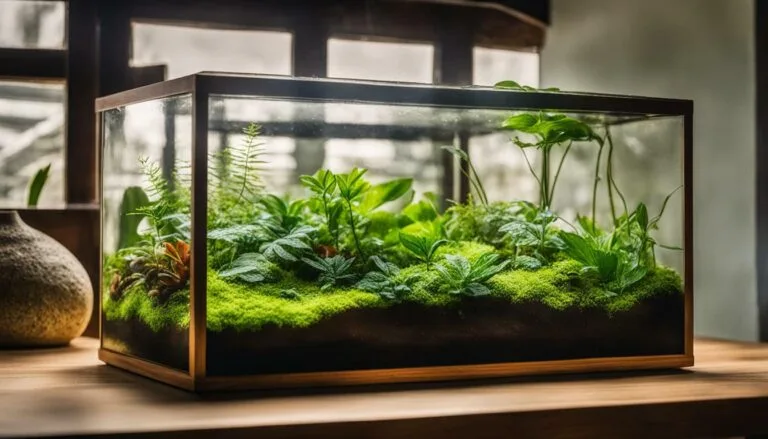
- Choose small, humidity-loving plants: Mosses, Fittonia (nerve plant), Selaginella, miniature ferns, Pilea depressa, and peperomia species with thin leaves.
- Avoid: Succulents, cacti, pothos, snake plant in closed terrariums — they prefer drier air.
- Plant gently: Firm soil around roots, don’t bury crowns, and water to settle only once.
How to Fix It
- Swap mismatched plants for humidity lovers from the garden centre’s terrarium or fairy-garden section.
- Trim rot back to firm tissue and replant at the same depth.
Takeaway: If a plant consistently fails in high humidity, replace it with a true terrarium species rather than forcing it.
Frequently Asked Questions
How often should I open the lid on a closed terrarium?
I open mine for 30–60 minutes once or twice a week to refresh air and balance humidity. If the glass stays foggy past midday, open daily until it clears. If the glass is bone dry each morning, keep it closed and add a tablespoon of water. Watch the glass — it tells you what to do.
What’s the simplest watering routine for a closed terrarium?
Start with 1–2 tablespoons of water every 3–4 weeks. Add water only when morning condensation drops to a faint mist on the lower third of the glass. Always add small amounts with a spray bottle or spoon, not a pour, to avoid flooding the drainage layer.
Do I need special soil for a terrarium?
Use a good quality potting mix from the garden centre, lightened with a handful of fine orchid bark or perlite if you have it. Add a thin layer of aquarium charcoal or horticultural charcoal under the soil to reduce odours. Avoid garden soil — it compacts and brings pests.
Why is my moss turning brown?
Brown moss usually means low light, stale air, or it dried out and never recovered. Move the terrarium to brighter indirect light, mist lightly, and vent for an hour daily for a week. Trim away dead mats to let new green tips expand. Replace with fresh sheet moss if most of it is crispy.
Can I put succulents in a closed terrarium?
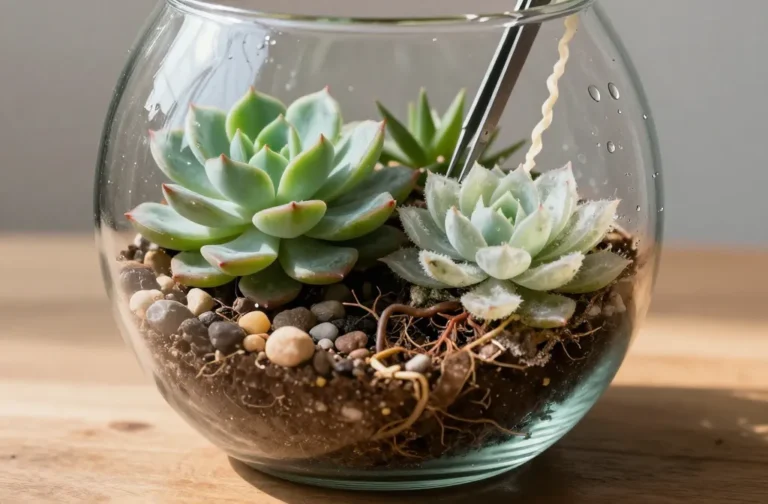
No — succulents rot in closed, humid conditions. If you love the look, use an open-top glass container placed in a bright window and water lightly every 2–3 weeks. Keep the soil gritty with cactus mix from the garden centre and avoid misting.
How do I clean the inside glass without disturbing plants?
Wrap a microfiber cloth around a wooden chopstick or a long spoon handle. Slide it down the glass and wipe in vertical strokes. For tight corners, use a cotton swab. Clean when the glass is only lightly damp so you don’t smear algae.
Conclusion
Your terrarium already tells you what it needs — the glass, the leaves, and even the gnats are clear signals once you know the language. Choose one symptom above, apply the single action, and watch the balance reset in days. When you’re ready for the next step, build a maintenance routine around the midday glass check — it’s the simplest habit that keeps a terrarium thriving for years.