5 Cactus Species That Work in a Closed Cloche Terrarium — and the Airflow Rule They All Need Secrets
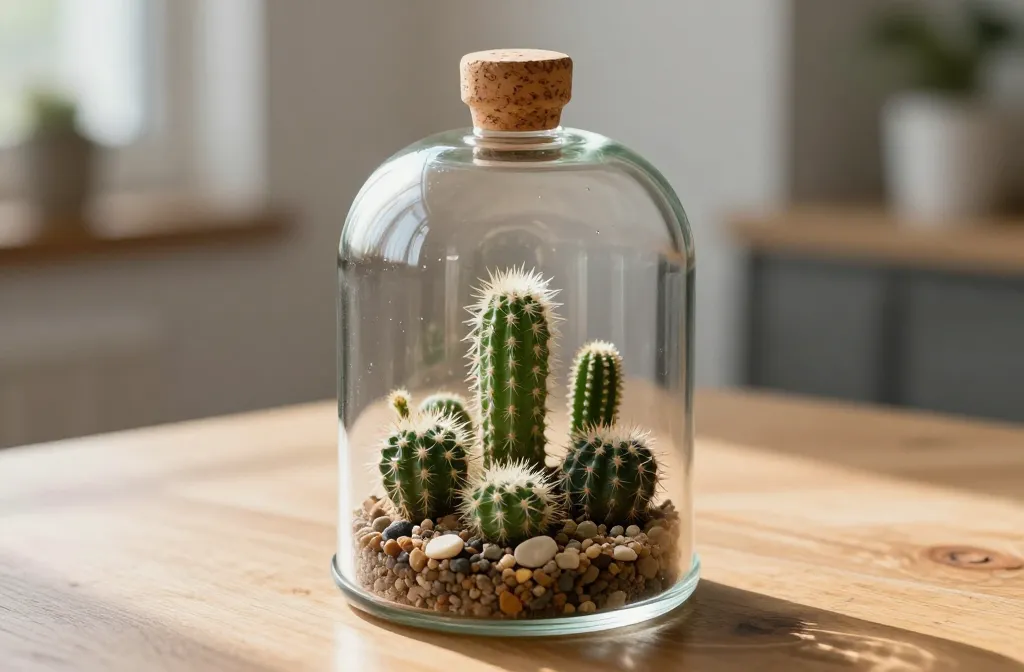
I’ve built more terrariums than I can count, and the first time I crammed desert cacti under a sealed cloche, I cooked them with stagnant, wet air. If your glass stays fogged, your cacti rot — fast. In this guide, I’ll show you five cactus species that tolerate a cloche and the simple airflow rule they all need to survive. You’ll learn how to set them up with basic materials and keep them healthy without gadgets.
1. Airflow Rule: Daily Venting Prevents Rot and Overheating
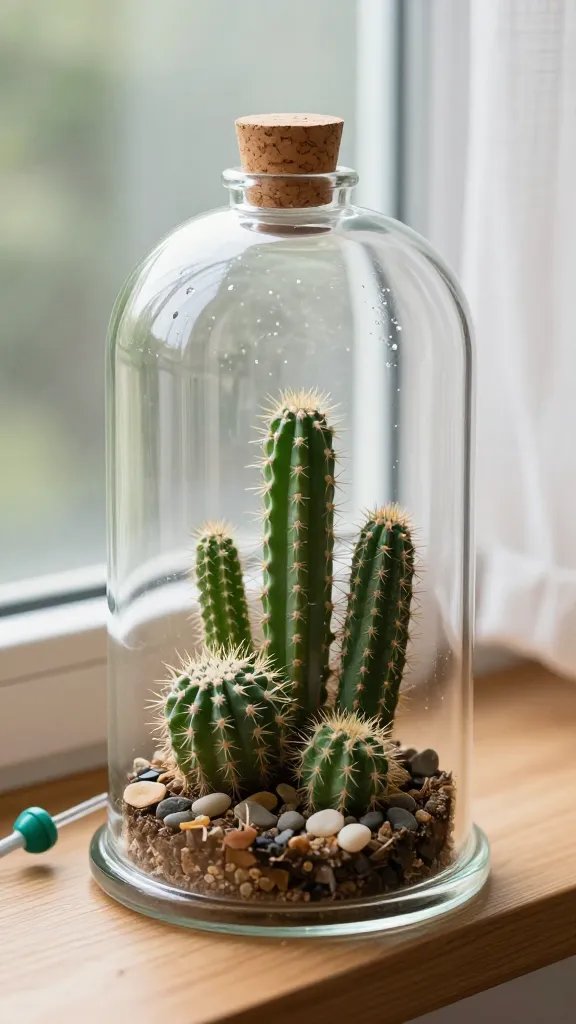
In a sealed cloche, warm air and trapped humidity push cacti into rot and sun-scald. I’ve seen perfect plants collapse at the base in a week because the air never moved. The fix is not fancy fans — it’s a consistent venting habit that mimics a dry breeze.
How to Vent a Closed Cloche
- Give the cloche a “breath” once a day: lift the lid for 10–15 minutes in the morning.
- If you see heavy fog at midday, vent again for 10 minutes or prop the lid open with a wine cork slice.
- On hot, bright days, keep the lid slightly ajar for 1–2 hours to prevent heat build-up.
Signs You Need More Airflow
- Condensation coats over half the glass by midday.
- Dark rings or squishiness at the cactus base.
- A sour, earthy smell when you lift the lid.
Action today: Set a phone reminder to lift the cloche lid for 10–15 minutes every morning. This single habit keeps rot out of the terrarium.
2. Mammillaria gracilis ‘Arizona Snowcap’: Compact, Forgiving, and Cloche-Friendly
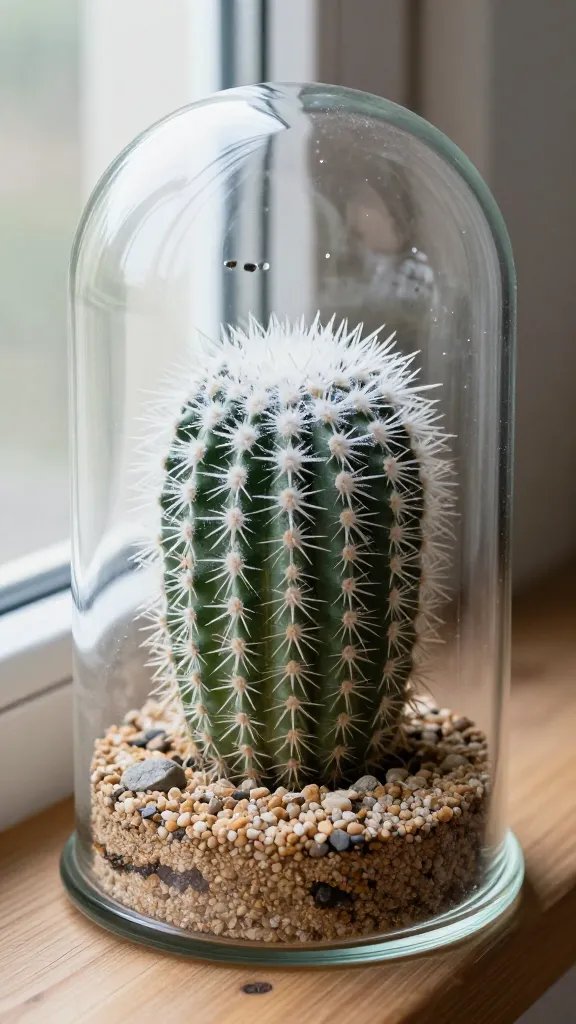
Most ball cacti stretch or rot in closed glass, but Mammillaria gracilis ‘Arizona Snowcap’ stays small, clumps slowly, and tolerates brief humidity spikes. If airflow slips for a day, this one doesn’t punish you immediately. It’s the best “starter” cactus for a cloche.
What It Needs
- Light: Bright indirect light near an east or bright north window. Avoid magnified midday sun through glass.
- Soil: 2 parts cactus potting mix + 1 part coarse sand or small aquarium gravel from the pet aisle.
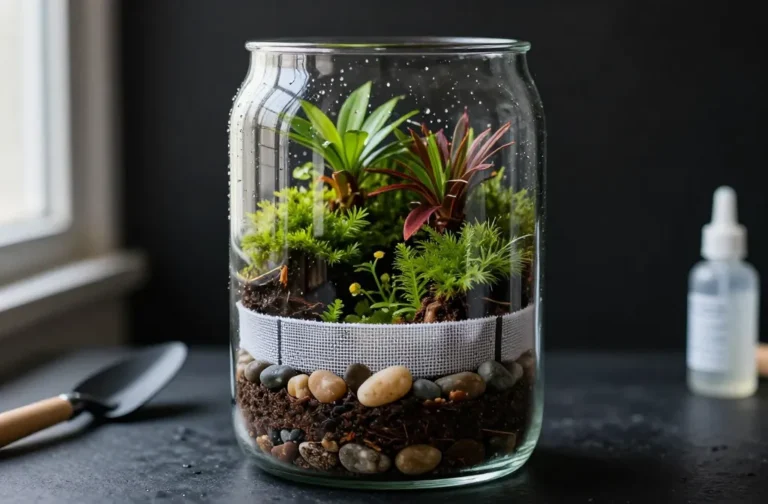
- Layering: 1–2 cm of pea gravel at the base, a coffee filter or mesh to stop soil sinking, then 4–6 cm of soil.
- Water: 1 tablespoon around the root zone every 3–4 weeks in spring/summer; every 6–8 weeks in winter.
Signs to Watch For
- Yellowing at the base = too wet; remove lid for 2–3 hours and skip the next watering.
- Pale, stretched growth = not enough light; move closer to the brightest window without direct burning sun.
Takeaway: Pick a small, clumping Mammillaria and keep light bright but diffused; water in tablespoons, not cups.
3. Rebutia heliosa: Cool-Night Friendly and Slow to Stretch
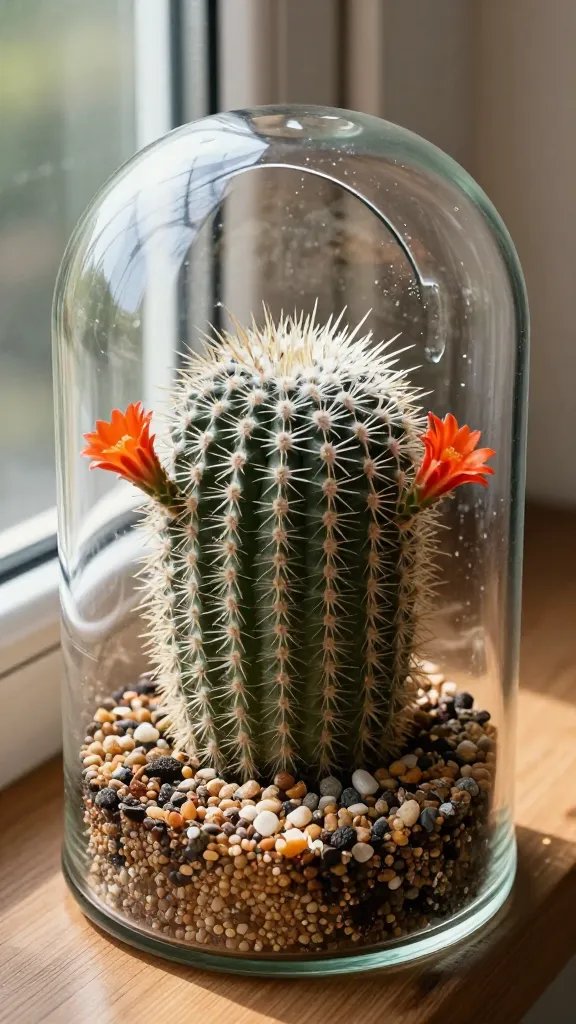
Rebutia heliosa handles cool nights and fluctuating humidity better than most desert cacti. In a cloche, it stays compact and blooms readily when given a winter rest. When I kept one under glass with daily venting, it held shape and flowered the next spring.
How to Set It Up
- Light: Bright indirect next to a window; 1–2 hours of gentle morning sun is fine if the lid is vented.
- Substrate: Cactus mix cut with 30–40% mineral grit (poultry grit, pumice, or coarse sand from a garden centre).
- Water: Spring–summer: 1–2 tablespoons every 3–4 weeks. Autumn–winter: 1 tablespoon every 6–8 weeks, only if the body looks slightly wrinkled.
Winter Rest Under a Cloche
- Move it to a cooler room (12–18°C) near a bright window.
- Keep the lid cracked with a spacer (cardboard tab) to avoid trapped moisture.
Action today: Add mineral grit to your cactus mix and reduce winter water — this keeps Rebutia firm and flower-ready.
4. Gymnocalycium mihanovichii (Green Rootstock Types): Shade-Tolerant and Heat-Smart
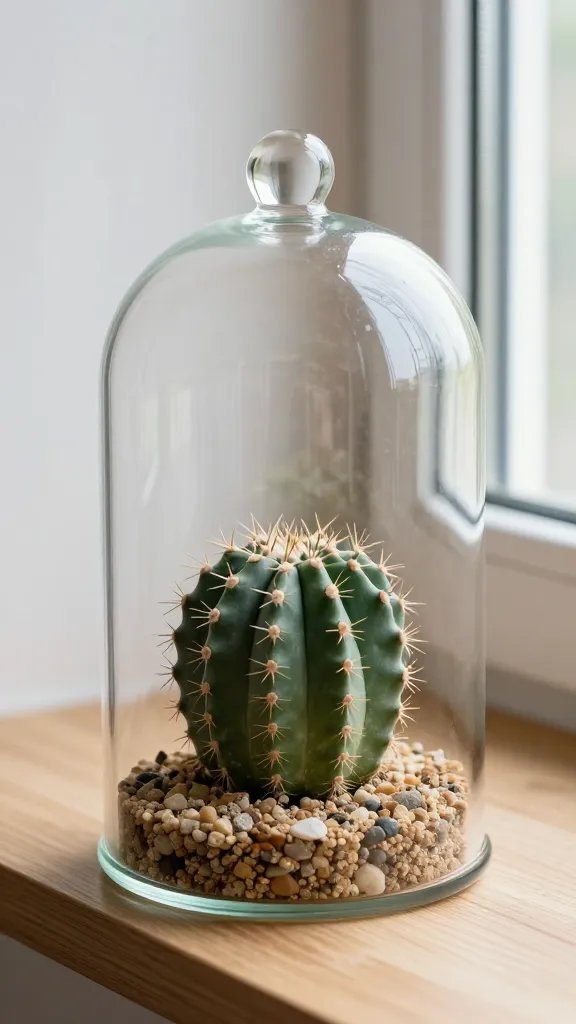
Many gymnos scorch under glass because the cloche acts like a lens. Gymnocalycium mihanovichii (green-bodied types sold without colorful grafted tops) tolerates lower light and stays neat in small spaces. It also signals stress early with dulling color rather than sudden collapse — which helps you correct fast.
Placement and Watering
- Light: Bright but filtered — one step back from a south window or right beside an east window with a sheer curtain.
- Water: 1 tablespoon every 4 weeks in growing season. Skip watering if you see midday fog on more than half the glass.
- Heat Control: On sunny days above 24°C indoors, prop the lid for an hour to dump heat.
Common Mistakes
- Direct midday sun through the cloche: Causes sunken, corky patches. Move it 30–60 cm back from the glass.
- Soil too peaty: Cut with gravel so water drains fast; the surface should dry in 24 hours.
Takeaway: Treat Gymnocalycium as a bright, filtered-light cactus and vent on warm days to prevent lens-burn under glass.
5. Parodia scopa (Notocactus): Humidity-Tolerant and Slow-Growing
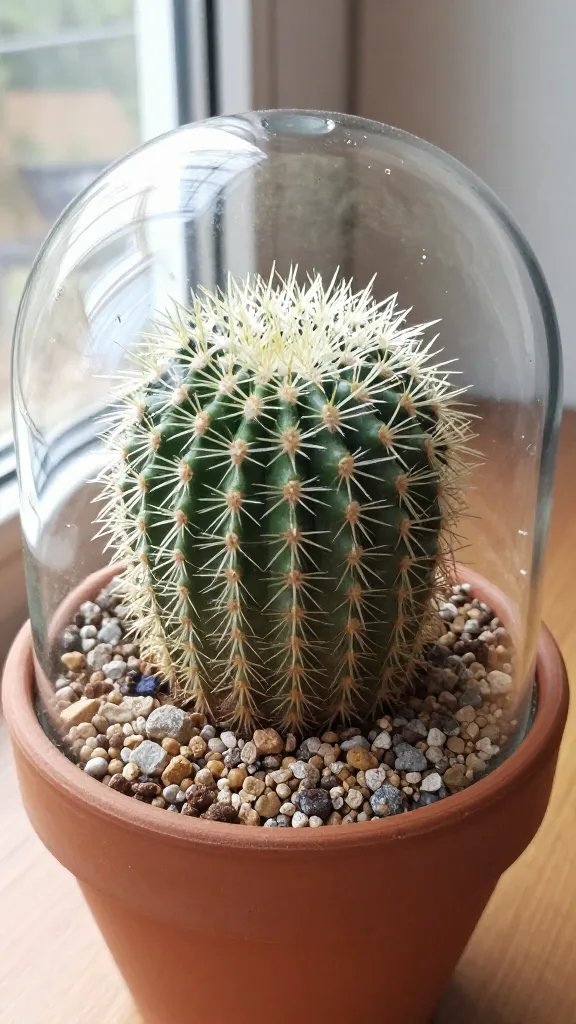
Parodia scopa forgives brief humidity spikes and doesn’t sprawl. In my cloche tests, it held shape and stayed firm when I stuck to tablespoon watering. It prefers mineral-rich, fast-draining soil and steady light — perfect for a coffee-table cloche near a bright window.
Potting and Care
- Soil: Cactus mix + 25–30% small gravel or pumice. Avoid moisture-retentive houseplant blends.
- Top-dress: A thin layer of aquarium gravel to keep the crown dry and reduce algae on the surface.
- Water: 1 tablespoon every 3–4 weeks; in winter, once every 6–8 weeks or not at all if the body stays firm.
Warning Signs
- Green algae or moss on soil = air too still or too wet; increase venting and remove the lid for 2 hours.
- Wrinkling paired with pale color = needs more light; move closer to the window without direct midday sun.
Action today: Add a gravel top-dress to keep the crown dry and reduce surface moisture under the cloche.
Frequently Asked Questions
Can cacti really live in a closed cloche without rotting?
Yes, if you control airflow and water in tablespoons. Vent the cloche daily for 10–15 minutes and avoid heavy condensation by adjusting watering and lid gaps. Use a gritty cactus soil with a gravel base layer so water drains fast. Keep light bright but filtered to prevent heat build-up.
How much water should I add, and how often?
Use 1–2 tablespoons per plant every 3–4 weeks in spring and summer. In winter, reduce to 1 tablespoon every 6–8 weeks, and only if the cactus looks slightly wrinkled. If the glass stays fogged at midday, skip watering and vent longer. Always water the soil, not the stem or crown.
What’s the best spot in my home for a cactus cloche?
Place it near a bright window with indirect light — an east or bright north window is ideal. For south or west windows, keep it 30–60 cm back or use a thin curtain to diffuse the sun. Avoid radiator tops and spots where the sun beams directly through the dome at midday. Heat spikes inside a cloche cause sudden rot and scorch.
Do I need special soil or can I use regular potting mix?
Use a cactus potting mix from a garden centre and lighten it with 25–40% coarse sand, poultry grit, or small aquarium gravel. Regular potting soil holds too much water and suffocates roots in a cloche. Add a 1–2 cm gravel layer at the base and a coffee filter to keep fines out. The surface should look dry within 24 hours after watering.
How do I stop mold and algae on the soil?
Increase airflow first: vent daily and leave the lid off for 1–2 hours every few days until the glass stays clear by midday. Top-dress with clean aquarium gravel to keep the surface drier. Water less often and only at the perimeter of the plant. If mold persists, remove the top 1 cm of soil, replace with fresh mix, and sanitize the glass with a mild vinegar-and-water wipe, then dry thoroughly.
Which cacti should I avoid in a cloche?
Avoid tall columnar types (Cereus, large Trichocereus), thin-leaved epiphytes (Rhipsalis, Schlumbergera), and species with woolly crowns that trap moisture (some Echinopsis). These either stretch, scorch, or rot fast under glass. Stick to compact, mineral-soil lovers like Mammillaria, Rebutia, Gymnocalycium, and Parodia. Choose small specimens under 6 cm wide to fit the microclimate.
Conclusion
Closed cloches and cacti can work when you treat airflow as a daily chore and size your species to the space. Start with one of the four compact types above, vent every morning, and water with a tablespoon — you’ll keep your cactus firm and mold-free. Ready to level up next? Try building a mineral-rich substrate with simple materials and compare how each species responds over one season.