Stop the Stink 6 Reasons Your Air Plant Terrarium Smells — and What Each One Indicates
The first time my air plant terrarium stank, I assumed the glass needed a wipe. Two days later the smell was worse, and the Tillandsia tips were browning. I learned the hard way that every odor points to a specific problem — and each one predicts what fails next. In this guide, you’ll learn exactly why your terrarium smells, what each scent signals, and the simple fixes you can do today with basic supplies.
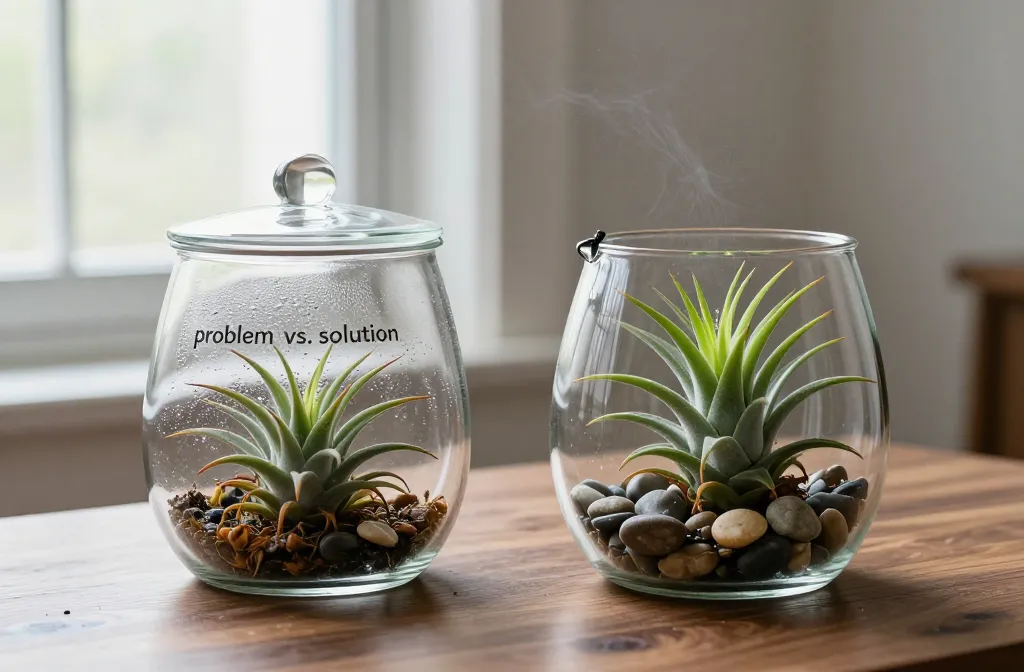
1. Stale, Sour “Gym Bag” Odor: Trapped Moisture And No Airflow
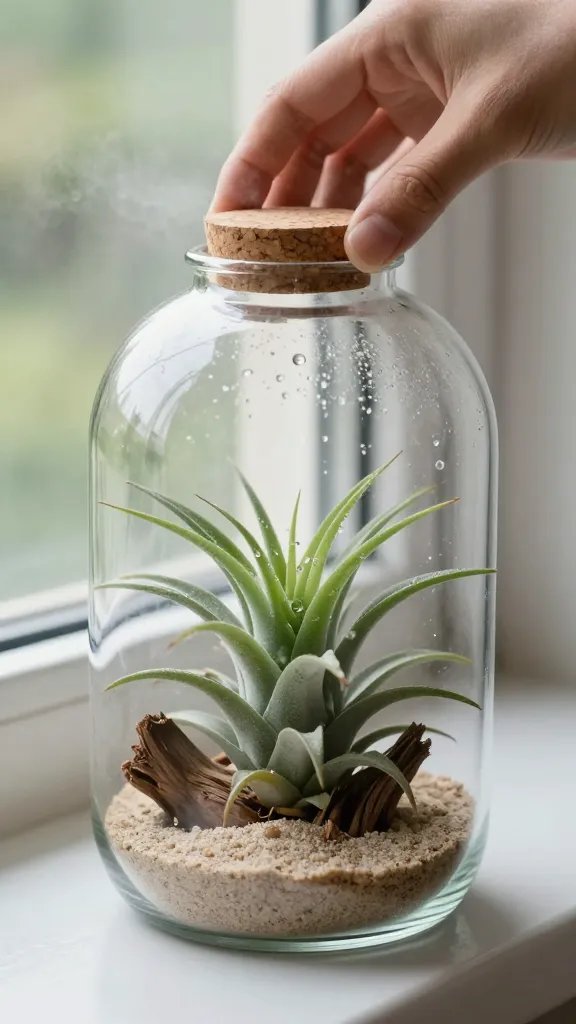
A sour, musty smell tells you moisture is trapped and the air is stagnant. In a sealed or barely vented container, water lingers on leaves and inside crevices, stressing roots and scales and inviting bacteria.
Signs to Watch For
- Glass fogs every morning and stays hazy past midday
- Tillandsia leaf bases feel damp for more than 6 hours after misting
- Faint sourness when you crack the lid or lift the terrarium
How to Fix It
- Open the terrarium daily for 1–2 hours for the next week. Set it near a bright window but out of direct midday sun.
- Switch from heavy misting to a light dunk every 2–3 weeks, then shake plants firmly to remove trapped water.
- Raise plants on a small layer of dry decorative pebbles or a wire stand so air reaches the undersides.
- If the container has no openings, leave the lid off permanently or swap to a vessel with a large opening (fishbowl, cloche with vent).
Action today: Open the terrarium and fan it with a postcard for 30 seconds, then keep the lid off for two hours to clear the stale air.
2. Rotten-Egg Or “Swamp” Smell: Rotting Organic Material Under The Decor
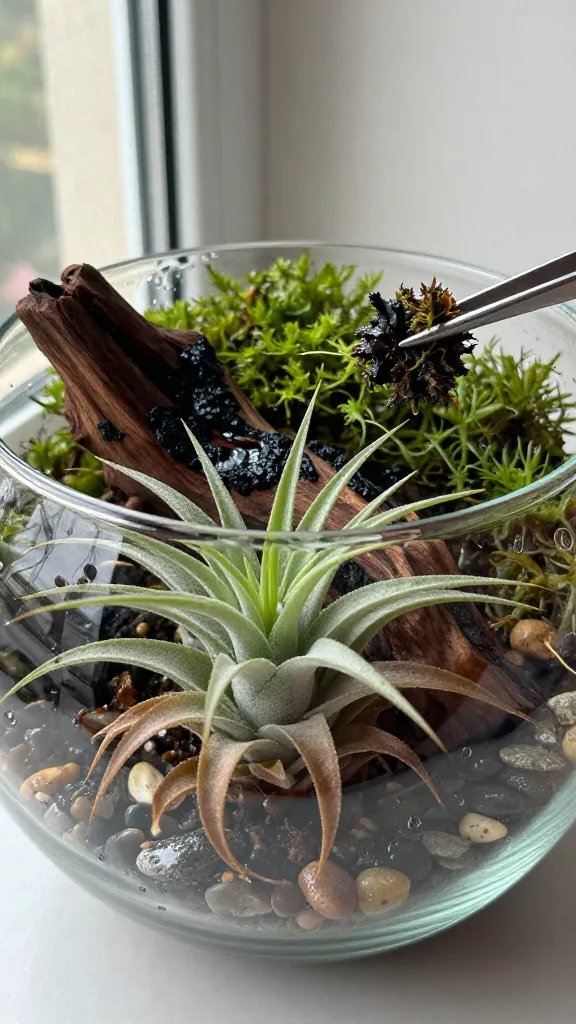
A sulfurous, swampy smell means something organic is decomposing in low oxygen. In air plant setups, it’s often a hidden piece of damp sphagnum, a wood chunk that stayed wet, or a dead leaf wedged at the base.
Signs to Watch For
- Blackened patches on driftwood where it contacts the glass or pebbles
- Brown, mushy leaf sheaths at the plant base that slide off when tugged
- Sticky residue beneath decorative moss
How to Fix It
- Disassemble the layout. Remove all soft or dark wood bits and any soggy moss. Discard anything that smells off.
- Scrub the glass with warm water and a drop of dish soap. Rinse and dry fully.
- Rebuild with fully dried materials only: dried moss labeled “preserved,” kiln-dried driftwood, and clean pebbles.
- Keep organic layers thin so they dry within a few hours after any watering.
Takeaway: If it smells like sulfur, something inside is rotting — pull it out, clean, and rebuild with dry, preserved materials.
3. Vinegar-Like Tang: Fermentation From Sugary Preserved Moss Or Glues
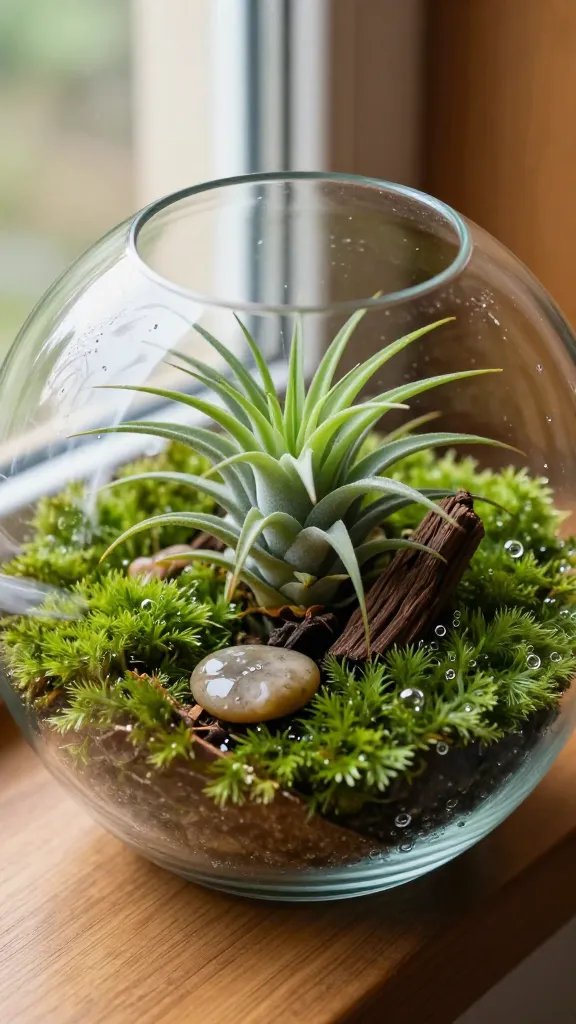
A sharp, vinegary odor points to mild fermentation. Preserved sheet moss or craft glues with organic additives can sour when kept damp and warm inside glass.
Signs to Watch For
- Bright green moss that feels tacky and stays cool to the touch
- Bubbles or slick film under glue spots on wood or stones
- The smell intensifies after sun warms the glass
How to Fix It
- Let the terrarium dry completely for 48 hours with the lid off.
- Replace suspect moss with preserved reindeer moss or a thin layer of decorative sand that won’t hold moisture.
- Use a clear, waterproof craft adhesive labeled non-porous and non-organic once, and allow it to cure for 24 hours before reassembly.
- Avoid spraying fertilizers inside the vessel; feed air plants outside the terrarium, then return once dry.
Action today: Remove all moss, let the setup air out for two days, and reintroduce only a small amount of preserved, truly dry décor.
4. Mildewy “Old Books” Smell: Fungal Growth From Over-Misting
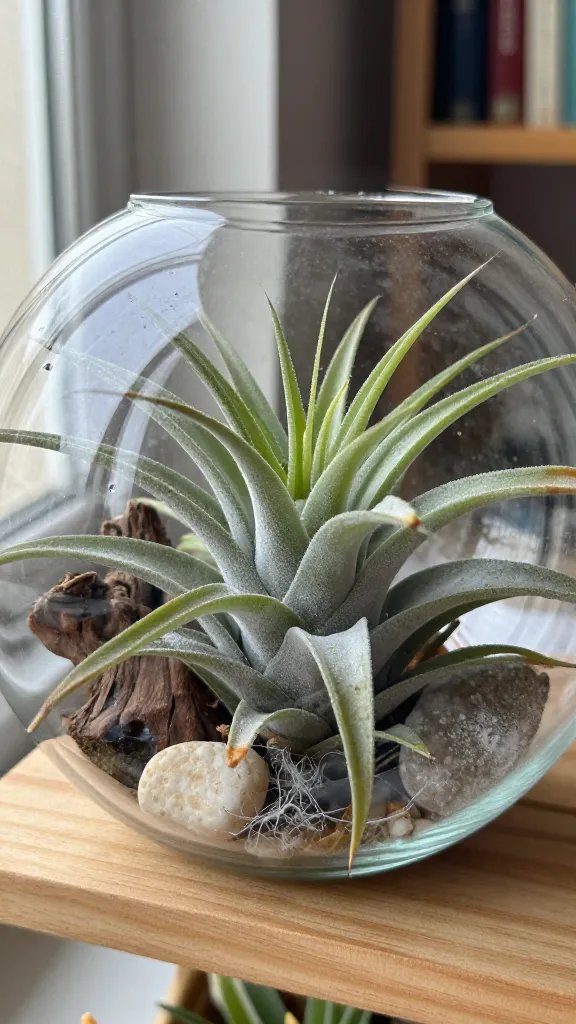
An old-paper, basement odor screams mildew. You’ve been misting too often, and the leaves and décor never get a chance to dry, letting fungus colonize surfaces.
Signs to Watch For
- Powdery gray film on glass or décor
- Fine white threads at the plant bases or where leaves overlap
- Tillandsia leaf tips browning while the middle looks fine
How to Fix It
- Stop misting for two weeks. Instead, give a 10–15 minute dunk every 2–3 weeks, then shake off water until no droplets remain.
- After each dunk, dry plants upside down on a towel for 1–2 hours before returning them to the terrarium.
- Wipe the glass with a 1:10 white vinegar to water solution, then rinse and dry.
- Move the terrarium to bright indirect light near a window to speed drying.
Takeaway: Mildew smell means switch from frequent misting to occasional dunking and thorough drying.
5. Fishy Or “Wet Dog” Funk: Bacterial Build-Up From Dirty Water Or Hands
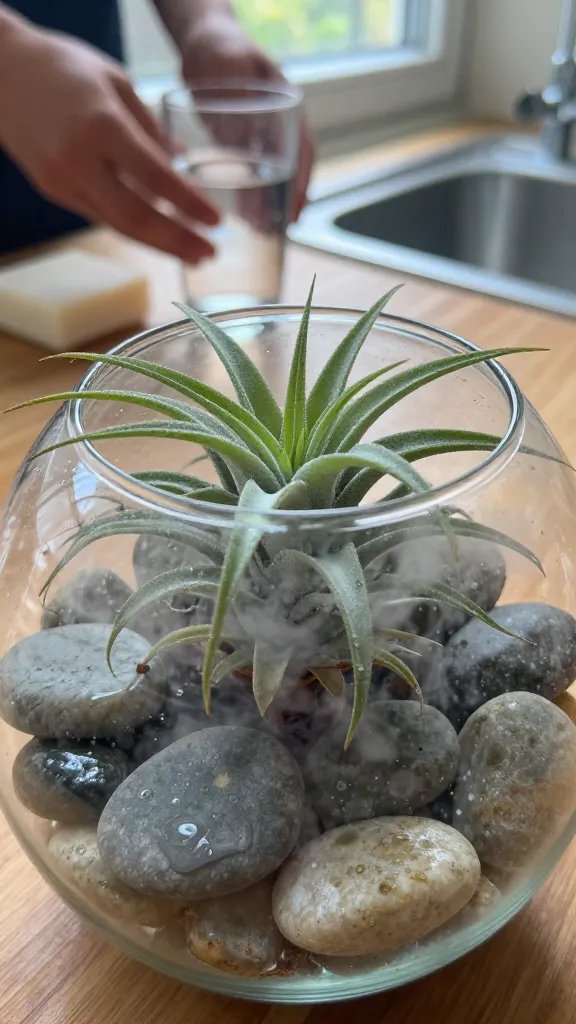
A fishy, animal-like funk points to bacteria introduced with unclean water or oils from handling. Inside glass, those populations bloom fast and coat surfaces with biofilm.
Signs to Watch For
- Slippery film on glass, stones, or plant leaves
- Water spots that smear rather than evaporate cleanly
- Odor worsens right after watering
How to Fix It
- Water with clean, room-temperature tap water that tastes clean and not salty. Let chlorinated water sit out overnight before using.
- Wash hands with plain soap and dry thoroughly before touching plants or décor.
- Rinse air plants under the tap, shake dry, then place on a clean towel for an hour before returning.
- Scrub stones and glass with warm soapy water, rinse, and dry completely.
What to Use Instead
- A simple spray bottle or bowl reserved for plant care
- Paper towels or a clean microfiber cloth for drying
Action today: Give the plants a clean-water rinse, shake them dry, and wipe every interior surface to remove biofilm.
6. Sweet, Perfume-Like Smell Turning Funky: Decomposing Flower Bracts Or Trapped Spent Blooms
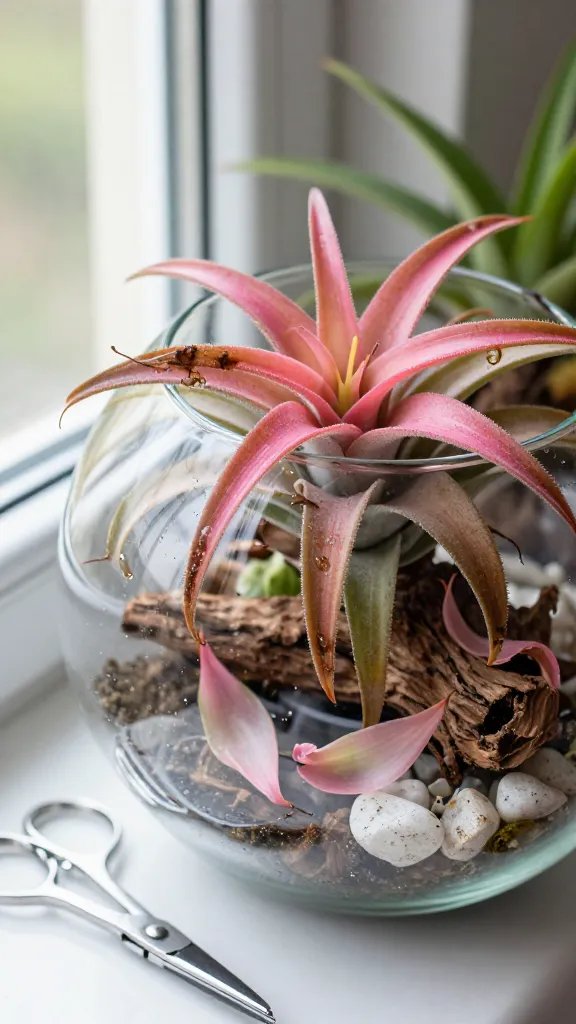
Some air plants produce sweet-scented blooms. When the flowers fade inside a humid terrarium, the bracts and petals break down and sour, shifting from sweet to funky in days.
Signs to Watch For
- Colorful bracts dulling to brown at the tips
- Petals sticking to leaves or décor
- Sweet scent that becomes sour within a week
How to Fix It
- As soon as blooms fade, trim spent flowers with clean scissors. Leave healthy bracts intact if still firm.
- Remove any fallen petals and wipe the glass where they touched.
- Increase airflow for a week by leaving the lid off for a few hours daily.
- Keep the terrarium out of direct sun while blossoms are present to prevent “cooking” the petals.
Takeaway: Treat flowers as temporary — deadhead promptly and clear all petals before they sour the whole setup.
Frequently Asked Questions
Should an air plant terrarium have a lid at all?
Air plants thrive with airflow, so a fully closed lid isn’t ideal. I keep lids off or use containers with a wide opening so moisture can escape. If you like the look of a lid, leave it ajar or remove it for a few hours daily. Prioritize a large opening and space under and around the plant for ventilation.
How often should I water air plants in a terrarium?
In most homes, dunk every 2–3 weeks for 10–15 minutes, then shake well and dry for 1–2 hours before returning. Skip misting inside glass to avoid lingering moisture. If your home is very dry in winter, add one extra dunk between your regular schedule. Watch the leaves: tight curling means thirsty; soft or brown tips mean they stayed wet too long.
Can I put soil or activated charcoal under my air plants?
Skip soil entirely for air plants. If you want a base layer, use dry decorative sand, small pebbles, or preserved moss used sparingly. Activated charcoal helps with odors only when air and moisture are balanced — it won’t fix rot. Keep layers thin so they dry within the same day after watering.
Why do my air plants smell after I fertilize?
Fertilizer residue can ferment or feed bacteria in a closed space. Feed outside the terrarium using a bromeliad-safe fertilizer at one-quarter strength once a month during spring and summer. Rinse the plant with clean water afterward and dry it thoroughly before returning it. Avoid spraying fertilizer onto décor or glass.
Is driftwood safe in a terrarium, or does it cause odors?
Driftwood is fine if it’s clean and dry. If it arrived damp or smells earthy, bake it at a low oven setting (about as warm as a preheating oven feels) for 30–45 minutes or leave it in a sunny, breezy spot for a full day. Seal only the contact points with a small amount of clear, waterproof adhesive and let it cure fully. Recheck after the first dunk; if the wood darkens and stays wet, reduce watering or swap it out.
What if the smell doesn’t match any description here?
Break the setup down to isolate the source. Smell each component — glass, stones, wood, moss, plant — after rinsing and drying them separately. Anything that still smells off when dry should be replaced. Rebuild with fewer layers and more space so you can spot issues early.
Conclusion
Odors are early warnings, not mysteries. Tackle the scent at its source, reset the airflow and drying routine, and your Tillandsia will bounce back fast. Next, set a two-minute weekly check: lift the plant, feel for damp bases, and clear any debris — that habit prevents nearly every smelly surprise.