Viral Guide Companion Planting for Empty Nesters: 14 Time-Intensive Hobby Gardens
Your house got quieter. Your garden doesn’t have to. Companion planting gives you a reason to linger outdoors, fuss over details, and coax flavor and flowers from every square foot. These five themed gardens pair plants that thrive together, so you can pour time into something beautiful, productive, and delightfully high-maintenance—in the best way.
You’ll find smart combos, hands-on tasks, and little rituals that make the hours fly. Ready to channel that extra bandwidth into soil therapy? Grab your gloves, a notebook, and a cup of tea—let’s build your new favorite obsession.
1. The Mediterranean Sauce Garden That Never Sleeps
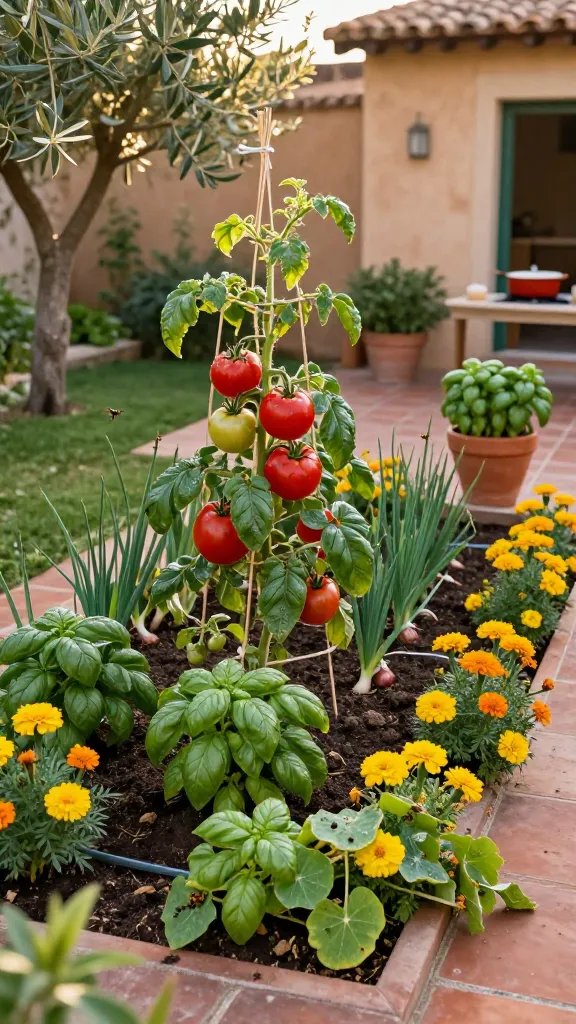
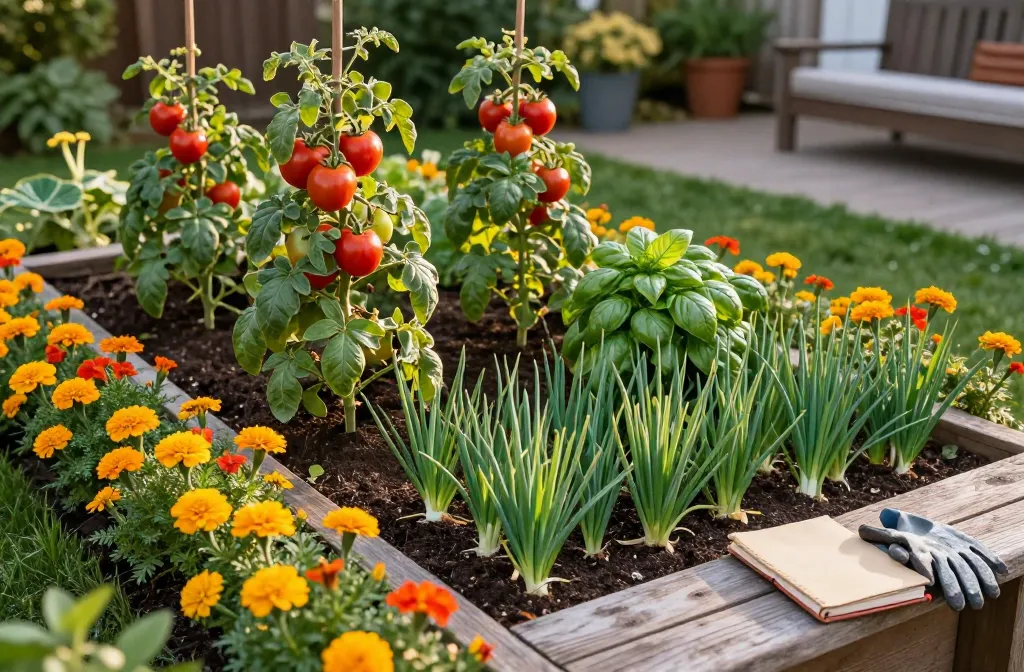
If you love slow cooking on Sundays, this companion garden feeds your sauce pot and your soul. Tomatoes, basil, onions, and flowers team up to boost flavor, deter pests, and keep soil humming with life.
Core Plant Guild
- Tomatoes with basil to intensify flavor and confuse pests.
- Onions or chives to deter aphids and improve airflow between tomato cages.
- Marigolds to repel nematodes and bring in beneficial insects.
- Nasturtiums as a sacrificial aphid trap—gross, but effective.
Space tomatoes 24–30 inches apart and thread basil between them. Interplant onions every 8–10 inches in the front row. Marigolds and nasturtiums fill the sunny edges and keep things pretty while they work.
Time-Intensive Tasks (The Fun Kind)
- String trellising: Train indeterminate tomatoes weekly for tidy vines and fewer diseases.
- Pruning/leaf thinning: Remove lower leaves and suckers for airflow and bigger fruit.
- Weekly basil pinch party: Pinch basil tips to prevent flowering and bulk up leaves.
- Compost tea days: Feed the bed every two weeks during heavy fruiting.
Want more complexity? Add oregano as a low, fragrant groundcover to shade soil, and tuck in calendula to attract hoverflies that snack on aphids. You’ll harvest sauce ingredients and armfuls of flowers—win-win.
Best for sauce lovers who enjoy routine garden chores with delicious payoff.
2. The Pollinator Tea Terrace That Buzzes All Afternoon
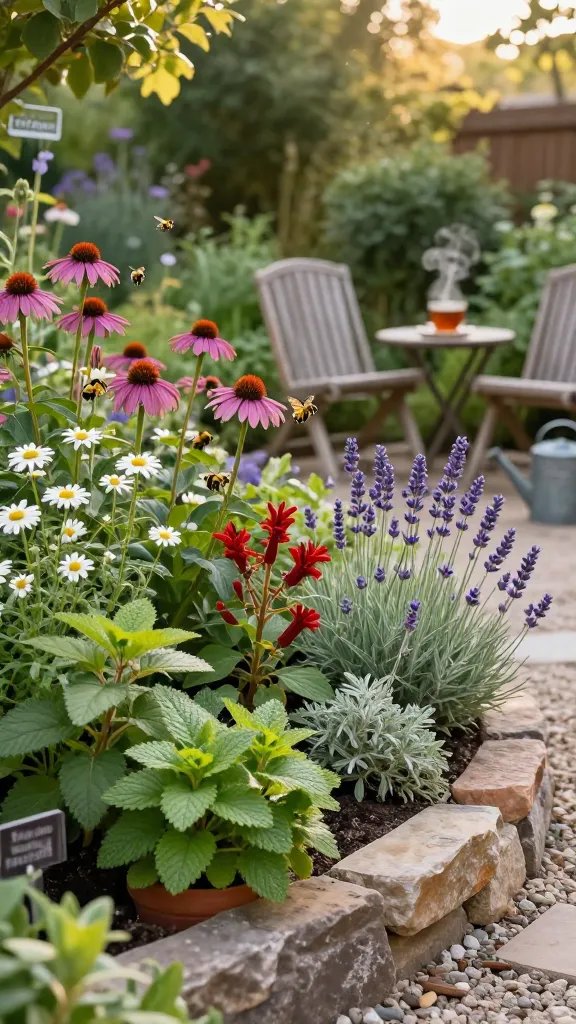
This one’s for the herbal tea drinker who loves a buzzing garden show. Companion herbs scent the air, pull in pollinators, and keep each other happy while you collect leaves for soothing blends.
Core Plant Guild
- Lemon balm and peppermint for cooling teas—grow in bottomless containers sunk into the bed to control spread.
- Chamomile for calming flowers that lure beneficials.
- Echinacea and bee balm to feed bees and add structure.
- Lavender as the aromatic anchor that repels moths and looks fancy, IMO.
Cluster tall bloomers like echinacea and bee balm at the back, lavender and chamomile mid-bed, and the vigorous mints in their submerged containers at the front. Mix in thyme along edges to knit the bed together and host tiny pollinators.
Hands-On Rituals
- Selective harvesting: Pick chamomile daily at peak bloom for top flavor.
- Dehydrator days: Dry lemon balm and mint in batches; label jars with harvest dates.
- Deadheading: Keep bee balm and echinacea blooming with frequent trims.
- Aroma grooming: Lightly brush thyme and lavender to release scent (okay, this one’s just for you).
Bonus companion trick: Plant yarrow nearby to draw lacewings and ladybugs. They’ll police the aphids so you don’t have to, seriously.
Perfect for tea lovers who want a sensory garden that works as hard as they relax.
3. The Salsa & Taco Bed With Built-In Pest Control
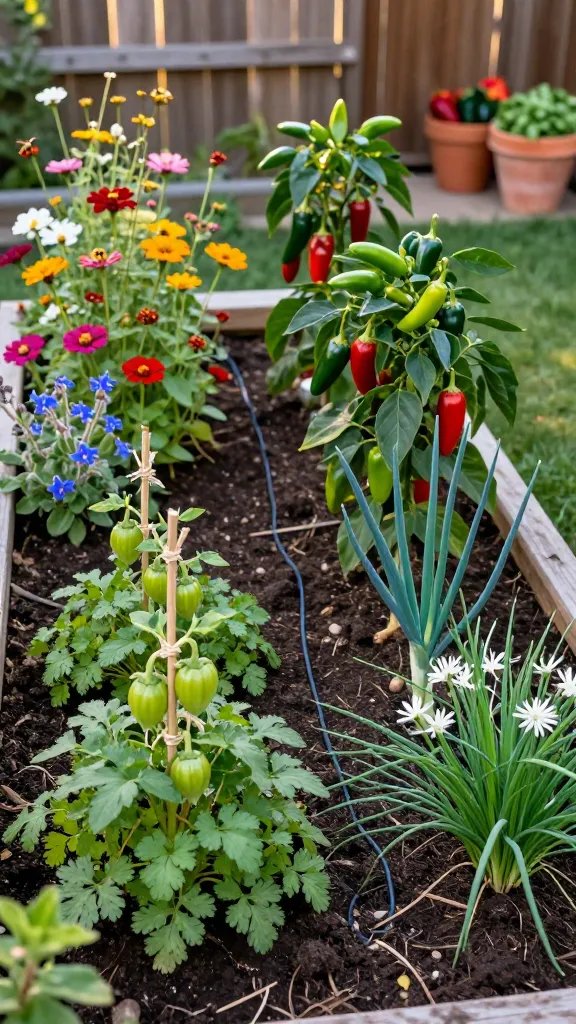
Spicy, colorful, and packed with flavor, this bed delivers everything for taco night—plus flowers that keep pests off your peppers. It’s a high-energy garden that begs for weekly check-ins and taste tests.
Core Plant Guild
- Tomatillos (always plant at least two for pollination) with cilantro tucked around them to shade soil and attract parasitic wasps.
- Jalapeños/serranos paired with onions and garlic chives to repel pests.
- Zinnias and cosmos for beneficial insects and continuous cutting.
- Borage near tomatoes and peppers to boost pollination and deter tomato hornworms.
Train tomatillos up a cage or A-frame to save space. Plant peppers in a hot, sunny strip and mulch them deeply. Let cilantro bolt in patches—you’ll harvest early leaves, then enjoy hoverfly-attracting flowers and coriander seeds.
Weekly To-Dos You’ll Weirdly Enjoy
- Harvest rotations: Pick peppers for heat testing and freeze extras in zip bags.
- Flower grooming: Deadhead zinnias and cosmos to keep bouquets coming.
- Pest patrol: Handpick hornworms at dusk—borage helps, but your flashlight finishes the job.
- Succession sowing: Replant cilantro every 2–3 weeks for tender leaves.
Add oregano or marjoram as low fillers to deter pests and make the bed look lush. Your tacos will taste garden-fresh for months, FYI.
Ideal for home cooks who want weekly color, spice, and constant harvest action.
4. The Shady Soup & Salad Woodland
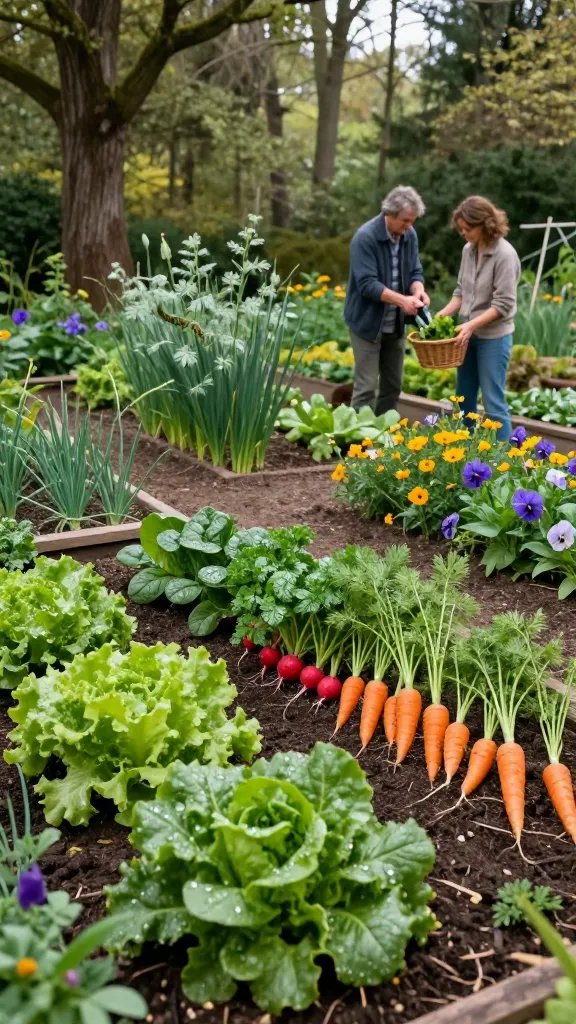
No full sun? No problem. Build a cool, dappled oasis where leafy greens, roots, and edible flowers thrive together—and you get to fuss over moisture and microclimates like a proud plant parent.
Core Plant Guild
- Lettuces (looseleaf mixes) interplanted with spinach and parsley.
- Radishes and baby carrots for quick, rewarding pulls.
- Green onions to deter pests and add bite to salads.
- Violas and calendula for edible color and beneficial insects.
- Dill or fennel at the back to host swallowtail caterpillars (yes, on purpose).
Use staggered rows: greens in wide bands, roots in narrow stripes, flowers tucked at ends. Mulch with shredded leaves to keep roots cool and soil evenly moist.
Zen Tasks For People Who Love Details
- Thin seedlings with tiny scissors for tidy spacing—use thinnings in salads.
- Mist sessions: Lightly water mid-morning on hot days to cool leaves.
- Cut-and-come-again harvesting: Shear outer lettuce leaves every few days.
- Slug traps: Set saucers of beer or iron phosphate baits. Garden justice, achieved.
Companion tip: Plant chervil near lettuce to enhance sweetness and ward off aphids. Shade cloth on heat waves keeps everything perky and extends the season.
Great for meticulous growers who enjoy steady, small harvests and a serene vibe.
5. The Four-Season Kitchen Plot With Crop Rotations That Actually Work
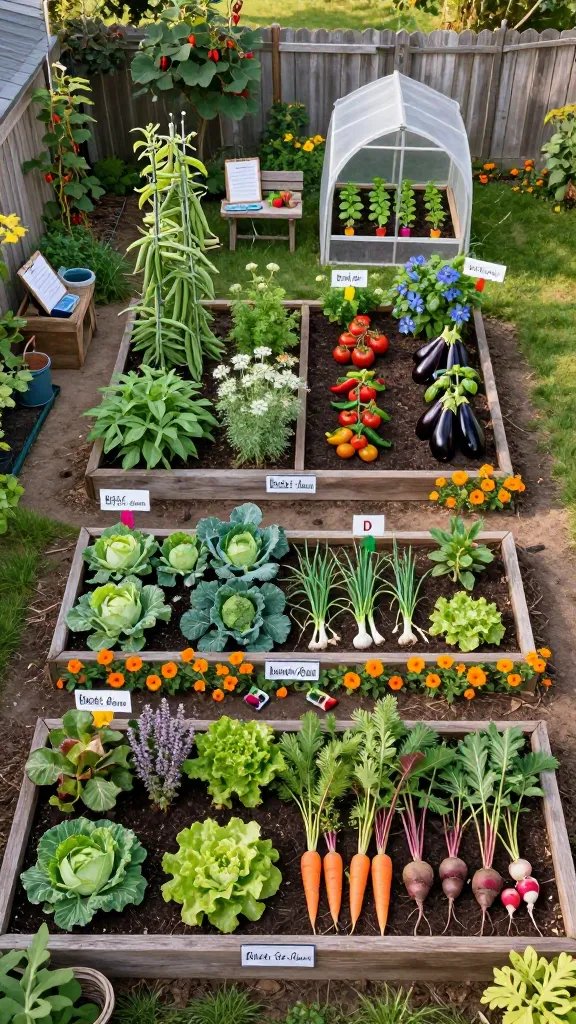
Ready for the big leagues? This layout uses companion planting plus crop rotation to keep soil fertile, pests confused, and your calendar delightfully packed. You’ll plan, plant, harvest, and replant like a maestro.
The Four Beds (Rotate Annually)
- Bed A: Legumes + Aromatics — Bush beans, pole beans, and peas with summer savory and dill. Beans fix nitrogen; herbs invite beneficials.
- Bed B: Fruiting Nightshades — Tomatoes, peppers, and eggplant with basil, marigolds, and borage. Flower power boosts pollination and protection.
- Bed C: Brassicas + Allies — Kale, broccoli, cabbage with nasturtiums, thyme, and onions. Aromatics throw off cabbage moths.
- Bed D: Roots & Alliums — Carrots, beets, onions, garlic with chamomile to enhance flavor and calendula for pest patrol.
Each season, shift beds A→B→C→D to balance nutrients and break pest cycles. Between crops, sow cover crops like clover or buckwheat to feed soil life and set you up for success.
Monthly Maintenance Map
- Winter: Plan rotations, order seeds, start cool crops indoors. Sharpen tools.
- Spring: Transplant brassicas and onions, direct-sow peas and carrots, install row covers.
- Summer: Trellis, prune, side-dress with compost, and brew aerated compost tea.
- Fall: Plant garlic, rip out spent vines, sow cover crops, and tally wins in your garden journal.
Layer in trap crops like radishes near brassicas and maintain perennial borders of thyme, sage, and yarrow for year-round beneficial habitat. This system thrives on your attention and pays you back with resilience and big harvests.
Best for planners who love a steady rhythm of tasks and a garden that evolves with the seasons.
Feeling inspired? Pick one garden and go all-in, or mix elements to fit your space and taste. The quiet of an empty nest makes room for the rustle of leaves, the buzz of bees, and the very satisfying sound of snipping herbs at dusk. Plant the companions, make it a ritual, and let your garden keep you deliciously busy.