Stop Killing Your Vfts: Why Carnivorous Plants Die Indoors — the Three Non-Negotiable Requirements Most Guides Skip
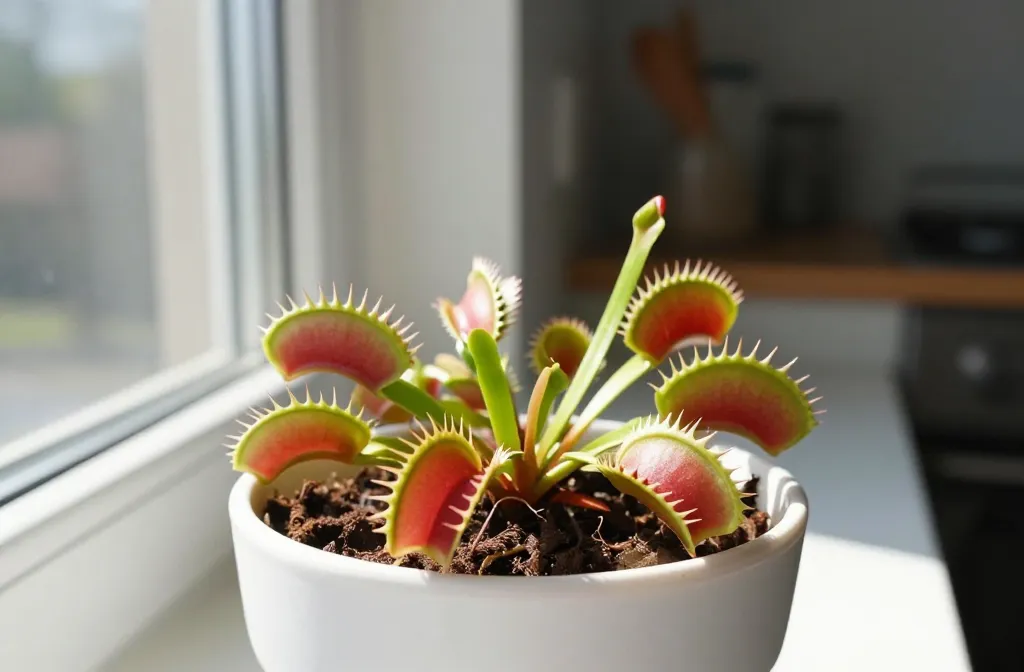
I lost my first two Vfts (Venus flytraps) on a bright kitchen counter that looked perfect to me and deadly to them. I watered when the soil looked dry, used “nice” potting mix, and gave them a sunny window — and they still dwindled. Once I learned the three things these plants refuse to compromise on, every new plant stopped failing. You’ll learn those non-negotiables today, how to fix them with normal home tools, and what warning signs to watch so you never repeat the same losses.
The First Non-Negotiable: True Sunlight, Not “Bright Room” Light
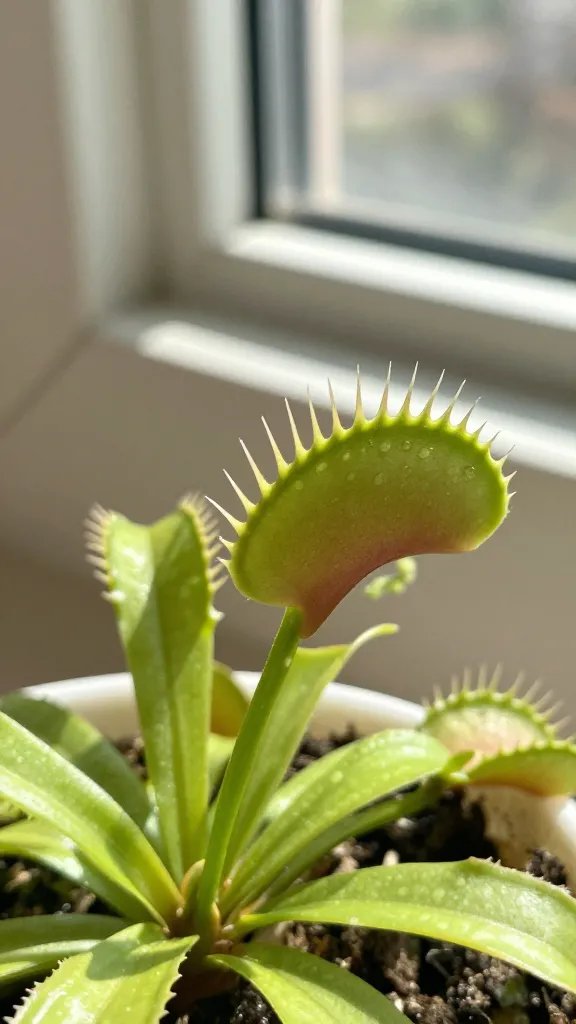
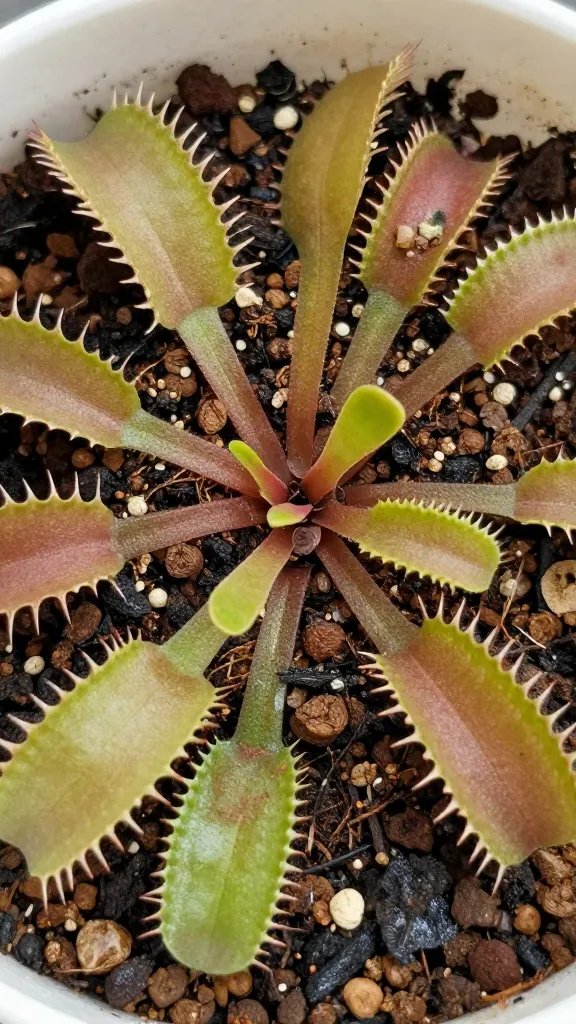
Vfts and most carnivorous plants are sun plants. A bright room is not enough. They want at least 5-6 hours of direct sun through a window, ideally south-facing, or a strong grow light set close enough to matter.
Indoors, glass eats light. A plant on a coffee table six feet from a window receives a fraction of what it needs. Leaves stretch, turn pale, and traps shrink because the plant is starving for energy.
Warning Signs You’re Under-Lighting
- Traps get smaller each new flush instead of larger.
- Leaves elongate into thin, weak petioles that flop.
- Color fades to uniform green with no red in traps (on cultivars that normally color up).
Simple Fix: Window or Light, Close and Strong
- Place the plant tight to a sunny window — the pot rim should touch the sill.
- South window beats east/west; west is second best; east works in summer; north fails.
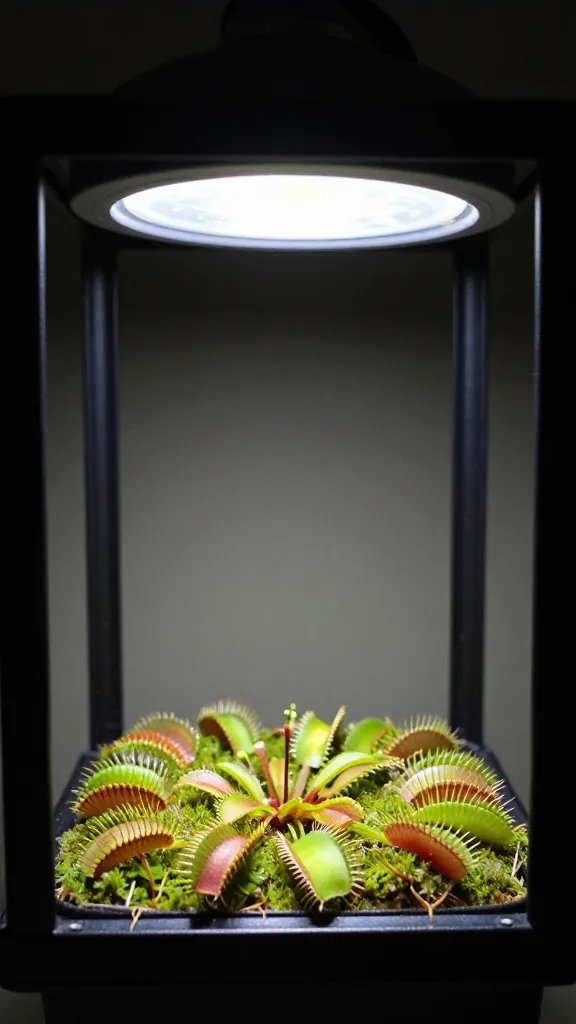
- If windows don’t deliver, use a basic clamp-on grow light from the garden centre. Position it 6-8 inches above the plant for 12-14 hours daily.
Action today: Move your Vft so the pot touches your sunniest window and set a 12-14 hour daily light schedule (natural + grow light if needed).
The Second Non-Negotiable: Mineral-Free Water, Every Single Time
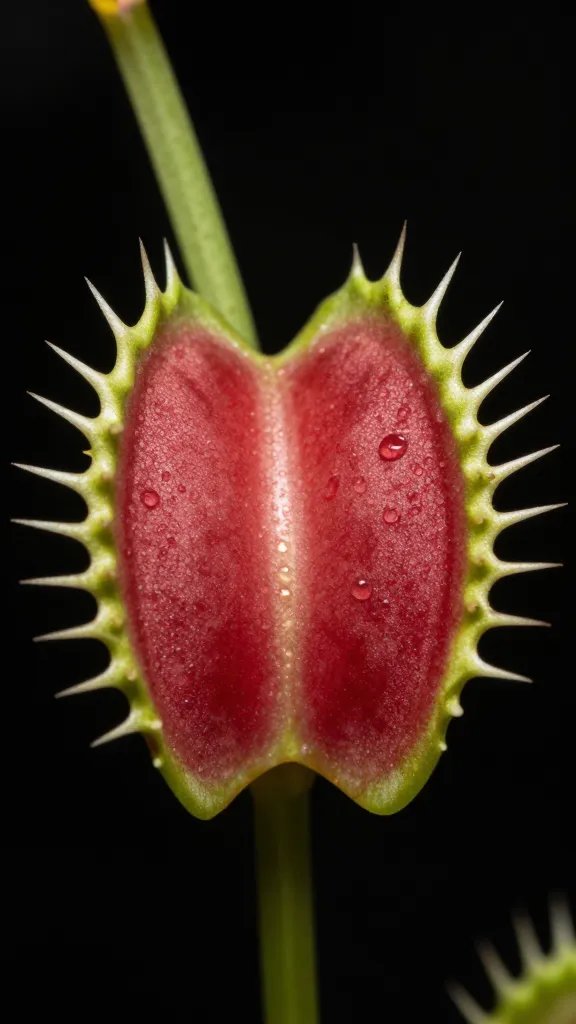
Minerals and fertilizers burn carnivorous plant roots. Tap water that tastes “a bit hard,” softened water, or houseplant fertilizer will salt the soil. The result is blackening traps, crispy edges, and a plant that declines no matter how much you “baby” it.
You don’t need meters. Use water that tastes clean and not salty: rainwater, distilled water, or reverse-osmosis (RO) water. If you can smell salt or your kettle crusts with limescale, that water is wrong for these plants.
Warning Signs You’re Using the Wrong Water
- New traps blacken at the tips within a week of opening.
- Leaf edges crisp while soil still looks damp.
- White crust forms on the soil surface or pot walls.
Simple Fix: Swap the Water and Flush
- Buy two 4-litre jugs of distilled water from the supermarket.
- Top-water the pot slowly with one full jug over a sink to rinse minerals out.
- Water only with distilled, rain, or RO going forward. Never alternate with tap.
Action today: Replace your current water with distilled or rainwater and flush the pot thoroughly once.
The Third Non-Negotiable: The Right Soil and Constant Moisture at the Roots
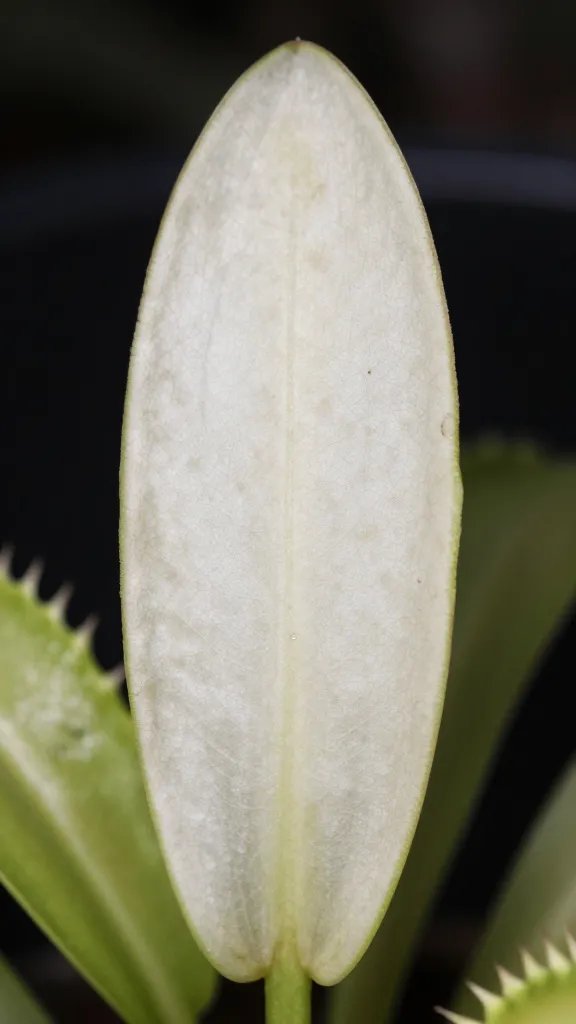
Vfts need a nutrient-poor, airy, water-retentive medium. Standard potting mix, compost, or anything “enriched” will kill them. Use plain sphagnum peat moss mixed 1:1 with coarse silica sand or perlite labeled for horticulture (no added fertilizer).
Keep the root zone evenly moist using the tray method. These bog plants like wet feet, not soggy crowns. Letting them dry out “between waterings” weakens them fast.
Material Recommendations That Work From Any Garden Centre
- Peat base: Plain sphagnum peat moss (no added feed). If peat-free is mandatory in your area, use long-fiber sphagnum moss labeled for orchids.
- Aeration: Horticultural perlite or silica sand (play sand can work if it’s silica and rinsed well).
- Pot: Plastic pot 9-12 cm wide with drainage holes — white or light-colored keeps roots cooler.
Step-by-Step Repot (20 Minutes)
- Pre-soak peat and perlite with distilled water until uniformly damp and fluffy.
- Mix 1:1 by volume. Squeeze a handful — it should glisten and hold shape without dripping.
- Fill the pot, make a hole, set the rhizome so the white crown sits just at soil level.
- Set the pot in a saucer and fill the saucer with 1-2 cm of distilled water.
Action today: Check your soil label — if it says “feeds up to X months” or includes compost, plan a repot into a peat/perlite or long-fiber sphagnum mix this week.
Indoor Climate Reality: Heat, Air, and Humidity Myths
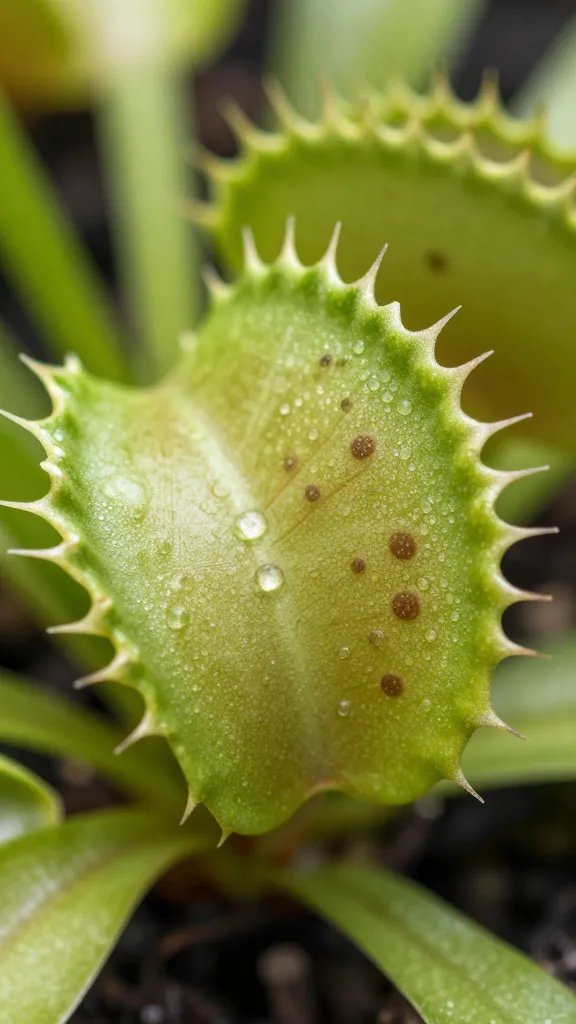
Vfts do not need terrarium humidity. Traps deform in stagnant, hot air. Normal home humidity is fine if light and water are correct.
They prefer cool roots and moving air. A sealed jar on a sunny sill becomes a steam cooker. Aim for typical room temps, and avoid midday sun magnified through glass if the pot overheats.
Practical Setup That Prevents Overheating
- Use a light-colored plastic pot in a white saucer to reflect heat.
- Crack the window for airflow on warm days or run a small desk fan nearby.
- If glass feels hot to the touch at midday, pull the pot 10-15 cm back or add a sheer curtain for the hottest hours.
Action today: Ditch any closed dome or cloche and give your plant free airflow by an open window or gentle fan.
The Seasonal Rule Everyone Skips: Real Winter Dormancy
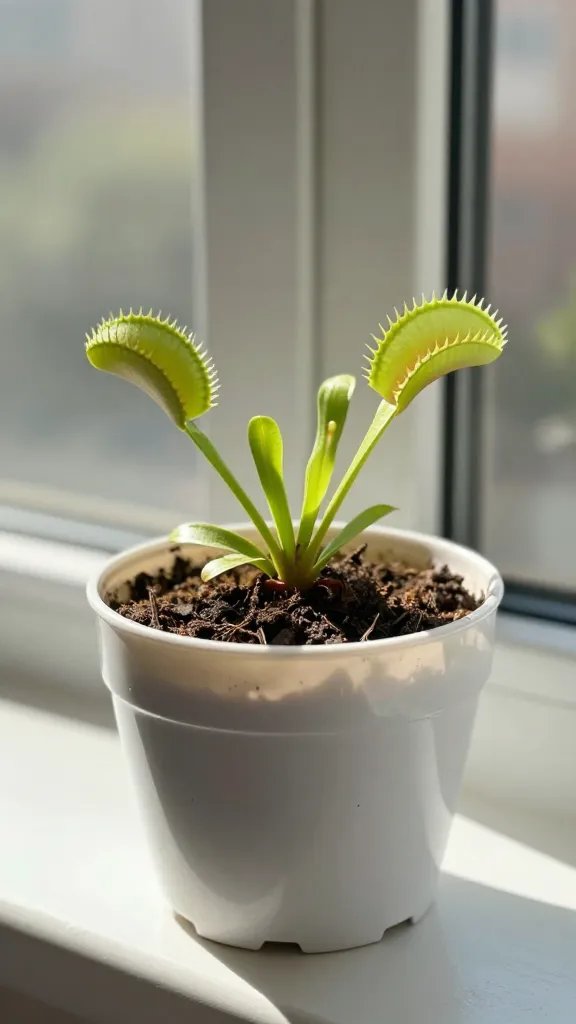
Vfts require 3-4 months of cool dormancy around 2-10°C. Without it, they limp along, exhaust their reserves, and die the next year. Indoors near heaters, they never rest.
I overwinter mine in an unheated porch and a bright, cool window. You can also use the top shelf of a frost-free fridge with the plant bagged to reduce drying, checking monthly.
Dormancy Made Simple
- In late autumn, reduce tray water to barely damp soil — no standing water.
- Move to a bright, cold location: unheated spare room window, garage window, or porch.
- Trim black traps; leave green growth. Keep soil just moist all winter.
- Return to full sun and tray watering in early spring as days lengthen.
Action today: Decide where your plant will spend winter (porch, cold window, or fridge) and set a calendar reminder for late autumn to start dormancy prep.
Feeding and Handling: Let the Plant Do Its Job
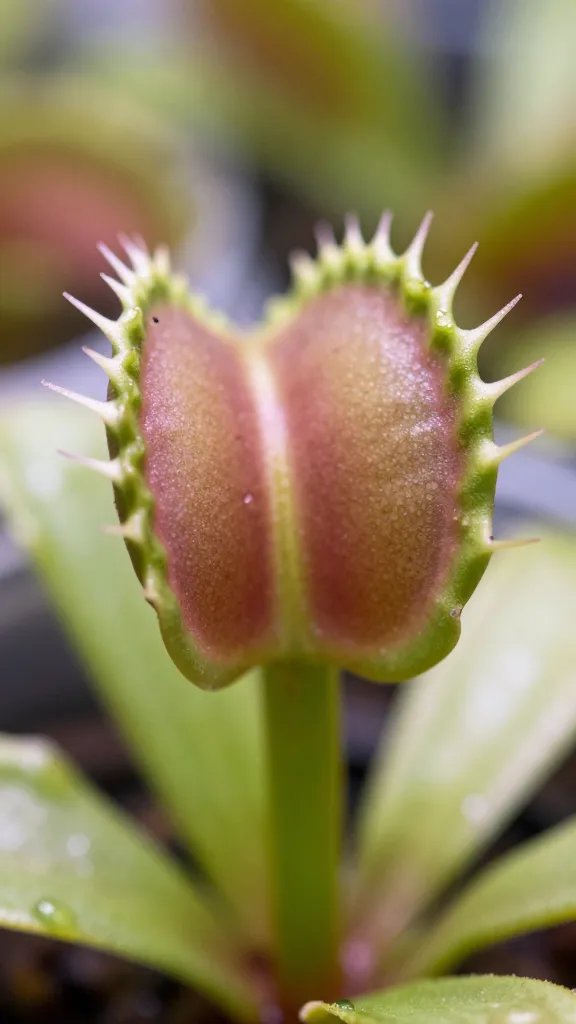
No fertilizer ever. Vfts get nutrients from prey. Overfeeding or sticking food in every trap wastes the plant’s energy and risks rot if the food is too big or dry.
Outdoors in summer, they feed themselves. Indoors, an occasional small fly is enough. If you use dried insects, moisten them and make sure the trap seals fully.
Safe Feeding Guidelines
- Food size: no larger than one-third the trap length.
- 1-2 traps fed per month per plant is plenty.
- Do not trigger traps for fun — each closure costs energy.
Action today: Stop fertilizing and stop poking traps; move the plant where it can catch the odd gnat naturally.
Frequently Asked Questions
Why do my new traps turn black at the tips so fast?
That points to mineral burn or chronic low light. Switch to distilled or rainwater and flush the pot thoroughly once. Move the plant to direct sun or add a grow light for 12-14 hours daily. New growth over the next 3-4 weeks should emerge clean and larger.
Can I keep a Venus flytrap in a terrarium?
Not closed. A sealed terrarium overheats and stagnates, which deforms traps and invites rot. Use an open pot in a tray, right at a sunny window, with good airflow. If you love glassware, use an open-top vase as a decorative cachepot that doesn’t trap heat.
Is my tap water okay if it tastes fine?
If your kettle builds limescale or your tap runs through a softener, it isn’t okay. Use distilled, RO, or rainwater exclusively. If tap is your only option temporarily, use it once, then flush twice with distilled when you can. Long term, stick to mineral-free water every watering.
How wet should the soil be day to day?
Keep 1-2 cm of water in the saucer spring through summer. In cooler months, let the saucer dry for a day before refilling so the crown isn’t constantly saturated. The soil surface should feel damp, not soupy, when you press it. During dormancy, keep it just moist with no standing water.
Do Venus flytraps need to eat to live indoors?
They survive on light and water alone, but they grow stronger with occasional prey. One or two small bugs a month is enough. If you don’t have insects indoors, set the plant outside for a few warm afternoons or feed a tiny, moistened dried insect and confirm the trap seals.
When should I repot, and how often?
Repot every 18-24 months in fresh peat/perlite or long-fiber sphagnum. Do it in early spring before vigorous growth starts, or right after dormancy. Replace any compacted, smelly, or crusted media sooner. Always use mineral-free water when preparing the mix.
Conclusion
You don’t need special gear to keep a Vft alive indoors — just honor the three non-negotiables: strong sun, mineral-free water, and the right soil kept consistently moist. Decide today where your plant gets real light, swap to distilled or rainwater, and schedule its winter dormancy spot. Do those three, and your “impossible” carnivore becomes one of the easiest, most rewarding plants you’ll ever grow.