Allergy-Friendly Companion Plant Combinations: 10 Low-Pollen Pairings Secrets
Your garden shouldn’t make you sneeze like you just sniffed pepper. Good news: you can plant a gorgeous, buzzing (but not sneezy) garden with smart, low-pollen pairings that play nice together. These combos boost pollinators, deter pests, and look stunning—without turning your yard into a pollen bomb. Ready to breathe easier and still get that lush, thriving vibe? Let’s dig in.
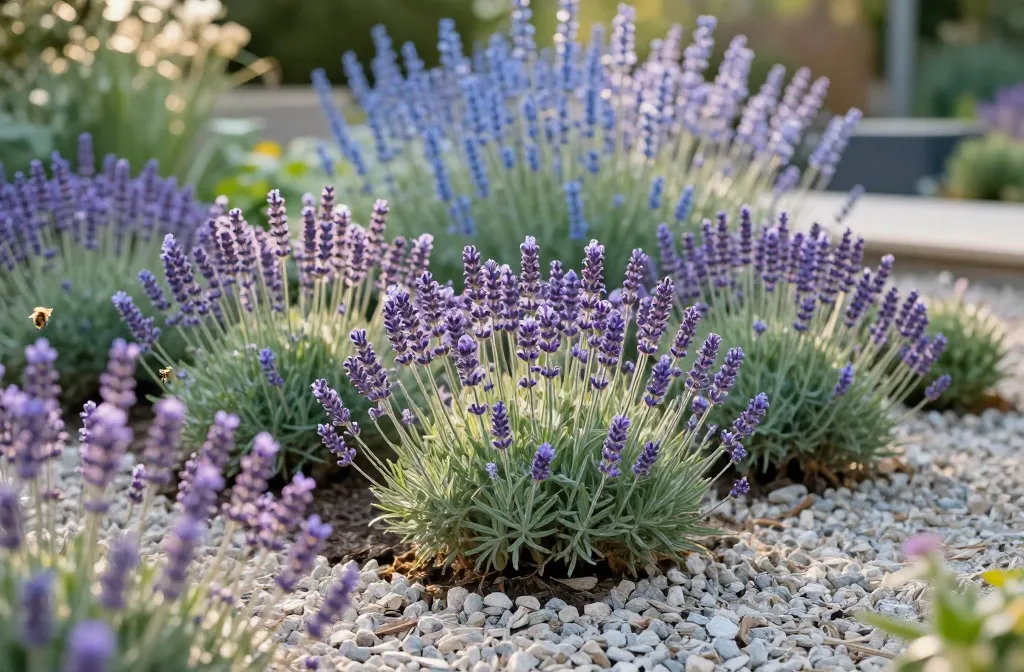
1. Lavender + Catmint: Fragrant Allies, Zero Sneeze Drama
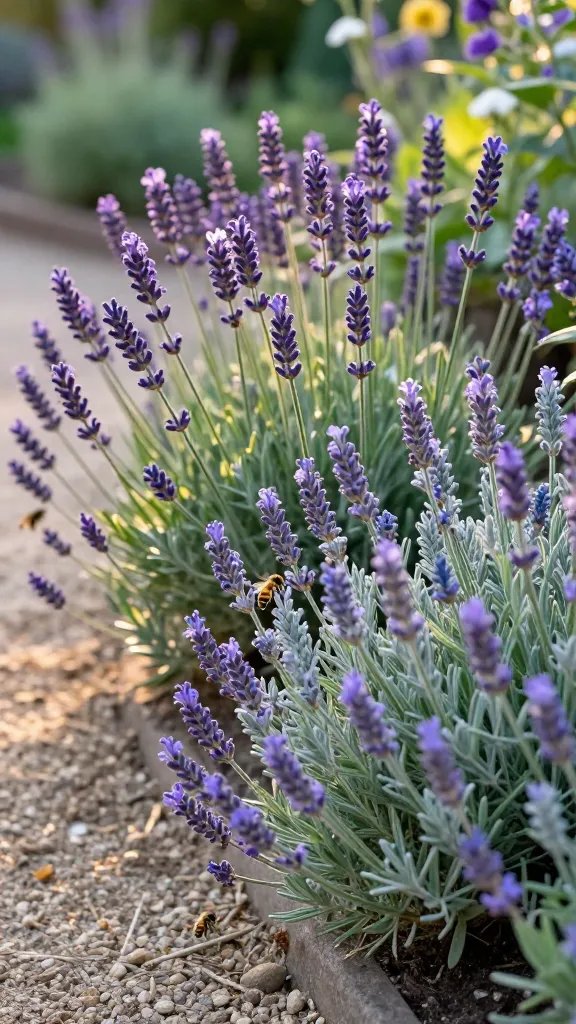
Lavender and catmint are the dream team for scent, color, and low pollen. Both plants rely more on insects than wind, which keeps pollen from floating into your face. They bring a long bloom season, attract bees and butterflies, and basically turn your garden into a spa day.
Why It Works
- Low wind-borne pollen: Bees handle most of the pollination.
- Drought-tolerant: Once established, they shrug off heat.
- Pest-resistant: Deer and rabbits usually pass these by.
Plant lavender (e.g., ‘Hidcote’ or ‘Munstead’) with sprawling catmint (Nepeta ‘Walker’s Low’). Give them full sun and well-drained soil. Deadhead catmint after the first flush to coax more blooms. Lavender likes a haircut too—lightly shear after bloom to keep it tidy.
Tips
- Space 18–24 inches apart for air flow (less mildew, more happy).
- Use gravel mulch to keep crowns dry.
- Pair with a low-allergen ornamental grass like blue fescue for texture without extra pollen.
Use this combo along sunny paths or patios where you’ll brush against the scent without brushing against allergens. IMO, it’s the easiest “set-and-forget” duo for beginners.
2. Hosta + Astilbe: Shady, Showy, And Sinus-Friendly
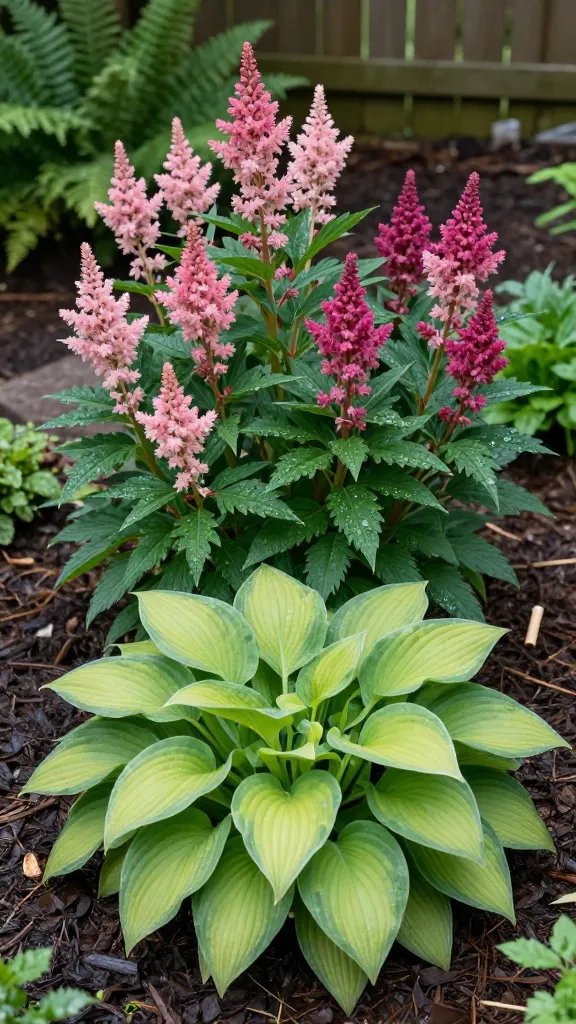
Got shade? Hosta and astilbe bring big leaves and feathery plumes that won’t make your eyes water. Astilbe’s pollen is heavy and sticky, and hosta flowers tend to be modest contributors to airborne pollen—especially when you snip spent blooms.
Key Points
- Shade superstars: Thrive in morning sun and afternoon shade, or full shade.
- Moisture lovers: Keep soil consistently damp—mulch helps.
- Layered interest: Hosta for bold foliage, astilbe for colorful spikes.
Choose a large-leaf hosta (like ‘Sum and Substance’ or ‘Patriot’) and pair with astilbe varieties in pink, red, or white (e.g., ‘Fanal’ or ‘Bridal Veil’). The contrast makes your shade bed look intentional and lush, like you hired a designer.
Maintenance
- Water deeply once a week; increase during heat waves.
- Deadhead hosta flowers if you’re super sensitive to pollen.
- Divide clumps every 3–4 years to keep them vigorous.
Ideal under trees, on the north side of your house, or anywhere turf grass sulks. You’ll get drama, not drama-llergies—seriously.
3. Coral Bells (Heuchera) + Hellebores: Four-Season Foliage With Low-Pollen Blooms
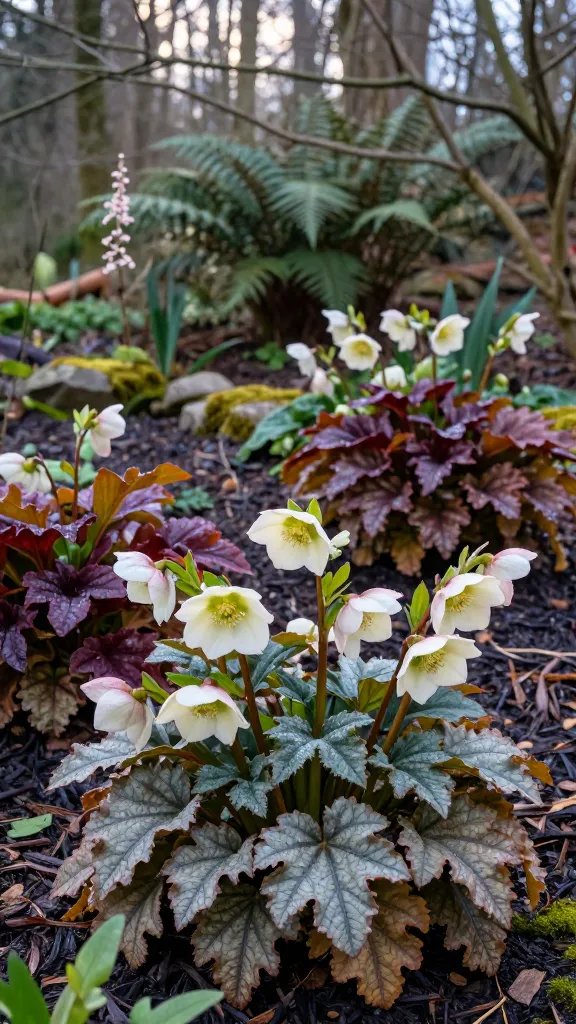
If you want color from January to December without sneezing, this duo delivers. Hellebores bloom late winter to spring with nodding flowers that trap pollen, while heuchera brings kaleidoscopic foliage and delicate, low-pollen flower wands.
Why You’ll Love It
- Extended season: Hellebores open early; heuchera foliage shines all year.
- Low maintenance: Both handle part shade and average soils.
- Wildlife wise: Deer and rabbits usually skip the menu.
Plant hellebores in a drift, then weave in heuchera varieties like ‘Caramel,’ ‘Obsidian,’ or ‘Lime Rickey’ for contrast. Keep them in dappled light with rich, well-drained soil, and top-dress with compost each spring.
Smart Pairing Ideas
- Add Japanese forest grass (Hakonechloa) for a flowing edge with minimal pollen.
- Mix in ferns for texture; they reproduce by spores, not pollen—FYI, your nose will thank you.
- Remove hellebore old leaves in late winter to show off new blooms and reduce disease.
Perfect for front-door beds and shade borders where you want something pretty 24/7. Bonus: hellebores often self-seed politely, creating a fuller look over time.
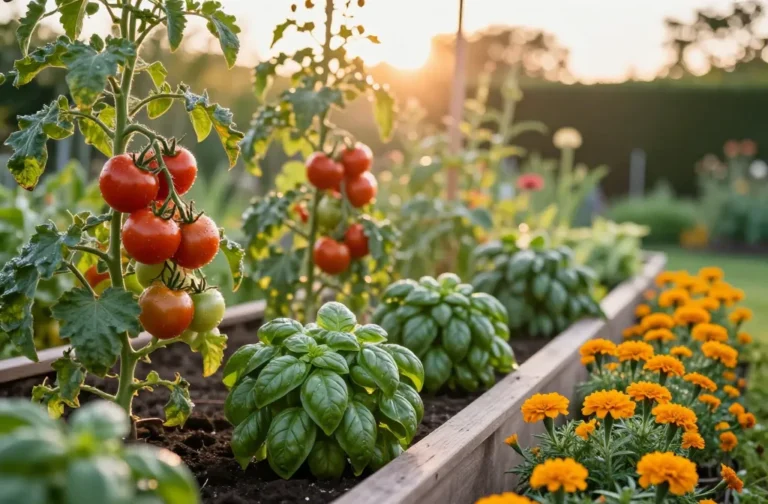
4. Zinnia (Double/Profusion Types) + Basil: Color Bomb Meets Kitchen Hero
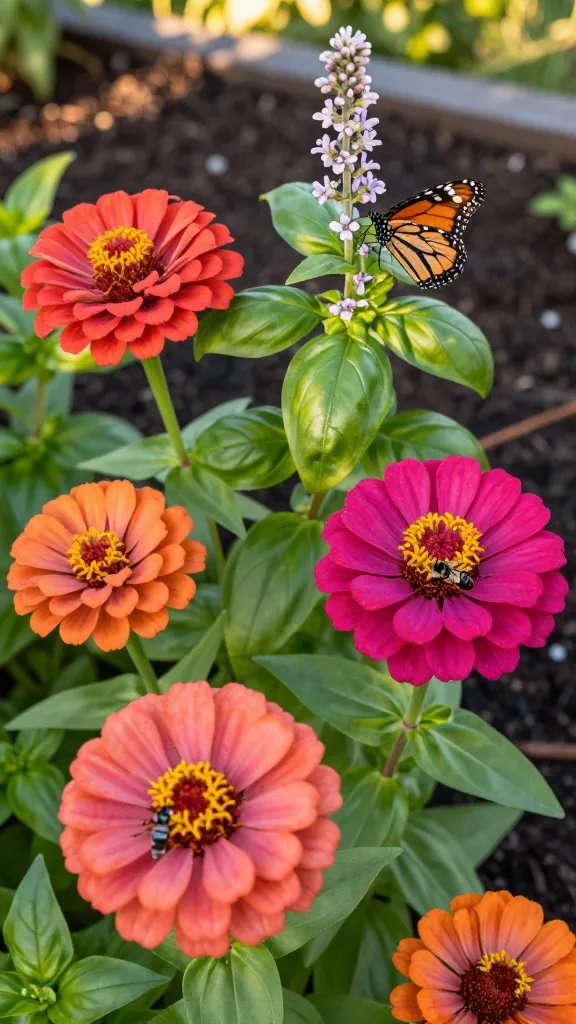
This pairing brings cheerful color and kitchen-ready herbs without a pollen cloud. Choose double-flowered zinnias or the Profusion series, which pack extra petals that trap pollen. Basil’s tiny flowers aren’t big pollen players, and they attract beneficial insects that help keep pests in check.
What Makes It Awesome
- Pollinator magnet: Butterflies adore zinnias; parasitic wasps love basil blooms.
- Edible bonus: You literally get pesto with your petals.
- Summer stamina: They thrive in heat with full sun and regular water.
Plant zinnias in rows or clumps, then tuck in basil around the edges. Try basil varieties like ‘Genovese’ for classic flavor or ‘African blue’ for nonstop flowers. Cut zinnias often to encourage more blooms; pinch basil relentlessly for bushier plants and tastier leaves.
Low-Allergen Tips
- Skip single-flowered zinnias if you’re extra sensitive—doubles are your friend.
- Water at soil level to avoid powdery mildew.
- Space well for airflow—12 to 18 inches does the trick.
Use this combo in raised beds, cutting gardens, or along sunny fences. You’ll get the cottage-garden vibe with dinner ingredients baked in. Trust me, you’ll start gifting bouquets and pesto like a neighborhood hero.
5. Blue Salvia (Salvia farinacea) + Dusty Miller: Cool Tones, Hot Curb Appeal
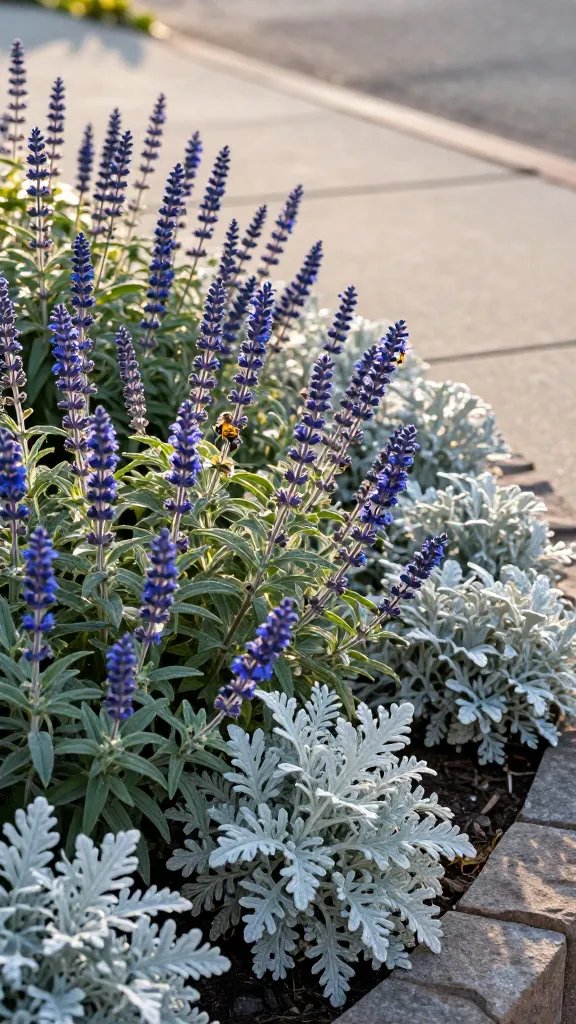
Want elegance without allergens? Blue salvia’s tubular flowers rely on bees, not wind, so you won’t inhale pollen just walking by. Dusty miller adds silvery foliage that looks frosty even in July, and it stays tidy with almost no fuss.
Highlights
- Color contrast: Indigo spikes + silver leaves = instant sophistication.
- Long bloom window: Salvia keeps going with deadheading.
- Low-pollen profile: Insect-pollinated, minimal drift.
Plant salvia in sun with average soil; it doesn’t need fancy. Tuck dusty miller in front as a soft border or weave it through the bed. Clip salvia spikes as they fade to push out fresh flowers through fall.
Design Add-Ons
- Introduce white alyssum for a gentle fragrance and tiny, bee-friendly blooms.
- Edge with creeping thyme—it’s low-pollen and releases aroma when you brush by.
- Use dark mulch to make the silver pop even more.
Great for front-yard beds, mailbox plantings, or anywhere you want tidy, high-contrast color. It’s the set of “dressy jeans” for your landscape—effortless but polished, seriously.
Quick Allergy-Smart Planting Principles
- Choose insect-pollinated plants over wind-pollinated ones. Tubular or complex flowers = good.
- Favor doubles (more petals) when possible—they often trap pollen.
- Deadhead regularly to reduce pollen exposure and prolong blooms.
- Water smart: Drip or soaker hoses keep foliage dry and reduce mold spores.
- Mind the trees: Big pollen culprits like birch, oak, and juniper can sabotage your plans.
- Mulch to keep dust down and prevent weeds that might trigger allergies.
Ready to plant a garden that loves your sinuses back? These five pairings give you color, fragrance, and pollinator action without the Kleenex budget. Start with one combo, see how good “breathing in your yard” feels, then layer in the rest. Your eyes—and your neighbors—will thank you.