Effortless Garden Wins New Parent Companion Planting: 9 Ultra-Low Maintenance Combinations
Sleep-deprived but craving fresh herbs and veggies? You can totally garden without adding chaos to your life. These companion planting combos practically take care of themselves, fend off pests, and squeeze more food out of small spaces. Set them up once, then spend your energy on the tiny human instead of your tomato drama.
1. Basil + Tomato + Marigold: The Tried-And-True Stress Reducer
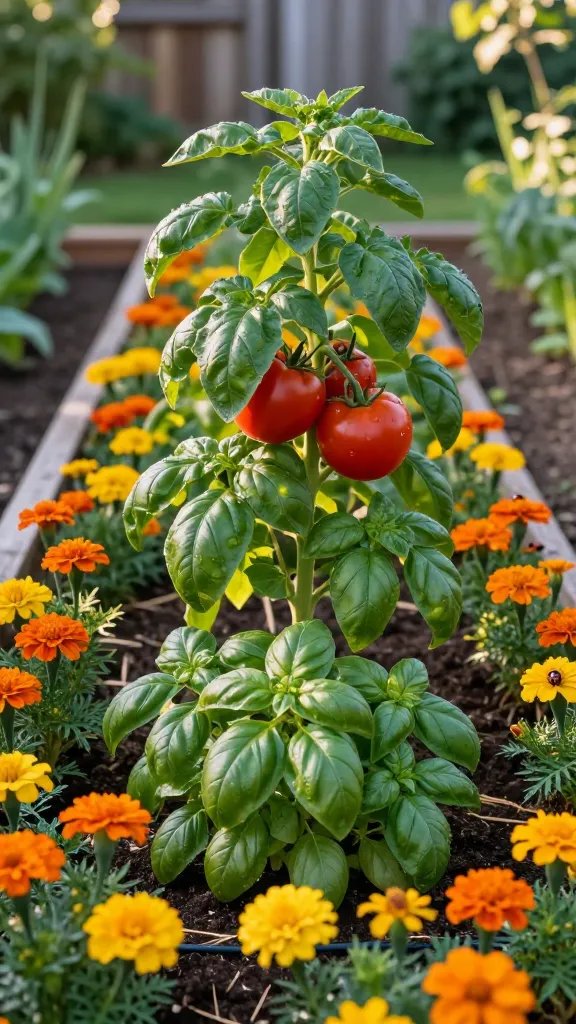
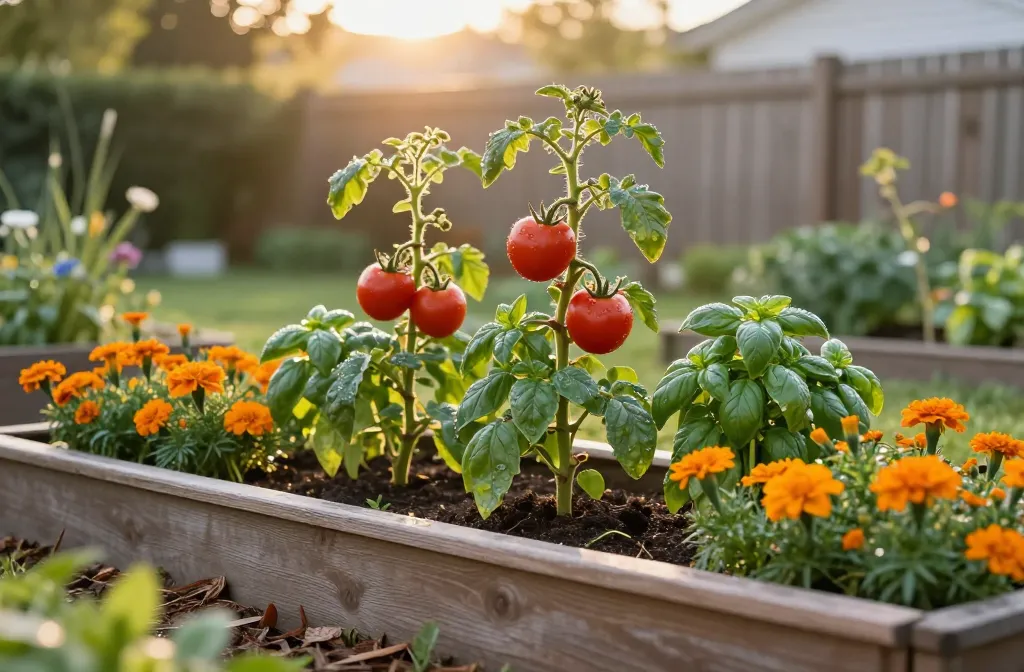
This trio is like a mini security team for your tomatoes. Basil boosts flavor, marigolds help deter nematodes and aphids, and the tomatoes get the spotlight without constant babysitting. It’s classic because it works—even if you forget to water for a day (or two… it happens).
Why It Works
- Basil releases aromatic oils that confuse pests and can improve tomato taste.
- Marigolds attract beneficial insects and help deter soil-dwelling nasties.
- Tomatoes enjoy a little shade at the base from basil, which helps soil moisture.
Setup Tips
- Plant one tomato in the center, two basil plants around it, and a ring of marigolds on the edge.
- Use a deep mulch layer (2–3 inches) to lock in moisture.
- Water at the base, not the leaves. A cheap soaker hose = your new best friend.
Bonus: You get caprese on demand. Low effort, high reward—seriously.
2. Carrot + Onion + Dill: The Rooting-For-You Crew
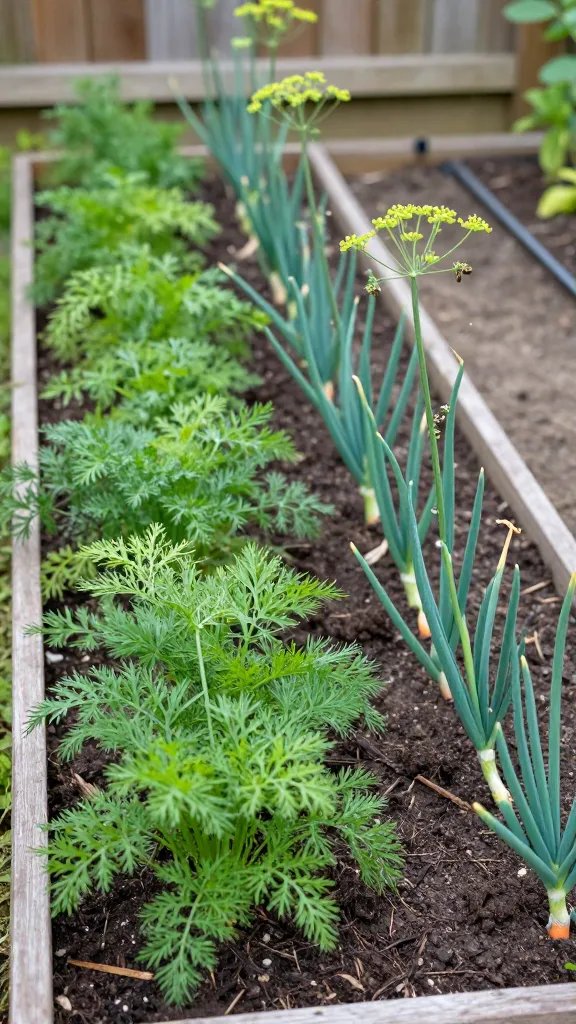
Carrots and onions make great neighbors because they mess with each other’s pests. Toss in dill, and you invite predatory wasps that snack on aphids. This combo stays tidy and doesn’t demand much attention, which is exactly the vibe you need.
How To Plant
- Rows or bands: Alternate a strip of carrots with a thin row of onions.
- Dill every couple of feet, or a single plant at the end of each bed.
- Keep the soil consistently moist for carrots to prevent bitterness and splitting.
Quick Wins
- Onion scent masks carrot smell, confusing carrot root flies.
- Dill brings in lacewings and hoverflies for natural pest control.
- Thin carrot seedlings once and call it a day.
When to use this: You want crispy carrots and zero fuss. IMO, it’s the best “set it and forget it” spring bed.
3. Cucumber + Nasturtium + Oregano: The Trailing Dream Team
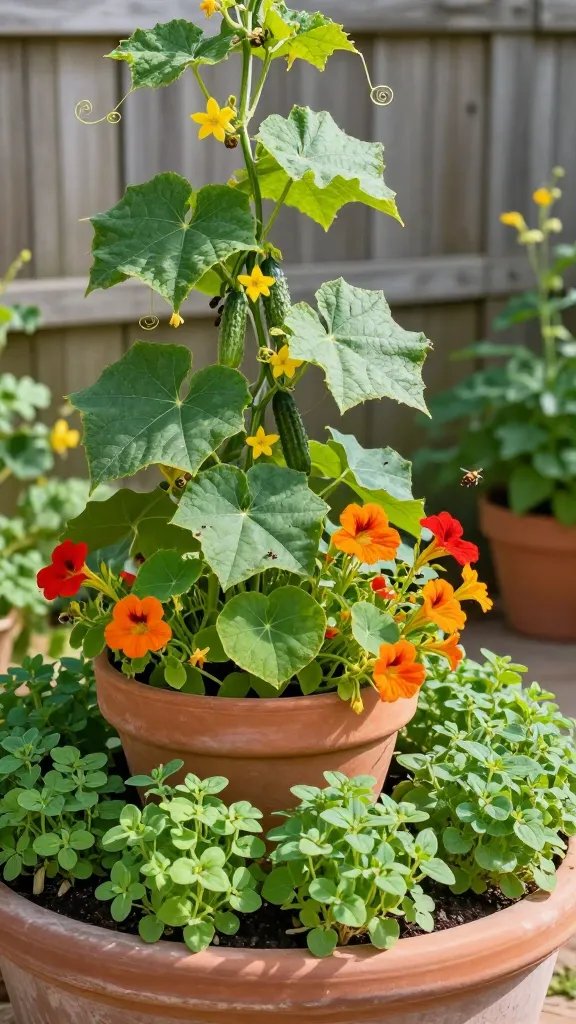
If you’ve got a sunny corner or a big pot, this combo shines. Cucumbers climb, nasturtiums sprawl and attract aphids away from your cukes, and oregano forms a fragrant groundcover. You get snacks, color, and pollinator traffic with minimal effort.
Planting Layout
- One cucumber per trellis or tomato cage.
- Nasturtiums at the base to cascade and play decoy for pests.
- Oregano along the edges to fill in gaps and hold moisture.
Maintenance Made Easy
- Pick cucumbers often to keep vines producing.
- Snip oregano monthly to prevent takeover.
- Let a few nasturtium vines wander—pollinators love the flowers.
Use this when you want gorgeous vines and clean harvests without constant spraying or micro-managing. FYI: Nasturtium flowers are edible and peppery—chef’s kiss in salads.
4. Lettuce + Radish + Chives: The No-Brainer Quick Salad Bed
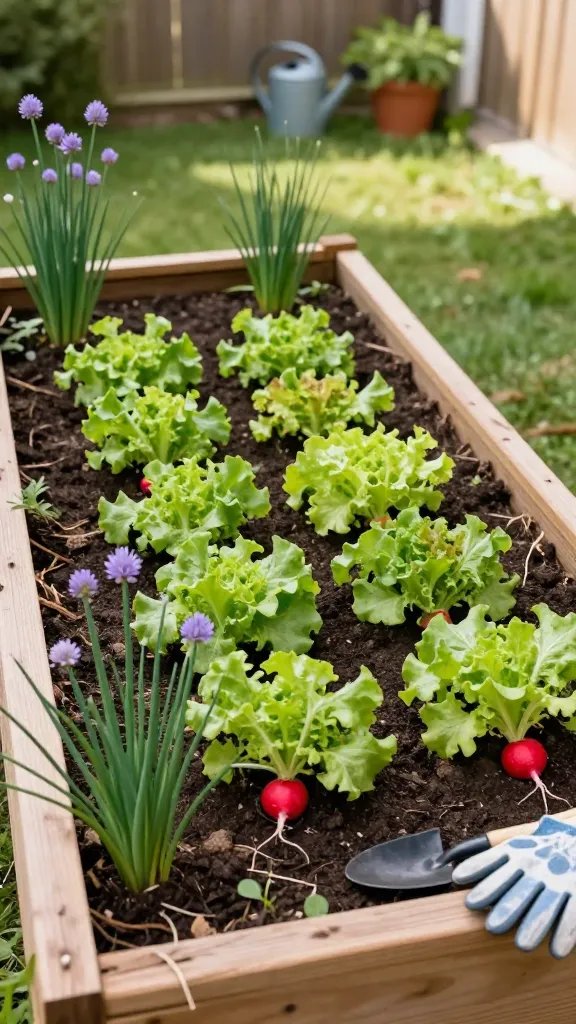
Want immediate payoff? This combo gives you fast wins and little drama. Radishes pop up quickly, lettuce stays cooler in their light shade, and chives discourage aphids while adding a hint of onion flavor to your salad bowl.
Timing And Spacing
- Lettuce: Plant a block of baby greens or spaced heads.
- Radish: Sprinkle between lettuce rows; harvest in 3–4 weeks.
- Chives: Tuck clumps at the corners or ends of the bed.
Pro Tips
- Harvest radishes first, then lettuce gets extra room to fill in.
- Keep the bed mulched to hold moisture and keep leaves clean.
- Snip chives regularly to prevent flowering and tough leaves.
Use this when you need quick wins and minimal commitment. It’s the “I have 10 minutes during nap time” garden plan, trust me.
5. Corn + Beans + Squash (The Three Sisters Remix): The Ultimate Lazy Legend
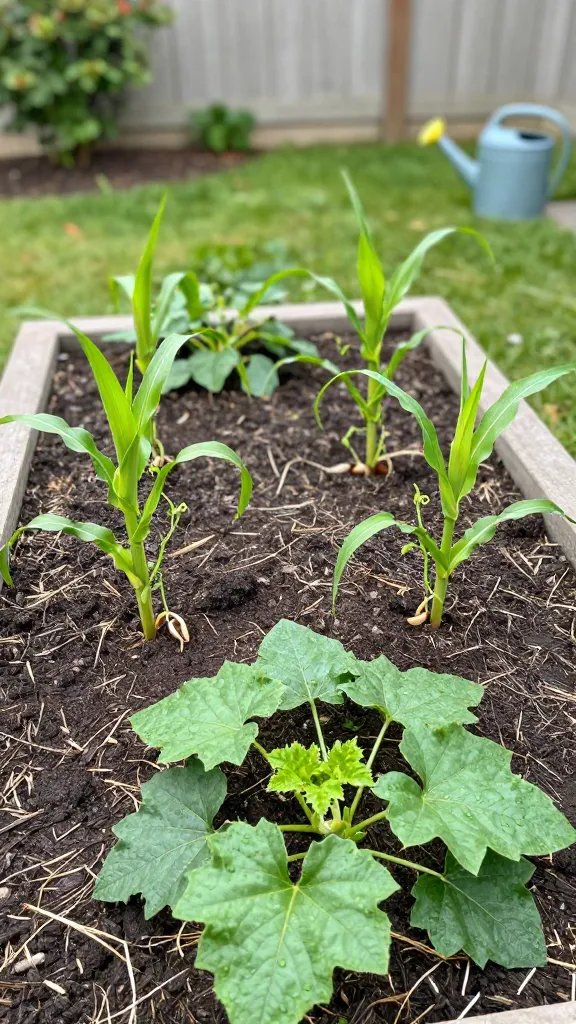
This Indigenous wisdom-powered combo still slaps for small families and busy seasons. Corn gives structure, beans fix nitrogen, and squash sprawls to smother weeds and hold moisture. You get three crops in one space with almost no weeding—chef-level efficiency.
How To Build It
- Step 1: Plant corn in a block (not a row) so it pollinates well—think 3×3 or 4×4 grid.
- Step 2: When corn hits 6 inches, plant pole beans at the base of every other stalk.
- Step 3: Add one squash plant per corner to vine and shade the soil.
Low-Maintenance Hacks
- Mulch thickly at the start to lock down moisture and discourage weeds.
- Water deep but infrequently once established—roots run strong.
- If space is tight, use a compact squash like bush delicata or zucchini.
Use this when you want real food with minimal hovering. It’s as close to “plant it and go back to cuddles and naps” as you’ll get.
Ready to build your low-effort garden that still delivers big flavor? Pick one combo, set it up this weekend, and watch the plants team up while you handle diaper duty. You’ll eat better, stress less, and feel oddly powerful every time you snip basil or pull a perfect radish—seriously.