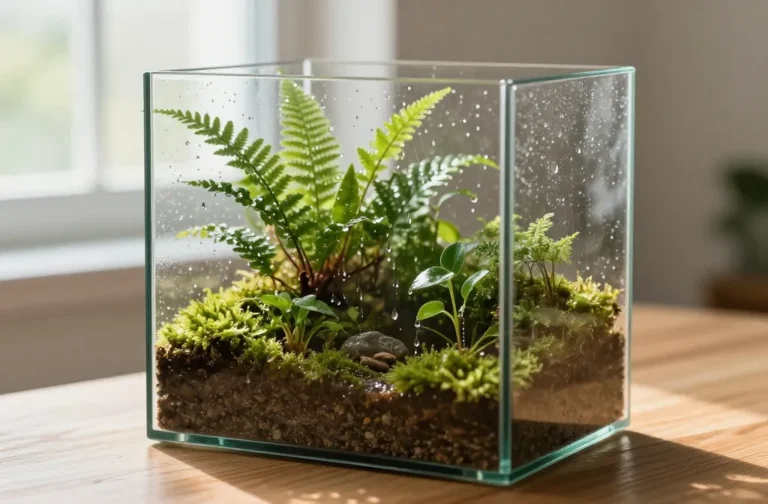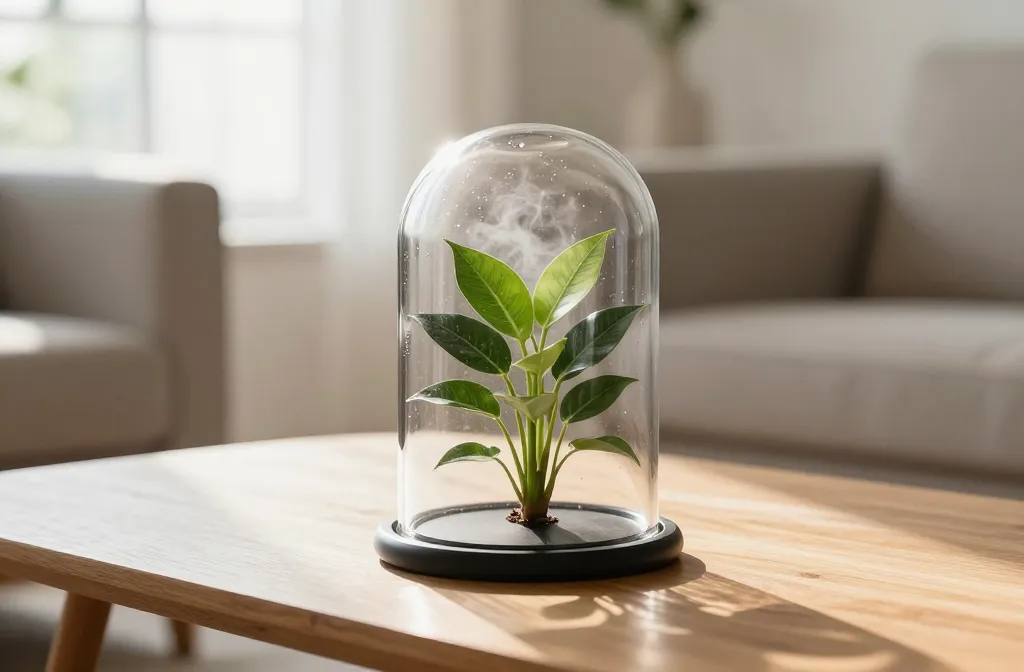
Using a Cloche As a Temporary Terrarium — When It Works and When Plants Cook Under Glass
I loved the look of a glass cloche on my coffee table — until my fittonia wilted overnight under it. I’d trapped heat and humidity without understanding how fast a sunny window can turn glass into an oven. After many trials, I now use cloches confidently for short, specific jobs. In this guide I’ll show you exactly when a cloche behaves like a handy temporary terrarium and when it becomes a plant roaster, plus the simple checks that prevent disaster.
What a Cloche Actually Does: Humidity Dome, Not a Full Ecosystem
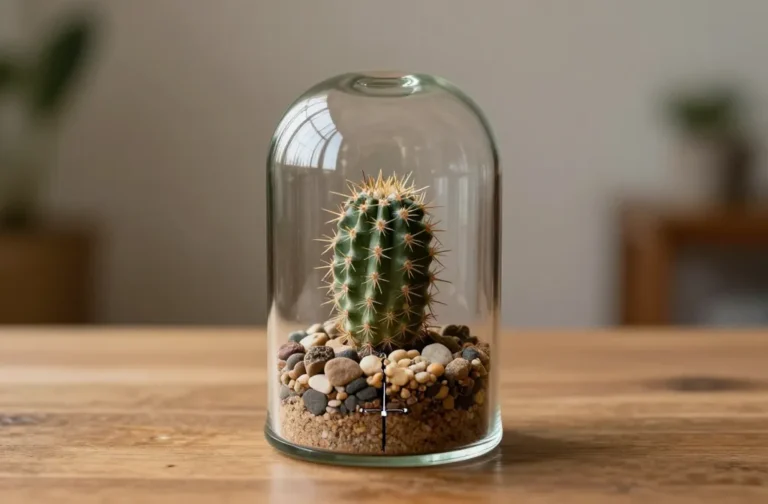
A cloche traps moisture and slows air movement. It creates high humidity fast, much like a seedling dome.
It does not buffer temperature or create a stable, closed water cycle like a true sealed terrarium. A cloche leaks at the base, so you still lose moisture and oxygen over time.
Action today: Before using a cloche, label it in your mind as a short-term humidity dome, not a permanent terrarium — plan hours to days, not weeks.
When a Cloche Works Beautifully
I reach for a cloche to recover wilted plants, settle recent cuttings, or protect a thirsty plant during dry indoor heat. It shines where temporary, elevated humidity helps tissues rehydrate and reduce stress.
Good Use Cases
- Post-repot recovery: After repotting a delicate plant like fittonia or peperomia, 24–72 hours under a cloche prevents leaf collapse while roots re-establish.
- Cuttings that like humidity: Soft-stem cuttings of pilea, tradescantia, and begonia root more reliably with steady moisture in the air.
- Temporary protection: Shield a small plant from a radiator draft or a weekend away when indoor air runs dry.
- Moss top-dressing: Keeping sphagnum or sheet moss hydrated while it knits to the soil surface.
Action today: Use your cloche for 1–3 days to help a freshly repotted humidity-loving plant bounce back — then remove it once leaves look firm.
Why Plants “Cook Under Glass”: Heat Trapping Explained
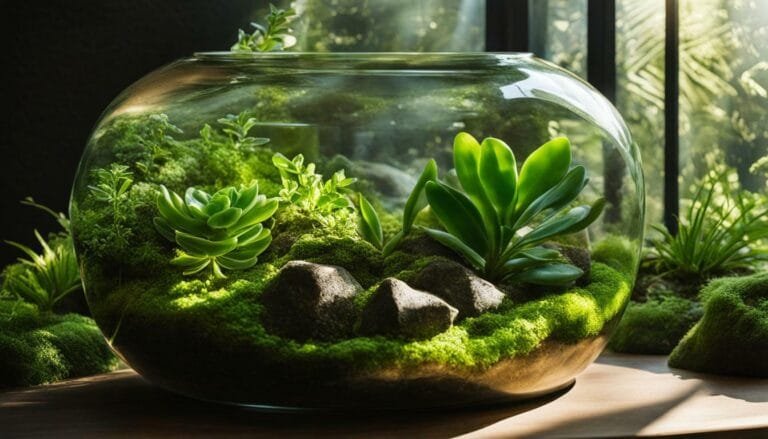
Glass magnifies light and traps heat. Under direct sun or even strong afternoon light, the air inside a cloche can climb above 32°C (90°F) within minutes.
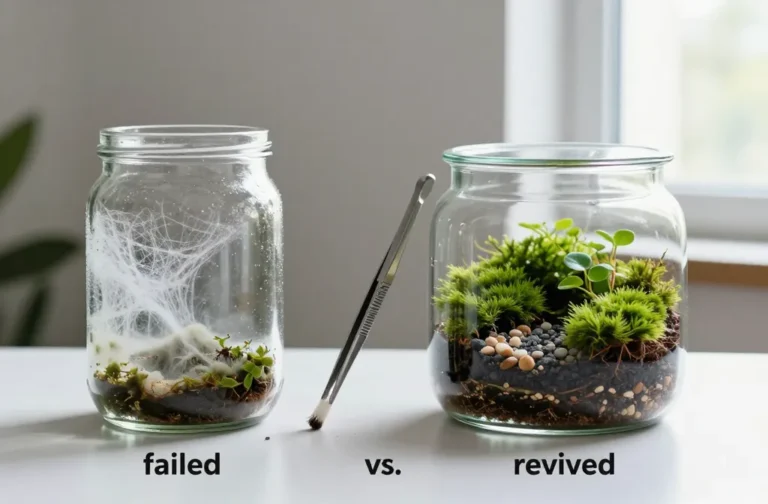
High humidity plus high heat shuts stomata and starves leaves of oxygen. Roots also use up oxygen quickly in saturated, warm soil, pushing the plant into stress and rot.
Warning Signs You’re Overheating
- Midday droop under the cloche but perky after you lift it — classic heat stress.
- Bleached or glassy patches on tender leaves facing the light.
- Condensation raining off the dome constantly — the air is too warm and saturated.
Action today: If your cloche sits within a sunbeam at any time, move it to bright, indirect light immediately — no direct rays on glass, ever.
Light Placement That Works Indoors
Place cloched plants near a bright window with sheer curtains, or at least 1–2 meters back from a sunny pane. Morning sun in winter is sometimes safe for 30–60 minutes, but I still prefer filtered light.
On a shelf, position the cloche where you can see light on the room’s surfaces but not feel heat on the glass at midday. If the glass feels warm to your hand, it’s too hot for leaves inside.
Action today: At noon, touch the cloche: if it feels warmer than your hand, relocate it to a spot with bright, indirect light.
Moisture and Venting: Simple Household Checks, No Meters Needed
Start with soil that’s evenly moist like a wrung-out sponge. If you squeeze a handful and it drips, it’s too wet for a cloche.
Use a daily crack-open routine. Lift the cloche for 10–15 minutes once or twice a day to swap air and prevent stale, oxygen-poor conditions.
Step-by-Step: Safe Daily Routine
- Morning: Wipe heavy condensation from the glass with a paper towel. Re-cover, leaving a 5–10 mm gap on one side.
- Midday: Feel the potting mix at the top. If it feels slimy or smells sour, remove the cloche for the rest of the day.
- Evening: If leaves look perked, re-cover fully overnight to retain humidity.
Action today: Wipe inside condensation now; this small step reduces fungal pressure and keeps humidity at a healthy level.
Match the Plant to the Method
Use cloches for plants that enjoy high humidity but not hot, stagnant air. Skip the cloche for succulents and thick-leaved arid species — they suffocate and rot quickly when trapped humid.
Use Under a Cloche (Short-Term)
- Fittonia, Calathea/Goeppertia, Peperomia, Pilea, Begonia rex/cane
- Ferns: maidenhair, button, lemon button
- Mosses and small tropicals with thin leaves
Avoid Under a Cloche
- Succulents and cacti: jade, echeveria, haworthia
- Thick-leaved hoyas and string-of types
- Plants in cold rooms that swing hot under sun and cold at night
Action today: If your plant has thick, waxy leaves, skip the cloche — use a pebble tray for humidity instead.
Setting Up a Fail-Safe Temporary Terrarium
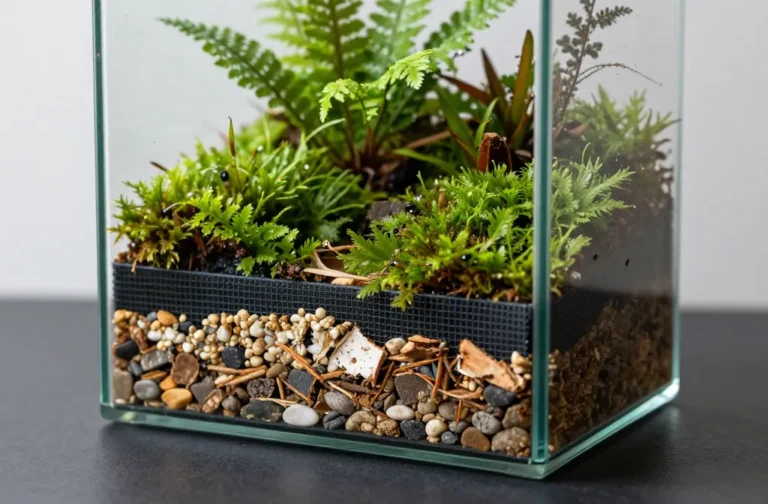
You can turn a cloche into a safe, short-term terrarium if you control light, moisture, and airflow. I build a small buffer under the plant so leaves don’t touch wet glass.
Materials From Any Garden Centre or Hardware Store
- Good quality potting mix for houseplants
- Small saucer or coaster to raise the pot off the table
- Thin cork mat or felt pad to stop condensation pooling under the rim
- Paper towels for wiping condensation
Build Steps
- Water the plant until a few drops exit the drain hole, then let it drip for 10 minutes.
- Set the pot on a coaster; place a cork or felt pad to create a tiny air gap under one side of the cloche rim.
- Place in bright, indirect light — never in a sunbeam.
- Wipe inside glass each morning and re-set the small gap.
- Limit use to 1–7 days; reassess daily.
Action today: Add a 5–10 mm air gap at the cloche base with a coin or felt pad to prevent stagnant air.
How to Know When to Remove the Cloche
Look for firm leaves that stay turgid for a full day after you vent. New growth points should look glossy and upright, not limp or pale.
Smell the soil. Clean, earthy smell means okay; sour or swampy means remove the cloche and let the plant breathe for several days.
Action today: Test your plant for 24 hours without the cloche — if it holds turgor, you’re done with the dome.
Frequently Asked Questions
Can I keep a cloche on a plant all the time?
No. A cloche is a short-term tool. Use it for hours to a few days to help with humidity stress, then remove it once the plant stabilizes. Long-term use encourages heat buildup, stale air, and fungal issues. If you want a permanent setup, build a true closed terrarium with a balanced substrate and stable light.
How do I stop condensation from dripping on leaves?
Wipe the inside glass each morning with a paper towel. Keep soil at “wrung-out sponge” moisture, not sopping wet. Leave a small gap under one side of the cloche base to allow slow air exchange. Move the setup to cooler, bright indirect light so the temperature inside stays steady.
What if I only have a sunny windowsill?
Do not place a cloche in direct sun. Move the plant 1–2 meters back from the window or hang a sheer curtain to diffuse the light. If your home gets sun everywhere, use a clear plastic storage bin with the lid ajar in a shaded corner; it’s less heat-prone than a small glass dome. Always check the glass at noon — warm glass means unsafe conditions.
Is there a low-cost alternative for humidity without the risks?
Yes. Use a pebble tray filled with water under the pot (pot on top of pebbles, not in water). Group plants closely to raise local humidity, and run a small room humidifier on a timer during the driest hours. These options avoid the sudden heat spikes a cloche can create. They’re better for daily, ongoing support.
Which pot size works best under a cloche?
Small pots, 5–10 cm (2–4 inches), are easiest to manage because air warms more evenly and leaves sit away from the glass. Tall plants press leaves against wet walls and invite rot. Keep at least 2–3 cm of air clearance around foliage inside the dome. If leaves touch the glass, prune lightly or choose a larger cloche.
Can I propagate seeds under a cloche?
Yes, but vent daily and avoid direct sun. Use a shallow tray with a seed-starting mix, mist to evenly moist, and set the cloche with a slight gap. Once you see the first true leaves, begin lengthening vent times every day to harden seedlings. Remove the cloche fully when seedlings stand upright for a full day without wilting.
Conclusion
A cloche is a precise, short-term tool that delivers humidity without the fuss of special gear — as long as you control light, moisture, and airflow. Use it for recovery and propagation, then graduate your plant back to open air once it stands steady. Today, pick one plant that struggles with dry air, run the safe 3-day cloche routine, and watch how much faster it rebounds — no cooked leaves, no guesswork.