Stop the Fuzz: Mold in a Succulent Terrarium — Causes, the 40% Rule and When to Start Over
I’ve watched a pristine succulent terrarium turn into a gray fuzz factory in ten days — and I caused it by treating it like a rainforest jar. If you’ve seen white fluff on the soil, foggy glass, or a collapsed leaf that smells earthy-sour, you’re in the same boat I was. In this guide, I’ll show you exactly why mold shows up, how to apply the 40% Rule to reset moisture and airflow, and how to decide when to salvage or start fresh. By the end, you’ll know the fast fixes and the firm limits that keep succulents healthy in glass.
Why Don’t Succulents and Glass Naturally Get Along?
Succulents evolved for dry air and fast-draining soil, while terrariums trap humidity and slow evaporation. That mismatch causes saprophytic mold to colonize debris and weakened leaves within days.
Succulents evolved for dry air, fast-draining soil, and long gaps between rain. A terrarium traps humidity and slows evaporation — the opposite of what succulents want. When moisture lingers, harmless spores on the soil surface explode into saprophytic mold that coats debris and weak leaves.
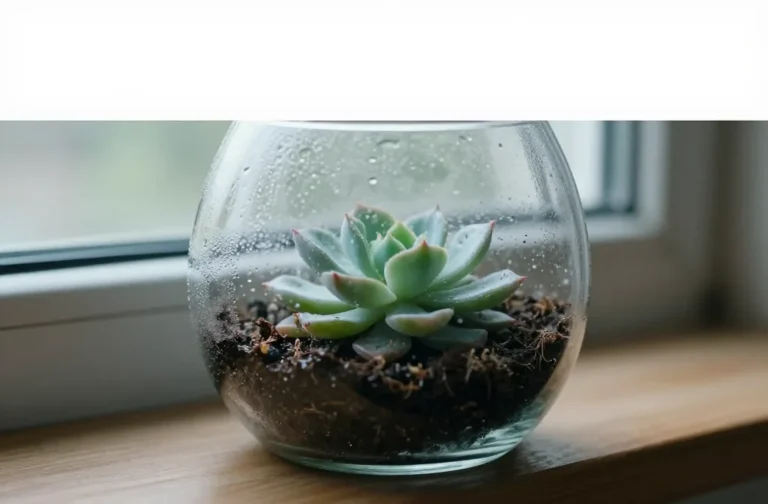
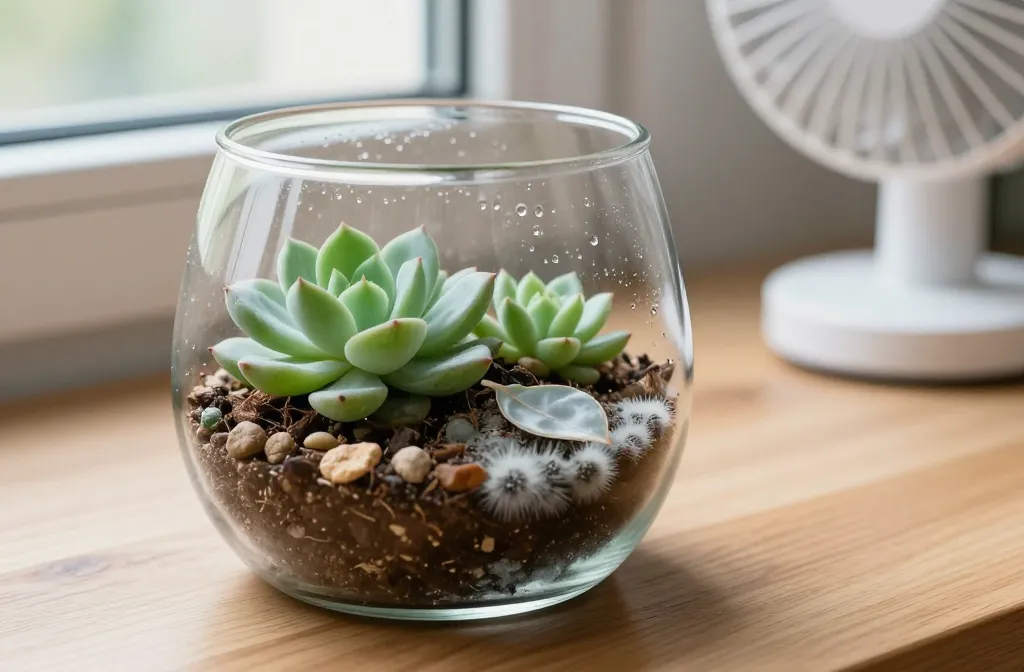
Closed or corked terrariums are worst for succulents. Even open bowls with tall sides hold still, humid air, especially near windows where cool glass meets warm room air and creates condensation. According to the University of Minnesota’s succulent care guide, replicating a succulent’s natural wet-and-dry cycle is the single most important thing you can do to prevent disease.
Action today: If your succulent terrarium has a lid, remove it permanently. If it’s an open bowl, plan to increase airflow with a small desk fan on low for 30–60 minutes daily.
What Actually Causes Mold in Succulent Terrariums?
Overwatering, organic debris, peaty compacted soil, and stagnant air work together to feed mold. Fix any one of these and you slow the problem; fix all four and you stop it.
Overwatering saturates the substrate and feeds fungi. Even a single heavy pour can keep the bottom wet for weeks because glass prevents side evaporation.
Organic debris — dried leaves, wood chips, moss, and decorative bark — becomes food for mold. Many “terrarium kits” include moisture-holding layers that are perfect for ferns, not succulents.
Poor drainage profile happens when you skip a mineral-heavy mix. A fine, peaty potting soil compacts and stays damp, especially in bowls without drainage holes. Peat moss facts from the US Sphagnum consortium explain why peat-based mixes hold so much water that they stay saturated well beyond what succulent roots can tolerate.
Stagnant air keeps the surface wet. Without light air movement, humidity clings to leaves and glass, and spores colonize fast.
Warning Signs You’re Feeding Mold
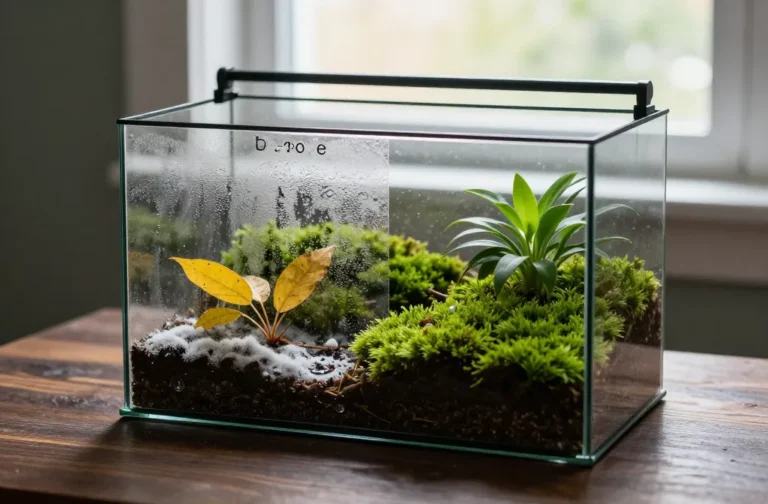
- Persistent moisture lines or fog on glass in the morning
- Soil looks dark and cold to the touch 24 hours after watering
- White threads on old leaves or where a leaf touches the soil
- Mushy leaf bases on Echeveria or Haworthia
Action today: Pinch off any leaf touching the soil surface and remove all fallen bits — they’re mold magnets within 48 hours.
What Is the 40% Rule for Succulent Terrariums?
No more than 40% of the soil surface or glass should show visible moisture after the first hour of daylight. If it does, trade water for air — less watering volume, more mineral grit in the mix, and deliberate daily airflow.
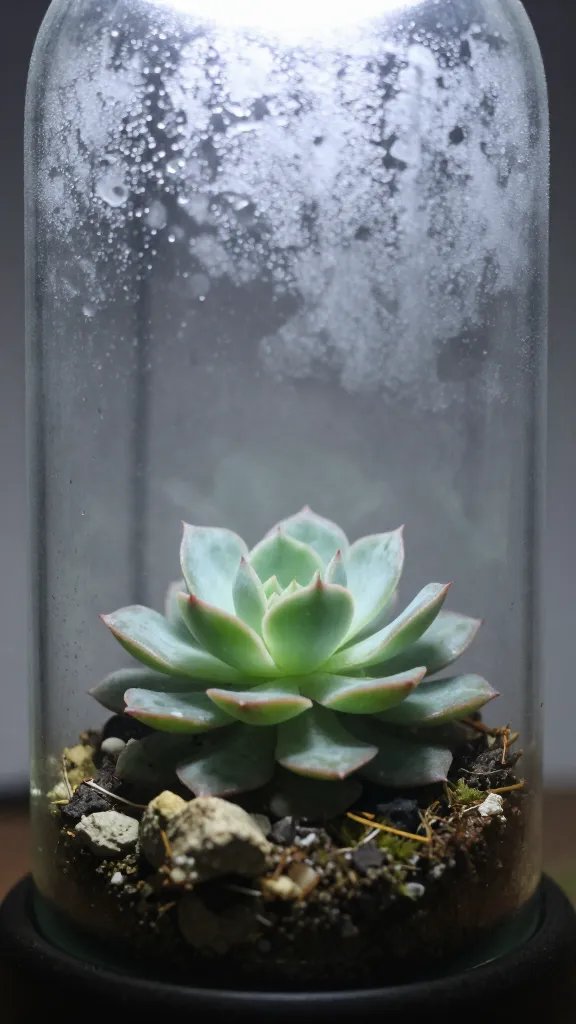
The 40% Rule keeps glass displays within a dry-enough zone for succulents: no more than 40% of the soil surface or glass should show visible moisture after the first hour of daylight. That includes dark, wet-looking patches, beading, or fog.
If you see more than 40% moisture showing, you have to trade water for air. That means less watering volume, more mineral content in the mix, and deliberate airflow daily. The Clemson extension guide to common container planting problems explains how trapped moisture at the base of any container creates the same issues you’re seeing in your terrarium.
How to Use the 40% Rule in Practice
- Check at the same time each morning (within an hour after sunrise or when you first open blinds).
- Estimate the area of foggy glass or dark soil. If it’s over 40%, you are in the mold zone.
- Respond the same day: increase airflow, extend dry intervals, and wick out excess water (paper towel tip below).
Action today: Do a morning check tomorrow. If you’re over 40%, run a fan on low for 45 minutes and skip watering for at least 10 days.
How Do You Get Rid of Mold in a Succulent Terrarium Fast?
Wick out moisture with paper towels, remove all dead leaves and decorative moss, then top-dress with mineral grit and spot-treat with hydrogen peroxide. Finish with 30–60 minutes of daily airflow for a week.
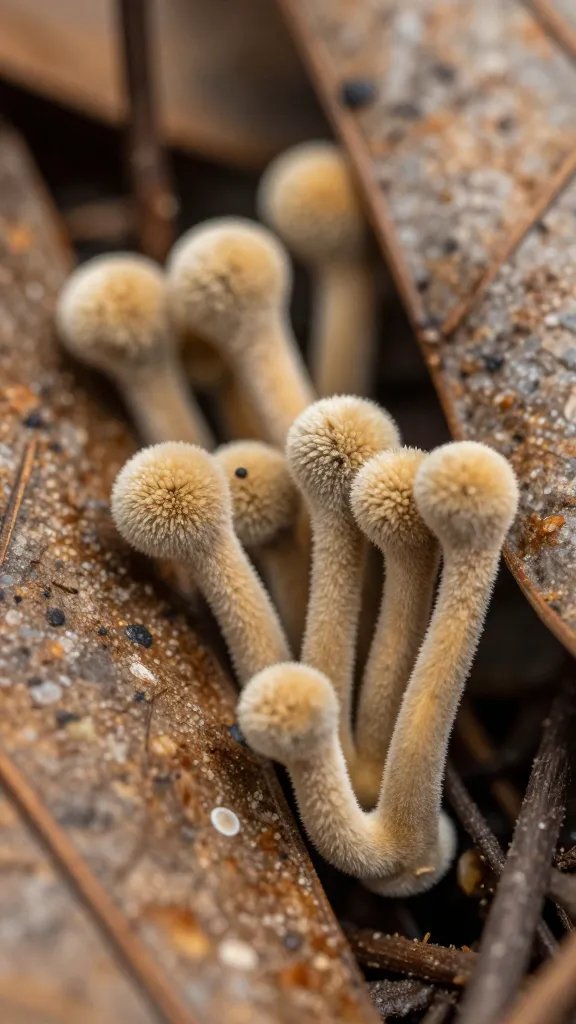
I stop mold without tearing everything apart by focusing on three moves: remove food, reduce moisture, then sanitize the surface.
Step-by-Step Fix
- Dry the bowl: Angle the terrarium 15–30° and wick water from the bottom layer with a folded paper towel or a strip of cotton T‑shirt for 10–20 minutes. Replace towels until they come out barely damp.
- Prune and clean: Lift rosettes gently and tweeze out all dead leaves. Scoop out any decorative moss or wood. Bag and bin — do not compost indoors.
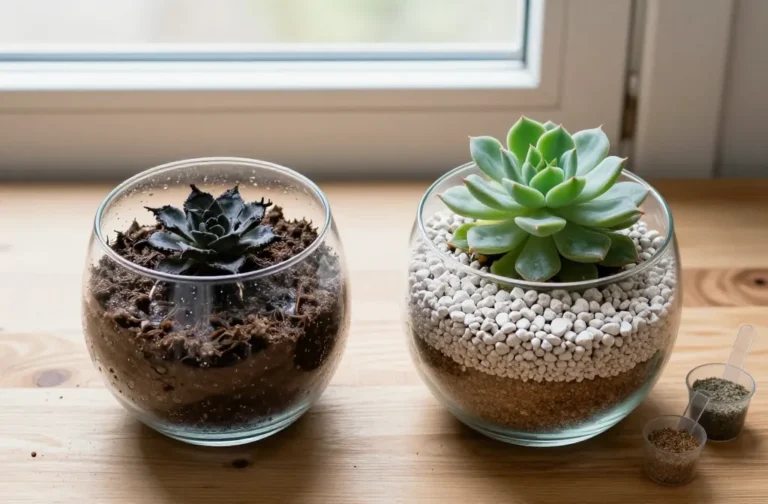
- Top-dress with minerals: Add a 0.5–1 cm layer of dry horticultural sand, poultry grit (crushed granite), or coarse aquarium gravel over bare soil. This keeps leaf bases dry and starves surface mold.
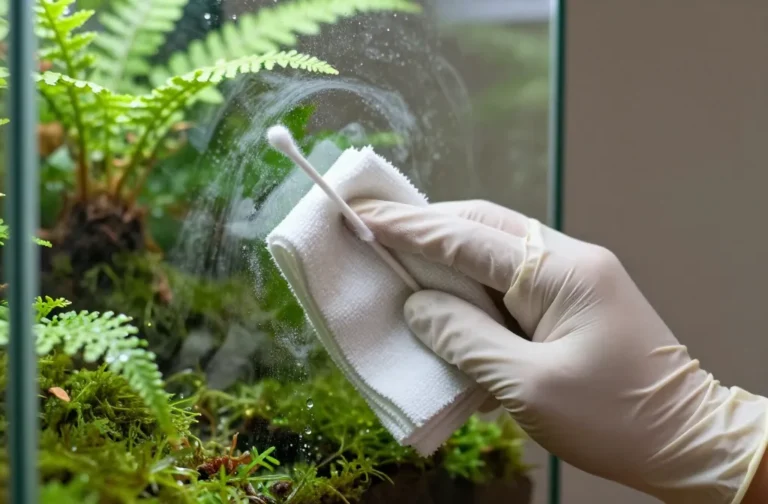
- Spot-sanitize: Mist only the moldy soil patches with 3% hydrogen peroxide until evenly damp. It will fizz for 30–60 seconds. Let it air-dry fully before returning plants to contact.
- Air it out: Place the terrarium 1–2 meters from a bright window and run a desk fan on low for 30–60 minutes daily for one week.
If your setup has been struggling with watering and drainage for a while, you may also want to check the guide to overwatered vs underwatered succulent symptoms for a full diagnostic before rebuilding.
Action today: Wick out moisture with paper towels for 15 minutes, then apply a thin mineral top-dress — you’ll see visible mold recede within 48 hours.
What Watering and Soil Setup Prevents Mold From Returning?
Use a cactus mix blended 1:1 with perlite or grit, water by measured volume instead of on a schedule, and add a mineral top-dress to break leaf-to-soil contact. This setup starves mold of the moisture and organic matter it needs to survive.
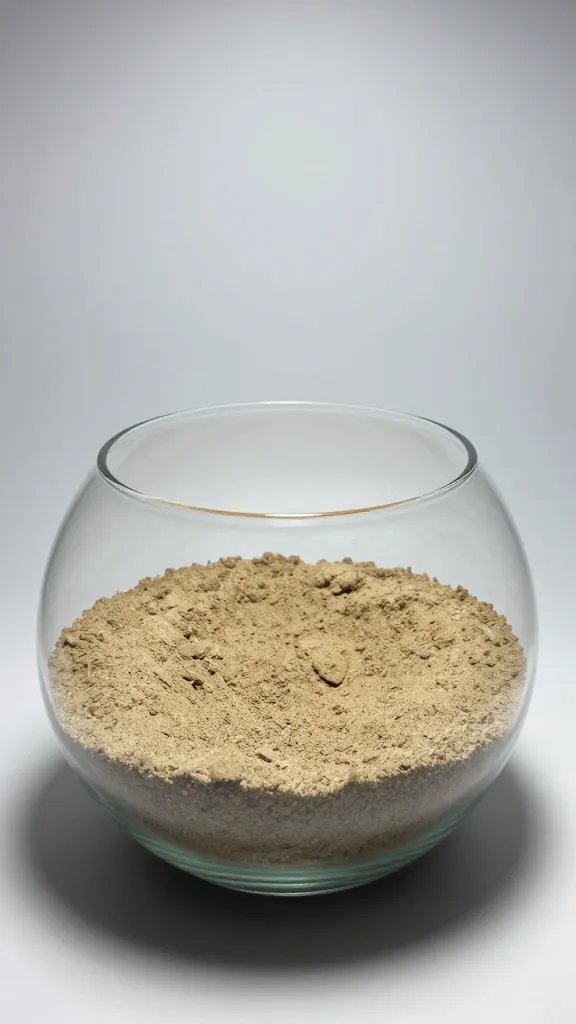
Use a mineral-heavy mix you can buy ready-made: a cactus/succulent bagged mix blended 1:1 with coarse perlite or poultry grit. Skip peat-heavy “all-purpose” mixes in glass — peat moss holds many times its weight in water, which is great for ferns and terrible for succulents.
Water by volume control, not schedule. For small terrariums (10–20 cm diameter), add 1–2 tablespoons of water around the outer edge only, then wait 14–21 days and reassess with the 40% Rule. If the top-dress still looks dry and leaves are firm, wait longer.
Top-dress matters. A dry, mineral crust breaks the soil-to-leaf contact that starts rot and feeds mold.
Simple Watering Test Without Gadgets
- Press a wooden chopstick 3 cm into the mix. If it comes out clean and barely cool, you can add a tablespoon of water.
- If it feels cool and looks smudged, wait at least 5 more days.
For a full comparison of substrate options, the soil types for container gardening guide breaks down ten mixes and exactly when each one works.
Action today: Mix a fresh top-up substrate: equal parts cactus mix and perlite or grit, and keep a cup of it dry in a jar for quick surface refreshes.
How Do Light and Airflow Prevent Mold in a Terrarium?
Place the terrarium in bright indirect light 0.5–1 m from the window and run a small fan on a 30-minute morning timer. Consistent light dries surfaces while daily airflow stops the overnight humidity buildup that feeds mold.
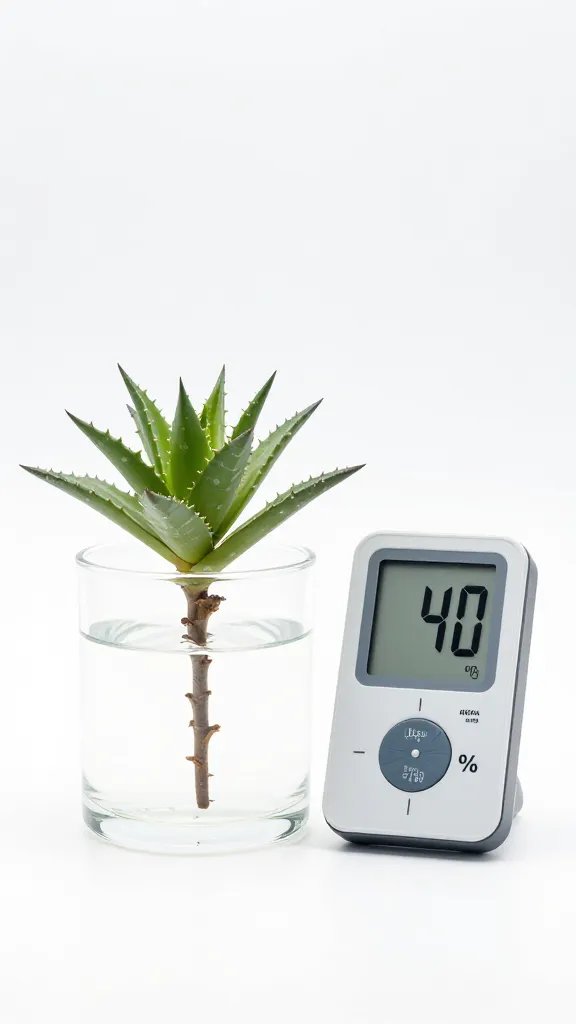
Place the terrarium in bright indirect light near a window, about 0.5–1 meter back from strong midday sun to avoid glass scorching. Morning sun for 1–2 hours is great; avoid all-day south-facing blaze on enclosed glass.
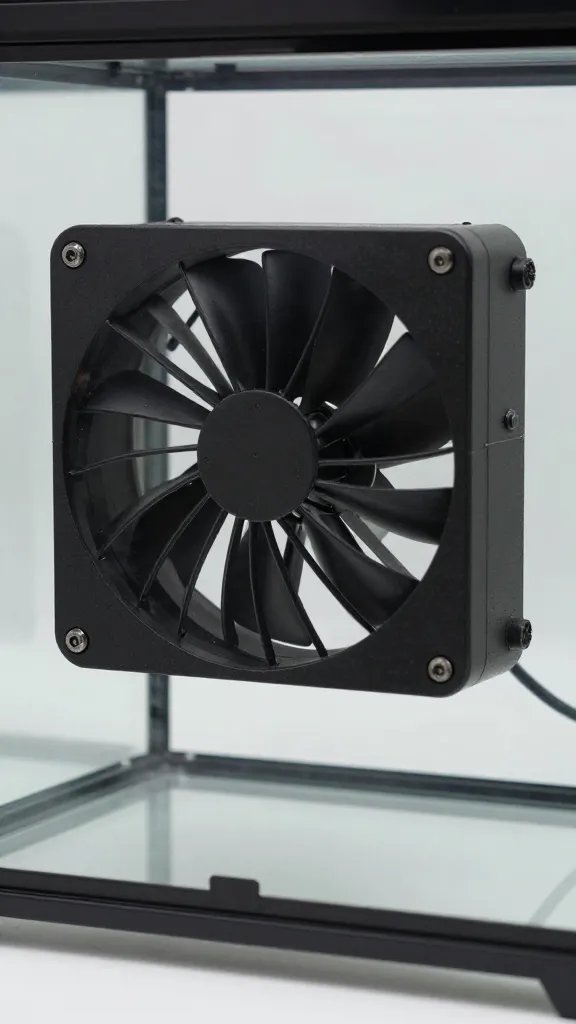
Airflow is non-negotiable for succulents in glass. A small fan on a smart plug for 30 minutes each morning prevents the overnight humidity hangover that feeds mold. Even rotating the terrarium 90° weekly helps dry shaded pockets.
Action today: Set a daily 30-minute fan timer for the morning and move the terrarium where it gets bright light without baking at noon.
When Should You Start Over With a Succulent Terrarium?
Start fresh when over 40% of roots feel mushy, when the glass fogs daily despite two weeks of 40% Rule corrections, or when the mix still smells sour after peroxide treatment. Choose a wide, open bowl, a mineral-heavy mix, and plant the succulent high with a grit top-dress.
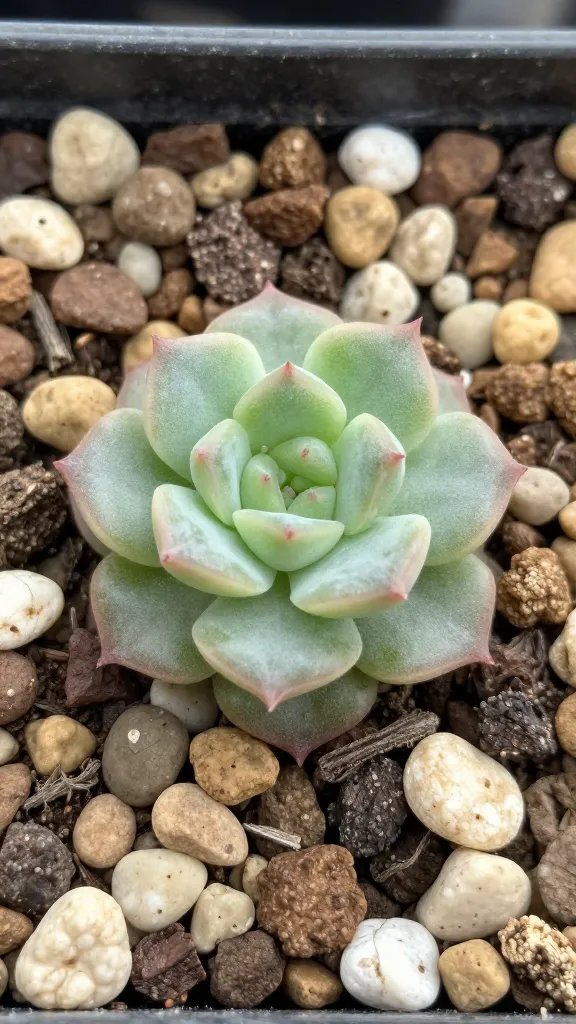
Start over when the structure or substrate traps failure. If more than 40% of roots feel mushy, if the glass fogs daily despite the 40% Rule actions for two weeks, or if the mix smells sour even after peroxide treatment, you’re wasting time.
| Mold Type | Appearance | Likely Cause | Fix |
|---|---|---|---|
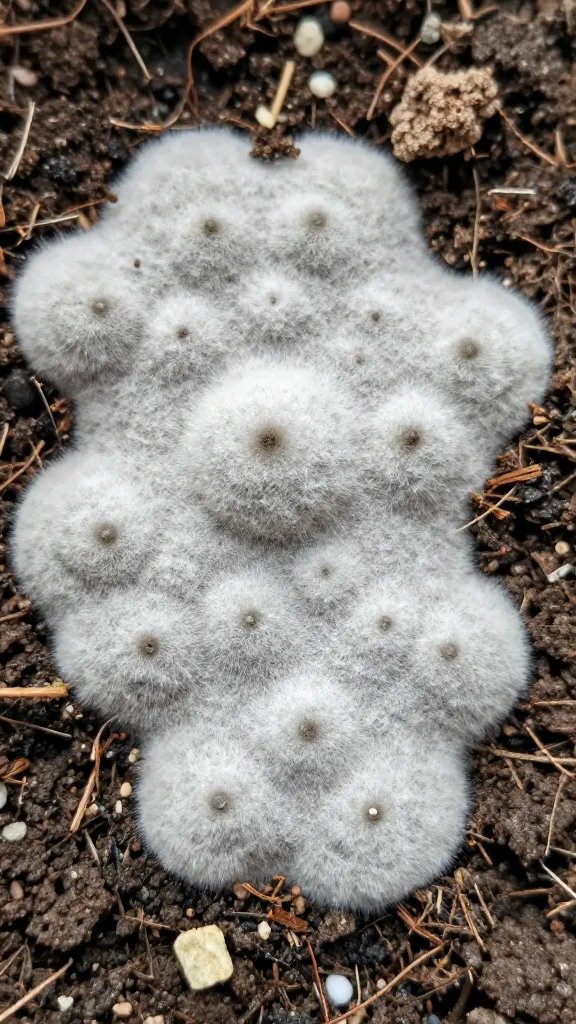
| White cottony fuzz | Soft white patches on soil surface | Overwatering + organic debris | Remove debris, top-dress with grit, increase airflow |
| Gray powdery film | Dusty gray coating on leaves or soil | Poor airflow + high humidity | Fan treatment 30 min daily, reduce watering volume |
| Green algae slick | Slimy green on glass or soil surface | Too much light + constant moisture | Move out of direct sun, wipe glass, vent more |
| Black slimy spots | Dark wet patches on leaves near soil | Leaf-to-soil contact + rot | Remove affected leaves, add mineral top-dress |
How to Rebuild the Right Way
- Choose an open container with low sides (no lids). Wider than tall is best.
- Lay a thin layer (0.5–1 cm) of coarse gravel for stability — not as a “drainage layer,” just to level.
- Fill with 4–6 cm of cactus mix + perlite/grit (1:1). Keep it dry.
- Inspect roots. Trim all mushy parts back to firm tissue. Dust cuts with dry cinnamon as a mild antifungal if you have it.
- Plant high — crown slightly above the surface — and top-dress with 0.5–1 cm of grit.
- Wait 5–7 days before the first tablespoon of water to let wounds callus.
Action today: If your setup fails the 40% Rule for 14 days straight, plan a full rebuild next weekend with a wide, open bowl and a mineral-heavy mix.
Frequently Asked Questions
Is the white fuzz dangerous to my plants or to me?
The common white fuzz in terrariums is usually harmless saprophytic mold feeding on debris, not living plant tissue. It can stress plants by keeping surfaces damp. Remove it with tweezers and treat the soil surface with 3% hydrogen peroxide. Wash hands after handling and avoid inhaling dust if you disturb dry colonies.
Can I keep any succulents in a closed terrarium with a lid?
No. Closed containers trap humidity that succulents reject. If you want a lidded display, choose moisture-loving plants like fittonia, ferns, and mosses instead. For succulents, stick to open vessels and follow the 40% Rule to keep moisture in check.
How often should I water a succulent terrarium?
Water by observation, not by calendar. For a small open bowl, 1–2 tablespoons every 2–4 weeks is typical, but only when the top-dress and the chopstick test both show dry. If you see morning moisture covering over 40% of soil or glass, skip watering entirely until it drops below that threshold.
Will cinnamon or baking soda cure mold long-term?
They can suppress surface mold briefly, but they don’t fix trapped moisture or poor airflow. Use them only after you remove debris, wick out extra water, and top-dress with grit. The lasting cure is a mineral mix, light watering, and daily airflow.
What if my leaves are already mushy at the base?
Remove the plant, trim back to firm tissue, and let it air-dry for 24–48 hours. Replant into a dry, mineral-heavy mix with a grit top-dress and wait 5–7 days before the first tablespoon of water. Discard any leaves with rot creeping into the midrib — they won’t recover.
Can grow lights help prevent mold?
Yes, consistent light helps dry surfaces and keeps succulents compact. Use a simple clamp light with a bright, full-spectrum LED and keep it 25–35 cm above the terrarium for 8–10 hours. Ensure airflow runs daily as well — light alone won’t overcome a wet mix.
Does mold on a piece of driftwood mean I have to throw it away?
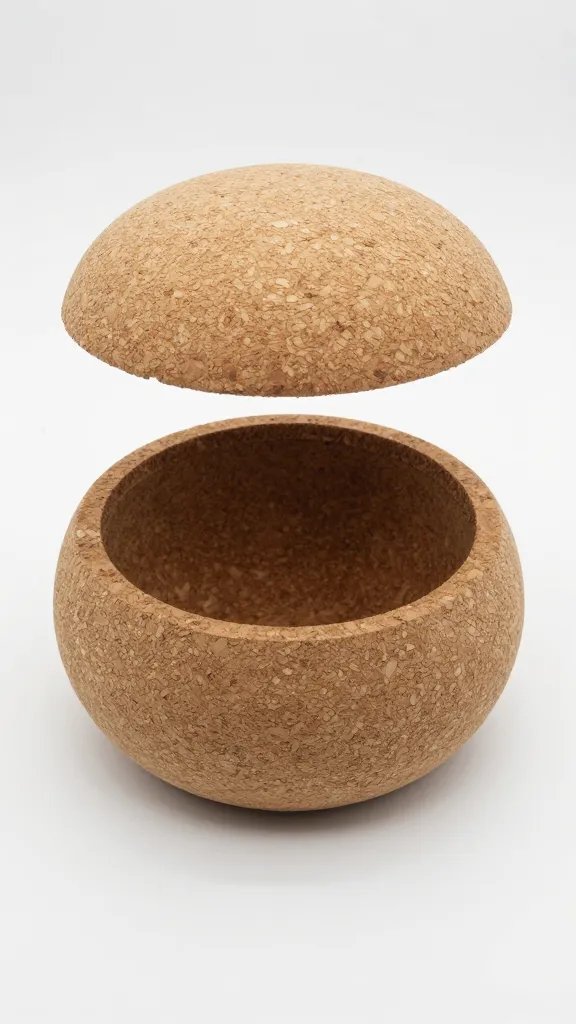
Not necessarily — remove the wood, scrub it with a brush under hot water, and let it dry completely in direct sun for two to three days. If mold returns within a week after it goes back in the terrarium, the wood is holding too much internal moisture for a succulent setup. Replace it with dry stone or untreated cork bark instead.
Is a moldy terrarium unsalvageable or can it always be fixed?
Most surface mold is fixable with the steps in this guide — the 40% Rule, debris removal, mineral top-dress, and daily airflow handle the majority of cases. The exception is when roots are more than 40% mushy or the substrate smells sour after peroxide treatment, which means the structure itself is trapping moisture. At that point, a full rebuild into an open vessel with fresh gritty mix is faster than fighting it.
Can I use a hairdryer to dry out a moldy terrarium faster?
No — the concentrated heat will scorch succulent leaves and crack the glass from thermal shock. Stick to ambient airflow from a small desk fan on low, which dries the surface gradually without stressing the plants. If you need faster drying, angle the terrarium to wick moisture with paper towels while the fan runs.
Will mold from one terrarium spread to others nearby?
Mold spores are already present in every home, so the issue isn’t spreading — it’s whether conditions in each container allow spores to colonize. Check every terrarium nearby for the same warning signs: excess moisture, organic debris, and still air. Fix the environment in all of them at once and none will develop a problem.
Conclusion
You don’t need lab tools to beat mold — you need a dry-leaning setup, the 40% Rule as your daily check, and the confidence to start over when the mix or container traps humidity. Today, do one morning moisture check and one airflow session. If you cross the 40% line all week, plan a rebuild next weekend; your succulents will thank you with firm leaves and clean glass.