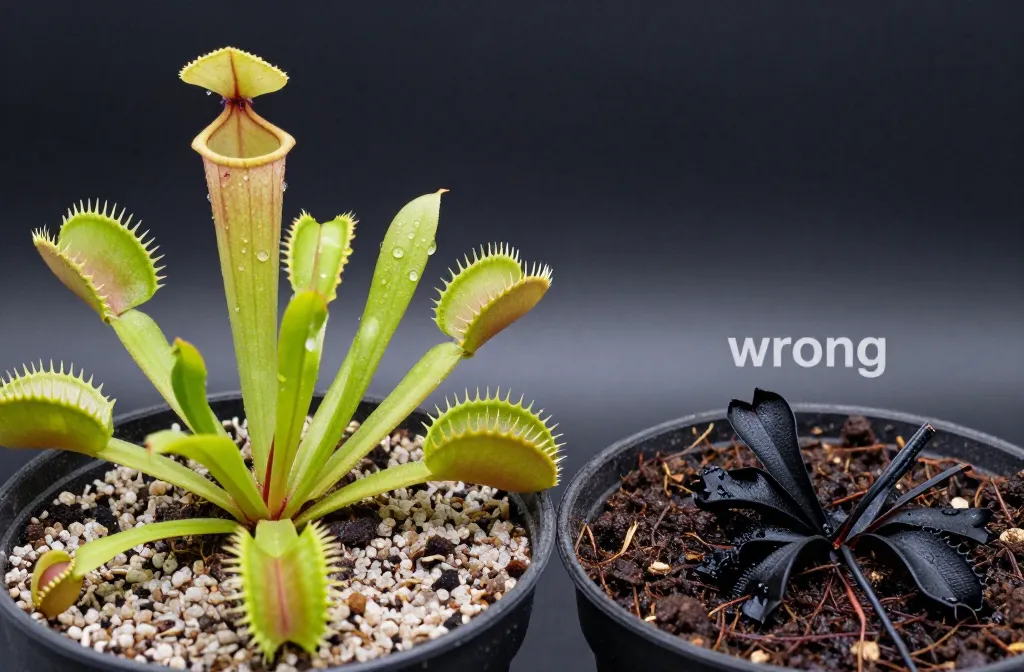
Stop Killing Your Traps 6 Common Carnivorous Plant Mistakes — Substrate, Water Type and Feeding Errors
When I brought home my first Venus flytrap, I treated it like a fern — potting soil, tap water, and a sunny sill. Three months later, I had a pot of blackened traps and a bruised ego. If that sounds familiar, you’re not alone. In this guide, I’ll show you the six mistakes I see most often — substrate, water type, and feeding blunders — and exactly how to fix them with simple supplies from a garden centre.
1. Planting In Nutrient-Rich Potting Mix Burns The Roots
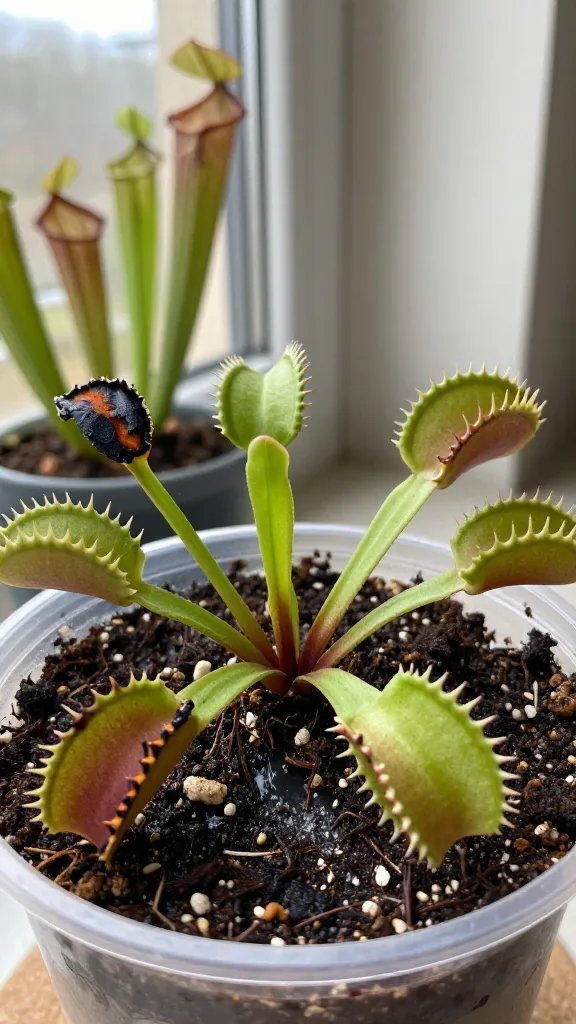
Standard potting soil and compost poison carnivorous plants. Their roots evolved for ultra-lean, acidic bogs; nutrients and fertilizers scorch them, leading to blackened crowns and stalled growth.
Signs To Watch For
- Venus flytrap (Dionaea) traps turn black from the base within 2-3 weeks of repotting
- Pitcher plants (Sarracenia, Nepenthes) produce small, twisted pitchers or stop making new ones
- Salty, earthy smell from the pot after watering
What To Use Instead
- Pure sphagnum peat moss mixed 1:1 with coarse horticultural sand or perlite (no added fertilizer, no wetting agents)
- For Drosera and Dionaea: 1:1 peat:perlite or peat:sand
- For Sarracenia: 1:1 peat:perlite with a top dressing of silica sand to keep algae down
- For Nepenthes (tropical pitchers): a lighter mix — 1:1 long-fiber sphagnum moss and perlite
How To Fix It
- Unpot gently and rinse roots in clean, low-mineral water.
- Prepare fresh mix in a clean bowl; pre-wet with low-mineral water until evenly damp, not dripping.
- Repot snugly in a plastic pot with drainage holes. Avoid glazed terracotta that can leach minerals.
- Top-water thoroughly with low-mineral water to flush any fines.
Action today: Squeeze a handful of your soil — if it smells “rich” or has fertilizer prills, repot into a peat and perlite/sand mix with no additives.
2. Using Tap Water Loads The Soil With Minerals
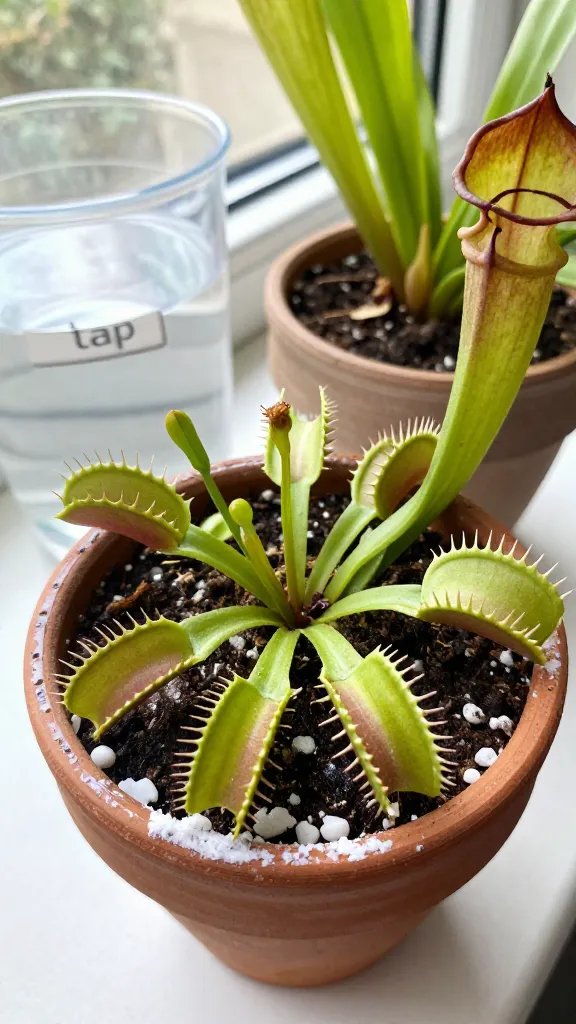
Most tap water contains dissolved minerals that build up and kill carnivorous plants slowly. You’ll see healthy leaves turn crispy at the tips, traps fail to close, and growth crawl to a halt.
Red Flags
- White crust on the pot rim or soil surface
- Flytrap traps that close sluggishly or not at all
- Pitchers browning from the rim downward despite good light
Safe Water Options
- Rainwater collected in a clean bucket or tub (lid on to keep debris out)
- Distilled water from the supermarket
- Reverse osmosis (RO) water from refill stations or aquarium shops
How To Rescue A Salt-Loaded Pot
- Set the pot in a sink and top-water with 3-4 times the pot’s volume using low-mineral water.
- Let it drain fully; repeat in one week if symptoms persist.
- If damage is severe, repot into fresh mix and water only with rain, distilled, or RO water.
Takeaway: Switch to rain, distilled, or RO water immediately and flush your pots once with it this week.
3. Feeding The Wrong Things Or Overfeeding Destroys Traps
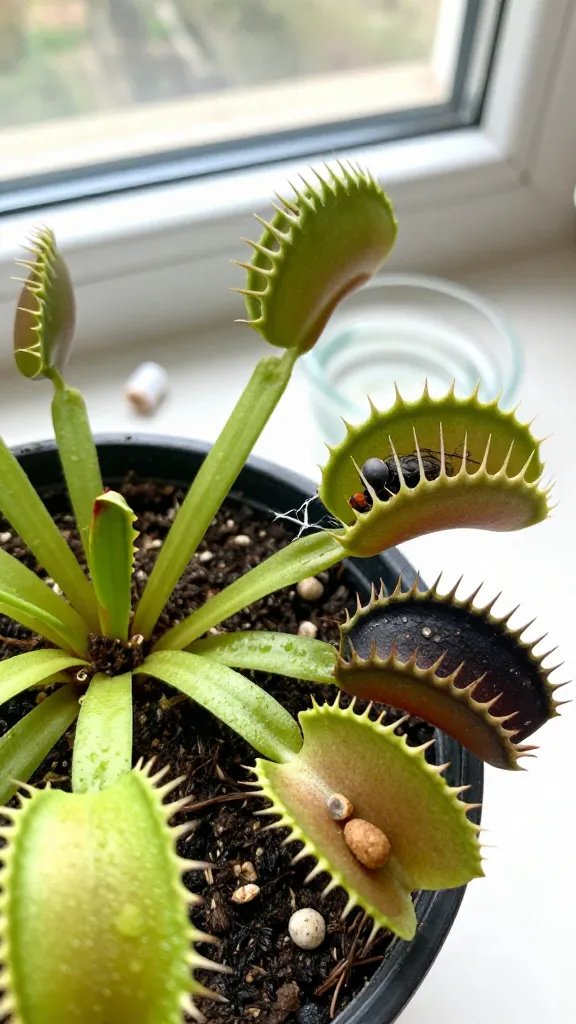
Household “treats” like hamburger, fertilizer pellets, or big bugs rot traps and invite mold. Overfeeding also exhausts the plant, causing black traps and a weak crown.
What Not To Feed
- Never meat, pet food, or fertilizer
- No dead insects too large for the trap (longer than one-third of trap length)
- No frequent manual feeding — they catch enough outdoors
Simple, Safe Feeding
- Outdoors: let them hunt. No extra feeding needed.
- Indoors: offer a small, dry insect (dried bloodworms or a tiny cricket) once a month during active growth.
- Moisten the prey, place it, then gently rub the trap sides for 20-30 seconds so the trap seals fully.
- For sundews (Drosera), sprinkle a pinch of hydrated dried bloodworms on the sticky leaves monthly.
Right Size, Right Frequency
- Food should be no bigger than one-third the trap length
- One to two traps per plant per month is enough
- Skip feeding during dormancy for temperate species
Action today: Remove any oversized or rotting prey with tweezers and stop feeding for two weeks to let the plant recover.
4. Letting Trays Dry Out Or Flooding Roots Chokes The Plant
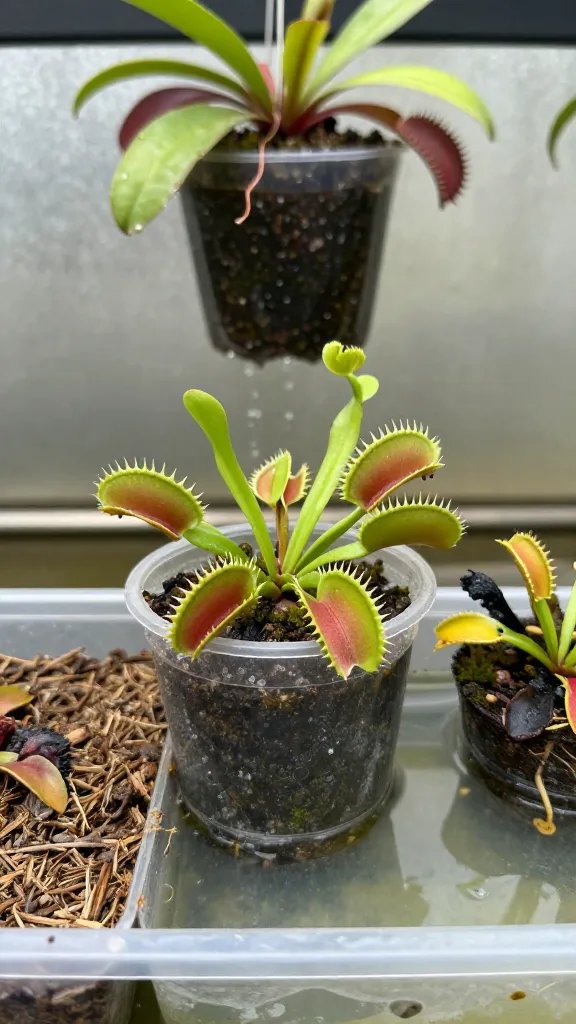
These plants love consistent moisture, not drought or boggy stagnation. Dry trays cause wilting and crispy traps; waterlogged, airless pots rot crowns and roots.
Tray Method That Works
- Use a shallow tray under the pot
- Keep 0.5–2 cm of low-mineral water in the tray during active growth for Dionaea, Drosera, Sarracenia
- Let the tray empty for 1-2 days every couple of weeks to re-oxygenate the mix
- For Nepenthes, keep the mix evenly moist by top-watering; no standing water
Warning Signs
- Drought: floppy leaves by late afternoon, dry top layer, traps failing to open
- Rot: foul smell, mushy crown, new leaves emerging weak and pale
Fix The Water Rhythm
- For bog species, set a repeating reminder to top up the tray every 2-3 days in warm weather.
- Use a plastic pot with many drainage holes to keep oxygen moving.
- If rot is starting, repot into fresh, airy mix and resume shallow-tray watering.
Takeaway: Today, set your tray to a visible water line — aim for 1 cm deep and check it every other day.
5. Skipping Full Sun Or Humidity For Pitchers Halts Pitcher Production
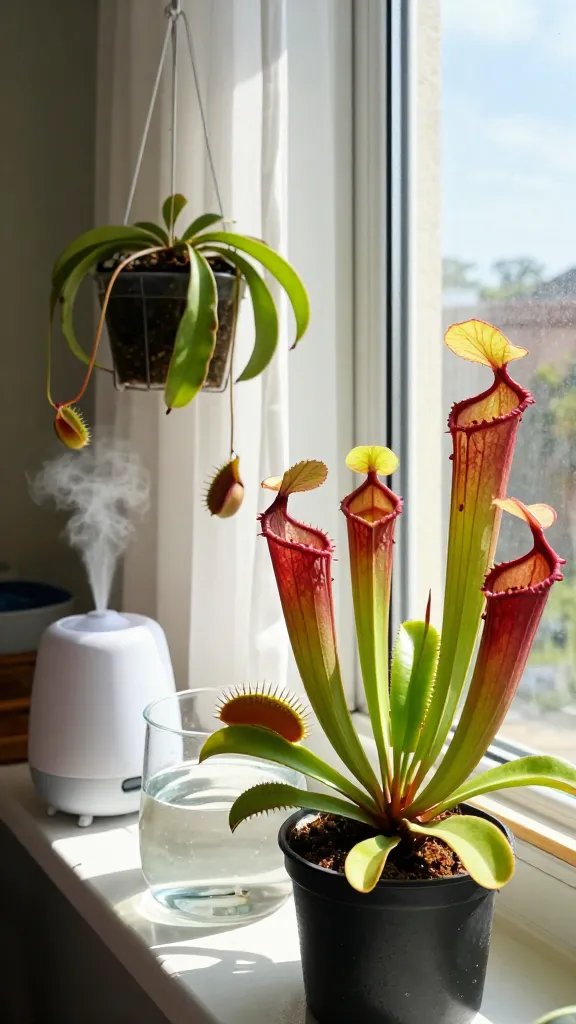
Weak light yields flat leaves, green flytraps, and pitcher plants that refuse to make pitchers. Indoor air that’s too dry for Nepenthes leads to lids forming without any fluid-filled tubes.
Light Targets In Household Terms
- Venus flytrap, Sarracenia, most Drosera: 5–6+ hours of direct sun daily. Best: a south-facing window, balcony, or bright outdoor spot.
- Nepenthes: Bright, indirect light near a window with a sheer curtain, or morning sun plus bright shade.
Humidity And Air For Nepenthes
- Place near a bright bathroom window or group plants on a wide tray with water and pebbles (pots on top, not sitting in water).
- A simple room humidifier near the plant helps pitchers form and hold fluid.
- Ensure gentle airflow — crack the window or run a small fan on low across the room.
Color And Pitcher Clues
- Flytraps need strong light to develop red interiors and firm traps.
- Nepenthes that stop pitchering under good growth usually lack humidity or have been allowed to dry out between waterings.
Action today: Move your sun-loving species to the brightest window or outdoors and give them at least 2 extra hours of direct sun starting this week, increasing by 30 minutes every two days to prevent scorch.
6. Ignoring Dormancy For Temperate Species Weakens Or Kills Them
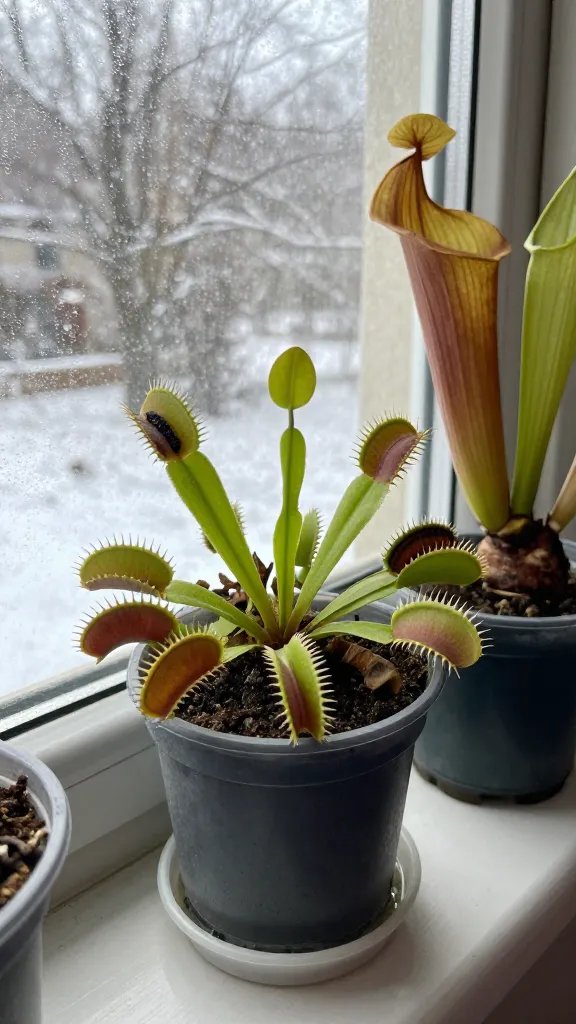
Venus flytraps and temperate sundews and Sarracenia need a cool winter rest. Without it, they limp along, shrinking each year until they crash.
How Dormancy Looks
- Growth slows in late autumn, traps get smaller, pitchers brown naturally
- Plants sit tight with a firm crown or rhizome, not dead — just resting
Easy Dormancy Routine (No Special Gear)
- From roughly November–February, keep outdoors or in the coolest bright spot you have (unheated porch, cold windowsill).
- Target cool conditions — think “jacket weather,” not freezing solid. Brief light frosts are fine for Sarracenia and Dionaea.
- Water less but never let the medium dry — keep it damp, not in a deep tray.
- Remove dead leaves to prevent mold and keep the crown airy.
Waking Up
- In early spring, increase sun and resume the shallow-tray method.
- Repot late winter/early spring if the mix has compacted or the rhizome is crowded.
Takeaway: If you grow temperate species, set a calendar note now for a cool rest from early winter to late winter, with damp—not soaking—soil.
Frequently Asked Questions
Can I keep a Venus flytrap on a north-facing windowsill?
No. It won’t get enough direct sun to build strong traps. Move it to a south or west window with at least 5 hours of direct sun, or place it outdoors on a balcony. If you only have a dim window, choose a sundew species that tolerates lower light better, and still push for the brightest spot you have.
Is bottled spring water safe for carnivorous plants?
Usually not. Spring water contains minerals that accumulate in the soil. Use distilled, rain, or RO water instead. If in doubt, taste it — if it tastes “mineral” or leaves a film on your tongue, don’t use it for these plants.
How often should I repot carnivorous plants?
Every 1–2 years for bog species, and when the mix compacts or smells stale. Repot late winter to early spring before strong growth resumes. Use fresh peat and perlite/sand with no fertilizer, and rinse the roots with low-mineral water during the switch.
Do I need to feed if the plant is outdoors?
No. Outdoors, they catch plenty of insects on their own. Focus on sun, safe water, and correct soil. If growth is still weak after improving those, reassess light and repot before considering supplemental feeding.
Why are my Nepenthes leaves healthy but no pitchers form?
Light is adequate but humidity or watering consistency is off. Keep the mix evenly moist (not wet feet) and raise humidity with a nearby humidifier or pebble tray. Give bright, indirect light near a window and avoid cold drafts, which stall pitcher initiation.
My flytrap’s traps keep turning black after feeding — what’s wrong?
You’re feeding prey that’s too large or too often, or the trap didn’t seal. Offer small, moistened insects no bigger than one-third the trap length, and gently stimulate the trap edges so it seals. Feed one to two traps monthly during active growth and skip winter entirely.
Conclusion
You don’t need lab tools to grow carnivores — just lean soil, clean water, strong light, and a seasonal rhythm. Pick one fix from above that matches your current problem and do it today, then give the plant two to three weeks to respond. When you’re ready, dive deeper into species-specific care so you can expand confidently beyond your first pot.