How to Style a Terrarium on a Shelf — Height, Negative Space and the Container Shape Rule Secrets
When I first lined up my terrariums on a bookshelf, they looked like cluttered paperweights instead of a display. The plants were healthy, but the styling made the whole room feel messy. Once I learned how height, negative space, and container shape work together, everything clicked — the same jars suddenly looked designed. In this guide, I’ll show you exactly how to apply those three levers so your shelf reads as calm, sculptural, and alive.
Start With the Shelf: Depth, Sightlines, and Safe Sunlight
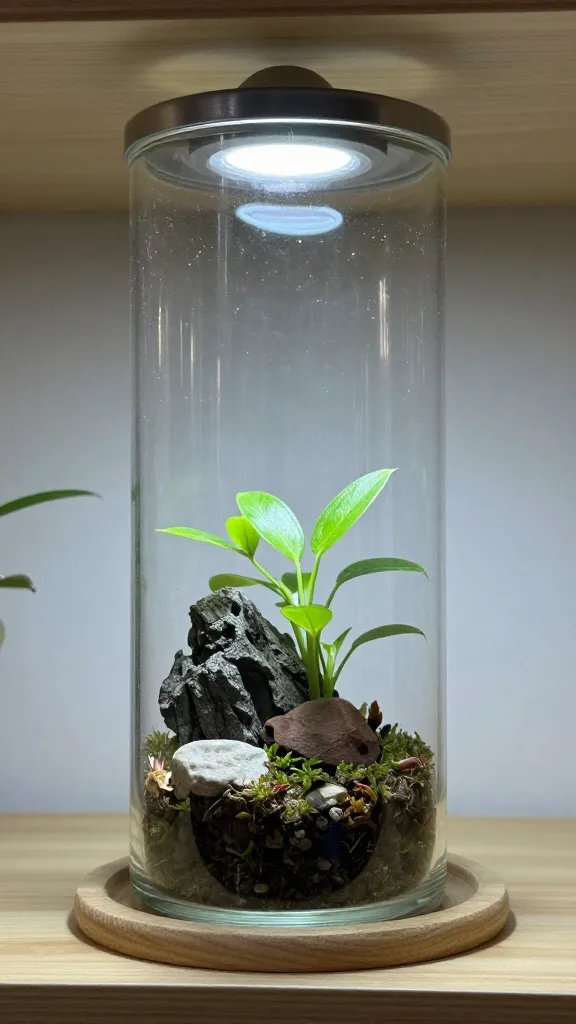
I measure the shelf depth first. Most standard shelves are 10–12 inches deep, which limits container diameter and how far foliage can sprawl without looking crammed.
I place terrariums where I can see into the glass at eye level or slightly below. If I only see lids and not the plants, I move them down one shelf.
I avoid direct sun that hits glass for more than 45 minutes. Direct sun through glass will overheat and scorch, especially in closed builds. I use bright indirect light near a window, or I set a warm-white LED desk lamp 12–18 inches away for 6–8 hours.
Action today: Stand back 6 feet and kneel. If you can’t see into at least two terrariums, move them to a lower shelf or angle them so the opening faces your usual viewing spot.
Height: Build a Simple Pyramid So the Eye Rests, Not Wanders
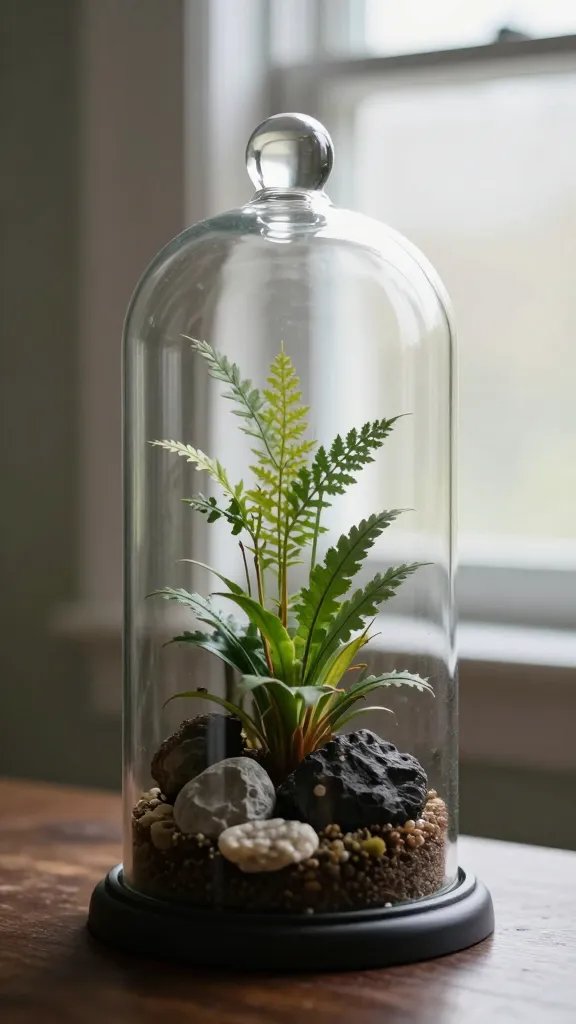
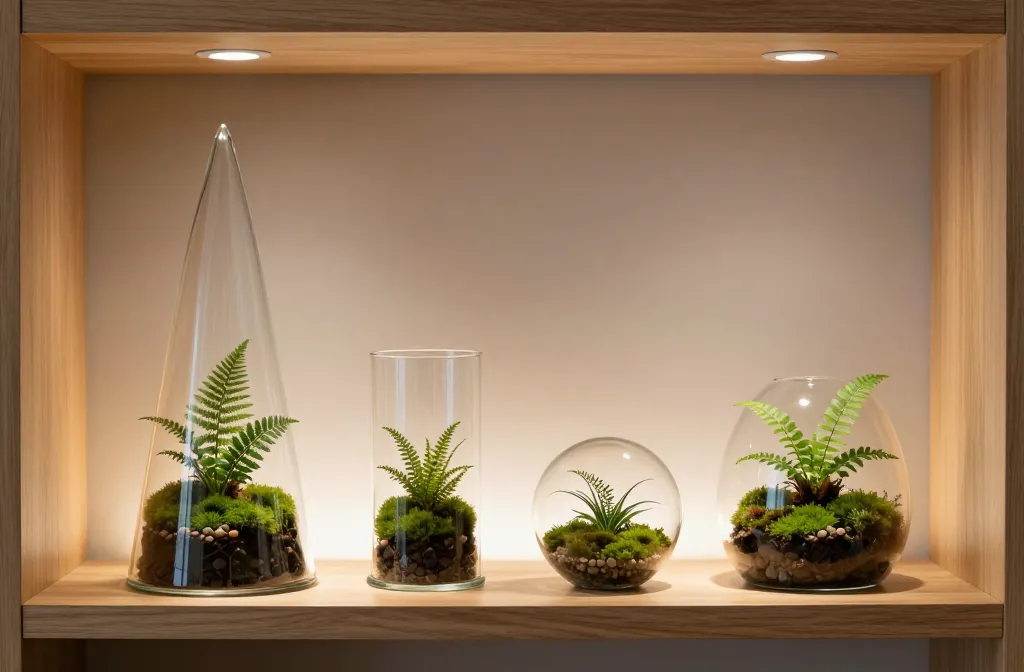
Unplanned equal heights read as static and busy. I aim for one tallest piece, one medium, and one low — a clear pyramid when viewed across the shelf.
I set the tallest piece at 10–14 inches, the medium at 6–9 inches, and the low at 3–5 inches. I place the tall piece off-center by a hand’s width, never dead middle, so the eye moves across.
If I only have short jars, I raise one on two stacked hardcover books. If a piece is too tall, I switch to a shallower vessel or move it to the top of the unit where headroom makes sense.
Quick Height Fixes
- Use hardcover books as risers; wrap in neutral paper if the spines shout.
- Choose domes/bell jars for elegant height without bulk.
- Trim or replant overgrown moss tops to drop visual height by 1–2 inches.
Action today: Create a three-tier arrangement using what you own: one piece at ~12 inches, one at ~8 inches, one at ~4 inches. Step back and confirm the tallest sits slightly off-center.
Negative Space: Leave Air So the Plants Can Breathe Visually
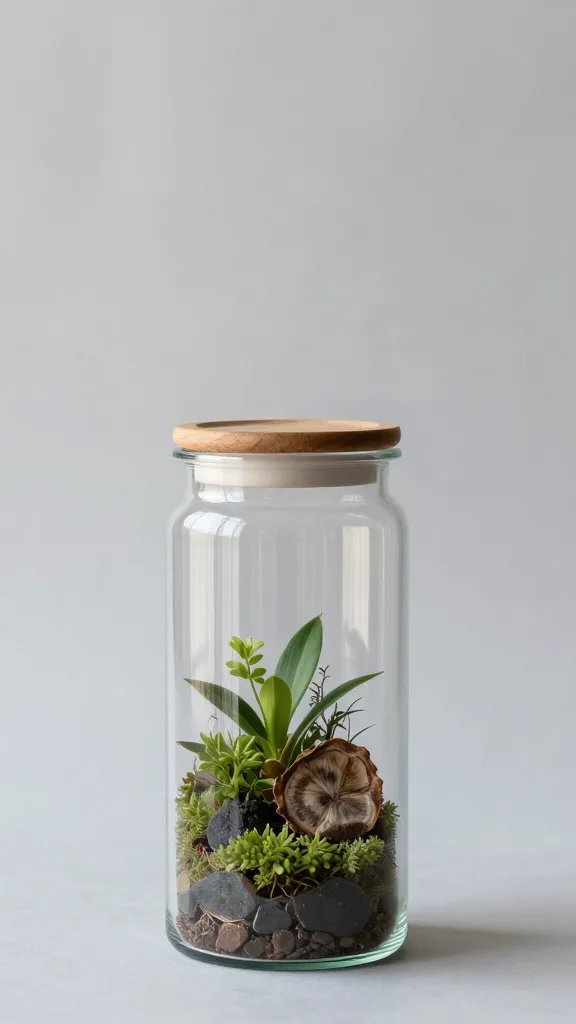
Most clutter happens because we fill every gap. I leave at least one open hand’s width (about 4 inches) between terrariums and 2–3 inches of bare shelf at the front edge so the scene “floats.”
I keep the wall behind the shelf clean. If there’s busy art, I give the terrariums a plain backing (a neutral book or a framed mat with no image) to stop visual noise.
Inside each container, I leave visible air above the planting. Cramming foliage against glass looks swampy and invites mold. I cap planting height at two-thirds of the vessel’s interior height so space remains above.
Warning Signs of Crowding
- Leaves press the glass all the way around.
- No visible shelf surface at the front edge.
- Your eye can’t tell where one terrarium ends and the next begins.
Action today: Remove one item from the shelf that isn’t a terrarium (a candle, a framed photo, or a knickknack). Reassess the breathing room between glass pieces.
The Container Shape Rule: Match Plant Shape to Vessel Silhouette
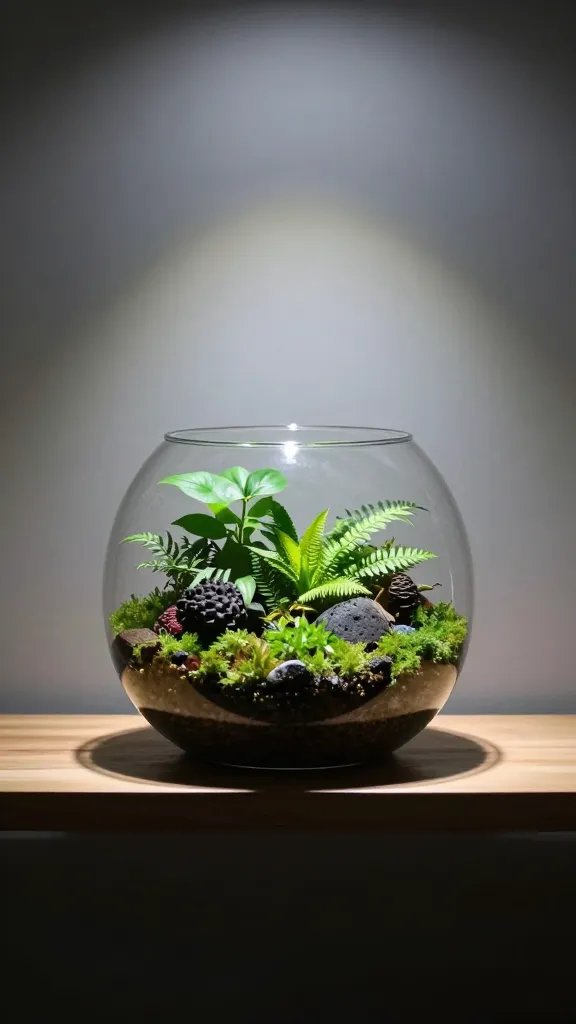
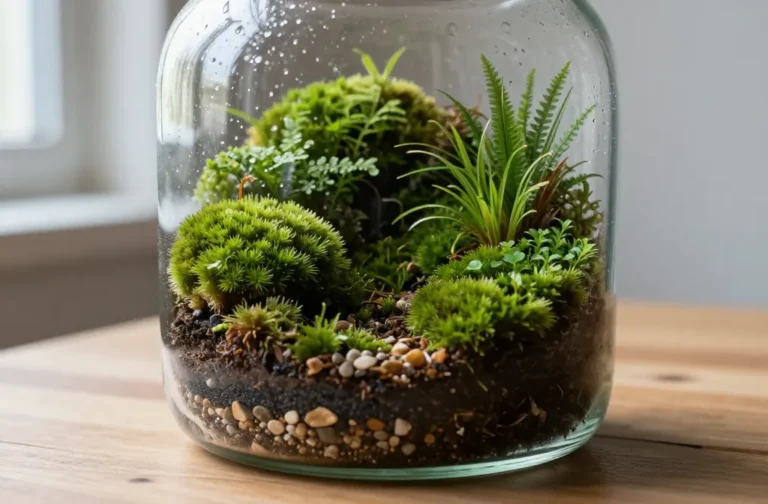
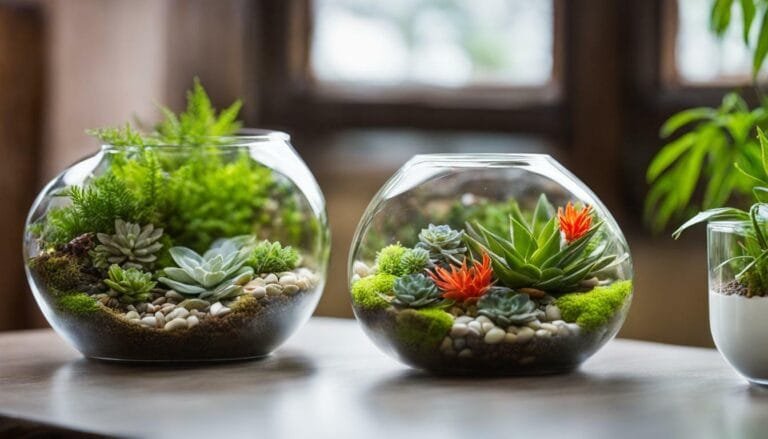
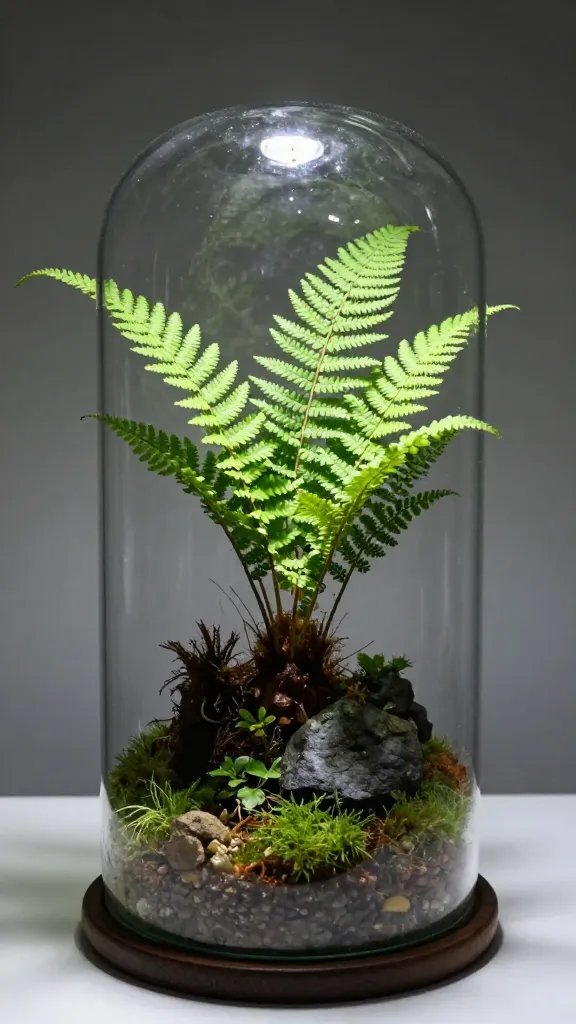
The container dictates the composition. I follow one rule: mirror or contrast with intent — never half-and-half. If the plant mass forms a dome (moss mounds, compact ferns), I mirror with a round fishbowl or cloche. If the plant mass is vertical (ferns with fronds, miniature palms), I contrast with a tall cylinder or apothecary jar that frames the lift.
Wide, low bowls flatten wispy plants; tall, narrow jars suffocate spreading moss. I choose a vessel where the plant’s mature outline fills 60–80% of the glass silhouette, leaving a clear rim of air.
Reliable Shape Pairings
- Round bowl + domey cushion moss or compact Pilea depressa
- Tall cylinder + upright button fern or Selaginella kraussiana ‘Aurea’ arranged vertical
- Cubic/straight-sided jar + structured fittonia and stones for crisp edges
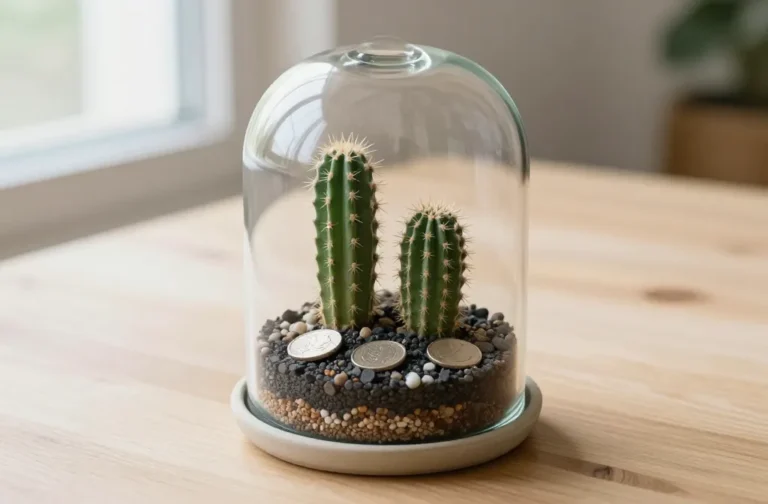
- Bell jar + a single sculptural air plant (Tillandsia) on a stone for a gallery feel
Action today: Pick one terrarium whose plant shape fights the glass. Either trim the plant to echo the vessel or move it to a better-matched container.
Groupings That Read as One Composition, Not a Row of Jars
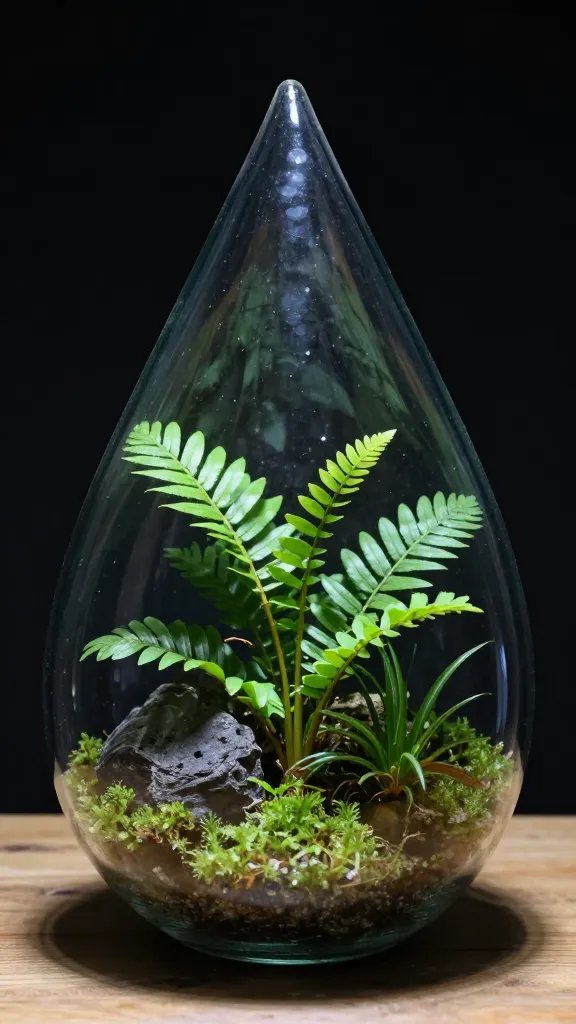
I build in triangles. Place the tallest and medium pieces closer, then tuck the low piece slightly forward, forming a loose triangle. It looks like a family, not a queue.
I repeat one element across the trio: same gravel color, same lid style, or the same moss species. One repeated detail unifies mixed shapes.
I limit a shelf to two materials outside the glass. Books and one natural accent (stone, driftwood) are enough. Three or more materials fragment the scene.
Step-by-Step Layout
- Set the tallest terrarium off-center by 4–6 inches.
- Place the medium piece 3–4 inches away, slightly behind or ahead.
- Tuck the low piece in front, overlapping their sightlines without touching.
- Check from the room’s doorway; adjust so you see all three plants clearly.
Action today: Create one triangle using three pieces and repeat a single unifying detail, like the same top dressing gravel in each.
Balance With Light and Shadows So Glass Doesn’t Glare
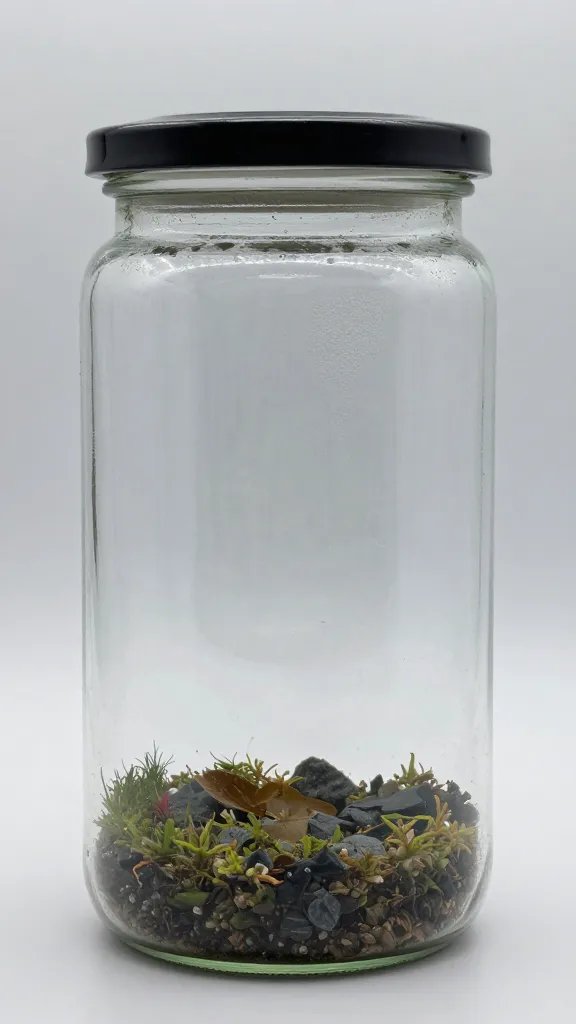
Glass can glare and flatten texture. I angle desk or puck lights so they graze from above and slightly to the side, never straight on. That builds depth and shadow inside the jar.
I choose warm-white bulbs labeled 2700–3000K so greens look rich. If leaves bleach, I raise the light to 18 inches or reduce on-time to 6 hours.
For closed terrariums, I leave a fingertip of the lid cracked only during display lighting if heat builds, then reseal after. Overheating inside a sealed glass is the fastest way to cook moss.
Action today: Turn your light 15 degrees off-axis and raise it 2 inches. Check for reduced glare and deeper shadows in the foliage.
Edit: One Focal, One Quiet, One Textured
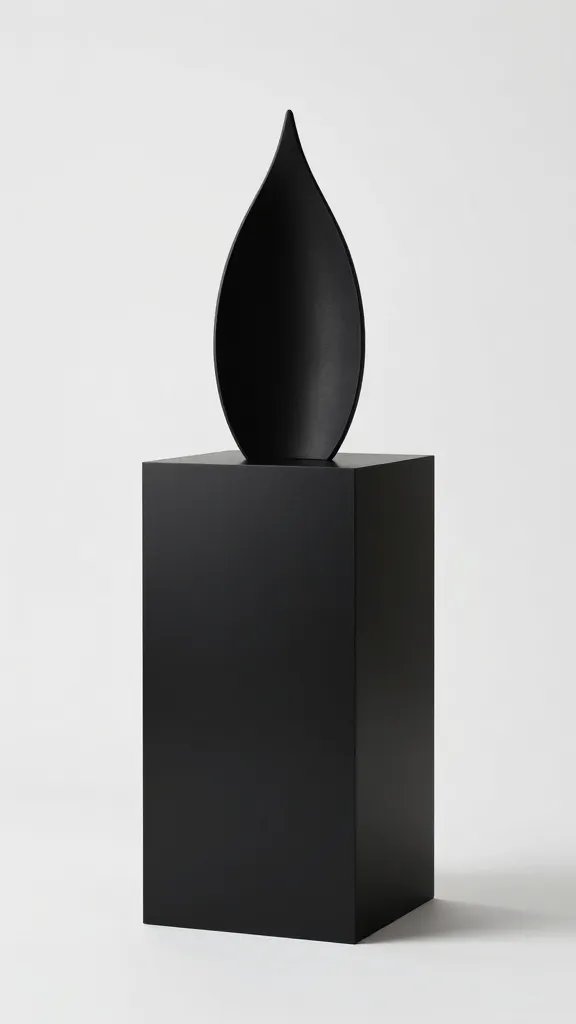
When everything shouts, nothing reads. I assign roles: one focal (the tallest or most sculptural), one quiet (simple moss field), and one textured (pebbles, driftwood accent, or variegated leaves).
I remove any extra jar that duplicates the focal. Repetition works, duplication clutters.
I keep external décor minimal. A single stone that echoes the gravel inside ties the shelf together without stealing attention.
Action today: Label your trio’s roles out loud. If two pieces fight for “focal,” demote one by lowering its height or moving it to another room.
Frequently Asked Questions
How much space should I leave between terrariums on a shelf?
Leave at least 4 inches between glass edges so each piece reads cleanly. Keep 2–3 inches of bare shelf at the front edge for a floating effect. If your shelf is narrow, reduce the number of terrariums instead of squeezing them.
Can I put terrariums on a sunny windowsill?
Only if the sun is filtered and brief. Direct sun on glass for more than 45 minutes overheats and causes condensation bursts and plant stress. Use bright indirect light a foot back from the window, or add a desk lamp at 12–18 inches for 6–8 hours.
What containers work best for beginners who want a clean look?
Straight-sided jars, medium fishbowls (8–10 inches), and small bell jars style easiest. They show plants clearly and stack well into height groupings. Avoid squat cookie jars that force plants to press the glass.
How do I stop my shelf from looking busy with different gravels and lids?
Pick one top dressing color and use it in every build on that shelf. Choose either all lids or all open vessels for that row. If you mix, repeat the detail at least twice so it looks intentional.
What plants keep their shape and won’t overrun the container?
Use compact growers like cushion moss (Leucobryum), fittonia ‘Mini’, peperomia ‘Frost’, and Selaginella kraussiana. They stay tidy with a light trim every 6–8 weeks. Avoid fast spreaders like ivy in small vessels.
How do I hide messy soil layers without making it dark?
Add a 0.5–1 inch band of uniform pea gravel or black aquarium sand at the front only, sloped thinner toward the back. This creates a clean “frame” without burying the roots. Keep the rest of the substrate natural for drainage.
Conclusion
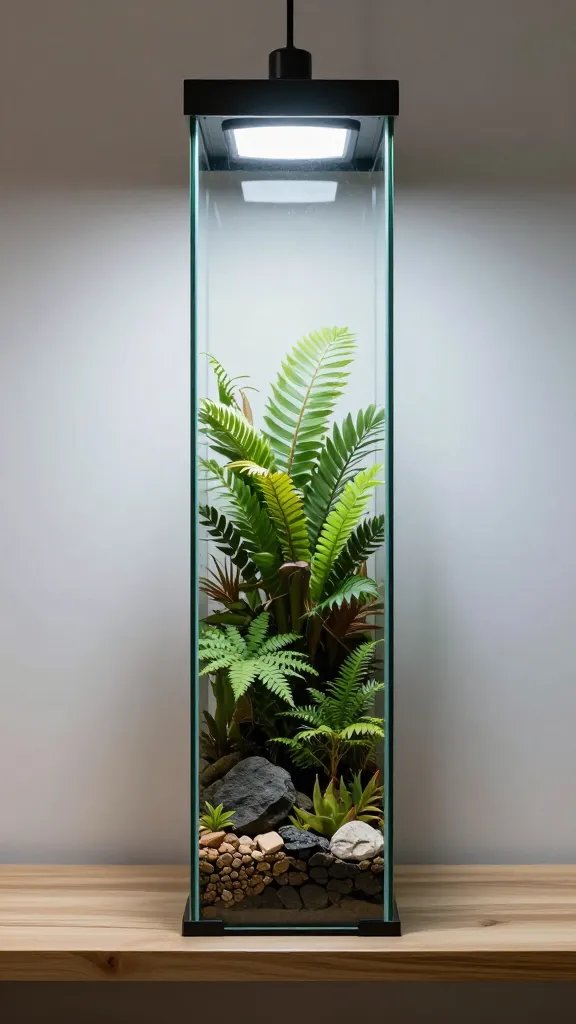
You now have the three levers that decide whether a terrarium shelf looks curated or chaotic: height that forms a pyramid, negative space that lets the eye breathe, and container shapes that either mirror or deliberately contrast plant forms. Set one trio today, confirm roles, and adjust light for depth. Tomorrow, edit the next shelf — you’ll see how fast the room calms once every piece has space and a purpose.