Succulents Vs Air Plants in the Same Terrarium — Why Mixing Them Usually Fails
I’ve rebuilt more “desert-meets-jungle” terrariums than I care to admit. The idea looks gorgeous on day one, then within a month the succulents stretch and rot while the air plants crisp or mildew. Once I matched the care needs to the container, the failures stopped. In this guide I’ll show you exactly why mixing these groups rarely works, how to spot trouble early, and what to build instead that actually survives.
Can Succulents and Air Plants Share the Same Moisture Levels?
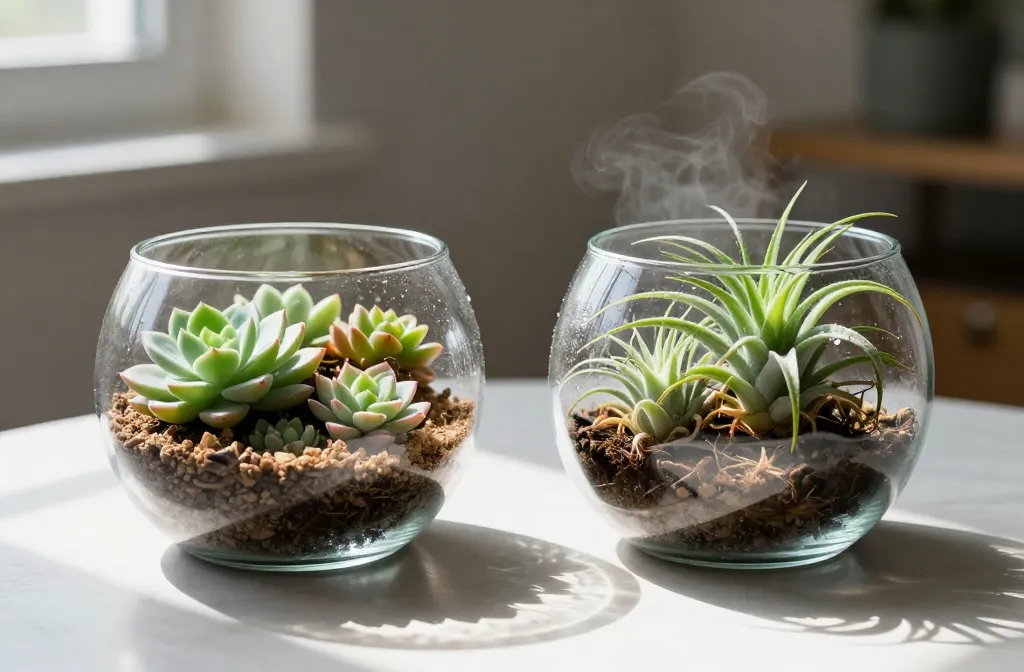
Succulents need dry soil that drains fast and stays dry for days, while air plants need weekly soaking and surface drying with moving air. One watering schedule cannot satisfy both inside a single glass container.
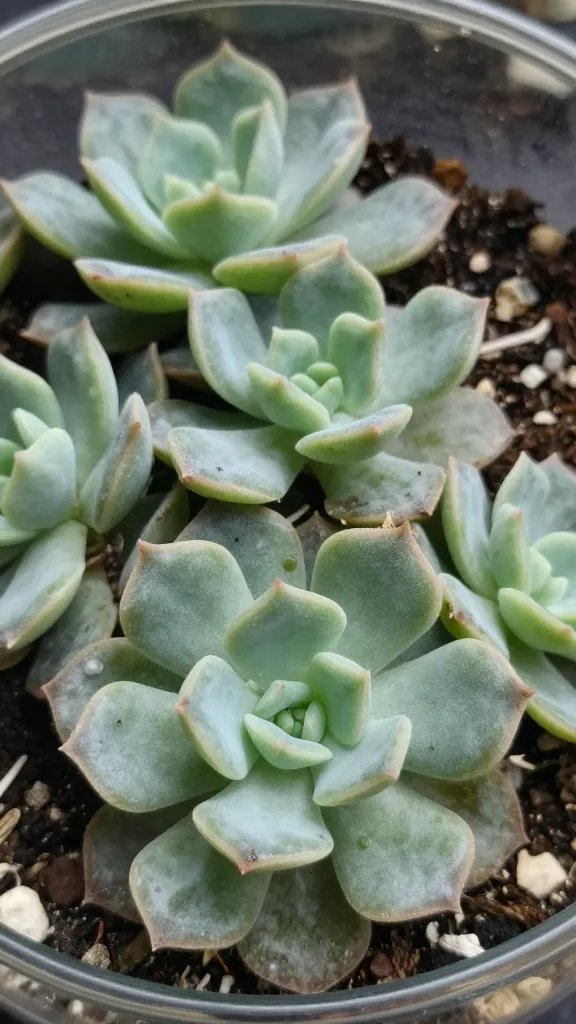
Succulents want a dry substrate that drains fast and stays dry for days. Their roots store water and rot when kept damp. In contrast, air plants (Tillandsia) need regular soaking and surface drying with moving air — not wet feet, but not days-long drought either. The Tillandsia care guide from Air Plant Supply Co explains that air plants absorb water through specialized scales on their leaves called trichomes, which is a completely different mechanism from root-based hydration.
A terrarium traps humidity. When you water enough for an air plant, the succulent soil stays moist too long. When you keep the substrate dry for the succulents, the air plant sits in stagnant air and dehydrates. One watering schedule cannot satisfy both.
Action today: Decide which plant group you want to prioritise in this container — succulents or air plants — and remove the other to a separate setup.
Do Succulents and Air Plants Need the Same Light?
Succulents demand the brightest spot you have — right by a south or west window — while air plants prefer bright indirect light and scorch under magnified midday sun through curved glass. Together in one vessel, you get leggy succulents and bleached air plants.
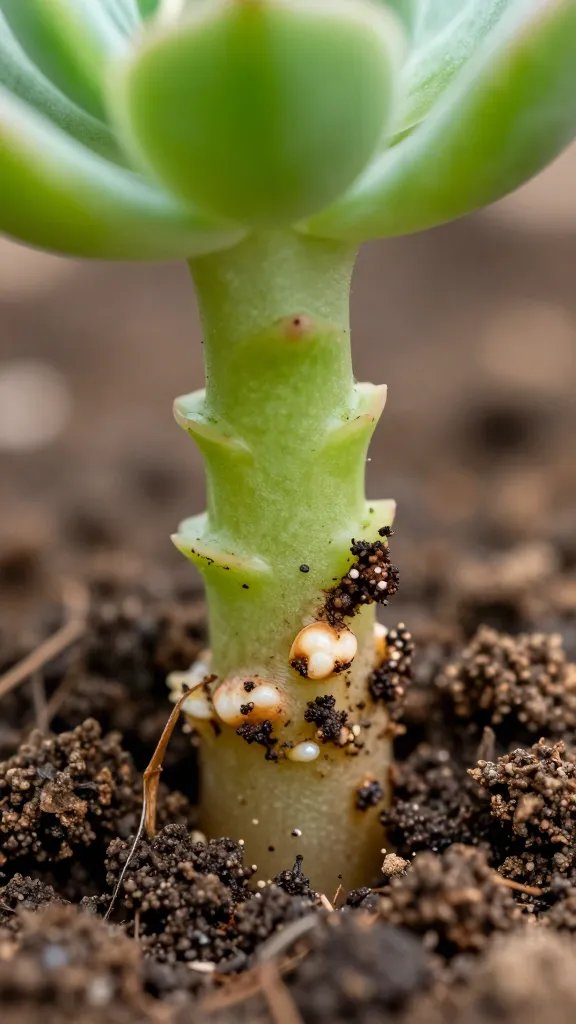
Succulents need very bright light to stay compact — think the brightest spot you have, right by a south or west window with several hours of sun. In terrariums, glass edges and rims cast shade that causes stretching. The University of Minnesota’s succulent guide confirms that insufficient light is the top cause of etiolation — the stretched, pale growth that ruins a compact rosette.
Many common air plants tolerate bright indirect light but scorch under magnified midday sun through curved glass. The result: leggy succulents and bleached air plants in the same vessel.
Action today: Move a succulent terrarium within 30 cm of a sunny window; move air plants to bright, indirect light one step back from harsh sun or behind a sheer curtain.
How Does Airflow Affect Succulents vs Air Plants?
Air plants evolved to hang in breezy canopies and need to dry within four hours of soaking or they develop fungus, while succulents in an open dish accept still air if the soil drains well. A closed or high-walled container creates stagnant humidity that harms both.
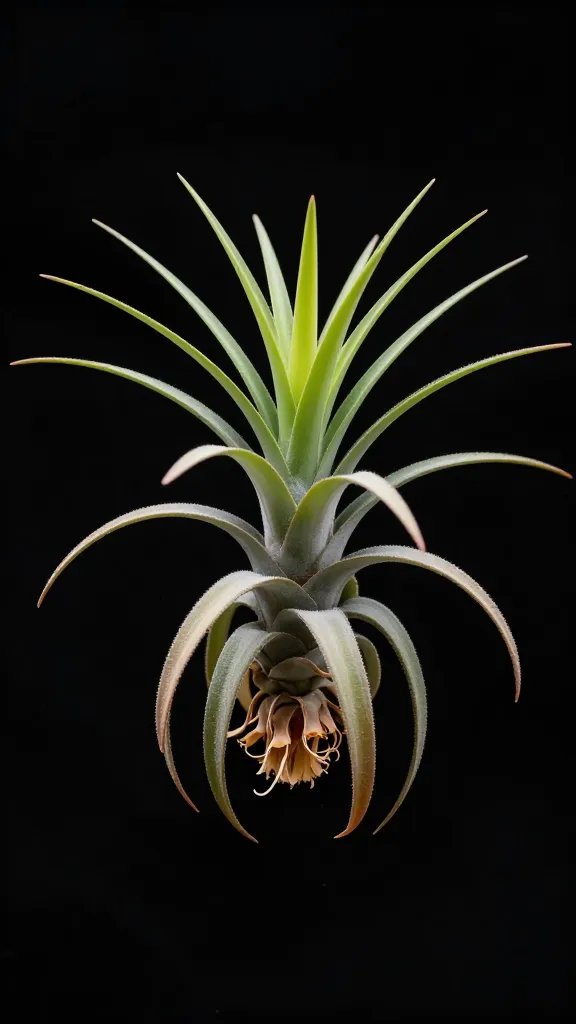
Air plants evolved to hang in breezy canopies. After a soak, they need to dry within 4 hours or they develop fungus and rot. A closed or semi-closed terrarium slows drying to a crawl.
Succulents in an open dish accept still air if the soil drains well. Put both in a lidded or high-walled container and you create stagnant humidity that benefits neither. Even “open” bowls limit cross-breeze on a shelf. Clemson’s guide to common container planting problems covers how poor airflow in enclosed vessels contributes to both rot and fungal disease.
Action today: Keep air plants out of lidded terrariums; display them on a stand or mesh in free air, and reserve glass bowls for soil-based plants only.
Why Do Soaking and Sipping Watering Methods Conflict?
Air plants need a full 10–20 minute weekly submersion, then must dry upside down within four hours, while succulents need a thorough soil soak followed by 7–14 days of complete drying. Misting to “compromise” under-watered succulents and over-wet air plant bases — killing both slowly.
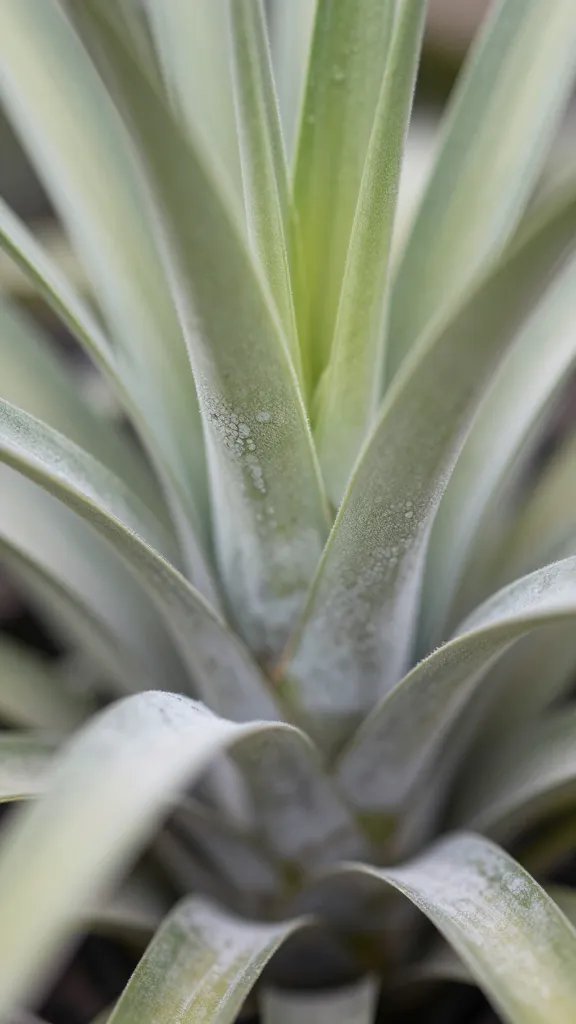
Healthy air plants prefer a deep soak: submerge for 10–20 minutes weekly, then shake and dry upside down. You cannot do that if the plant is glued to hardscape or wedged above wet soil inside a bowl.
Succulents thrive with a thorough soil soak followed by complete drying for 7–14 days. If you mist to “compromise,” you under-water succulents and over-wet air plant leaf bases without hydrating the core. Compromise watering kills both.
For a detailed breakdown of watering schedules by plant type, the terrarium watering guide covers how to match volume and frequency to specific container setups.
Action today: Unmount any air plant that’s stuck inside a succulent terrarium. Give it a proper soak in the sink, then dry on a towel with good airflow.
Can Succulents and Air Plants Share the Same Substrate?
Succulents need a gritty mineral-heavy mix while air plants want no substrate at all — they anchor to bark or stone and absorb water through their leaves. When air plants sit above damp moss inside a bowl, constant evaporating moisture encourages rot at the base.
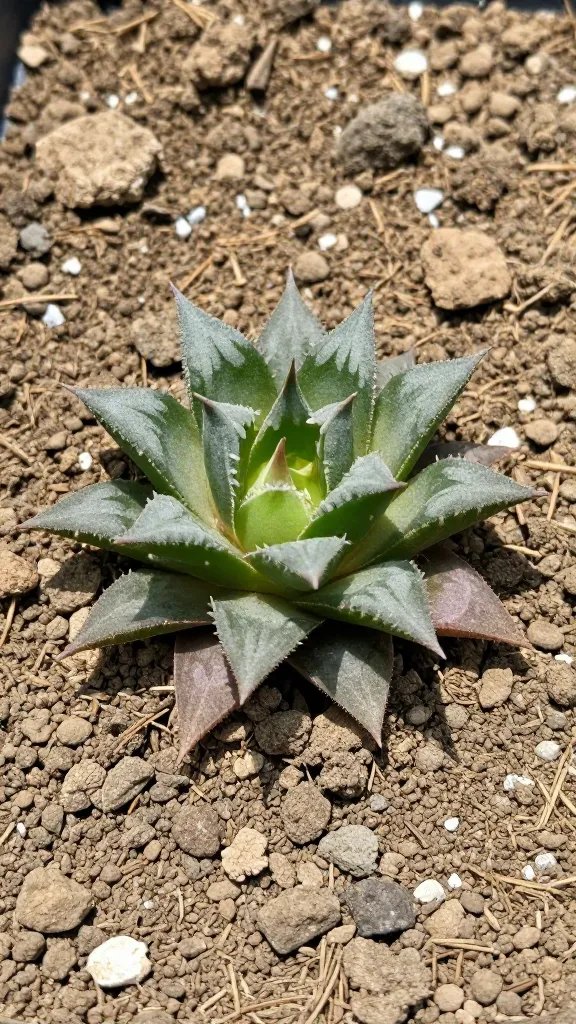
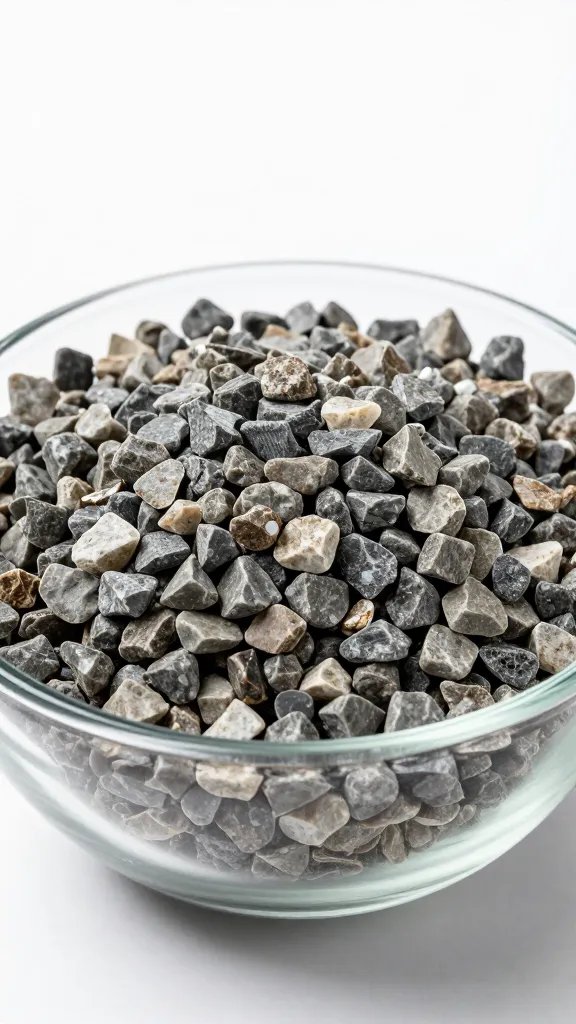
Succulents need a gritty, mineral-heavy mix: roughly 50–70% coarse material like pumice or perlite blended with a bagged cactus mix. Decorative moss layers and moisture-retentive potting soils hold too much water.
Air plants don’t want any substrate at all. They anchor to bark, cork, or stone and take water through leaves. When they sit above damp moss for “looks,” constant evaporating moisture encourages rot at the base. The University of Minnesota’s container soil guide explains how particle size determines drainage speed — and why fine, moisture-holding mixes are the wrong choice for either group in a terrarium.
Action today: Replace any moss under or touching air plants with dry, non-absorbent materials (clean stone, cork) — or better, relocate the air plants off soil entirely.
Do Temperature Swings in a Home Affect Mixed Terrariums?
Glass bowls magnify daytime heat against air plant leaves, then trap cooling humidity at night — exactly the conditions that trigger fungal growth. Succulents handle heat fine as long as the root zone stays dry, so mixed builds experience the worst of both worlds.
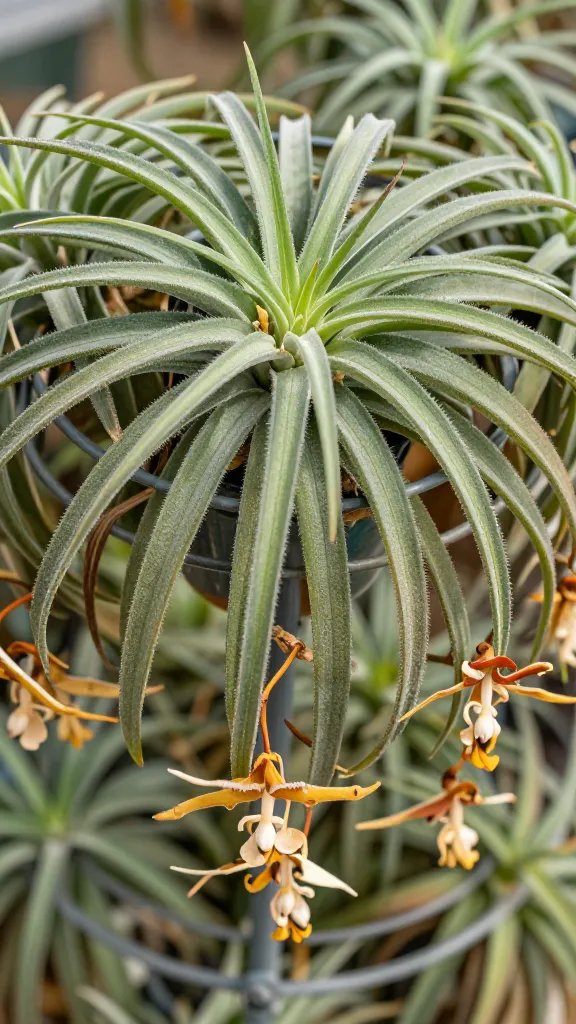
Apartment heating and AC create daily swings. A sunny window heats a glass bowl fast, then cools at night. Succulents handle heat if the root zone is dry. Air plants under glass trap that heat and humidity against their leaves, then cool into dampness — prime conditions for fungus.
Stable environments help both, but terrariums exaggerate highs and lows. Mixed builds experience the worst of both worlds.
Action today: If you insist on a shared vessel, choose a shallow, wide, fully open dish and keep it out of direct midday sun to reduce temperature spikes.
What Should You Build Instead of a Mixed Terrarium?
Build one open succulent dish with gritty soil and maximum light, and a separate air plant display on cork or wire with weekly soaking and free airflow. Each setup matches the plant’s natural habitat and neither compromises on care.
Option A: A True Succulent Dish
- Container: Wide, open bowl or shallow dish, no lid.
- Soil: Bagged cactus/succulent mix plus extra perlite or pumice to make it chunky.
- Plants: Haworthia, Gasteria, dwarf Echeveria, small Crassula.
- Water: Soak thoroughly, then wait until the top 2–3 cm are bone dry before repeating (usually 10–21 days indoors).
- Light: Brightest window you have; rotate weekly.
Takeaway: Keep roots dry between waterings and give maximum light for compact growth.
Option B: An Air Plant Display With Real Airflow
- Container: No container needed; use a wall-mounted hook, wire stand, or open metal/wood frame. If you love glass, use a large, open-front shadow box — not a sphere.
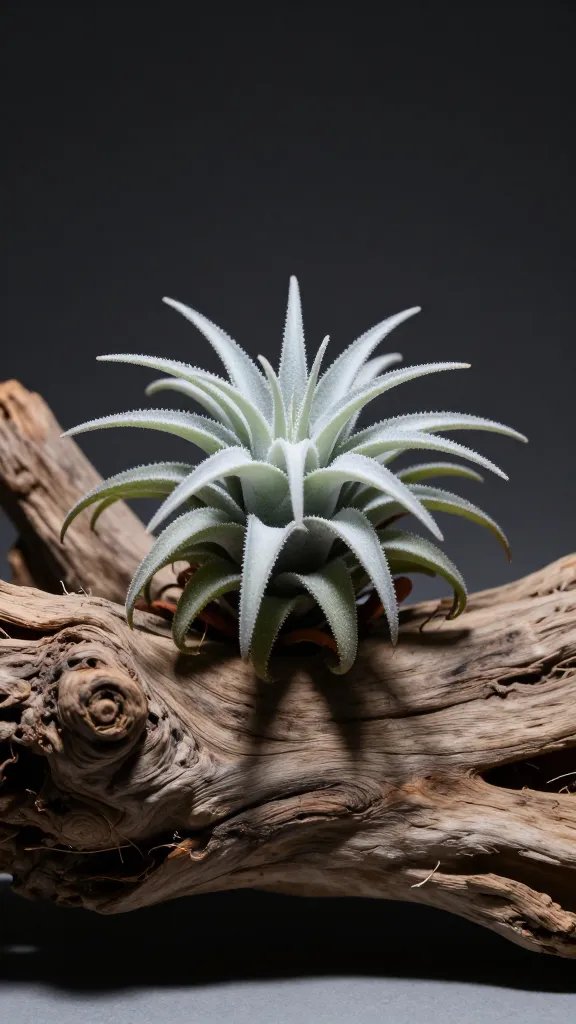
- Mounts: Cork bark, driftwood, or stone; attach with plant-safe wire or fishing line. No glue on the base or leaf sheaths.
- Water: Soak 10–20 minutes weekly (twice weekly in heated, dry homes). Shake and dry upside down; return only when fully dry.
- Light: Bright, indirect light near an east window or one step back from a south window.
If you want a full walkthrough of building a proper closed setup for moisture-loving plants instead, the closed terrarium build guide covers every step from drainage layer to first planting.
Takeaway: Treat air plants like hanging pets: soak, drain, and dry in moving air every week.
How Do You Rescue a Terrarium Where You Already Mixed Them?
Separate the plants immediately — air plants get a proper soak and four-hour dry, succulents get trimmed of rot and 24–48 hours to callus before replanting. Then rebuild each group in its own vessel with the right substrate, light, and watering routine.
Warning Signs To Act On Now
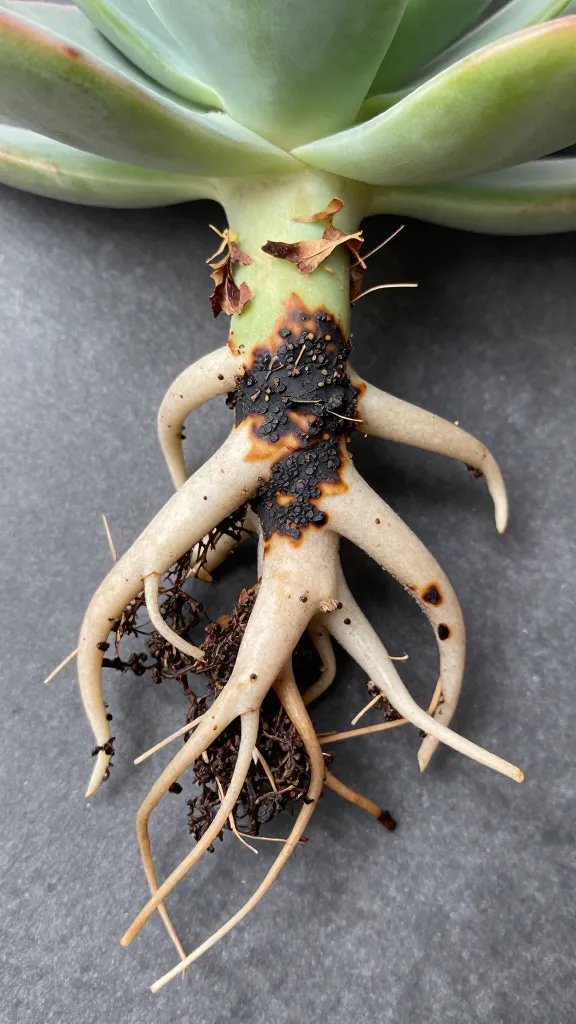
- Succulents: Mushy leaves, black stem at soil line, stretching toward light, or leaves popping off easily.
- Air plants: Leaf tips browning inward, base turning soft or brown, musty smell, or persistent moisture in leaf bases.
| Care Factor | Succulents | Air Plants (Tillandsia) |
|---|---|---|
| Watering method | Soil soak, then 7–14 days dry | 10–20 min submersion weekly, dry in 4 hrs |
| Light level | Brightest possible — right at the window | Bright indirect, one step back from harsh sun |
| Airflow | Open dish; tolerates still air if soil drains | Essential — must dry fast after soaking |
| Substrate | Gritty mineral mix, 50–70% coarse material | None — mount on bark, cork, or stone |
| Humidity tolerance | Low — needs dry intervals | Moderate — needs humidity but also drying time |
| Ideal container | Wide open dish, no lid | No container; wire stand or wall mount |
If your succulents are showing early signs of mold from the trapped humidity, the mold in succulent terrariums guide walks through the 40% Rule and when to rebuild.
Step-by-Step Fix
- Remove air plants. Rinse, trim any mushy leaves, soak 10 minutes, shake, and dry upside down for at least 4 hours.
- Unpot succulents. Cut away any black/mushy roots. Dust cuts with cinnamon or garden sulfur and let callus 24–48 hours.
- Rebuild: Use a dry, gritty mix in a new open dish for succulents. Mount air plants separately on cork or place on a wire stand.
- Reset locations: Succulents go to the brightest window; air plants to bright, indirect light with airflow.
- Resume care: Water succulents after 5–7 days once calluses form; soak air plants weekly.
Takeaway: Separate first, then dry and reset each plant to its proper routine before watering again.
Frequently Asked Questions
Can I keep air plants above the soil if they don’t touch it?
You can perch them above soil, but trapped humidity inside glass still slows drying and encourages rot. If you do this, use a fully open-front container and remove the air plants for every soak. Dry them upside down before returning them, and keep them away from any damp moss or wood.
What if I only mist both — will that balance things?
No. Misting does not hydrate succulent roots and it keeps air plant leaf bases damp without saturating the plant properly. You end up with thirsty succulents and rotting air plants. Water succulents with a full soil soak and air plants with a proper 10–20 minute bath.
Are there any succulents that tolerate higher humidity with air plants?
Haworthia and Gasteria handle indoor humidity better than most, but they still need fast-draining soil and dry intervals. They won’t thrive in a closed or constantly damp terrarium. Use an open dish and keep the air plants out of the bowl.
Which air plants handle brighter light if I keep them near my succulent window?
Tillandsia xerographica, streptophylla, and other thicker, curly species handle brighter light. Place them slightly off to the side of the sunbeam or diffuse with a sheer curtain. Always ensure they dry within 4 hours after soaking.
Can I use a fan to make a mixed terrarium work?
A small fan improves air plant health but dries succulent soil too fast inside a shallow bowl, leading to frequent watering and salt buildup. You also reintroduce the soaking conflict for the air plants. A fan helps air plant displays, not mixed terrariums.
My succulent stretched. Is it ruined?
Stretched growth (etiolation) won’t shrink back, but you can behead and re-root the rosette. Let the cut end callus for 2 days, then plant in dry, gritty mix and wait a week to water. Move it to brighter light to keep new growth compact.
Can I propagate succulents or air plants inside a terrarium?
No — propagation for both groups needs dry, ventilated conditions that a terrarium can’t provide. Succulent cuttings must callus for days before touching soil, and air plant pups need to dry fully after each soaking. Propagate on an open tray with good airflow, then move only the established plants into their display.
Why did my air plant turn brown at the base after a week in the terrarium?
Constant contact with humid air sitting on damp moss or soil kept the leaf base wet around the clock, which causes rot within days. Air plants need to dry completely within four hours of every watering, which is impossible inside a moisture-trapping glass vessel. Move the air plant to an open mount and trim away any brown, soft tissue before it spreads.
How do I know when an air plant is dying versus just thirsty?
A thirsty air plant has slightly curled or stiff leaves but the base stays firm and green, and it plumps up within 24 hours of a proper soak. A dying air plant has a soft, brown, or mushy base, leaves that pull away easily, or a musty smell that indicates rot has set in. Once the base goes soft, the plant cannot recover — compost it and start fresh.
Is it okay to glue air plants to hardscape inside a succulent terrarium?
Gluing air plants to rocks or wood inside a terrarium traps moisture against the leaf sheaths and prevents proper soaking and drying. If you want to display air plants on hardscape, mount them outside the terrarium using plant-safe wire or fishing line instead of adhesive. This lets you remove them for every weekly soak and check the base for rot.
Conclusion
If your mixed terrarium keeps failing, nothing is wrong with you — the care requirements are simply incompatible. Build one clean, open dish for succulents and a separate, breathable display for air plants, and both will finally thrive. Take ten minutes today to separate them, and you’ll save yourself months of rot, stretch, and frustration.