Viral Night Shift Worker Companion Plants: 11 Low-Light Timing Combinations
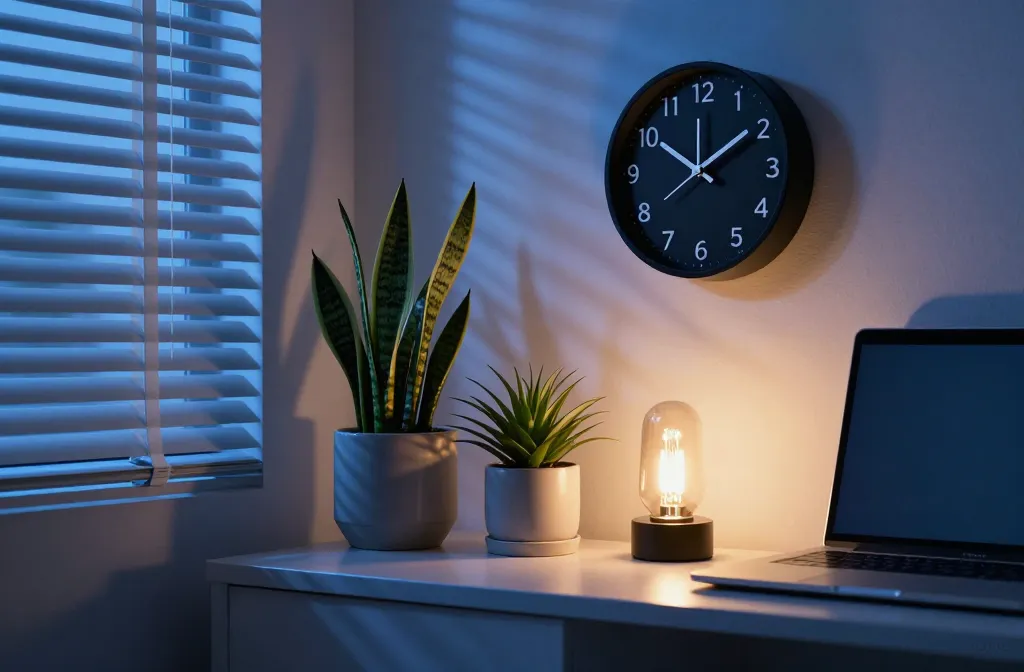
Working nights and sleeping days? Your plants can sync with that rhythm—no sun worship required. These low-light pairings thrive on the edges of your schedule and make your home feel alive even when you’re caffeinated at 2 a.m. We’ll time watering, light boosts, and quick care windows around a nocturnal routine so you don’t babysit leaves on your “lunch” break at midnight. Ready for greenery that doesn’t ghost you when the blinds stay closed?
1. Snake Plant + ZZ Plant: The “Set-It-And-Forget-It” Duo
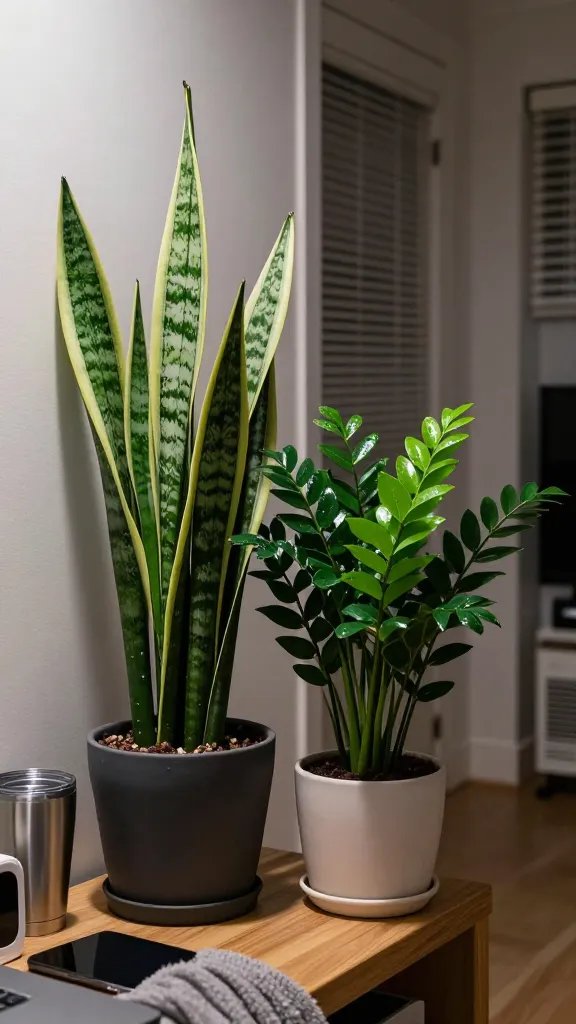
Meet the dream team for anyone who forgets what a window looks like. Snake plant (Sansevieria) and ZZ plant (Zamioculcas zamiifolia) tolerate low light, irregular watering, and your unpredictable sleep. They both store water and handle dry air from AC or heaters without drama.
Why It Works
- Low-light champs: They chill in corners, hallways, and rooms with blinds down most of the day.
- Slow sippers: Water every 2–4 weeks. Overwatering hurts them more than neglect.
- Night-owl friendly: Do micro-care during your pre-shift window—dust leaves, rotate pots, done.
Timing Tips
- Quick light boost: Crack blinds for 45–60 minutes when you wake up in the afternoon. Even indirect light helps.
- Water window: Early evening every 2–3 weeks. Let the soil dry completely between sessions.
- Rotate routine: Quarter-turn each week to keep growth even in low light.
Use this combo in bedrooms and hallways where light is basically a rumor. Easy, resilient, and quietly stylish—IMO, the best starter pair.
2. Pothos + Peace Lily: The “Fresh-Air At Night” Pair
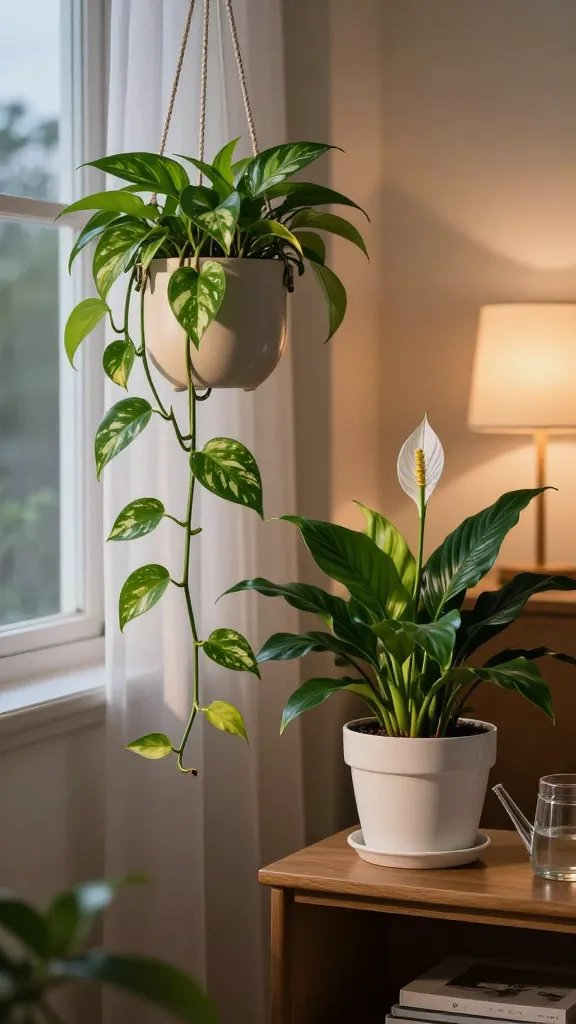
If you want a hint of drama (hello, glossy leaves) without the diva behavior, pair Pothos (Epipremnum aureum) with a Peace lily (Spathiphyllum). Pothos trails like a lazy waterfall. Peace lily gives you those elegant white blooms when it’s happy.
Why It Works
- Low to medium light: Both thrive under bright indirect light but tolerate low light.
- Different thirst levels: Pothos likes a dry-down; peace lily likes consistent moisture—together, they help you calibrate your watering routine.
- Air-quality boost: They’re solid for stuffy rooms if that matters to you.
Timing Tips
- Stagger watering: Water peace lily weekly (or when leaves gently droop—seriously, it tells you). Water pothos every 10–14 days.
- Night-shift misting: Quick evening mist helps peace lily during heating season. Skip if your home runs humid.
- Light snack: 60–90 minutes of bright indirect light after you wake up keeps blooms coming.
Use this duo in living rooms you occupy during late afternoons or pre-shift evenings. You’ll get a lush look with cues that make watering foolproof.
3. Cast-Iron Plant + Heartleaf Philodendron: The “Forget-Me-And-I’ll-Flourish” Team
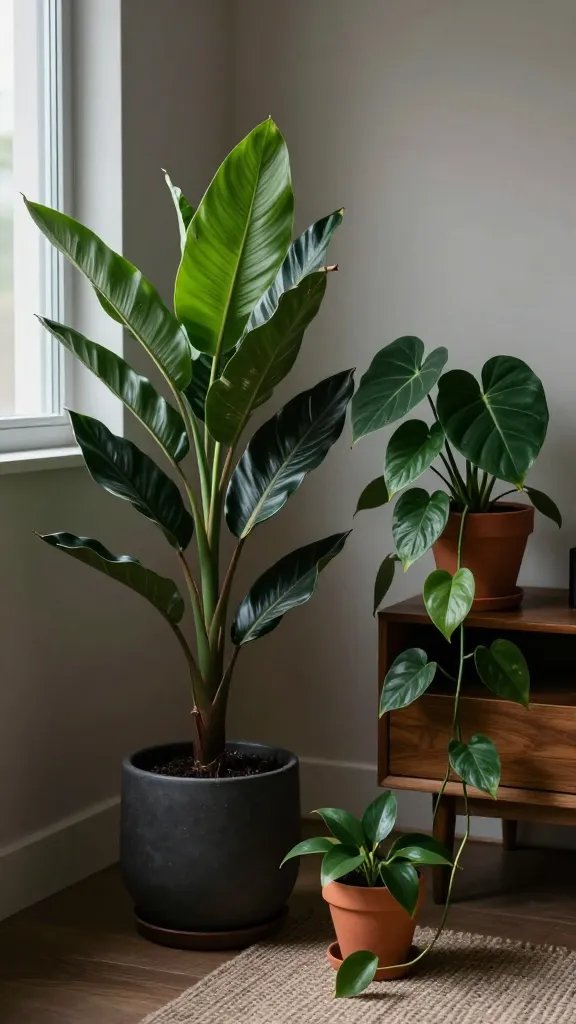
The Cast-iron plant (Aspidistra elatior) lives up to its name. It shrugs at low light, dust, and neglect. Pair with Heartleaf philodendron (Philodendron hederaceum) for soft, trailing vibes that don’t complain when light is meh.
Why It Works
- True low-light tolerance: Both handle darker rooms, even offices without direct windows.
- Low maintenance: Water every 2–3 weeks for cast-iron; every 10–14 days for philodendron.
- Visual balance: Upright, swordlike leaves + gentle trailing = texture and movement without clutter.
Timing Tips
- Dust-and-dash: Wipe leaves with a damp cloth once a month right before your evening shower. Cleaner leaves = better photosynthesis.
- Micro-fertilize: During spring/summer, feed every 6–8 weeks in your pre-shift window. Skip in winter.
- Light pulse: 30 minutes of indirect daylight when you wake up is enough; don’t stress it.
Use this combo where you want low-commitment greenery: entryways, bathrooms with a sliver of window, or your blackout-blind bedroom.
4. Chinese Evergreen + Parlor Palm: The “Soft Light, Softer Vibes” Blend
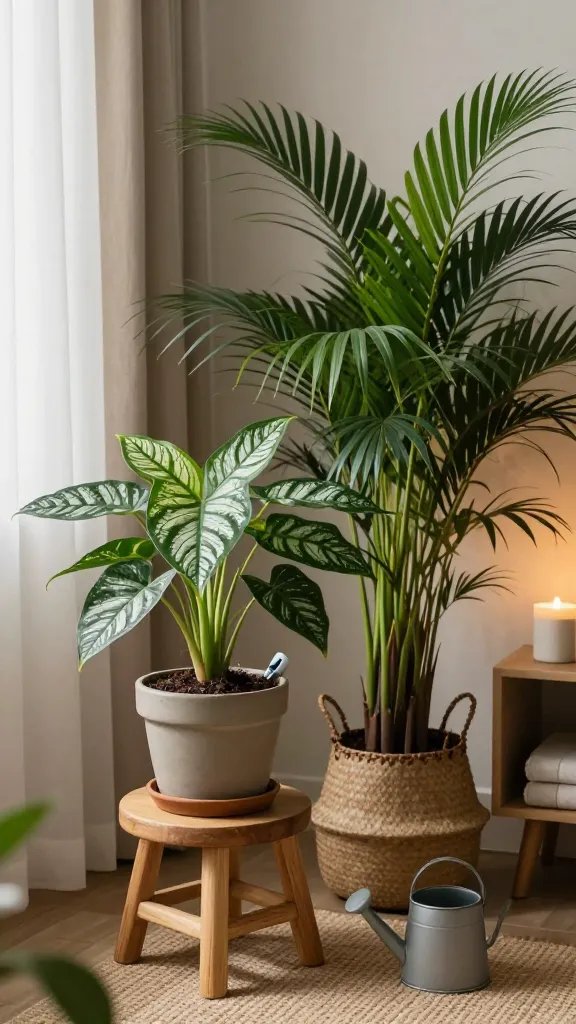
Want cozy, spa-like energy? Chinese evergreen (Aglaonema) brings patterned leaves that brighten a dim corner. Parlor palm (Chamaedorea elegans) adds feathery fronds that soften the whole space.
Why It Works
- Low-light tolerant: Both do well with filtered light, even several feet from a window.
- Moderate watering: Keep evenly moist but never soggy. Let the top inch of soil dry out first.
- Pet-friendlier choice: Parlor palm is generally safer around pets; check your aglaonema placement since it can be mildly toxic.
Timing Tips
- Evening water check: Poke a finger an inch into the soil after work. Water if dry; if damp, wait 2–3 days.
- Humidity hack: Group them together near your desk for a mini humidity bubble. A small pebble tray during heating season helps.
- Rotate schedule: Turn both plants every Sunday evening to prevent lopsided growth.
Use this pair in your workspace if you log hours at night. The soft textures reduce visual stress and make long shifts feel less sterile, FYI.
5. Spider Plant + Boston Fern: The “Night-Shift Hydration Routine” Combo
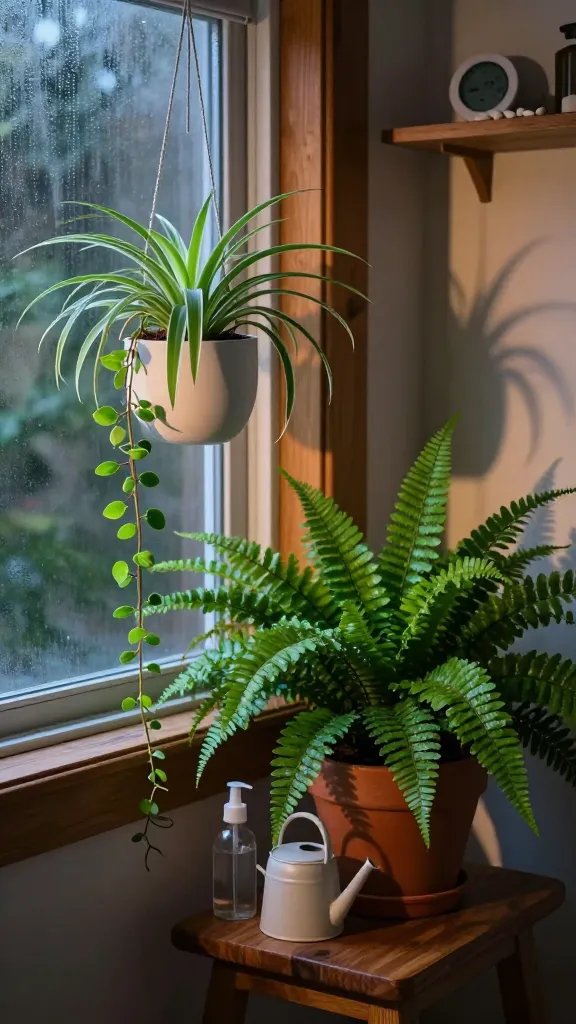
Craving lush and lively? Spider plant (Chlorophytum comosum) throws out cute baby plantlets. Boston fern (Nephrolepis exaltata) brings that dramatic, rainforest energy. Together, they thrive with slightly higher humidity and regular, quick check-ins.
Why It Works
- Low to medium light tolerance: They’re happy with indirect light from a north or east window.
- Hydration synergy: Spider plant forgives missed waterings; Boston fern prefers consistent moisture—your routine can balance both.
- Visual fullness: Hang the spider plant, pedestal the fern. Instant “green wall” feel.
Timing Tips
- Two-step watering: Water the fern lightly every 3–5 days, spider plant every 7–10. Use a narrow-spout can to avoid mess during your pre-shift rush.
- Mist moments: Quick mist for the fern at night if your place feels dry. Skip if you notice crispy tips improving with a humidifier—misting isn’t magic, but it helps.
- Light nudge: Give them 60 minutes of bright indirect light when you wake; pull sheer curtains for diffusion.
Use this combo in kitchens or bathrooms where humidity stays higher. You’ll get that jungle vibe without turning your home into a full-time greenhouse, trust me.
Quick Tools & Tricks For Night-Shift Plant Success
- Moisture meter or chopstick: Check moisture quickly before you crash. No guessing.
- Self-watering stakes: Great for ferns or peace lilies if your schedule whipsaws.
- LED grow bulb (warm spectrum): A 10–12W bulb on a 2–3 hour timer during your evening can top up light without blasting your circadian rhythm.
- Catch trays and felt pads: Water fast, avoid puddles, protect furniture—zero drama at 1 a.m.
- Quarterly repot check: If roots circle the pot or water rushes through, go one size up. Do it on your “Sunday,” whatever day that is.
Common Night-Shift Plant Problems (And Fast Fixes)
- Yellowing leaves: Usually overwatering. Extend intervals by 3–5 days and ensure drainage.
- Leggy growth: Not enough light. Add a short grow-light session during your awake hours.
- Crispy tips: Low humidity or salts from tap water. Try distilled or let tap water sit overnight.
- Fungus gnats: Let topsoil dry more, add a thin layer of sand, and use sticky traps.
How To “Time” Care Around A Night Schedule
- Wake-up window (afternoon): Open blinds for 45–90 minutes of indirect light. Quick leaf check, rotate, micro-mist if needed.
- Pre-shift (evening): Water any “thirsty” plants, wipe dust, set grow-light timers for a short boost.
- Post-shift (morning): Keep blinds closed for your sleep. Plants won’t mind a dark block if they got their light earlier.
Low-Light Reality Check
- True low light = reading light levels. Plants survive, but growth slows. That’s okay.
- Indirect beats none. Even a shaded hour near a window makes a difference.
- Patience pays. New leaves will be smaller in winter; adjust expectations, not your entire routine.
You don’t need a sun-drenched loft to rock a home jungle. With the right combos and a schedule that respects your nightlife, your plants will keep pace—and look good doing it. Pick one duo, set your timers, and watch your low-light buddies thrive while everyone else sleeps. Seriously, your 2 a.m. coffee deserves better scenery.