Companion Planting for Chronic Illness and Disability: 12 Accessible Garden Pairings That Thrive Effortlessly
Want a garden that works hard so you don’t have to? Companion planting can cut chores, boost yields, and make the whole thing way more forgiving on low-energy days. These pairings attract helpers, repel pests, and keep soil happy—so you can focus on joy, not constant maintenance. Let’s build a garden that respects your body and still looks ridiculously lush.
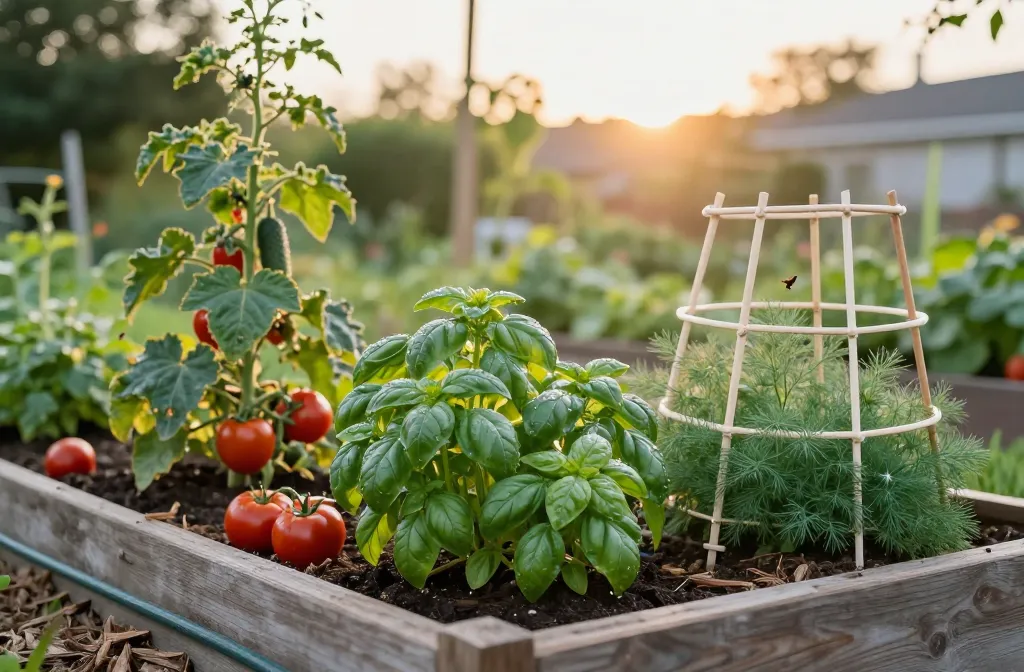
1. Aroma Bodyguards: Basil + Tomatoes, Dill + Cucumbers
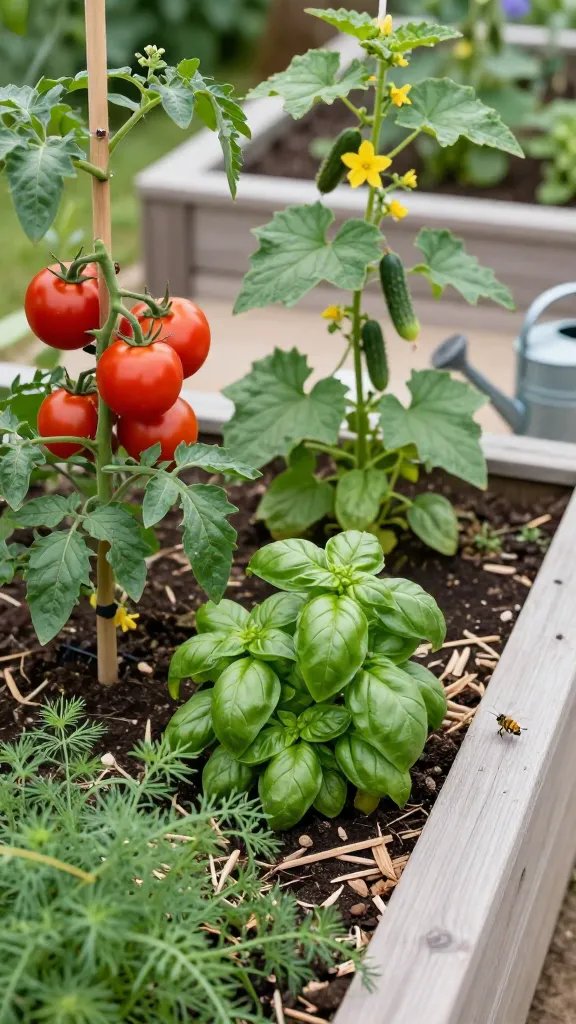
Think of these herbs as your garden bouncers. Strong scents confuse pests, and you get better flavor with almost zero extra effort. Plant once, harvest often, and let the aromas do the heavy lifting.
Why It’s Awesome
- Basil + Tomatoes: Basil masks tomato scent from hornworms and whiteflies, while shading soil to reduce watering.
- Dill + Cucumbers: Dill attracts lacewings and wasps that snack on aphids and beetles. Cukes climb; dill fluffs below.
Keep everything within arm’s reach. You’ll harvest herbs while checking tomatoes—one trip, two wins. Also, basil and dill both grow fine in containers or raised beds at seated height.
Quick Setup Tips
- Use a tomato cage or sturdy stake. Clip stems at chest height to avoid bending.
- Plant basil 8–12 inches from tomatoes. Plant dill 10 inches from cucumbers.
- Run a soaker hose under mulch so you water everything at once.
When to use: You want a simple, compact trio that fights pests and saves watering time. FYI, basil and dill both regrow fast after cuts—low effort, constant reward.
2. The Pest Decoy Squad: Nasturtiums + Kale, Marigolds + Peppers
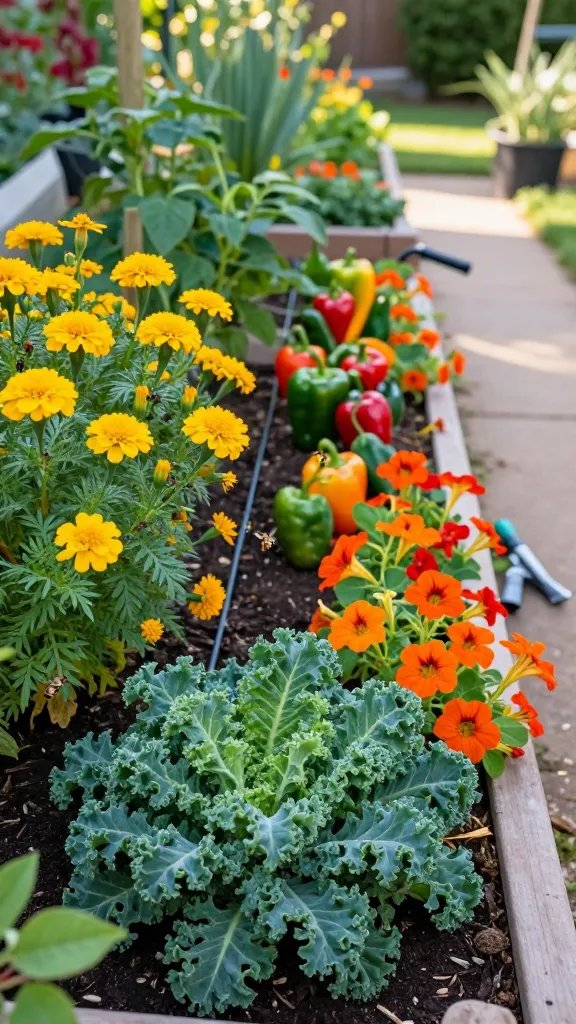
If aphids and beetles treat your greens like a buffet, give them a tastier snack. These flowers lure pests away while also bringing in pollinators. Bonus: they’re pretty and edible—kale salad with peppery nasturtium, anyone?
Key Pairings
- Nasturtiums + Kale: Nasturtiums attract aphids, sparing your kale leaves. Their sprawling habit also shades soil and limits weeding.
- Marigolds + Peppers: Marigolds deter nematodes and confuse beetles. Peppers appreciate the extra pollinator traffic.
Plant both combos in containers near a doorway for quick snips. Put nasturtiums on the pot edge so they cascade—easy to reach, easy to admire.
Accessible Gardening Moves
- Use self-watering planters to reduce watering frequency.
- Choose compact pepper varieties (like lunchbox sizes) for less staking and simpler harvests.
- Place pots at hip height on sturdy stands or cinderblocks to reduce bending.
When to use: You struggle with energy dips or fine motor skills and need plants that thrive with minimal fuss—and keep pests busy elsewhere.
3. Shade & Save: Corn + Beans + Squash (The Accessible “Three Sisters”)
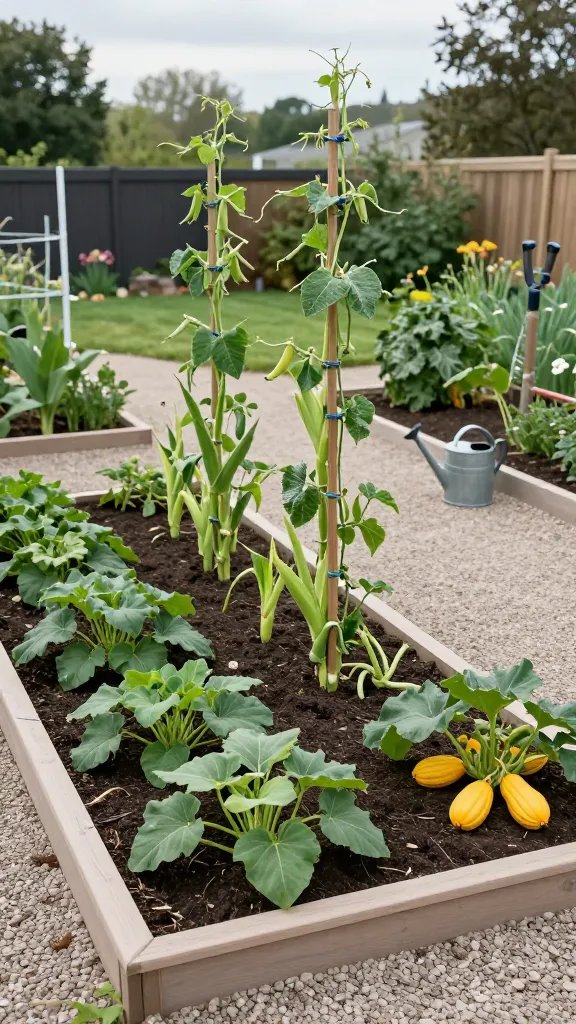
Native gardeners perfected this trio centuries ago. Corn supports climbing beans; beans fix nitrogen; squash shades soil like a living mulch. You get a tiny ecosystem that feeds itself and cuts down on watering and weeding.
Make It Accessible
- Swap tall field corn for short-stature corn or use a sturdy trellis so you don’t have to reach high.
- Pick bush beans if climbing harvests feel tough; they still fix nitrogen.
- Choose compact squash (like bush delicata or yellow crookneck) to avoid tangly sprawl.
Plant in a large raised bed or two 20–25 gallon containers grouped together. Beans improve soil, squash blocks sunlight, and your watering routine shrinks dramatically.
Planting Cheat Sheet
- Center: 4–5 corn starts or a trellis.
- Around: 4–6 bean plants.
- Outer ring: 2 squash plants to form a living mulch.
When to use: You want a resilient, forgiving setup that reduces weeding and holds moisture. It’s a powerhouse trio that rewards patience with big harvests.
4. Pollinator Party: Lavender + Strawberries, Chives + Carrots
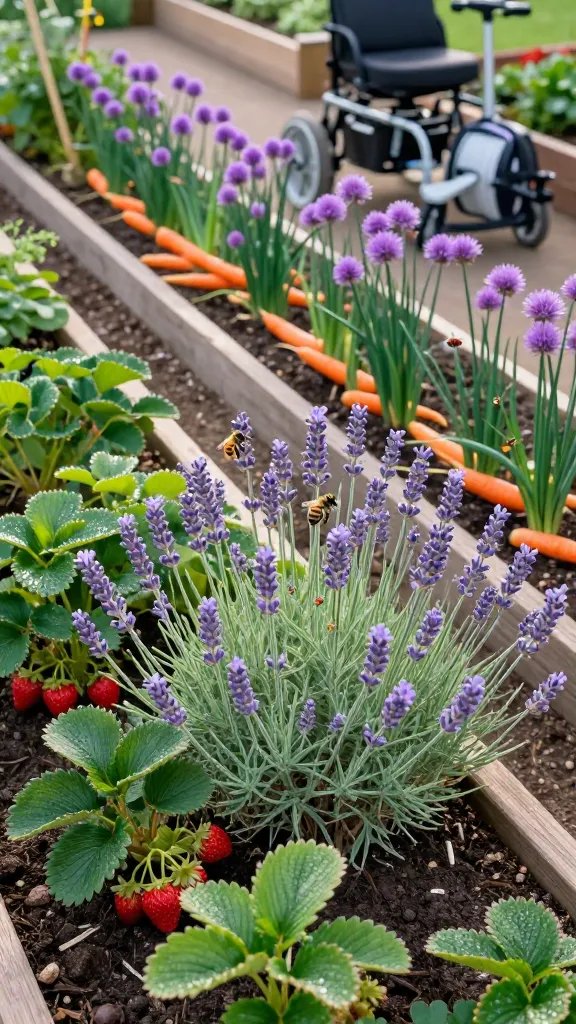
Pollinators make your harvest bigger and your garden happier. These pairings invite them in and gently protect your plants with scent and mild pest deterrence. They also smell amazing, which counts, IMO.
Dynamic Duos
- Lavender + Strawberries: Lavender draws bees while discouraging slugs with its dry, woody base. Strawberries enjoy improved set and less mildew with better airflow.
- Chives + Carrots: Chives repel carrot flies, and their purple blooms bring beneficial insects. Carrots benefit from the reduced pest pressure and shared water schedule.
Keep lavender and strawberries in a wide, shallow bed by a walkway. You’ll pick berries without trekking across the yard. For carrots and chives, use a deep container to avoid kneeling.
Easy-Care Tactics
- Use a rolling planter or plant caddy to move pots into shade during heat waves.
- Install a drip line with a timer so watering happens while you rest.
- Top-dress with compost + straw to keep moisture steady and reduce hand weeding.
When to use: You want pollination upgrades without constant intervention and prefer fragrant, sensory-friendly plants near daily paths.
5. Groundcover Guardians: Thyme + Brassicas, Oregano + Eggplant
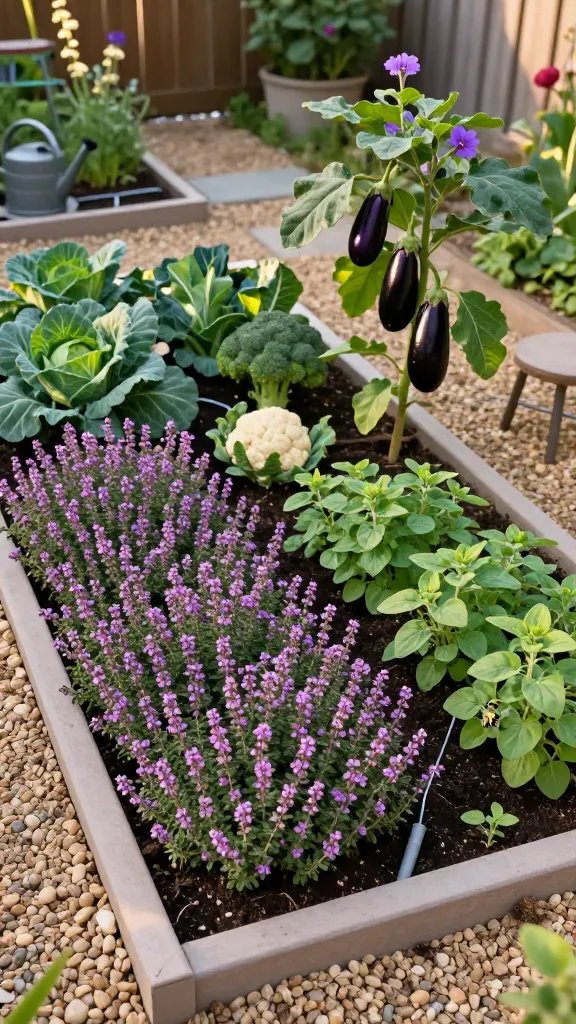
Creeping herbs are the stealth mode of accessible gardening. They block weeds, hold moisture, and smell fantastic when you brush past them. Less weeding, fewer pests, more flavor—yes please.
Smart Combos
- Thyme + Brassicas (Cabbage, Broccoli, Cauliflower): Thyme’s low mat confuses moths and beetles. It also keeps soil from crusting, so watering sinks in faster.
- Oregano + Eggplant: Oregano sprawls into a soft, bee-friendly carpet that makes flea beetles less persistent. Eggplant stays cleaner and happier.
Plant thyme and oregano at the drip line of your main crops, not right at the stem. They’ll knit together under the canopy and save you from scraping at weeds.
Practical Setup
- Choose creeping thyme for tight mats and easy trimming.
- Grow compact eggplant varieties (like Patio Baby) to keep everything within seated reach.
- Mulch pathways with wood chips to cushion steps and reduce fatigue.
When to use: You want a low-maintenance, low-sweat garden that looks tidy and smells like a dream. Seriously, the thyme brush-by fragrance alone is therapy.
Bonus Pairings You Can Mix Into Any Section (Pick 2–3)
- Garlic + Roses or Lettuce: Garlic deters aphids; lettuce appreciates the mild shade between rows.
- Borage + Squash: Borage attracts pollinators and may deter hornworms, plus the blue flowers look magical.
- Sage + Brassicas: Sharply scented leaves confuse cabbage moths and reduce munch marks.
- Calendula + Almost Anything: It draws beneficial insects and acts as a gentle pest trap, then rebounds fast after a cutback.
Use these as plug-ins around your main combos to supercharge protection and pollination with minimal extra care.
Tools & Tweaks That Reduce Strain
- Seated-height raised beds (24–30 inches) with a perch or armrest.
- Long-handled, lightweight tools with ergonomic grips to protect wrists.
- Soaker hoses + timers for automated watering that respects your energy.
- Mulch, mulch, mulch: shredded leaves, straw, or pine needles for fewer weeds and steadier moisture.
- Clip-on garden stool or rolling seat for low tasks. Your knees will send a thank-you note.
Low-Spoon Scheduling
- Batch tasks: water on timer, harvest every 3–4 days, prune lightly once a week.
- Keep a harvest basket by the door with shears and gloves so quick trips stay quick.
- Plant in waves so everything doesn’t ripen on the same day.
Remember: companion planting isn’t about perfection. It’s about creating a cooperative garden that supports your body and your harvest, without demanding heroic effort.
Bottom line? These pairings make your garden do more with less. Start with one or two combos, observe what thrives, and scale at your pace. Your future self—snacking on basil-tinted tomatoes from a comfy chair—will be very proud.